
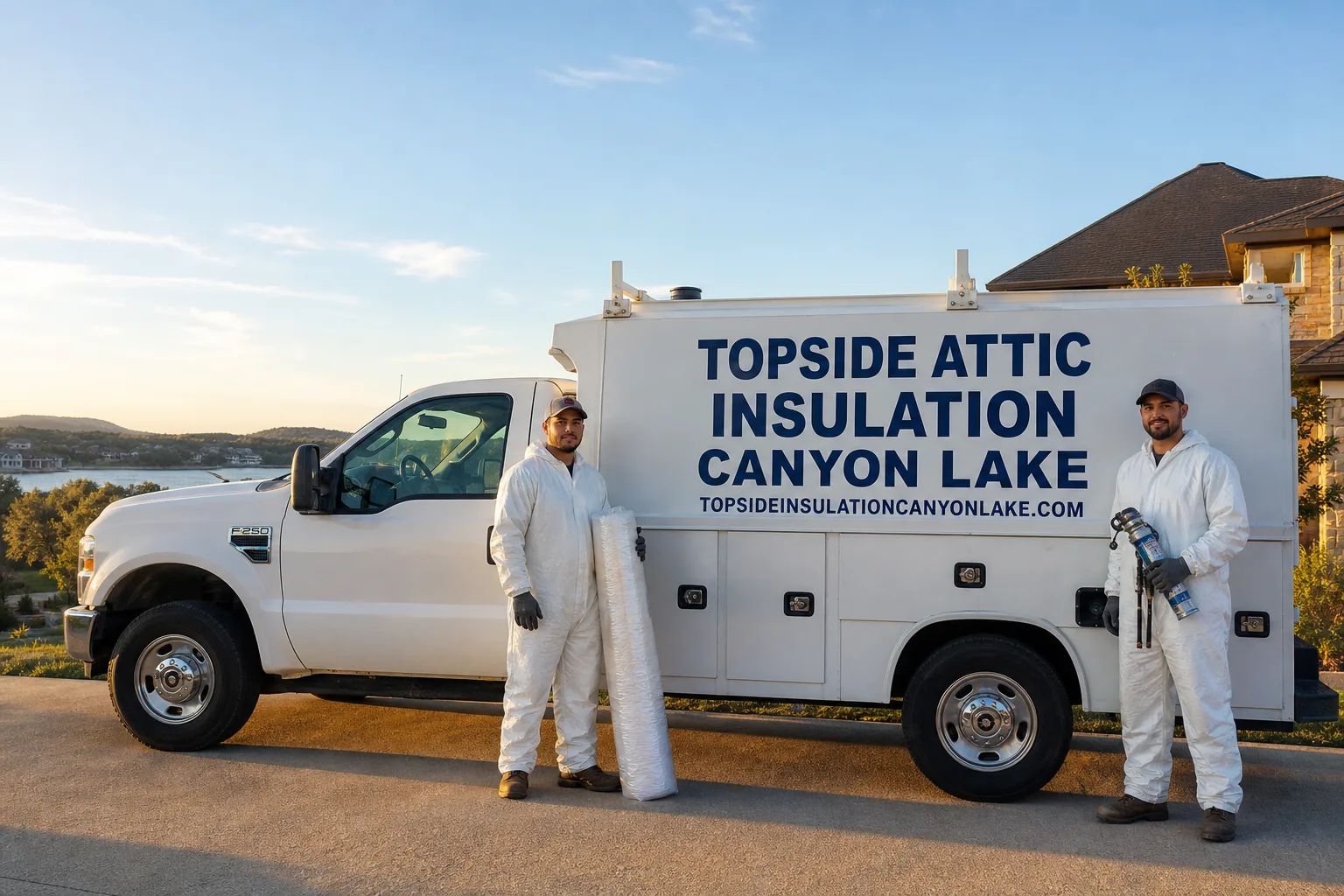
Fast, Reliable Blown-In Insulation Across Boerne
Blown-in insulation in Boerne typically costs $1.80-$3.20 per square foot installed, with most attic jobs running $2,400-$5,800 depending on accessibility and whether air sealing is needed first. We’re at Boerne homes same-day or next-day, dispatching from our San Antonio office with crews who know the Hill Country’s limestone terrain and the building patterns that repeat from Cordillera Ranch to downtown-adjacent streets. Call (737) 227-6219 for a written price before any work starts - that’s Haven Standard Clause 1, no exceptions.
Why Topside Attic Insulation Canyon Lake Is Boerne’s Preferred Blown-In Insulation Company
We’ve sealed and insulated over 9,000 homes since 2016, and the Boerne jobs stand out in our records for one reason: this is not San Antonio’s climate. At 1,400 feet on the Edwards Plateau, Boerne’s homes face hard freezes and Blue Norther drops that the lower metro rarely experiences, which means our crews arrive knowing the insulation has to perform at both extremes, not just summer.
Our reviews from Boerne customers consistently mention two things: the blower-door numbers we leave behind, and the fact that we don’t start blowing until the air sealing is done. One recent Cordillera Ranch homeowner noted in their review that they’d had two other quotes that skipped the sealing step entirely. We don’t do that.
Response time to Boerne is same-day or next-day for standard calls, and our 24/7 live-answer line means you’re talking to a person, not a voicemail loop, when you call. Crews carry GreenFiber cellulose, Owens Corning fiberglass, and Knauf materials on the truck, so we’re not driving back to San Antonio for product while your attic sits open.
Our Blown-In Insulation Services in Boerne
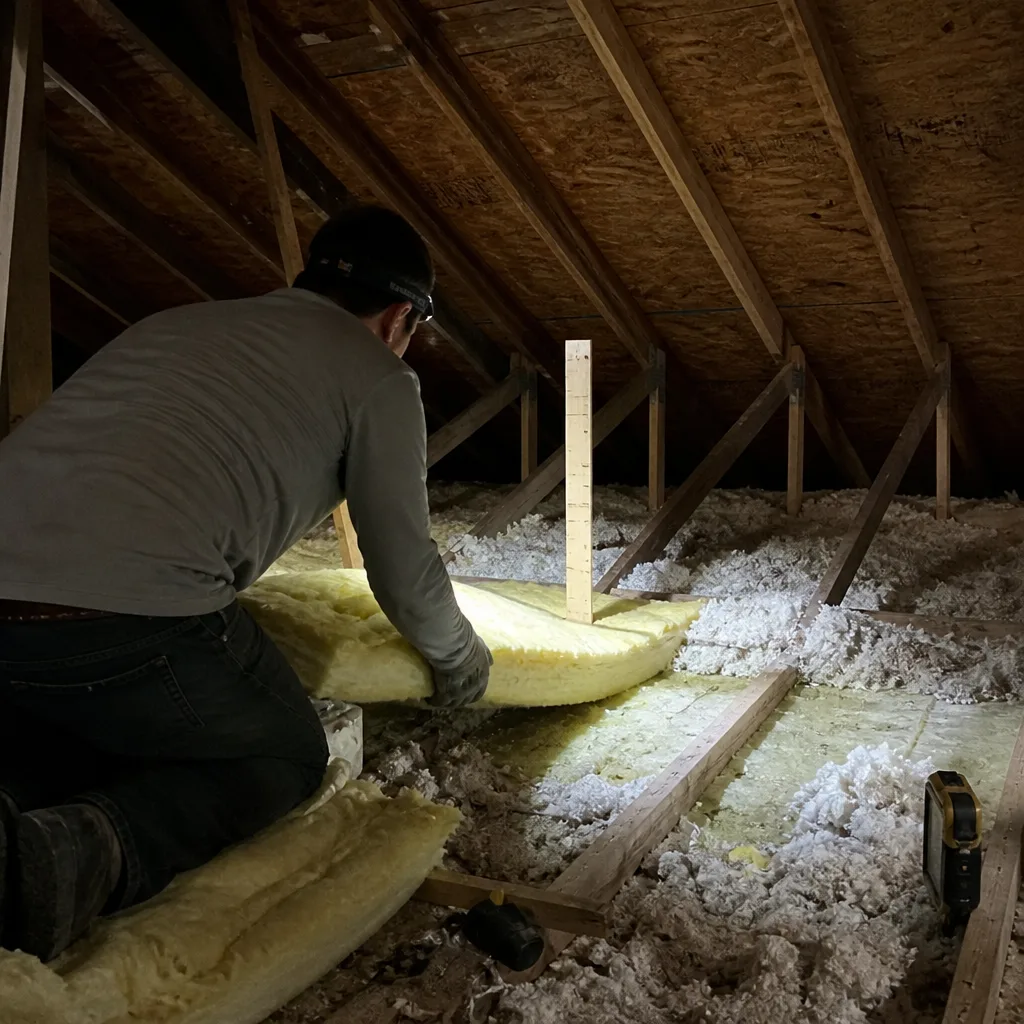
Blown-In Cellulose
We use GreenFiber cellulose for most Boerne attic jobs because it handles the plateau’s temperature swings better than you’d expect. Cellulose is treated with borate fire retardant and settles less than older formulations, which matters in Boerne’s 155°F attics where inferior products degrade fast. We blow to a uniform depth across irregular bays - critical in Hill Country custom homes where hip rooflines create variable cavity heights. Every cellulose job includes air sealing of top plates, can lights, and penetrations first; we won’t blow over an unsealed attic floor.
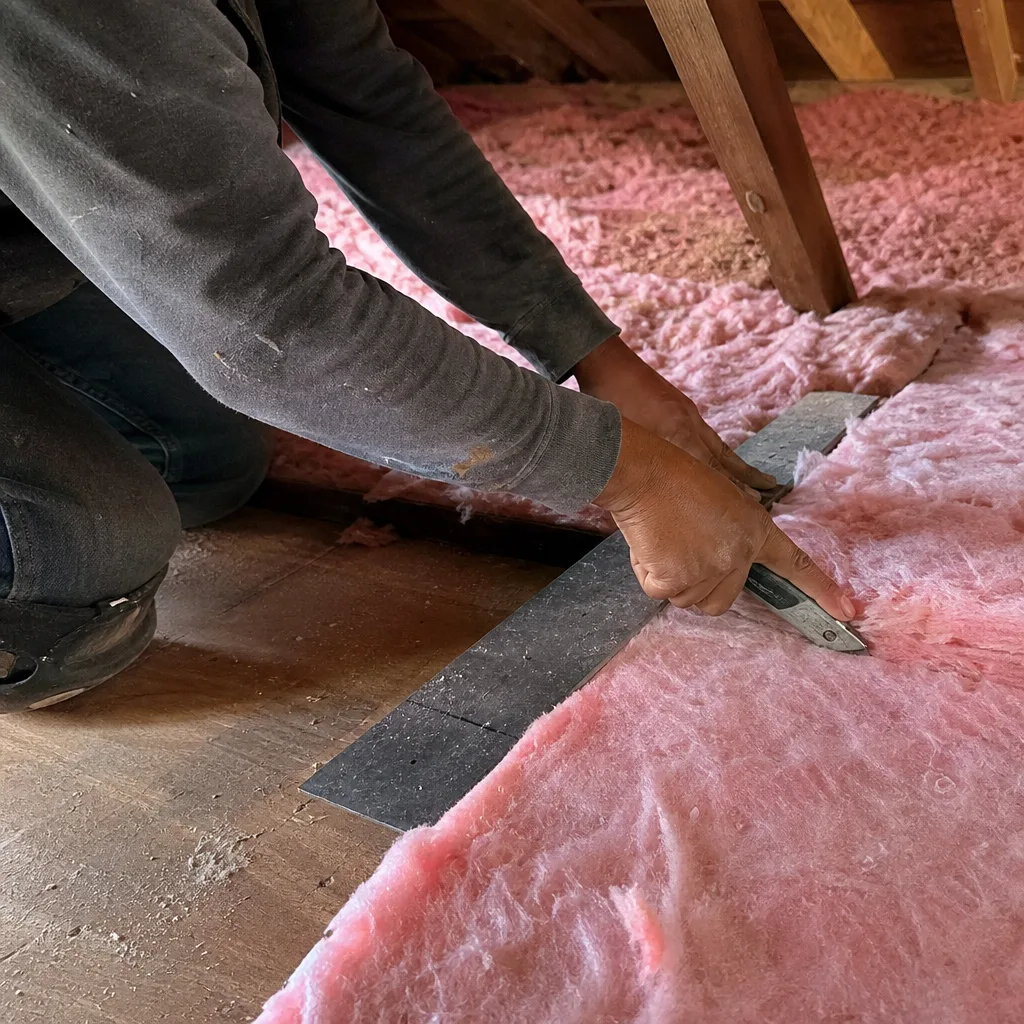
Blown-In Fiberglass
Owens Corning and Johns Manville fiberglass work well for Boerne homeowners who want a synthetic option with zero cellulose dust. Fiberglass doesn’t absorb moisture the way organic materials can, which is relevant in some of Boerne’s older downtown-adjacent homes with roof leaks that haven’t been addressed yet. We still seal first, then blow to manufacturer-specified density. The blower-door test - a pressurization reading that shows, in one number, how much air your building envelope is losing - gets run before and after so you see the actual performance change.
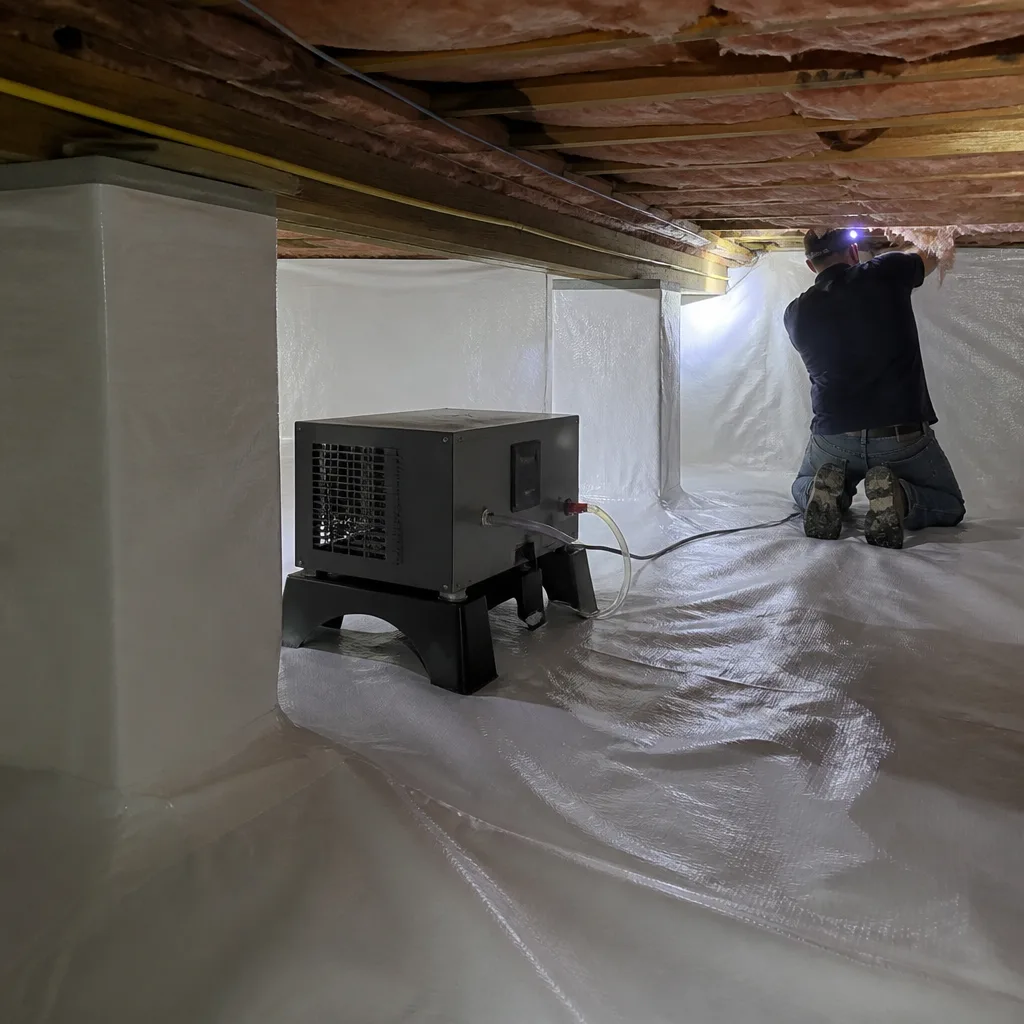
Dense-Pack Wall Insulation
Boerne’s slab-on-grade construction means there’s no crawl space to work from; the walls are your secondary thermal barrier after the attic. Dense-pack cellulose or fiberglass, blown at 3.5-4.0 pounds per cubic foot into closed cavities, fills the gaps that batt insulation leaves around wiring and plumbing. This matters enormously in Cordillera Ranch-style homes with stone or stucco exteriors, where the wall cavity is often interrupted by irregular framing and the thermal bridge at the stone is already working against you. We’ve dense-packed knee walls and vaulted ceiling cavities that other crews wrote off as inaccessible.
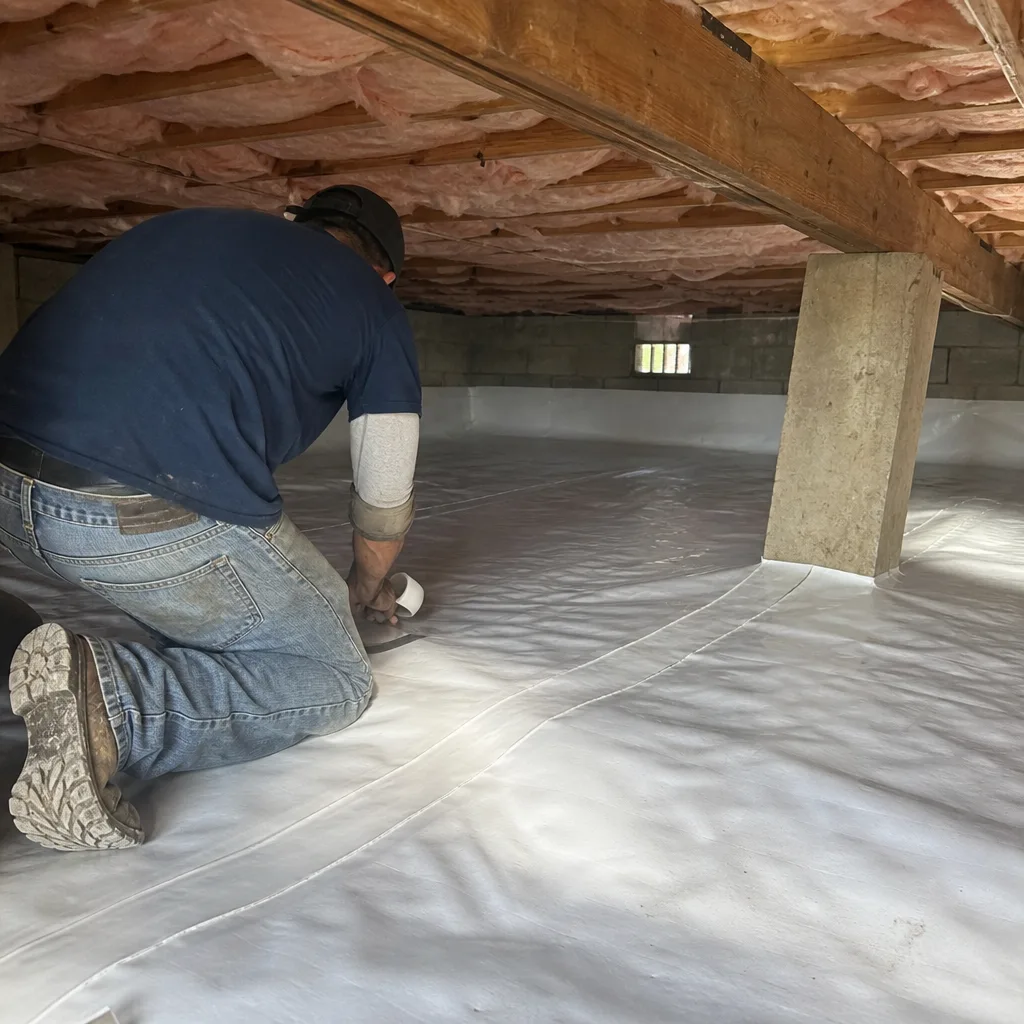
Blown-In Top-Up
Top-ups are common in Boerne’s 1960s-1980s neighborhoods near downtown, where original fiberglass batts have settled from R-19 to something closer to R-9 over forty years. We don’t just add material on top. We pull back existing insulation, seal what the original builder missed at top plates and electrical penetrations, then blow new cellulose or fiberglass to restore depth and exceed current code. The field vignette: we were called out to a Cordillera Ranch custom home with a complex hip roof and vaulted ceilings where the original builder had left top plates unsealed; after dense-packing the knee walls and air-sealing, we blew GreenFiber cellulose to a uniform depth across the irregular bays. The homeowner had been fighting $400 summer electric bills and cold spots near the stone exterior walls, and within one season both problems resolved. Because their detached workshop shares the same unshaded limestone pad, we topped up its ceiling in the same trip so they weren’t scheduling a second run from Canyon Lake.
What happens when you call
- 1
A real person answersNo phone trees - you reach a local pro.
- 2
You get an upfront price rangeHonest numbers before anyone is dispatched.
- 3
A background-checked tech heads outLicensed & insured, dispatched right away.
- 4
You approve before work beginsNothing starts until you say go.
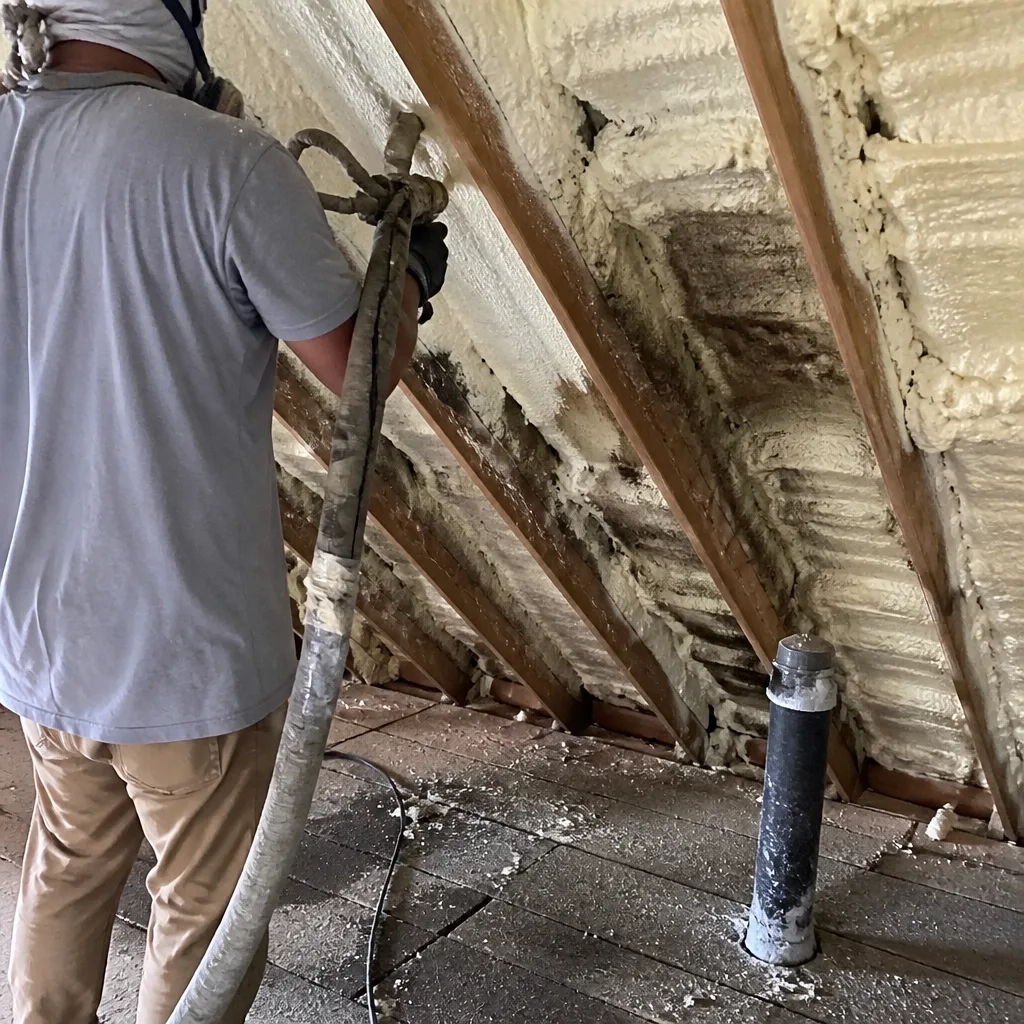 Before
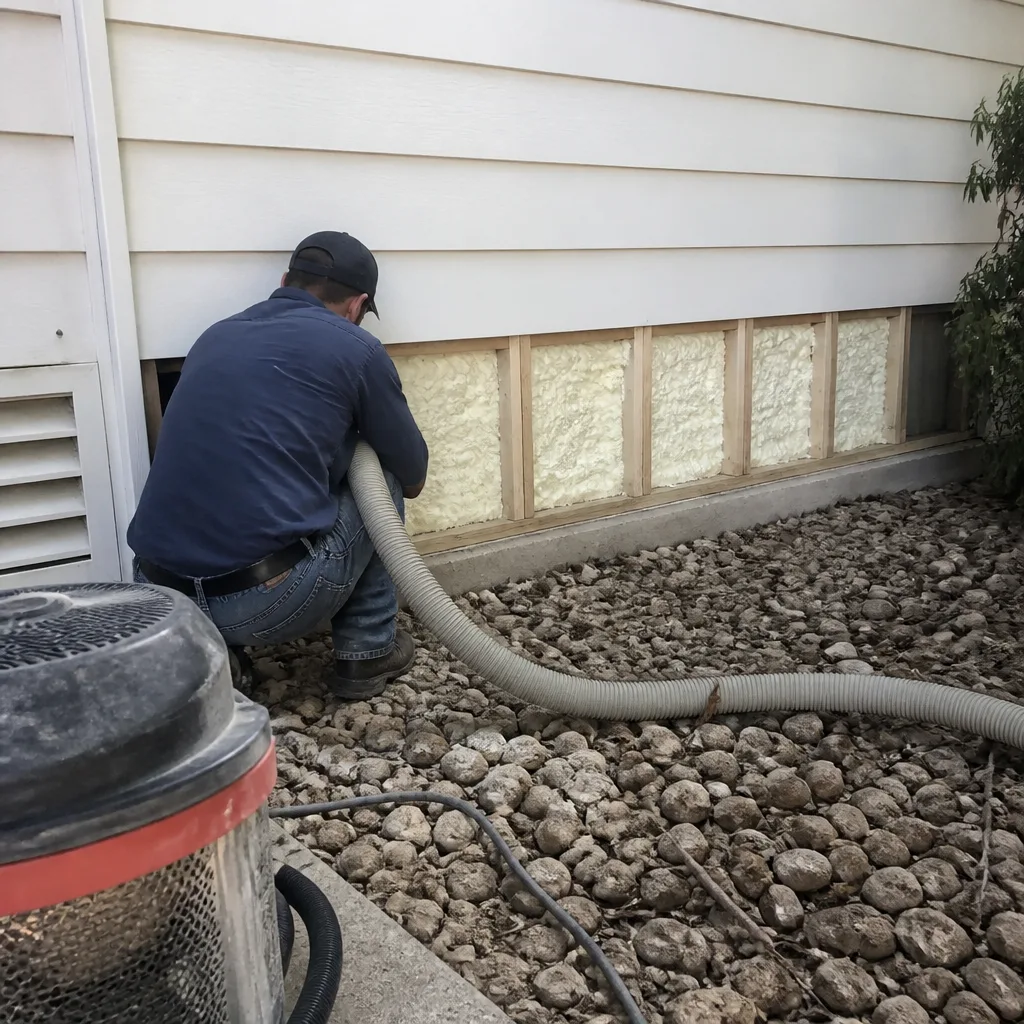 After
AfterTrusted Brands We Service in Boerne
We stock GreenFiber, Owens Corning, and Knauf blown-in products on our Boerne-bound trucks, with Johns Manville available by next-day pull if your job specifies it. No proprietary lock-in - we match the material to the cavity and the condition. Fast turnaround matters in Boerne’s climate; we’re not leaving your attic open overnight because the right product wasn’t on the truck.
Common Blown-In Insulation Problems We See in Boerne Homes
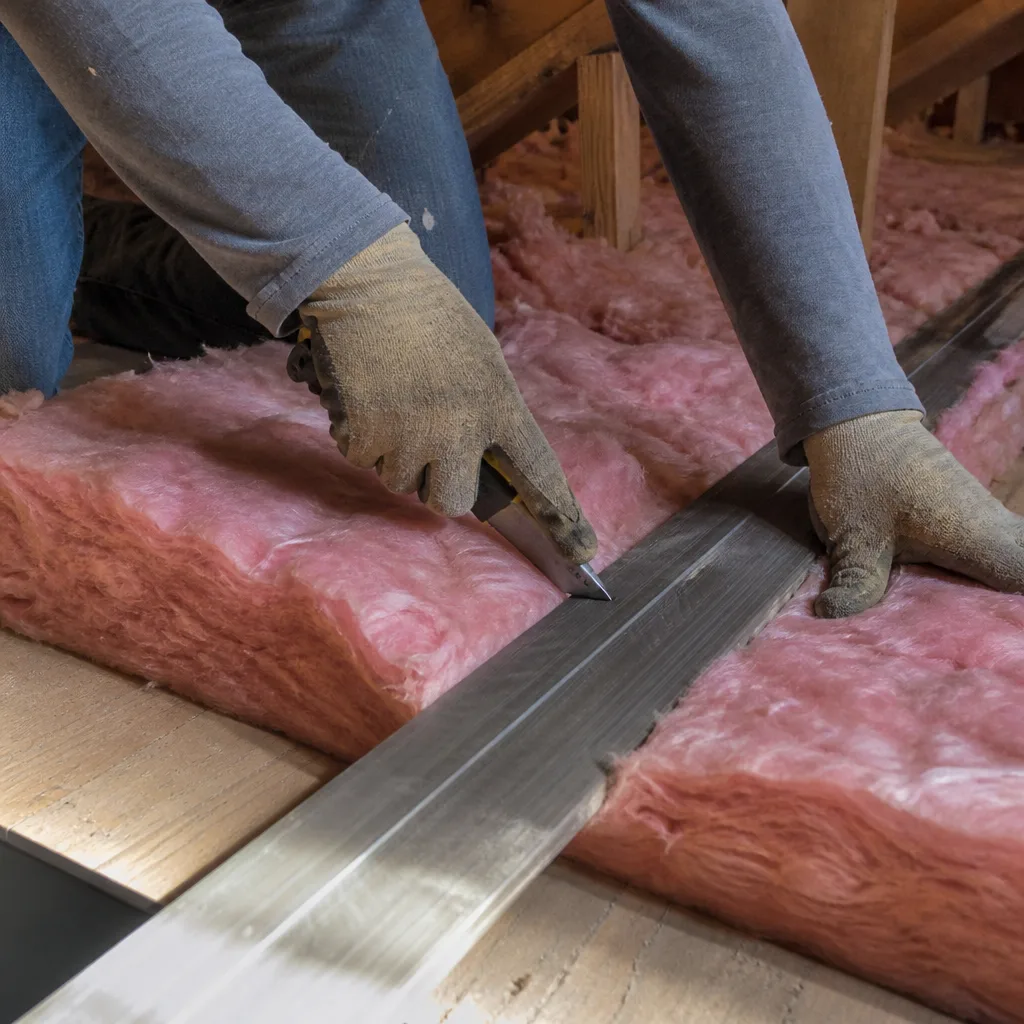
- Settled fiberglass batts in downtown-adjacent homes. Original fiberglass batts in 1960s-1980s Boerne homes have compressed and lost R-value, and because there’s no crawl space to work from, the gaps at top plates go unsealed for decades. The result is a house that leaks conditioned air at exactly the points where the old insulation is thinnest.
- Underfilled irregular bays in custom homes. Complex hip rooflines and vaulted ceilings in Cordillera Ranch-style customs create cavity shapes that are easy to underfill with blown-in material, leaving thin spots that freeze pipes during a Blue Norther. We use depth markers and thermal imaging verification, not guesswork.
- Attic heat degradation. Boerne’s cleared limestone subdivisions have almost no tree canopy, so attic temps regularly exceed 155°F and degrade improperly installed blown-in insulation faster than in shaded San Antonio neighborhoods. Material selection and installation density both matter here.
- Insulation blown over unsealed air leaks. This is the most common error we correct: previous contractors who added blown-in material without sealing top plates, can lights, or duct chases first. The insulation performs like a sweater with holes in it - fine material, wrong application.
Pricing for Blown-In Insulation in Boerne, TX
Most attic blown-in insulation jobs in Boerne run $2,400-$5,800 for a typical 2,000-3,500 square foot home, with dense-pack wall insulation adding $1,800-$3,400 depending on cavity count and accessibility. Blown-in top-ups in older homes with simpler flat ceilings start around $1,400 if the existing material can stay and only sealing plus new depth is needed. Detached workshops and garages run $600-$1,500 for ceiling work, and we can usually add them to the same visit.
What moves the number: roof complexity (vaulted ceilings require scaffolding or specialized hose work), the extent of air sealing needed before blowing, and whether we’re removing degraded material first. Every job gets a written price before any work starts - Haven Standard Clause 1 - and a Free Second Opinion on any competing written estimate you bring us. Call (737) 227-6219 for your exact number; estimates are free.
We Also Serve Cities Near Boerne
Our Blown-In Insulation crews work throughout the Hill Country and I-35 corridor, including Bulverde, Canyon Lake, Schertz, and Universal City. Same standards, same written price first, same blower-door documentation where applicable.
Serving Boerne, TX - Our Local Coverage Area
We’re based in the Boerne area and know this community well. Use the map below to see our service coverage - if you’re nearby, we can almost certainly help.
FAQs - Blown-In Insulation in Boerne
Boerne sits at 1,400 feet on the Edwards Plateau, exposing homes to 155°F attic summers and Blue Norther cold fronts that drop temperatures 30-40°F in hours - a dual-season demand that lower-elevation San Antonio suburbs rarely face. Insulation that performs in one extreme but not the other costs you money twice a year. We specify materials and densities for both conditions, and we prove the result with before-and-after blower-door numbers. Call (737) 227-6219 for a written estimate - they’re free.
Yes - this is exactly the geometry we handle in Cordillera Ranch and similar Hill Country custom homes. Complex hip rooflines create irregular bays that require careful hose placement and depth verification; we use thermal imaging after installation to confirm no thin spots. The air sealing is actually more critical than the blowing in these homes, because the vaulted ceiling eliminates the flat attic floor that normally provides a continuous insulation blanket. Call (737) 227-6219 to schedule a walkthrough.
Because blowing insulation over an unsealed attic floor is like putting a sweater on someone standing in a wind tunnel - the material is fine, but the air goes right through it. Boerne’s hard freezes make this especially costly; the same thermal bypass that bleeds AC in August allows pipe-freezing cold infiltration during winter fronts. We seal top plates, can lights, penetrations, and duct chases first, then blow. Under Haven Standard: sealed first, insulated second, always.
Nearly every Boerne home is slab-on-grade because blasting a crawl space through the Edwards Plateau limestone karst is prohibitively expensive. This concentrates the entire insulation performance equation in the attic and wall cavities - which is why undersized or poorly installed attic insulation here is disproportionately costly compared to homes with crawl-space options. We focus our work where your house actually is: the attic, the walls, and any accessible ceiling planes.
Yes - and we encourage it. Boerne’s acreage properties often have detached workshops that share the same unshaded limestone pad and the same 155°F summer ceiling temperatures as the main house. Scheduling one trip for both buildings saves you a second dispatch fee and gets everything handled while the crew is already on site. Mention the outbuilding when you call (737) 227-6219 and we’ll factor it into the written scope.
Written by Wes Okafor, Owner at Topside Attic Insulation Canyon Lake, serving Boerne since 2016 under The Haven Standard.