
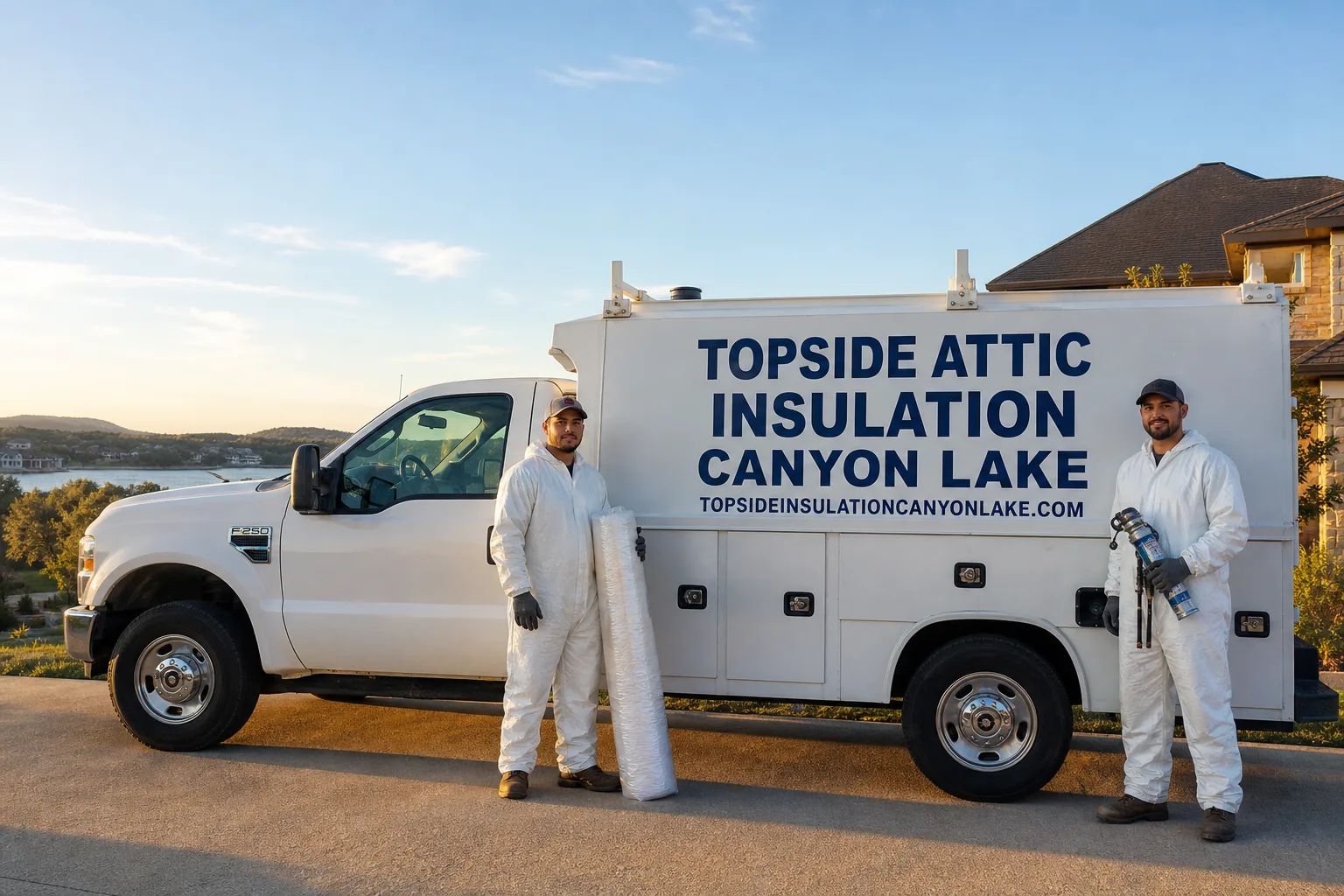
Trusted Blown-In Insulation for Canyon Lake Homeowners
Most Canyon Lake homes built between 1980 and 2010 are running 30-50% higher on cooling bills than they need to because attic insulation has settled below R-30 and the air sealing was never done right in the first place. We’re Wes Okafor’s crew at Topside Attic Insulation Canyon Lake, and we’ve sealed and insulated over 9,000 homes since 2016 with Canyon Lake Blown-In Insulation - every one starting with a written price and ending with a documented photo record. Call (737) 227-6219 for a free estimate; we answer live 24/7 and can usually inspect your attic within 24 hours.
What Our Blown-In Insulation Service Includes
Blown-In Cellulose
Cellulose is ground recycled paper treated with borate fire retardant - it packs tightly into irregular joist bays and performs well in Canyon Lake’s humidity when the attic floor is sealed first. We specify cellulose for older homes in neighborhoods like Startzville and Hancock, where balloon framing and irregular cavity shapes make batts nearly impossible to install properly. Our crews blow to an settled density of 1.5-1.8 lbs per cubic foot, and we verify depth with a probe at ten locations before we sign off.
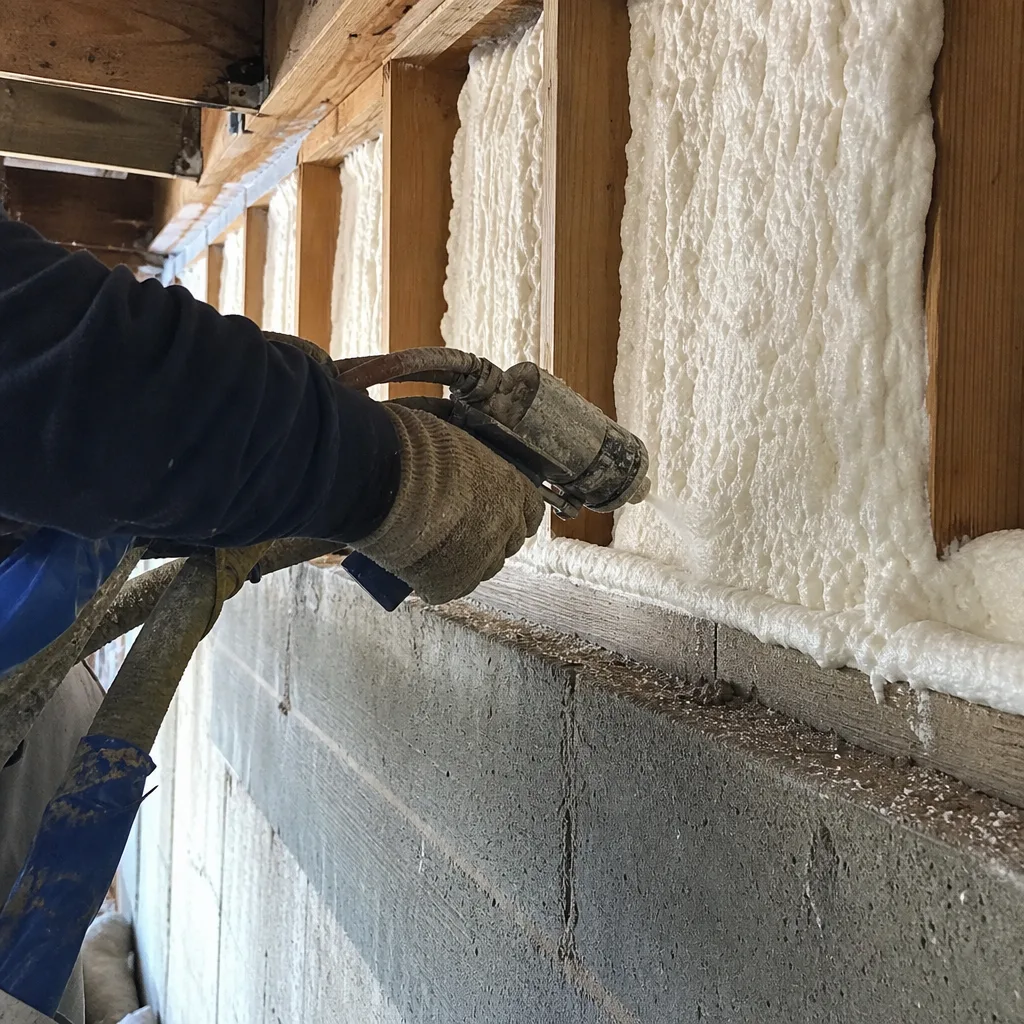
Blown-In Fiberglass
Fiberglass loose-fill doesn’t absorb moisture the way cellulose can, which matters in Canyon Lake attics that see 100°F+ temperatures and occasional roof leaks from hail events. We typically specify Owens Corning AttiCat or Johns Manville Climate Pro for new construction in Timberwood Park and Canyon Lake Hills, where truss spacing is uniform and the attic floor has already been sealed during construction. The material doesn’t settle as dramatically as cellulose, so your R-value holds closer to spec over a 15-year span.
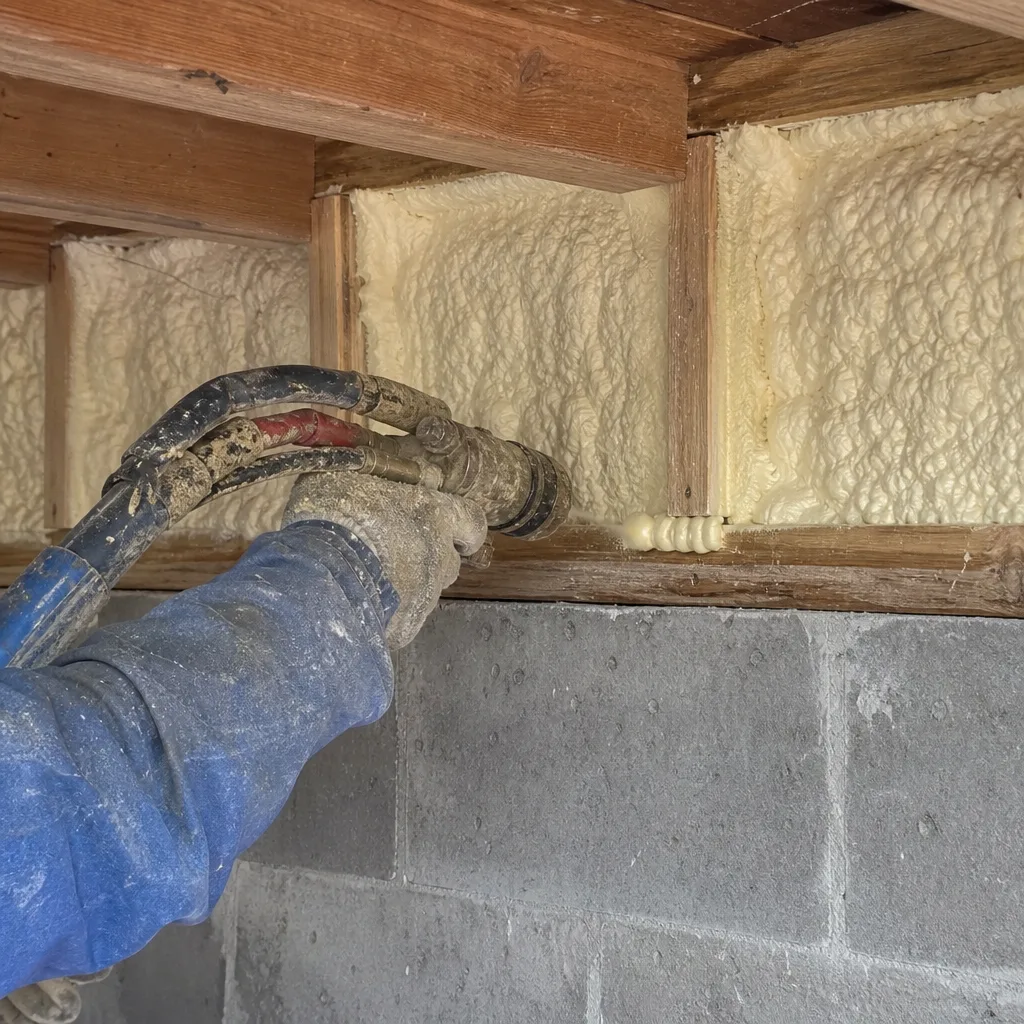
Dense-Pack Wall Insulation
Dense-pack means blowing cellulose or fiberglass into closed wall cavities at 3.5-4.0 lbs per cubic foot - dense enough to resist convection but not so dense it bows drywall. This is how we insulate the uninsulated 2×4 walls common in Canyon Lake’s 1970s and 1980s ranch homes without tearing out interior finishes. We drill 2-inch holes at stud-bay intervals, fill with a calculated weight of material, then patch and texture-match; most rooms take a half-day and the homeowner receives before-and-after photos of every wall cavity.
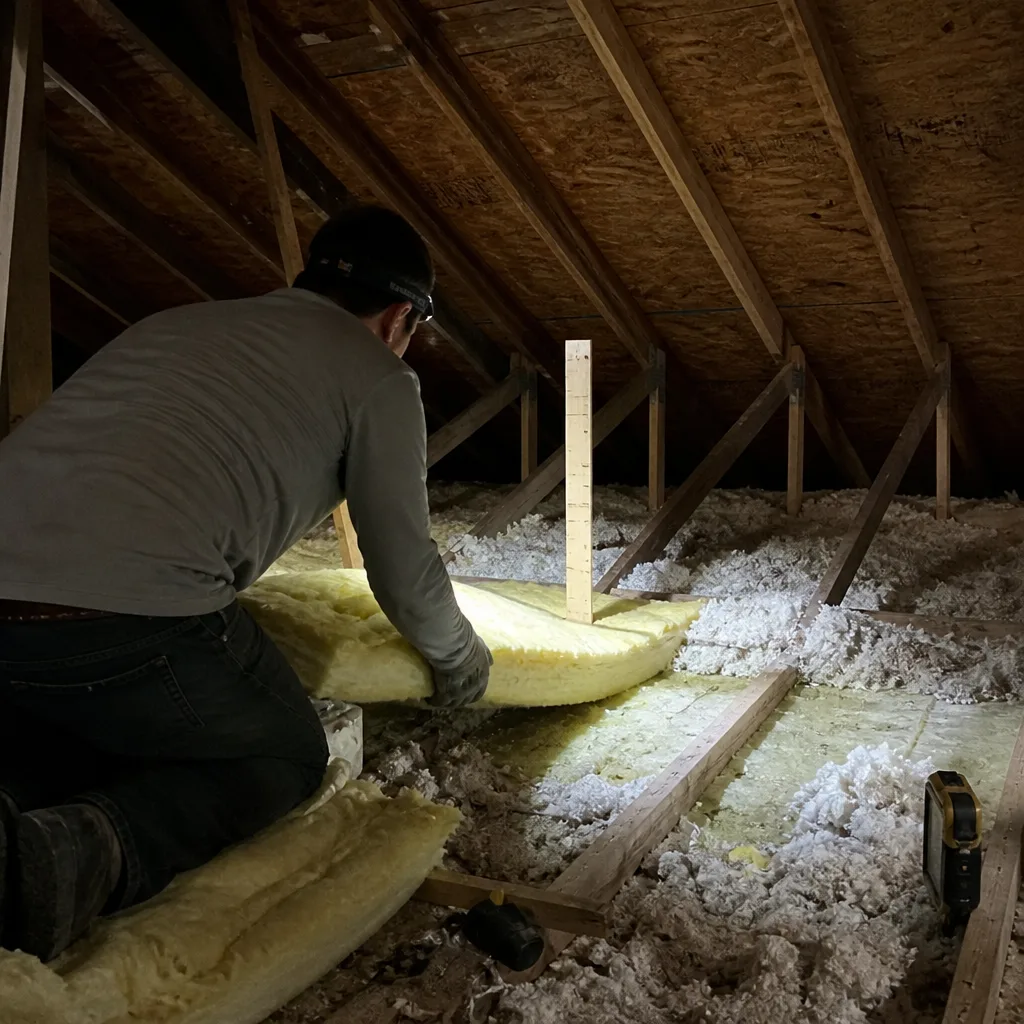
Blown-In Top-Up
A top-up adds loose-fill over existing insulation that has compressed or settled - common in Canyon Lake where 6-8 inches of original fiberglass has squashed to 3-4 inches after decades of foot traffic and storage. We don’t blow over wet, moldy, or rodent-contaminated material; if we find that, we quote removal and replacement separately under Haven Standard Clause 1. When conditions allow, a top-up to R-49 (about 14 inches of cellulose or 18 inches of fiberglass) typically cuts attic heat gain by 25-35% in a single morning.
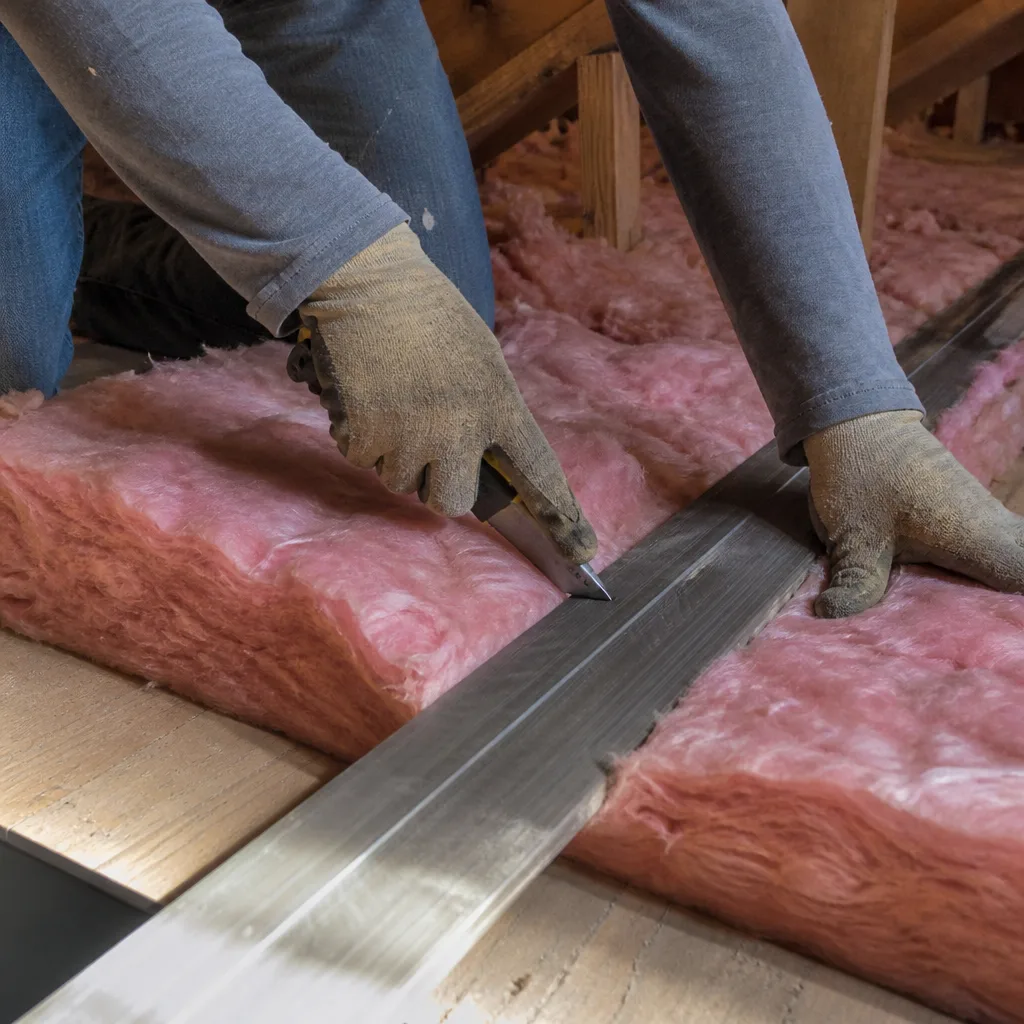
What happens when you call
- 1
A real person answersNo phone trees - you reach a local pro.
- 2
You get an upfront price rangeHonest numbers before anyone is dispatched.
- 3
A background-checked tech heads outLicensed & insured, dispatched right away.
- 4
You approve before work beginsNothing starts until you say go.
Brands We Service for Blown-In Insulation
We’ve installed GreenFiber cellulose in over 200 Canyon Lake homes, particularly in the older lakefront properties near Comal Park where fire-retardant treatment and pest resistance matter as much as thermal performance. Their stabilized product holds density well in our humidity, and we keep bags in stock for same-week jobs. Owens Corning’s AttiCat system is our go-to for fiberglass top-ups in newer subdivisions - the blowing machine integrates with our truck-mounted generators, so we’re not borrowing hardware from a big-box store and hoping it’s calibrated.
Johns Manville Climate Pro fiberglass works well for dense-pack wall jobs where we need longer fibers that bridge irregular cavities without voids, and Knauf’s Jet Stream Ultra has been reliable for commercial-scale blown jobs in the multi-family builds near FM 306. Whether you have a preference for GreenFiber, Owens Corning, Johns Manville, Knauf, or another manufacturer, we source materials to spec rather than pushing proprietary products - your written scope lists the exact material and R-value before anyone starts.
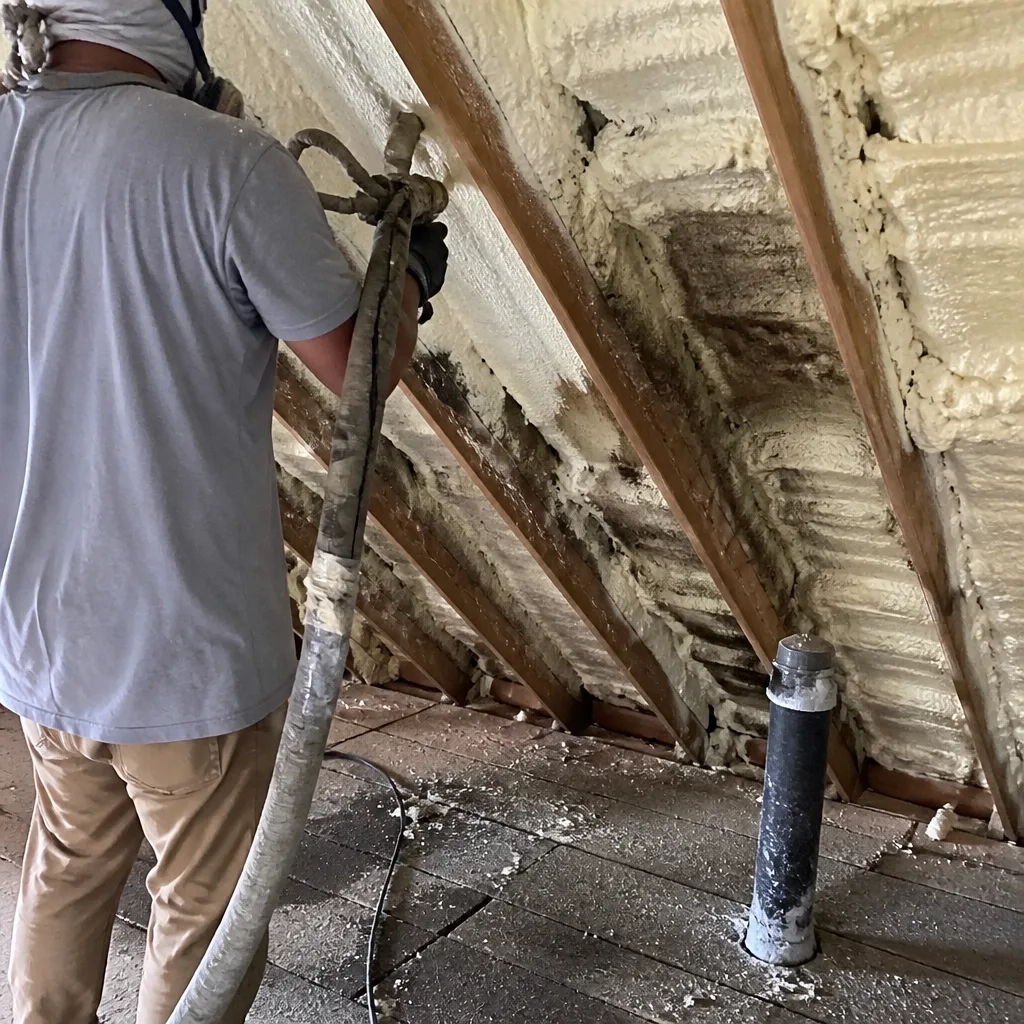 Before
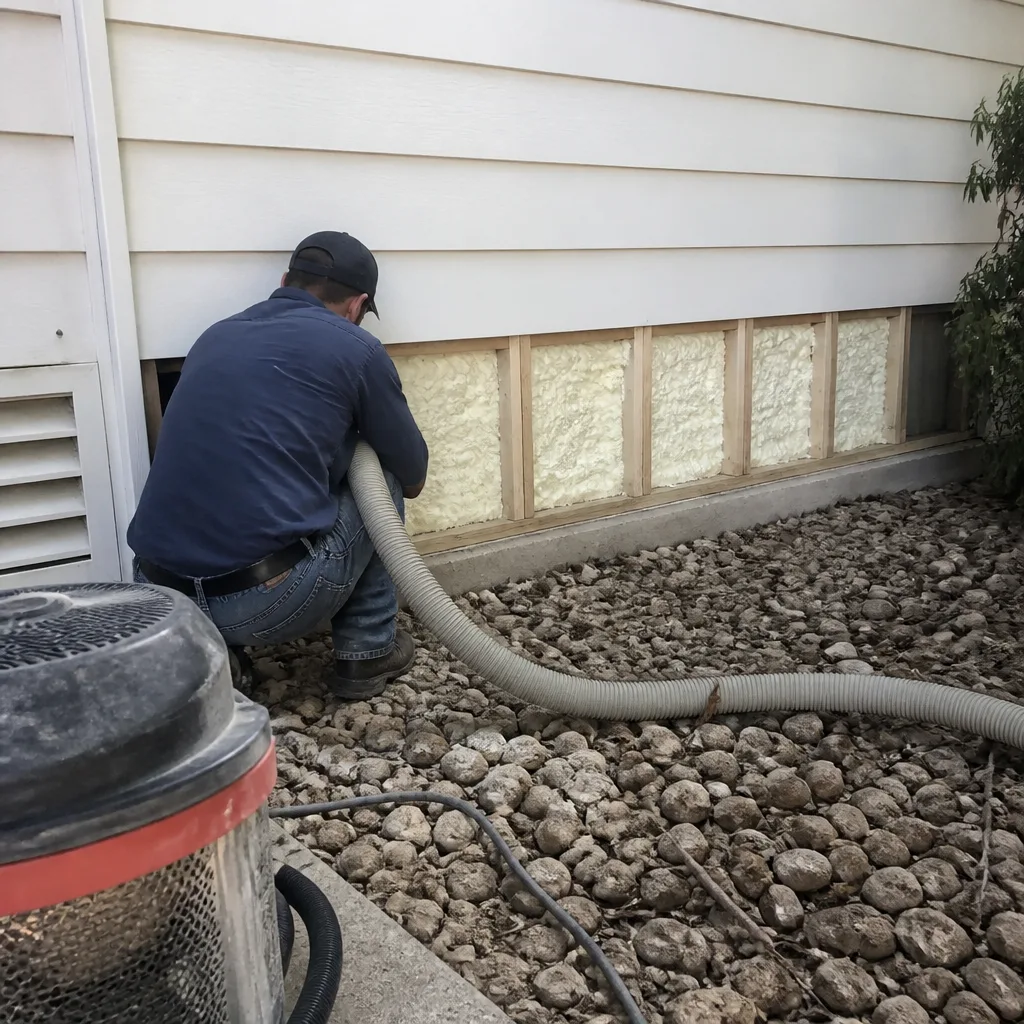 After
AfterSigns You Need Blown-In Insulation Right Now
- Your upstairs bedrooms won’t cool below 78°F even when the AC runs constantly. In Canyon Lake’s summer heat, an underinsulated attic can reach 140°F, radiating downward through the ceiling and overwhelming your HVAC’s capacity. We’ve measured attic floors in Startzville homes where the effective R-value had dropped below R-15 from compression alone.
- Your energy bill spikes every July and August despite no change in thermostat setting. Most Canyon Lake homeowners see a 40-60% summer cooling load increase when attic insulation falls below R-30. If your bill has crept up year-over-year while rates stayed flat, the building envelope is the likely culprit.
- You can see the ceiling joists through your attic insulation. Proper coverage means you shouldn’t see wood - if joists are visible, you’ve lost at least 30% of your original R-value to settling or disturbance. This is especially common in homes where previous owners used the attic for storage.
- Ice dams formed on your roof last winter (or you noticed water stains after rare freeze events). Canyon Lake doesn’t see many hard freezes, but when we do, heat escaping through an unsealed attic floor melts roof snow that refreezes at the eaves. The resulting water intrusion damages drywall and breeds mold in insulation.
- Your home was built before 2012 and has never had an energy audit or insulation upgrade. Texas energy code didn’t require R-38 in attics until the 2012 IECC cycle, and enforcement in Comal County was inconsistent before 2015. If you’ve never had work done, you’re almost certainly below current standards.
Our Blown-In Insulation Process - Step by Step
- 1
Schedule and arrival. Call (737) 227-6219 and a live person answers - no voicemail, no callback queue. We confirm a 2-hour arrival window, text you when the technician is en route, and arrive in a marked vehicle with a uniformed, background-checked crew. Under Haven Standard: Arrive on schedule, you get a named technician.
- 2
Attic inspection and blower-door test. We climb up and photograph current insulation depth, condition, and any air leaks visible at top plates, can lights, and penetrations. On applicable jobs, we run a blower-door test - a pressurization reading that shows, in one number, how much conditioned air your building envelope is losing. Most Canyon Lake homes built 1980-2005 test between 3,500 and 6,000 CFM50 before any work.
- 3
Written scope and price. Before any work starts, you receive a flat price, written scope, and written warranty - Haven Standard Clause 1, no exceptions. The scope specifies material type, target R-value, air-sealing details, and whether removal of existing material is required. We also offer a Free Second Opinion on any written estimate you’ve received from another contractor.
- 4
Air sealing first, then insulation. We seal all accessible leaks with caulk, foam, or rigid baffles - top plates, electrical penetrations, bath fan housings, and chimney chases. Only after the attic floor is sealed do we begin blowing insulation to the specified depth. This sequence is non-negotiable; we will not blow insulation over an unsealed attic floor.
- 5
Verification, documentation, and sign-off. We probe insulation depth at ten locations, re-run the blower-door test on air-sealing jobs, and photograph everything. You receive a Documented Photo Record showing before, during, and after conditions, plus the blower-door numbers if applicable. The 365-Day Done Right Promise begins the moment we finish.
How Much Does Blown-In Insulation Cost in Canyon Lake?
A typical Blown-In Insulation pricing for a cellulose top-up to R-49 in a 1,800-square-foot Canyon Lake attic runs $1,800-$2,600, including air sealing of accessible top plates and penetrations. Full removal of contaminated existing insulation and replacement with new cellulose to R-49 typically runs $3,200-$4,800. Dense-pack wall insulation for a 2,000-square-foot home with standard 2×4 construction runs $2,800-$4,200 depending on interior finish complexity and the number of windows to work around.
Several factors move these numbers. Attic accessibility matters - low-pitch roofs over 1,200-square-foot ranch homes in Canyon Lake’s older lakefront areas take longer to navigate than steep new construction in Timberwood Park. Existing insulation condition drives removal cost; rodent-contaminated material requires HEPA vacuuming and sanitizing before new material goes in. Material choice shifts price too - fiberglass runs 10-15% less per R-value than cellulose but doesn’t seal air leaks as effectively on its own.
What affects price most is whether air sealing is included. Some Canyon Lake contractors quote insulation alone, then discover “unexpected” leaks that require change orders. Our price includes sealing all accessible leaks as standard - it’s not an upsell, it’s the prerequisite. The written scope you receive before work starts itemizes exactly what’s included, and the 365-Day Done Right Promise covers both materials and labor. Call (737) 227-6219 for an exact quote - estimates are free, and we publish before-and-after blower-door numbers on every applicable job so you can verify what you paid for.
Blown-In Insulation Near Canyon Lake - Our Service Area
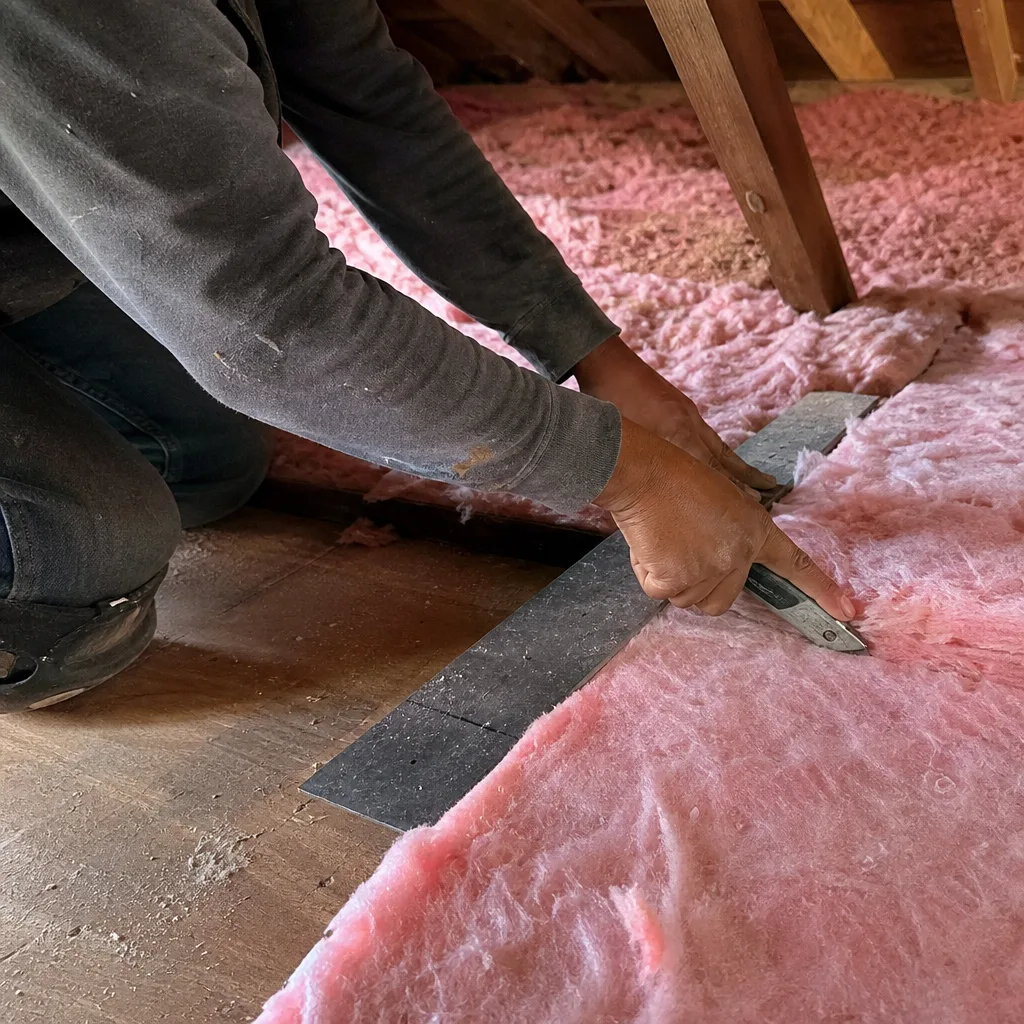
We run blown-in insulation crews throughout the Canyon Lake corridor with typical response times under 24 hours for inspection appointments. Our primary service area includes Canyon Lake, Bulverde, and New Braunfels, plus Timberwood Park, Selma, Cibolo, Schertz, Universal City, Live Oak, Fair Oaks Ranch, Converse, and Windcrest. Most jobs in Startzville, Hancock, and Canyon Lake Hills proper are same-week; outlying areas like Fair Oaks Ranch typically schedule within 3-5 business days. We don’t charge travel fees within Comal County or northern Bexar County.
Serving Canyon Lake, TX - Our Local Coverage Area
We’re based in the Canyon Lake area and know this community well. Use the map below to see our service coverage - if you’re nearby, we can almost certainly help.
Frequently Asked Questions - Blown-In Insulation in Canyon Lake
Blown-in insulation is loose-fill cellulose or fiberglass that’s pneumatically blown into attic floors or wall cavities, allowing it to fill irregular spaces and achieve uniform coverage without gaps. Unlike batt insulation - pre-cut fiberglass sheets that leave voids around wiring, plumbing, and framing - blown-in material conforms to obstructions and maintains consistent R-value across the entire surface. We typically recommend blown-in for Canyon Lake attics and Blown-In Insulation in Bulverde because our truss construction and abundant penetrations make batts difficult to install properly.
A standard attic top-up for a 2,000-square-foot Canyon Lake home takes 4-6 hours including air sealing, while full removal and replacement runs 1-2 days. Dense-pack wall insulation for a typical three-bedroom home requires a half-day per floor plus drying time for patchwork. We schedule start times so you’re not waiting around - the crew arrives, works continuously, and cleans up before leaving.
Most Blown-In Insulation in New Braunfels and Canyon Lake attic jobs run $1,800-$4,800 depending on whether we’re adding to existing material or removing and replacing it, with dense-pack wall insulation typically $2,800-$4,200 for a standard home. The written price you receive before any work starts includes material, labor, air sealing, cleanup, and your Documented Photo Record - no itemized add-ons after the fact. Call (737) 227-6219 for an exact quote - estimates are free.
Yes - we install Owens Corning, Johns Manville, Knauf, GreenFiber, and other major manufacturers’ loose-fill products, and we don’t push proprietary brands or exclusive relationships. Your written scope specifies the exact material by manufacturer and product line before work begins, sourced through normal distribution channels so you’re not locked into a single supplier. If you have a brand preference from previous experience or a builder’s specification, we’ll source and install to that spec.
We answer calls live 24/7 at (737) 227-6219, though blown-in insulation is rarely a same-day emergency unless a roof leak has saturated existing material and immediate removal is needed to prevent mold. For true emergencies - post-storm water intrusion, rodent infestation requiring immediate cleanup - we can typically inspect within 24 hours and begin work within 48. For standard efficiency upgrades, we book inspections within 1-3 business days.
Every job is backed by our 365-Day Done Right Promise - if it’s not done right, we make it right - plus the written warranty delivered before work starts under Haven Standard Clause 1. Material warranties come from the manufacturer (typically lifetime for fiberglass, 25 years for cellulose) and cover product defect, while our labor warranty covers installation quality including settled density, specified R-value achievement, and air-sealing performance verified by blower-door test.
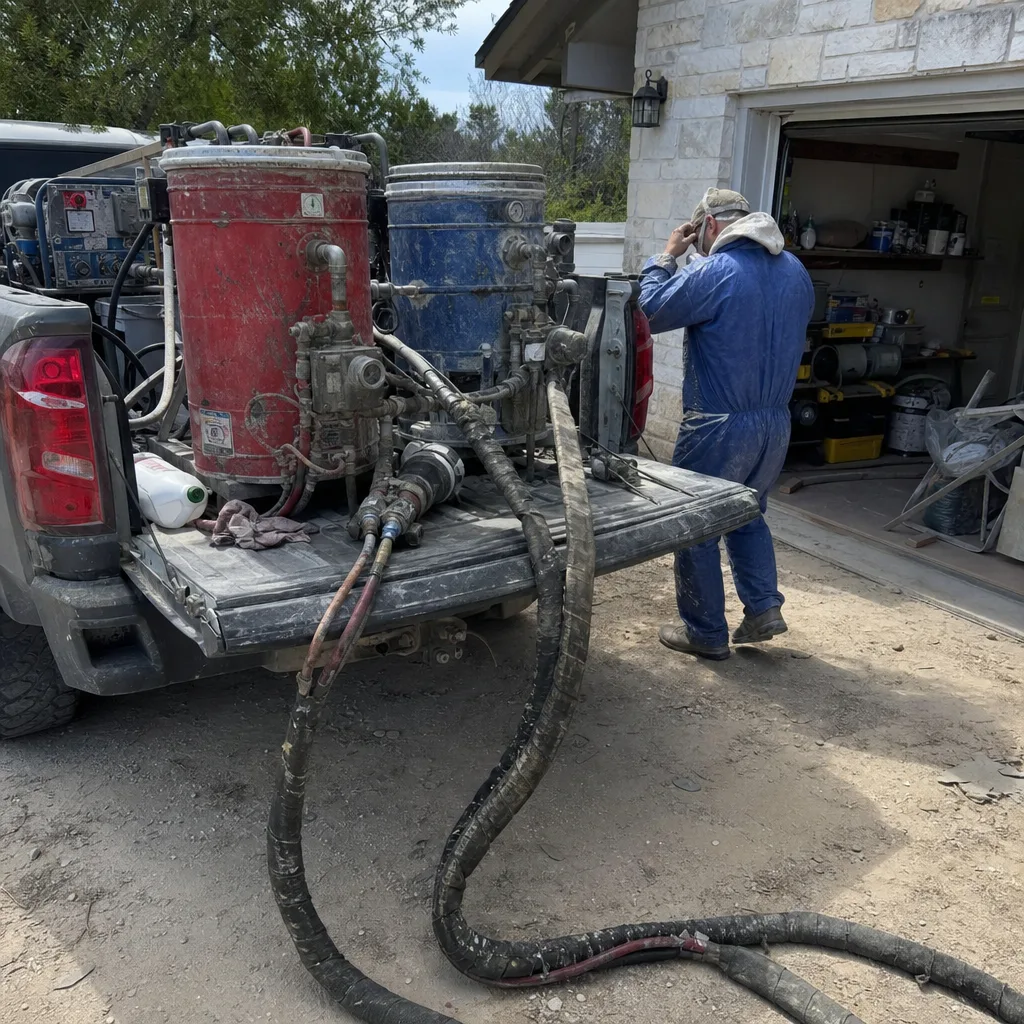
Clear attic storage items from the work area and provide clear driveway access for our blowing equipment - the hose runs from our truck, typically 150-200 feet. We’ll cover floors and furniture with drop cloths, but removing fragile items from the attic saves time and risk. For dense-pack wall jobs, move furniture 3 feet from exterior walls and remove wall hangings; we patch holes with texture-matched compound, but the less we navigate around, the cleaner the job. You’ll receive a preparation checklist with your appointment confirmation.
Schedule Your Blown-In Insulation Service in Canyon Lake Today
Call (737) 227-6219 now - a live person answers 24/7, and we’ll schedule your free inspection within 24 hours. You’ll receive a written price before any work starts, a Documented Photo Record when we finish, and before-and-after blower-door numbers on every air-sealing job so you can see exactly what changed. No voicemail, no callback windows, no surprises.
Written by Wes Okafor, Owner at Topside Attic Insulation Canyon Lake, serving Canyon Lake since 2016.