
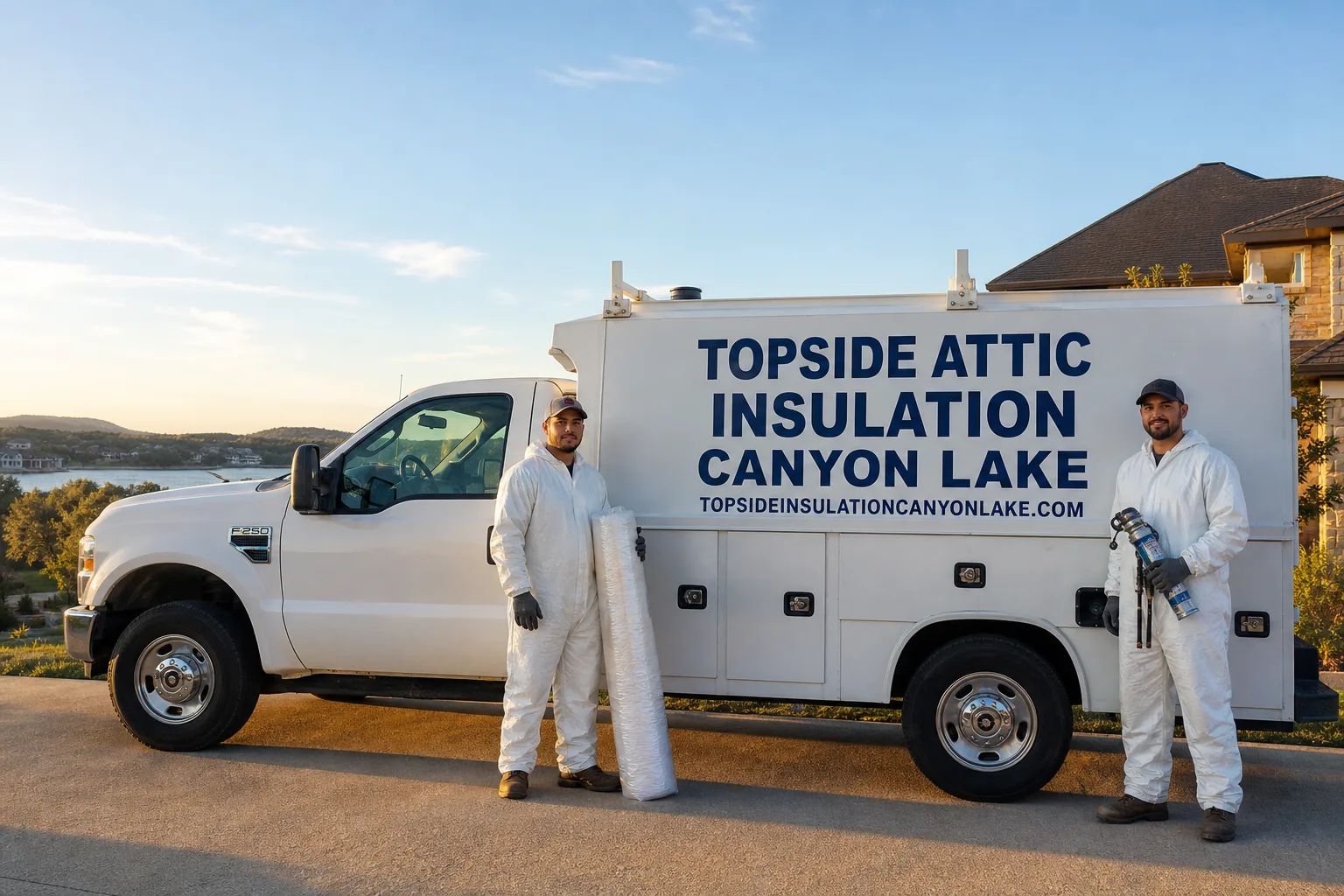
Fast, Reliable Blown-In Insulation Across Bulverde
Blown-in insulation in Bulverde typically runs $1.80-$3.20 per square foot of attic floor, with most complete attic jobs landing between $2,400 and $5,800 depending on the home’s footprint and whether air sealing is needed first. Most Bulverde appointments are scheduled within 48 hours, and crews are already working in the Hill Country corridor between Boerne and Canyon Lake. Call (737) 227-6219 for a written price before any work starts.
We’ve been sealing and insulating homes in Bulverde’s subdivisions since the first wave of post-2000 development, and we’ve documented the same pattern enough times to know it by address range: builder-grade R-30 blown fiberglass in a 3,500-square-foot attic with minimal air sealing at the top plates. It meets code on paper. It doesn’t perform in a February freeze.
Why Topside Attic Insulation Canyon Lake Is Bulverde’s Preferred Blown-In Insulation Company
Our crews serve Bulverde from our Dallas-Fort Worth dispatch office, with scheduling coordinated for Hill Country routes that keep travel time down and arrival windows tight. We’ve completed blown-in insulation work in the subdivisions off Bulverde Road, along FM 1863, and in the newer master-planned communities north of the downtown corridor.
Bulverde homeowners leave reviews that mention the same details: the blower-door number they got, the photo record they received, the written scope they signed before anyone started. Our 365-Day Done Right Promise applies to every job, and we don’t ask you to trust us - we ask you to read the documentation.
Calls are answered by a live person, 24/7. No voicemail loops. No callback windows measured in business days.
Our Blown-In Insulation Services in Bulverde
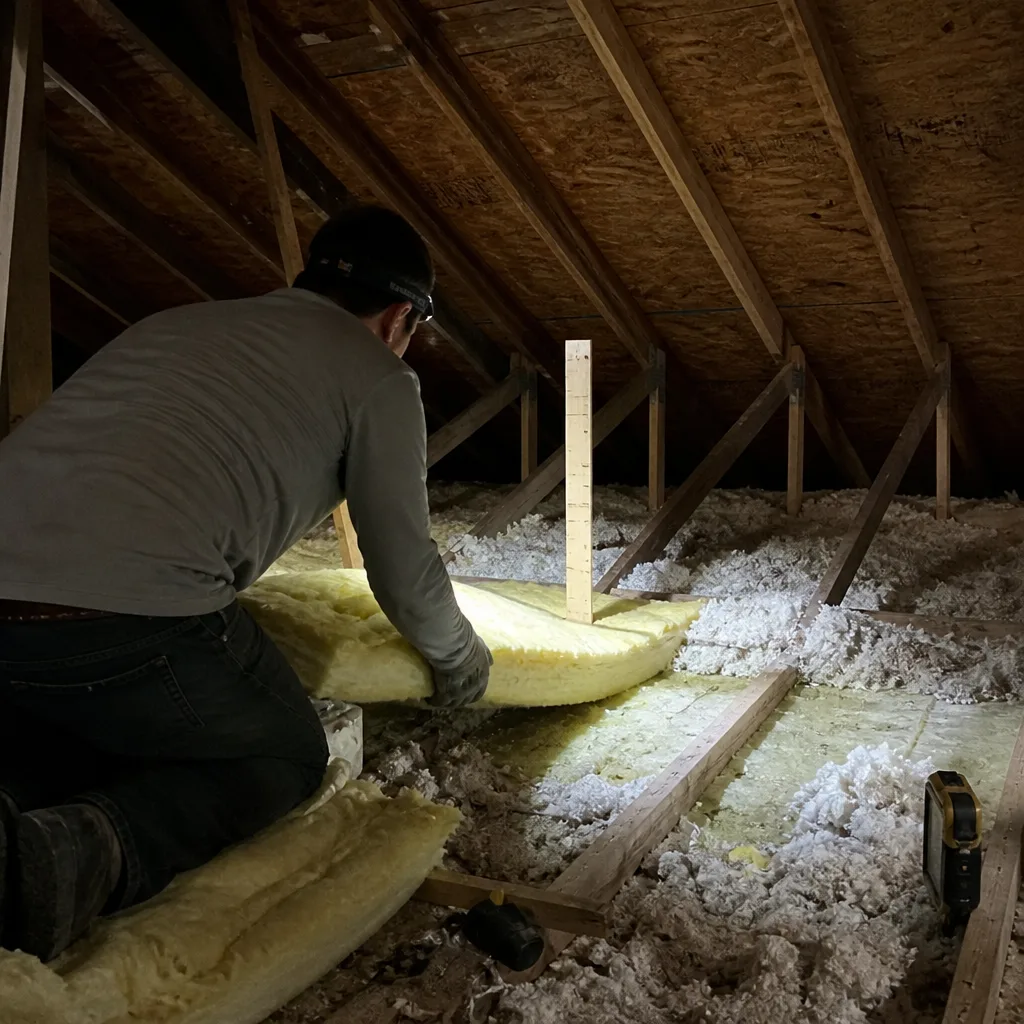
Blown-In Fiberglass
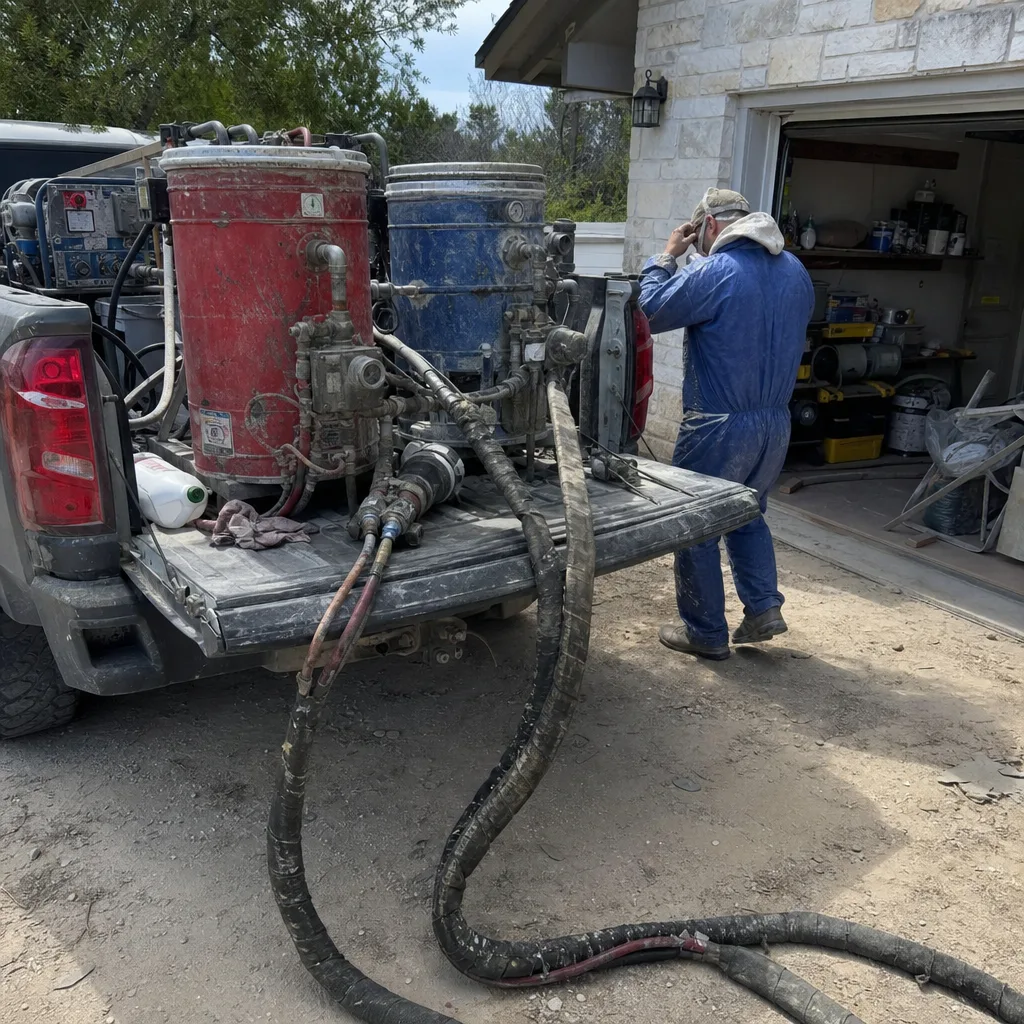
We blow Owens Corning and Johns Manville fiberglass in Bulverde attics, typically upgrading builder-grade R-30 fields to R-49 or R-60 depending on the accessible depth and framing configuration. Fiberglass doesn’t settle as aggressively as cellulose, which matters in Bulverde’s steep-pitch attics where crews are working at angles and uniform depth is harder to achieve. Every job starts with a written price and ends with a Documented Photo Record.
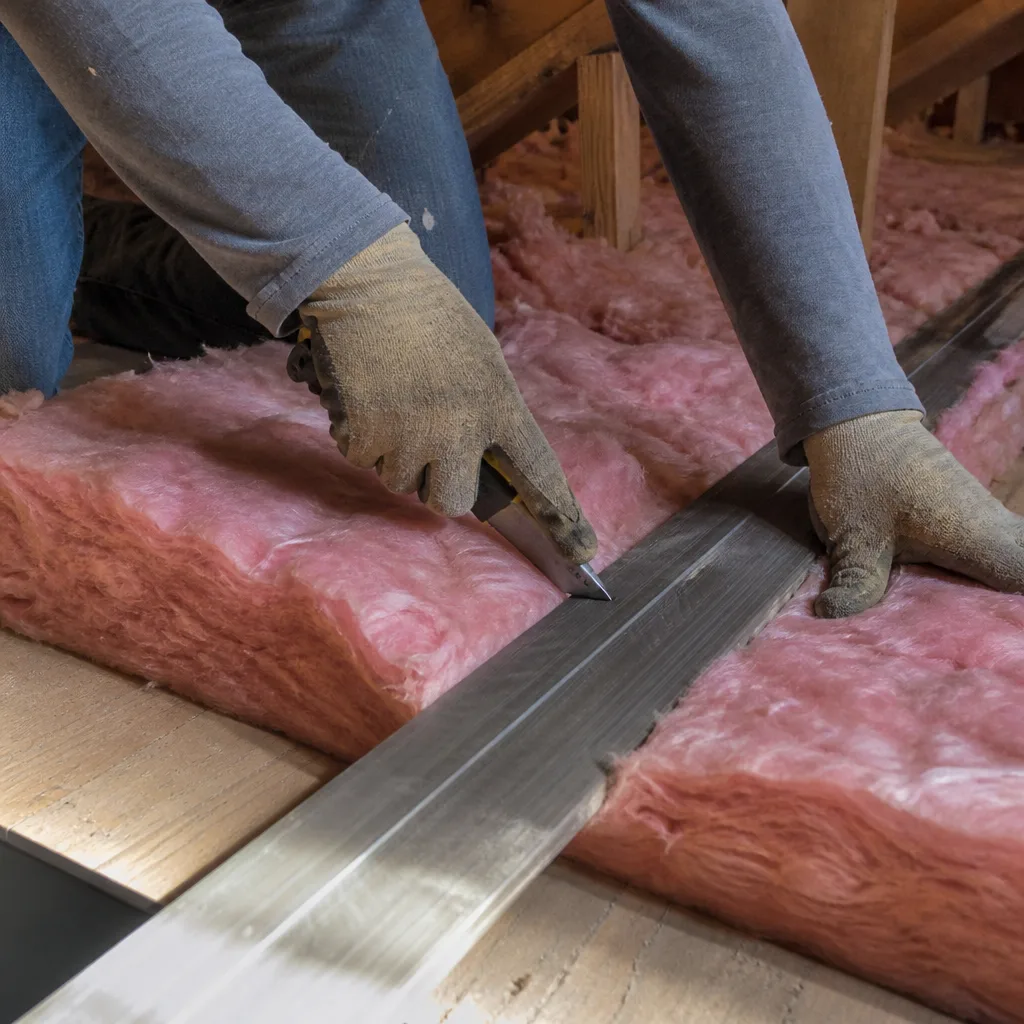
Blown-In Cellulose
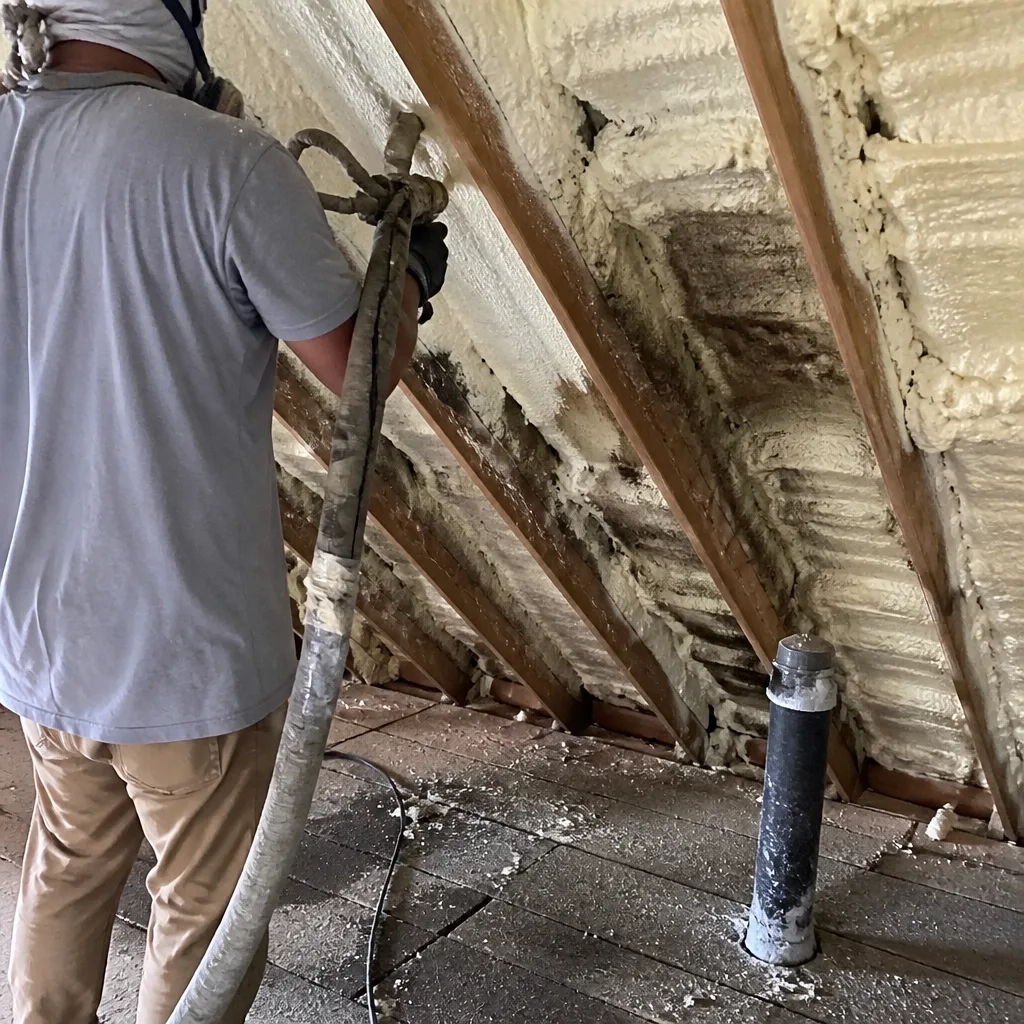
Cellulose - treated ground paper with borate fire retardant - packs tighter at a given R-value and performs better against air movement when dense-packed. In Bulverde’s older pre-2000 stock or in homes where homeowners want a recycled-content material, we specify GreenFiber or similar borate-treated products. We still air-seal first. We always air-seal first.
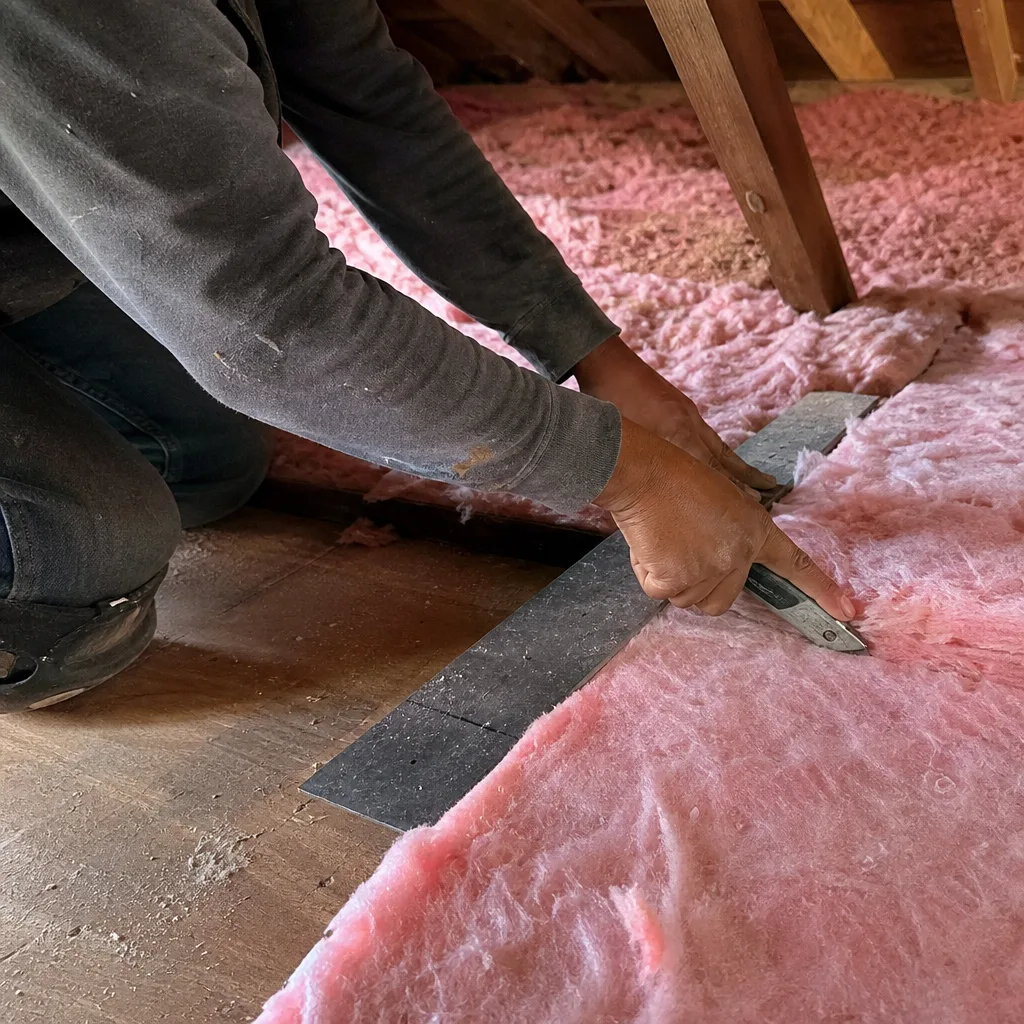
Blown-In Top-Up
This is the service we perform most often in Bulverde: the existing blown fiberglass has settled to R-20 or below, the attic floor shows thin spots and high points, and the homeowner wants to know whether to remove it or blow over it. If the existing material is dry, uncontaminated, and not compressed by storage or foot traffic, we air-seal the penetrations and top plates, then blow new Owens Corning or Knauf fiberglass across the field to achieve uniform R-49 or R-60. It’s less expensive than full removal. It works if the substrate is sound.
Dense-Pack Wall Insulation
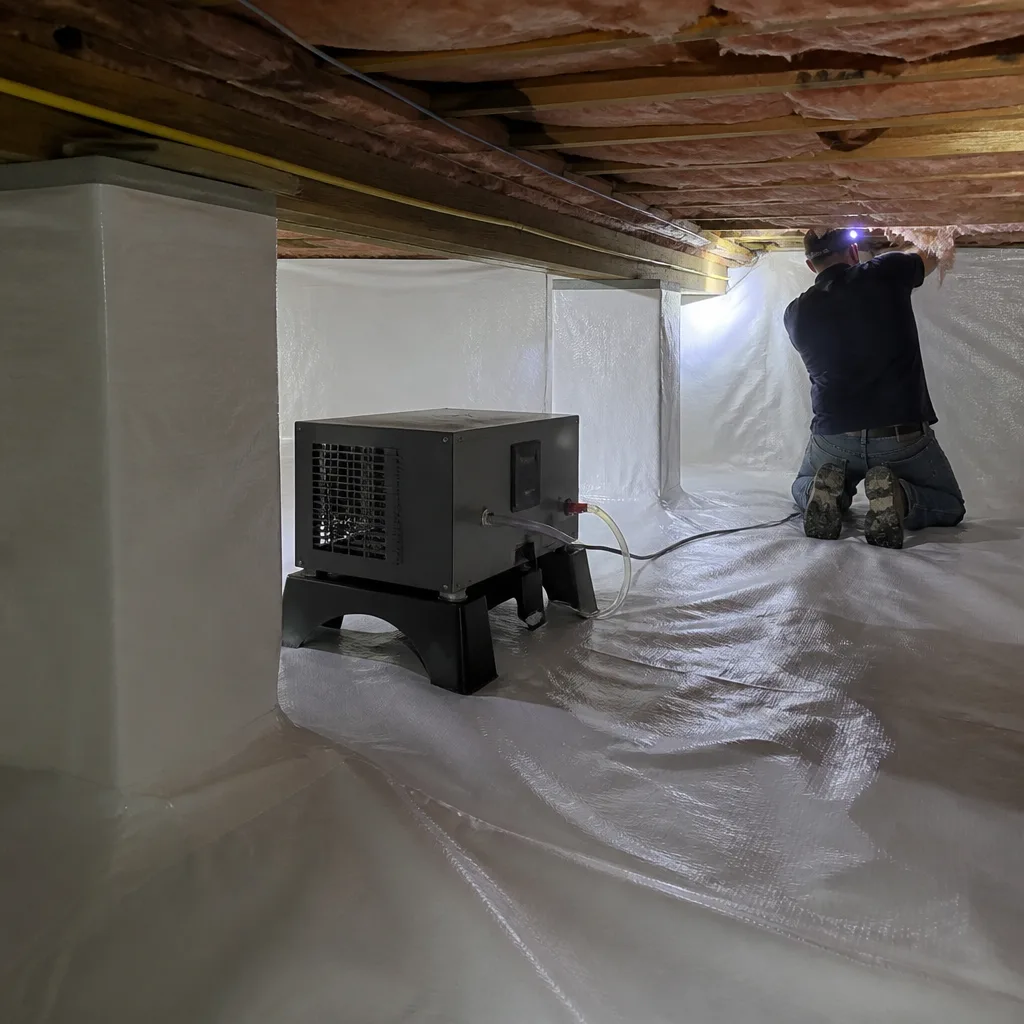
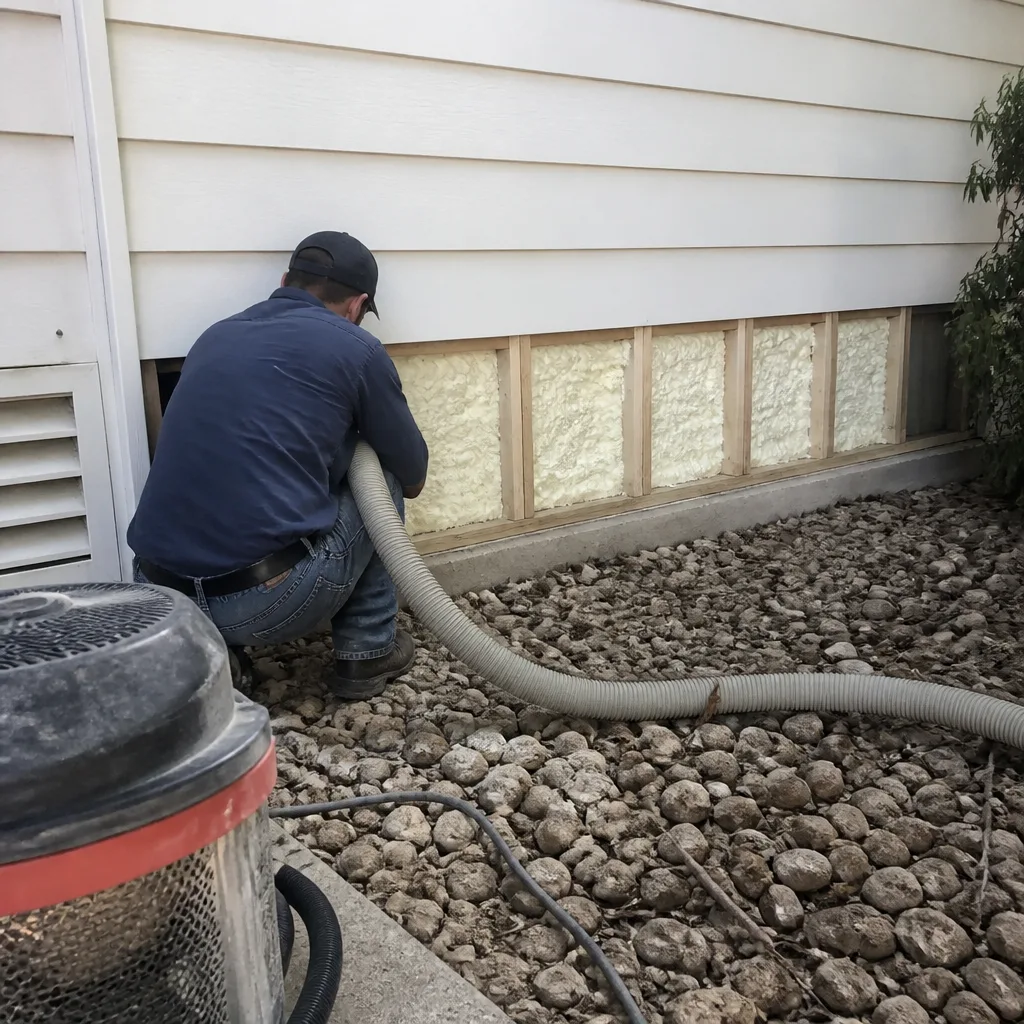
Here’s where Bulverde’s building stock gets specific. That stone veneer on your Hill Country-style home - the one that looks like solid masonry - is typically a 1-inch non-structural façade over OSB sheathing with no continuous exterior insulation. Thermal bridging through the dense stud framing bleeds heat in January and bleeds cool air in July. A dense-pack wall insulation job, using blown cellulose or fiberglass packed to 3.5 pounds per cubic foot in the stud cavities, doesn’t eliminate thermal bridging but it reduces the air movement that makes it worse. We tell Bulverde homeowners the truth: attic blow-in alone won’t fix the wall assembly. Dense-pack is the next step.
Our Blown-In Insulation team documents every wall cavity with photos before and after.
What happens when you call
- 1
A real person answersNo phone trees - you reach a local pro.
- 2
You get an upfront price rangeHonest numbers before anyone is dispatched.
- 3
A background-checked tech heads outLicensed & insured, dispatched right away.
- 4
You approve before work beginsNothing starts until you say go.
 Before
 After
AfterTrusted Brands We Service in Bulverde
We source materials from Owens Corning, Johns Manville, Knauf, Rockwool, CertainTeed, Icynene, Demilec, and GreenFiber - no proprietary lock-in, no house brand you can’t cross-reference. For Bulverde jobs, we stock Owens Corning L77 loose-fill fiberglass and Knauf Jet Stream Ultra on the truck, which means most attic top-ups and full fills don’t wait on a supplier run to San Antonio. If your home needs a specific product for warranty continuity or compatibility with existing material, we order it and schedule accordingly. The written scope specifies exactly what goes in; you verify it against the bags left on site.
Common Blown-In Insulation Problems We See in Bulverde Homes
- Settled builder-grade R-30 in expansive attics. The blown fiberglass in Bulverde’s 2,500-4,500 sq ft homes was installed to a labeled R-30 depth but has settled unevenly over 5-15 years, leaving cold spots above bedrooms and pushing July attic temperatures past 150°F in the thin zones.
- Minimal air sealing at top plates and recessed lights. Builder packages in Bulverde’s 2000s-2020s subdivides rarely include thorough sealing of the attic floor plane. Hill Country freeze air infiltrates through these gaps, which is exactly what contributed to pipe failures during Winter Storm Uri while better-sealed neighbors kept water flowing.
- Thermal bridging through stone-veneer wall assemblies. The 1-inch non-structural stone over OSB with no continuous exterior insulation creates a heat-loss path that attic insulation alone cannot address. Homeowners who top up the attic and see no bill improvement are usually looking at this wall problem.
- Compressed or disturbed existing insulation. Bulverde’s large-footprint homes often have attic storage platforms, HVAC service paths, or homeowner traffic that compresses blown fiberglass to a fraction of its rated R-value. Compressed fiberglass doesn’t recover.
Pricing for Blown-In Insulation in Bulverde, TX
Most complete attic blown-in insulation jobs in Bulverde’s 2,500-4,000 sq ft homes run between $2,400 and $5,800, including air sealing of top plates, can lights, and penetrations. A blown-in top-up over existing sound fiberglass typically falls in the $1,400-$2,800 range. Dense-pack wall insulation in Bulverde runs $2.00-$3.50 per square foot of wall area, with most whole-house jobs between $4,200 and $8,500.
| Service | Typical Range in Bulverde |
|---|---|
| Attic blown-in fiberglass (new fill, R-49 to R-60) | $2,400 - $5,800 |
| Blown-in top-up over existing fiberglass | $1,400 - $2,800 |
| Blown-in cellulose (attic, R-49 to R-60) | $2,200 - $5,200 |
| Dense-pack wall insulation | $4,200 - $8,500 |
| Attic air sealing (standalone) | $800 - $1,800 |
What moves the number: attic square footage, accessibility (steep pitches and tight scuttles add labor), whether existing material needs removal, and the extent of air sealing required. We don’t give ballpark prices that change at the door. Under Haven Standard Clause 1, you get a flat written price, a written scope, and a written warranty before anyone lifts a tool. Free Second Opinion on any written estimate from another contractor - bring us the quote and we’ll read it with you.
Call (737) 227-6219 for a written price. Estimates are free.
We Also Serve Cities Near Bulverde
Our crews run regular routes to Bulverde, Boerne, Canyon Lake, Schertz, and Universal City from our Dallas-Fort Worth dispatch office. If you’re in one of these surrounding communities and your home has the same builder-grade insulation package, the same freeze exposure, and the same documentation requirements, we apply the same process and the same written price guarantee.
Serving Bulverde, TX - Our Local Coverage Area
We’re based in the Bulverde area and know this community well. Use the map below to see our service coverage - if you’re nearby, we can almost certainly help.
FAQs - Blown-In Insulation in Bulverde
Your attic likely had the standard builder package: R-30 blown fiberglass with minimal air sealing at top plates and recessed lights, installed in a home at 1,100-1,400 feet elevation where freeze events hit harder than in San Antonio 25 miles south. The unsealed attic floor let cold Hill Country air infiltrate continuously, and the R-30 material - often settled below its labeled depth by 2021 - couldn’t maintain enough thermal boundary to protect the plumbing penetrations. Your neighbor may have had better air sealing, a higher R-value, or both. Call (737) 227-6219 and we’ll blower-door test to show you the exact air-loss number.
Yes, if the existing insulation is dry and uncompressed and if we air-seal first. A proper top-up to R-49 or R-60 with sealed penetrations typically reduces cooling load enough to show on the bill, especially in Bulverde’s 150°F attic summers. If your walls have the common stone-veneer-over-OSB thermal bridging problem, the attic improvement will be partial - you’ll see some reduction, but not the full potential until the wall assembly is addressed. We document the before-and-after blower-door reading so you can verify the air-sealing result yourself.
It affects what you should expect. That stone is typically a 1-inch non-structural façade over OSB with no continuous exterior insulation, so heat bleeds through the dense stud framing in a pattern that attic blow-in cannot stop. We recommend dense-pack wall insulation as the complementary step. We tell Bulverde homeowners this before we price the attic, not after. No surprises. Written scope. Haven Standard.
R-49 to R-60 for attics, per IECC climate zone 2 with the Hill Country elevation adjustment for freeze exposure. Builder-grade R-30 was code-minimum for the era most Bulverde homes were built, but it underperforms in actual conditions here. We specify the target R-value in the written scope and verify installed depth with a ruler before we leave. Photos included.
If it’s dry, uncontaminated, and not compressed by storage or foot traffic, we air-seal and top up. Removal is only necessary for mold, rodent contamination, or severe compression that won’t recover. We inspect and photograph the existing field during the estimate, then specify in the written scope whether we’re topping up or removing. You see the photos. You sign the scope. Then we start.
Ready for a written price? Call (737) 227-6219. A live person answers, 24/7. Free estimate. Free Second Opinion on any competing quote. Every job ends with a Documented Photo Record and, on applicable work, before-and-after blower-door numbers you can verify.
Written by Wes Okafor, Owner at Envelope Insulation Co., independently owned and operated under The Haven Standard since 2016.