
Fast, Reliable Spray Foam Insulation Across Converse
Spray foam insulation in Converse typically runs $1,800-$4,500 for attic retrofits and $3.50-$6.50 per board foot for wall applications, with most jobs completed in one day. We’re Envelope Insulation Co., and our Spray Foam Insulation crews serve Converse from our San Antonio dispatch office. Call (737) 227-6219 for a written price before any work starts.
Converse sits in the San Antonio basin where summer attic temperatures routinely exceed 150°F and winter hard freezes like February 2021’s Storm Uri catch under-insulated homes off guard. We’ve sealed and insulated over 9,000 homes since 2016, and a disproportionate share of our Converse work traces back to one pattern: original 1980s blown-in fiberglass in slab-on-grade tract homes that’s settled to R-15 or below, discovered only when a pre-sale inspection finally forces the issue.
Why Envelope Insulation Co. Is Converse’s Preferred Spray Foam Insulation Company
Our reputation in Converse was built on slab-home retrofits, not marketing. We arrive with a written scope, a written price, and a written warranty before anyone lifts a tool - Haven Standard Clause 1. No exceptions.
Response time to Converse neighborhoods like the subdivisions off Kitty Hawk Road, Woodlake, and the FM 78 corridor is typically same-day or next-morning. Our technicians are background-checked, uniformed, and named - you’ll get a text when they’re on the way.
We publish before-and-after blower-door numbers on every applicable job. That’s a pressurization reading showing, in one figure, how much conditioned air your home was losing before and after the work. For Converse buyers evaluating a 1989 tract home, that documentation matters more than any slogan.
Our 365-Day Done Right Promise applies to all completed work. If it’s not done right, we make it right. Under Haven Standard: Have it in writing.
Our Spray Foam Insulation Services in Converse
Open-Cell Spray Foam
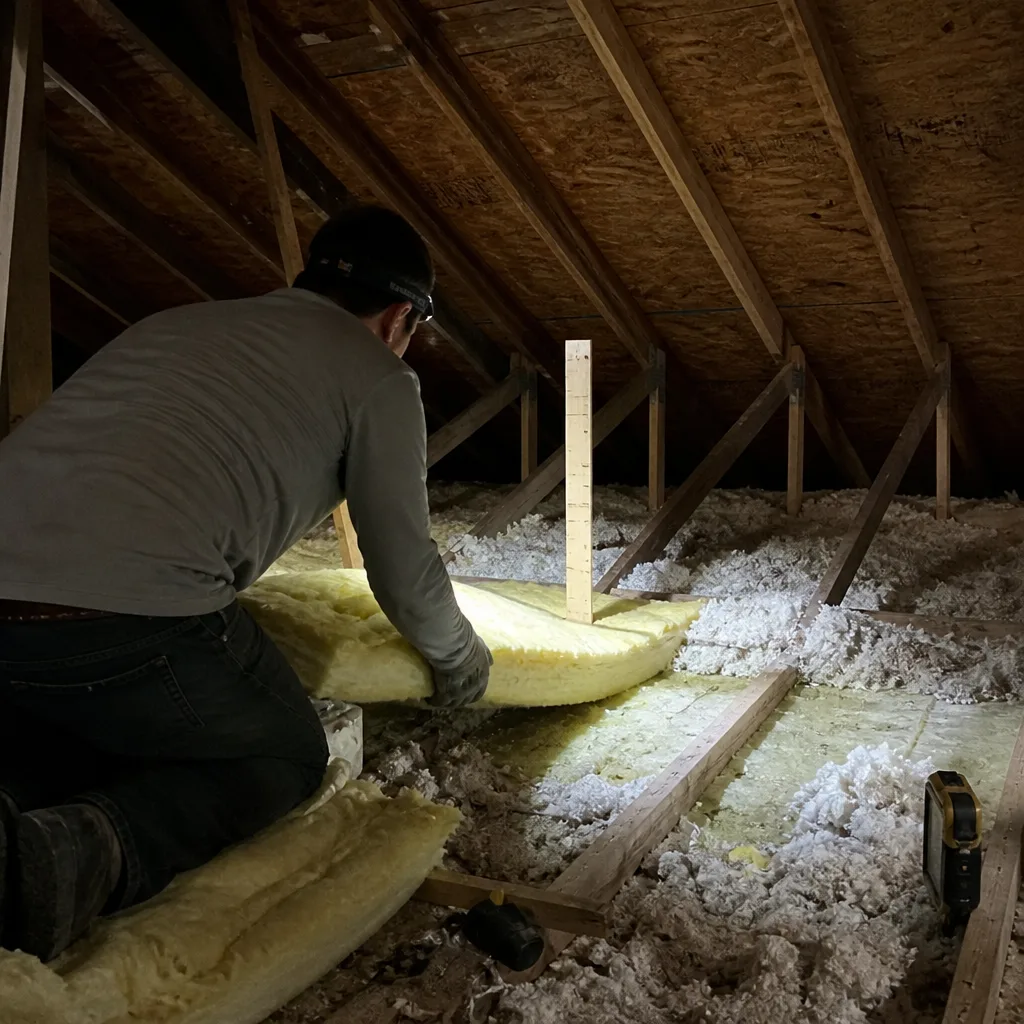
Open-cell spray foam is our most common recommendation for Converse’s vented attics. It expands to fill irregular joist bays in those 1978-2000 tract homes, locks in a stable R-value where settled blown-in fiberglass has failed, and breathes enough to avoid trapping moisture in our humid San Antonio basin summers. Most Converse attic retrofits with open-cell run $2,200-$3,800 for a single-story slab home. We air-seal top plates, can lights, and all penetrations first - never foam over an unsealed attic floor.
Closed-Cell Spray Foam
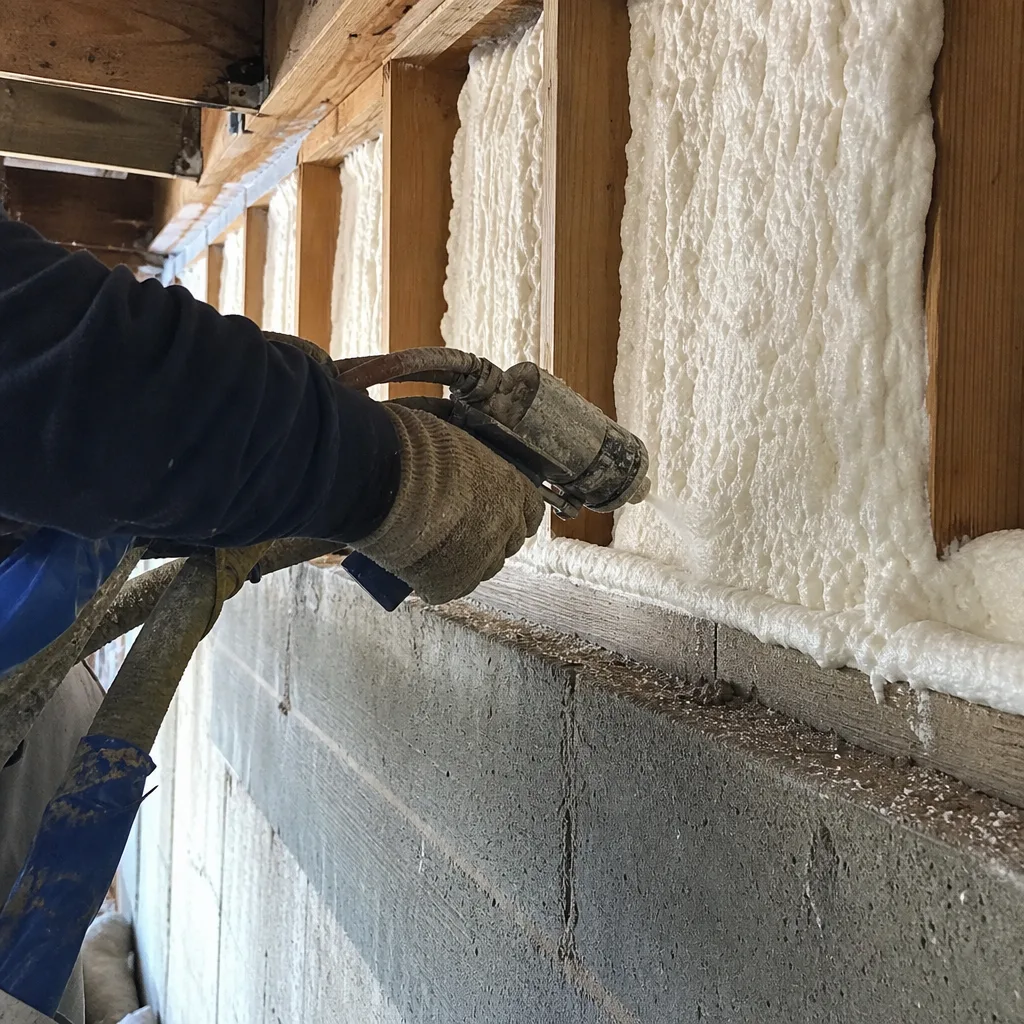
Closed-cell spray foam, denser and moisture-resistant, makes sense for Converse’s garage ceiling applications and exterior walls where space is tight. A 2×4 wall cavity only holds so much insulation, and closed-cell delivers higher R-value per inch than open-cell. In Converse garages with sloped ceiling planes and thin wall framing, we use closed-cell with a deliberate vapor strategy to avoid condensation against rim joists. Typical closed-cell jobs in Converse run $4.50-$6.50 per board foot.
Rim Joist Spray Foam
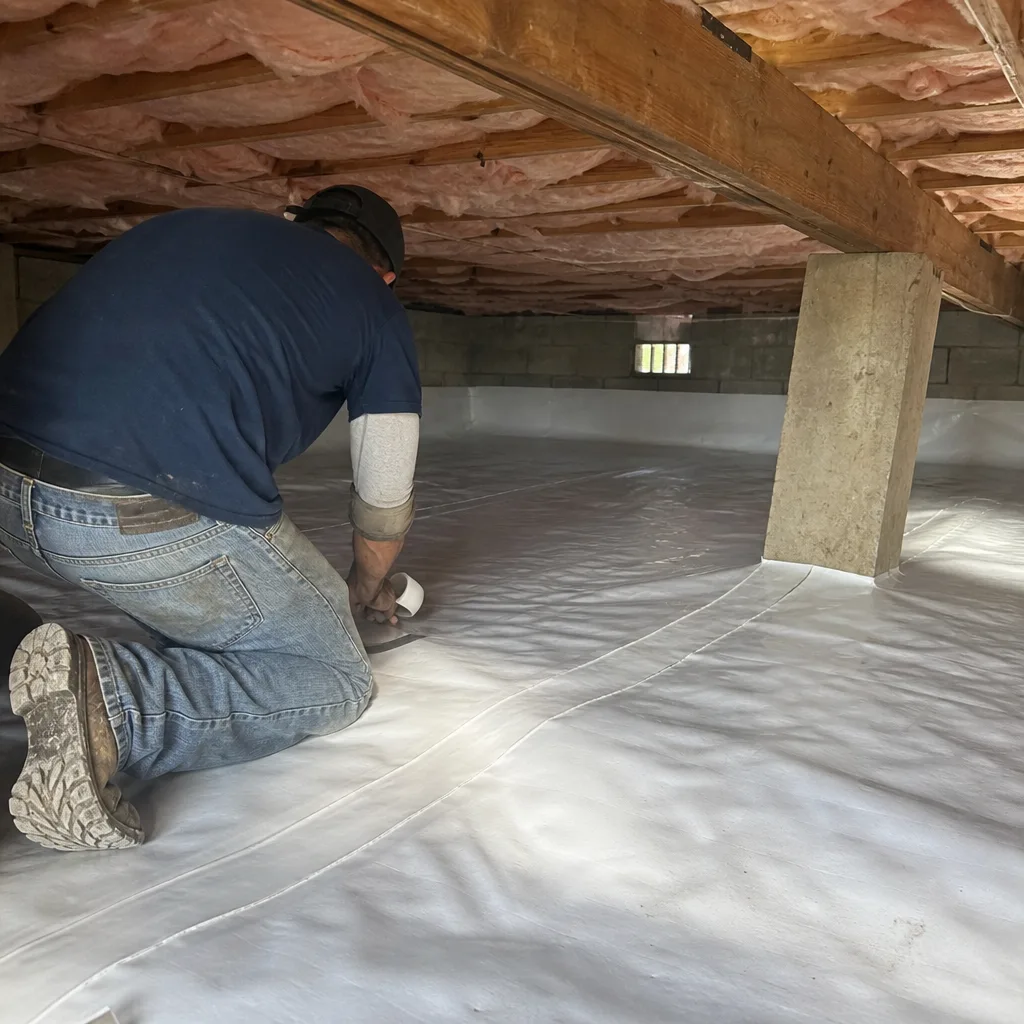
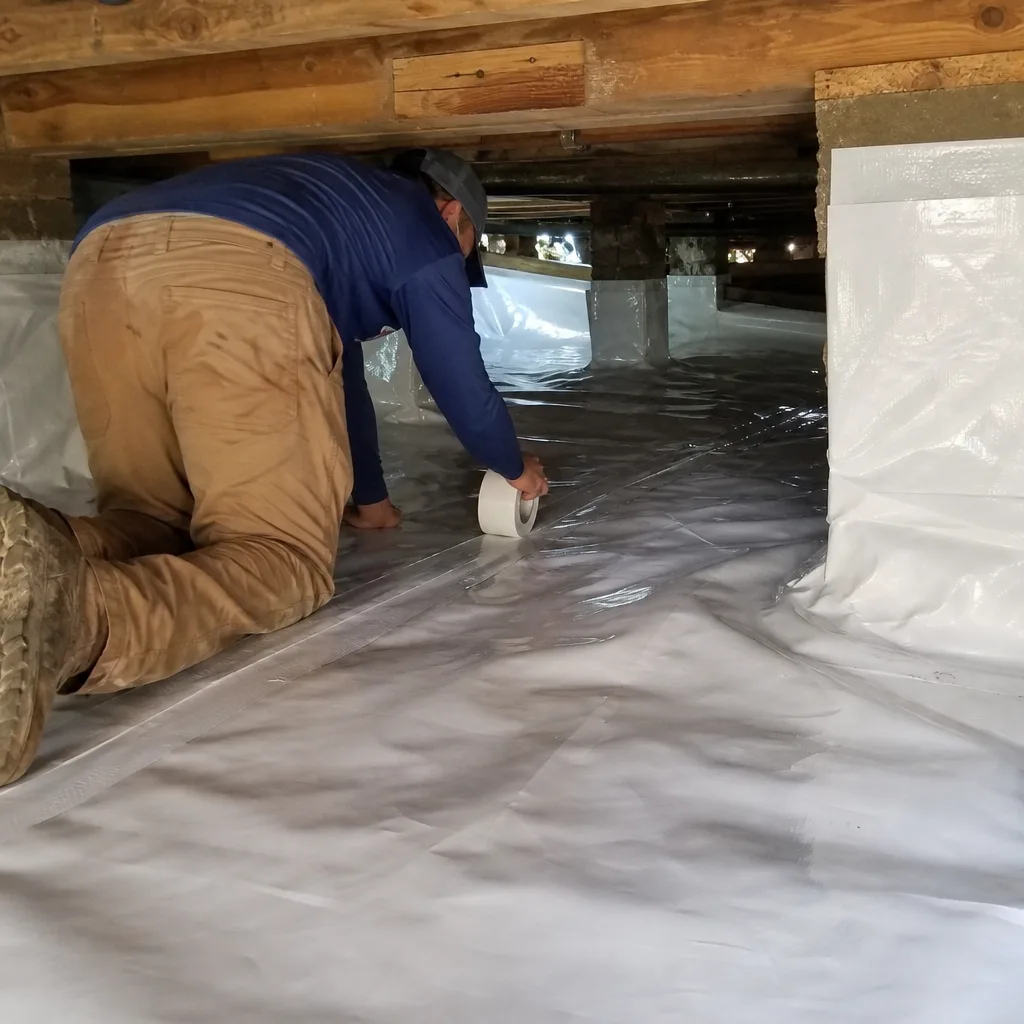
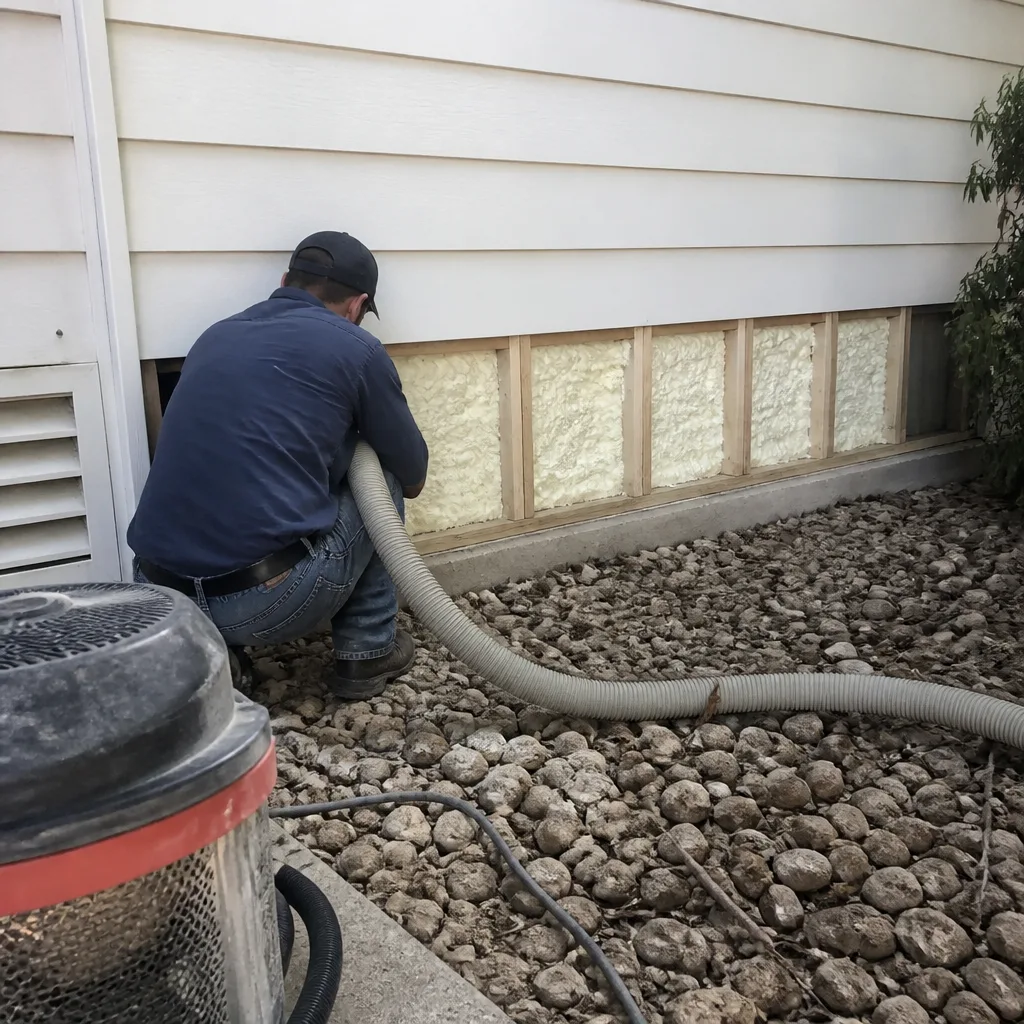
Rim joist spray foam targets the perimeter where your floor framing meets the foundation - a chronic leak point in Converse’s slab-on-grade construction. Cold air pours through unsealed rim joists in winter; humid outside air infiltrates in summer. We’ve found rim joist gaps in Converse homes where the original builder stuffed fiberglass batts that sagged and left voids within five years. Sealing these with closed-cell foam typically runs $800-$1,800 depending on linear footage and accessibility.
Garage Ceiling Spray Foam
Garage ceiling spray foam in Converse addresses a specific failure mode: bedrooms over unconditioned garages that bake in summer and freeze in winter. The thin 2×4 ceiling planes in these tract-home garages can’t hold enough batt insulation to matter. We air-seal the garage ceiling plane, then apply open-cell foam to create a thermal boundary that actually performs. Most Converse garage ceiling jobs fall between $1,800-$3,200.
Spray Foam Roof Deck
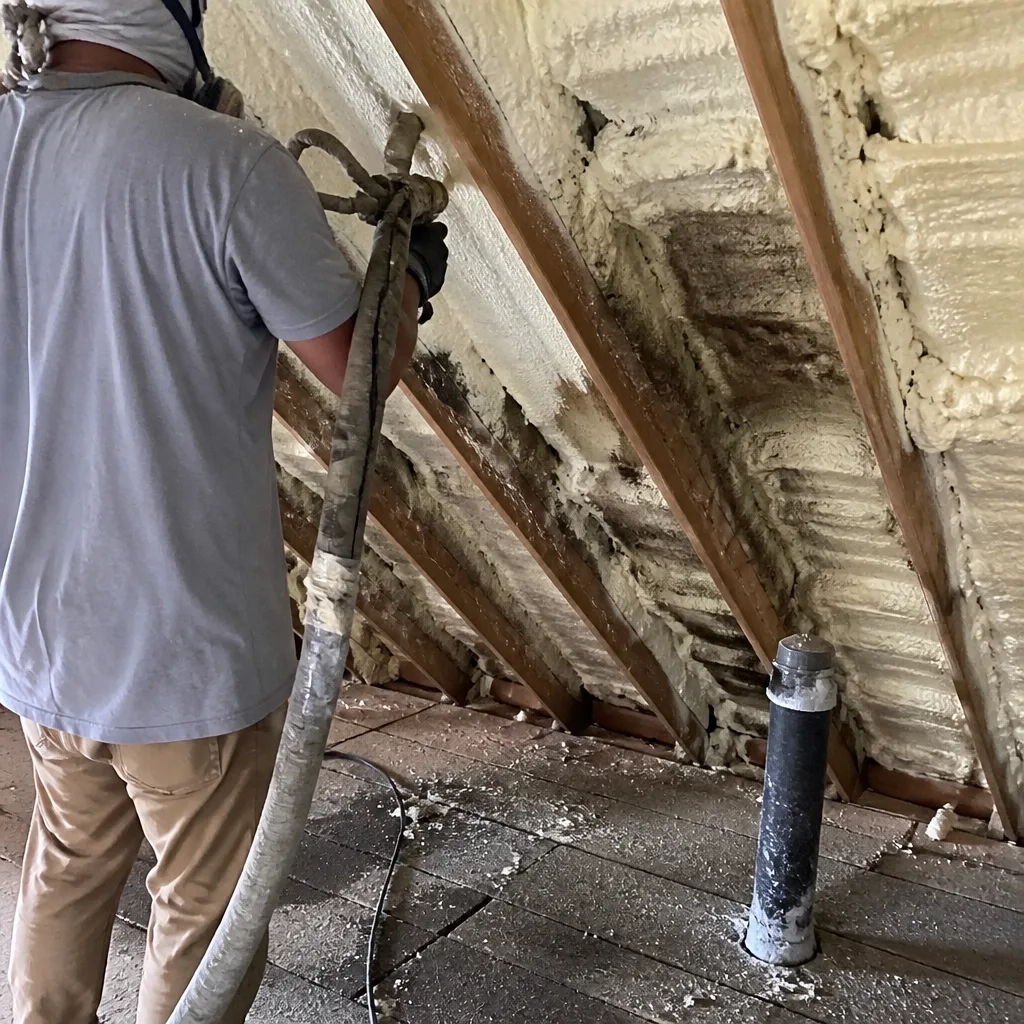
Spray foam applied directly to the roof deck converts a vented attic into conditioned space. In Converse, this makes sense when HVAC equipment lives in the attic and duct losses are driving summer bills past $400. It’s a bigger investment - typically $4,500-$8,000 for a single-story home - but eliminates the 150°F attic entirely. We only recommend roof deck foam after blower-door testing confirms the rest of the envelope is tight enough to support it.
What happens when you call
- 1
A real person answersNo phone trees - you reach a local pro.
- 2
You get an upfront price rangeHonest numbers before anyone is dispatched.
- 3
A background-checked tech heads outLicensed & insured, dispatched right away.
- 4
You approve before work beginsNothing starts until you say go.
 Before
 After
AfterTrusted Brands We Use in Converse
We source materials from Owens Corning, Johns Manville, Knauf, and other manufacturers - no proprietary lock-in, no mystery products. For Converse’s retrofit market, that means we match the foam to the assembly, not the other way around. Owens Corning’s FOAMULAR line and Johns Manville’s AP Foil-faced products are stocked for jobs where rigid board complements spray foam. We carry GreenFiber cellulose for hybrid systems where dense-pack walls pair with spray foam attic floors. Every material is specified in your written scope before work starts.
Common Spray Foam Insulation Problems We See in Converse Homes
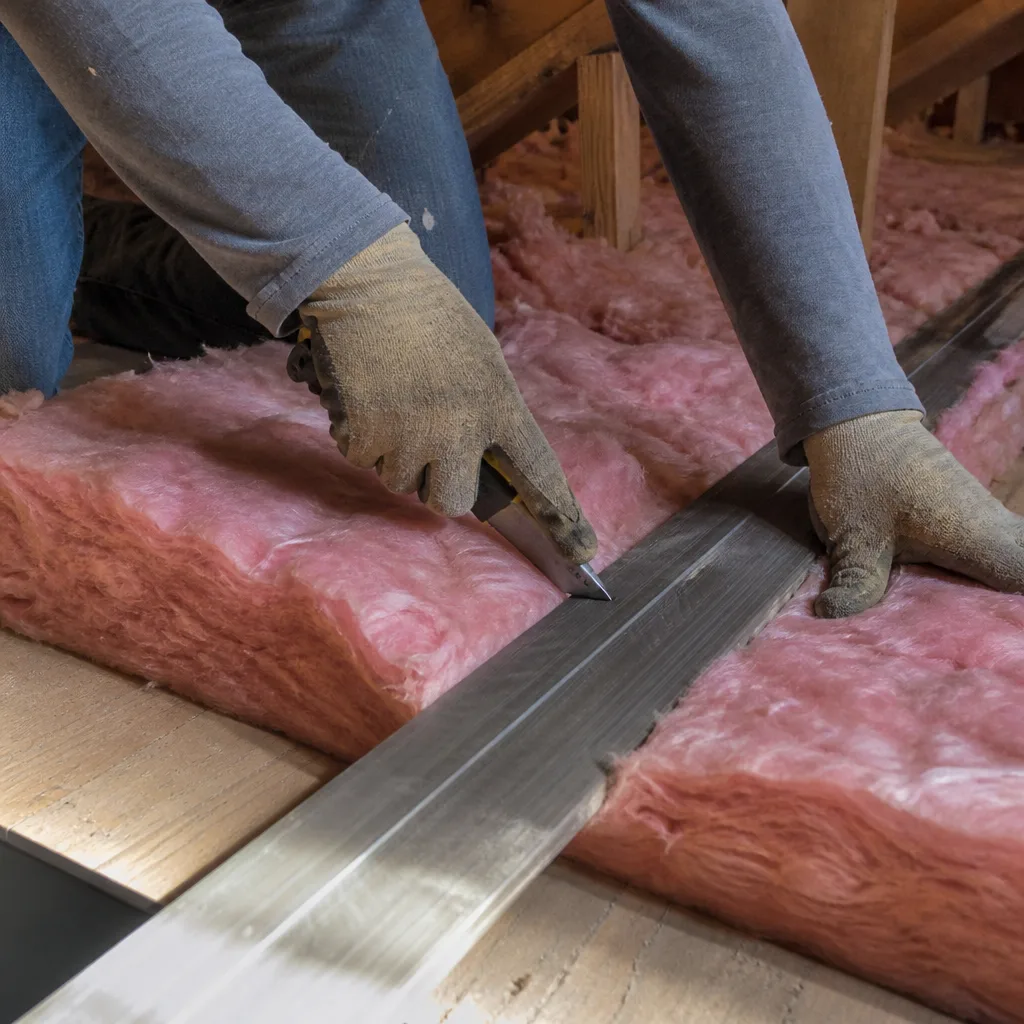
- Settled blown-in fiberglass masking as adequate insulation. Original 1980s GreenFiber or Owens Corning blown-in in Converse attics has often compressed to R-15 or below, but it still looks like insulation from the attic hatch. We measure with a probe and thermal camera. The real R-value is almost always worse than it appears.
- Foam applied over unsealed air leaks. Converse’s vented hip and gable attics hit 150°F+ on routine summer afternoons. Spray foam applied over unsealed top plates, can lights, and plumbing penetrations blisters or pulls away within seasons. We air-seal first, always. The blower-door test proves it worked.
- Garage rim joists and ceiling planes trapping moisture. Early Converse tract homes with attached garages often have 2×4 walls and sloped garage ceilings that create condensation traps. Foam sprayed without a vapor strategy in these assemblies wets the framing. We specify closed-cell with controlled permeability or hybrid systems with exterior drainage plane review.
- Pre-sale inspection surprises derailing closings. Because military renters on short PCS assignments rarely escalate utility complaints to Converse landlords, original insulation can fail for 20-plus years undetected. The first time anyone looks is often during a pre-sale inspection. We can mobilize quickly to quote, scope, and complete retrofits before closing deadlines.
Pricing for Spray Foam Insulation in Converse, TX
| Service | Typical Range in Converse | What Drives Cost |
|---|---|---|
| Open-cell attic floor (single-story slab) | $2,200-$3,800 | Attic square footage, existing removal, accessibility |
| Closed-cell wall cavities (2×4 framing) | $3.50-$5.50/board ft | Linear feet of wall, interior or exterior access |
| Rim joist sealing (slab-on-grade) | $800-$1,800 | Linear footage, basement vs. crawl access |
| Garage ceiling (bedroom over garage) | $1,800-$3,200 | Ceiling area, duct relocation if needed |
| Roof deck (conditioned attic) | $4,500-$8,000 | Roof pitch, HVAC relocation, code ventilation |
These are actual ranges for Converse’s market, not teaser prices. Every job gets a flat written price before work starts - Haven Standard Clause 1 - and a Free Second Opinion on any competing written estimate. Call (737) 227-6219 for your exact number. Estimates are free.
We Also Serve Cities Near Converse
Our crews work throughout the San Antonio metro, including Spray Foam Insulation in Converse and surrounding communities: Universal City, Schertz, Cibolo, and Bulverde. Each market has different housing stock and different retrofit patterns. Converse’s 1978-2000 slab-on-grade military-bedroom-community construction is distinct from Schertz’s older, more diverse housing or Universal City’s mid-century ranch mix. We scope accordingly.
Serving Converse, TX - Our Local Coverage Area
We’re based in the Converse area and know this community well. Use the map below to see our service coverage - if you’re nearby, we can almost certainly help.
FAQs - Spray Foam Insulation in Converse
Yes, if your attic has original blown-in fiberglass that’s settled below R-19, which we find in most 1989 Converse homes. Adding more blown-in over compressed, uneven old material doesn’t fix air leaks through top plates and can lights. We air-seal first, then apply open-cell spray foam for a stable, continuous thermal boundary. Call (737) 227-6219 for a written price - estimates are free.
Yes. The February 2021 freeze exposed how poorly Converse’s thin-wall, under-insulated tract homes performed when temperatures held below 15°F for days. Air-sealed spray foam reduces both conductive heat loss through walls and convective loss through leaks. After Uri, we completed dozens of Converse retrofits where homeowners specifically cited freeze protection as a priority. The blower-door numbers document the improvement.
Almost certainly. Original 1980s blown-in fiberglass in Converse rentals has typically settled to R-15 or below, and short-PCS tenants rarely report high utility bills to landlords. Pre-sale inspectors probe attic depths and flag insufficient insulation as a standard item. We can quote, scope, and complete retrofit work before your closing deadline. Bring us the inspection report - we’ll read it with you.
Open-cell attic floor foam plus rim joist sealing. The attic floor application addresses your largest thermal and air-leak surface. Rim joist sealing closes the perimeter gap where floor framing meets the slab - a major infiltration point in this construction type. Wall foam is secondary unless the 2×4 cavities are empty or the home has specific freeze-damage history.
No. Spray foam requires direct contact with the cavity surfaces to adhere and perform. Existing batts must be removed first, and the cavity inspected for moisture staining or pest damage. We include removal, disposal, and photo documentation in our written scope. The Documented Photo Record shows you what was behind those batts before the foam went in.
Written by Wes Okafor, Owner at Envelope Insulation Co., serving Converse and the San Antonio metro since 2016.