
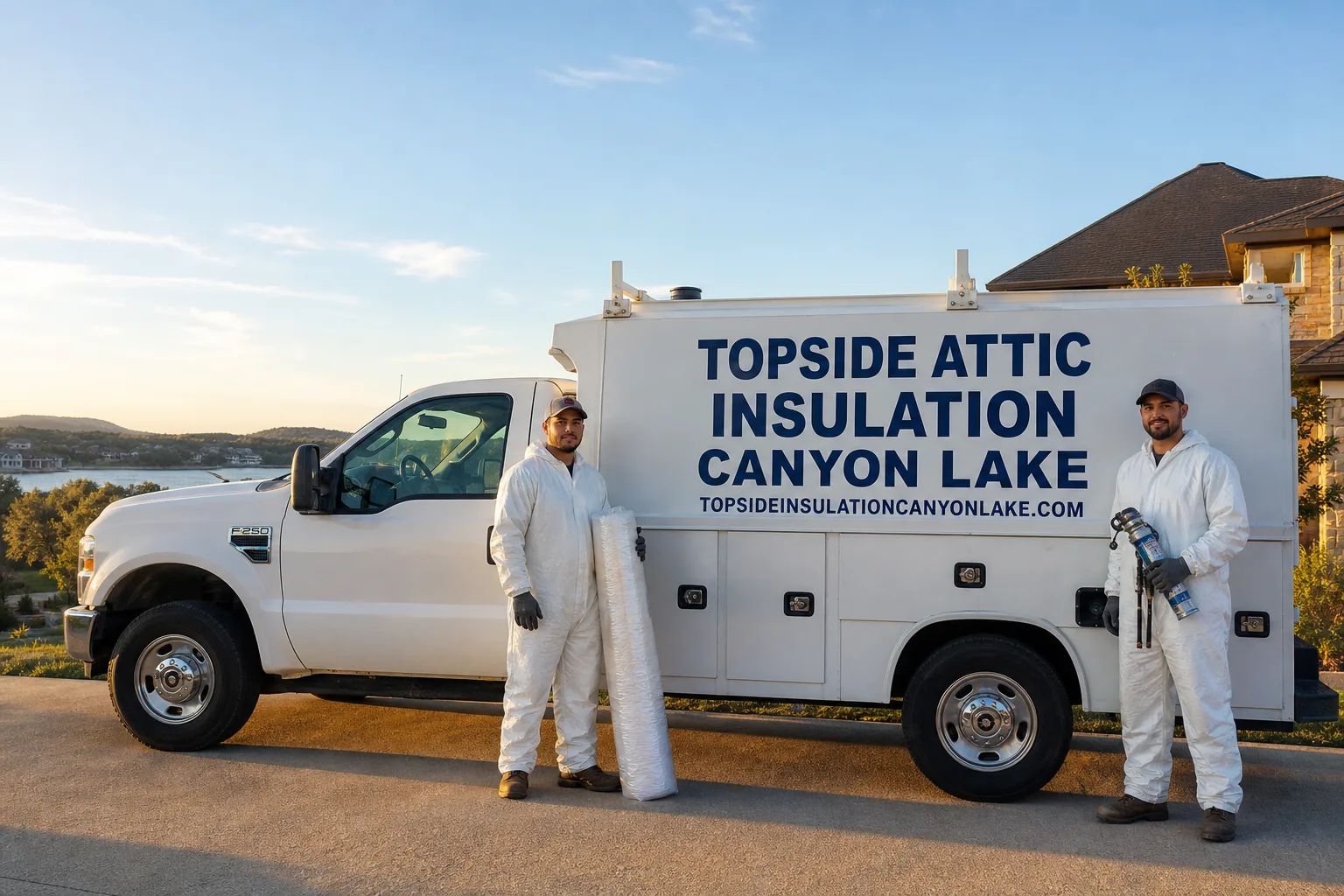
How Much Does Attic Insulation Cost in Canyon Lake?
Attic Insulation Near Me in Canyon Lake, TX typically costs between $1,400 and $4,200 for a standard single-story home, depending on square footage, current insulation condition, and whether air sealing is done first. Most homeowners in the Canyon Lake area spend around $2,100 to $2,800 for a full blown-in insulation job with proper air sealing completed before any material goes in. A written price is set before any work starts – that’s not a promise we make casually, it’s how every job at Envelope Insulation Co. is structured under the Haven Standard.
Attic Insulation Cost Breakdown (2026)
These ranges reflect actual jobs completed in the Canyon Lake market – homes in the Hill Country corridor, along FM 2673, and in communities like Cranes Mill, Sattler, and Spring Branch. Prices shift based on attic size, insulation type, existing R-value, and whether removal or rodent proofing is needed first.
| Service | Typical Price Range (Canyon Lake, TX 2026) |
|---|---|
| Blown-in fiberglass insulation (1,000-1,200 sq ft attic) | $900 - $1,500 |
| Blown-in fiberglass insulation (1,500-2,000 sq ft attic) | $1,400 - $2,200 |
| Blown-in fiberglass insulation (2,000-2,800 sq ft attic) | $1,900 - $3,100 |
| Blown-in cellulose insulation (1,500-2,000 sq ft attic) | $1,200 - $2,000 |
| Attic air sealing (top plates, can lights, penetrations) | $350 - $900 |
| Spray foam insulation (rim joists and targeted sealing) | $600 - $1,800 |
| Radiant barrier installation | $900 - $2,000 |
| Old insulation removal (per 1,000 sq ft) | $500 - $1,100 |
| Insulation removal + replacement (full project) | $2,200 - $4,800 |
| Air sealing + blown-in insulation (combined job) | $1,800 - $3,500 |
| Attic cleaning and rodent proofing (before insulation) | $400 - $1,200 |
A few things drive these numbers in Canyon Lake specifically. First, attic access. Many homes on the lake side of Canyon Lake have steep-pitch rooflines or very low clearance near the eaves – both of which add time to air sealing and installation. Second, the Hill Country heat. Canyon Lake sits in a climate zone where summer attic temperatures regularly push past 140°F, which degrades fiberglass batts faster than in milder climates and often means we’re doing Attic Insulation Replacement that was rated to last 20 years but functionally performed for 12. Third, the age of the housing stock. A lot of the homes along the north shore were built in the late 1980s and 1990s with R-19 or R-22 attics – code at the time, but well below today’s Texas recommended R-38 to R-49 for this climate zone. Bringing those homes up to current performance levels costs more than a top-up on a newer build, but the energy delta is also much larger.
On the lower end of any project, you’re looking at a smaller attic, decent existing insulation with no contamination, and straightforward access. On the higher end: large attic, contamination or rodent damage requiring removal, complex geometry around HVAC ducts, or a home where nobody sealed the top plates when it was built – which is most Canyon Lake homes built before 2005.
What Affects Attic Insulation Pricing in Canyon Lake
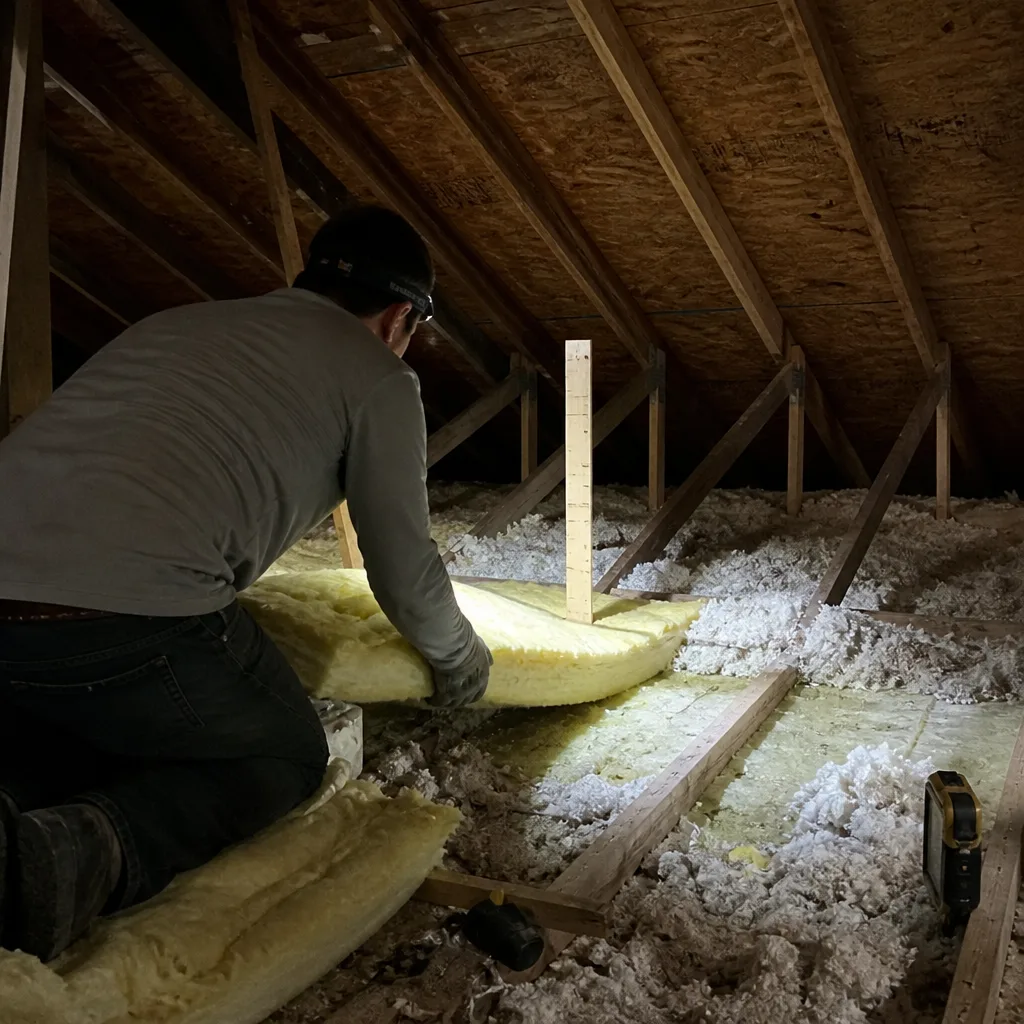
- Attic square footage: This is the biggest single variable. A 1,200 sq ft attic costs materially less than a 2,600 sq ft attic, not just in material volume but in labor time. Homes on the larger lots off FM 306 and in the Mystic Shores subdivision tend to run larger footprints and correspondingly larger attic spaces.
- Current insulation condition and R-value: If there’s already R-22 in place and it’s clean and undisturbed, we’re adding to it – faster and cheaper. If it’s been contaminated by a rodent infestation (common along the cedar-heavy terrain around Canyon Lake), or if it was incorrectly installed by a previous contractor and is blocking eave ventilation, that material has to come out before anything goes in. Removal adds cost but skipping it produces worse results.
- Air sealing complexity: Envelope Insulation Co. treats air sealing as a prerequisite, not an optional add-on. Before any blown-in material goes in, we seal top plates, recessed can lights, plumbing penetrations, and HVAC chases with foam or caulk. Homes with more can lights, older construction with open-top interior walls, or HVAC equipment in the attic take longer to seal and that time is reflected in the price. This is the step most insulation-only contractors skip – and the reason some Canyon Lake homeowners have seen their energy bills barely move after a “new insulation” job.
- Insulation material type: Blown-in fiberglass (from manufacturers like Owens Corning, Johns Manville, and Knauf) lands mid-range on cost and performs well in Canyon Lake’s dry heat. Blown-in cellulose (sourced from GreenFiber among others) is often slightly less expensive per bag but requires accurate moisture assessment given the lake’s occasional humidity spikes. Spray foam from Icynene or Demilec runs higher but makes sense for specific applications: rim joists, attic knee walls, or unvented attic designs. We don’t push one product over another – the right material depends on the specific attic and the home’s HVAC configuration.
- Radiant barrier need: Canyon Lake’s sun exposure is significant. A radiant barrier – a reflective foil material installed at the roof deck – can drop attic temperatures by 20 to 30°F in peak summer. Homes facing south or west with minimal shade from mature trees benefit most. It’s a separate line item and a genuine performance upgrade, not a filler upsell.
- Access difficulty and attic geometry: Homes on Canyon Lake’s steeper hillside lots sometimes have attic configurations that are physically harder to work in – low-sloped ceilings over additions, multiple attic sections separated by framing, or pull-down stairs that open into cramped areas. More time in a difficult attic costs more than a wide-open attic of equal square footage. Our estimators document the layout when they assess the job so there are no surprises in the scope.
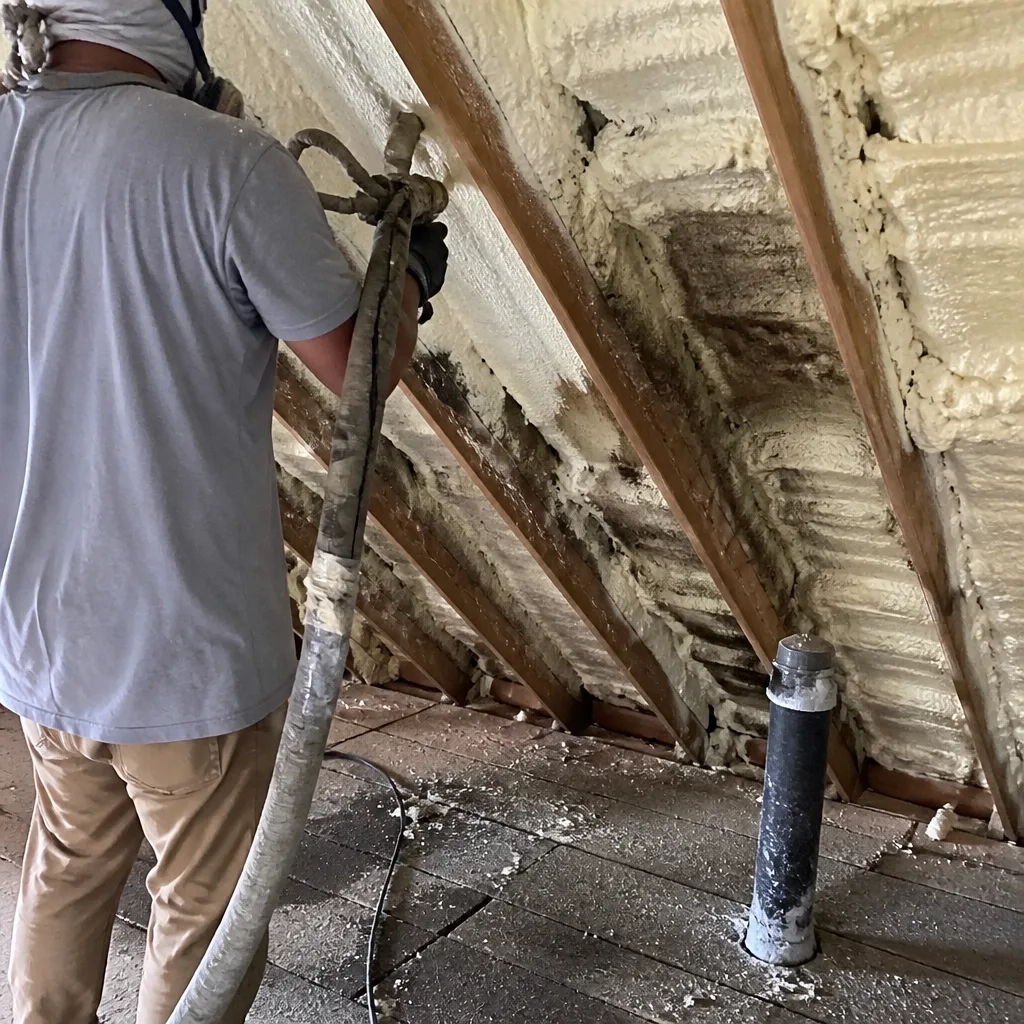 Before
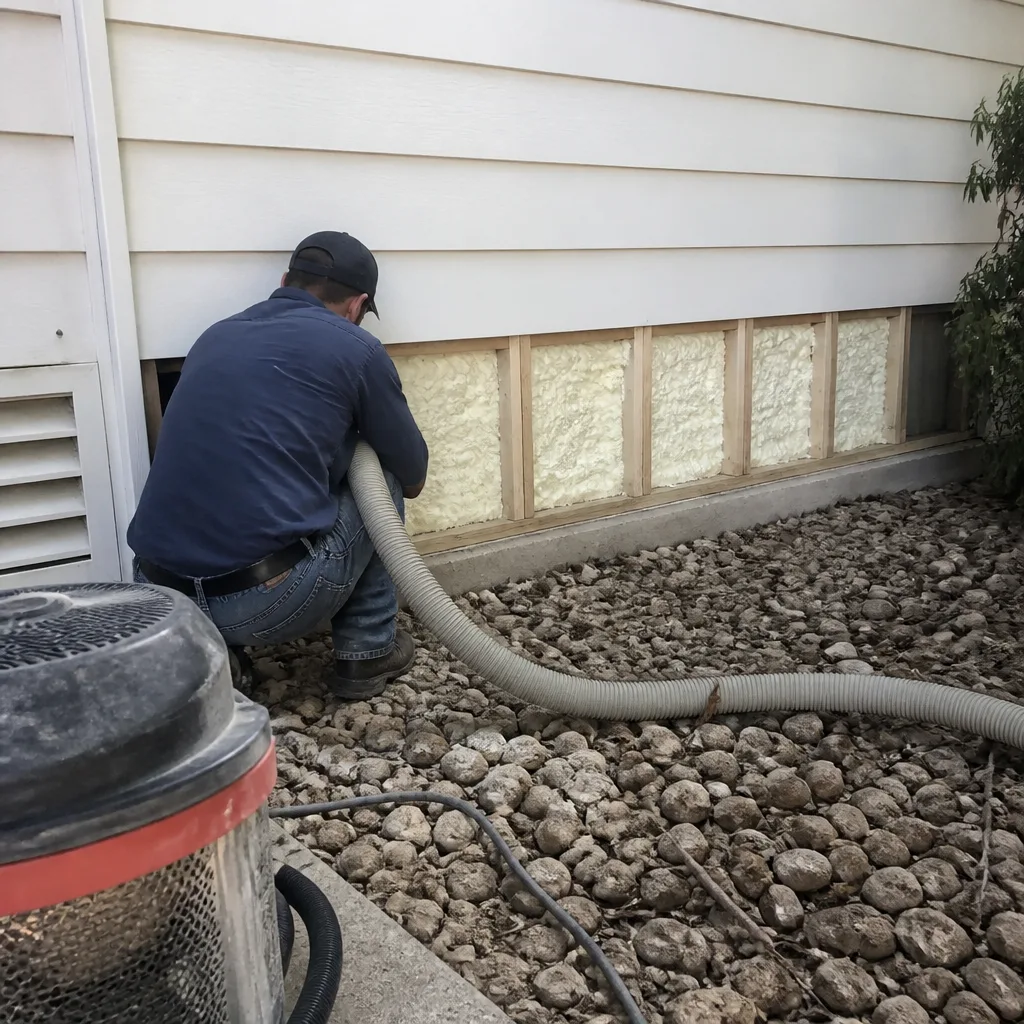 After
AfterThe Air Sealing Step Most Contractors Skip (And Why It Matters in Canyon Lake)
Canyon Lake homes built before 2000 lose a disproportionate amount of conditioned air through attic floor penetrations – the gaps around recessed lights, the open stud bays at top plates, and the holes drilled for plumbing and electrical over decades of remodeling. Adding insulation over those gaps without sealing them first is the equivalent of insulating the outside of a colander. The R-value number goes up. The energy bill doesn’t move.
We measure this with a blower-door test – a calibrated fan mounted in the front door that pressurizes the house to a standard 50 Pascals and reads, in a single number (CFM50), how much air the building envelope is leaking. A Canyon Lake home that reads 3,800 CFM50 before air sealing and 1,900 after has genuinely cut its air leakage in half. That before-and-after number goes into your documented record when the job closes. You’re not taking our word for it.
This is the part of attic insulation work that separates a performance improvement from a cosmetic one. It’s also why Attic Insulation in Canyon Lake at Envelope Insulation Co. always starts with a written scope that itemizes air sealing separately from insulation – so you can see exactly what you’re paying for and why.
How to Save on Attic Insulation in Canyon Lake
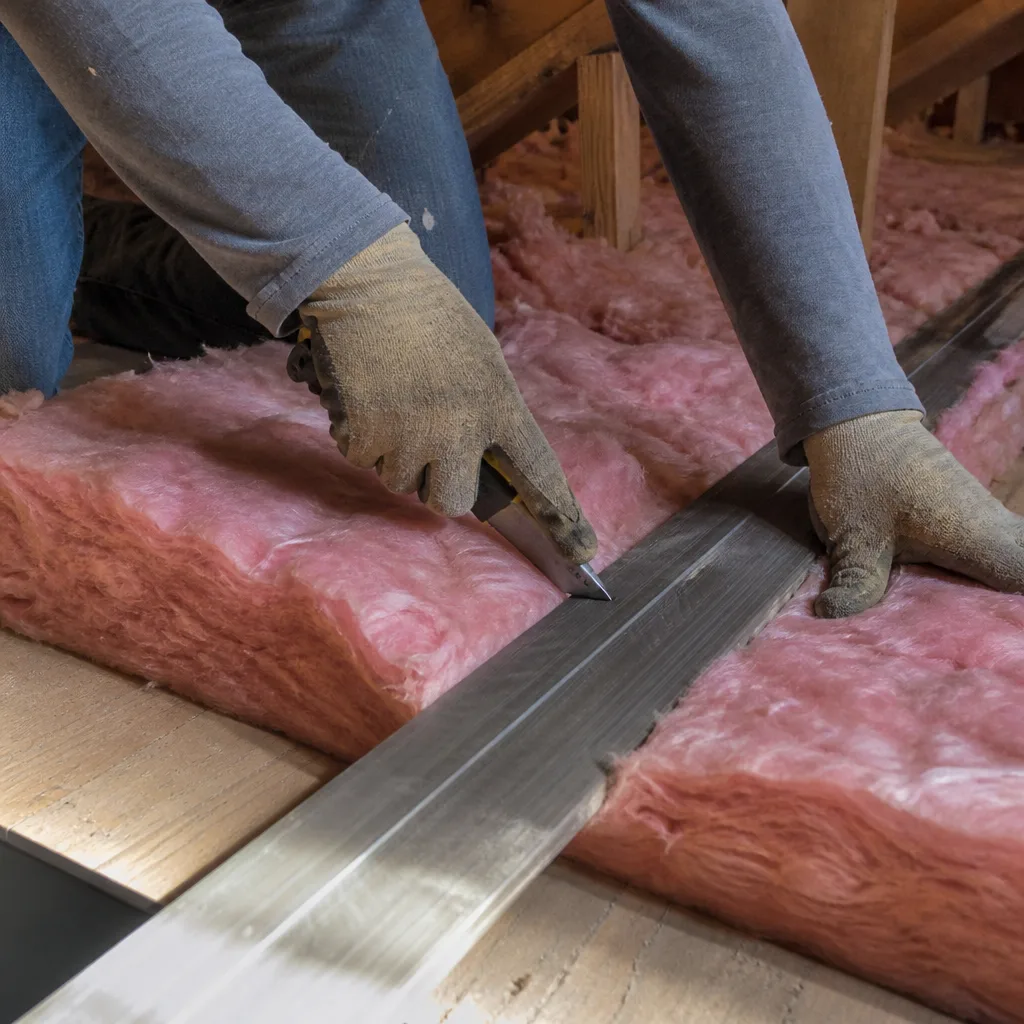
There are legitimate ways to reduce what you spend on attic insulation – and a few apparent savings that cost more in the long run.
Get a second opinion before signing anything. If you have a written estimate from another contractor, bring it to us. Under the Haven Standard, Envelope Insulation Co. offers a free second opinion on any written estimate. We’ll read through the scope with you and tell you what’s there, what’s missing, and what the price reflects. Canyon Lake is a smaller market than San Antonio or Austin, and pricing from contractors who rarely work this far into the Hill Country corridor can be inconsistent. A second set of eyes on a written scope takes 20 minutes and can save several hundred dollars or flag a genuinely underpriced job that has corners cut in the scope.
Don’t skip air sealing to lower the quote. We don’t offer this option because it produces a measurably worse result, but some contractors will. If you’re comparing quotes and one is significantly lower, check whether it includes any air sealing at all. A blown-in job without air sealing in a Canyon Lake home built in the 1990s will underperform. The energy savings won’t materialize, and you’ll have spent $1,500 to add R-value to a leaky attic floor.
Check available utility rebates. CPS Energy and other Texas utilities periodically offer rebates on attic insulation upgrades that bring homes to R-38 or higher. These programs change, so verify current availability directly with your utility provider before assuming a rebate applies to your project. A legitimate contractor will note what rebates exist; they won’t guarantee them in the written scope.
Time the project correctly. Late fall and early winter tend to be easier scheduling periods than the summer rush in Canyon Lake. Attic insulation is physically harder work in July attics that hit 140°F – and crews who are overextended in peak season occasionally move faster than a complicated attic deserves. A November or February project often gets more deliberate attention.
Bundle services when it makes sense. If your attic needs both insulation and a radiant barrier, or if you’ve been meaning to address the crawl space as well, combining work orders into a single mobilization reduces overhead on both sides. Ask what the scope looks like as a bundle and compare it against separate jobs. Sometimes it pencils out; sometimes it doesn’t, and we’ll tell you which.
For a written price specific to your attic’s square footage and current condition, call (737) 227-6219. The estimate is free, the price is written down before anything starts, and the scope tells you exactly what air sealing and insulation work is included.
What You Receive When the Job Is Done
Under the Haven Standard, every completed job at Envelope Insulation Co. closes with a documented record – not an invoice stapled to a door handle. Here’s what that looks like in practice:
- Documented Photo Record: Photos of the attic before and after, showing air sealing points, insulation depth at multiple locations, and any areas of note (contaminated insulation removed, baffles installed at eaves, etc.).
- Blower-door readings on applicable jobs: Before-and-after CFM50 numbers so you can see the air-sealing result in a single measurable figure. If we sealed your top plates and recessed lights, you’ll see the number drop.
- Written scope and written warranty: The scope you agreed to before work started, confirmed as completed. The 365-Day Done Right Promise applies to all work – if something isn’t right within a year of completion, we make it right.
These documents are yours. They matter when you sell the home, when you’re talking to a HVAC contractor about right-sizing equipment, and when you want to verify that the R-49 you paid for is actually there.
Canyon Lake-Specific Notes on Insulation Performance
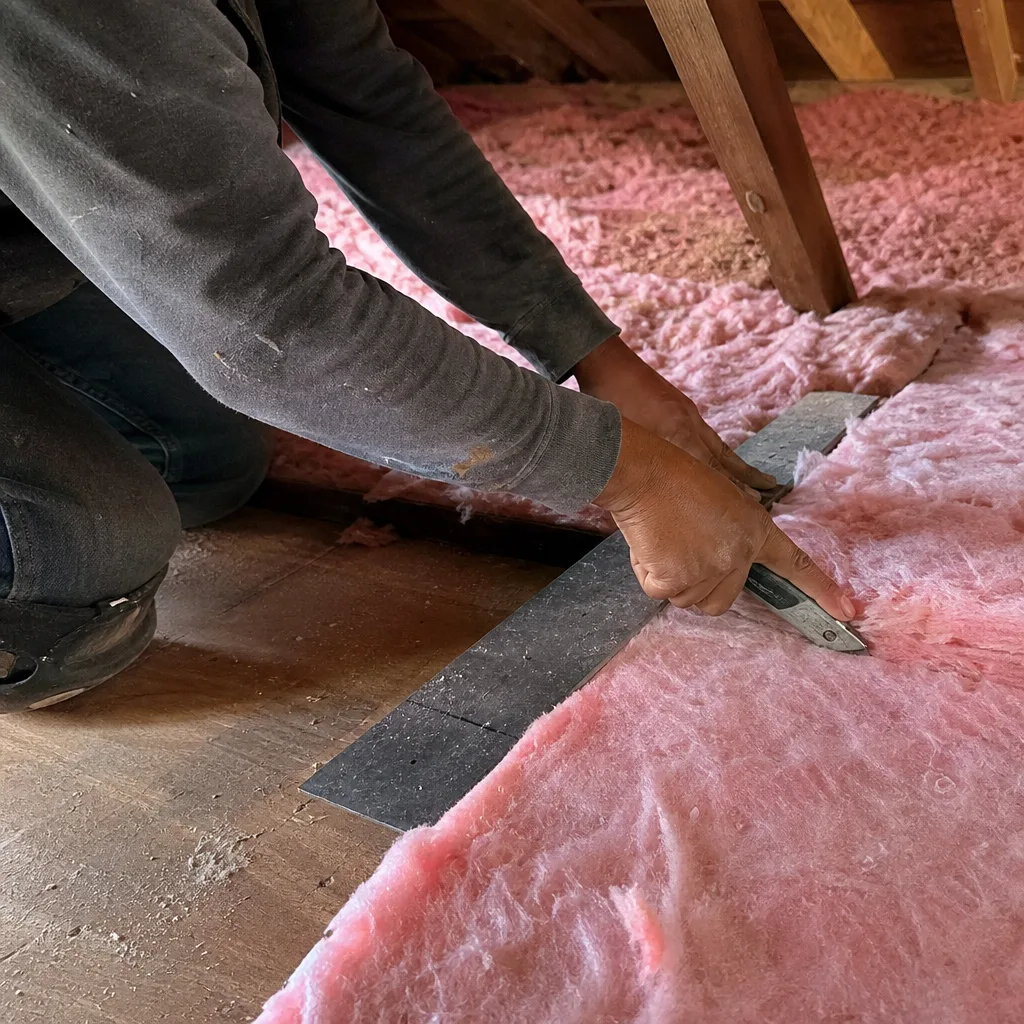
Canyon Lake sits in IECC Climate Zone 2/3 boundary territory – hot summers, mild winters, and enough humidity from the lake to make moisture management a real consideration in attic assemblies. A few things we see regularly here that don’t show up as often in the San Antonio metro or the Austin suburbs:
Cedar and oak debris in attics. Homes in the cedar-dense areas around the north shore and near Potters Creek Park accumulate fine organic debris in attics through ridge vents and gable vents. That debris gives rodents and insects nesting material and can compress older fiberglass batts over time. When we assess an attic in Canyon Lake, we look at what’s accumulated as much as what was installed.
HVAC equipment located in unconditioned attics. A significant share of Canyon Lake homes – particularly those built in the 1990s and early 2000s in subdivisions off FM 2673 – have their air handler and ductwork in an unconditioned attic. That means the equipment is sitting in 140°F air in July, working harder than it should. One option is air-sealing and insulating the roof deck rather than the attic floor to bring that equipment into the conditioned envelope. It’s a different scope and a higher upfront cost, but for homes with aging HVAC in a hot attic, the math sometimes works. We’ll show you both options and the reasoning behind each.
Pier-and-beam homes near the waterfront. Some older Canyon Lake properties close to the water sit on pier-and-beam foundations rather than slab. Those homes benefit from crawl space encapsulation in addition to attic work, since moisture and conditioned-air loss happen at both ends of the building envelope. We cover both in our full building-envelope service line.
How Envelope Insulation Co. Prices Its Work
Every estimate starts with a physical assessment – someone walks the attic, measures the square footage, reads the existing R-value with a depth gauge, notes the number of penetrations that need sealing, and documents what they find. That assessment produces a written price: a flat number with a written scope attached. No range with a “starting at.” No “we’ll know more when we get in there” clauses that leave the final number open until the job is done.
Haven Standard Clause 1 is simple: written price before any work starts, always. That’s not a promotional offer. It’s how the business has operated since 2016, across more than 9,000 homes sealed and insulated.
Wes Okafor leads Envelope Insulation Co.’s work in the Canyon Lake area. When you call (737) 227-6219, you reach a live person – not a voicemail queue. When a technician is on the way to your home, you get a text with their name. And when the job closes, you get the documented record described above, not a verbal debrief on the driveway.
FAQs: Attic Insulation Cost in Canyon Lake, TX
How much does attic insulation cost in Canyon Lake, TX?
Most attic insulation jobs in Canyon Lake run between $1,400 and $3,500 for a combined air sealing and blown-in insulation project on a standard single-story home with a 1,500 to 2,200 sq ft attic. Smaller attics or Attic Insulation Top-Up projects with no removal required can come in under $1,200. Full replacement on a larger home with contaminated insulation and complex air sealing can reach $4,500 to $5,000. A written price for your specific attic is available after a free on-site assessment – call (737) 227-6219.
Is it cheaper to add insulation on top of existing insulation or remove and replace?
Adding on top is less expensive by $500 to $1,100 per 1,000 sq ft in the Canyon Lake market – but only when the existing insulation is clean, uncompressed, and not blocking eave ventilation. Contaminated insulation (from rodents, moisture, or pest activity) has to come out before new material goes in, because blowing over a compromised layer produces an effective R-value well below what the depth gauge reads. We assess the existing condition on every job and tell you which approach makes sense and why before quoting either option.
Does attic insulation actually lower energy bills in Canyon Lake?
Yes – but only when air sealing is done first. Homes in Canyon Lake that we’ve measured before and after a combined air sealing and insulation job typically show blower-door readings dropping by 40 to 55 percent. That reduction in air leakage, combined with increased R-value, translates to meaningful cooling load reductions during the July and August months when Canyon Lake attics routinely exceed 135°F. The before-and-after blower-door numbers are documented and included in your job record so you have a measured result, not an estimate.
How long does attic insulation last in Canyon Lake’s climate?
Blown-in fiberglass in a properly ventilated Canyon Lake attic typically performs for 20 to 25 years before settling affects its R-value materially. However, homes with inadequate soffit-to-ridge airflow see faster degradation – attic temperatures that exceed 160°F in poorly ventilated spaces accelerate batt breakdown and cause blown-in material to settle more quickly. If your home has blocked soffits or undersized ridge venting, that’s worth addressing as part of any insulation project. We note ventilation conditions in the written scope.
What R-value does a Canyon Lake, TX attic need?
The Department of Energy recommends R-38 to R-49 for Canyon Lake’s climate zone. Most homes built before 2005 in Canyon Lake have R-19 to R-30 – enough to meet code at the time, not enough to meet current performance standards or to prevent the significant heat transfer that happens during Texas summers. Bringing an attic from R-22 to R-49 adds roughly 4 to 5 inches of blown-in material on top of existing insulation and costs between $900 and $1,800 depending on attic size, assuming the existing insulation is in usable condition and air sealing is completed first. Call (737) 227-6219 for a written price on your specific attic.
Can I get a price without committing to the work?
Yes. The estimate is free and the written price comes with no obligation. Haven Standard Clause 1 means the price is written before any work starts – you’re not agreeing to the work by asking for the number. If you have a competing written estimate, Envelope Insulation Co. will review it with you as part of the free second opinion offer. Call (737) 227-6219 or reach out online to schedule an assessment for your Canyon Lake home.
Key Takeaways
- Attic insulation in Canyon Lake costs $1,400 to $4,200 for most single-story homes; combined air sealing and blown-in jobs average $2,100 to $2,800.
- Air sealing before insulation is not an upsell – it’s what determines whether the project actually changes energy performance.
- Canyon Lake’s Hill Country climate, steep rooflines, and pre-2005 housing stock create pricing and performance factors that differ from the San Antonio and Austin suburban markets.
- A blower-door test before and after the job gives you a measured result – not an estimate – of what changed.
- Every job at Envelope Insulation Co. starts with a written price and closes with a documented photo record. The 365-Day Done Right Promise applies to all completed work.
- Wes Okafor leads the Canyon Lake team. A live person answers the phone at (737) 227-6219, any hour.
To get a written price for your Canyon Lake attic, call (737) 227-6219. The estimate is free, the visit includes a documented photo record, and no work starts without a flat written price in your hand. If you have a competing quote, bring it – we’ll read it with you. You can also learn more about our full service line on our home page.
Written by Wes Okafor, Owner at Envelope Insulation Co. (operating as Topside Attic Insulation Canyon Lake), serving Canyon Lake, TX since 2016.
Pricing reflects the Canyon Lake market as of 2026. Topside Attic Insulation Canyon Lake offers free estimates – call (737) 227-6219.
What Our Customers Say
"Crawl space encapsulation done properly. Photographs of the vapour barrier at every seam, and the damp smell in the hallway is gone."
- Ainsley P."The winter gas bill dropped by about a third. They had estimated a quarter, so they under-promised."
- Genevieve R."They photographed rodent damage in the old insulation that we had no idea about, and priced the exclusion work separately so we could decide."
- Harriet N.