
How Much Does Crawl Space Encapsulation & Vapor Barrier Cost in Canyon Lake?
Crawl space encapsulation in Canyon Lake, TX typically runs between $3,500 and $8,500 for a standard single-family home, with most projects landing around $5,000 to $6,500 once liner material, sealing, and any moisture remediation are included. A basic vapor barrier installation alone – without full encapsulation – generally costs $1,200 to $2,800 depending on square footage and access conditions. Most jobs in the Canyon Lake area are completed in one to two days, and a written price before any work starts is the only way we operate under Envelope Insulation Co.‘s Haven Standard.
Crawl Space Encapsulation & Vapor Barrier Cost Breakdown (2026)
Crawl Space Encapsulation & Vapor Barrier services in Canyon Lake cover several distinct scopes of work, and the price difference between a vapor barrier-only job and a full encapsulation package is significant. Here is how the cost breaks down by line item, based on typical Canyon Lake-area projects in 2026:
| Scope of Work | Typical Cost Range | Notes |
|---|---|---|
| Vapor barrier only (6-mil poly sheeting) | $1,200 – $2,200 | Ground cover only; no wall liner or sealing |
| Vapor barrier, heavy-duty (12-20 mil liner) | $2,000 – $3,500 | More durable; better puncture resistance for active crawl spaces |
| Full encapsulation (liner + wall coverage + sealing) | $4,500 – $7,500 | Ground and foundation walls covered; vents and penetrations sealed |
| Full encapsulation + drainage matting | $5,500 – $8,500 | Adds a dimple mat layer under the liner for water drainage |
| Crawl space mold remediation (pre-encapsulation) | $800 – $2,500 | Required before encapsulation if active mold is present |
| Crawl space dehumidifier (installed) | $900 – $1,800 | Often added to sealed crawl spaces without passive ventilation |
| Vent sealing (per vent) | $50 – $150 per vent | Foam or rigid blocking; typically 4-8 vents in a standard Canyon Lake home |
| Access door replacement or upgrade | $200 – $600 | Conditioned crawl space needs an insulated, well-sealed access hatch |
| Debris removal and prep | $150 – $500 | Older Canyon Lake homes often have wood scraps and construction debris |
What Drives the Final Number
Square footage is the biggest single variable. A 1,000-square-foot crawl space costs materially less to encapsulate than a 2,200-square-foot footprint, even if the labor rate is the same, because liner material is priced by the square foot and seam sealing takes proportionally longer. Access difficulty matters almost as much: crawl spaces in older Canyon Lake homes near the lake’s shoreline can drop to 18 to 22 inches of clearance, which slows every step of installation and can add $400 to $900 to the total.
Liner thickness is the other variable homeowners most often underestimate. A 6-mil polyethylene sheet – the minimum – is adequate for dry, stable soil. Canyon Lake’s Hill Country terrain brings rocky ground that punctures thin liners within a year or two of installation. A 12-mil to 20-mil reinforced liner costs more upfront but eliminates the repeat expense of re-lining a torn barrier. We source liner material from manufacturers we can stand behind, and we’ll show you the product spec sheet before the work starts.
If the crawl space has standing water, wood rot, or active mold, those conditions need to be resolved before a liner goes down – otherwise you’re just sealing problems in. That remediation work adds cost, but skipping it guarantees a second, larger bill later.
What Affects Crawl Space Encapsulation & Vapor Barrier Pricing in Canyon Lake
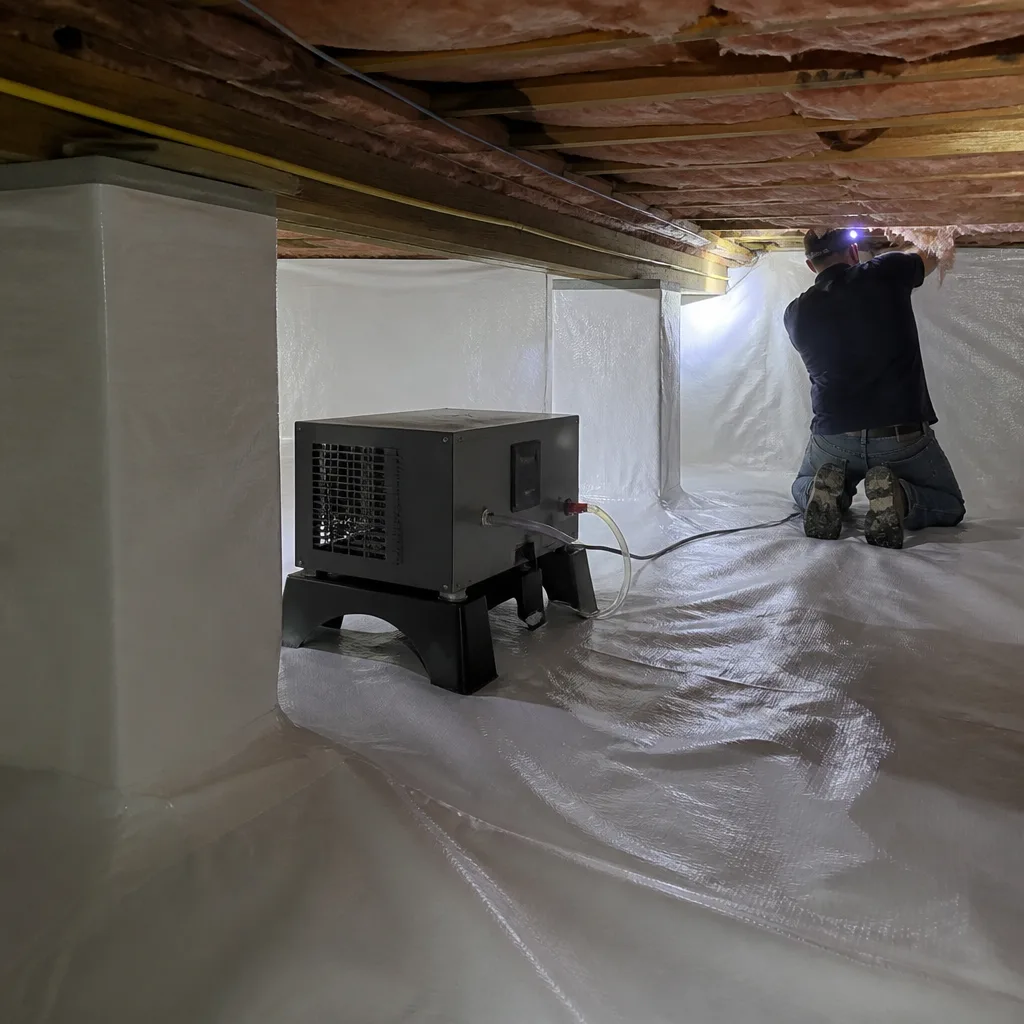
- Crawl space square footage and height: Most Canyon Lake homes range from 800 to 2,400 square feet of crawl space area. Price scales with square footage, and low-clearance spaces under 24 inches add labor time. Older properties along the FM 2673 corridor near the dam frequently have unusually shallow access, which affects every estimate.
- Soil moisture and drainage conditions: Canyon Lake sits at the edge of the Balcones Escarpment. Homes on the lower slopes – particularly near Sattler and the inlets around Comal County Road 107 – see seasonal groundwater movement that keeps crawl space soil damp for months at a stretch. That moisture load increases the spec required for both liner thickness and ventilation management.
- Existing mold, rot, or pest damage: A visual inspection sometimes turns up wood deterioration or active mold colonies on floor joists. Those conditions must be treated before encapsulation; a liner installed over active mold traps the spores and worsens the problem. Treatment adds cost but is non-negotiable for a durable result.
- Number and type of penetrations: Every pipe, wire chase, duct, and structural column that passes through the crawl space is a sealing point. Homes with older HVAC systems often have multiple duct runs running through the crawl space, each one requiring careful detailing around the liner. More penetrations mean more sealing time and material.
- Vented vs. unvented crawl space design: Canyon Lake building practices from the 1970s through the early 2000s typically used vented crawl spaces with passive foundation vents. Converting to a sealed, conditioned crawl space requires blocking those vents – either with rigid foam or custom baffles – and may require a mechanical dehumidifier to control humidity in the now-enclosed space. That conversion adds $1,000 to $2,500 to the project compared to sealing an already-unvented crawl space.
- Liner quality and brand specification: There is a real performance difference between commodity polyethylene sheeting and a reinforced, multi-layer encapsulation liner. The cheaper product works until the soil shifts or someone crawls in to service ductwork; the heavier product holds up for 15 to 20 years under normal use. We use materials we can document and warranty, and we’ll put both options in writing so you can compare what you’re actually buying.
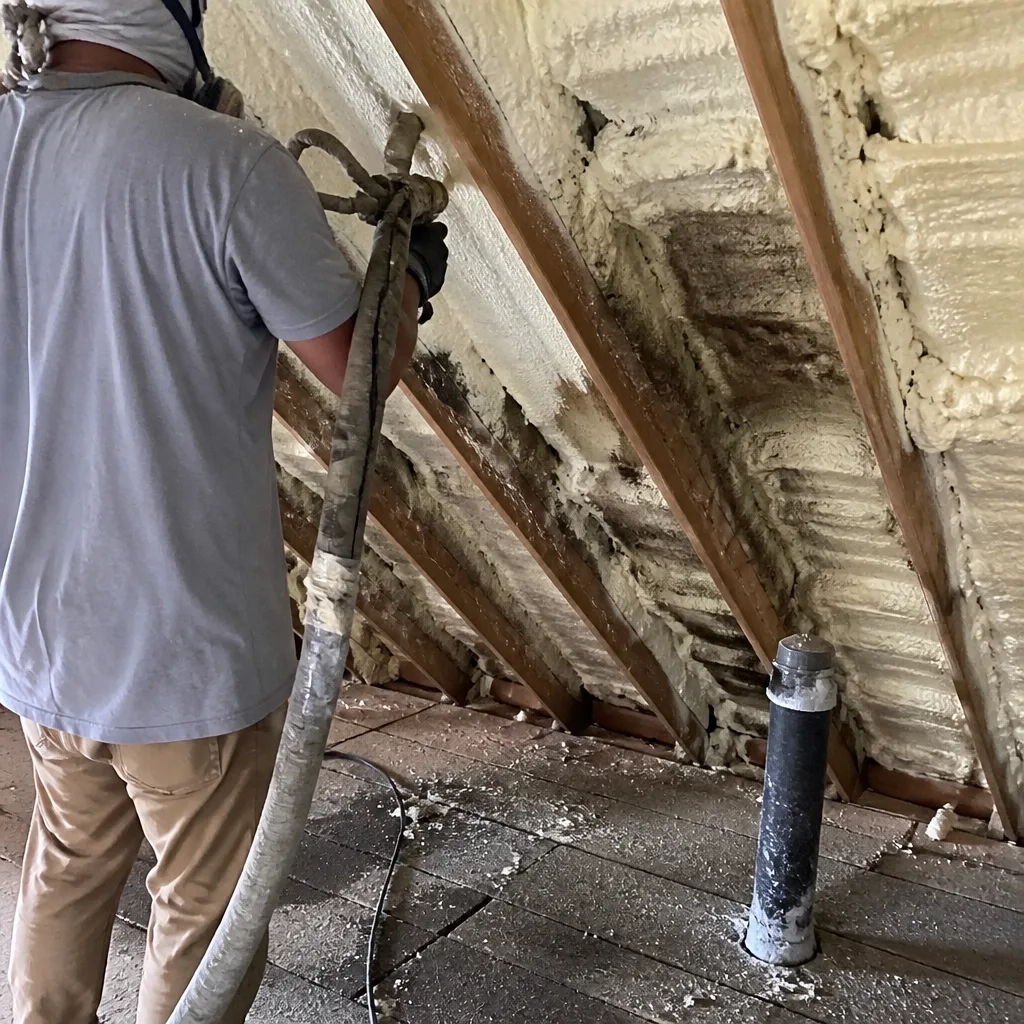 Before
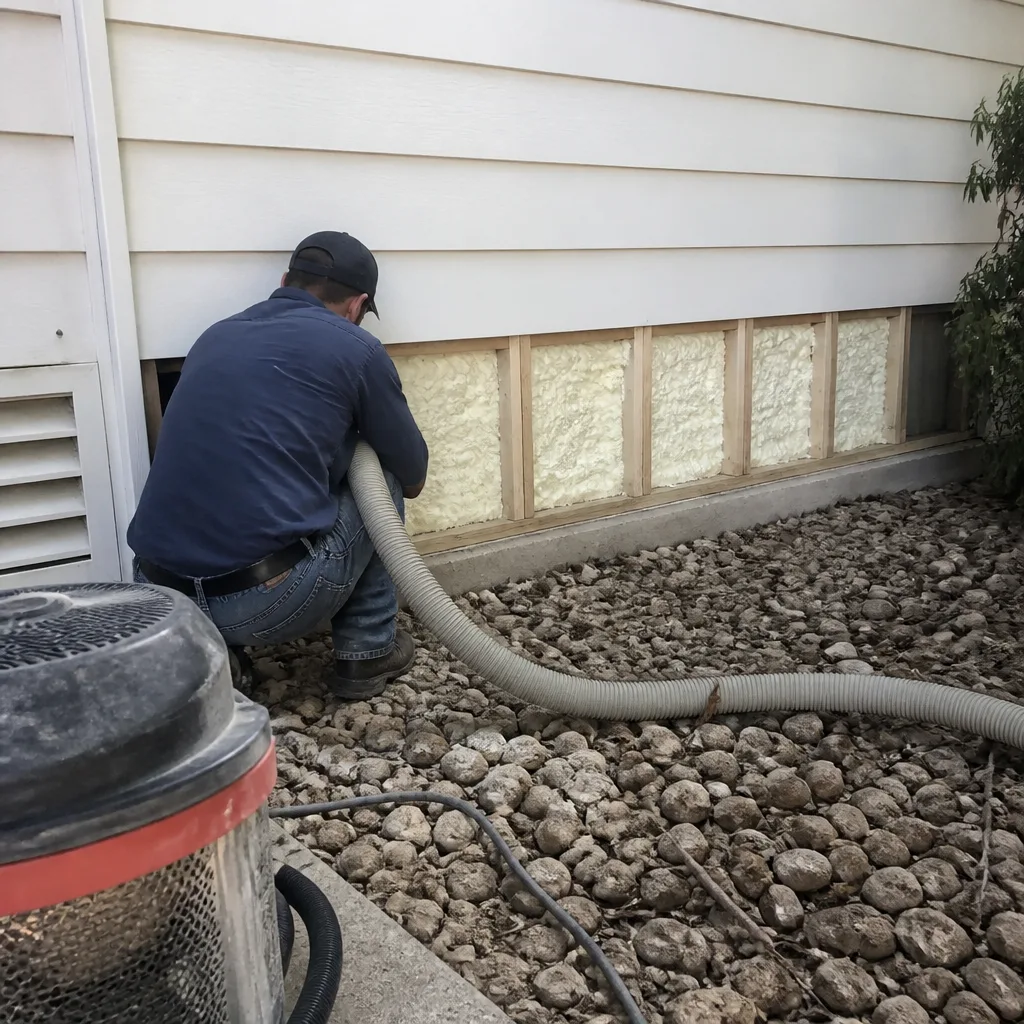 After
AfterHow to Save on Crawl Space Encapsulation & Vapor Barrier in Canyon Lake
Get a Written Scope Before You Compare Prices
The single most effective way to avoid overpaying is to make sure every quote you receive describes the same scope of work. A $3,200 bid and a $5,800 bid can both be honest numbers – for completely different jobs. One might include a 6-mil vapor barrier over the ground only; the other might include a 20-mil reinforced liner up the foundation walls, vent sealing, and a dehumidifier. You cannot compare those prices until both contractors have described, in writing, exactly what they’re installing. Under the Haven Standard, a written price and written scope come before any work starts – not after you’ve agreed to move forward.
Address Moisture at the Source First
If your crawl space has a drainage problem, grading issue, or plumbing leak feeding moisture into the space, fixing those before encapsulation costs less than fixing them after. A liner installed over a water intrusion problem fails faster and may require partial replacement to address what’s underneath. Spending $300 to $800 on exterior drainage improvements before the liner goes in is nearly always cheaper than a liner tear-out and reinstall two years later.
Bundle Work When It Makes Sense
Crawl space encapsulation and Crawl Space Encapsulation & Vapor Barrier in Canyon Lake work best when the building envelope is considered as a system. If you’re already having the crawl space encapsulated, it’s the right moment to evaluate floor insulation above the liner, since the space is already open and prepped. Bundling floor insulation with encapsulation during a single mobilization typically saves $200 to $600 in labor versus scheduling two separate visits.
Use the Free Second Opinion
If you’ve already received a written estimate from another contractor, bring it to us. We’ll read it with you, line by line, and tell you what’s included, what’s missing, and whether the price reflects the Canyon Lake market. That second opinion is free, and it doesn’t obligate you to anything. Call (737) 227-6219 to set that up – we answer live, not through a callback queue.
Check for Applicable Energy Efficiency Programs
Texas doesn’t currently offer a statewide rebate for crawl space encapsulation, but some utility providers serving the Canyon Lake and Comal County area have periodic weatherization incentives. The federal residential energy efficiency tax credit (IRS Form 5695) may apply to certain air-sealing work connected to encapsulation, depending on the scope and how the work is categorized. Talk to your tax advisor about whether any portion of the project qualifies – we can document the work in the format most useful for that conversation.
Don’t Delay Past a Wet Season
Canyon Lake’s late spring and early fall bring the highest soil moisture levels, especially for homes on the lower terrain around the lake. Encapsulating during a dry stretch – typically mid-summer or mid-winter – is slightly easier to schedule and occasionally faster to complete because the substrate is more workable. Waiting until moisture damage is visible on floor joists or subflooring adds remediation cost that could have been avoided.
FAQs – Crawl Space Encapsulation & Vapor Barrier Cost in Canyon Lake
How much does crawl space encapsulation cost in Canyon Lake, TX?
Most crawl space encapsulation projects in Canyon Lake run between $4,500 and $8,500, with the average for a 1,200-to-1,800-square-foot footprint landing around $5,500 to $6,500. That range covers a 12-mil to 20-mil reinforced liner on the ground, liner up the foundation walls to the sill plate, vent sealing, and any minor prep work. Homes with low clearance, active moisture, or mold remediation needs will sit toward the upper end. A vapor barrier-only installation – ground cover with no wall liner or sealing – typically costs $1,200 to $2,800 depending on size and liner spec. Call (737) 227-6219 for an exact written price for your home’s specific footprint – estimates are free.
Is crawl space encapsulation worth it for a Canyon Lake home?
For most Canyon Lake homes with a vented crawl space and any evidence of seasonal moisture, Crawl Space Insulation pays back from three directions. First, the floor above a damp crawl space loses heating and cooling efficiency; encapsulation eliminates that loss and reduces monthly energy bills. Second, sustained moisture accelerates wood rot and pest activity in floor joists and subfloor sheathing; the repair cost for damaged structural members runs $3,000 to $15,000 or more, well above the cost of encapsulation. Third, air quality in a sealed crawl space is measurably better – the stack effect that draws damp, musty air from the crawl space up into the living space diminishes significantly after encapsulation. None of that is a guarantee of a specific dollar return, but the conditions in the Canyon Lake area – seasonal groundwater movement, summer humidity, and the rocky Hill Country soil that holds moisture near the surface – make this a high-value investment relative to what we see in drier Texas markets.
What’s the difference between a vapor barrier and full encapsulation in Canyon Lake?
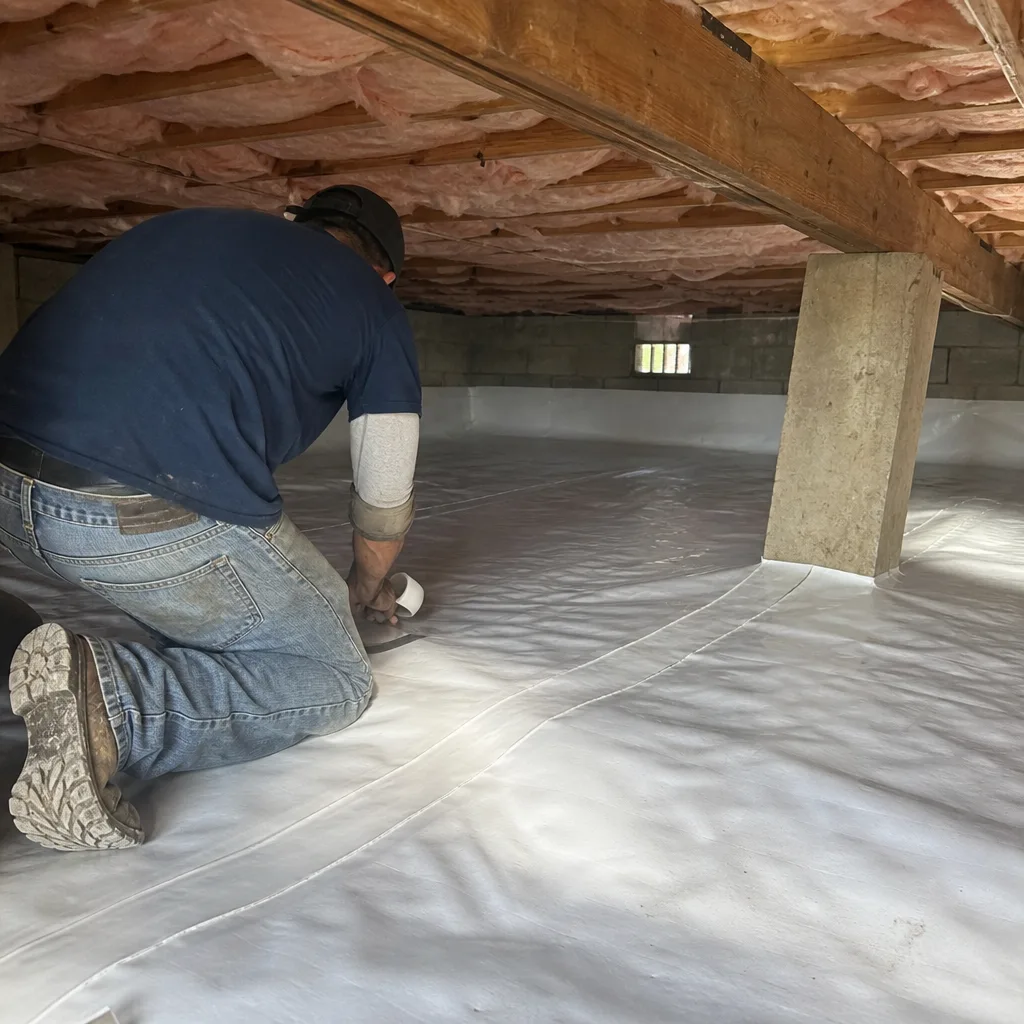
A Crawl Space Vapor Barrier is ground cover: polyethylene sheeting laid on the crawl space floor to reduce moisture evaporation from the soil. It does not seal the foundation walls, does not block foundation vents, and does not create a controlled environment. Full encapsulation does all of that – the liner runs up the foundation walls and is sealed at the top, vents are blocked, penetrations are detailed, and the crawl space becomes a semi-conditioned space. In Canyon Lake’s climate, a ground-only vapor barrier is a partial measure; it reduces moisture load but doesn’t eliminate it. Full encapsulation is the standard we recommend for any home where the crawl space shows seasonal moisture, wood discoloration, or pest activity – because those are signs the ground-only approach isn’t keeping up with the actual moisture load.
How long does crawl space encapsulation last in Canyon Lake’s climate?
A properly installed 12-mil to 20-mil reinforced liner, with sealed seams and correct detailing at walls and penetrations, should last 15 to 25 years under normal conditions. The failure modes we see most often in the Canyon Lake area are punctures from rocks or debris in low-clearance crawl spaces, seam separation from subgrade movement after heavy rain events (which the Hill Country does get), and liner degradation from UV exposure near access points that aren’t covered. Thin liners – 6-mil commodity poly – typically show wear in 5 to 10 years in this environment. The documentation we provide after installation includes photographs of every sealed seam and wall detail, so if a warranty question ever comes up, both parties have a clear baseline record. Under the 365-Day Done Right Promise, if something isn’t right within the first year, we make it right.
Can I install a vapor barrier myself, or do I need a professional?
The ground-cover portion of a basic vapor barrier is physically possible as a DIY project – you’re cutting and overlapping polyethylene sheeting. But the details that actually make it work are harder to get right without experience: seam overlaps need to be sealed with compatible tape, the liner needs to be secured to the foundation wall and detailed around every column and penetration, and if you’re converting from a vented to a sealed crawl space, the vent blocking and humidity management need to be specified correctly or you’ll trap moisture rather than control it. A poorly detailed liner that peels away from the walls or tears at penetrations within a year or two costs more to fix than a professionally installed job would have cost originally. For a vapor barrier-only project on a clean, dry, accessible crawl space, a confident DIYer can handle it. For full encapsulation – especially in Canyon Lake homes with the access challenges and soil conditions common to the area – professional installation with documented results is the more reliable path.
Canyon Lake Crawl Space Conditions: What We Actually See on the Job
Canyon Lake sits in Comal County at roughly 900 feet of elevation, on terrain that shifts between limestone outcroppings and clay-heavy soil depending on how far a property sits from the lake’s shoreline. That variation matters for crawl spaces more than most homeowners realize.
Homes on the higher lots near Canyon Lake Estates and the Ridge Harbor area tend to have drier crawl spaces with good natural drainage – the limestone base doesn’t hold water the way the clay deposits near the Guadalupe River arm of the lake do. For those higher-elevation properties, a standard 12-mil liner with basic vent sealing is often sufficient. Down near Startzville and the lower-lying properties off Texas 306 heading toward New Braunfels, we regularly see standing water in crawl spaces after a significant rain event – the kind that doesn’t fully evaporate between wet seasons. Those homes need drainage matting under the liner, sometimes a sump point, and always a dehumidifier in the sealed space.
The age of the home is a consistent predictor of what we’ll find. Canyon Lake saw most of its residential development between the late 1960s and the mid-1990s, and those homes were built with vented crawl spaces designed around building codes that treated moisture management as a passive process. That approach doesn’t hold up well against two or three decades of Hill Country weather cycles. When we open the access hatch on a 1985 build near the lake, we expect to find some combination of deteriorating fiberglass batt insulation on the floor joists (often sagging or missing), a thin or torn vapor barrier if there’s one at all, and at least a few foundation vents that are either stuck open or broken. None of that is unusual, and none of it changes the quote structure – we document what we find, write the scope, and let the homeowner decide what to address.
Wes Okafor has reviewed crawl spaces in Canyon Lake across the full range of conditions the area produces, and one consistent finding is that homeowners are almost always surprised by how much the crawl space is affecting their living space comfort. A damp crawl space with a compromised vapor barrier pulls conditioned air down through the floor and replaces it with humid, musty air from below. That’s not just an energy efficiency problem – it’s an air quality problem that shows up as musty odors in the home, higher allergy symptom loads, and in some cases structural deterioration that’s been ongoing for years before anyone looked.
How the Encapsulation Process Works at Envelope Insulation Co.
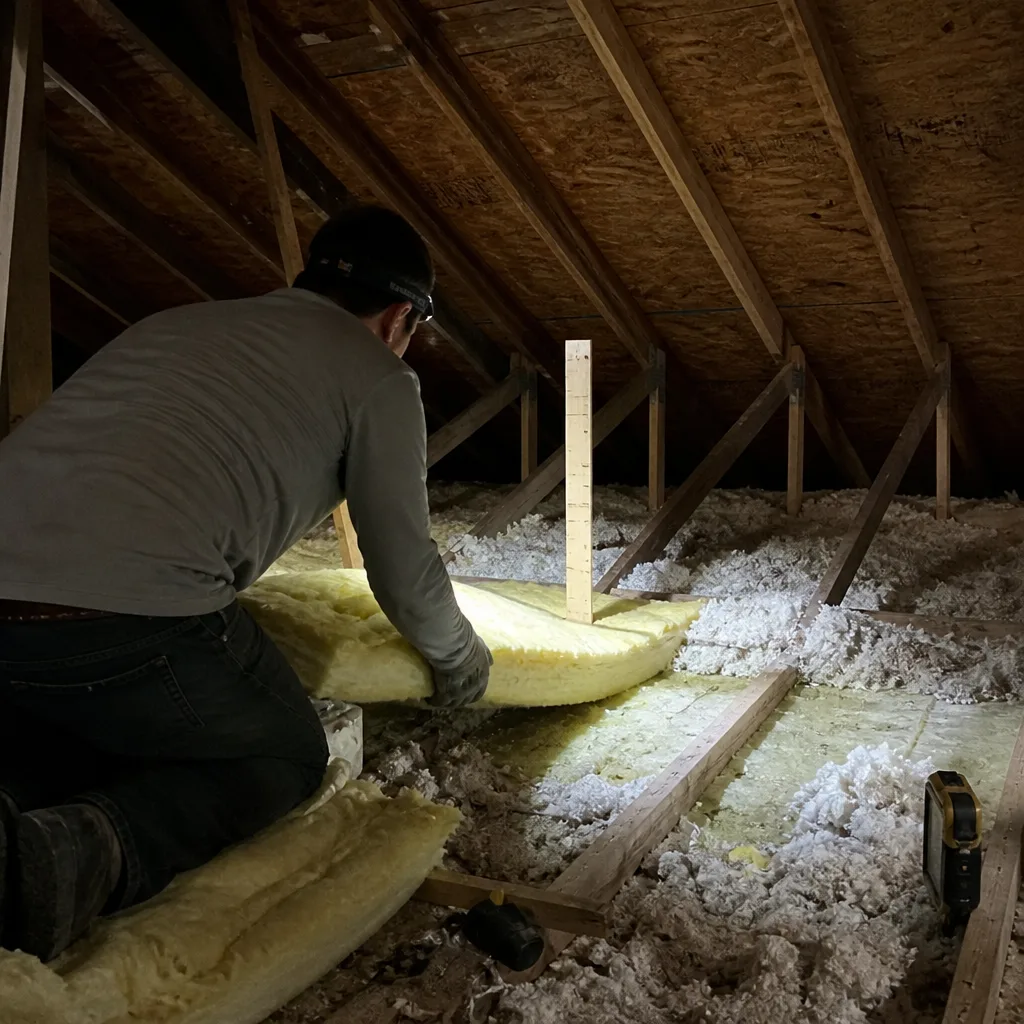
We don’t show up and start laying liner. The first step is a documented inspection – photographs of the current condition, measurements of the space, and an assessment of any conditions that need to be addressed before the liner goes in. That inspection produces a written scope and a written price. Under Haven Standard Clause 1, no work starts until you have both in hand and have agreed to them.
If there’s mold on floor joists, we document it and address it before any liner is installed. If there’s standing water, we identify the source before we cover the ground. If ductwork runs through the space need to be re-supported or repaired, we note that in the scope rather than just working around it. This isn’t an upsell process – it’s the sequence that produces a result that lasts.
Liner installation follows: ground cover first, then wall liner run from the sill plate down to the ground and overlapped with the floor liner by at least 12 inches, taped at every seam with compatible butyl tape. Penetrations – pipes, columns, duct supports – are detailed individually. Foundation vents are sealed with rigid blocking sized to the opening. The access hatch gets weatherstripping or replacement if the existing one isn’t airtight.
When the crew leaves, you get a Documented Photo Record of the finished installation – every sealed seam, every detailed penetration, the before-and-after condition of the space. If a dehumidifier was installed, we show you the settings and explain what to check. The written warranty is delivered the same day the work is completed. That’s what leaving looks like when we do the job.
Crawl Space Encapsulation vs. Vapor Barrier: Which Does Canyon Lake Need?
This is the question most Canyon Lake homeowners are working through when they start researching costs, and the answer isn’t one-size-fits-all. Here is a straightforward way to think about it:
- Vapor barrier only makes sense when: the crawl space is genuinely dry year-round, has good natural drainage, doesn’t show any wood discoloration or pest activity, and the foundation vents are functioning correctly. This is a less common situation in Canyon Lake but it does exist, typically on higher-elevation lots with limestone base soil.
- Full encapsulation makes sense when: the crawl space shows any seasonal moisture, has a history of musty odors in the home above it, has deteriorating or missing insulation on the floor joists, has existing pest activity, or was built with foundation vents that are now inadequate for the moisture load. This describes the majority of Canyon Lake homes we inspect.
- Encapsulation plus dehumidifier makes sense when: the crawl space has a high moisture load from soil conditions or exterior water movement, or when the home is on a lot that doesn’t drain well after heavy rain. The Guadalupe River corridor near Canyon Lake Dam and the lower sections of Startzville see this condition regularly.
If you’re not certain which category your home falls into, that’s exactly what an inspection is for. We’ll document what we find and give you a written option for each reasonable approach – not a single number with no context.
Key Takeaways
- Crawl space encapsulation in Canyon Lake, TX costs $4,500 to $8,500 for most homes; vapor barrier-only projects run $1,200 to $2,800.
- Liner thickness matters more in Canyon Lake than in flatter, drier Texas markets – rocky Hill Country soil punctures thin liners. A 12-mil to 20-mil reinforced liner is the standard we recommend.
- Homes near the lake’s lower shoreline areas (Startzville, the Guadalupe River inlets) see higher moisture loads and more frequently need drainage matting plus a dehumidifier – add $1,500 to $2,500 for those components.
- Full encapsulation includes wall liner, sealed penetrations, and vent blocking – not just ground cover. Make sure any quote you receive specifies what’s included before you compare numbers.
- The 365-Day Done Right Promise and a written scope before any work starts apply to every job. You’ll also receive a Documented Photo Record when the crew leaves.
- A free second opinion on any written estimate is available – bring us a competing quote and we’ll read it with you.
Get a Written Price for Your Canyon Lake Crawl Space
If your Canyon Lake home has a crawl space showing moisture, deteriorating insulation, musty odors in the living space, or a vapor barrier that’s more than ten years old, the right next step is a documented inspection with a written price – not an estimate over the phone based on square footage alone. Wes Okafor and the team at Topside Attic Insulation Canyon Lake have worked through the full range of crawl space conditions this area produces, from dry limestone-base spaces on the ridge to high-moisture clay-soil crawl spaces near the lake’s lower inlets.
We answer live. No voicemail, no callback window. Call (737) 227-6219 to schedule your free inspection and get a written price before any work starts – that’s Haven Standard Clause 1, and it applies to every job we take on in Canyon Lake.
Written by Wes Okafor, Owner at Envelope Insulation Co. (operating as Topside Attic Insulation Canyon Lake), serving Canyon Lake, TX since 2016.
Pricing reflects the Canyon Lake market as of 2026. Topside Attic Insulation Canyon Lake offers free estimates – call (737) 227-6219.
What Our Customers Say
"Two other companies quoted to blow more insulation on top of what was there. These were the only ones who said the existing material had to come out first, and explained why."
- Clifford E."Crawl space encapsulation done properly. Photographs of the vapour barrier at every seam, and the damp smell in the hallway is gone."
- Ainsley P."The winter gas bill dropped by about a third. They had estimated a quarter, so they under-promised."
- Genevieve R.