
Owens Corning Radiant Barrier Installation: The Canyon Lake Owner’s Guide
Owens Corning radiant barrier installation in Canyon Lake typically runs $1,800-$3,400 for a complete attic retrofit depending on roof deck square footage and whether existing insulation must be navigated during placement. Most Canyon Lake homes we see near the Cranes Mill Road corridor and the hillside developments above the Guadalupe River can be completed same-day or next-day once we verify your roof deck configuration. Homeowners usually discover their radiant barrier is underperforming when second-floor rooms spike 8-12 degrees warmer than the thermostat setting between 2 and 5 p.m., or when their summer electric bills jump 25-40% despite the HVAC running continuously.
Which Owens Corning Models This Applies To
Owens Corning produces radiant barrier products across several lines, and the right match depends on what you’re working with. The Owens Corning Raft-R-Mate series, their rigid attic rafter vent with integrated radiant barrier, comes in 22.5-inch and 24-inch widths designed for standard 16-inch and 24-inch on-center framing. We also install Owens Corning AttiCat Expanding Blown-In PINK Fiberglas systems where radiant barrier sheathing is paired with loose-fill coverage, and their Total Protection Roofing System applications that include radiant barrier roof deck panels. To identify your exact product, check the printed label on any existing rigid panel for the OC stock number (typically starting with 70- or 71-), or measure the thickness: Raft-R-Mate runs 1.5 inches thick, while their reflective roof sheathing is 7/16-inch OSB with laminated aluminum facing.
Topside Attic Insulation Canyon Lake is an independent service provider, not affiliated with Owens Corning. We stock OEM-compatible Owens Corning radiant barrier materials sourced through our distributor network, and we also carry Reflectix as an alternative when the application calls for a different attachment method or the homeowner prefers a foil-based product over rigid panel systems. The OEM-versus-aftermarket decision for Owens Corning specifically usually comes down to whether your existing system uses their proprietary interlocking edge profile on Raft-R-Mate panels, which third-party equivalents sometimes mismatch by 1/8-inch and leave gaps at the ridge. We measure on-site before ordering anything.
Signs Your Owens Corning Radiant Barrier Installation Is Failing
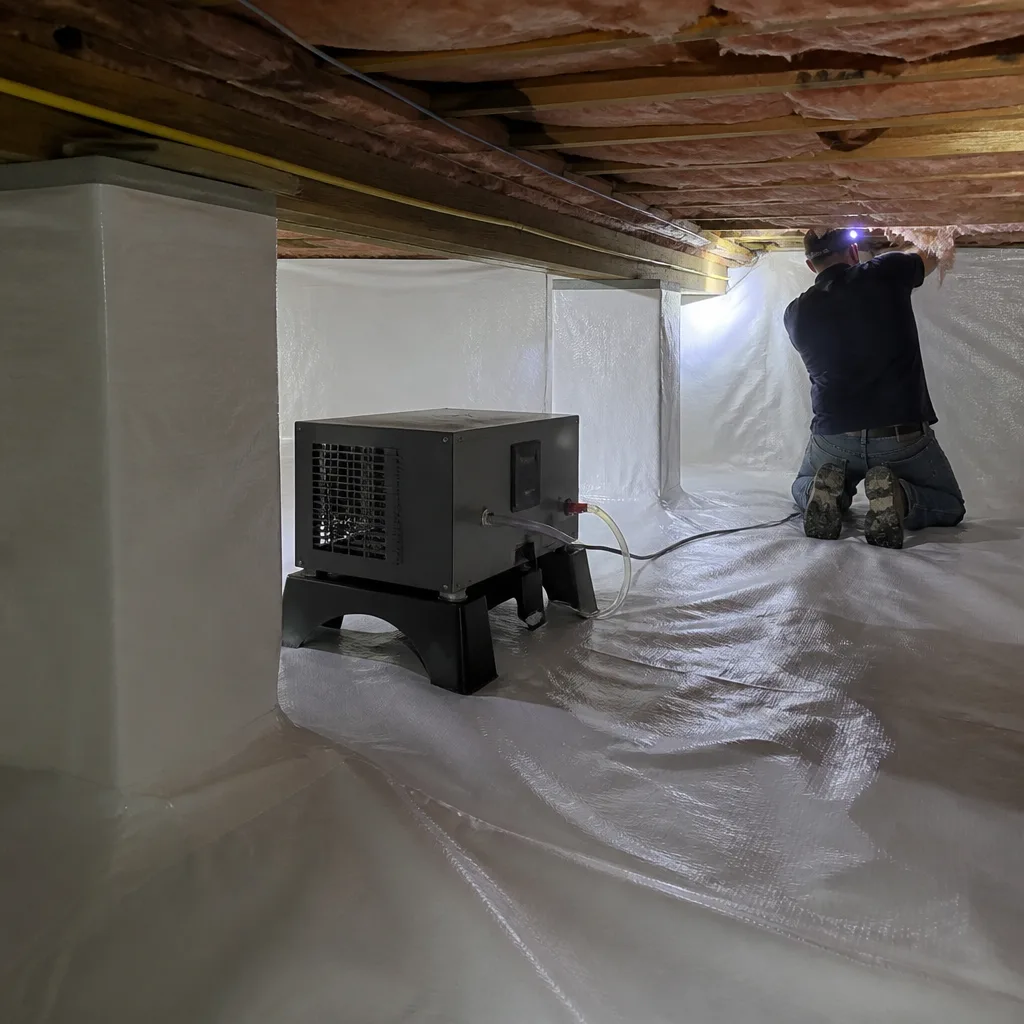
- Hot ceiling surfaces in late afternoon. In Canyon Lake, roof deck temperatures can hit 140-160°F in July. A functioning radiant barrier should drop that radiant heat transfer by 95% or better. If your ceiling feels warm to the touch at 4 p.m., the reflective surface has likely oxidized, accumulated dust, or was installed with the wrong side facing down.
- HVAC runs 45 minutes or longer per cycle without reaching setpoint. This happens when the attic is dumping heat faster than the ducts can deliver conditioned air. We see this most often in homes built 2015-2019 where the builder stapled radiant barrier foil directly to the rafters without an air gap, which nullifies the reflectivity.
- Shingle granules in the attic or on the insulation below. This indicates the roof deck is cycling through extreme temperature swings, cooking the shingles from underneath because the radiant barrier isn’t rejecting heat outward. It’s a secondary failure pattern we catch during attic inspections near the Startzville area.
- Visible tears, gaps, or sagging in existing foil or rigid panels. Canyon Lake’s humidity swings, 40-90% seasonally, cause expansion and contraction. Foil products tear at staple points; rigid panels can pull free if the installer used roofing nails instead of the specified cap nails with 1-inch plastic washers.
- Energy bills that climb year-over-year despite no rate increase. When a radiant barrier degrades, the attic behaves like an unprotected space. We compare 12-month usage trends for CPS Energy customers in Canyon Lake, and a 15% annual increase with flat rates almost always traces to envelope failure, not equipment.
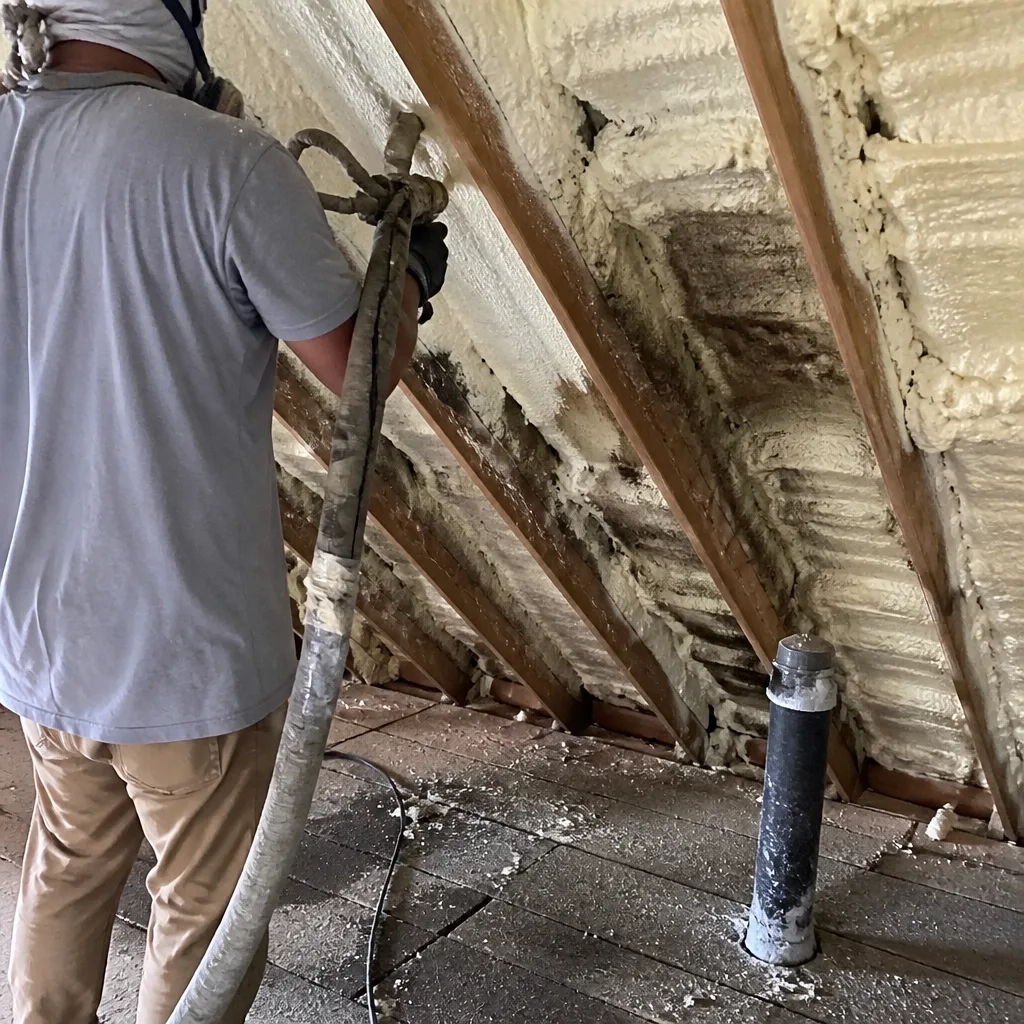 Before
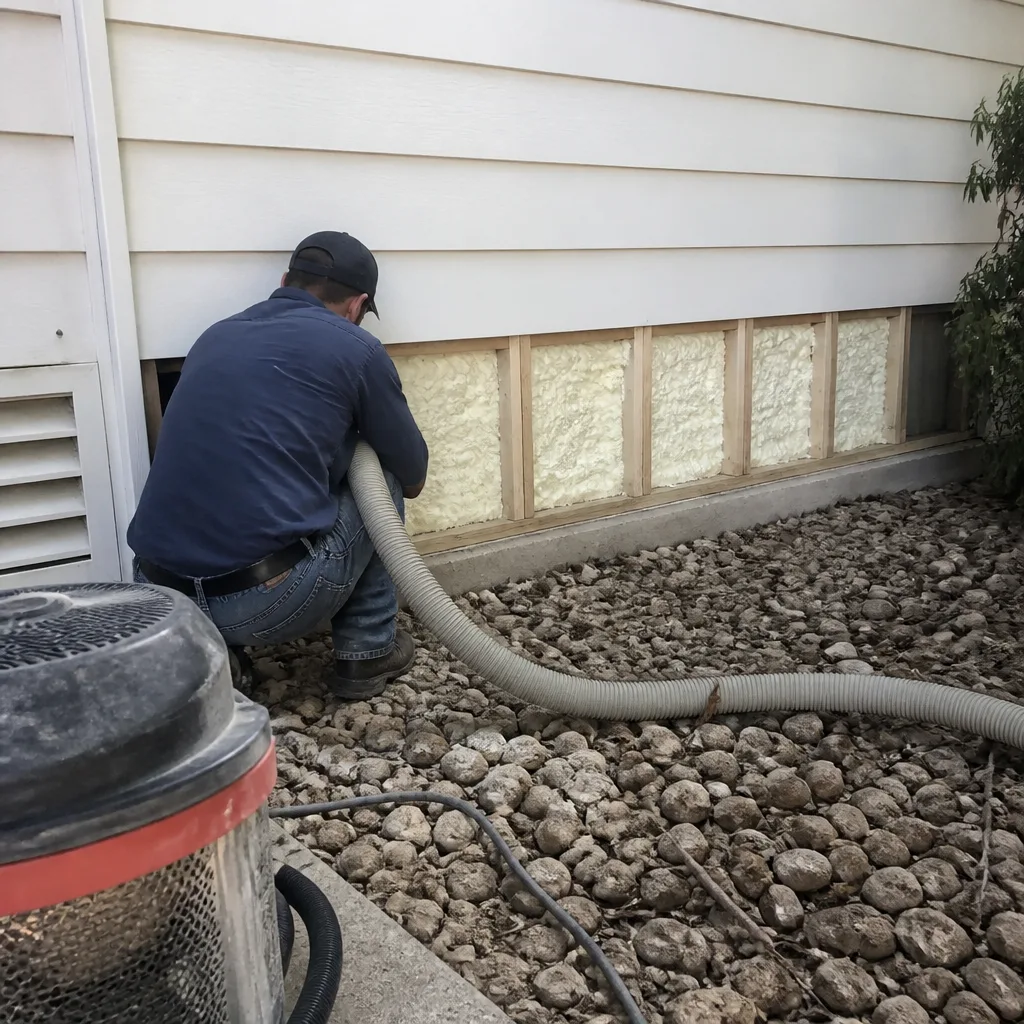 After
AfterReplacement Cost & What’s Included
Most Owens Corning radiant barrier installations in Canyon Lake fall between these ranges:
- Partial retrofit (1,000-1,500 sq ft roof deck, existing insulation remains): $1,800-$2,400
- Full retrofit (1,500-2,500 sq ft, including navigation of existing blown-in): $2,400-$3,100
- Complex roof (multiple dormers, steep pitch above 8/12, or removal of failed prior installation): $3,100-$3,400+
What drives the range: roof deck square footage, pitch (steeper means slower, safer work), whether we’re working around existing insulation or removing degraded material first, and whether the home needs companion air sealing at top plates and can lights before the radiant barrier goes in. We don’t blow anything over leaks. Every job includes the Owens Corning or equivalent material, labor, cap-nail or staple fastening per manufacturer spec, and a Documented Photo Record of the completed installation. Applicable jobs also include before-and-after blower-door numbers so you can verify the air-sealing result. Under Haven Standard Clause 1, you get a written price before any work starts and a 365-Day Done Right Promise on the completed work.
DIY or Call Us?
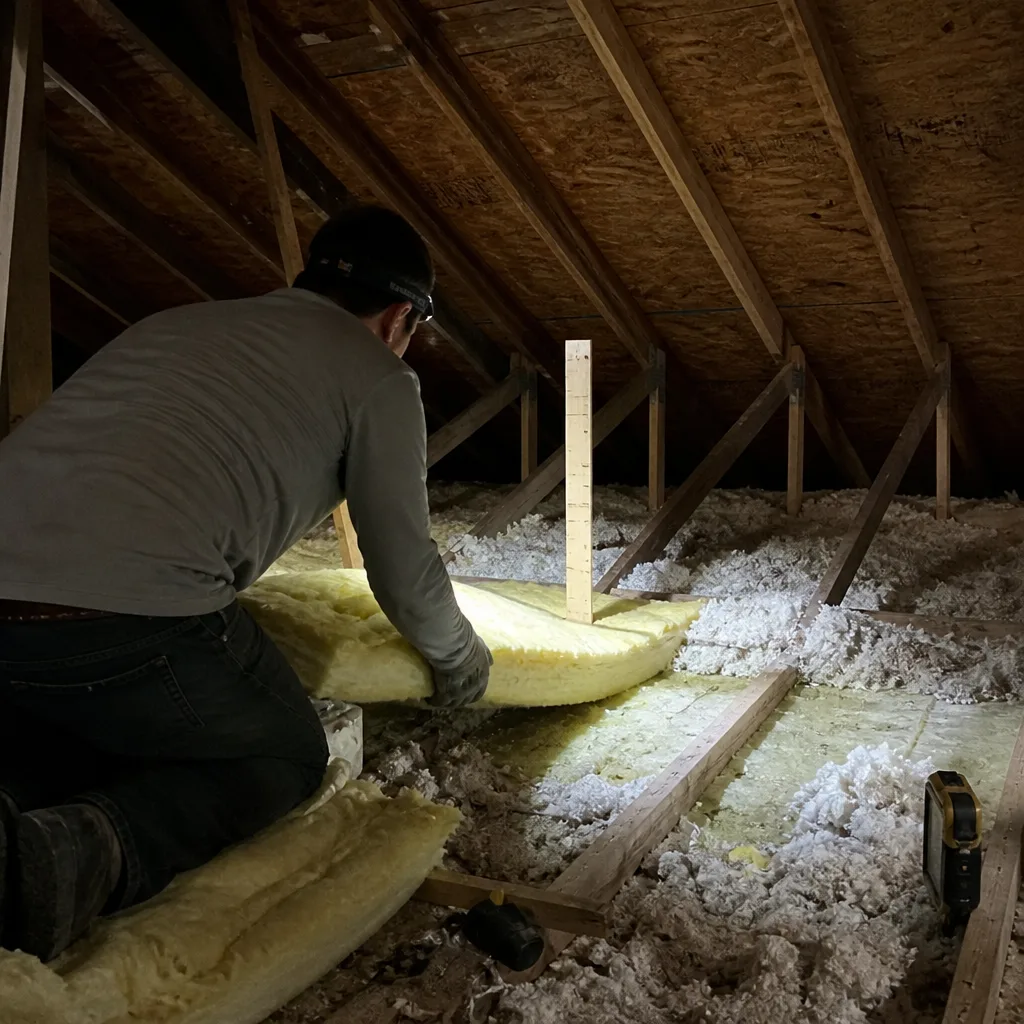
There’s a safe middle ground here. A homeowner can check the attic hatch for visible product labels, measure roof deck square footage from the exterior footprint, and verify whether existing foil faces up or down (it should face the open attic air space, not the roof deck). What goes wrong fast: working on a pitched roof deck in summer heat, misidentifying which side of a reflective product is the emissive surface, or compressing blown-in insulation while maneuvering rigid panels and destroying the R-value you already paid for. Radiant barrier installation isn’t high-tension dangerous like garage door springs, but heat exhaustion in a Canyon Lake attic in August is real, and a misinstalled product does nothing while looking correct. We stock Owens Corning-compatible radiant barrier on our truck for most common roof pitches, and we run a blower-door test before any material goes in so we know what we’re sealing against. Seal the leaks first. Then insulate. The report tells you whether it worked. Call (737) 227-6219 when you’re ready for a written price.
FAQs
In the Texas Hill Country climate, a properly installed Owens Corning rigid radiant barrier should perform 20-25 years, though foil-based products in dusty attic environments can see reflectivity drop after 10-15 years if not occasionally blown clean. Canyon Lake’s combination of high summer UV load and humidity cycling accelerates oxidation on lower-grade products. Call (737) 227-6219 for an attic inspection if you’re unsure of your install date - estimates are free.
Localized tears in foil can sometimes be patched with compatible foil tape, but degraded or improperly oriented radiant barrier almost always requires removal and replacement to restore performance. We’ve inspected attics near Canyon Lake’s north shore where a “repair” left 30% of the roof deck unprotected, which is functionally the same as no barrier at all. Call (737) 227-6219 and we’ll show you exactly what we found with photos.
Most Owens Corning radiant barrier installations in Canyon Lake are completed in one working day, with larger or steeper roofs occasionally stretching to a second day if extensive air sealing is needed first. We don’t rush the pre-work. The blower-door test, top-plate sealing, and can-light boxing happen before the first panel goes up. Call (737) 227-6219 to schedule - a live person answers 24/7.
We stock Owens Corning-compatible rigid radiant barrier panels and foil products on our truck for standard 16-inch and 24-inch framing, with specialty widths available next-day through our distributor. We also carry Reflectix as an alternative when the application suits it. If your Canyon Lake home has an unusual rafter spacing, we measure and order exact-fit material rather than forcing a mismatch. Call (737) 227-6219 to confirm availability for your specific roof configuration.
Written by Wes Okafor, Owner & Lead Insulation Technician, Topside Attic Insulation Canyon Lake at Topside Attic Insulation Canyon Lake, serving Canyon Lake and nearby areas.