
Knauf Crawl Space Encapsulation: The Canyon Lake Owner’s Guide
Knauf crawl space encapsulation systems installed in Canyon Lake homes typically run $2,800-$5,200 for a complete vapor barrier and seal, depending on square footage and whether the foundation needs pre-sealing. Most jobs we book are completed in a single day, and we stock Knauf-compatible 12-mil and 20-mil reinforced polyethylene on every truck. If your crawl space smells musty even after running a dehumidifier, or you’re seeing condensation beads on ductwork down there, the Knauf vapor barrier may have torn at seam points or the perimeter seal has separated from the block wall.
Which Knauf Models This Applies To
Knauf doesn’t sell crawl space encapsulation as a named “system” the way some brands do. Instead, we match parts to the Knauf insulation products already in your home. If your crawl space has Knauf EcoSeal, Knauf Jet Stream, or Knauf Insulation fiberglass batts with the tan-brown color and printed Knauf logo, we source compatible vapor barriers and sealing tapes that won’t off-gas against those materials.
To identify what you need, check three things: the existing vapor barrier thickness (measure with a tape measure at a tear point, 6-mil feels like a heavy trash bag, 20-mil feels like a pool liner), the linear footage of your foundation walls, and whether your home has a passive or active radon mitigation pipe passing through the seal. Knauf batts compress differently than Owens Corning or Johns Manville in humid conditions, so we spec a slightly heavier barrier, 12-mil minimum in Canyon Lake, to prevent the friction tears we see when lighter material shifts against compressed fiberglass.
OEM Knauf vapor barrier material is available through distribution, but we typically install a reinforced cross-woven polyethylene that exceeds Knauf’s original spec and carries a 25-year degradation warranty. The aftermarket material costs less and outperforms in Texas crawl spaces where summer ground moisture pushes 70% relative humidity.
Signs Your Knauf Crawl Space Encapsulation Is Failing
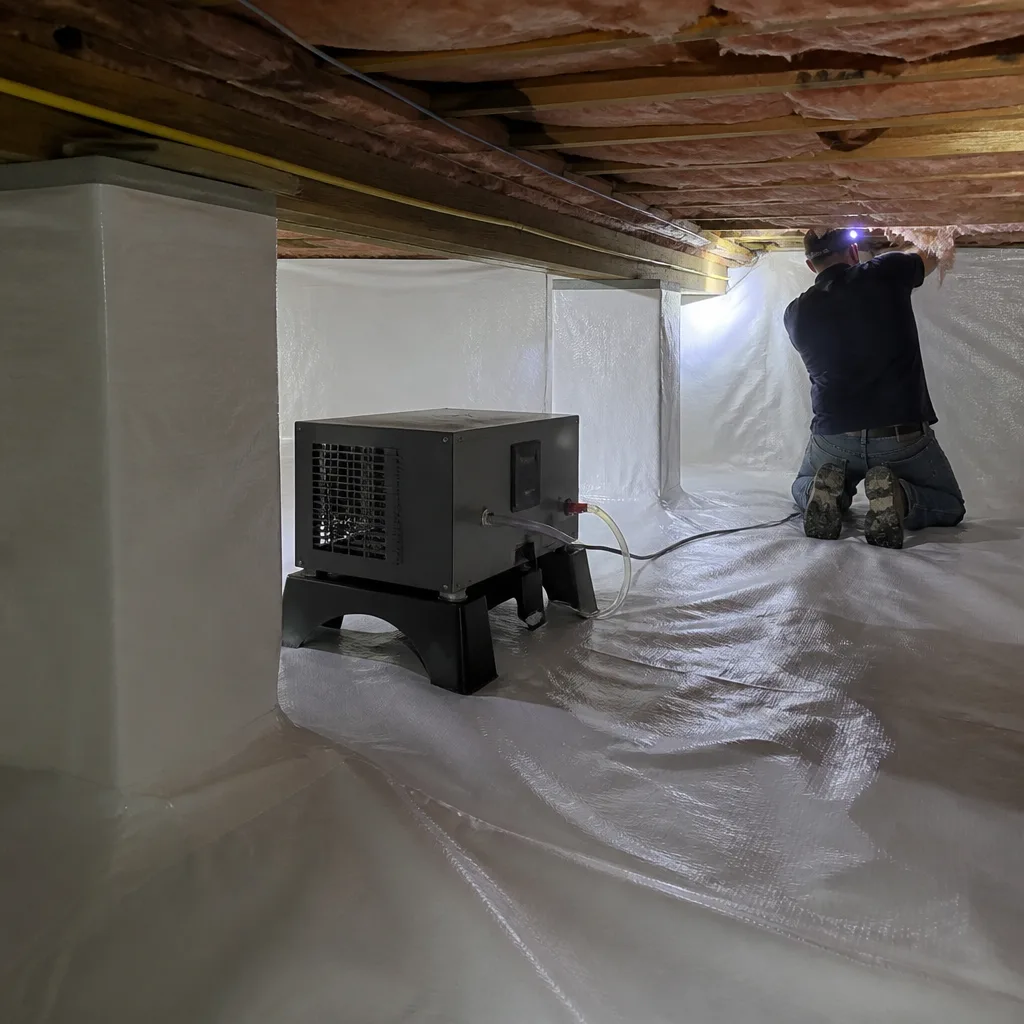
- Musty odors rising through floor registers. When the Knauf-compatible vapor barrier separates at the perimeter or tears at pier posts, ground moisture evaporates directly into the crawl space air. Your HVAC return pulls that air upward, which is how you smell it in the living space before you see any damage below.
- Condensation on ductwork or plumbing lines. A functioning encapsulation keeps the crawl space within 10 degrees of the living space temperature. When the seal fails, humid outside air contacts cold surfaces and beads up. In Canyon Lake, we see this most on homes near the lake itself where groundwater tables sit higher and summer dew points linger above 75 degrees.
- Soft or bouncy floors above the crawl space. Moisture that gets past a failed barrier wets the subfloor OSB from below. Knauf fiberglass batts hold that moisture against the wood, accelerating the rot cycle. By the time the floor feels soft, the vapor barrier has likely been compromised for two or more seasons.
- Increased dehumidifier runtime or failure to reach set point. If your crawl space dehumidifier ran 4 hours daily last summer and now runs continuously, the space is gaining moisture faster than the unit can remove it. The barrier isn’t keeping ground moisture out, and the dehumidifier is working against an open water source.
- Visible tears, rodent damage, or separated seam tape at the foundation wall. Knauf vapor barriers installed before 2018 often used butyl tape that hardens in Texas heat cycles. The tape releases from block walls, creating a 1-2 inch gap that looks minor but vents the entire crawl space to outside air. We check this first on every Canyon Lake inspection.
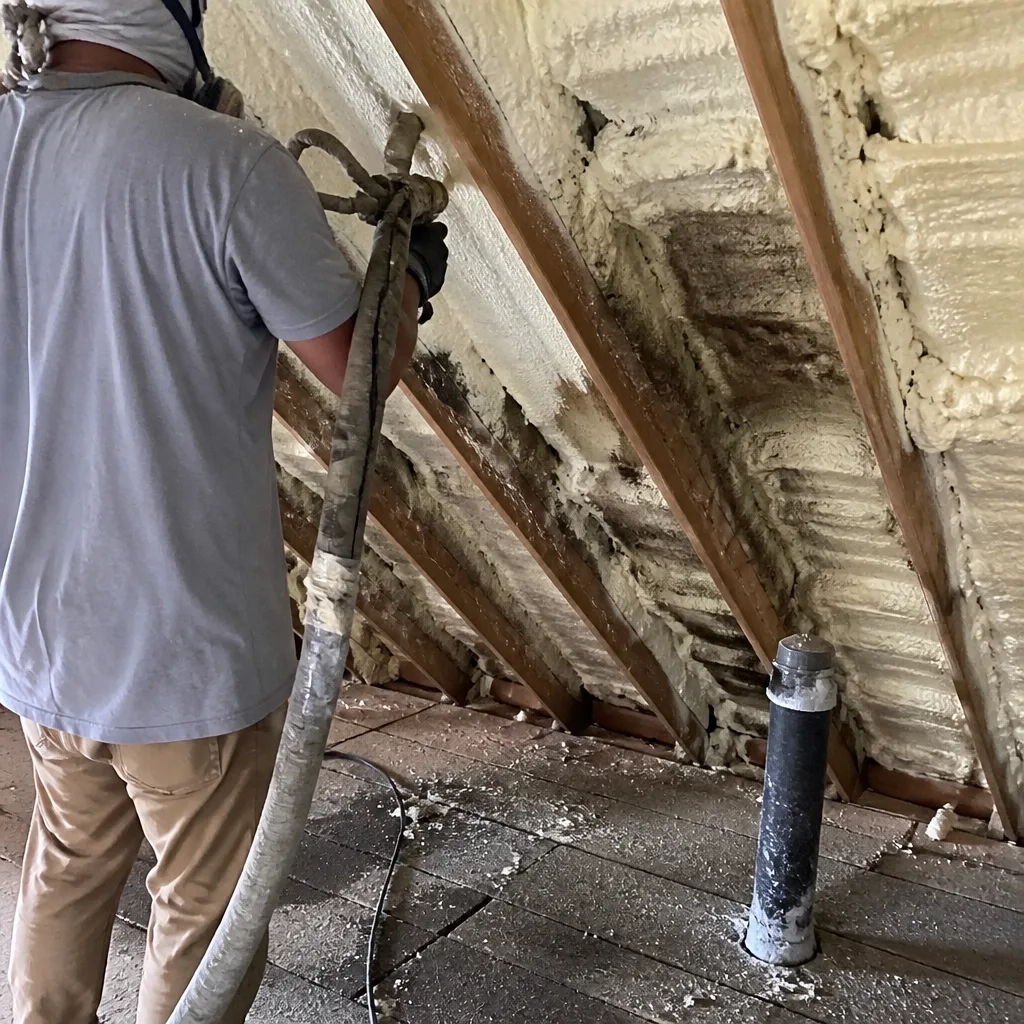 Before
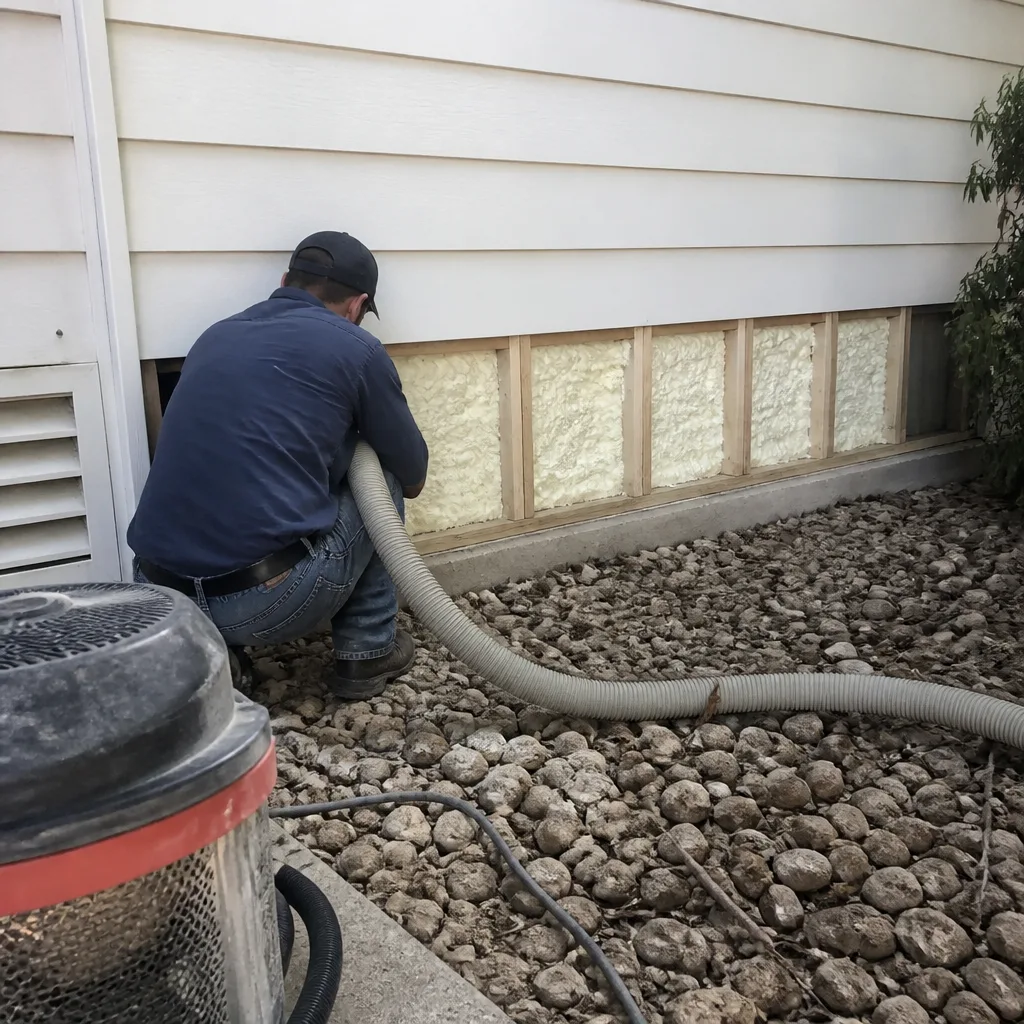 After
AfterReplacement Cost & What’s Included
| Scope | Typical Range in Canyon Lake |
|---|---|
| Partial repair (localized tear, re-tape perimeter) | $850-$1,400 |
| Full encapsulation, small crawl (under 1,000 sq ft) | $2,800-$3,600 |
| Full encapsulation, medium crawl (1,000-1,800 sq ft) | $3,600-$4,500 |
| Full encapsulation, large crawl (1,800+ sq ft) with pier wrapping | $4,500-$5,200 |
| Add active dehumidifier (70-pint, drained to exterior) | $1,200-$1,600 |
What moves the number: crawl space height (we work on our backs in 18-inch clearance, which takes longer), number of pier posts to wrap and seal, whether the foundation wall needs wire brushing and new butyl tape prep, and if we find existing Knauf batts that need removal due to moisture damage. Every quote is a flat, written price under Haven Standard Clause 1. No work starts without it. The 365-Day Done Right Promise covers the encapsulation and any associated air-sealing work.
Your documentation includes: before-and-after photos of the full crawl space perimeter, a moisture reading log at three points, and a written scope with material specs. On jobs where the home has an existing blower-door test on file, we note whether the crawl space seal changed the overall envelope leakage. Seal the leaks first. Then insulate. The report tells you whether it worked.
DIY or Call Us?
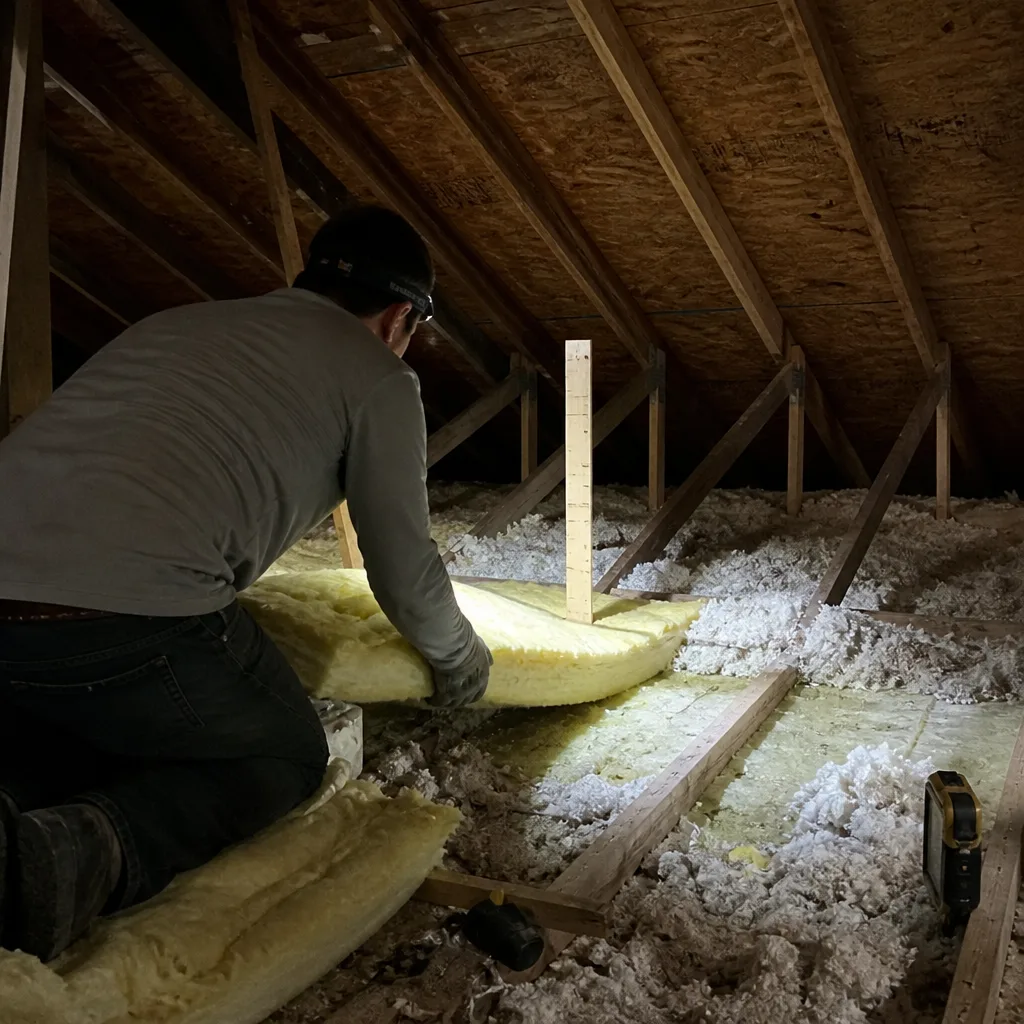
There’s no high-tension danger in crawl space encapsulation, but there’s a lot of ways to waste money. A homeowner can safely check the perimeter tape adhesion with a flashlight and utility knife, measure existing barrier thickness, and photograph any tears for reference. What goes wrong in DIY: inadequate surface prep on block walls (tape won’t bond to dust or efflorescence), wrong tape for the temperature range (standard duct tape fails in 6 months), and missing the pier post wraps where 40% of moisture intrusion actually happens.
We also find that DIYers underestimate material ordering by 15-20%, and Knauf-compatible reinforced polyethylene isn’t stocked at Canyon Lake hardware stores. If you’ve already been down there twice and the musty smell persists, the gap is probably somewhere you can’t see from the entry point. Call (737) 227-6219 and we’ll read your photos with you, no charge for the second opinion if you have another estimate in hand.
FAQs
A properly installed 12-mil or 20-mil reinforced barrier lasts 20-25 years in this climate. The failure point is almost always the seam tape or perimeter seal, not the polyethylene itself. Canyon Lake’s freeze-thaw cycles and high summer humidity accelerate tape degradation, so we inspect and touch up seals at year 10 as part of our 365-Day Done Right Promise follow-up protocol. Call (737) 227-6219 to schedule a condition check.
Localized tears under 12 inches can be patched with compatible tape and an overlay patch if the surrounding material is still supple. If the barrier is brittle, chalking, or has multiple tear points, partial or full replacement is the only fix that holds. We don’t patch brittle material, it tears again in 18 months. Bring us photos or a written estimate from another contractor and we’ll tell you which category you’re in.
Most Canyon Lake homes are completed in 6-10 hours on a single day. We arrive with material pre-cut to your measurements, so the crew isn’t measuring and cutting in the crawl space. Large crawls with extensive pier wrapping or batts removal may extend to a second morning. Your written scope includes the day count before anyone starts.
Yes. We carry 12-mil and 20-mil reinforced polyethylene, butyl tape rated for 200°F surface temperature, Knauf-compatible seam tape, and pier post wraps in standard diameters. For odd pier sizes or radon mitigation penetrations, we custom-fabricate on site. If you need a specific Knauf insulation product matched, we source from our regular suppliers with no proprietary lock-in. Topside Attic Insulation Canyon Lake is an independent service provider, not affiliated with Knauf.
Ready to stop the moisture and get the documentation that proves it worked? Call (737) 227-6219 for a free estimate. A live person answers, 24/7. We’ll bring a written price before any work starts, and you’ll leave with photos, readings, and a scope in hand.
Written by Wes Okafor, Owner & Lead Insulation Technician, Topside Attic Insulation Canyon Lake at Topside Attic Insulation Canyon Lake, serving Canyon Lake and nearby areas.