
Rockwool Crawl Space Encapsulation & Vapor Barrier in Canyon Lake: What to Know First
We provide independent Rockwool crawl space encapsulation and vapor barrier service in Canyon Lake, with most jobs completed in one to two days and a written price delivered before any work starts. As an independent Rockwool service provider, we’re not affiliated with or authorized by the manufacturer, which means we source parts based on what actually solves your problem, not what a brand catalog dictates. Most Canyon Lake crawl spaces we see run between $2,800 and $5,400 for full encapsulation with Rockwool Comfortbatt or Comfortboard insulation, depending on whether we’re working over bare earth or replacing failed existing material. If you’re seeing musty odors, sagging subfloor insulation, or energy bills that spike every humid summer, call (737) 227-6219. We’ll read your crawl space the same way we read a blower-door report: with the numbers in front of us before anyone picks up a tool.
How Rockwool Products Fail - and How We Fix Them
- Comfortbatt R-23 compressed against damp subflooring. In Canyon Lake’s clay-heavy soils, groundwater wicks upward through stem walls even when the surface looks dry. Compressed Comfortbatt loses its loft and R-value while trapping moisture against floor joists. We remove the saturated batts, install a 6-mil or thicker vapor barrier sealed at seams and walls, then reinstall Rockwool only after the space is conditioned or at least dehumidified.
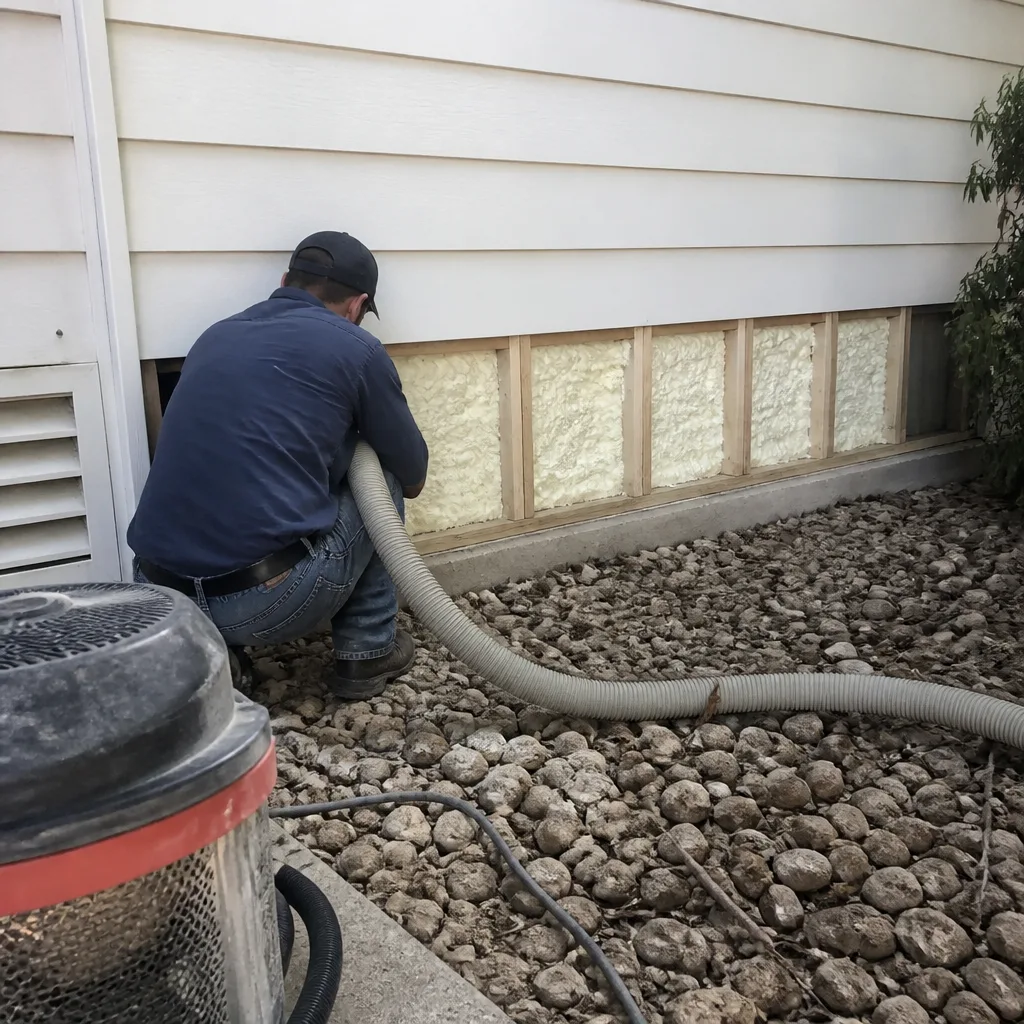
- Comfortboard 80 used as a perimeter band without air sealing. Homeowners sometimes install this rigid board around rim joists thinking the material alone stops air infiltration. It doesn’t. Canyon Lake’s temperature swings, especially near the lakefront where thermal bridging is pronounced, create expansion gaps that pull humid outdoor air through. We pull the board, seal rim joists with closed-cell spray foam or proper gasketed detail, then reinstall Comfortboard as a thermal break, not a substitute for air sealing.
- Rockwool batts dropped between joists without mechanical fastening. In crawl spaces with active rodent traffic, which we see regularly off FM 306 and Startzville Road, loose batts become nesting material within a season. We install stainless-capped fasteners or wire mesh supports, and where rodent pressure is severe, we integrate our rodent-proofing protocol before any insulation goes back in.
- Comfortbatt installed over an unsealed dirt floor. This is the most common Rockwool failure we document: a homeowner or prior contractor insulated the ceiling without addressing the vapor drive from below. The batts absorb ground moisture, grow heavy, and delaminate. We won’t install Rockwool over bare earth. Period. The vapor barrier goes down first, sealed to walls and piers, then we assess whether the space needs active dehumidification before re-insulating.
- Rockwool left exposed in vented crawl spaces during Canyon Lake’s shoulder seasons. When outdoor dew points swing from 40°F to 70°F in a March afternoon, vented crawl spaces hit condensation conditions that wet the material’s binder. We either convert to a sealed, conditioned crawl space or specify a different assembly if full encapsulation isn’t in scope. Rockwool handles moisture better than fiberglass, but “better” doesn’t mean “immune.”
Our Rockwool Crawl Space Encapsulation & Vapor Barrier Process
- 1
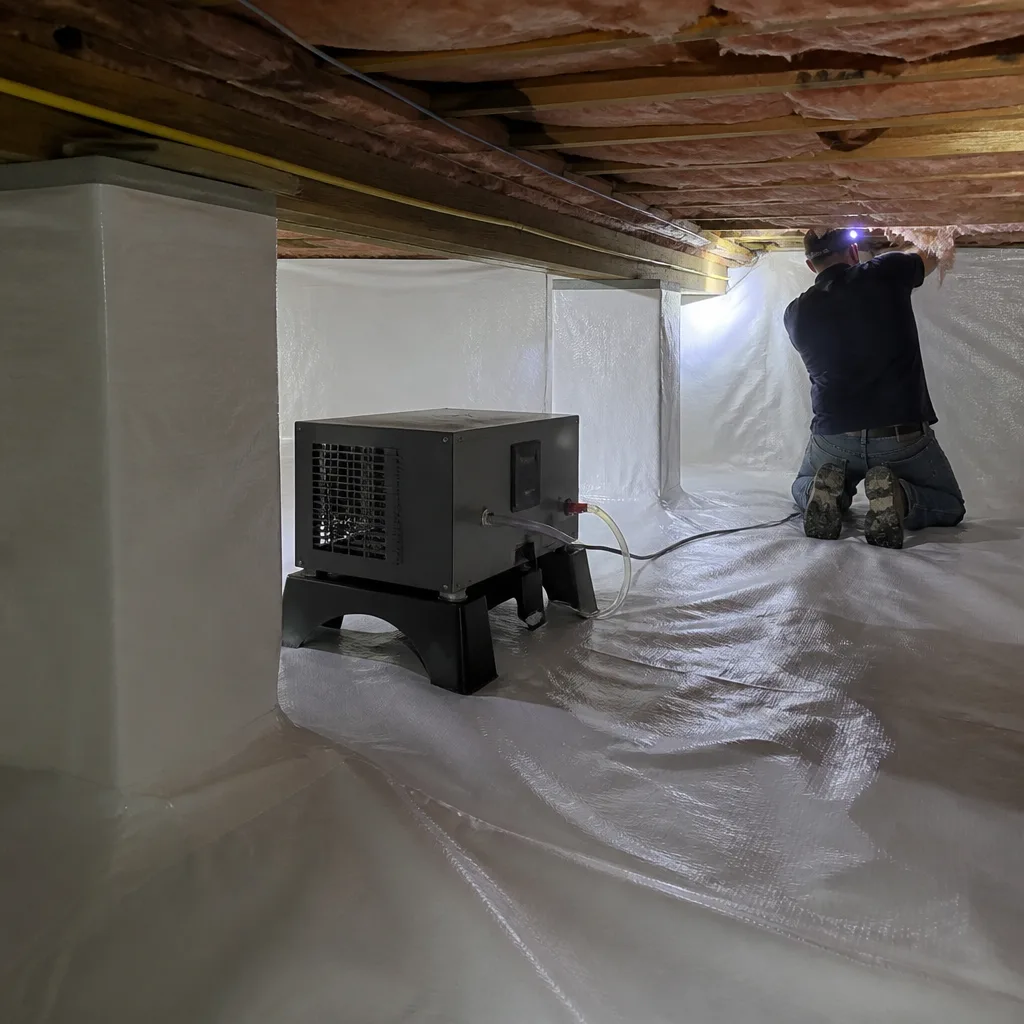
Site assessment and moisture mapping. We measure relative humidity at multiple points, check for standing water, and photograph existing Rockwool condition. You’ll see what we see before we quote.
- 2
Blower-door or smoke-pencil diagnostic if the home’s envelope is in question. Crawl space air leaks often connect to wall cavities and floor penetrations. We find the path before we seal it.
- 3
Written price with scope, warranty, and material spec. Haven Standard Clause 1: flat price, written scope, written warranty before anyone lifts a tool. No surprises.
- 4
Removal of failed material, cleaning, and vapor barrier installation. We seam-seal with pressure-sensitive tape rated for damp substrates, run barriers up walls to grade level, and seal around piers and penetrations.
- 5
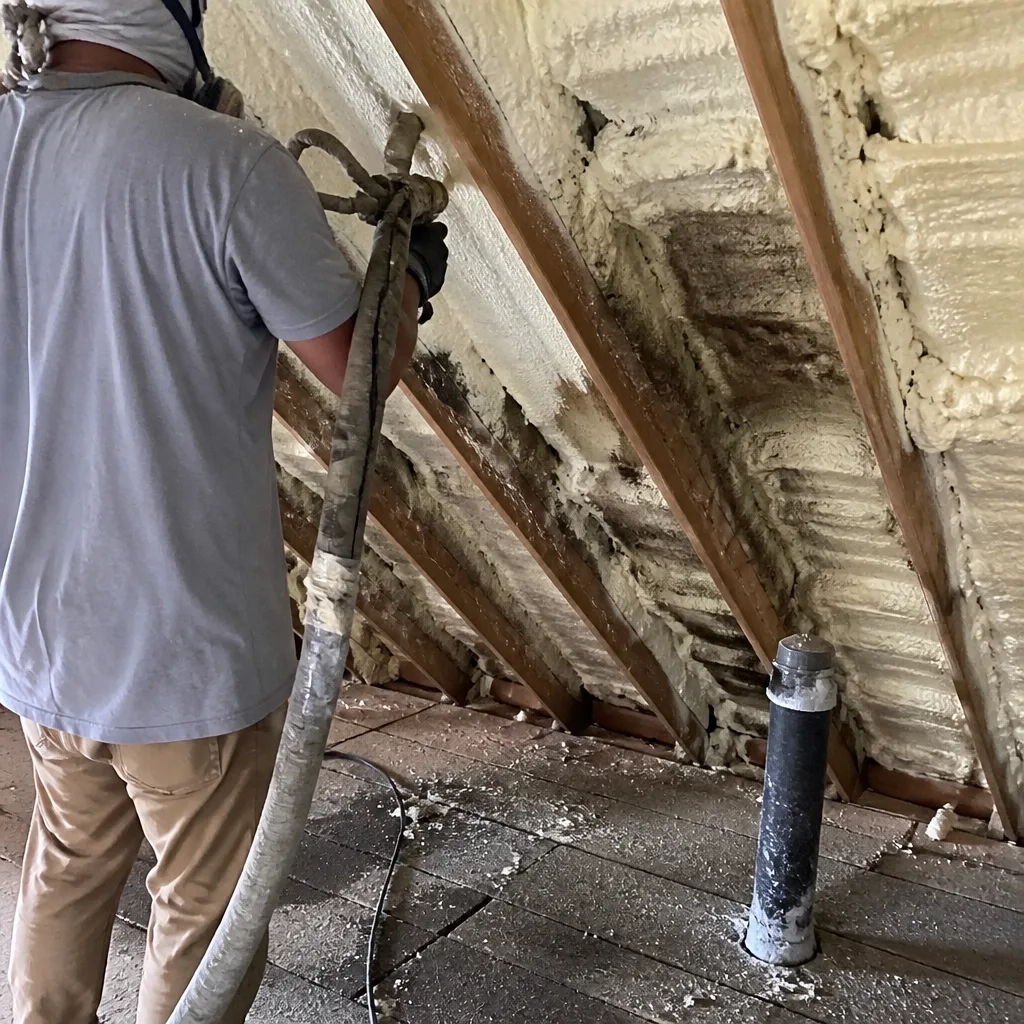
Air sealing of rim joists, sill plates, and penetrations. Then, and only then, do we reinstall Rockwool or specify an alternative if the assembly calls for it. Seal the leaks first. Then insulate. The report tells you whether it worked.
- 6
Documented Photo Record and final walkthrough. You get photos, the written scope fulfilled, and on applicable jobs, before-and-after air leakage numbers. The crew doesn’t leave until you’ve seen what was done.
 Before
 After
AfterWhat Rockwool Crawl Space Encapsulation & Vapor Barrier Costs in Canyon Lake
| Job Type | Typical Range | What Moves the Price |
|---|---|---|
| Vapor barrier only (6-mil, sealed, bare earth) | $1,800 - $2,800 | Square footage, pier count, access difficulty |
| Full encapsulation with Rockwool Comfortbatt reinstall | $3,200 - $4,800 | Existing material removal, dehumidifier needed, rim joist sealing extent |
| Conditioned crawl space conversion with Comfortboard detail | $4,500 - $7,200 | HVAC extension, dehumidification capacity, wall insulation requirements |
| Rockwool removal and replacement with rodent remediation | $2,400 - $4,200 | Contamination level, accessibility, vapor barrier condition |
Homes near the lakefront or in low-lying pockets off Cranes Mill Road often run toward the higher end due to persistent groundwater and the extra pier sealing required. We also service Reflectix systems if your crawl space has a mixed assembly or you’re comparing radiant barrier options. Call (737) 227-6219 for a written estimate - we’ll read your existing quote with you as a Free Second Opinion if you’ve already got one in hand.
Why Canyon Lake Homeowners Call Topside Attic Insulation Canyon Lake for Rockwool Work
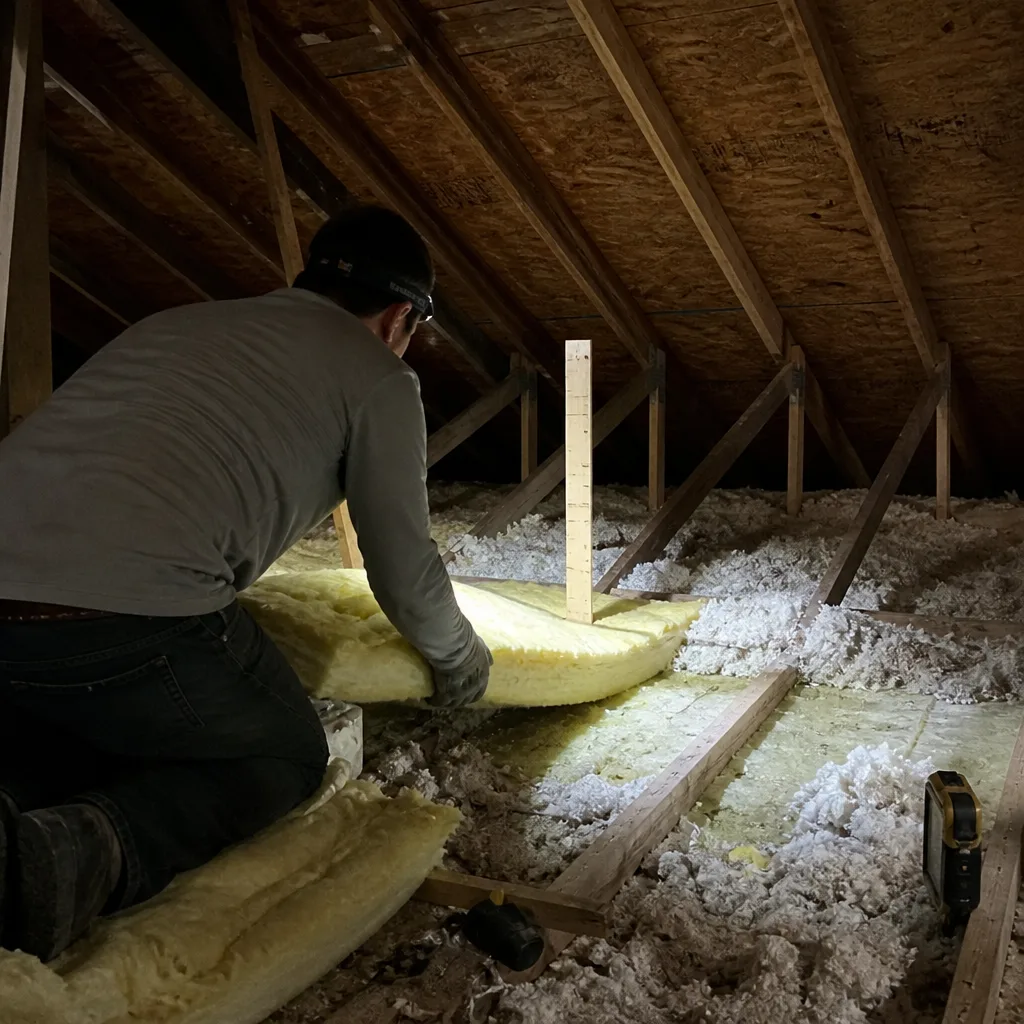
We’ve been in enough Canyon Lake crawl spaces to know which ones were insulated by someone who never checked the soil moisture first. Wes Okafor and our crew treat air sealing as prerequisite, not upsell - we don’t blow insulation over unsealed rim joists or install batts over bare dirt and call it done. Every job gets a written price before work starts, a Documented Photo Record when we leave, and the 365-Day Done Right Promise if anything isn’t right. Our technicians are background-checked, uniformed, and know the difference between Comfortbatt and Comfortboard without reading a label. Calls are answered by a live person 24/7, not a voicemail loop. If your energy bills are higher than your mortgage, the crawl space is usually confessing something. We’ll help you read the evidence.
FAQs
Rockwool’s product warranty covers manufacturing defects, not installation errors like compression against wet substrates or installation over unsealed vapor barriers. As an independent service provider, we document the installation conditions so you have a record if a material claim ever arises. Call (737) 227-6219 and we’ll walk through what’s covered and what isn’t.
We source Rockwool Comfortbatt, Comfortboard, and accessories through standard distribution channels; there’s no “OEM part” distinction in insulation the way there is in mechanical systems. We specify based on what the assembly needs, and we’re not locked into any single brand - we also work with Reflectix and other manufacturers if a different material solves your problem better.
Spot repair is rarely worth it in a crawl space. Once Rockwool has absorbed groundwater or rodent contamination, the binder breaks down and the material won’t recover its R-value. Full removal, vapor barrier installation, and reinstallation typically runs $3,200-$4,800 in Canyon Lake, versus $1,200-$2,000 for partial repair that usually needs redoing within two years. Call (737) 227-6219 for an exact quote - estimates are free.
Most Canyon Lake encapsulations with Rockwool reinstall finish in one to two days. Access constraints, pier count, and whether we need to install a dehumidifier can push it to three. We don’t schedule until you’ve approved the written price, and we text when the technician is en route.
Yes, but only if the air sealing is done first. We’ve measured blower-door reductions of 15-30% on Canyon Lake homes after proper crawl space sealing and insulation, but the savings come from stopping air leakage, not from the insulation alone. We publish before-and-after numbers on every applicable job so you can verify the result yourself.
Written by Wes Okafor, Owner & Lead Insulation Technician, Topside Attic Insulation Canyon Lake at Topside Attic Insulation Canyon Lake, serving Canyon Lake and nearby areas.