
Rockwool Blown-In Insulation in Canyon Lake: What to Know First
We provide independent Rockwool blown-in insulation service in Canyon Lake, typically scheduling within 48 hours and completing most attic jobs in a single day. Every job starts with a written price before any work begins, and every job ends with a documented photo record. Most Rockwool blown-in retrofits in Canyon Lake run between $2,800 and $5,400 for a typical 2,000-square-foot home, depending on existing insulation depth and how much air sealing the top plates and penetrations need first.
This page is for homeowners who have Rockwool insulation products in their attic or walls and need blown-in installation, top-up, or replacement. You’re not looking for a generic insulation contractor. You’re looking for someone who knows why Rockwool ComfortBatt in a vented attic performs differently in Canyon Lake’s 100-degree August afternoons than it does in a climate-controlled catalog photo.
Call (737) 227-6219 for a free estimate. A live person answers, 24/7.
How Rockwool Products Fail - and How We Fix Them
- ComfortBatt settled below labeled R-value in vented attics. The batts compress over time where Canyon Lake’s afternoon attic temperatures regularly exceed 140°F, especially near the Cranes Mill Road corridor where roof pitch and dark shingles accelerate heat gain. We remove the degraded batts, seal every top plate and penetration with foam and caulk, then blow in Rockwool Comfortbatt loose-fill or switch to a blown-in system that fills irregular joist cavities without the compression points.
- Rockwool Comfortbatt loose-fill bridges across recessed can lights. When installers blow over unsealed IC-rated fixtures, the insulation creates a thermal bypass that dumps conditioned air into the attic. We find this constantly in Canyon Lake homes built between 2005 and 2015. We remove the bridging material, install fire-rated covers over every can light, seal the perimeter with acoustic sealant, then reinstall the blown-in to proper depth.
- Multifix boards delaminate from the substrate in high-humidity applications. Canyon Lake’s spring humidity spikes and occasional roof leaks wick moisture into wall cavities where Multifix was used as continuous exterior insulation. The boards lose their mechanical bond and create a gap that convection loves. We diagnose with thermal imaging, remove the failed boards, remediate any moisture damage, and dense-pack the cavity with Rockwool blown-in or recommend an alternative system if the wall assembly can’t be dried reliably.
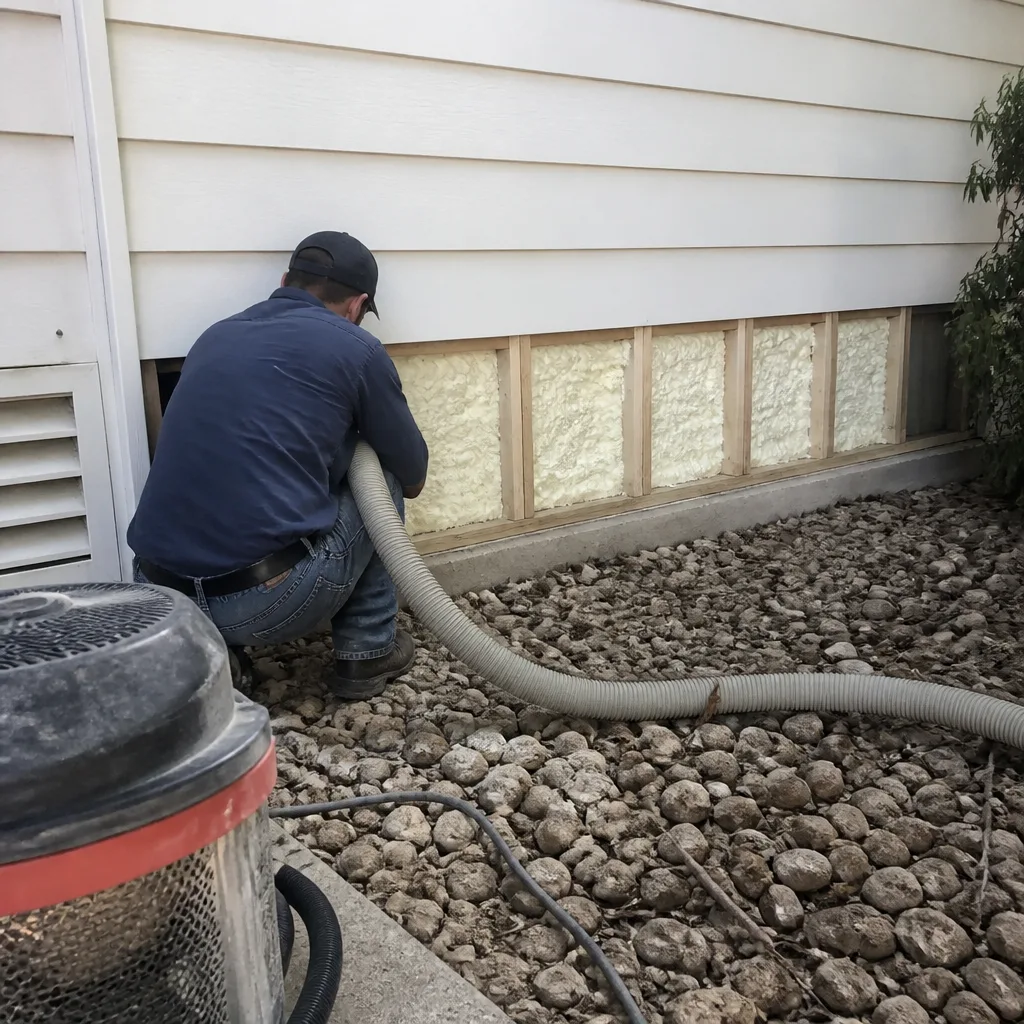
- Rockwool AFB (Acoustical Fire Batt) installed without proper cavity fill leaves sound flanking paths. In townhomes near the lake where owners wanted both fire rating and noise reduction, incomplete cavity fill around electrical boxes and duct chases lets sound and air travel unimpeded. We dense-pack those cavities properly with Rockwool blown-in, using a tube-fill method around obstructions that batts can’t navigate.
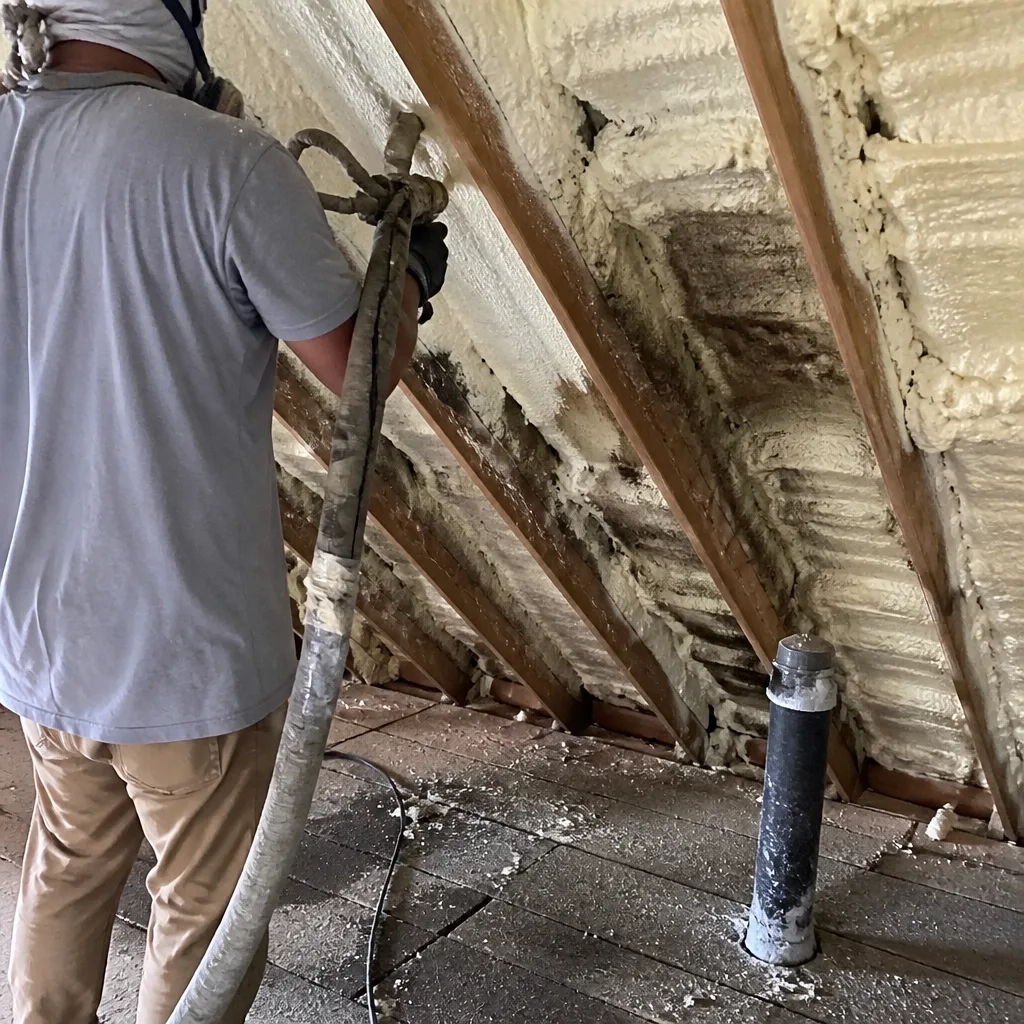
- TopRock DD loose-fill washes in wind-driven rain through gable vents. Canyon Lake’s spring storms push water through poorly screened gable ends, clumping the mineral wool and creating mold-prone dead zones. We remove the water-damaged material, install proper baffles and vent screens, seal the air leaks that drove the moisture migration, then reinstall with corrected ventilation geometry.
Our Rockwool Blown-In Insulation Process
- 1
Call and schedule. A live person answers at (737) 227-6219, 24/7. We book a site visit, usually within 48 hours.
- 2
Blower-door test and attic inspection. We pressurize the house and measure CFM50 - the number that tells us how much conditioned air you’re losing through gaps in the envelope. We photograph every penetration, top plate, and can light. You get the printed pre-test number before we discuss scope.
- 3
Written price and material selection. We specify Rockwool product by line - Comfortbatt loose-fill, TopRock DD, or AFB dense-pack - and note where quality aftermarket components (fire-rated covers, baffles, sealants) outperform OEM accessories. You get a flat price, written scope, and written warranty before anyone lifts a tool. Haven Standard Clause 1.
- 4
Air sealing first. Every gap gets sealed before a single bag opens. Top plates, wire penetrations, plumbing stacks, chimney chases, duct boots. Seal the leaks first. Then insulate. The report tells you whether it worked.
- 5
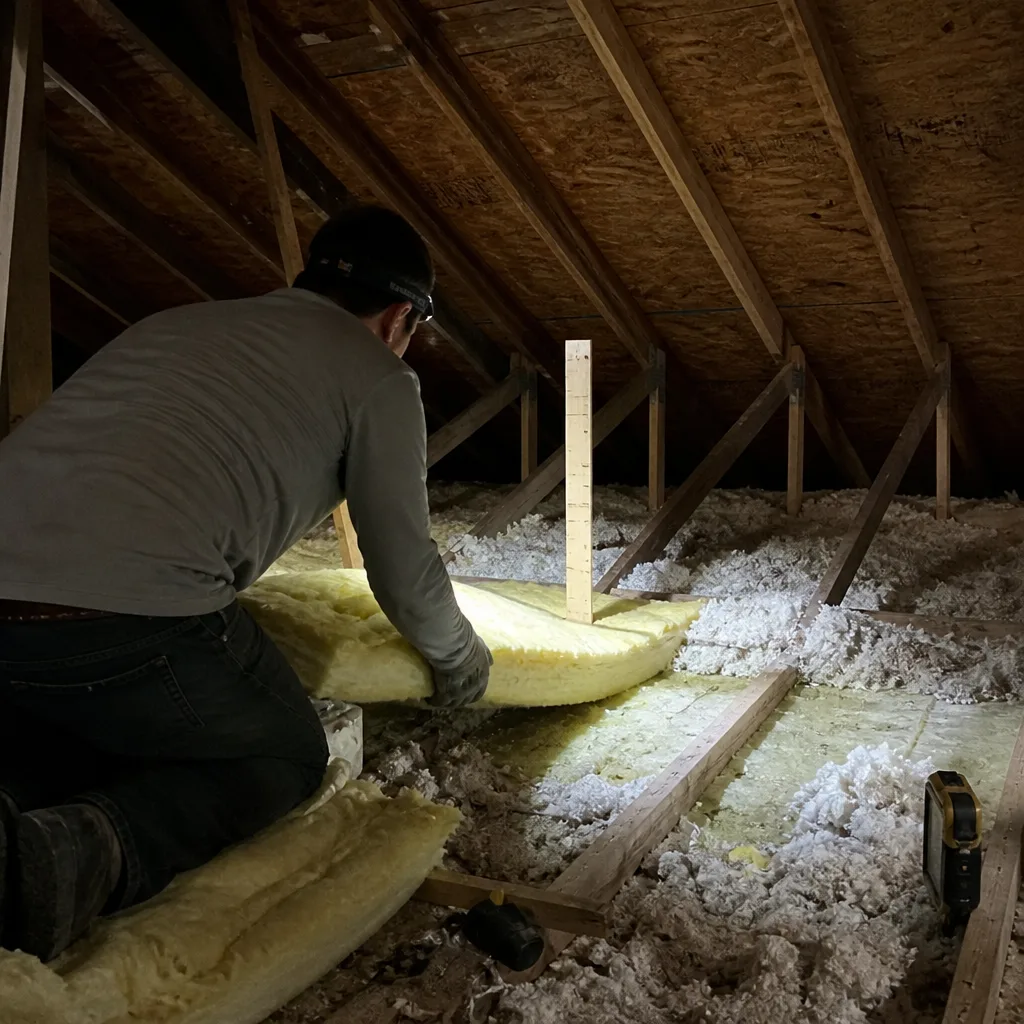
Blown-in installation to depth. We set screed lines and install to manufacturer-specified depth with proper density - no fluffy underfill, no over-compression. Thermal imaging confirms even distribution.
- 6
Post-test, photo record, and walkthrough. We run the blower door again and hand you the printed before-and-after report, plus the documented photo record of every sealed penetration and installed area. The 365-Day Done Right Promise is already in writing.
 Before
 After
AfterWhat Rockwool Blown-In Insulation Costs in Canyon Lake
| Scenario | Typical Range |
|---|---|
| Attic top-up over existing Rockwool (1,500-2,500 sq ft) | $2,800 - $4,200 |
| Full removal and replacement with Rockwool blown-in, plus air sealing | $4,500 - $7,800 |
| Dense-pack wall insulation with Rockwool AFB (per 1,000 sq ft of wall) | $3,200 - $5,600 |
| Water-damaged Rockwool removal, drying period, and reinstall | $5,500 - $9,400 |
What moves the price: attic square footage, current insulation depth and condition, accessibility (steep roof pitch or limited hatch size), extent of air sealing required, and whether we need to coordinate with an electrician for can light sealing. Every quote is flat and written. No surprises.
Call (737) 227-6219 for an exact quote. Estimates are free.
Why Canyon Lake Homeowners Call Topside Attic Insulation Canyon Lake for Rockwool Work
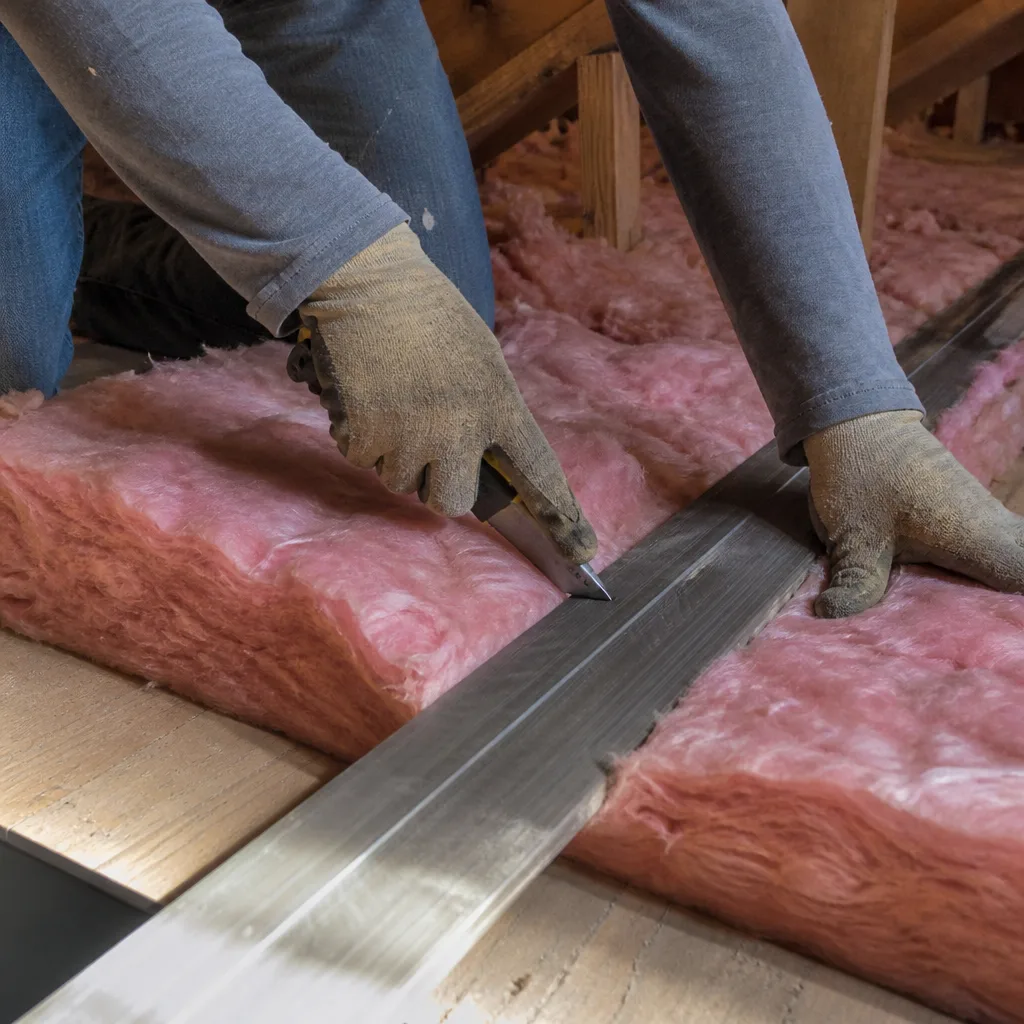
We’ve been in attics around Canyon Lake long enough to know which ridge-vent configurations clog with pollen and which don’t. Wes Okafor runs a blower-door test on every applicable job because a number without context is just noise, and the number after sealing is the only proof that the work mattered. Our technicians are background-checked and uniformed, and we carry Rockwool, Owens Corning, Johns Manville, Knauf, and Reflectix materials - no proprietary lock-in, so we specify what’s right for your assembly, not what’s in our warehouse. The 365-Day Done Right Promise is in writing before we start. The photo record is delivered before we leave. And a live person answers the phone at 2 AM when your AC is running nonstop and you suspect the attic is the culprit.
FAQs
Rockwool’s product warranty covers manufacturing defects regardless of who installs it, provided the product was installed to manufacturer specifications. As an independent Rockwool service provider, we document our installation depths, densities, and assembly details so any warranty claim has the backup it needs. We are not affiliated with or authorized by Rockwool. Call (737) 227-6219 and we’ll walk you through what’s documented and what’s not.
Most complete attic jobs finish in one day, assuming standard access and no active moisture remediation. Dense-pack wall work or water-damaged removal scenarios typically run two days. We schedule start times, not windows. Call (737) 227-6219 for availability.
Top-up over compressed batts almost always costs less upfront, but the compressed layer continues to underperform and can create thermal bypasses. Full removal and proper blown-in installation costs 40-60% more but delivers the rated R-value across the entire attic plane. We show you both numbers in writing and let the blower-door result settle the argument. Call (737) 227-6219 for a free second opinion on any written estimate.
Yes. We also install Owens Corning, Johns Manville, Knauf, and Reflectix products, and we can specify equivalent density and fire-performance assemblies when Rockwool lead times stretch out. We don’t lock you into a single brand. Call (737) 227-6219 to discuss what’s in stock and what fits your assembly.
We hand you a printed blower-door report with the pre-work CFM50 and post-work CFM50 on the same page. If the number didn’t drop, we keep sealing until it does. That’s Haven Standard. Call (737) 227-6219 and we’ll explain what a meaningful drop looks like for your home’s size and vintage.
Written by Wes Okafor, Owner & Lead Insulation Technician, Topside Attic Insulation Canyon Lake at Topside Attic Insulation Canyon Lake, serving Canyon Lake and nearby areas.