
Rockwool Attic Air Sealing: The Canyon Lake Owner’s Guide
Rockwool attic air sealing in Canyon Lake typically runs $380-$720 for a complete top-plate and penetration seal on a 1,800-2,400 sq ft home, and we stock the compatible gasket, caulk, and fastener systems to finish most jobs same-day. If your energy bills climbed after a Rockwool insulation install, or you’re feeling drafts through recessed fixtures despite fresh batts overhead, the air sealing layer underneath likely failed or was skipped. In Canyon Lake’s climate, where attic temperatures hit 140°F and humidity swings hard off the lake, an unsealed attic floor lets conditioned air escape faster than the Rockwool can slow it.
Which Rockwool Models This Applies To
This applies to Rockwool Comfortbatt, Comfortboard, and AFB (Acoustical Fire Batt) installations where the air sealing detail was either omitted, degraded, or specified with incompatible materials. Rockwool itself is stone wool insulation; it does not shrink, but the sealing interface around it - top plates, electrical penetrations, chimney chases, and dropped soffits - is where the failure happens.
To identify what you’re working with: check for a white or silver facer label on the batt edge showing “Comfortbatt R-30” or similar. The critical compatibility gotcha in Canyon Lake is that Rockwool’s density (about 2.5-4.0 lbs/ft³ depending on product) requires a sealant with enough elongation to handle the compression cycle without tearing. Basic latex caulk cracks in 18-24 months here. We spec OSI Quad Max or comparable solvent-based sealant for Rockwool interfaces, or closed-cell spray foam for larger gaps. OEM Rockwool does not manufacture its own air sealing accessories; the “Rockwool-compatible” designation means materials tested to maintain adhesion at the temperature and humidity ranges where stone wool performs.
Aftermarket equivalents are standard in this trade and often superior to whatever was originally slapped on. We carry both.
Signs Your Rockwool Attic Air Sealing Is Failing
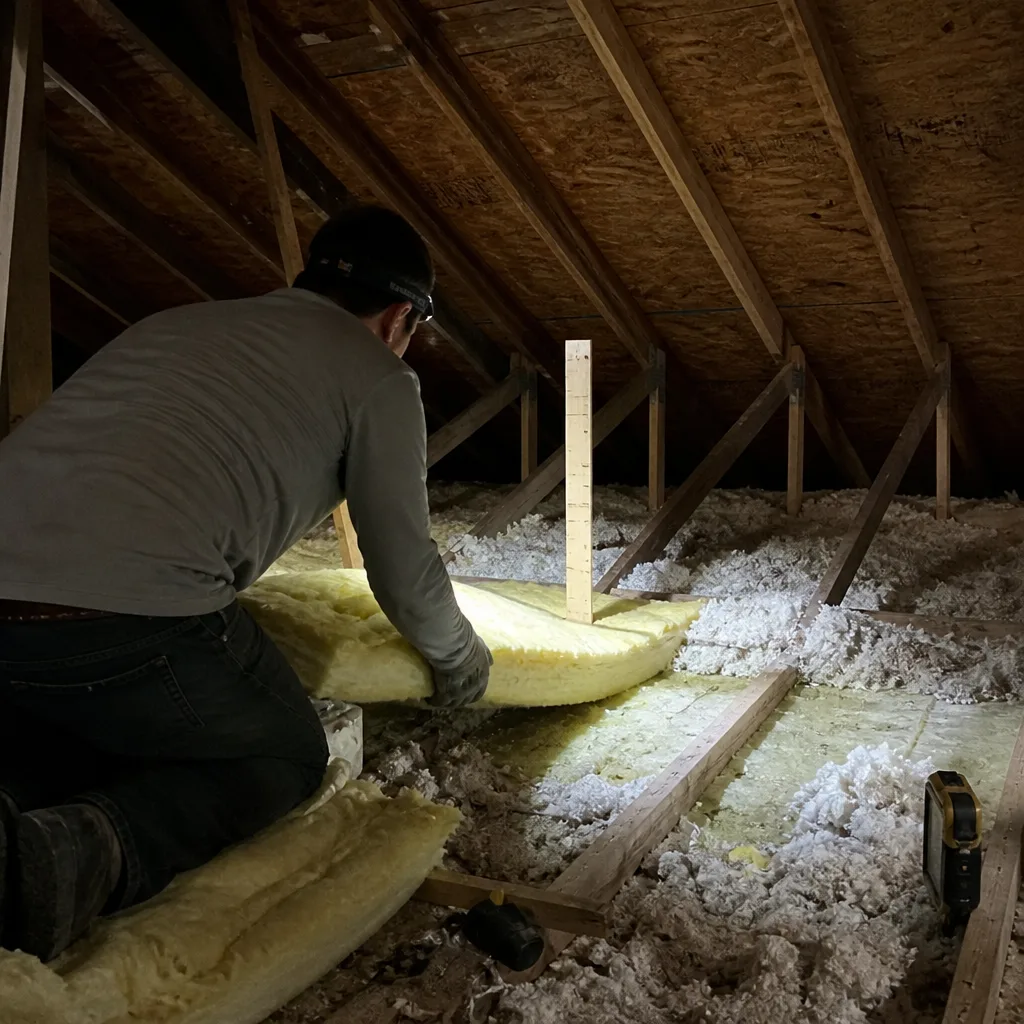
- Dust streaks on batt edges. Air moving through gaps carries fine particles that deposit on the Rockwool surface. If your batts look grimy at the perimeter, air is washing through, not just conducting.
- Hot rooms under the attic despite thick insulation. Rockwool’s R-value is real, but R-value only measures conductive heat flow. Convective leaks bypass it entirely. We see this on the south-facing bedrooms in Canyon Lake homes near Startzville, where ridge vent suction pulls living-space air up through missed top-plate seals.
- Ice damming or moisture staining on ceiling drywall. Warm, humid interior air hits cold sheathing and condenses. In our climate, this shows up as ring-shaped stains around can lights, not just roof-edge ice.
- Spikes in cooling load that don’t match outdoor temperature. Your AC runs harder on mild days because the envelope is leaking continuously, not just when it’s hot. The blower-door test catches this: a reading above 3,500 CFM50 on a post-2000 home usually means the air sealing failed or was never done.
- Pest activity in the attic. Gaps that pass air also pass mice. Rockwool is mineral fiber and unappealing to rodents, but the holes around plumbing stacks are an open door.
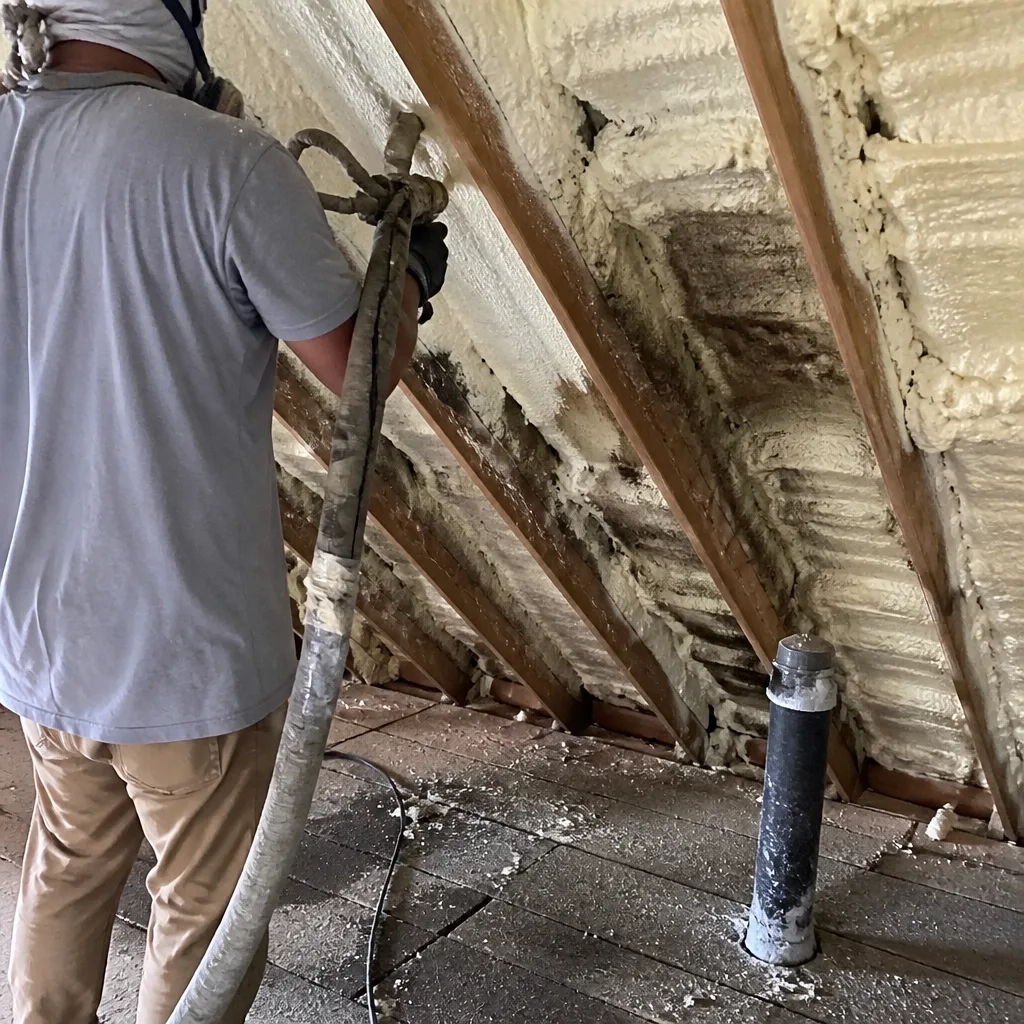 Before
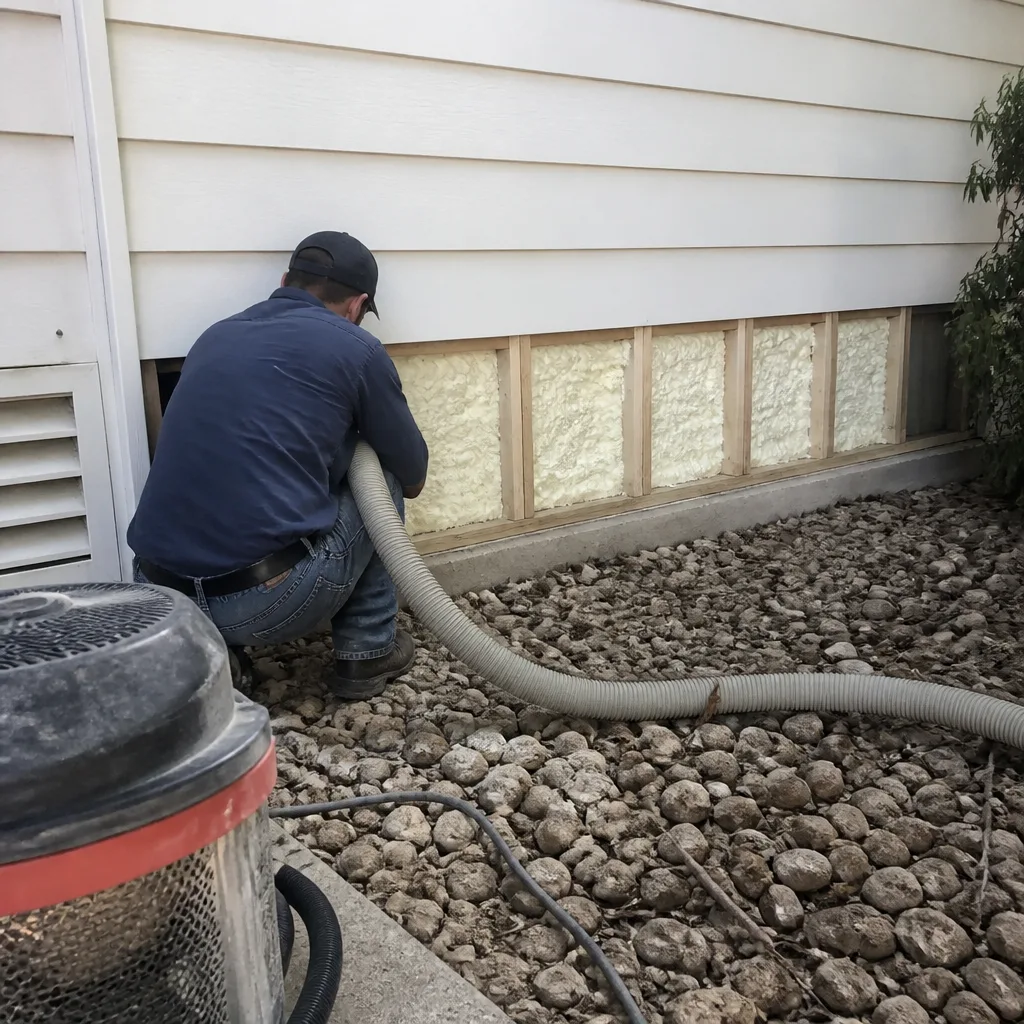 After
AfterReplacement Cost & What’s Included
Most Rockwool attic air sealing jobs in Canyon Lake fall between $380 and $720 installed. The low end covers a focused repair: re-sealing top plates and 6-10 electrical penetrations in a straightforward attic. The high end addresses complex geometry - multiple HVAC platforms, a chimney chase, or a previously insulated attic where we remove and reinstall existing Rockwool to access the deck.
That price includes: labor, sealant and gasket materials, any necessary baffles to maintain vent channel clearance, and our Documented Photo Record. On applicable jobs, we run a blower-door test before and after so you see the CFM50 drop in writing. The 365-Day Done Right Promise covers workmanship; materials carry manufacturer terms. We give you the written price before anyone starts, under Haven Standard Clause 1.
DIY or Call Us?
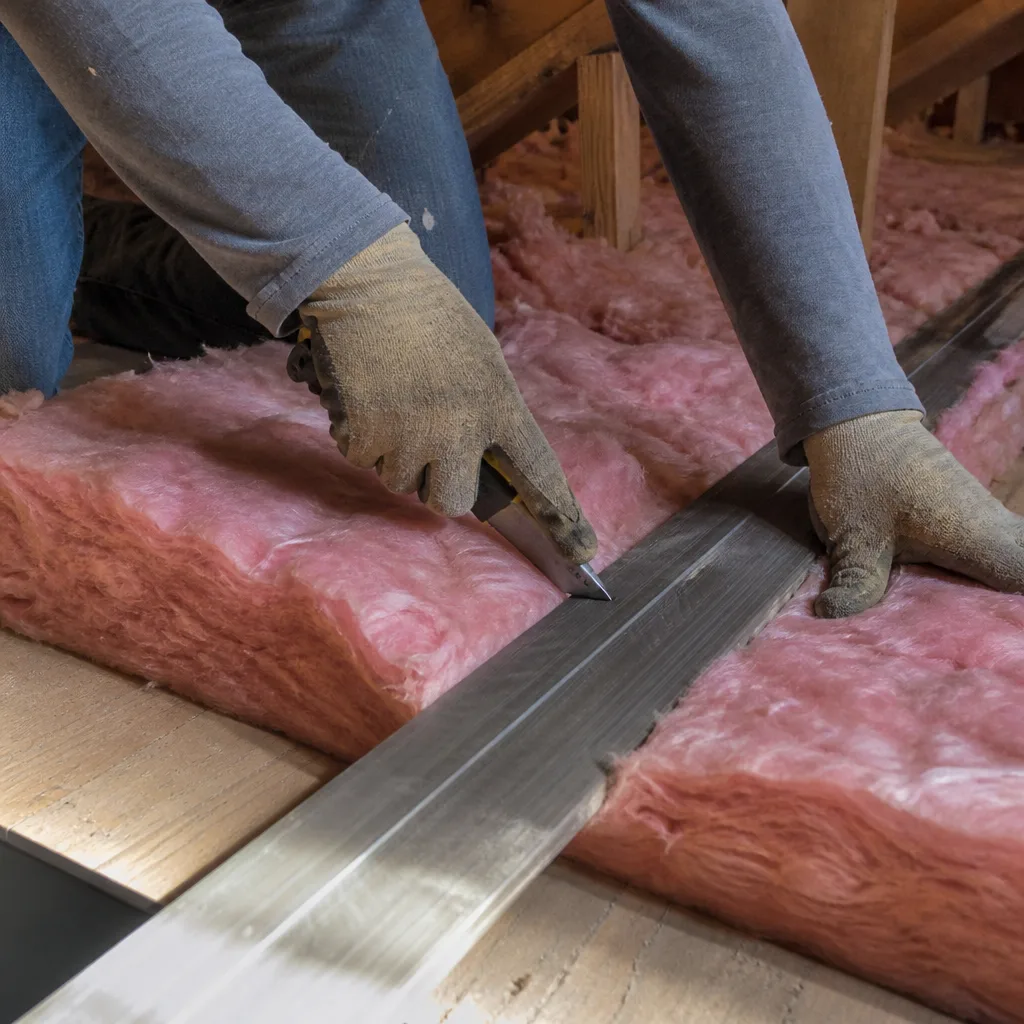
Here’s what you can safely check: look for visible gaps around light fixtures, plumbing vents, and the wall top plates where the drywall meets the attic floor. A flashlight and a camera are enough to document what you find. Do not, however, attempt to seal around recessed can lights unless you know whether they’re IC-rated (insulation contact rated) - a wrong call creates a fire hazard. And skip the spray foam kits from the hardware store; the DIY versions off-gas badly in confined attics and rarely achieve the closed-cell density needed for a durable seal.
The real risk in Canyon Lake isn’t dramatic. It’s that you’ll seal the obvious spots, miss the critical ones, and spend the next three years wondering why your bills didn’t drop. We’ve cleaned up enough partial DIY jobs to know the pattern. Call (737) 227-6219 and we’ll read your situation with you - free second opinion on any written estimate you’ve already got.
FAQs
Properly installed sealants and gaskets last 15-20 years, but the thermal cycling here is aggressive. We recommend a visual inspection at year 10, especially if your attic runs especially hot. Call (737) 227-6219 to schedule - estimates are free.
Spot repairs work if the original sealant is still adhering in adjacent areas. If it’s cracking or pulling away from the framing, partial repair usually fails within two years because the old material undermines the new. We assess this on every job and tell you straight which path costs less over time.
A focused Rockwool air sealing repair takes 3-5 hours. A full attic re-seal with blower-door verification runs a full day. We stock the compatible materials on our truck, so we’re not waiting on delivery.
We stock the sealants, gaskets, fasteners, and baffles that interface with Rockwool installations. Rockwool itself does not manufacture a dedicated air sealing kit; the parts are trade-standard materials selected for compatibility with stone wool density and Canyon Lake’s climate range. We also stock Reflectix and other brand interfaces if your attic has mixed materials.
Written by Wes Okafor, Owner & Lead Insulation Technician, Topside Attic Insulation Canyon Lake at Topside Attic Insulation Canyon Lake, serving Canyon Lake and nearby areas.