
Rockwool Attic Cleaning & Rodent Proofing in Canyon Lake: What to Know First
We provide independent Rockwool attic cleaning and rodent proofing in Canyon Lake, with most jobs completed in one to two days and a written price delivered before any work starts. Rockwool mineral wool insulation - including Comfortbatt, Comfortboard, and AFB (Acoustical Fire Batt) lines common in local homes - can harbor rodent waste, compress from moisture intrusion, or become contaminated after roof leaks near the lake’s humid microclimate. Our crew removes the affected material, sanitizes the deck, seals entry points with rodent-proof materials, and restores the thermal boundary.
This page is for Canyon Lake homeowners who’ve found droppings, nesting material, or compressed Rockwool in their attic and need the problem fixed without guesswork. Call (737) 227-6219 for a free estimate with a written scope.
How Rockwool Products Fail - and How We Fix Them
- Comfortbatt R-23 and R-30 batts sag in high-humidity attics. Rockwool’s hydrophobic fibers resist liquid water but don’t stop vapor drive; in Canyon Lake, where afternoon humidity spikes off the lake and ridge vents sometimes underperform on low-slope roofs, we’ve pulled batts that have sagged off top plates and left gaps. We remove the fallen material, sanitize the deck, and reinstall with proper spacers and air-sealed top plates so the batt stays where it belongs.
- Comfortboard 80 and 110 become rodent highways when gaps are left at eaves. The rigid board’s flat surfaces make ideal runways for roof rats, which we’ve found repeatedly in homes near the Cranes Mill Road corridor. We cut out contaminated sections, seal all eave and soffit gaps with 26-gauge galvanized flashing (rodents can’t chew through it), and replace with new board set in continuous beads of sealant.
- AFB (Acoustical Fire Batt) loses its fire rating when contaminated with oils or urine. This line is common in bonus rooms over garages in Canyon Lake’s newer builds; rodent urine crystallizes in the fibers and the salt load degrades the binder. We document the contamination with photos, remove the batt entirely, treat the substrate with an enzyme cleaner, and reinstall only after the deck reads dry on a moisture meter.
- Rockwool blown-in (Nu-Wool ProBlend, formerly Rockwool-blended) settles unevenly after rodent tunneling. The interlocking fibers separate when disturbed, creating cold spots. We vacuum out the tunneled material, which can’t be salvaged, air-seal the attic floor including every penetration and top plate joint, then reinstall with fresh material at proper density - typically 0.5 to 1.0 pounds per square foot depending on the target R-value.
- All Rockwool lines trap rodent scent if the deck isn’t sanitized before reinstallation. Mineral wool itself doesn’t support mold, but the organic debris in it does. We’ve learned that skipping the deck treatment guarantees a callback; our process includes HEPA vacuuming, enzyme treatment, and a follow-up moisture reading before any new insulation goes down.
Our Rockwool Attic Cleaning & Rodent Proofing Process
- 1
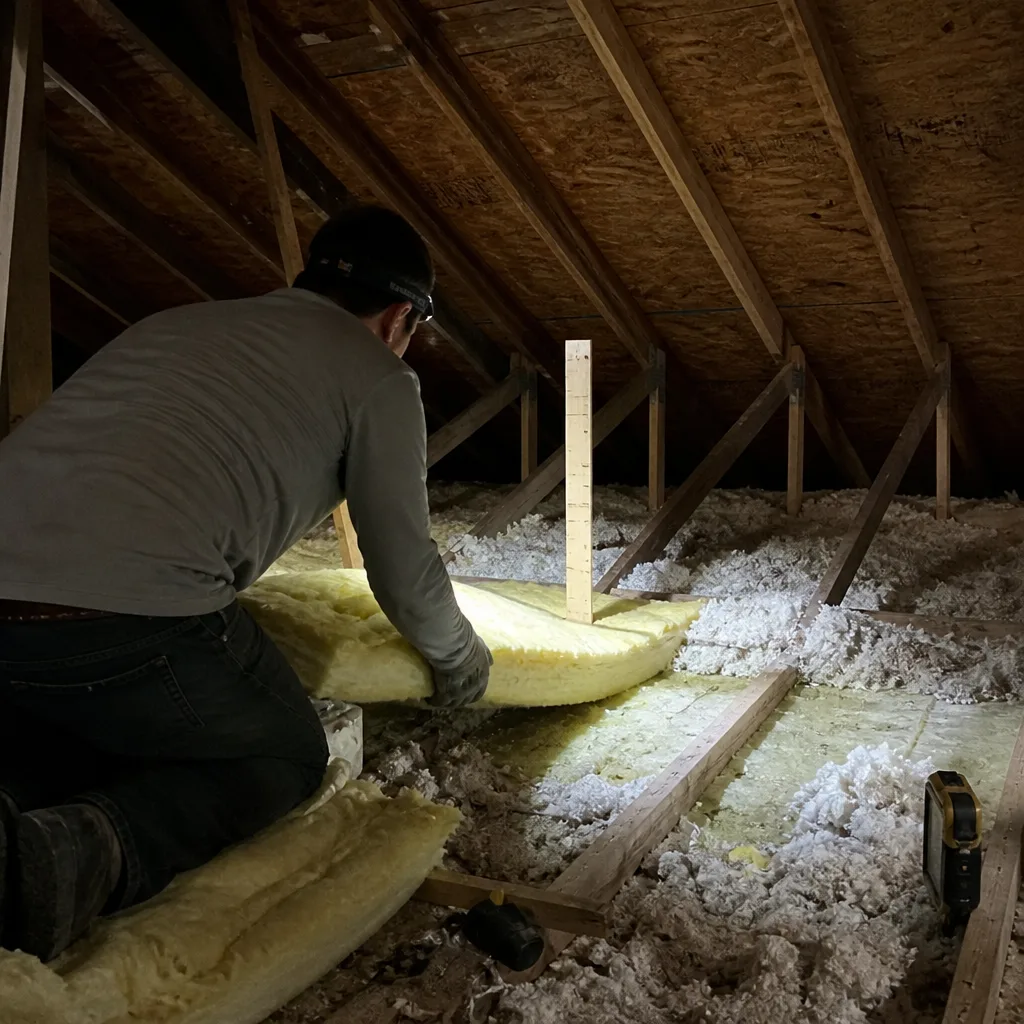
Inspection with photo documentation. We enter the attic, identify the Rockwool product line and its condition, locate rodent entry points, and photograph everything. You get these photos in your written estimate.
- 2
Written price before any work starts. The scope specifies what comes out, what gets sealed, what goes back in, and the exact material - no open-ended “time and materials” arrangements.
- 3
Containment and removal. We set negative air pressure if contamination is significant, bag the affected Rockwool, and haul it off. Comfortbatt and AFB go to different waste streams; we handle the sorting.
- 4
Deck sanitizing and rodent exclusion. The deck gets enzyme treatment and a moisture check. Every gap larger than 1/4 inch gets sealed: 26-gauge metal for rodents, fire-rated caulk for penetrations, rigid blocking for open soffits.
- 5
Reinstallation and verification. New Rockwool or alternative material goes in at specified density. On jobs where air sealing is part of the scope, we run a blower-door test - a pressurization diagnostic - before and after, and hand you the printed report. Seal the leaks first. Then insulate. The report tells you whether it worked.
- 6
Documented Photo Record and 365-Day Done Right Promise. You walk away with photos, readings if applicable, and a written warranty. If it’s not done right, we make it right.
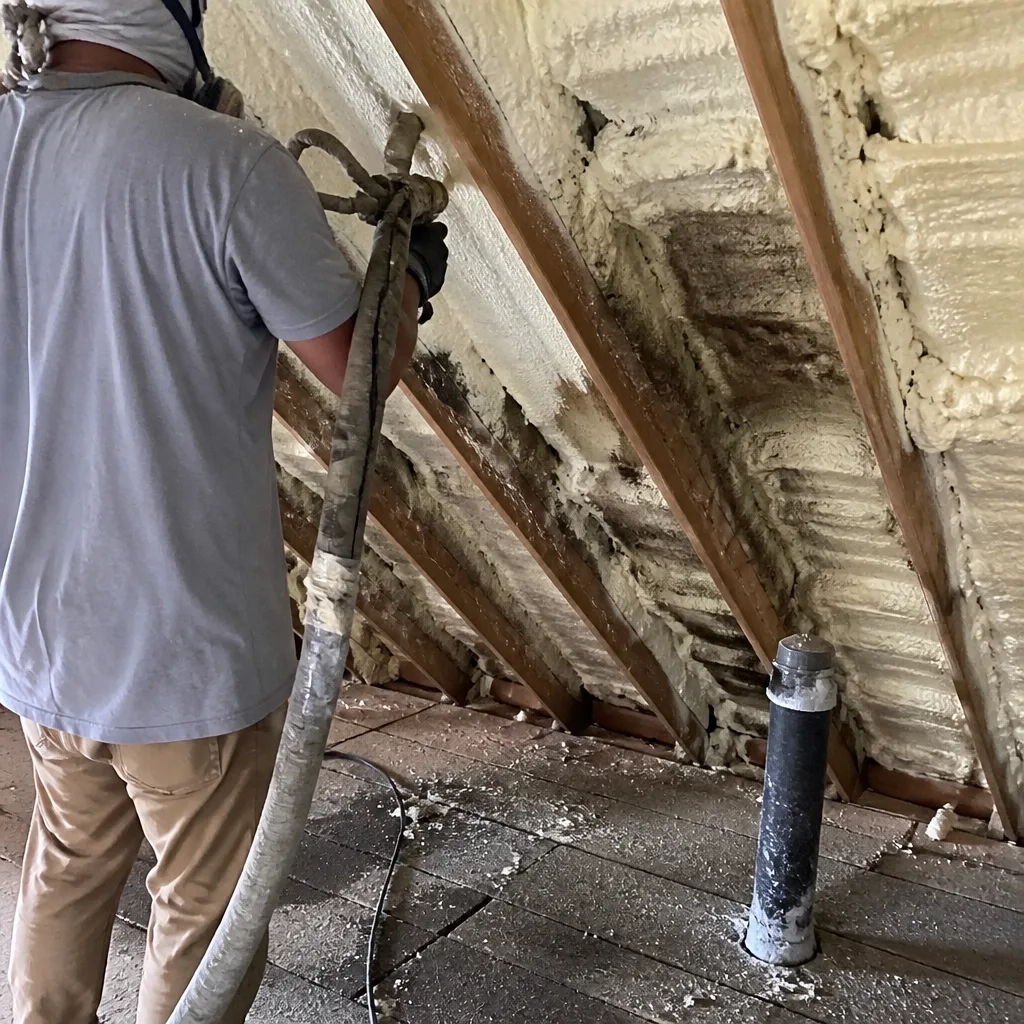 Before
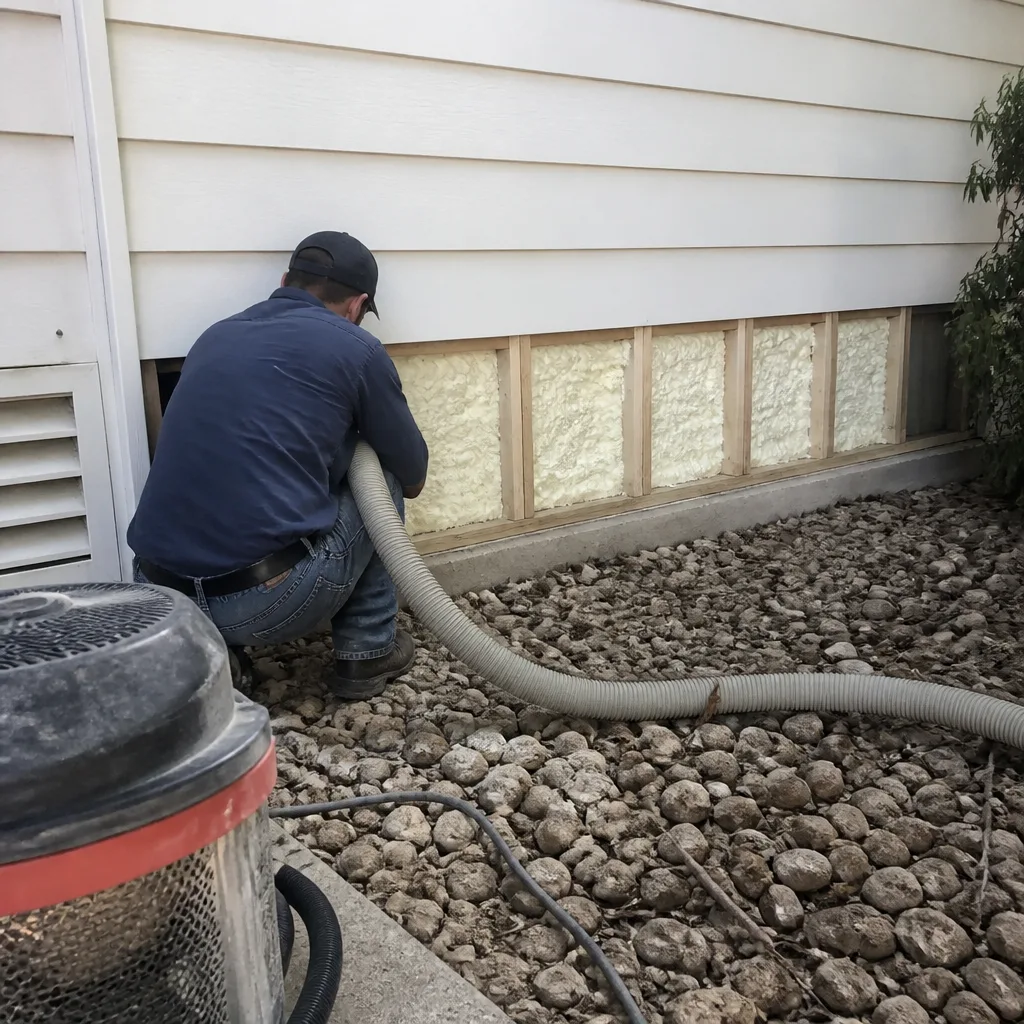 After
AfterWhat Rockwool Attic Cleaning & Rodent Proofing Costs in Canyon Lake
Most Rockwool attic cleaning and rodent proofing jobs in Canyon Lake run between $2,400 and $5,800, with simpler Comfortbatt removals and spot sanitizing at the lower end and full Comfortboard replacement with comprehensive exclusion at the upper. What moves the price: square footage, how many rodent entry points we find (roof rat exclusion on lake-adjacent homes with complex rooflines takes longer), whether the decking needs repair, and if you’re re-insulating with Rockwool or switching to another material like blown cellulose or Reflectix radiant barrier in select applications.
We also service Reflectix products if your attic has a hybrid system. Call (737) 227-6219 for a free estimate - the written price comes before any work starts, always.
Why Canyon Lake Homeowners Call Topside Attic Insulation Canyon Lake for Rockwool Work
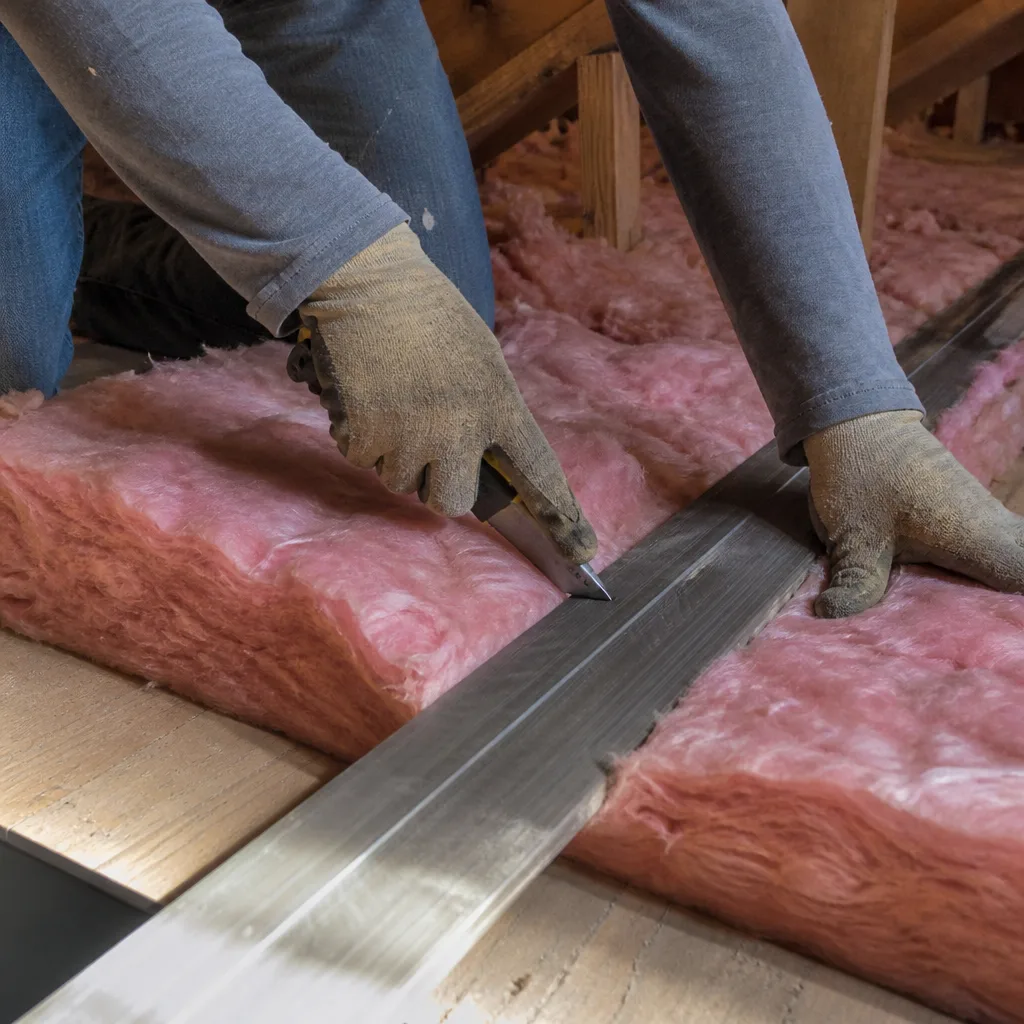
We’ve been in attics across the Canyon Lake area long enough to know which ridge-vent configurations fail first and why Rockwool performs differently here than in drier climates. Wes Okafor and our crew run blower-door tests on air-sealing jobs and publish the numbers - pre- and post-work - so you’re not trusting a feeling. We’re an independent Rockwool service provider, not affiliated with or authorized by the manufacturer, which means we recommend what’s actually needed: OEM Rockwool when it fits, quality alternatives when it doesn’t, and honest talk about when the product line in your attic has reached end of useful life. Calls are answered by a live person 24/7. No voicemail loops.
FAQs
Rockwool’s limited warranty covers manufacturing defects, not damage from rodents, moisture, or improper installation, so removal for cause doesn’t void what wasn’t covering the problem anyway. We document the pre-existing condition with photos so there’s no dispute about what caused the failure. For warranty-safe reinstallation, we follow Rockwool’s published density and fastening guidelines. Call (737) 227-6219 if you want us to review your original installation paperwork with you.
Most jobs finish in one to two days; a full removal, sanitizing, exclusion, and reinstallation on a 2,500-square-foot home near the lake typically takes two days because we don’t rush the deck-drying phase. We’ll give you a firm schedule in the written scope. If you need it faster, call (737) 227-6219 and we’ll tell you honestly what’s possible without cutting steps.
Spot repair works when contamination is limited to one area and the remaining material tests clean and properly placed; full replacement is the better call when rodent waste has spread, compression exceeds 20% of original thickness, or multiple product lines are mixed in ways that create thermal gaps. We make the recommendation after inspection, not before, and we show you the photos so you can see what we saw. Estimates are free.
We source Rockwool Comfortbatt, Comfortboard, and AFB through standard distribution channels, and we also install Johns Manville, Knauf, Owens Corning, and other brands when they better fit the job or your budget. As an independent service provider, we’re not locked to any single manufacturer. We’ll tell you the price difference and the performance difference, and you decide.
We guarantee our exclusion work for one year: if rodents re-enter through a point we sealed, we return and fix it at no charge. The guarantee is in writing before we start. What we can’t control is new damage - a fallen tree limb creating a roof gap, for instance - which is why we also show you the vulnerable spots to monitor. Call (737) 227-6219 and we’ll walk through the warranty terms before you commit.
Written by Wes Okafor, Owner & Lead Insulation Technician, Topside Attic Insulation Canyon Lake at Topside Attic Insulation Canyon Lake, serving Canyon Lake and nearby areas.