
Rockwool Crawl Space Encapsulation: The Canyon Lake Owner’s Guide
Rockwool crawl space encapsulation in Canyon Lake typically runs $2,800-$4,600 installed for a standard 1,200-square-foot crawl space, and we stock Rockwool Comfortboard and Comfortbatt rigid board systems for same-day or next-day installation. Most homeowners discover the system has failed when their first-floor hardwood starts cupping in June, or when the musty smell they blamed on the lake turns out to be 78% relative humidity under the house. We see this pattern constantly on the older ranch-style homes off FM 306 and around the Startzville peninsula, where crawl spaces were built vented to the Hill Country air and never meant to hold conditioned space.
Which Rockwool Models This Applies To
We install and replace encapsulation systems built around Rockwool’s rigid board lineup, specifically Comfortboard 80 and Comfortboard 110 for perimeter walls, plus Comfortbatt for band-joist and rim-joist cavities. The model number is stamped on the foil-facing edge of every board; if yours is unmarked, measure density with a simple scale, Comfortboard 80 runs 8 pounds per cubic foot, Comfortboard 110 runs 11. The 110 is overkill for most Canyon Lake crawl spaces unless you’re converting to conditioned storage space.
Rockwool does not manufacture its own vapor barrier or drainage matting, so a complete encapsulation pairs their insulation with third-party polyethylene sheeting, typically 12-20 mil reinforced, and a dimpled drainage mat if your grade sits below the seasonal water table near the lake. We source our poly from the same suppliers we use for Owens Corning and Johns Manville jobs, no proprietary lock-in. Aftermarket equivalents for the board exist, but we stick with Rockwool OEM for the rigid layer because the density and hydrophobic treatment, it sheds water rather than wicking it, are hard to match without changing the assembly’s drying potential. One compatibility gotcha: Comfortboard is 2 feet by 4 feet, not the 4-by-8 sheets some framers expect, so retrofit jobs in tight crawl spaces around Canyon Lake’s older pier-and-beam homes need a crew that has cut to fit around duct chases and plumbing stacks before.
Signs Your Rockwool Crawl Space Encapsulation Is Failing
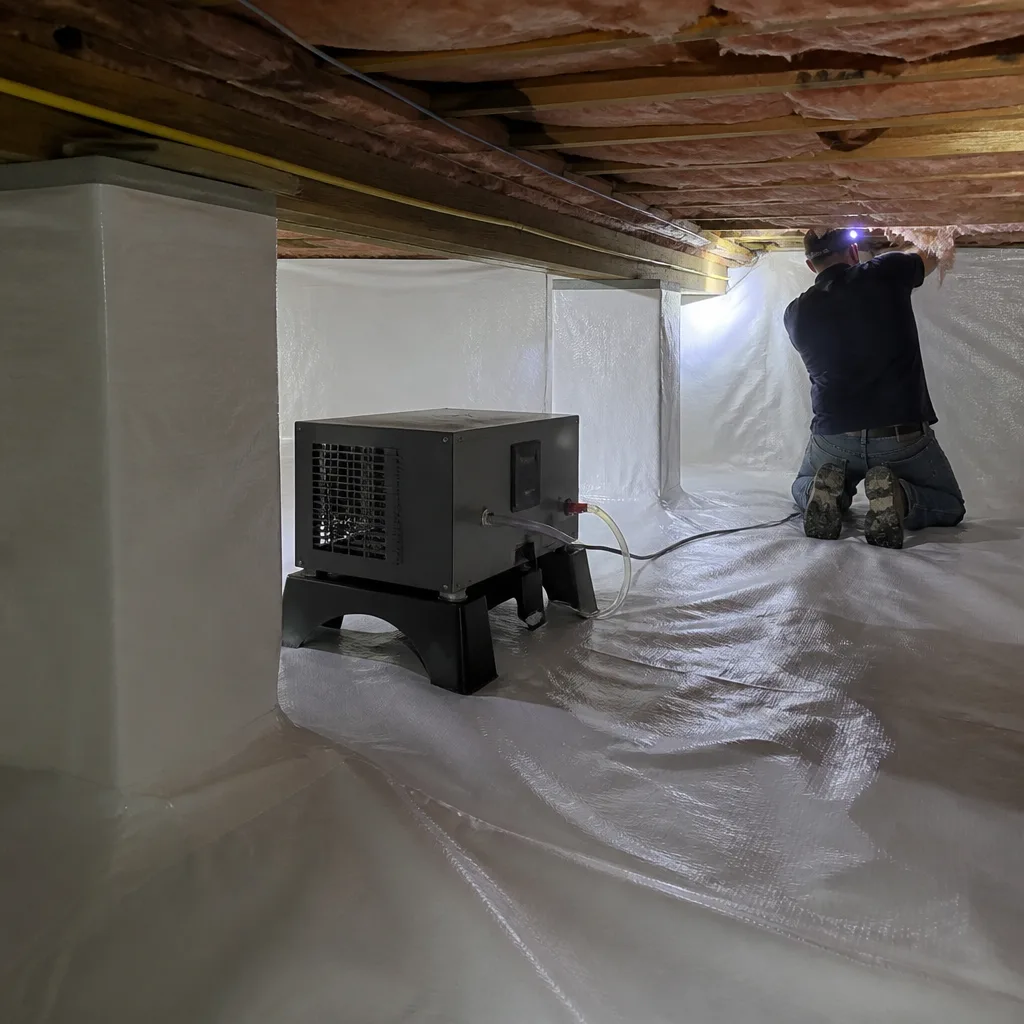
- Floor joists feel damp to the touch even in dry weather. This means your vapor barrier has separated at the seams or the Rockwool board has absorbed moisture through a breach in the facing. In Canyon Lake’s clay-heavy soils, hydrostatic pressure pushes moisture through any gap in the perimeter seal.
- Insulation boards are sagging or pulling away from the band joist. The adhesive or mechanical fasteners have failed, usually because they were installed before the wood was properly dry. We see this on homes near the lake where seasonal humidity swings hit 40% in a single day.
- Your HVAC runs longer in summer but the house never feels cool. Wet insulation has lost its R-value, Rockwool holds 95% when dry, but water conducts heat straight through. The system is working overtime to push conditioned air past a soggy thermal bridge.
- Mold or mildew on the poly sheeting’s interior surface. This is a ventilation failure, not an insulation failure. Someone sealed the crawl space without adding a dehumidifier or conditioning supply, trapping moisture against the barrier with nowhere to go.
- Pest activity in the insulation layer. Rockwool is mineral-based and unappealing to rodents, but if the vapor barrier is torn, they’ll nest between the poly and the board. We find this most often where trades have crawled through after the original install and never resealed their access path.
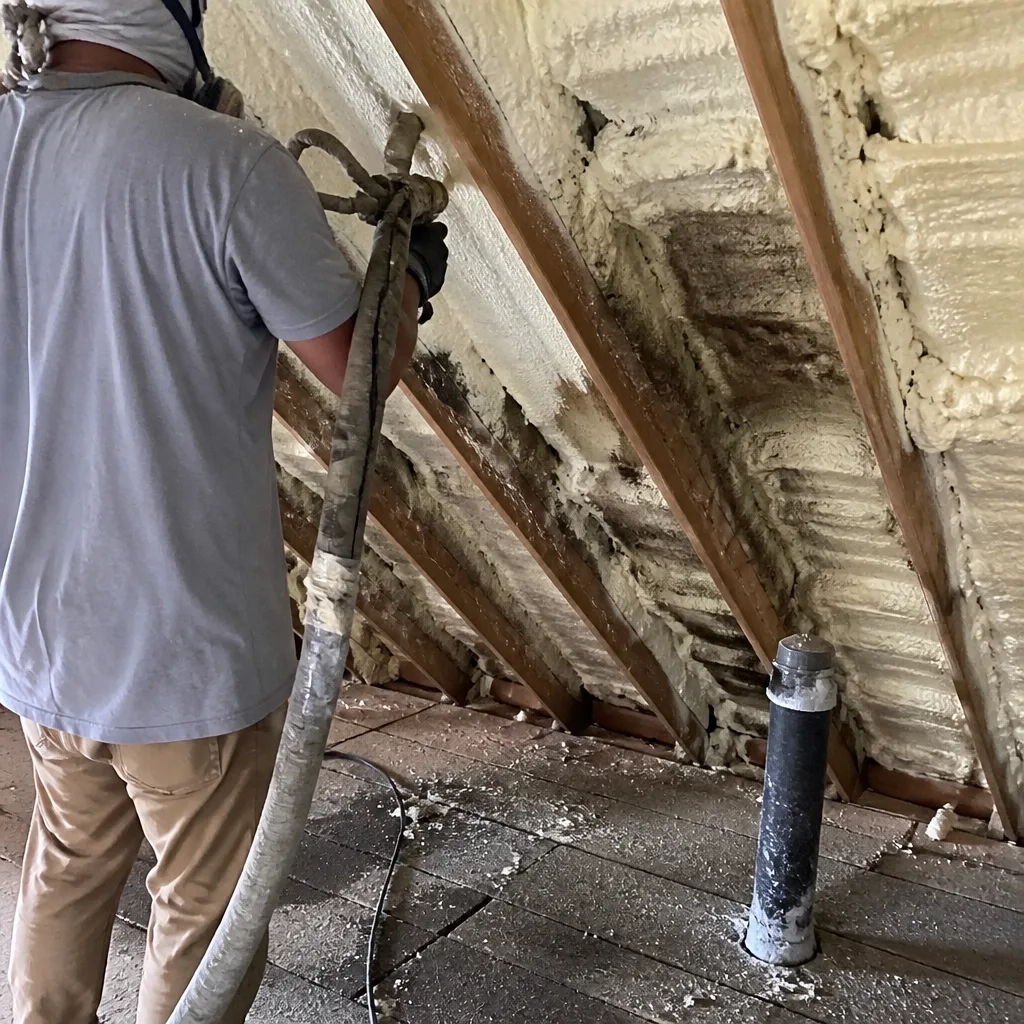 Before
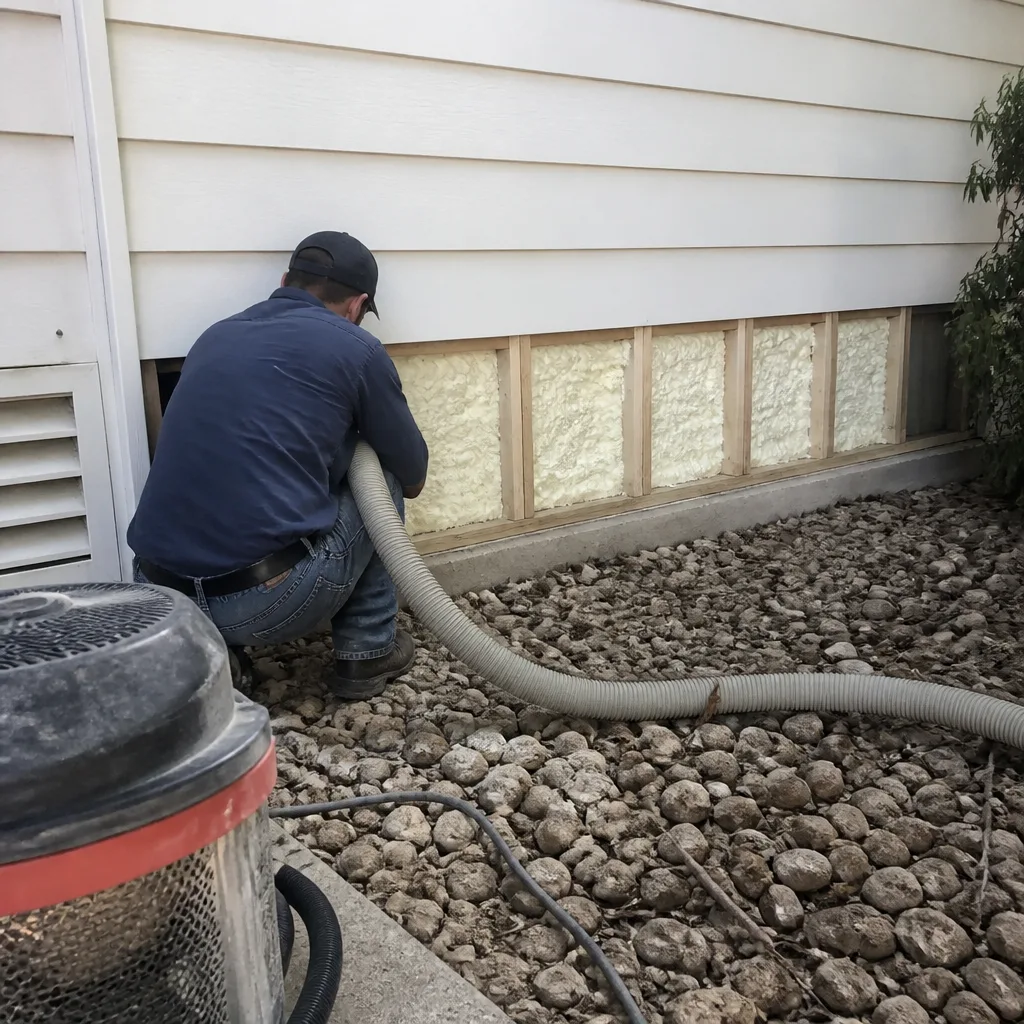 After
AfterReplacement Cost & What’s Included
Most full Rockwool crawl space encapsulation replacements in Canyon Lake fall between $2,800 and $4,600 for a 1,200-square-foot footprint. The spread comes down to three things: how much of the existing material we can salvage, whether your crawl space has less than 18 inches of headroom, and whether we need to add a dehumidifier or conditioning tap to meet current building science standards.
| Component | Typical Range |
|---|---|
| Rockwool Comfortboard (rigid wall insulation) | $1.40-$2.10/sq ft installed |
| Reinforced poly vapor barrier (12-20 mil) | $1.10-$1.80/sq ft installed |
| Band joist air sealing + Comfortbatt | $380-$620 |
| Dehumidifier (if required) | $890-$1,400 |
| Drainage mat + sump assessment | $340-$780 |
Every job starts with a written price before any work starts, Haven Standard Clause 1, and closes with a Documented Photo Record. If we run a blower-door test on the full envelope, you’ll get the pre- and post-sealing numbers printed. The 365-Day Done Right Promise covers all completed work.
DIY or Call Us?
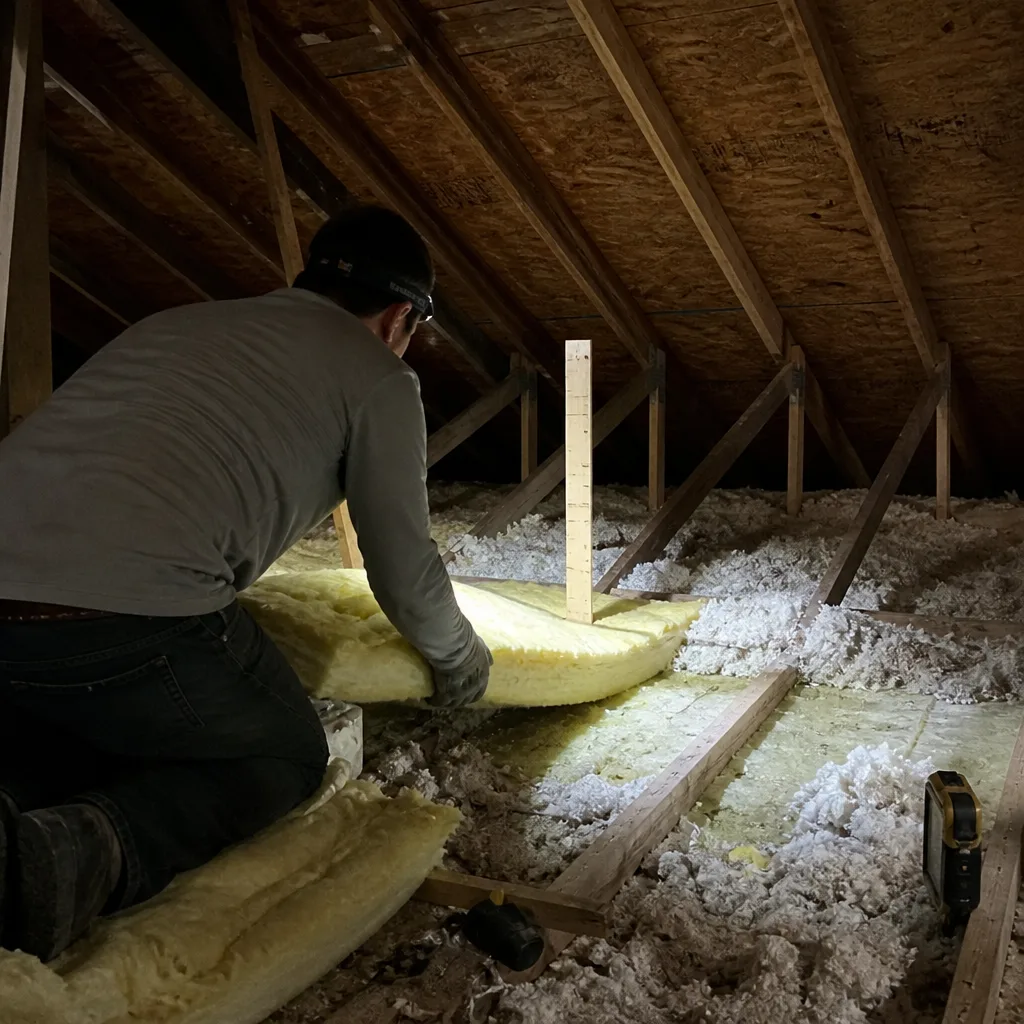
There is nothing inherently dangerous about handling Rockwool, it is mineral wool, not fiberglass, and it does not off-gas or carry the same skin-irritant risk. But the assembly is where DIY goes wrong. A homeowner can safely pull back the poly and photograph the board markings to confirm the model, and you should check that your crawl space vents are actually closed, many Canyon Lake homes still have phantom vents the original builder never sealed. Where it falls apart is the sequencing. If you install new Rockwool over a still-damp substrate, you have trapped moisture and accelerated rot. If you seal the vapor barrier without addressing the bulk water path, you have built a swimming pool under your house. We carry moisture meters, thermal cameras, and the experience to read what they show. Call (737) 227-6219 and we’ll walk through what you’re seeing before you spend a dollar on material you might not need.
FAQs
In our climate, a properly installed Rockwool encapsulation assembly lasts 20-25 years for the rigid board and 10-15 years for the poly vapor barrier before seam degradation becomes likely. The Hill Country’s UV exposure through foundation vents, even closed ones, plus the thermal cycling from 95-degree August afternoons to 28-degree January mornings, stresses the poly faster than in milder zones. We inspect barrier integrity at year 10 on every job we’ve done. Call (737) 227-6219 to schedule a look at yours.
Patching works only if the breach is smaller than a dinner plate, the surrounding poly is still pliable, and you can identify and fix what caused the tear. Anything larger, or any area where the Rockwool beneath has compressed or wicked moisture, needs full replacement of that bay. We do not patch over wet substrate; it fails again in 18 months. Call (737) 227-6219 for an honest assessment, estimates are free.
Most Canyon Lake crawl spaces take one to two days for a complete Rockwool encapsulation replacement, assuming standard access and no active water intrusion. Tight crawl spaces under 24 inches, or homes requiring sump pump installation, add a day. We arrive with the Rockwool board, poly, and sealing materials on the truck. Call (737) 227-6219 to check same-week availability.
We stock Comfortboard 80 and 110, Comfortbatt in standard joist widths, and reinforced poly sheeting on every truck serving Canyon Lake. We are an independent service provider, not affiliated with Rockwool, and we also stock Reflectix and other brands for homeowners with mixed assemblies. If your system uses a discontinued Rockwool spec, we cross-reference the thermal performance and match it with current stock. Call (737) 227-6219 to confirm compatibility.
Seal the leaks first. Then insulate. The report tells you whether it worked. If your crawl space is telling you something through your floorboards, we’re the crew that listens with a blower-door and answers with numbers. Call (737) 227-6219 for a free estimate, a written price before any work starts, and a Documented Photo Record when we leave.
Written by Wes Okafor, Owner & Lead Insulation Technician, Topside Attic Insulation Canyon Lake at Topside Attic Insulation Canyon Lake, serving Canyon Lake and nearby areas.