
Rockwool Vapor Barrier Installation: The Canyon Lake Owner’s Guide
Rockwool vapor barrier installation in Canyon Lake typically runs $1,800-$3,400 for a complete attic-floor system, and we stock the compatible membranes and tapes on every truck for same-day starts. Most homeowners realize theirs has failed when they pull back insulation and find dark, compressed batts or rusted nail heads on the drywall below, signs that warm, moist Hill Country air has been condensing against the cooler ceiling plane for months.
At Topside Attic Insulation Canyon Lake, we’ve retrofitted dozens of attics in the Canyon Lake area where the original vapor barrier was either omitted during construction or degraded after years of summer heat cycling. The combination of Rockwool’s density and a properly sealed polyethylene or smart vapor retarder is what stops that moisture migration before it reaches the insulation layer. We run a blower-door test - a pressurization diagnostic that measures how much conditioned air your house is losing through gaps - before we touch a single batt, because a vapor barrier over a leaky ceiling is just a bucket under a dripping pipe.
Which Rockwool Models This Applies To
Rockwool doesn’t sell a branded vapor barrier, but their Comfortbatt, Comfortboard, and AFB (Acoustical Fire Batt) lines all require a compatible retarder installed on the warm-in-winter side of the assembly. In Canyon Lake’s climate zone, that’s the attic floor, not the roof deck. The critical match is between the batt thickness and the cavity depth: Comfortbatt R-30 fills a 2×8 joist bay at 7.25 inches, while R-38 needs a true 2×10 or deeper framing. We’ve found that builders in the Startzville and Hancock areas often spec’d R-30 in 2x8s with no retarder at all, a detail that fails the moment indoor humidity climbs above 50 percent.
To identify what you have, look for the black-and-yellow Rockwool label on the batt facing, which lists the product name, R-value, and batch date. The vapor barrier itself is a separate membrane, typically 6-mil polyethylene or a variable-perm smart retarder like CertainTeed’s MemBrain. We stock both. OEM-spec poly works fine in most Canyon Lake homes; smart retarders are worth the upgrade if you run a humidifier in winter or have a sealed combustion range that adds moisture to the interior air. We don’t push proprietary products - we source Rockwool, Owens Corning, Johns Manville, and Knauf materials based on what the assembly actually needs.
Topside Attic Insulation Canyon Lake is an independent service provider, not affiliated with Rockwool.
Signs Your Rockwool Vapor Barrier Installation Is Failing
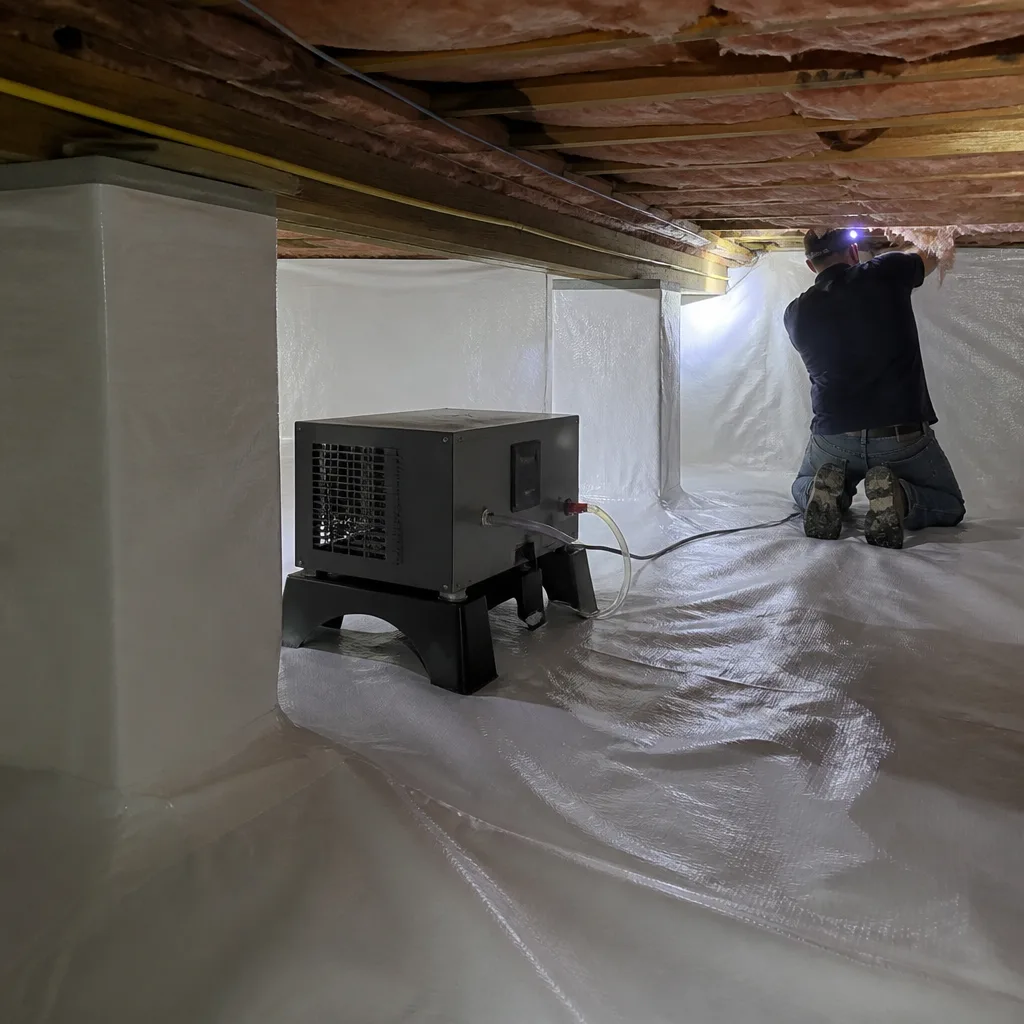
- Dark streaks or staining on ceiling drywall. Moisture that makes it past a compromised barrier condenses on the cooler drywall surface, carrying dust and particulates that leave gray or brown trails. In Canyon Lake, we see this most often on north-facing rooms where the ceiling stays cooler longer into the morning.
- Compressed or sagging Rockwool batts. Wet insulation loses its loft, and Rockwool’s density means it holds moisture longer than fiberglass. Once a batt has been damp and dried repeatedly, its R-value is permanently reduced and the binder may have begun to break down.
- Rust on drywall nails or ceiling fixtures. Condensation that reaches the ceiling plane will corrode ferrous metal first. If your recessed can lights have rust rings or nail pops are bleeding orange, the barrier has been passing vapor for at least one full season, probably two.
- Mildew odor in upper rooms during shoulder seasons. October and April in Canyon Lake are when attic temperatures sit closest to indoor dew points. A failed barrier lets just enough moisture through to support microbial growth without ever showing visible water damage.
- Ice dam evidence in rare freeze events. When Canyon Lake does drop below freezing for consecutive nights, heat loss through wet insulation melts roof snow from below, and the refreeze at the eave backs water under shingles. The barrier failed long before the ice formed.
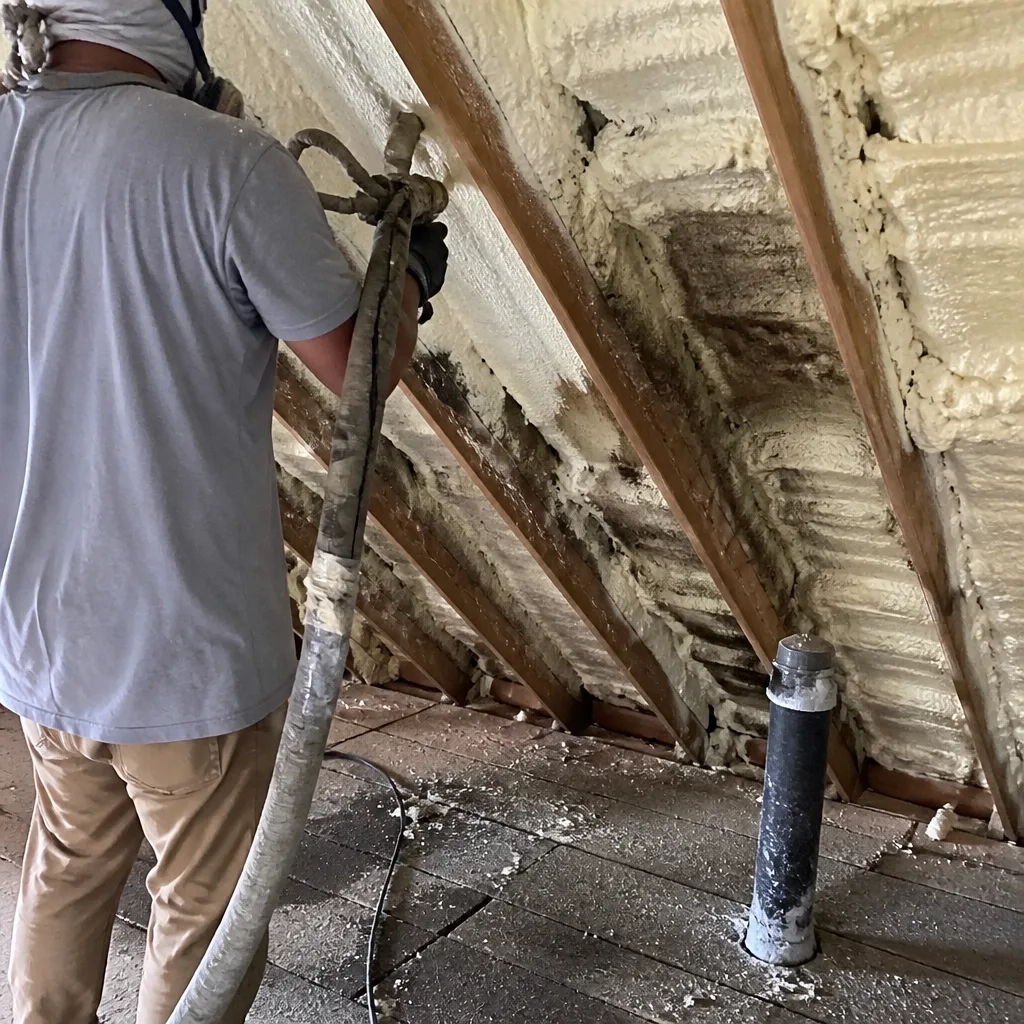 Before
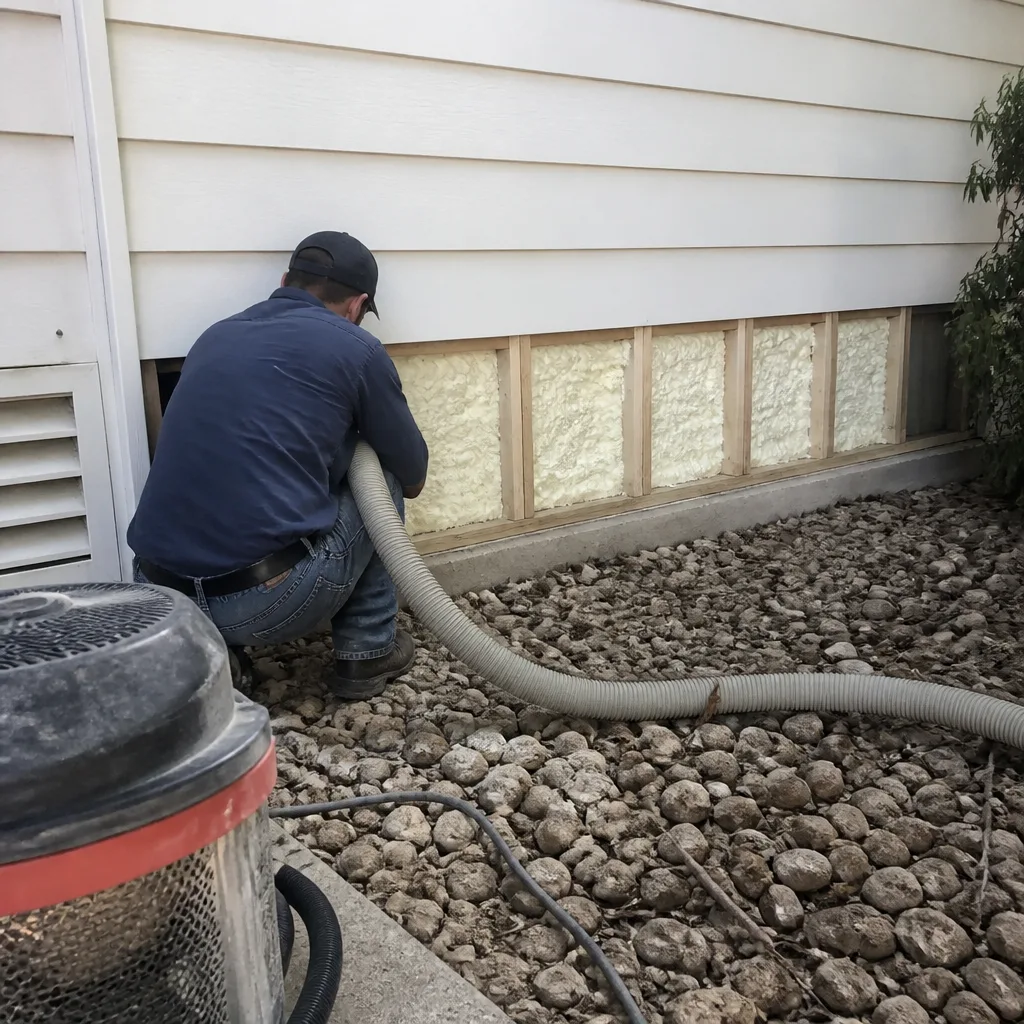 After
AfterReplacement Cost & What’s Included
| Component | Typical Range |
|---|---|
| Vapor barrier material (6-mil poly or smart retarder) | $0.45-$1.10 per sq ft installed |
| Rockwool batt removal and reinstallation (if salvageable) | $1.20-$2.00 per sq ft |
| New Rockwool batts (if existing is compromised) | $2.80-$4.50 per sq ft |
| Attic-floor air sealing (top plates, penetrations, can lights) | $450-$890 flat |
| Blower-door test with printed pre/post report | Included |
Most complete Rockwool vapor barrier installations in Canyon Lake fall between $1,800 and $3,400 for attics in the 1,200-2,400 square foot footprint range. What drives the spread is existing insulation condition, accessibility, and how much air sealing the top plates and penetrations need before the barrier goes down. We don’t quote over the phone without photos or a site visit - but we do provide a written price before any work starts, always, under Haven Standard Clause 1. That written scope includes the material specs, the blower-door target, and our 365-Day Done Right Promise. Every job closes with a Documented Photo Record and, on applicable work, before-and-after pressurization numbers so you can verify the result.
DIY or Call Us?
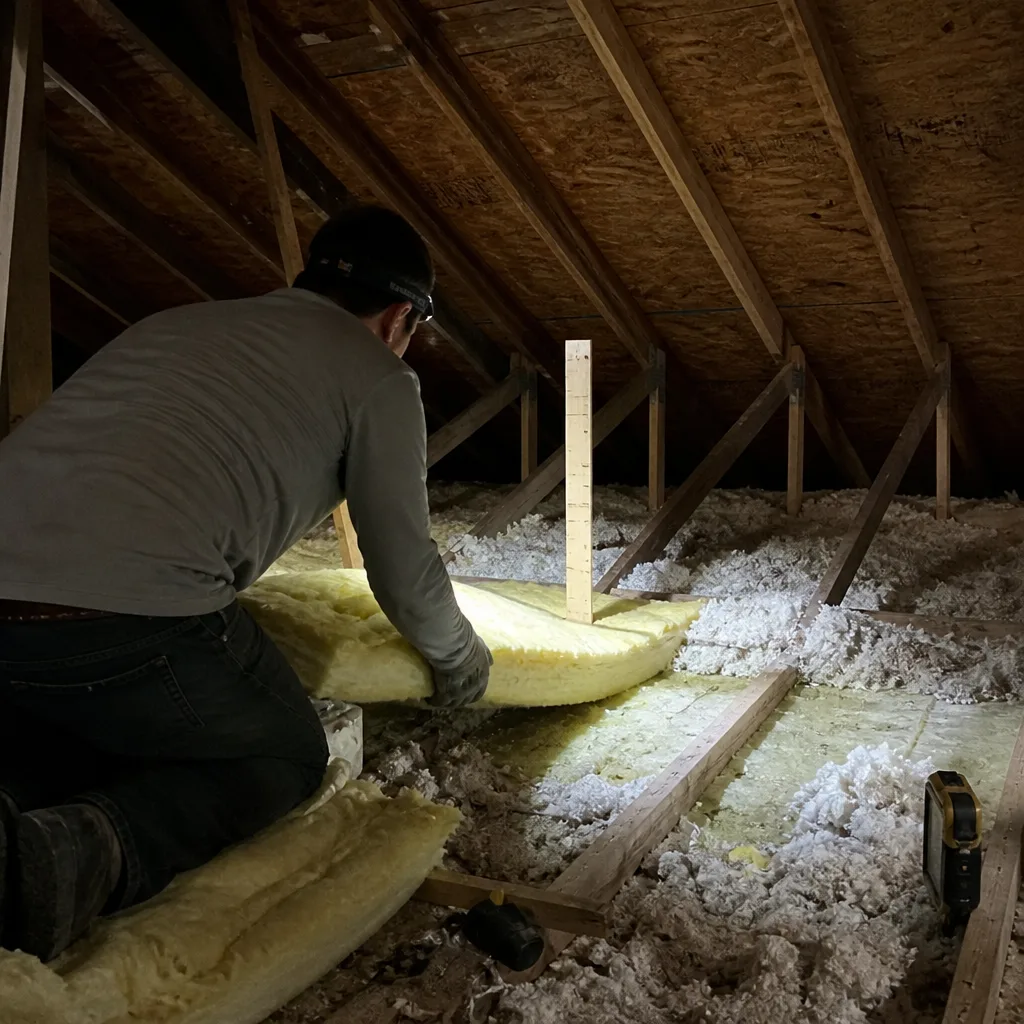
There’s a short list of what a Canyon Lake homeowner can safely check: confirm your bathroom exhaust fans terminate outside (not into the attic), verify the dryer vent is intact, and use a moisture meter on a few batt samples near the attic hatch. If readings top 20 percent wood-moisture-equivalent, you’ve got a problem that needs more than a hardware-store poly sheet.
Where DIY goes wrong is in the sequencing. A vapor barrier installed before air sealing traps moisture inside the assembly; a barrier with untaped seams or punctures around electrical boxes is worse than none, because it channels vapor to concentrated failure points. Working in a Texas attic in summer is its own hazard - heat stress, nail punctures, and the real risk of stepping through a ceiling. We carry the respirators, the seam tapes rated for high-temperature application, and the blower-door equipment to prove the assembly works before we leave. Seal the leaks first. Then insulate. The report tells you whether it worked.
Call (737) 227-6219 for a free estimate. We answer live, 24/7.
FAQs
In the Hill Country heat, a properly installed 6-mil polyethylene barrier lasts 15-25 years before embrittlement; smart retarders often stretch past 20. The bigger variable is whether the attic was air-sealed first - unsealed top plates let conditioned air wash past the barrier, accelerating degradation at seam tape and penetrations. Call (737) 227-6219 and we’ll assess what you’ve got - estimates are free.
Spot repairs work only if the original barrier is intact over 90 percent of the surface and the failure is limited to a few untaped seams or isolated punctures. Once poly has become brittle or Rockwool beneath it has been wet-compressed, partial fixes guarantee callbacks. We document the condition with photos before recommending either approach. Call (737) 227-6219 for an exact quote - estimates are free.
A typical Canyon Lake attic, 1,500-2,000 square feet, takes one crew day to air-seal, install the barrier, and replace or reinstall Rockwool batts. Second day is reserved for the post-work blower-door test and any touch-ups the numbers reveal. We don’t leave until the documented result meets the written scope. Call (737) 227-6219 to schedule - estimates are free.
Yes - 6-mil polyethylene, high-tac seam tape, acoustic sealant for top plates, and CertainTeed MemBrain smart retarder are on every Topside Attic Insulation Canyon Lake vehicle. Rockwool batts in R-30 and R-38 are warehocked locally for Canyon Lake jobs. If your assembly calls for something we don’t have, we source it and hold to the same written price. Call (737) 227-6219 to confirm availability for your model - estimates are free.
Written by Wes Okafor, Owner & Lead Insulation Technician, Topside Attic Insulation Canyon Lake at Topside Attic Insulation Canyon Lake, serving Canyon Lake and nearby areas.