
Icynene Attic Insulation: The Canyon Lake Owner’s Guide
We stock and install Icynene-compatible open-cell and closed-cell spray foam insulation for attic retrofits in Canyon Lake, with most complete attic treatments running between $3,800 and $7,200 depending on roof deck square footage and whether the existing insulation needs full removal. Same-day assessment appointments are available, and we carry Icynene-equivalent stock on our trucks for homes under 3,500 conditioned square feet. Most Canyon Lake homeowners discover their attic insulation is failing when summer electric bills spike past $400 on a 2,000-square-foot home, or when they notice the second floor never cools below 78 degrees despite the AC running continuously.
Which Icynene Models This Applies To
Icynene produces several product lines, and the right match depends on what’s currently in your attic and what condition it’s in. The open-cell LD-C-50 series, common in Texas attic applications from 2010 to 2020, expands to roughly 3.5 inches per pass and is labeled with a density of 0.5 pounds per cubic foot. Closed-cell Icynene MD-C-200, the harder foam often used in rim joists and cathedral ceilings, runs 2.0 pounds per cubic foot and requires a different substrate prep. To identify what you have, check the exposed cut edge of any existing foam for color (LD-C-50 is pale yellow; MD-C-200 is tan to light brown) and look for a sprayed or stamped ICC-ES evaluation report number on any visible surface.
We are an independent insulation contractor, not affiliated with Icynene. For Canyon Lake homes with original Icynene that has degraded, we typically specify equivalent-density open-cell foam from Demilec or Johns Manville that meets the same R-value per inch and thermal resistance standards without locking you into a single manufacturer’s product line. The critical compatibility gotcha: Icynene’s open-cell formula is hydrophilic, meaning it can retain moisture if the roof deck above it fails. We never install new foam over water-stained existing material without first identifying and fixing the leak source. Our trucks stock both 2-pound and 0.5-pound density foam so we’re not making two trips.
Signs Your Icynene Attic Insulation Is Failing
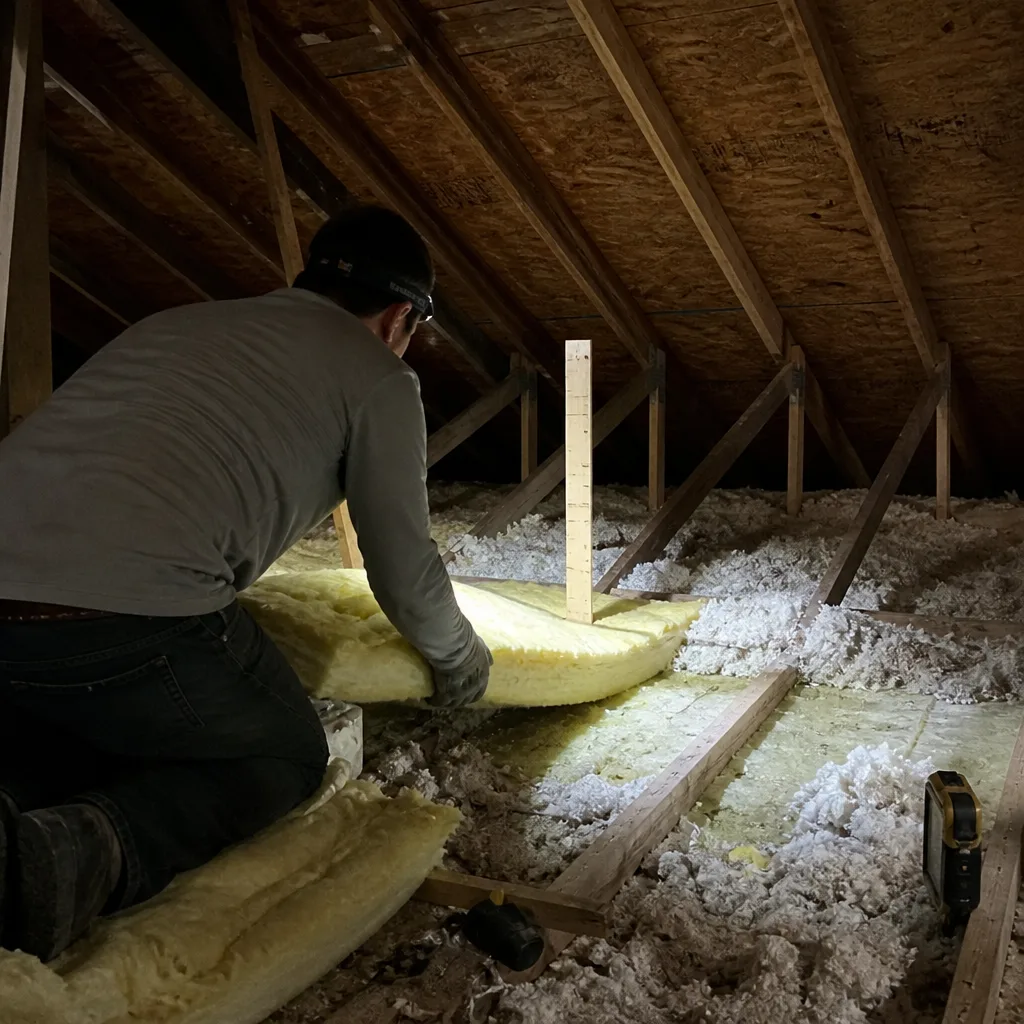
- Discoloration or dark streaking on the foam surface. This usually means roof-deck moisture is migrating through compromised shingles or inadequate ventilation. In Canyon Lake, where summer attic temperatures regularly hit 140 degrees, trapped moisture turns to vapor drive that stains the foam and degrades its R-value over time.
- Crumbly or powdery texture when touched. UV exposure through gable vents or recessed lighting holes breaks down the polymer chains in open-cell foam. Once it powders, it’s no longer forming an air barrier and you’re essentially paying to condition your attic.
- Noticeable gaps between foam and framing members. Thermal cycling in Texas causes wood to expand and contract; if the foam was installed without proper adhesion primer or at too low a substrate temperature, it pulls away from rafters and top plates, creating convection channels.
- Sudden increase in dust or allergen symptoms indoors. Failing attic foam allows attic air, which in Canyon Lake often carries pollen, rodent debris, and fiberglass particulate, to migrate into conditioned space through recessed can lights and duct chases.
- Ice dam formation or persistent frost on roof nails in winter. Even in mild Canyon Lake winters, poor attic air sealing allows warm, humid interior air to reach the cold roof deck. The foam was supposed to stop this; if nails are frosting, the thermal boundary has failed at the ceiling plane.
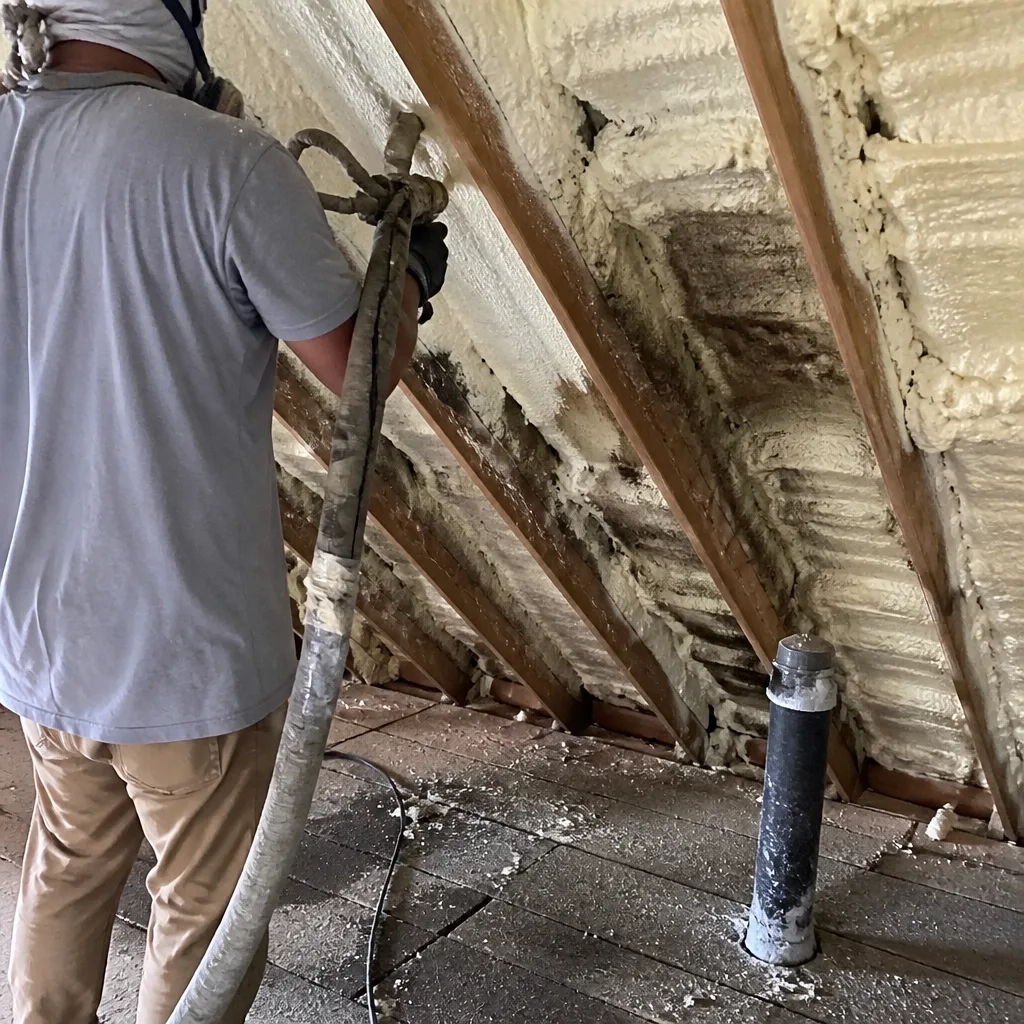 Before
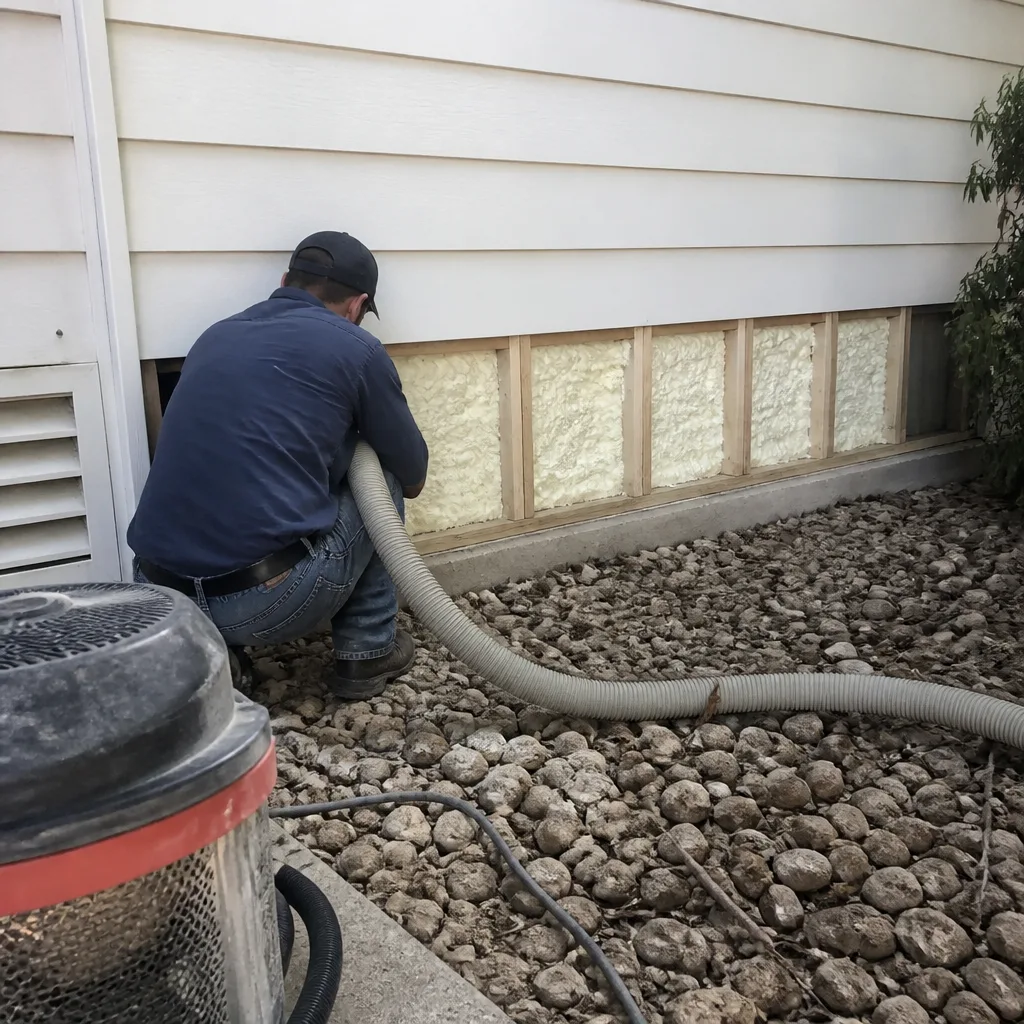 After
AfterReplacement Cost & What’s Included
For a typical Canyon Lake home between 1,800 and 2,800 square feet, complete Icynene attic insulation replacement runs $3,800 to $7,200 installed. Homes at the lower end usually need spot removal and localized re-spray; homes at the upper end require full removal of degraded material, deck repair, and complete re-application. Here’s how the pricing breaks:
| Component | Price Range |
|---|---|
| Removal of existing degraded foam (per sq ft of deck) | $1.50 - $2.75 |
| Attic air sealing (top plates, penetrations, can lights) | $800 - $1,400 |
| Open-cell spray foam, 5.5″ depth (R-19 equivalent) | $2.20 - $3.10 per board foot |
| Closed-cell spray foam, 3″ depth (R-19 equivalent) | $3.50 - $4.80 per board foot |
| Blower-door test with printed pre/post report | Included |
What drives the range: roof pitch (steeper means slower application), accessibility (hatch size, whether we can stand or must crawl), and the condition of what’s coming out. We provide a written price before any work starts, always. The 365-Day Done Right Promise covers adhesion failure, shrinkage, or coverage gaps. Every job closes with a Documented Photo Record and printed blower-door numbers.
DIY or Call Us?
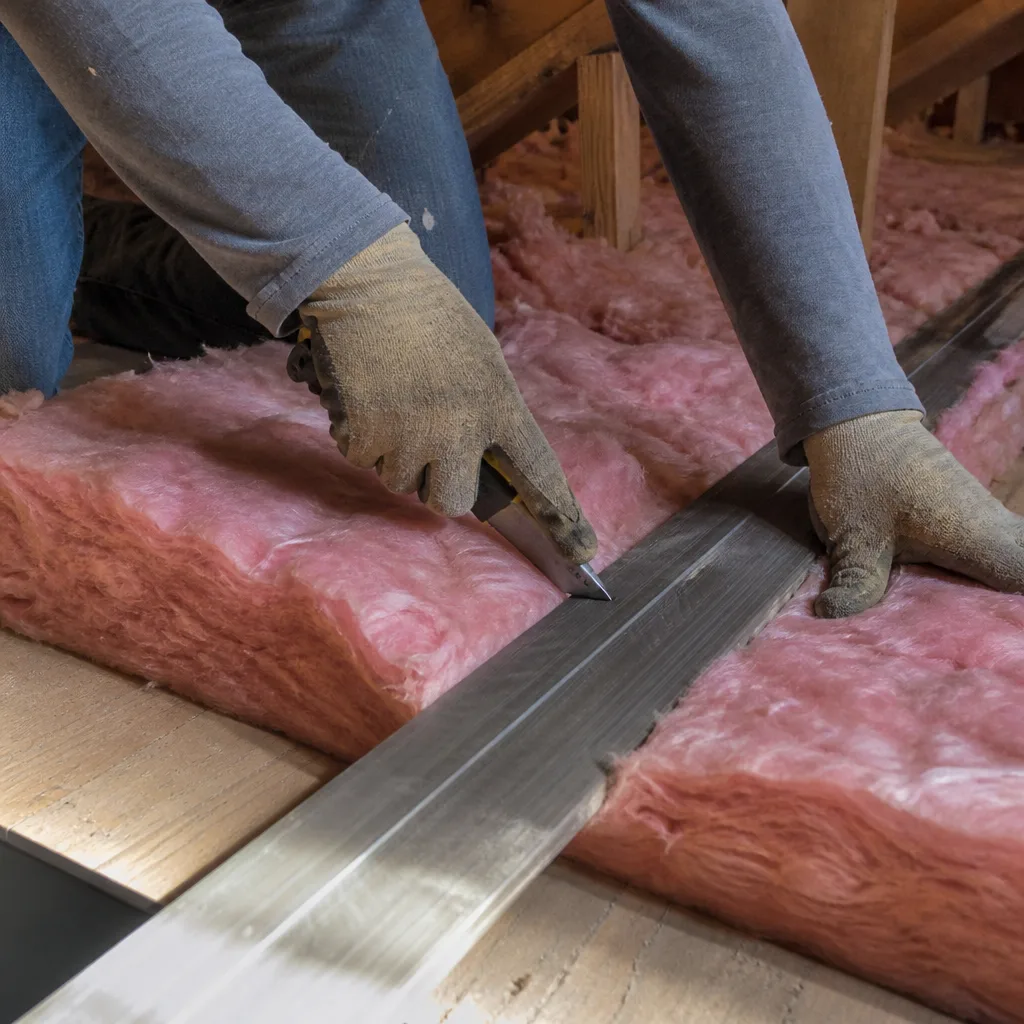
There’s a short list of what a homeowner can safely check: look at your attic hatch for daylight around the frame, feel for hot spots on the ceiling during afternoon peak, and photograph any discolored foam for reference. Do not attempt to remove or cut existing spray foam yourself. The chemicals require respirators with organic vapor cartridges, and disturbing degraded foam releases isocyanate dust that will migrate through your HVAC system. We’ve also seen homeowners fall through ceiling drywall trying to navigate truss bays while focused on foam removal.
Our crew is equipped for confined-space attic work, and we run a blower-door test before we quote so we’re not guessing at air leakage paths. If your energy bills are higher than your mortgage, the attic is usually confessing something. Call (737) 227-6219 for a free assessment. We answer live, 24/7.
FAQs
Properly installed open-cell spray foam should perform for 20 to 30 years, but in Canyon Lake’s combination of intense radiant heat gain and occasional hard freezes, we’ve seen premature failure at 8 to 12 years when the roof deck wasn’t properly ventilated or the foam was applied over damp substrate. The foam itself doesn’t “wear out,” but adhesion failure and moisture intrusion are the killers. Call (737) 227-6219 and we’ll test what’s actually happening up there.
Localized repair is possible if the failure is limited to a specific area, like around a new recessed light installation or a small roof leak zone. We cut back to sound foam, seal the substrate, and re-spray with matching density. If the failure is widespread, spot repairs create thermal boundaries with seams that leak, and full removal is the honest recommendation. We give you a written scope either way before anyone lifts a tool.
Most Canyon Lake attic retrofits take two to three days: one day for removal and air sealing, one day for foam application and cure, and a partial third day for the post-install blower-door test and documentation. Larger homes or those with finished attic space may run four days. We don’t rush cure times; foam trimmed too early tears and loses its air barrier.
We stock equivalent-density open-cell and closed-cell foam from multiple manufacturers, including Demilec and Johns Manville, that matches Icynene’s thermal performance specifications. For Canyon Lake homes requiring exact Icynene product for warranty continuity with a previous install, we can source it with a two-day lead time. Most homeowners don’t need brand-matched foam; they need the right density, the right depth, and a verified air seal.
Topside Attic Insulation Canyon Lake also stocks parts and materials for Reflectix radiant barrier systems. We source materials from Owens Corning, Johns Manville, Knauf, Rockwool, CertainTeed, Icynene, Demilec, and GreenFiber with no proprietary lock-in.
Seal the leaks first. Then insulate. The report tells you whether it worked.
Ready to stop conditioning your attic? Call (737) 227-6219. A live person answers, day or night. We’ll schedule a free assessment, run the blower-door test, and hand you a written price before any work starts. That’s Haven Standard Clause 1, and it’s how we’ve operated since 2016.
Written by Wes Okafor, Owner & Lead Insulation Technician, Topside Attic Insulation Canyon Lake at Topside Attic Insulation Canyon Lake, serving Canyon Lake and nearby areas.