
Icynene Radiant Barrier Installation: The Canyon Lake Owner’s Guide
Icynene radiant barrier installation in Canyon Lake typically runs $2,800-$4,600 for a 2,000-square-foot attic, and we stock the full Icynene-compatible radiant barrier system on our trucks for same-day starts. Most Canyon Lake homeowners figure out something’s wrong when their upstairs bedrooms won’t cool below 78 degrees even with the AC running flat out, or when their July electric bill jumps $80-$120 over the previous year. That’s the roof deck radiating heat through under-performing or missing barrier layers.
Which Icynene Models This Applies To
Icynene doesn’t manufacture radiant barrier as a standalone branded product line. What we’re talking about is the radiant barrier component installed in attics where Icynene open-cell or closed-cell spray foam has already been applied to the roof deck or top plates. The critical compatibility issue is whether your existing Icynene foam is open-cell (LD-C-50, MD-R-200 series) or closed-cell (ProSeal, ProSeal LE, ProSeal Eco). Open-cell Icynene allows moisture vapor through, so your radiant barrier must be a perforated product, not a solid foil, or you’ll trap condensation against the roof deck in Canyon Lake’s humid shoulder seasons. Closed-cell Icynene is its own vapor barrier, so solid radiant barrier works fine.
We identify what you’ve got three ways: the Icynene application tag (usually stapled near the attic access), the foam density (open-cell feels spongy, closed-cell is rigid like stale bread), or the original permit on file with Comal County. For the radiant barrier itself, we source perforated foil from Icynene’s approved material list or equivalent ASTM C1313-compliant product. We don’t push proprietary lock-in. Topside Attic Insulation Canyon Lake is an independent service provider, not affiliated with Icynene. We also stock Reflectix equivalents when the application allows.
Signs Your Icynene Radiant Barrier Installation Is Failing
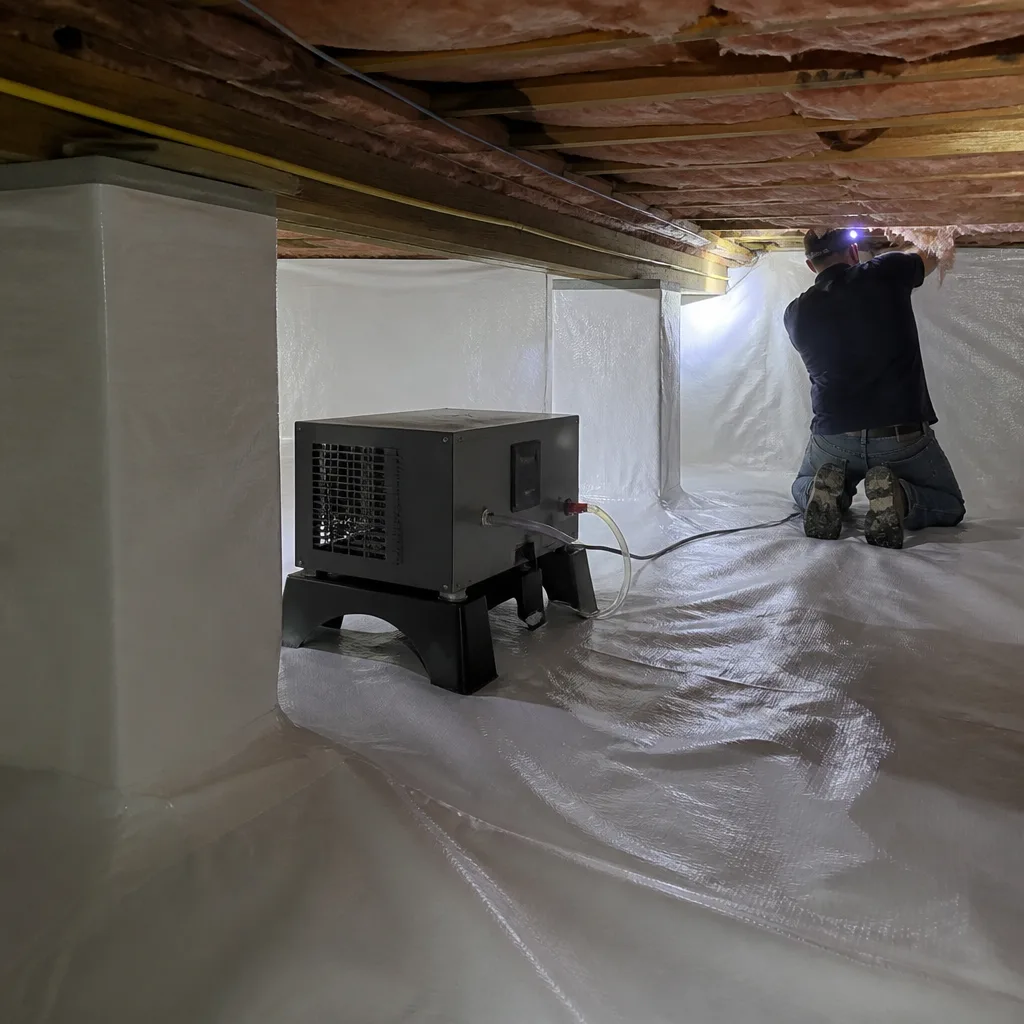
- Upstairs rooms heat up faster than downstairs by mid-afternoon. In Canyon Lake, solar gain on your roof deck hits peak around 3 p.m. If the radiant barrier has torn, detached, or was never installed over the full deck surface, that heat radiates straight through. We see this most on homes near the Cranes Mill Road corridor where attic temps can reach 140°F.
- Your AC runs 45+ minutes per cycle in July but the thermostat barely moves. The equipment is fighting radiant heat gain, not air temperature. The barrier’s job is to reflect that radiation back toward the roof deck; when it fails, the thermal load overwhelms your system’s capacity.
- Dusty or oxidized foil visible from the attic hatch. Aluminum radiant barrier oxidizes to a chalky white when attic ventilation pulls humid air across it for years. Once oxidized, reflectivity drops from 95% to under 60%. Canyon Lake’s lake-effect humidity accelerates this compared to drier Hill Country locations west of here.
- Staples pulling through, sagging sections, or gaps at the ridge. Installation quality varies. We find barriers stapled too far apart (should be every 6-8 inches on rafters), or single-sided tape failed in summer heat. Gaps at the ridge vent are especially common; hot air stacks there and the barrier needs a clean termination.
- Your energy bill climbed year-over-year with no rate increase or equipment change. This is the slow-failure signature. Barrier degradation is gradual, so homeowners often blame the AC unit first. We run a blower-door test - a pressurization diagnostic that measures how much conditioned air your house is losing - to separate envelope problems from equipment problems before quoting any work.
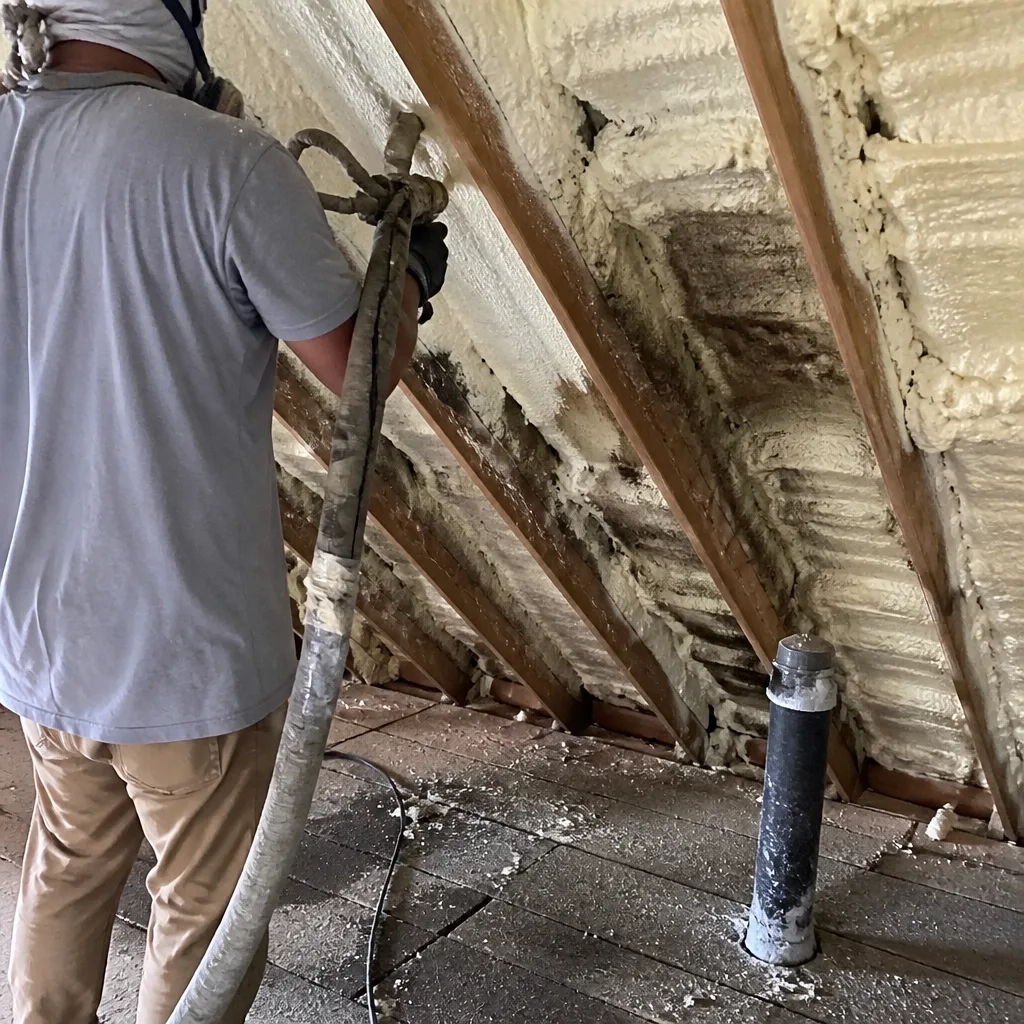 Before
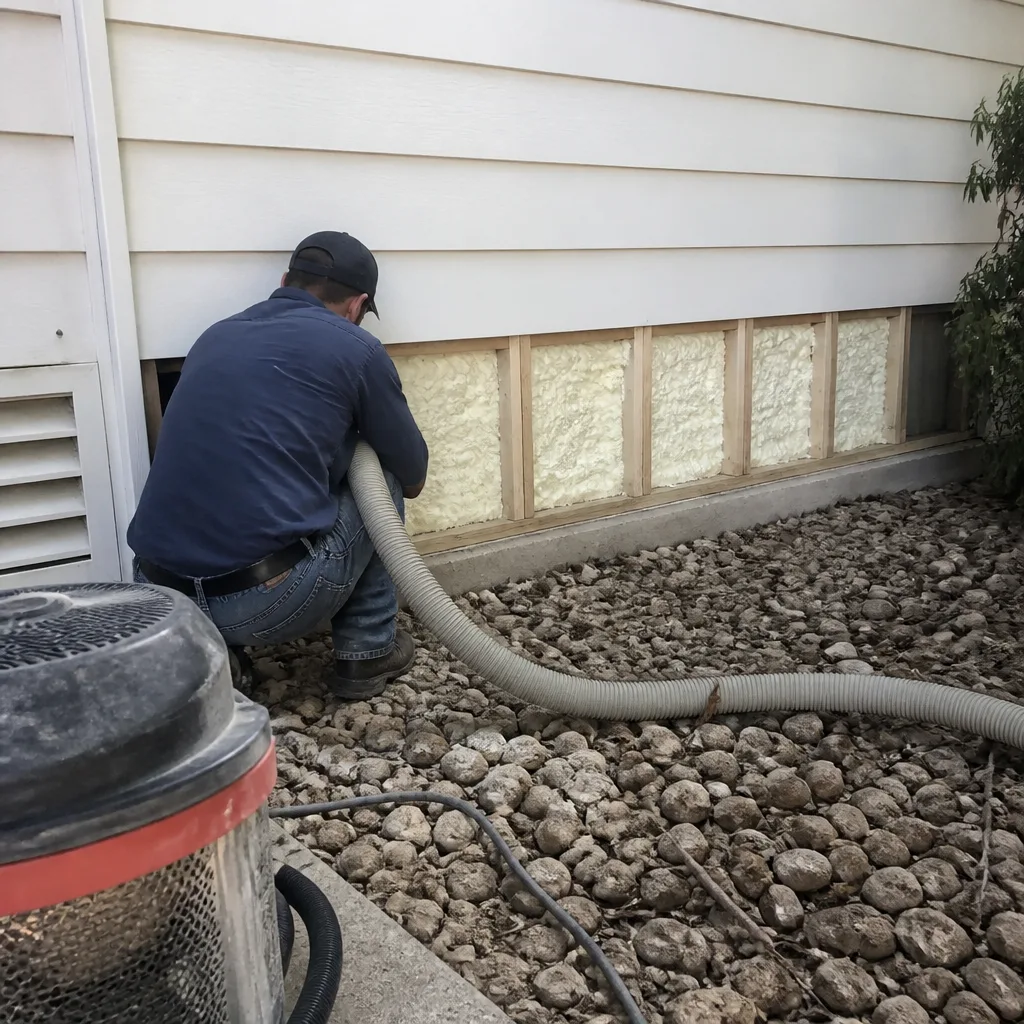 After
AfterReplacement Cost & What’s Included
Most Icynene-compatible radiant barrier replacements in Canyon Lake run $2,800-$4,600 for attics between 1,500 and 2,500 square feet of deck surface. Smaller attics with straight gable roofs can hit $2,200; complex cut-ups with dormers, hips, and multiple attic chambers push toward $5,200. What drives the range: deck geometry (more cuts = more labor), whether we need to work around existing Icynene foam without damaging it, and whether the attic floor needs temporary decking for safe access.
Our price includes perforated radiant barrier material, proper fasteners rated for 160°F attic service, sealing of all seams with aluminum tape, and termination detailing at ridge and soffit vents. We air-seal the attic floor first - top plates, can lights, penetrations - because we’re not blowing anything over leaks. Seal the leaks first. Then insulate. The report tells you whether it worked. Every job closes with a Documented Photo Record and, where applicable, before-and-after blower-door numbers. The 365-Day Done Right Promise applies. Written price before any work starts, always.
DIY or Call Us?
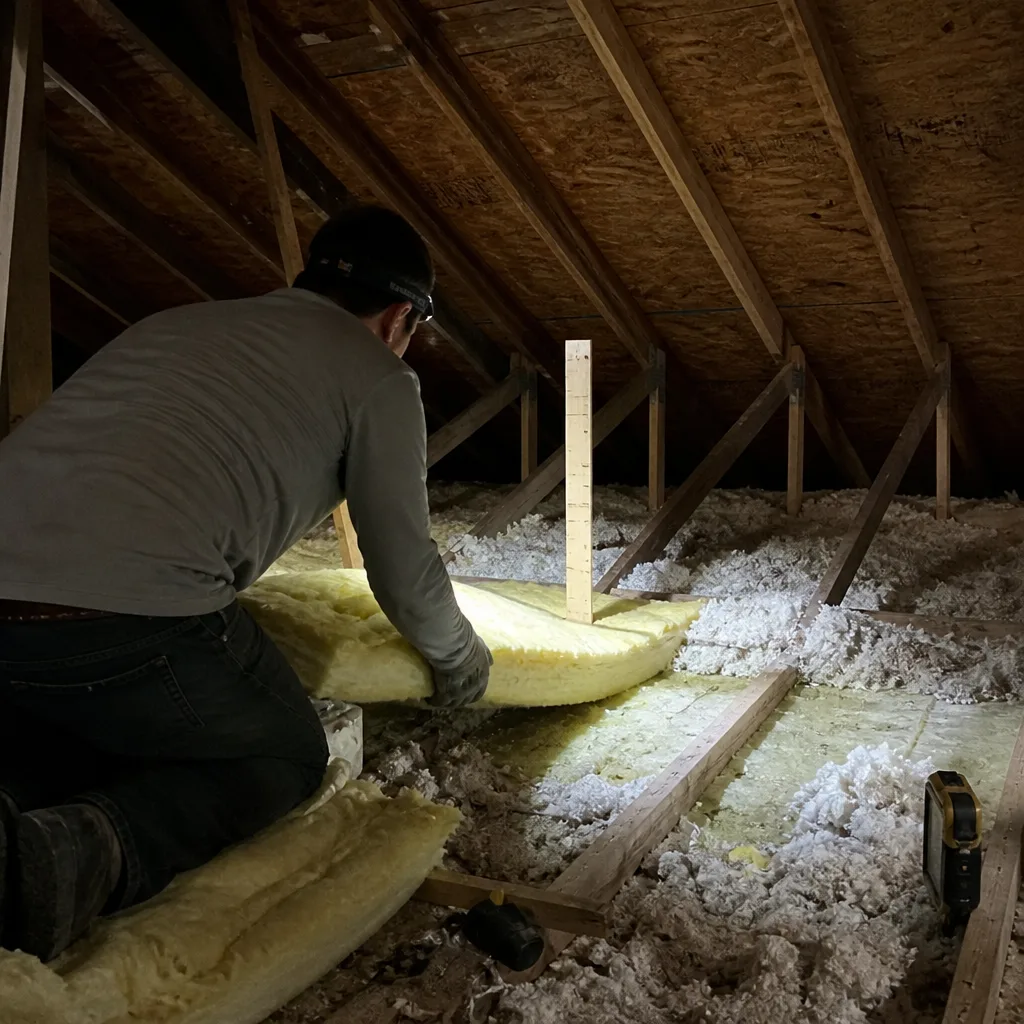
Here’s what you can safely check yourself: look through your attic hatch on a sunny afternoon. If you see bare roof deck, dark spots where foil’s missing, or sagging sections, you’ve got a problem. You can also photograph any Icynene tags or labels for us to review.
Here’s where DIY goes wrong: radiant barrier installation requires working on steep roof pitches, often in 130°F+ attic temperatures, with proper fall protection. More critically, getting the perforation right for your Icynene foam type is a building-science decision, not a hardware-store guess. Wrong choice and you trap moisture against the deck. We don’t recommend owner installation for this component. Call (737) 227-6219 and we’ll read your situation with you. Free Second Opinion on any written estimate you’ve already collected.
FAQs
Perforated aluminum radiant barrier in a ventilated Canyon Lake attic typically holds 15-20 years before oxidation and staple fatigue become significant. Lake-effect humidity and temperature swings between 40°F winter nights and 140°F summer afternoons speed the timeline compared to drier climates. If your home is 10-15 years old and you’ve never had the attic evaluated, it’s worth a look. Call (737) 227-6219 for a free estimate - estimates include the Documented Photo Record.
Spot repairs work for isolated tears or small detached sections, but we rarely recommend them. Patched barriers create seams that trap dust and lose reflectivity at the joint; the labor to do it right often approaches replacement cost. If more than 20% of the surface is compromised, full replacement is the better value. We’ll show you both options in the written scope. Call (737) 227-6219 and we’ll price both paths.
Most residential radiant barrier replacements take one full day for a two-person crew. Complex attics with multiple chambers or tight clearances may run into a second day. We don’t rush - the air sealing comes first, then the barrier, then the verification. You get a written schedule with your written price before anyone starts. Call (737) 227-6219 to check current availability.
Yes. We carry perforated and solid radiant barrier rolls, aluminum seam tape, and compatible fasteners on every Canyon Lake truck. For Icynene-specific applications, we verify your existing foam type before selecting material. Same-day starts are available when the attic is accessible and the scope is straightforward. Call (737) 227-6219 to confirm stock and schedule.
Written by Wes Okafor, Owner & Lead Insulation Technician, Topside Attic Insulation Canyon Lake at Topside Attic Insulation Canyon Lake, serving Canyon Lake and nearby areas.