
Icynene Insulation Removal & Replacement in Canyon Lake: What to Know First
We provide independent Icynene insulation removal and replacement in Canyon Lake, Texas, with most jobs completed in a single day and pricing put in writing before any work starts. As an independent Icynene service provider, we are not affiliated with or authorized by Icynene, which means we source parts based on what actually fixes your problem, not what a brand catalog limits us to. Typical turnaround from your call to a crew on site is same-day or next-day during peak season, and every job opens with a written price and closes with a documented photo record. If your Icynene insulation is settling, off-gassing, or was installed over an unsealed attic floor, the symptoms are telling you something the product literature won’t. Call (737) 227-6219 for a free estimate.
How Icynene Products Fail - and How We Fix Them
- Icynene Classic Max settling in vented attics. This open-cell foam was marketed as a “pourable” solution for retrofit jobs, but in Canyon Lake’s combination of 100-degree attic summers and winter humidity swings, we’ve seen it shrink away from rafter bays by 15 to 30 percent within eight to ten years. The fix is complete removal down to substrate, air sealing of every top plate and penetration with closed-cell foam or acrylic sealant, then replacement with a product matched to your roof deck temperature.
- Icynene MD-R-200 moisture retention in lake-adjacent homes. The mid-density closed-cell formula performs well in dry climates, but homes near the Canyon Lake shoreline or in the lower elevations along FM 306 see enough ambient moisture that MD-R-200 can trap water against roof sheathing if the dew point was miscalculated at install. We remove the affected sections, run a moisture-content meter on every sheet of OSB, and replace only after readings drop below 16 percent.
- Icynene LD-C-50 overspray onto electrical and HVAC components. Light-density open-cell foam expands aggressively, and inexperienced installers in the 2015-2019 Canyon Lake building boom often buried junction boxes and flex duct connections. Our removal process uses controlled mechanical stripping around electrical, then thermal imaging to confirm no hot spots before we reinsulate.
- Icynene Classic Max degradation from rodent infestation. Open-cell foam is not a food source, but rodents tunnel through it readily, and their waste contaminates the cavity. We see this most in homes near the Hill Country brush line off Cranes Mill Road. Removal includes HEPA vacuuming of all debris, enzyme treatment of substrate, and replacement with a material the customer chooses - sometimes switching to mineral wool in known rodent-pressure zones.
- Icynene ProSeal LE delamination from incompatible substrates. This low-emissivity formula was specified for metal building and conditioned attic applications, but if the installer skipped the manufacturer’s recommended primer on galvanized ductwork or certain OSB resins, the foam separates in sheets. We strip to bare substrate, test adhesion on a sample patch, and reapply with the correct primer or recommend a substrate-appropriate alternative.
Our Icynene Insulation Removal & Replacement Process
- 1
Call and scope. A live person answers 24/7. We schedule a site visit, and under Haven Standard Clause 1, you get a written price before any work starts.
- 2
Blower-door test and thermal imaging. We pressurize the house to measure CFM50 - the single number that tells us how much conditioned air you’re losing - and run a FLIR scan to locate bypasses the original Icynene installer missed.
- 3
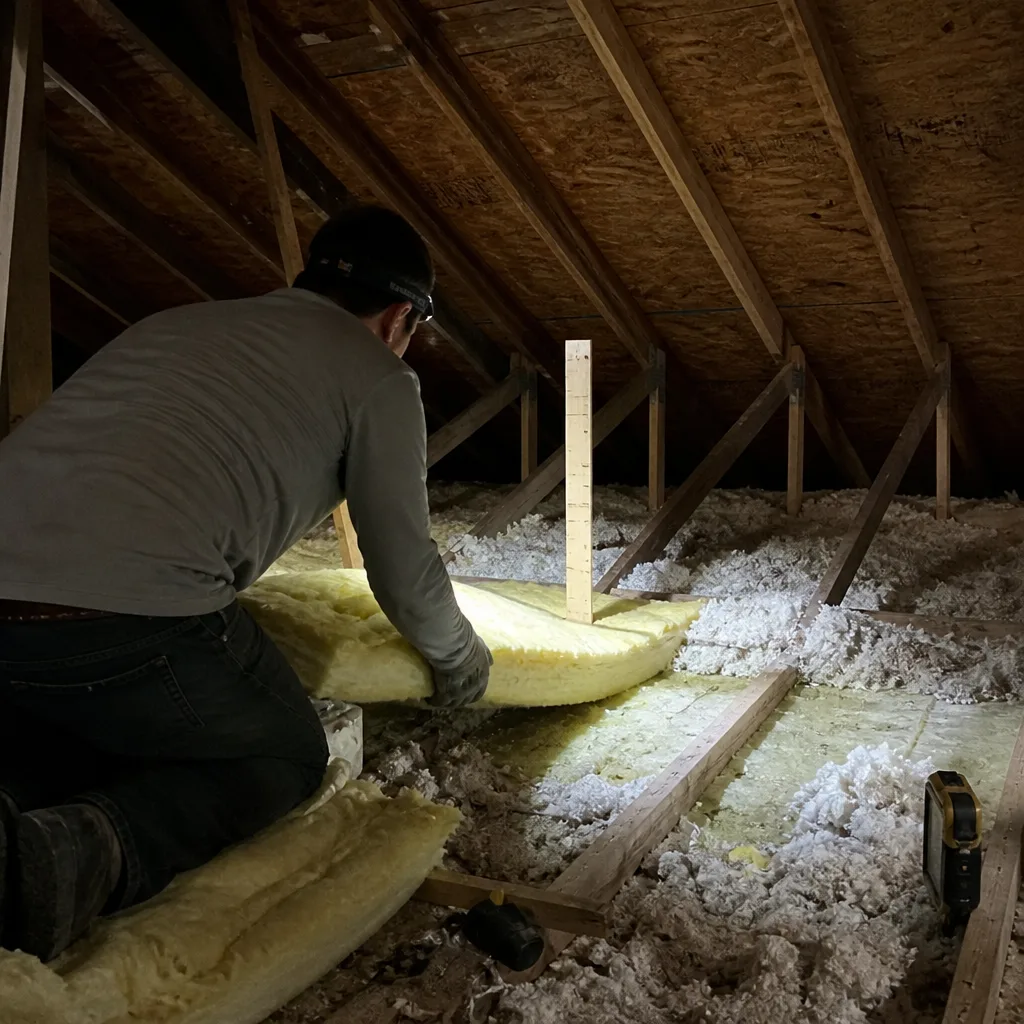
Removal and substrate assessment. Mechanical removal for accessible areas, controlled chemical stripping where foam bonds to sensitive components. We moisture-test wood and photograph every stage.
- 4
Air sealing before any new insulation. Top plates, can lights, plumbing and electrical penetrations, and chimney chases get sealed. Seal the leaks first. Then insulate. The report tells you whether it worked.
- 5
Replacement and verification. New insulation goes in, we run a second blower-door test, and you receive printed pre- and post-installation numbers plus the documented photo record.
- 6
365-Day Done Right Promise activation. Written scope, written warranty, and our direct line if anything reads differently than the report showed.
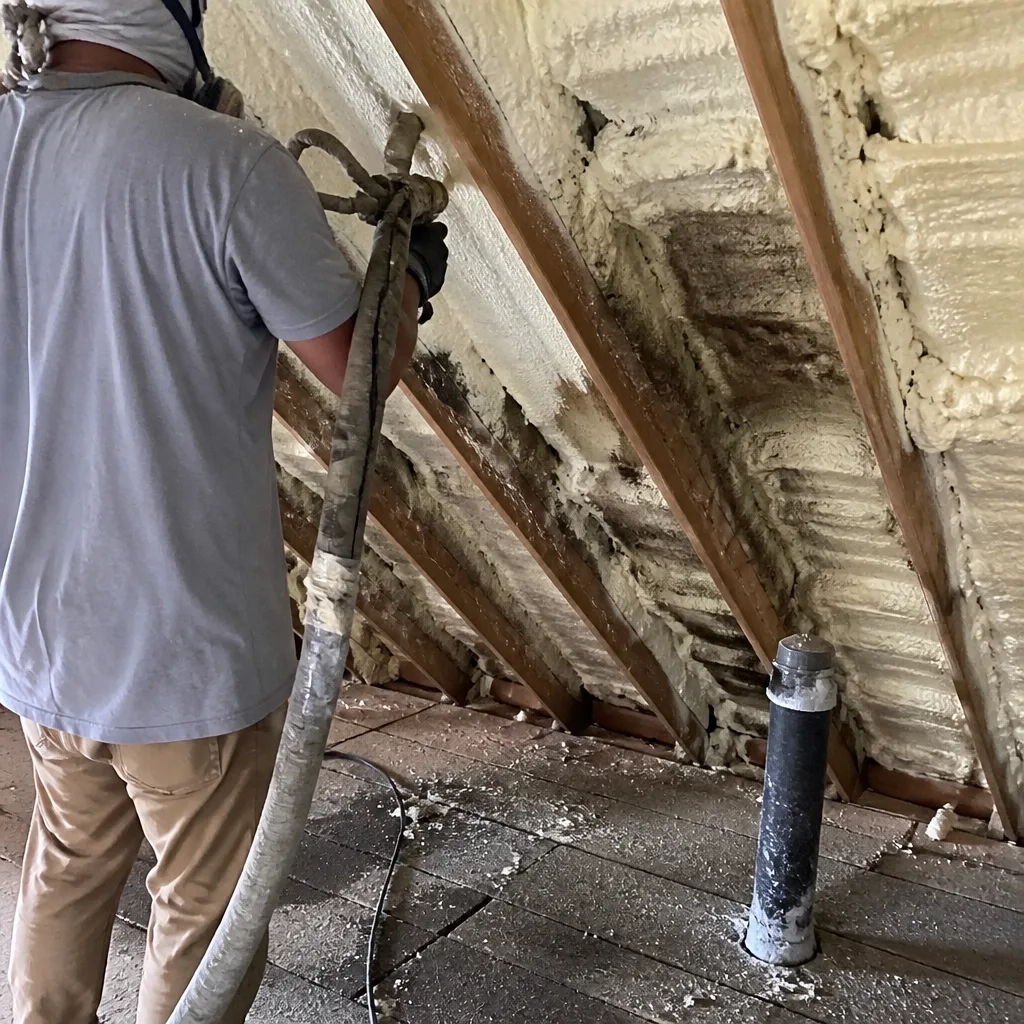 Before
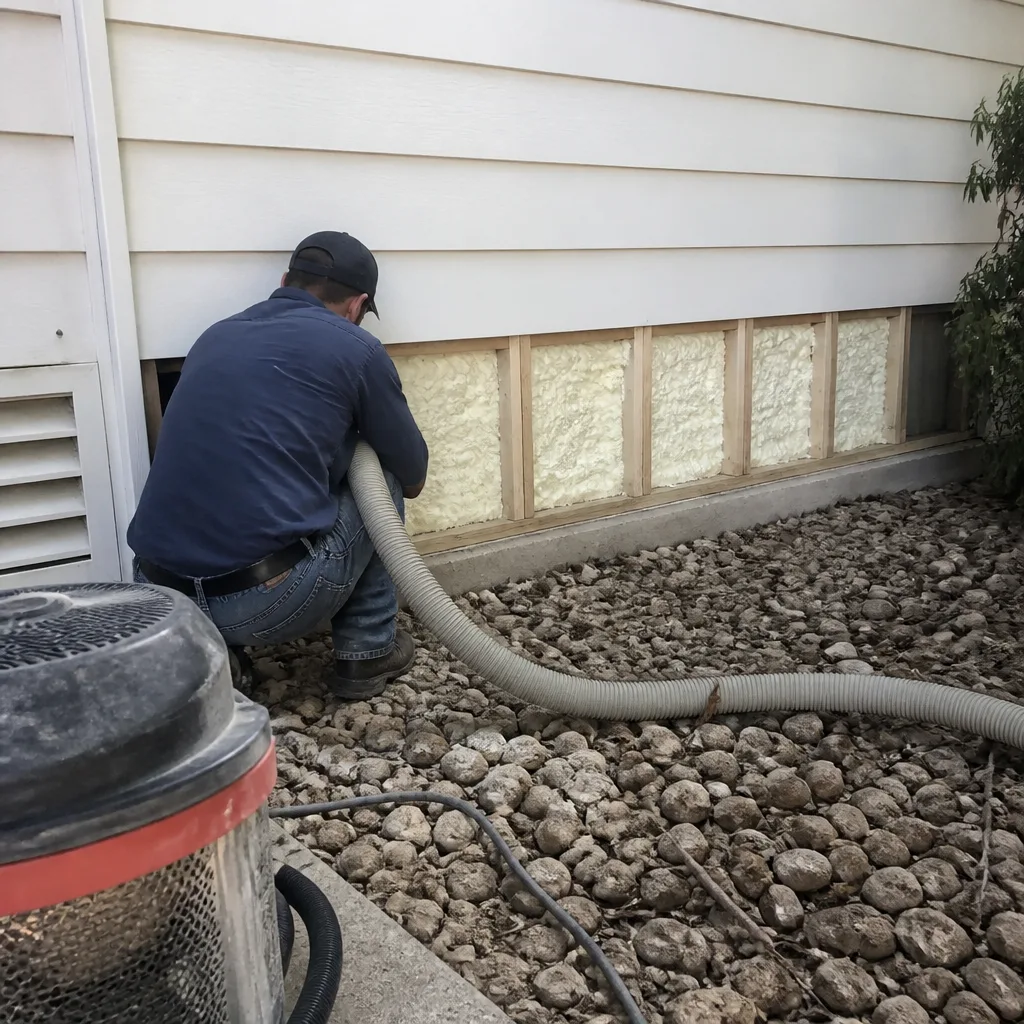 After
AfterWhat Icynene Insulation Removal & Replacement Costs in Canyon Lake
Most Icynene removal and replacement jobs in Canyon Lake run between $3.80 and $7.50 per square foot of treated area, with full attic jobs on a 2,000-square-foot home typically landing between $4,200 and $8,900. What moves the price: how many inches need removing, whether the foam is open-cell (faster) or closed-cell (denser, more labor), accessibility of the attic, and whether we find moisture damage or rodent contamination that requires remediation before replacement. Homes in the older Canyon Lake Village sections with shallow roof pitches take longer to access and run toward the higher end. We also service Reflectix systems and can compare approaches if you’re considering a material change. Every estimate is free, written, and delivered before any work starts - bring us a competing quote and we’ll read it with you.
Why Canyon Lake Homeowners Call Topside Attic Insulation Canyon Lake for Icynene Work
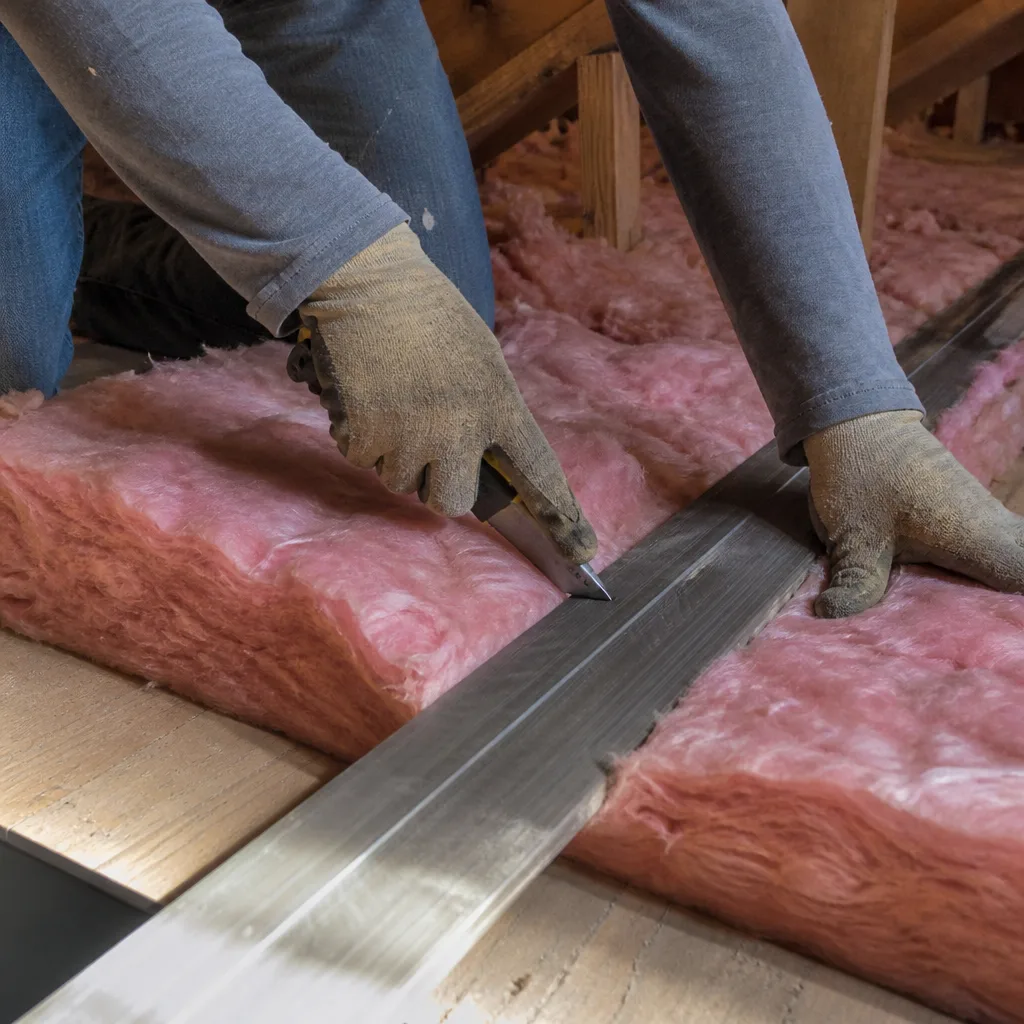
Wes Okafor and our crew have been in attics along Cranes Mill Road and throughout the Canyon Lake area long enough to know that a house here fails differently than one in Chicago or Dallas. We don’t sell insulation by the bag; we seal the envelope, measure the result, and hand you the numbers. The 365-Day Done Right Promise means if the post-install blower-door reading doesn’t hold, we find out why and fix it. Our technicians are background-checked and uniformed, and we source from Icynene, Owens Corning, Johns Manville, Knauf, Rockwool, and others - no proprietary lock-in, so the solution fits the house, not a distributor agreement. Calls are answered by a live person, 24/7.
FAQs
The original Icynene warranty was tied to the installing contractor and specific product batch; in most cases we’re seeing, that coverage has already expired or was voided by the conditions that caused the failure. As an independent service provider, we provide our own 365-Day Done Right Promise backed by written scope and warranty. Call (737) 227-6219 and we’ll review what documentation you have.
Yes - and often improve it. R-value is only half the story; air leakage dominates real-world performance in Canyon Lake’s climate. We frequently replace failed Icynene open-cell with closed-cell spray foam or dense-pack cellulose over a sealed attic floor, and the blower-door number tells you which assembly actually performs better, not which label claims a higher R.
Spot repair works when the failure is isolated - a single overspray area, one moisture-compromised bay. If you’re seeing widespread settling, odor, or thermal imaging shows delamination across multiple rafter bays, removal and replacement is the cost-effective path. We diagnose this on every estimate at no charge.
Most Canyon Lake Icynene jobs are scheduled within two to five business days, with emergency removals for active moisture or contamination issues available sooner. Your written price includes the start date before anyone lifts a tool.
Rarely, and never if the old foam is trapping moisture or off-gassing. In Canyon Lake’s humid shoulder seasons, burying compromised open-cell foam creates a vapor sandwich that accelerates roof deck rot. We remove to substrate, verify condition, and build back correctly - the report shows you why.
Written by Wes Okafor, Owner & Lead Insulation Technician, Topside Attic Insulation Canyon Lake at Topside Attic Insulation Canyon Lake, serving Canyon Lake and nearby areas.