
Icynene Vapor Barrier Installation: The Canyon Lake Owner’s Guide
Icynene vapor barrier installation in Canyon Lake typically runs $1,800-$3,400 for a complete crawl space or attic application, depending on square footage and whether the substrate needs prep work. We stock Icynene-compatible vapor barrier membrane in 10-mil and 15-mil rolls on every truck, and most Canyon Lake jobs are started same-day once the written price is approved. Homeowners usually figure out something’s wrong when they notice musty odors returning after a dry spell, or when their energy bills climb back toward pre-insulation levels despite the spray foam still looking intact on the rafters.
Which Icynene Models This Applies To
Icynene’s vapor barrier line breaks into two membrane families: the LD-C-50 series (lighter, 6-mil nominal, common in 2015-2019 Texas builds) and the current MD-R-80 series (10-mil reinforced, specified since 2020). The critical compatibility gotcha is the fastening pattern. LD-C-50 was designed for mechanical fastening at 12-inch centers; MD-R-80 shifted to a hybrid adhesive-mechanical system at 18 inches. If your original installer used the wrong spacing, you’ll see sagging and channeling within 18 months, especially in Canyon Lake’s humidity cycles.
To identify what you’ve got, check the printed edge stripe on the membrane roll tail, usually visible at seams or penetrations. LD-C-50 shows a single green stripe; MD-R-80 shows green-yellow-green. If the stripe’s worn off, measure thickness with a micrometer at a seam flap, not the field, 6-mil measures 0.0065″-0.0075″ and 10-mil measures 0.010″-0.012″.
We source OEM Icynene membrane through our distributor in San Antonio, but we also carry a Johns Manville equivalent that meets the same ASTM E1745 Class A standard and carries the same perm rating, 0.1 perms or less. For Canyon Lake homes with active radon mitigation, we stick with OEM because Icynene’s seam tape chemistry is certified for radon-barrier continuity. Otherwise, the JM equivalent installs identically and costs about 15% less on materials.
Signs Your Icynene Vapor Barrier Installation Is Failing
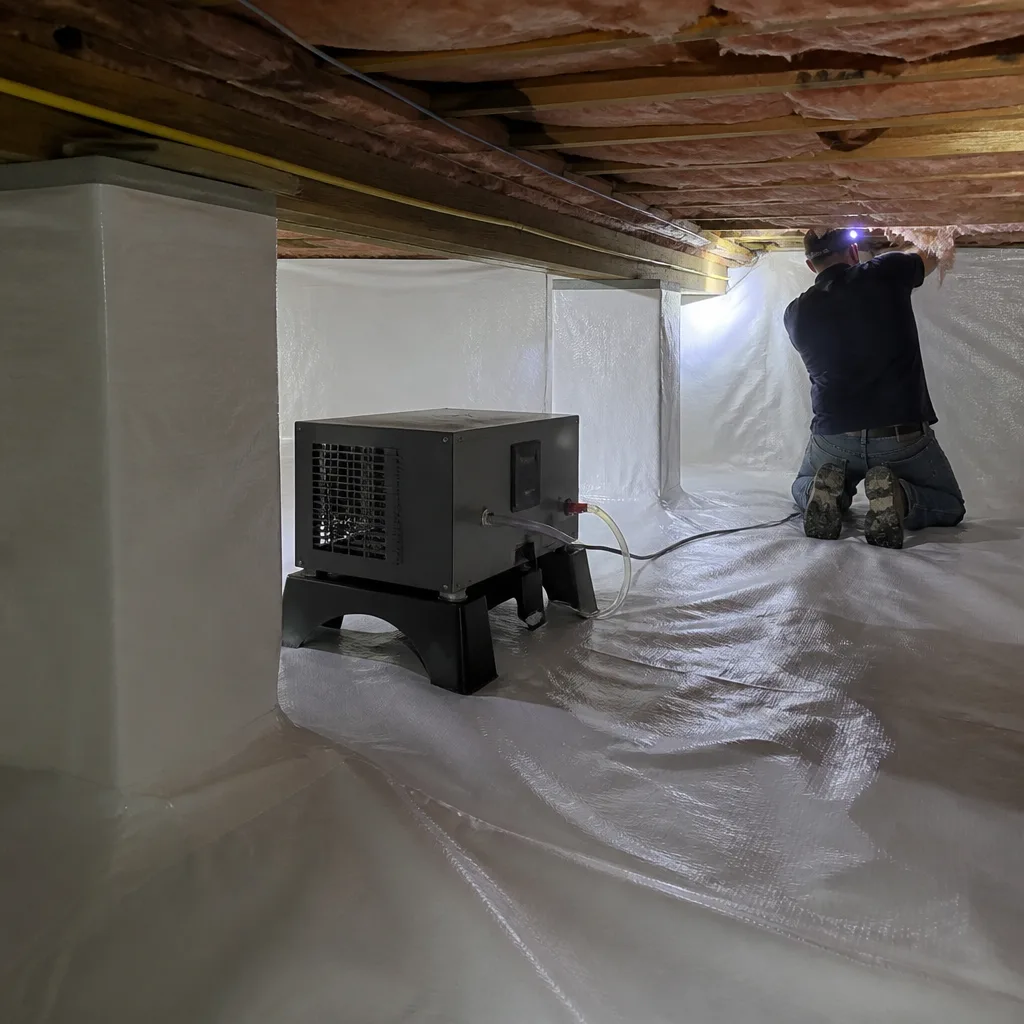
- Condensation beading on the membrane underside. This means the perm rating has degraded or the seam tape has lost adhesion, letting soil moisture migrate through. In Canyon Lake’s clay-heavy soils near the lake proper, hydrostatic pressure accelerates this. We see it most often on homes built 2017-2019 where LD-C-50 was spec’d without adequate substrate drainage.
- Sagging or bridging between fasteners. The membrane has exceeded its tensile elongation limit, usually from thermal cycling in unconditioned attics. Canyon Lake roof decks hit 140°F in August; that expansion-contraction adds up. Bridging creates air gaps that render the barrier cosmetic.
- White chalking or surface cracking. UV exposure through gable vents or missing soffit baffles has photodegraded the polyethylene. Icynene’s 6-mil product has a 90-day UV rating; in practice, Canyon Lake’s intensity cuts that to 60 days if the attic ventilation was never balanced properly.
- Musty odor return after rain events. The barrier is no longer monolithic. Even pinholes at seam lifts let soil gas and moisture through. We’ve traced this to improper overlap, 4 inches minimum per Icynene’s spec, on jobs where speed trumped detail.
- Insulation performance drop despite intact spray foam. The vapor barrier and foam work as a system. If the barrier fails, moisture degrades the foam’s thermal resistance over time. Your blower-door number might hold, but the moisture-corrected R-value doesn’t.
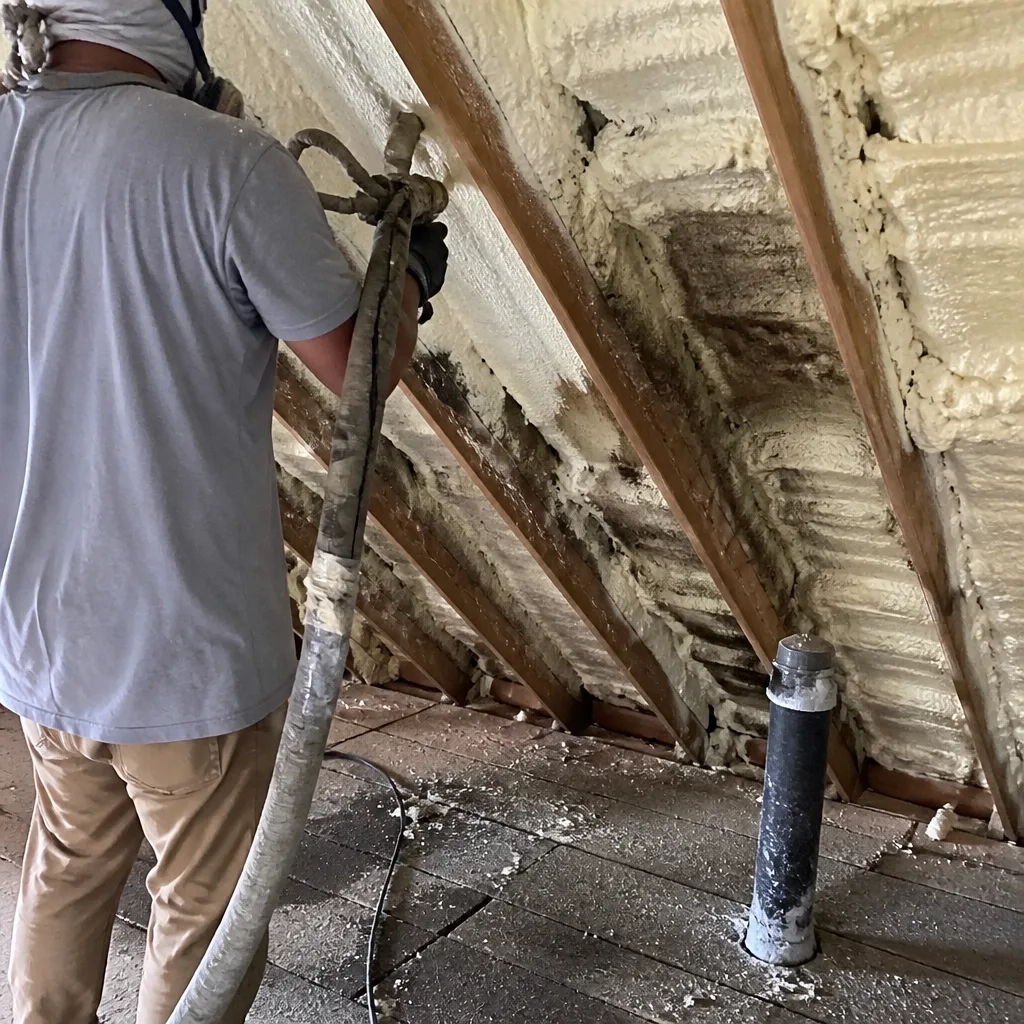 Before
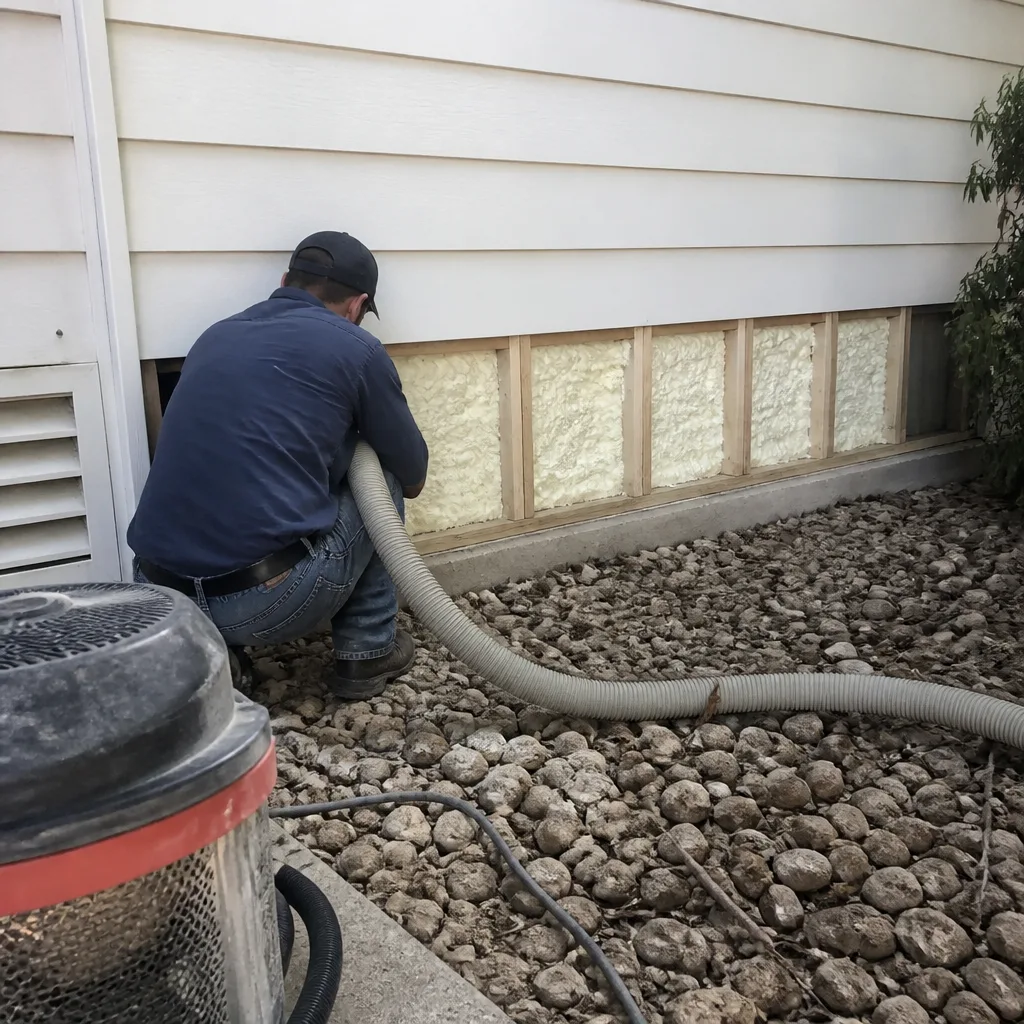 After
AfterReplacement Cost & What’s Included
| Scope | Price Range in Canyon Lake |
|---|---|
| Partial repair, under 200 sq ft, seam tape and patch | $480-$720 |
| Full vapor barrier replacement, crawl space, 800-1,200 sq ft | $1,800-$2,600 |
| Full replacement with substrate prep (leveling, debris removal) | $2,400-$3,400 |
| Radon-certified installation with continuous barrier documentation | Add $340-$520 |
What drives the range: square footage is obvious, but substrate condition is the variable we can’t price until we see it. A crawl space with previous rodent damage, sagging fiberglass, and standing water needs prep. A clean concrete pad with existing mechanical fastening points does not. Every Canyon Lake job includes removal and disposal of the failed membrane, surface prep, new membrane installation to Icynene spec or equivalent, seam sealing with pressure-rolled tape, and mechanical fastening per the series requirement. We run a blower-door test before and after on attic applications, pressure-rolled tape, and mechanical fastening per the series requirement. We run a blower-door test before and after on attic applications, and every customer gets a written scope, the written 365-Day Done Right Promise, and a Documented Photo Record before we leave. Materials carry the manufacturer’s defect warranty; our labor is covered under Haven Standard Clause 3.
DIY or Call Us?
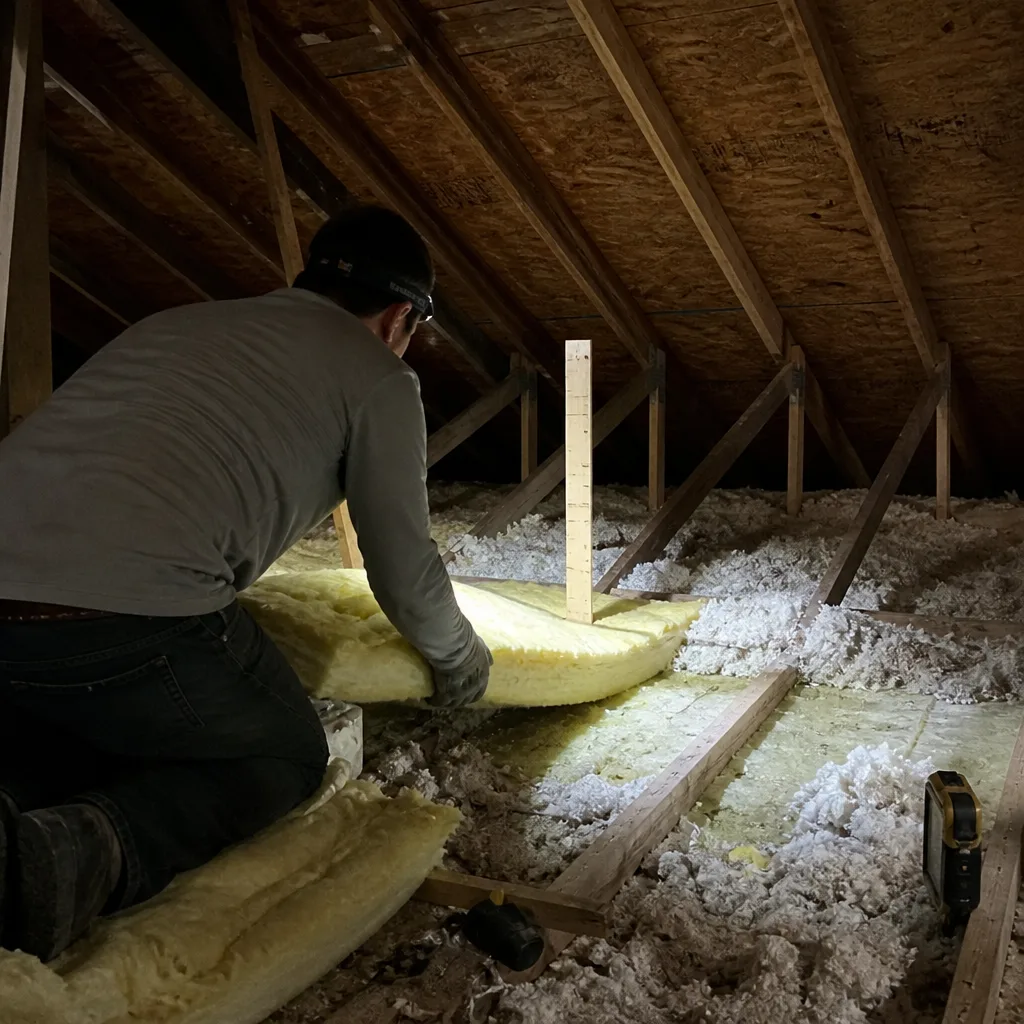
There’s a safe middle ground here. A homeowner can inspect: check the edge stripe, look for sagging, sniff for mustiness after rain. You can even measure thickness at a seam flap with a cheap micrometer. What you shouldn’t do is crawl around cutting and taping in a confined space with soil gases present, or attempt to heat-weld seams without the proper iron temperature, 380°F for Icynene tape, which is easy to overshoot and burn through. The real risk isn’t dramatic; it’s that a partial fix masks the problem for two years while moisture degrades your floor joists or spray foam adhesion. If your energy bills are higher than your mortgage, the attic is usually confessing something. Call (737) 227-6219 and we’ll read what it’s saying, with a written price before any work starts.
FAQs
In Canyon Lake’s climate, a properly installed 10-mil reinforced barrier should last 15-20 years; the older 6-mil product typically shows degradation at 8-12 years, especially in unconditioned attics with poor ventilation. The 15-mil upgrade we stock for lake-proximity homes with high water tables pushes that toward 25 years. Call (737) 227-6219 for an exact quote on your square footage, estimates are free.
Localized seam lifts or small punctures can be patched with compatible tape if the surrounding membrane is still supple and the perm rating hasn’t degraded. If you’re seeing widespread chalking, cracking, or multiple sag points, replacement is more cost-effective than chasing individual failures. We offer free second opinions on any written estimate you’ve already received, bring us the quote and we’ll read it with you.
Most Canyon Lake crawl spaces in the 1,000-square-foot range take one crew day, 6-8 hours, assuming standard access and no substrate prep. Attic applications run longer, 8-10 hours, because of the blower-door test protocol and the tighter working space. We text you a 30-minute arrival window the morning of, and a named technician runs the job start to finish.
We carry 10-mil and 15-mil reinforced membrane, Icynene-compatible seam tape, and mechanical fasteners on every Canyon Lake truck. OEM Icynene membrane is available with 24-hour lead time; the Johns Manville equivalent is on the truck today. We also stock Reflectix radiant barrier if your job needs a combined vapor-and-radiant solution. Same-day starts are standard once the written price is approved.
Topside Attic Insulation Canyon Lake is an independent service provider, not affiliated with Icynene or Demilec. We source materials through authorized distributors and install to manufacturer spec or equivalent ASTM standard.
Ready to stop the moisture and see the numbers? Call (737) 227-6219 for a free estimate. We’ll run the blower-door test, hand you a written price before any work starts, and leave you with a Documented Photo Record and the pre- and post-install report so you know exactly what changed. Seal the leaks first. Then insulate. The report tells you whether it worked.
Written by Wes Okafor, Owner & Lead Insulation Technician, Topside Attic Insulation Canyon Lake at Topside Attic Insulation Canyon Lake, serving Canyon Lake and nearby areas.