
Demilec Crawl Space Encapsulation: The Canyon Lake Owner’s Guide
Demilec crawl space encapsulation repair in Canyon Lake typically runs $2,800-$5,400 for a full vapor-barrier replacement with seam sealing and conditioned-air integration, and we stock Demilec-compatible 16-mil and 20-mil reinforced polyethylene on every truck for same-day starts. Most homeowners notice the problem first as a musty smell that returns within 48 hours of running a dehumidifier, or they spot condensation beading on the underside of the barrier where the seam tape has let go. If your energy bills are higher than your mortgage, the attic is usually confessing something - but when the crawl is the culprit, the humidity graph on your thermostat tells the story before we ever pull the access door.
Which Demilec Models This Applies To
Demilec’s crawl space line centers on the Heatlok HFO High Lift and Sealection 500 spray foam systems, which are often paired with their specified 16-mil woven reinforced vapor barrier for hybrid encapsulation jobs. The barrier itself isn’t branded Demilec on the roll - look for the lot tag printed every 36 inches that lists the mil rating, ASTM E1745 Class A compliance, and the distributor code starting with “DLC” for Demilec-authorized material. We’ve also encountered Demilec-specified jobs in Canyon Lake where the original installer used a generic 6-mil polyethylene that failed inside three years; the upgrade to 16-mil or 20-mil woven is the fix, not a matching exercise.
OEM Demilec vapor barrier runs $1.10-$1.40 per square foot material-only through regional distributors in San Antonio. We stock an equivalent 20-mil woven product from the same mill that supplies Demilec’s Texas distribution chain - identical puncture resistance (85 lbs per ASTM D1709) and perm rating (0.06 per ASTM E96), minus the markup for the brand stamp. For homes near the Canyon Lake shoreline where groundwater runs high, we spec 20-mil minimum regardless of what was originally installed; the 16-mil holds up fine on hillside lots above the 950-foot contour, but the lake-adjacent crawl spaces we’ve worked off FM 306 and Comal Springs see enough hydrostatic pressure to justify the heavier gauge.
Signs Your Demilec Crawl Space Encapsulation Is Failing
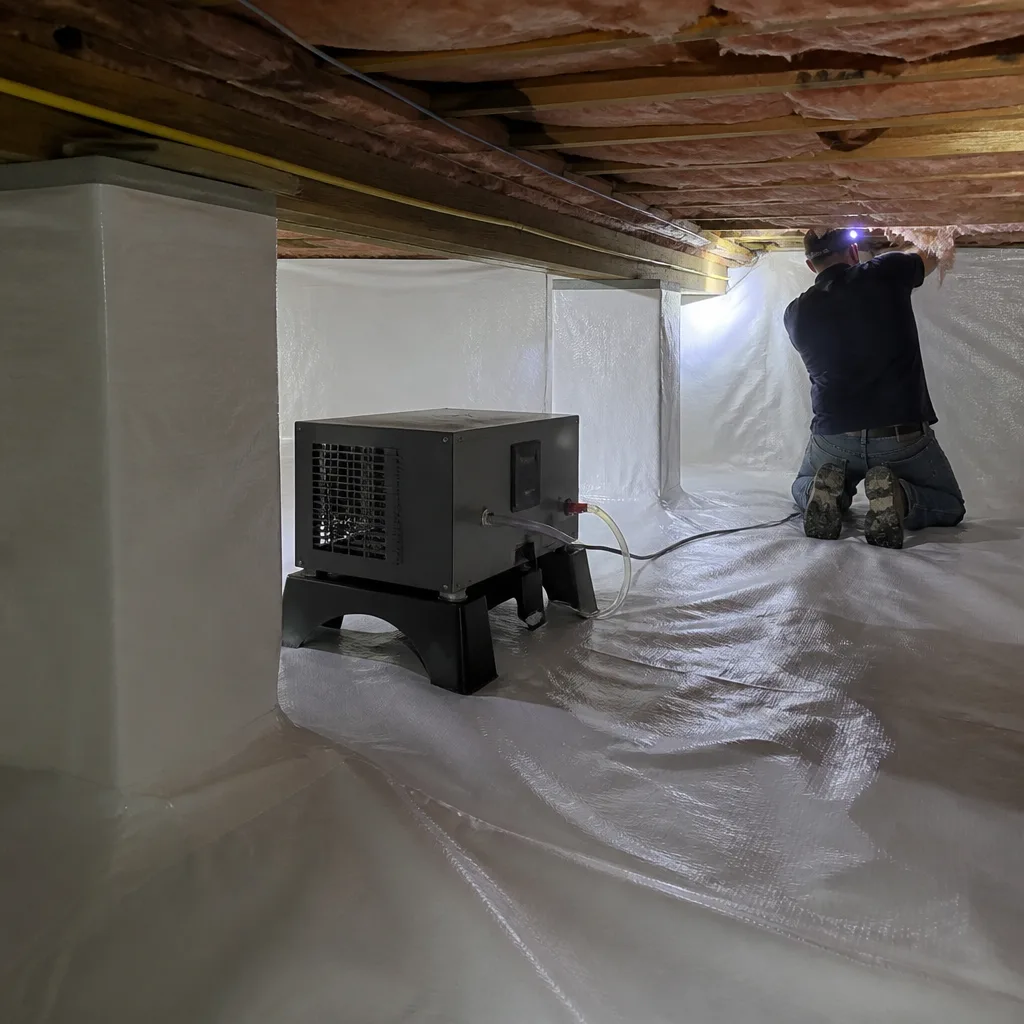
- Condensation on the barrier underside. This means your seam tape or mastic has failed at a lap joint, letting warm, moist exterior air contact the cool conditioned surface. In Canyon Lake’s shoulder seasons, when the ground is still warm from summer but you’re running heat, this shows up first along the north foundation wall where the temperature delta is sharpest.
- Musty odor returning within two days of dehumidifier shutdown. A properly sealed crawl space should hold below 60% relative humidity for 72 hours minimum without active drying. If your nose knows within 48 hours, the vapor barrier has lost its air seal at piers, sill plates, or penetrations - not the dehumidifier’s fault.
- Sagging or pooling on the barrier surface. Standing water on top of the poly means either a plumbing leak above or, more commonly, that the barrier was never properly sealed to the foundation walls and groundwater is weeping underneath then finding low spots. The 6-mil stock grade tears under foot traffic during inspection; 16-mil and up stays put.
- Insulation falling from floor joists. Fiberglass batts saturated with crawl space moisture gain weight, compress, and drop. If you’re finding pink or yellow debris on your vapor barrier, the encapsulation failed first and the insulation is the symptom - not the root cause.
- Increased pest activity. Termites and carpenter ants exploit the humidity gradient at a failed seal. We found active Formosan termite tubes last spring in a Canyon Lake home off Startz Road where the barrier had pulled away from the sill plate; the moisture reading at that gap was 78% RH, essentially a welcome mat.
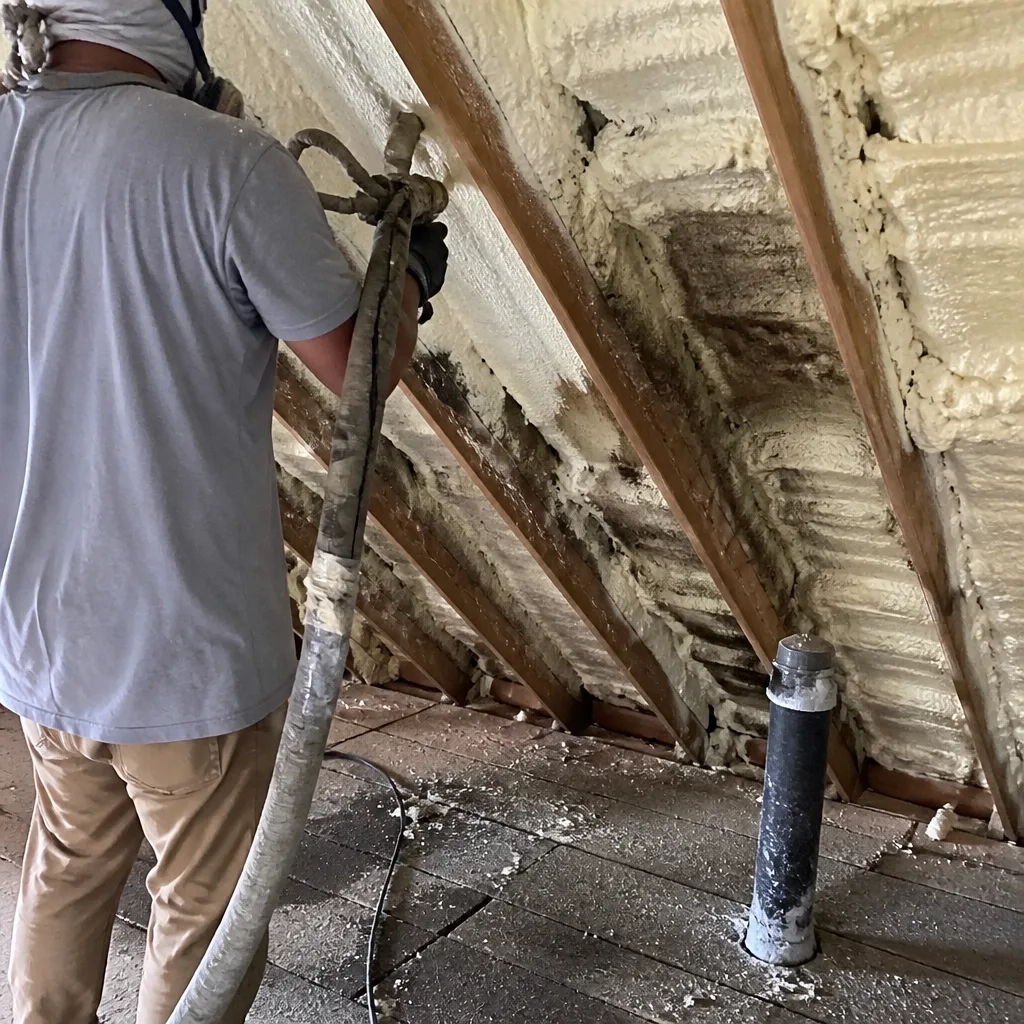 Before
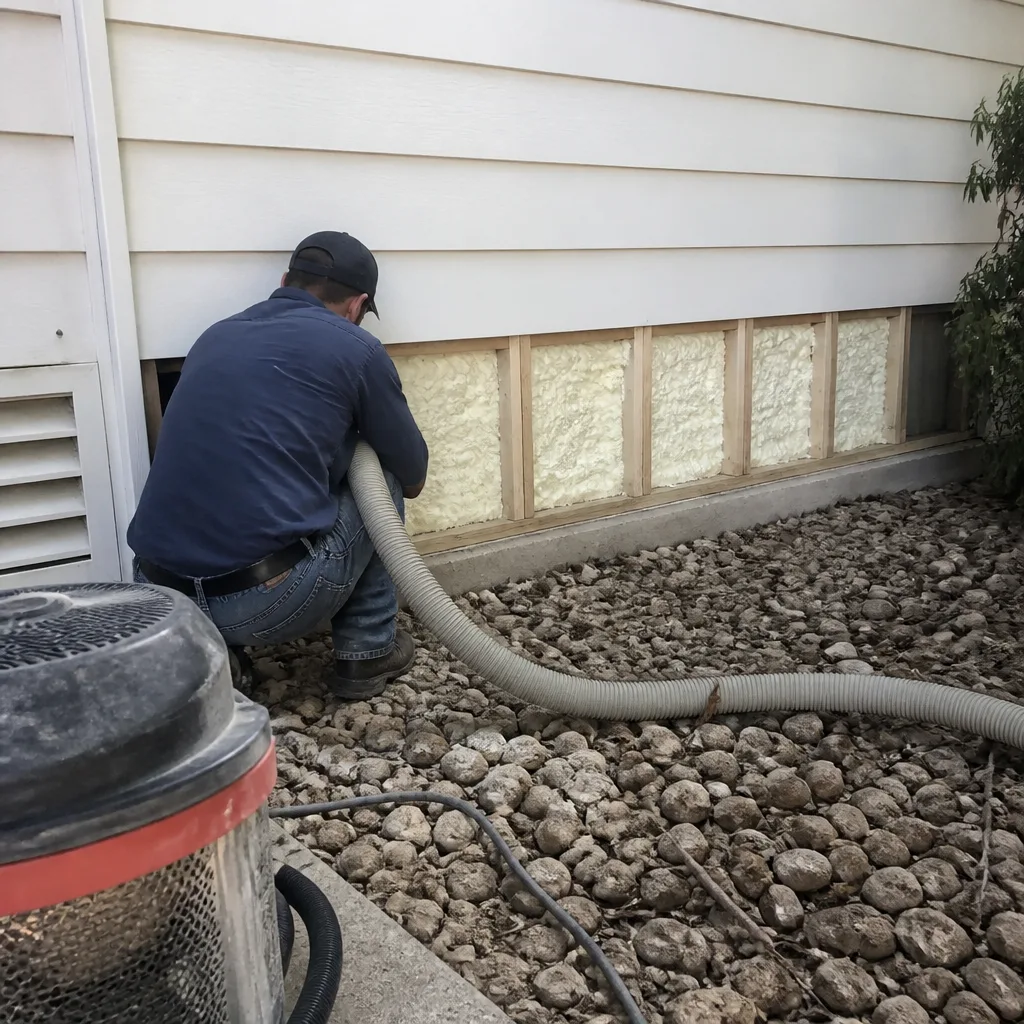 After
AfterReplacement Cost & What’s Included
Most full crawl space encapsulation replacements in Canyon Lake run $2,800-$5,400 installed, with the range driven by three factors: square footage (600 sq ft typical for a 1,800 sq ft home on pier-and-beam), current access conditions (a 16-inch by 24-inch hatch adds labor versus a full-height door), and whether we need to remove degraded material before laying new. That price includes removal of failed barrier and tape, wall prep with mechanical fastening at sill plates, new 16-mil or 20-mil woven polyethylene with double-fold seams sealed with closed-cell foam tape, sealed perimeter integration to foundation walls, and a post-install humidity reading with photo documentation.
Partial repairs - localized seam failure or pier sealing - start around $850 if the existing barrier is salvageable. We don’t quote those without looking; too many “simple” tape jobs in Canyon Lake have turned out to cover rotted sill plates or active leaks that change the scope. Every job gets a Written Price Before Any Work Starts, always - Haven Standard Clause 1 - and the 365-Day Done Right Promise covers seam integrity and adhesion. On full encapsulations, we run a blower-door test before and after if the crawl is integrated with conditioned space, so you have a pressurization number showing whether the envelope actually tightened.
DIY or Call Us?
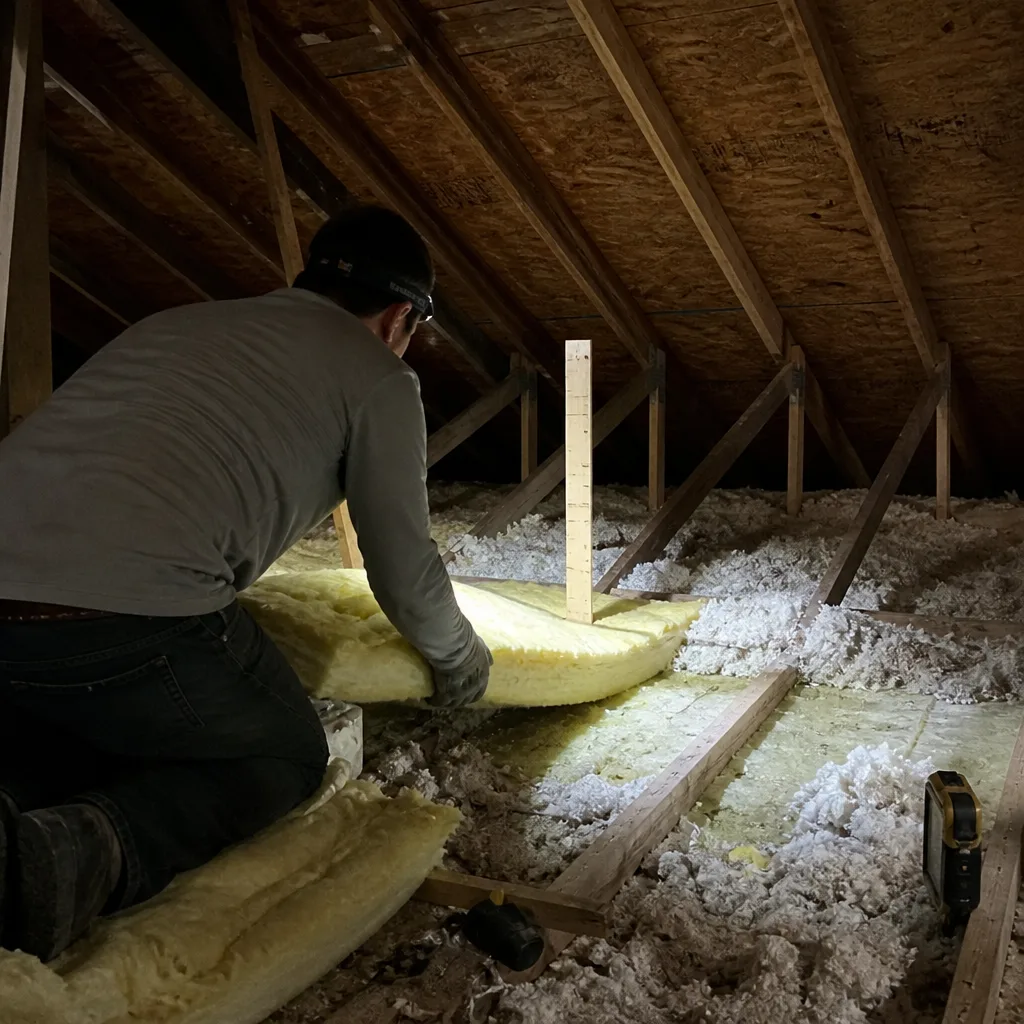
What you can safely check: verify your dehumidifier is running and draining, look for obvious tears or standing water with a flashlight, and photograph any sagging or pulled seams for reference. What goes wrong fast: crawling a 16-inch access with a headlamp and a box knife, cutting old barrier that’s glued to sill plates with mastic, and disturbing active fungal growth without respiratory protection. The woven 20-mil material we use weighs 0.48 lbs per square foot - a 600 sq ft roll is unwieldy in a confined space, and seam sealing requires a clean, dry surface that rarely exists in a failing crawl.
We carry Demilec-compatible 16-mil and 20-mil barrier, closed-cell seam tape, and mechanical fasteners on every truck. If your crawl space is the access point for HVAC ductwork or plumbing manifolds, the safety call is straightforward - disturbed connections in a dark, tight space create water damage risk that dwarfs the labor savings. Call (737) 227-6219 and we’ll read your situation with you, no charge for the conversation. Seal the leaks first. Then insulate. The report tells you whether it worked.
FAQs
Properly installed 16-mil or 20-mil woven barrier lasts 15-20 years in Canyon Lake’s climate, though lake-adjacent properties with seasonal groundwater fluctuation may see 12-15 years at the sill plate perimeter where hydrostatic pressure is highest. The seam tape is typically the failure point before the poly itself - we use closed-cell foam tape rated for 20-year adhesion to extend that. Call (737) 227-6219 for an exact condition assessment - estimates are free.
Localized seam failures and small punctures can be patched with compatible tape and an overlay patch of matching mil rating, but only if the surrounding barrier is still supple and the substrate is dry. If the poly has become brittle (common with 6-mil stock grade after 5-7 years in Texas heat) or if mold is present on the underside, partial repair is false economy - the adjacent material will fail within two years. We stock patch kits for emergency stabilization, but we’ll tell you honestly if replacement is the better spend.
A typical 600-square-foot crawl space in Canyon Lake takes one day for removal and replacement, or two days if we integrate with active dehumidification and run pre- and post-install blower-door testing. Access matters - a full-height door off a garage or exterior wall saves two hours versus a belly-crawl through a foundation vent. We text you a named technician and arrival window under Haven Standard: Arrive on schedule.
Yes - 16-mil and 20-mil woven reinforced polyethylene, closed-cell seam tape, mechanical fasteners for sill-plate attachment, and mastic for foundation wall integration. We also stock Reflectix radiant barrier for hybrid jobs where the crawl has ductwork that needs summer heat gain reduction. Topside Attic Insulation Canyon Lake is an independent service provider, not affiliated with Demilec; we source material that meets or exceeds Demilec’s published specifications without the brand markup.
Written by Wes Okafor, Owner & Lead Insulation Technician, Topside Attic Insulation Canyon Lake at Topside Attic Insulation Canyon Lake, serving Canyon Lake and nearby areas.