
Crawl Space Insulation in Canyon Lake, TX
Crawl space insulation in Canyon Lake typically runs between $1,800 and $4,200 for most single-family homes, depending on square footage, existing moisture conditions, and whether air sealing needs to happen first. Most jobs are scheduled and completed within one to two days. At Topside Attic Insulation Canyon Lake, we never install insulation over an unsealed crawl space floor or rim joist – that sequence is fixed, and it’s the reason our installs hold their performance year after year. See our guide on how much crawl space encapsulation and vapor barrier costs in Canyon Lake, TX to understand how pricing breaks down.
If you’re reading this because your floors are cold in January, your energy bills spiked after buying the house, or you found standing moisture under the home after one of Canyon Lake’s hard spring rains, you’re in the right place. Call us at (737) 227-6219 and we’ll put a written price in your hands before anyone touches a tool. That’s not a sales line – it’s Haven Standard Clause 1, and it applies to every job we do.
Crawl space insulation sits under the broader scope of Crawl Space Encapsulation & Vapor Barrier in Canyon Lake, and understanding how those two services interact is key to getting work that actually performs. Insulation handles thermal resistance; encapsulation handles moisture. Skip either one and you’ve solved only half the problem. We treat them as a coordinated system – not two separate line items you can defer one by one.
When You Need Crawl Space Insulation
- Cold or uneven floors in winter. Canyon Lake sits at roughly 900 feet elevation, and December overnight lows regularly drop into the upper 20s. An uninsulated crawl space lets that cold air press directly against your subfloor, and the rooms above feel it first – especially over vented pier-and-beam foundations common in older neighborhoods near the lake’s north shore.
- Energy bills that don’t match the home’s size. If your heating and cooling costs look high relative to similar Canyon Lake homes, an under-insulated crawl space is one of the first places a building-science inspection looks. Conditioned air that heats your floor assembly instead of your living space is money that leaves through the ground.
- Existing insulation that’s sagging, wet, or compressed. Kraft-faced fiberglass batts stapled to floor joists were standard practice in Canyon Lake homes built through the 1990s. That material absorbs humidity off the ground, sags out of the joist bays within a decade, and stops delivering its rated R-value the moment it makes contact with moisture.
- Recent moisture intrusion or a failed vapor barrier. The Guadalupe River corridor and the draws feeding Canyon Lake produce ground moisture that works its way into vented crawl spaces after heavy rain events. If a previous vapor barrier shifted, tore, or was never lapped and taped correctly, the insulation above it has likely absorbed that moisture. Wet insulation is a mold substrate, not a thermal barrier.
- You’re buying a home built before 2000. Canyon Lake’s older stock – particularly the mid-century lake cabins converted to year-round residences and the 1970s-era tract homes off FM 2673 – was often built with minimal or no crawl space insulation. A pre-purchase inspection that catches this saves you from inheriting an energy penalty on day one.
- Pest or rodent activity has compromised the existing material. Attic cleaning and rodent proofing is a separate service, but the same issue applies below: rodents nest in fiberglass, compress it, and leave contamination behind. Insulation that’s been disturbed by wildlife needs to be removed and replaced, not layered over.
Our Crawl Space Insulation Process
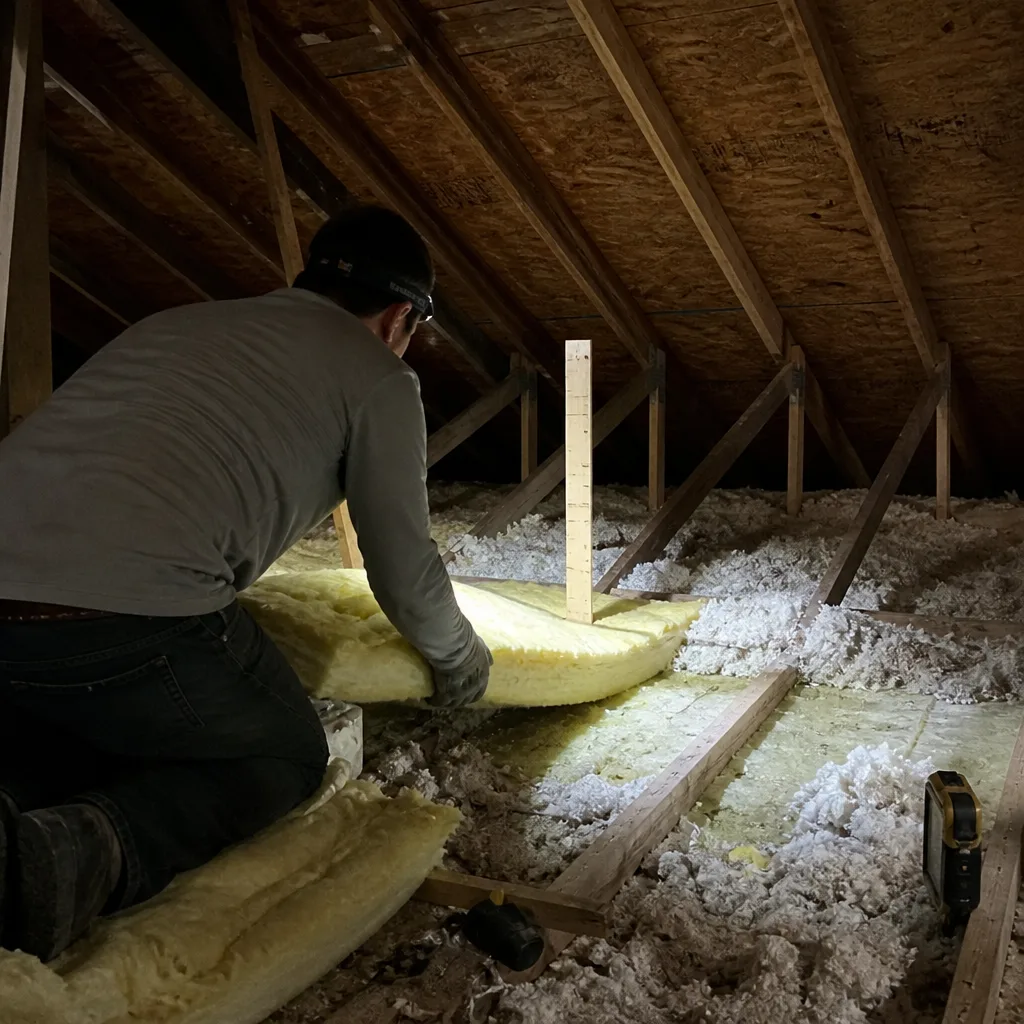
- Written scope and price before entry. Under Haven Standard Clause 1, you receive a flat written price and a documented scope before we schedule the job. No ballpark. No “we’ll know more once we’re under there.” If a condition we find during the assessment changes the scope, we put the revised number in writing and you decide whether to proceed. We’ve done this on every job since 2016 – more than 9,000 homes across the region.
- Crawl space assessment and moisture reading. A technician enters the crawl space with a moisture meter and a camera. We document what’s there: the existing insulation type and condition, vapor barrier status, standing water or staining, rim joist and band joist exposure, and any visible air bypasses at plumbing penetrations or duct supports. You get photos of what we found before we start work – that’s the Documented Photo Record, included on every visit, not available on request.
- Remove deteriorated or contaminated insulation. If the existing material is wet, compressed below its rated depth, or rodent-compromised, it comes out. We bag and remove it as part of the job. Leaving degraded insulation in place and adding new material over it is a practice we won’t do – it traps moisture between layers and creates conditions for mold growth in the floor assembly.
- Air seal first – every time. Rim joists, band joists, plumbing penetrations, and any gap where conditioned space meets the crawl – these get sealed before insulation goes in. This is the step most contractors skip because it adds labor time and isn’t visible when the job is done. We don’t skip it. Sealing first and insulating second is the core of how we build a crawl space assembly that holds its performance. On jobs where a blower-door test is warranted, we run pre- and post-readings so you have a number showing what the air sealing accomplished.
- Install insulation to correct R-value for the Canyon Lake climate zone. Canyon Lake sits in IECC Climate Zone 2A – a mixed-humid designation that calls for a minimum of R-19 in crawl space floor assemblies, though we regularly recommend R-25 to R-30 for homes with high ceiling-to-floor ratios or known duct leakage. Depending on the joist depth and moisture history of the specific space, we use rigid foam board at the rim joist, spray foam closure at penetrations, and either cut-and-cobble rigid foam or high-density Johns Manville or Owens Corning fiberglass batts in the field. Material selection is based on the conditions in your crawl space – not on which product we happen to have on the truck.
- Final documentation and 365-Day Done Right Promise. We photograph the completed installation, document the materials used and coverage achieved, and leave you with a written record. If anything about the work isn’t right within 365 days – settling, installation gaps, moisture intrusion related to the installation – we make it right. That promise is in writing before we start.
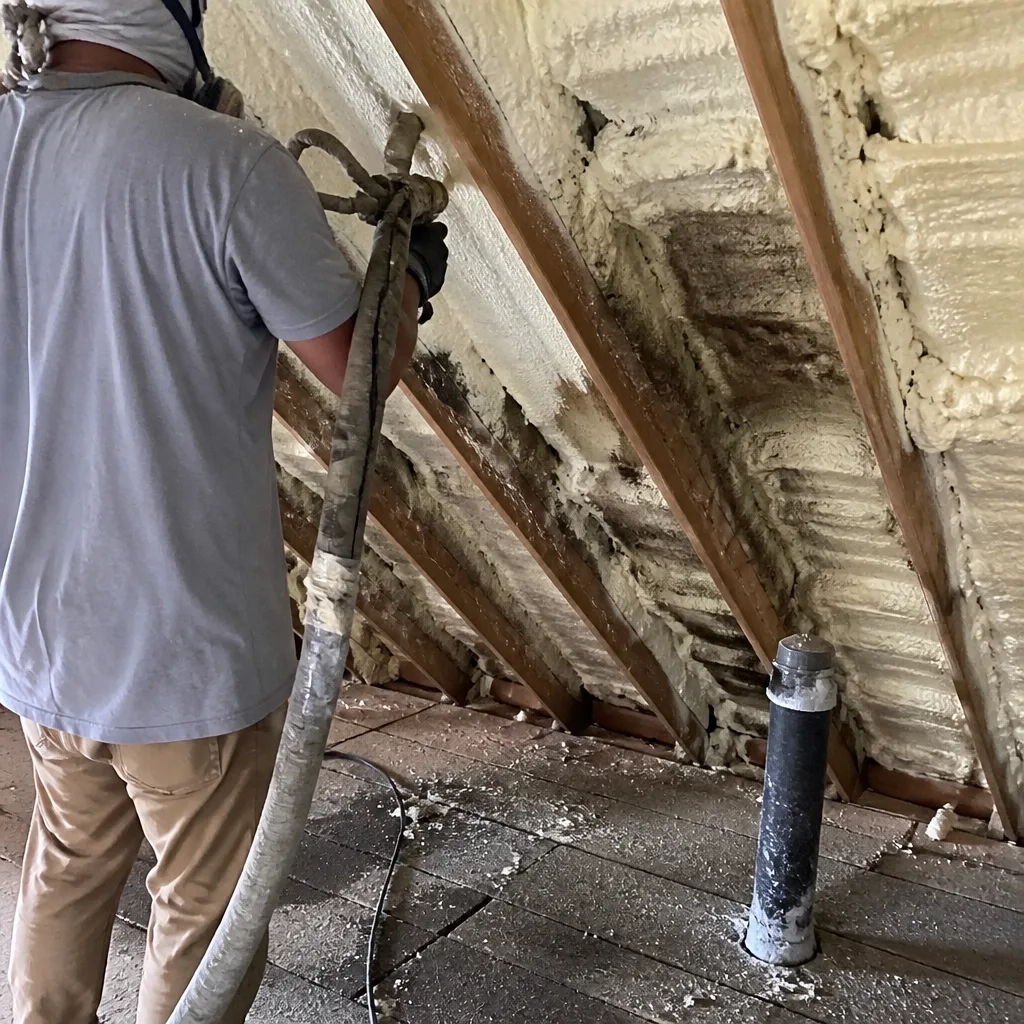 Before
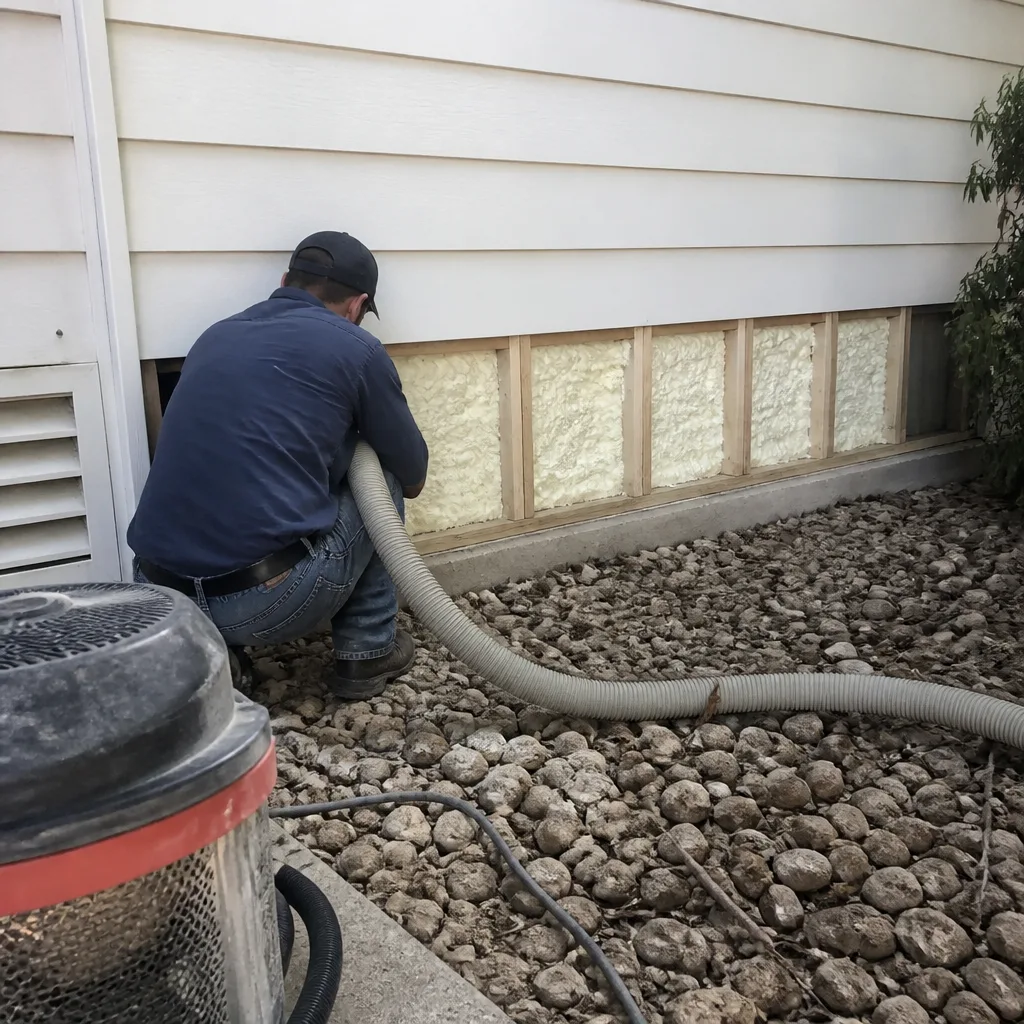 After
AfterCrawl Space Insulation Pricing in Canyon Lake
Most crawl space insulation jobs in Canyon Lake fall into a predictable range once we know three things: the square footage of the crawl space, the condition of whatever is down there now, and whether a crawl space vapor barrier needs replacement at the same time. Below are the ranges we see most often. These are not estimates for your specific home – your written price comes after we assess the space.
| Scope | Typical Range |
|---|---|
| Air sealing only (rim joist + penetrations, crawl space < 1,000 sq ft) | $600 – $1,100 |
| Insulation install, no removal, 1,000-1,500 sq ft crawl | $1,800 – $2,600 |
| Insulation removal + reinstall, 1,000-1,500 sq ft crawl | $2,400 – $3,400 |
| Full assembly: air seal + new insulation + vapor barrier, 1,500-2,200 sq ft | $3,200 – $4,200 |
| Spray foam rim joist closure (add-on to any above) | $300 – $700 |
A few things push costs toward the higher end in Canyon Lake specifically. Pier-and-beam foundations with multiple access hatches require more labor to cover and document. Crawl spaces under older lake properties off RR 2673 and Canyon Lake Drive sometimes have partial stone foundations that create dead zones where insulation can’t be mechanically fastened – those areas need a different approach. And any job where we find active moisture or organic growth (mold) requires remediation before insulation, which adds scope and cost that we document separately and price separately.
If you have a written estimate from another contractor, bring it to us. We offer a Free Second Opinion on any written estimate – we’ll read it with you line by line and tell you what’s there, what’s missing, and whether the scope matches what your crawl space actually needs. Call (737) 227-6219 to schedule that conversation.
What’s Always Included
- Written price before any work starts – flat, not subject to change without your written approval
- Documented Photo Record of existing conditions and completed work
- Material specifications (brand, product name, R-value) in the written scope
- 365-Day Done Right Promise in writing
- Live person answering when you call – no voicemail, no callback window
FAQs – Crawl Space Insulation
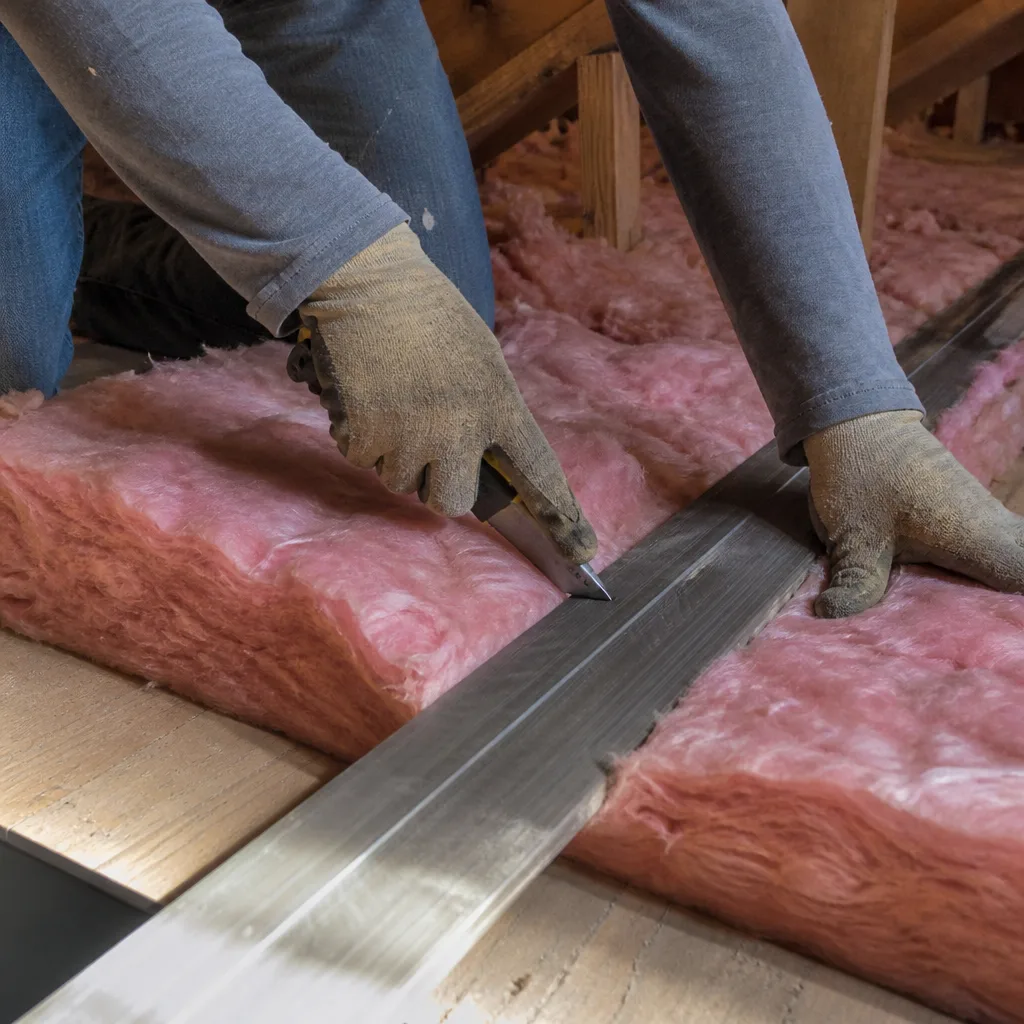
What type of insulation works best in a Canyon Lake crawl space?
For Canyon Lake’s Climate Zone 2A conditions, rigid foam at the rim joist combined with high-density fiberglass batts in the floor joist bays is the most common combination we install – and it holds up well in the area’s mixed-humidity summers. Spray foam is a better choice when joist bays are irregular, when there’s a history of moisture intrusion, or when air sealing at penetrations needs to be airtight rather than just reduced. We use materials from Johns Manville and Owens Corning depending on the specific application; the choice is based on the crawl space’s dimensions and moisture history, not brand preference. What we don’t do is install a single product type regardless of conditions – that’s how you get insulation that fails in two to three years.
Can I just add insulation on top of what’s already there?
Only if the existing insulation is dry, unfaced or properly faced for the application, at its full rated depth, and free of pest contamination or mold. In practice, less than a third of the Canyon Lake crawl spaces we assess meet all four of those conditions. Adding new material over wet or compressed insulation traps moisture between the layers, accelerates mold growth in the subfloor assembly, and doesn’t deliver the R-value you’re paying for. We photograph and document the existing condition before recommending removal – you see what we see before we give you a price.
Does crawl space insulation reduce humidity under the house?
Insulation slows heat transfer through the floor assembly, but it does not control ground moisture. That’s what a vapor barrier and, in some cases, a full encapsulation system does. If your crawl space has a moisture problem – standing water after rain, efflorescence on the piers, high relative humidity readings under the floor – insulation alone won’t fix it and may make the moisture situation worse by reducing air movement. The right sequence is: address moisture first, seal the air bypasses second, install insulation third. We offer the full scope under our Crawl Space Encapsulation & Vapor Barrier in Canyon Lake service so both problems get solved in the correct order. Call (737) 227-6219 to get a written assessment of what your specific crawl space needs.
How long does crawl space insulation last in Central Texas?
Properly installed, air-sealed, and moisture-controlled crawl space insulation should hold its rated R-value for 20 to 30 years in Central Texas conditions. The failure mode we see most often is moisture – either because crawl space encapsulation and vapor barrier work was never done or failed, or because air sealing wasn’t done before the insulation went in. Fiberglass that stays dry and undisturbed performs for decades. Fiberglass that cycles through wet and dry seasons compresses, sags out of the joist bays, and loses R-value in under ten years. The documentation we leave behind – written scope, photos, material specs – gives you a benchmark so any contractor who looks at it in fifteen years can tell exactly what was installed and what conditions looked like the day the job was done.
Why Canyon Lake Homeowners Choose Topside Attic Insulation Canyon Lake
Canyon Lake is a specific environment for insulation work. The lake itself moderates temperature swings along the water, but homes on the canyon ridges and the limestone plateaus to the north and west see wider temperature variation than most of the Comal County market. Pier-and-beam construction is common in the older waterfront stock. High crawl spaces under homes built into hillside cuts create access challenges that drive up labor time. And the area’s growth since 2015 – new construction in Cranes Mill, the Canyon Lake Gorge area, and along the FM 306 corridor – means a significant portion of the local housing stock is less than ten years old but was built to code minimums that are below what the climate actually calls for.
We’ve been doing this work since 2016. Every one of those jobs started with a written price and ended with a documented record. The home energy performance results we’ve documented across the Hill Country and Comal County market show, consistently, that the air sealing step – the one most contractors skip because the customer can’t see it when the job is done – accounts for the largest single share of measured performance improvement. That’s why we treat it as a prerequisite, not an upsell.
If you’ve had a quote from another contractor that didn’t mention air sealing, or that gave you a verbal number rather than a written scope, bring it to us. We’ll review it with you at no charge. And if what you need is a fresh assessment of your crawl space from scratch, we’ll schedule that, show you what we find, and give you a flat written price before we touch anything. Call (737) 227-6219 – a live person picks up, every time.
Key Takeaways
- Crawl space insulation in Canyon Lake typically costs between $1,800 and $4,200 for most homes – exact price in writing before work starts, always.
- Air sealing at the rim joist and penetrations must happen before insulation is installed – this sequence is fixed, not optional.
- Canyon Lake’s Climate Zone 2A designation calls for R-19 minimum in crawl floor assemblies; R-25 to R-30 is more appropriate for most of the area’s existing housing stock.
- Wet, compressed, or pest-damaged existing insulation must be removed before new material goes in – installing over damaged insulation doesn’t restore rated R-value.
- Every job includes a Documented Photo Record, written scope, material specifications, and the 365-Day Done Right Promise.
- If you have a competing written estimate, we’ll review it with you free of charge.
Ready to get a written price for your Canyon Lake crawl space? Call Topside Attic Insulation Canyon Lake at (737) 227-6219. A live person answers, we’ll schedule an assessment at your convenience, and you’ll have a flat written price in hand before any work is scheduled.
Written by Wes Okafor, Owner at Topside Attic Insulation Canyon Lake, serving Canyon Lake.