
Last updated September 24, 2026
Seasonal Insulation Care for Canyon Lake: Year-Round Homeowner’s Guide
Canyon Lake averages roughly 230 days above 90°F per decade, and the attic above an under-insulated ceiling can sustain 150°F for six of those hours per day. That temperature degrades fiberglass binder, drives AC overcycling, and deposits radiant heat into living space at a rate no thermostat setting fully compensates for. Yet most Canyon Lake homeowners treat insulation as a one-and-done installation, not a system that needs seasonal attention.
In The Complete Guide to Insulation in Canyon Lake, you’ll learn how Canyon Lake’s two-season thermal year - a seven-month cooling season dominated by radiant attic heat, and a brief but sharp winter driven by air infiltration - creates distinct maintenance priorities for each quarter. We’ll assign specific inspection tasks to spring, summer, fall, and winter, and explain how to read your own utility data as a performance diagnostic. By the end, you’ll know when a problem needs a pro and when a homeowner check suffices.
Quick Answer
Seasonal insulation care in Canyon Lake means inspecting air sealing before summer heat arrives, tracking your kWh-per-cooling-degree-day ratio through peak summer, sealing penetration points before winter nighttime lows hit the 30s, and monitoring for moisture at vapor retarders during rare ice events. A rolling blower-door baseline retested every five to seven years gives you a number, not a feeling, to justify re-insulation decisions.
Table of Contents
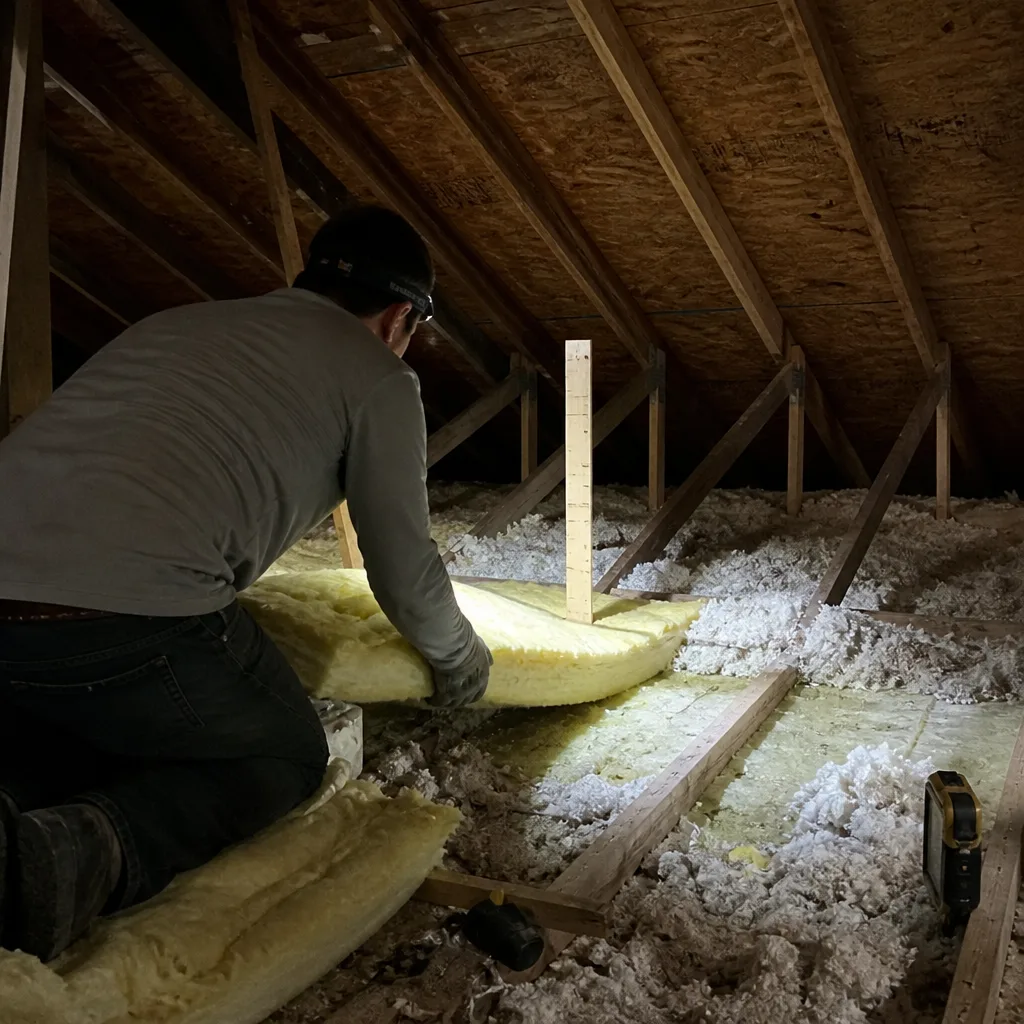
- Spring: The Post-Winter Air-Sealing Inspection Checklist
- Summer: Reading Your Utility Bill as a Performance Indicator
- Fall: Pre-Winter Air-Sealing Priorities for Canyon Lake Homes
- Winter: Moisture Risk at the Vapor Retarder
- Cross-Season: The Rolling Blower-Door Baseline
- How Canyon Lake’s Climate Ages Insulation Materials
- Common Mistakes to Avoid
- When to Call a Professional
- Frequently Asked Questions
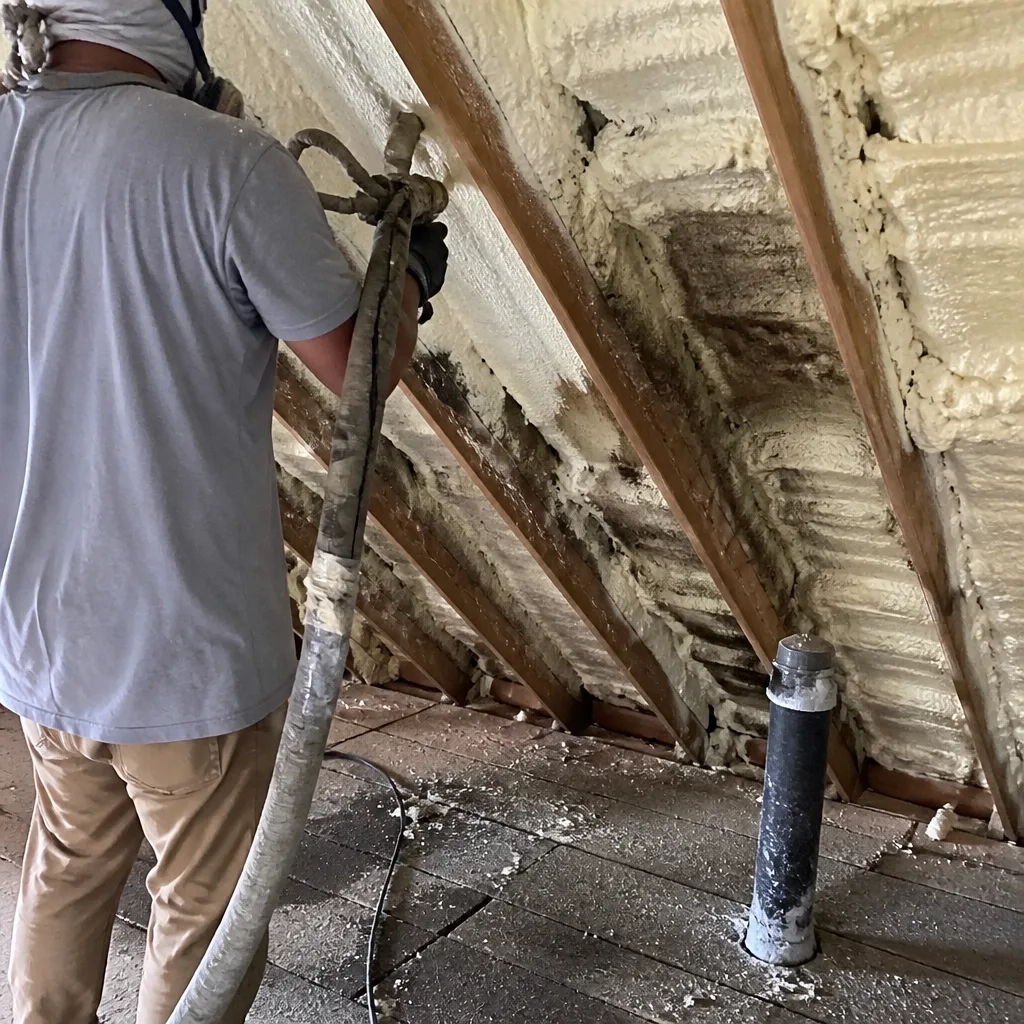 Before
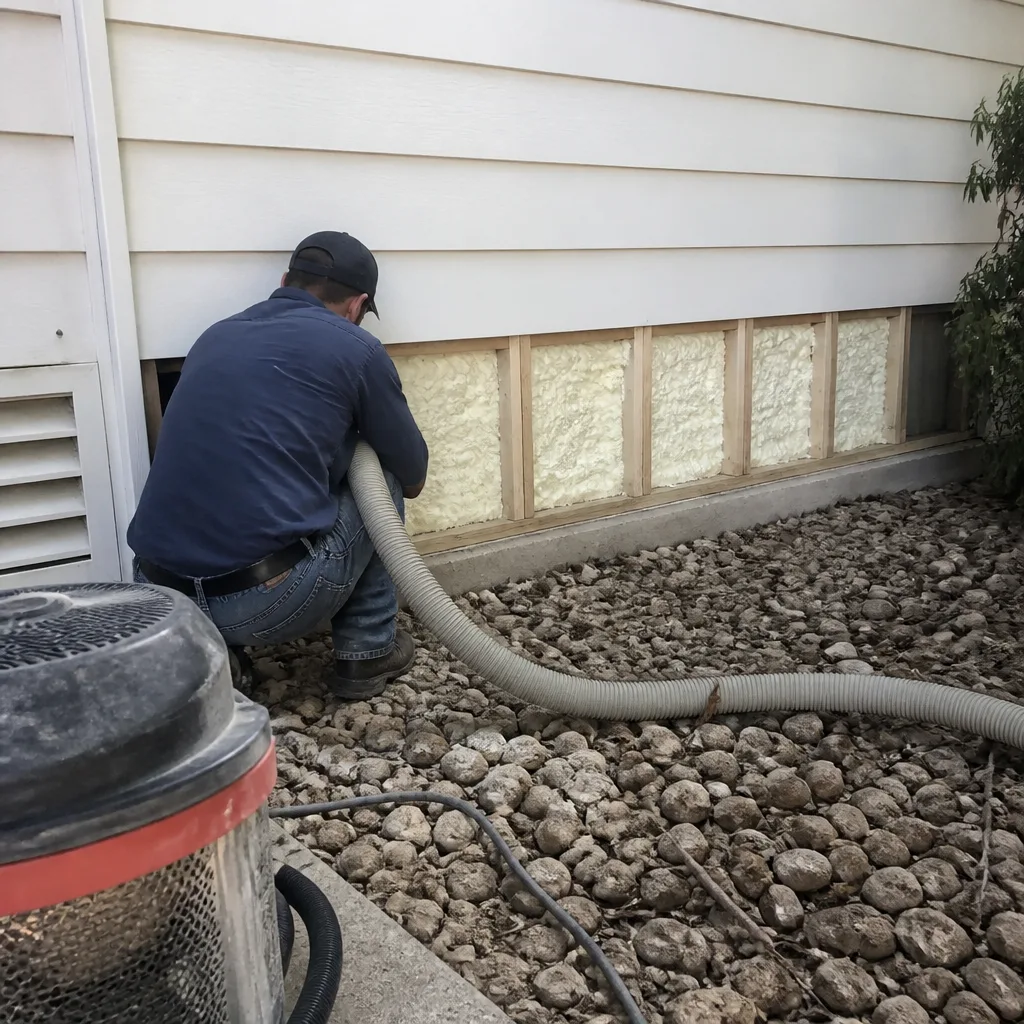 After
AfterSpring: The Post-Winter Air-Sealing Inspection Checklist (March-April)
Spring in Canyon Lake is brief. By late March, attic temperatures can already reach 110°F on clear days. The window between the last hard freeze and the first sustained 100°F day is typically four to six weeks. That’s your annual inspection window.
Winter’s temperature swings - Canyon Lake sees overnight lows in the 20s several times per year - expand and contract framing members, caulk, and foam sealants. Thermal cycling loosens air-barrier continuity at the weakest points. Spring is when you document the damage before summer makes the attic uninhabitable.
Here’s our Attic Insulation Maintenance Checklist for Canyon Lake Homeowners, developed from what we’ve found in Canyon Lake attics after nine years of post-winter inspections:
- Thermal bypass check at top plates. Top plates are the horizontal framing members where interior walls meet the ceiling. In most Canyon Lake homes built 1980-2010, these joints were never sealed during original construction. Use a smoke pencil or incense stick on a breezy day - hold it near the wall-ceiling intersection in each room. A horizontal drift means attic air is moving into your wall cavities. Mark each location. Sealing these requires accessing the attic floor above each wall run, which means moving insulation aside to expose the gap. This is labor-intensive and often skipped by contractors who blow insulation without prep work. We seal every top plate before adding any new insulation - it’s Haven Standard procedure, not an upsell.
- Attic hatch gasket test. The attic hatch is the largest unsealed hole in most Canyon Lake ceilings. Close it on a strip of paper. If you can pull the paper out without resistance, your gasket has compressed or hardened. Replacement gaskets cost under $15; the heat loss through a failed hatch gasket costs far more over a Canyon Lake summer. Check the hatch’s weatherstrip for UV cracking - attic hatches in homes with west-facing roof planes see more ultraviolet degradation because radiant heat drives attic air circulation past the seal.
- Soffit baffle confirmation. Soffit baffles - the cardboard or foam channels that keep attic ventilation open above your exterior wall insulation - collapse, get displaced by wind, or get buried by insulation crews who don’t verify their position. Without baffles, blown insulation blocks the soffit vent, killing attic airflow and creating a heat trap. In Canyon Lake’s Startzville and Hancock areas, we’ve found baffles completely flattened by insulation weight in homes where the original installation was 10-plus years ago. You need a baffle at every rafter bay above every exterior wall. Verify from the attic side with a flashlight; look for daylight at the soffit vent location.
Spring is also when we recommend a professional attic inspection in Canyon Lake if your insulation is more than 15 years old or if you’ve never had one. The cost of discovery is zero with our free estimates; the cost of missing a failed baffle through a 150°F summer is measurable in kWh and equipment wear.
Summer: Reading Your Utility Bill as a Performance Indicator (May-September)
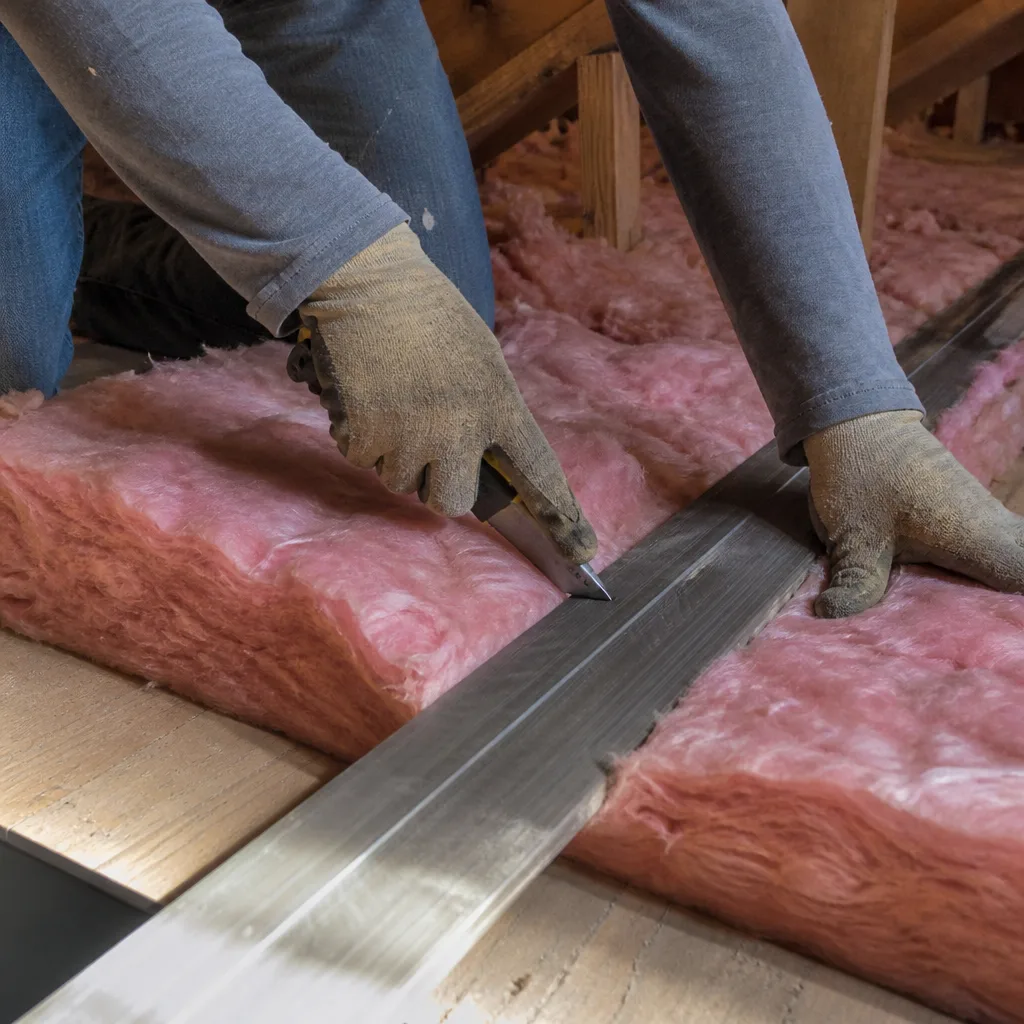
Canyon Lake’s cooling season runs seven months. From May through September, the attic is the thermal engine driving your electric bill. When insulation degrades or air sealing fails, the first signal isn’t comfort - it’s money.
Most homeowners know their bill went up. Few know how to separate weather from envelope performance. Here’s the method we teach:
Calculate kWh per cooling degree-day (CDD). Cooling degree-days measure how much and how long outdoor temperature exceeded 65°F. Your utility bill shows total kWh. Divide kWh by CDD for that billing period. You can find CDD data for Canyon Lake’s 78133 ZIP code from NOAA’s Climate Data Online tool.
A well-sealed, properly insulated Canyon Lake home of 2,000 square feet typically runs 3.5-5.5 kWh per CDD during peak summer. If your ratio climbs above 6.5 kWh/CDD and your equipment hasn’t changed, your envelope is leaking. The leak could be insulation compression, air-sealing failure, duct leakage in the attic, or all three.
Track this ratio monthly through summer. A June reading of 4.2 kWh/CDD that becomes 5.8 kWh/CDD by August - with no equipment change - means something degraded mid-season. In our experience, that’s often when a homeowner stored holiday decorations in the attic and compressed fiberglass batts, or when wind-driven rain entered a soffit vent and wet a section of Topside Attic Insulation Canyon Lake home insulation, collapsing its R-value.
Here’s what the ratio can’t tell you: whether the problem is insulation, air sealing, or duct leakage. For that, you need a blower-door test and thermal imaging. But the ratio tells you when to call for those diagnostics. Under Haven Standard, we provide written blower-door numbers on every applicable job - a pressurization reading that shows, in one figure, how much conditioned air your building envelope was losing before and after our work.
Summer is also when radiant barrier performance matters most in Canyon Lake. A radiant barrier - typically aluminum-foil-faced sheathing or draped foil in the attic - can reduce radiant heat gain by 25-40% when properly installed with proper ventilation gap. But dust accumulation degrades reflectivity over 5-10 years. If your radiant barrier was installed before 2015, summer is when you’ll feel the decline. We inspect radiant barrier condition during our attic assessments and can reinstall or upgrade where the original product has oxidized or collected dust film.
Fall: Pre-Winter Air-Sealing Priorities for Canyon Lake Homes (October-November)
Canyon Lake’s winter is short but sharp. Nighttime lows in December and January routinely hit the mid-30s, and occasional hard freezes drop into the teens. The discomfort isn’t from sustained cold - it’s from rapid temperature swings and air infiltration that makes a 68°F thermostat setting feel like 62°F.
Fall is your last chance to seal the penetrations that matter most in heating season. Unlike summer, when radiant attic heat dominates, winter discomfort comes from conditioned air escaping and cold air replacing it at the building envelope’s weakest points.
These are the priority leaks we seal in Canyon Lake homes every October and November:
- Recessed light can penetrations. IC-rated (insulation contact) cans are sealed better than old-style non-IC cans, but both types leak at the ceiling cutout. In Canyon Lake’s 1990s-era subdivisions, we’ve found can lights with no gasket at all - just a metal flange resting on drywall. A blower-door test with theatrical fog reveals straight vertical columns of escaping air at each can. We seal with fire-rated foam or pre-formed gaskets, depending on can type and ceiling assembly.
- Fireplace flue bypasses. Masonry fireplace chimneys in Canyon Lake homes - common in the older lake-area neighborhoods - create massive thermal bypasses. The framing chase around the chimney is rarely sealed at the attic floor, and the metal flue pipe has its own gap where it passes through the ceiling. These leaks are invisible from living space but show dramatic infrared signatures. Sealing requires fire-rated materials and knowledge of clearances; this is not a homeowner task.
- Duct boot connections. Where flex duct connects to ceiling registers, the boot-to-drywall joint is often unsealed. In heating mode, this leaks warm air into the attic - air you’ve already paid to heat. The thermal image shows a hot spot above each register. We seal with mastic and fiberglass mesh, not duct tape, which fails in attic temperature extremes.
- Plumbing and electrical penetrations. Every pipe and wire that enters the attic is a potential leak. In Canyon Lake, homes with tankless water heaters mounted in the attic have additional penetrations for venting and condensate lines that original builders often left unsealed.
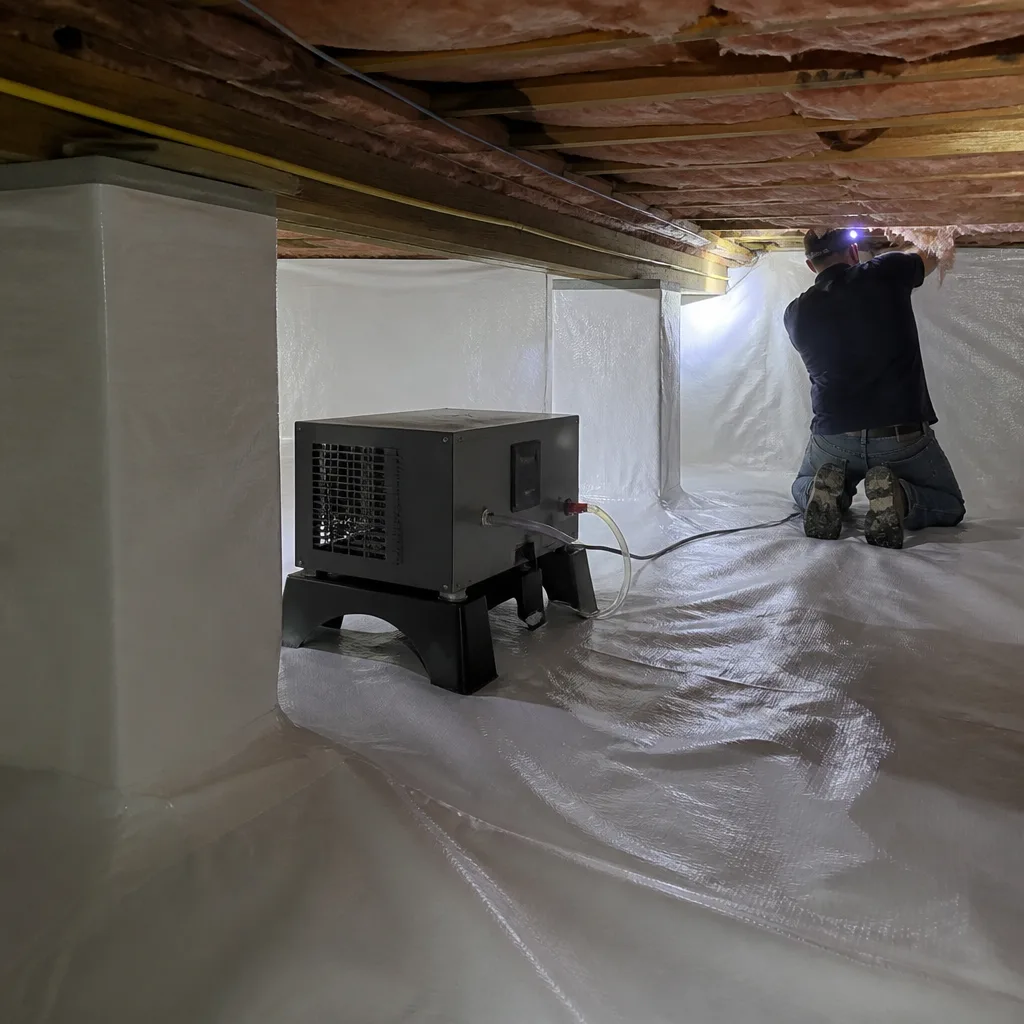
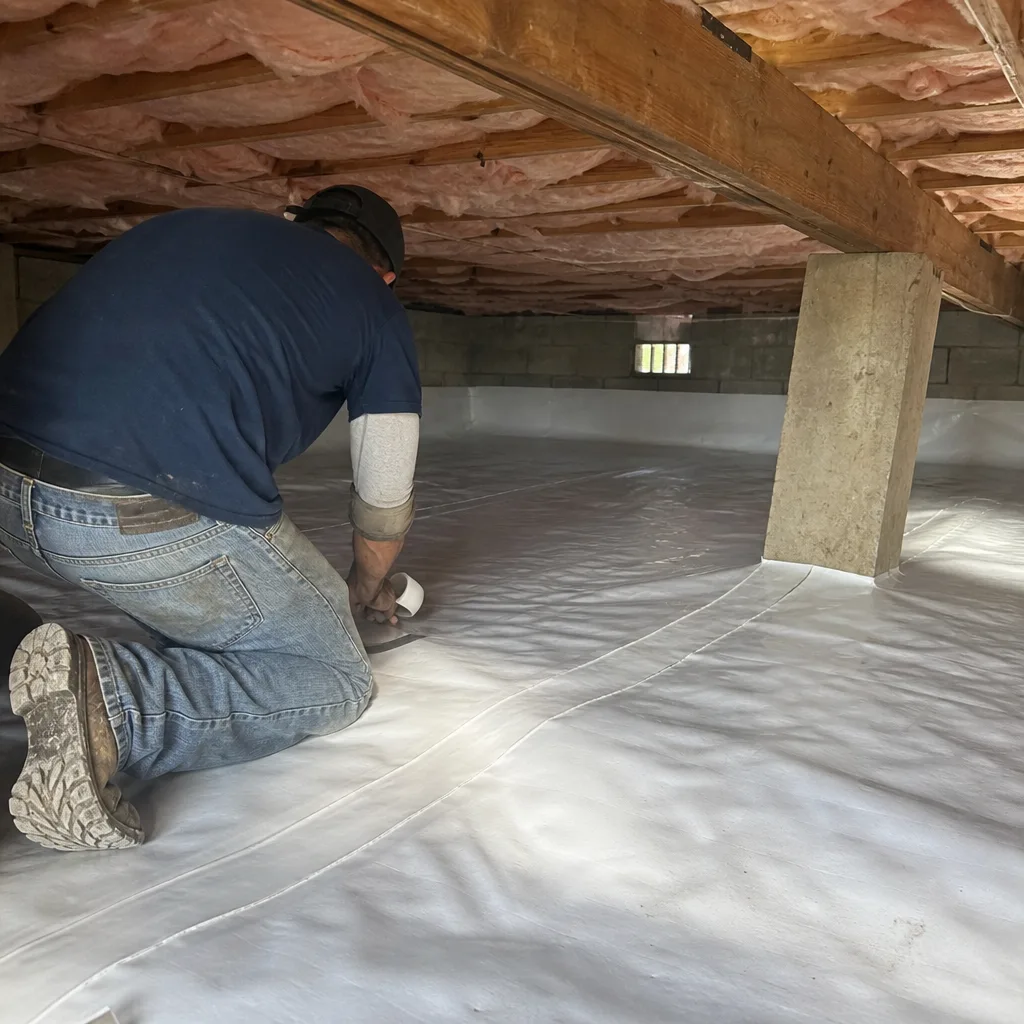
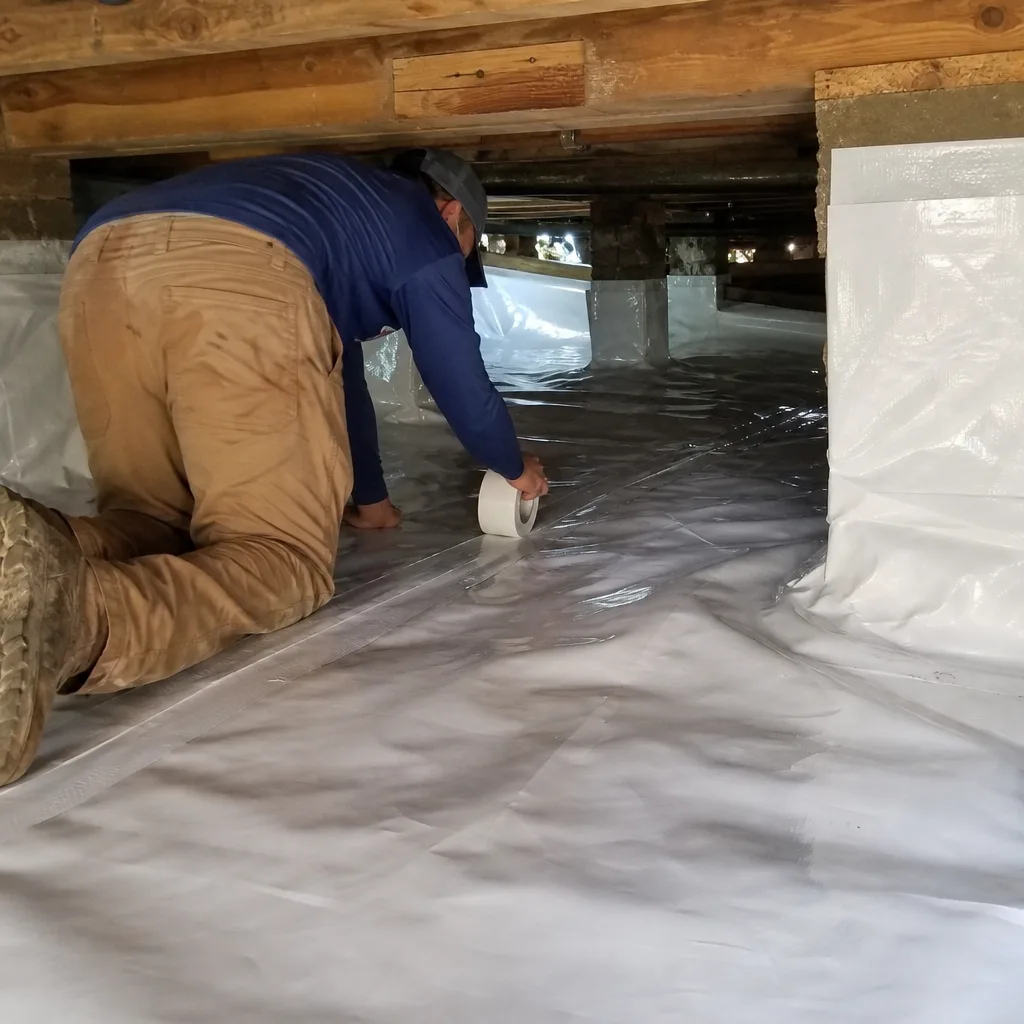
Fall is also when we recommend crawl space encapsulation and vapor barrier work in Canyon Lake if your home has a pier-and-beam foundation. Winter air infiltration through crawl space vents drives floor-level cold that insulation alone won’t fix. Encapsulation - sealing the crawl space from outdoor air and installing a vapor barrier on the ground - transforms the crawl space into a semi-conditioned zone. We’ve measured floor surface temperature increases of 8-12°F after encapsulation in Canyon Lake homes.
Winter: Moisture Risk at the Vapor Retarder (December-February)
Canyon Lake’s winter moisture risk is specific and often misunderstood. We don’t have sustained cold like the northern states. What we have is occasional ice events - typically 1-3 days per year - where outdoor temperature drops below freezing while indoor relative humidity remains elevated from cooking, showering, and respiration.
When warm, moist interior air reaches a cold surface, it condenses. In an attic with poor air sealing and inadequate vapor retarder detail, that surface is often the underside of the roof deck or the top surface of the insulation. The visible evidence appears in specific patterns:
- Frost on roof nails. On cold mornings, look up at your attic. If nail shanks protruding through the roof deck show frost crystals, moist interior air is reaching the deck. This means your air sealing has failed at the ceiling plane, or your vapor retarder - typically kraft paper facing on fiberglass batts, or a separate polyethylene sheet - has been compromised.
- Water staining on ceiling drywall below insulation gaps. Where insulation has been displaced - often by workers, homeowners, or pests - the ceiling drywall below runs colder. Moist air migrating through the gap condenses on the drywall’s back side. The stain appears on the room side as a yellow-brown ring, often misdiagnosed as a roof leak.
- Compressed or darkened insulation at the attic perimeter. Repeated condensation-wetting cycles collapse fiberglass loft and can initiate mold growth on organic dust accumulated in the insulation. In Canyon Lake’s humid subtidal climate, mold can establish within 48-72 hours of wetting if temperature stays above 50°F.
The vapor retarder’s job is to slow - not stop - moisture migration toward cold surfaces. In Canyon Lake, we typically see kraft-faced batts or sprayed vapor-retarding paint, not the full polyethylene sheets used in colder climates. The key detail is continuity: every seam must overlap, every penetration must be sealed, and the retarder must align with the air barrier.
When we find winter moisture damage in Canyon Lake attics, the root cause is almost always air leakage, not vapor diffusion. A nail hole in drywall leaks far more moisture than diffusion through intact drywall. That’s why we seal first, then insulate - air sealing addresses the bulk moisture transport, and the vapor retarder handles the remainder. Spray foam insulation in Canyon Lake creates both air barrier and vapor retarder in one application, which is why we often recommend it for problem attics with complex geometry or extensive penetration patterns.
After rare ice events, inspect your attic within 48 hours. Look for new water staining, insulation compression, or musty odor. Document with photos - you’ll want a record if damage develops. Our Documented Photo Record on every visit means we have baseline images for comparison if you call us for assessment.
Cross-Season: The Rolling Blower-Door Baseline
Homeowners make re-insulation decisions based on feelings: “It seems draftier,” or “The bills feel high.” Feelings are poor substitutes for measurement. A blower-door test gives you a single number - CFM50, cubic feet per minute at 50 Pascals of pressure difference - that quantifies your building envelope’s leakiness.
We recommend establishing a blower-door baseline after any major envelope work, then retesting every five to seven years. Here’s why that interval matters for Canyon Lake:
- Five years: Caulk and foam sealants begin measurable degradation from thermal cycling and UV exposure in attic conditions.
- Seven years: Fiberglass batt insulation in trafficked attics shows compression damage from storage activity. Blown-in cellulose - we use GreenFiber in many Canyon Lake applications - settles 10-15% in the first year and stabilizes, but subsequent disturbance requires replenishment.
- Post-event: After any roof replacement, pest intrusion, or major HVAC work, retest. These events commonly disrupt attic air barriers.
A baseline of 2,800 CFM50 that drifts to 3,600 CFM50 over six years means you’ve lost 29% of your air-sealing performance. You won’t feel that as a draft in summer - you’ll feel it as a bill increase. The rolling baseline catches degradation before it becomes comfort failure.
Under Haven Standard, we publish before-and-after blower-door numbers on every applicable job. If we air-seal your attic and the reading drops from 4,200 to 2,100 CFM50, you have documentation of exactly what you paid for. When you retest in five years, you know whether maintenance is needed or the original work is holding.
We also use the baseline to size mechanical ventilation. A tight house needs controlled fresh air; a leaky house gets uncontrolled fresh air with dust, pollen, and humidity. In Canyon Lake’s pollen-heavy spring, a house below 2,500 CFM50 typically needs mechanical ventilation to maintain indoor air quality without opening windows.
How Canyon Lake’s Climate Ages Insulation Materials
Not all insulation fails the same way in Canyon Lake’s specific climate. Understanding material-specific aging helps you target inspections.
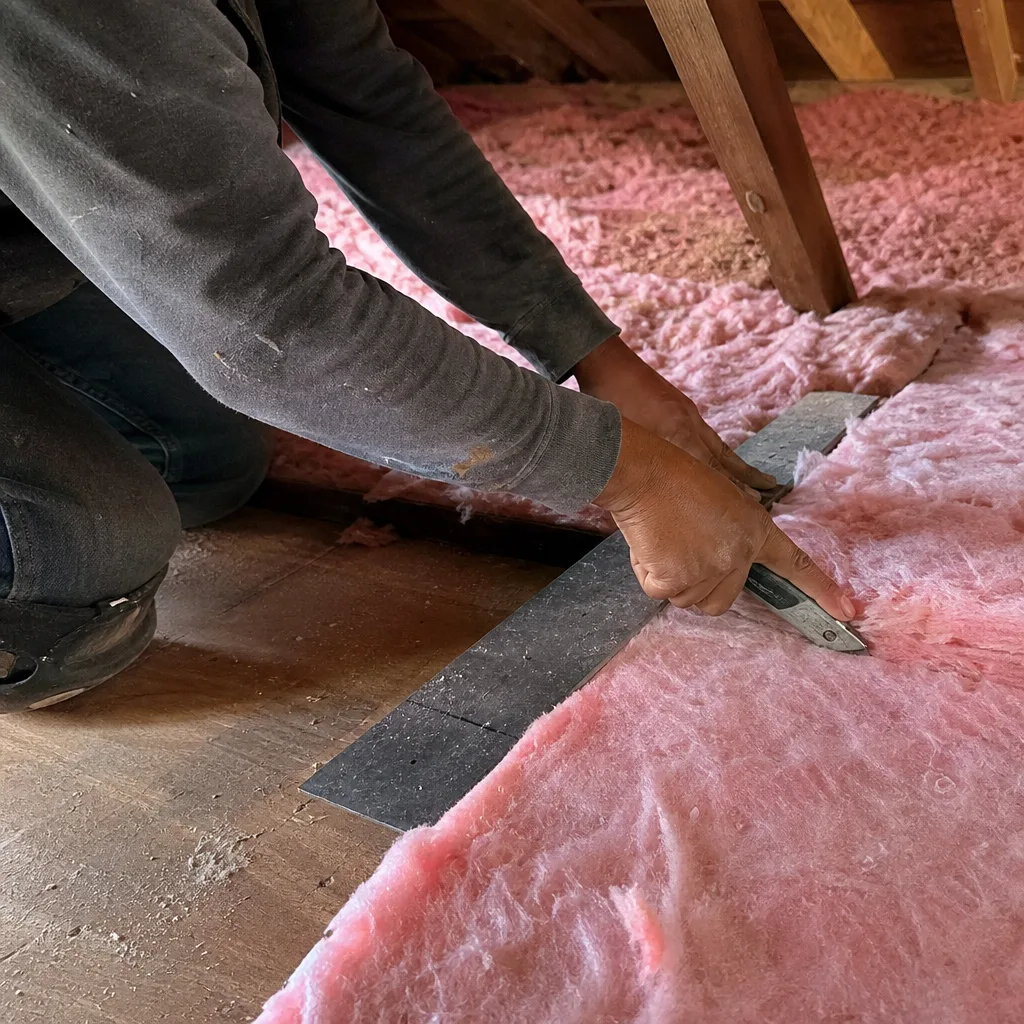
Fiberglass batts (Owens Corning, Johns Manville, Knauf): The binder that holds glass fibers together degrades from sustained heat above 140°F. In Canyon Lake attics, that’s June through September. Degraded binder releases fibers that settle in insulation layers below, reducing loft and R-value. Look for batts that don’t spring back when compressed - a sign of binder failure. Typical service life in Canyon Lake attics: 15-25 years if undisturbed, 10-15 years in heavily trafficked attics.
Blown-in cellulose (GreenFiber): Treated with borate fire retardant and pest deterrent. The borate doesn’t degrade, but cellulose compacts over time and can absorb moisture if the air barrier fails. In Canyon Lake, we’ve found cellulose that wetted during a roof leak event and then dried into a dense mat - R-value drops from R-3.7 per inch to R-2.5 or lower. Cellulose also shifts on sloped attic floors, creating thin spots at eaves. Inspect annually for uniform depth.
Spray polyurethane foam (Icynene, Demilec open-cell; various closed-cell): Chemically stable once cured, but UV exposure degrades the surface. In attics with gable vents or incomplete radiant barrier coverage, foam surfaces can yellow and dust. This is cosmetic, not structural. More significant: closed-cell foam is vapor-impermeable. If applied to the underside of a roof deck without proper ratio of exterior ventilation, it can trap moisture from minor roof leaks. We inspect foam roofs annually for this reason.
Radiant barriers: Aluminum oxidizes slowly; dust accumulation is the faster degradation mode. In Canyon Lake’s dusty hill-country environment, expect 20-30% reflectivity loss over 10 years without cleaning - which is impractical in most attic configurations. We typically recommend replacement rather than cleaning for aged radiant barriers.
Common Mistakes to Avoid
- Blowing new insulation over unsealed air leaks. This is the most common error we correct in Canyon Lake. The new insulation performs poorly because air moves through it, and the homeowner paid for material that can’t work. We never add insulation without completing air sealing first - it’s Haven Standard, not optional.
- Blocking soffit vents with insulation. Well-meaning homeowners or inexperienced contractors pack insulation tight to eaves, killing attic ventilation. In Canyon Lake’s summer, this creates a 170°F attic that cooks shingles and overloads AC. Baffles exist to prevent this; use them.
- Ignoring the attic hatch. Homeowners obsess over R-49 attic floors and leave a 2-square-foot uninsulated, unsealed hole. The hatch is a thermal bridge and air leak of disproportionate impact. An insulated hatch with proper gasket costs little and saves measurably.
- Storing items on attic insulation. Every box, bin, and artificial Christmas tree compresses insulation and creates a cold spot in winter, a hot spot in summer. If you need attic storage, build a raised platform above the insulation, not on it.
- Assuming all spray foam is the same. Open-cell and closed-cell foam have different vapor permeabilities, expansion characteristics, and costs. In Canyon Lake’s climate, open-cell at the roof deck requires different ventilation detailing than closed-cell. Specify the product, not just “spray foam.”
- Waiting for comfort failure before acting. By the time you’re uncomfortable, your insulation has been underperforming for two to three years. The rolling blower-door baseline catches this early; feelings catch it late.
- Hiring based on price per square foot alone. Insulation performance depends on air-sealing quality, material selection, and installation detail. A low price per square foot often means skipped prep work - the most important part of the job.
When to Call a Professional
Some insulation maintenance is appropriate for homeowners: attic hatch gasket replacement, visual baffle checks, utility bill tracking. Other work requires training, equipment, and safety protocols - a topic covered in our DIY vs Professional Insulation: The Canyon Lake Homeowner’s Decision Guide.
Call a professional when you find frost on roof nails, water staining on ceiling drywall, or compressed/wet insulation - these indicate air-sealing or moisture problems beyond homeowner repair. Call when your kWh/CDD ratio climbs 20% year-over-year with no equipment change. Call when your insulation is 15-plus years old and you’ve never had a blower-door test. Call when you’re considering adding insulation, because the prep work determines the result.
Topside Attic Insulation Canyon Lake offers free estimates in Canyon Lake - call (737) 227-6219. Every estimate includes a written price before any work starts, a documented photo record, and on applicable jobs, before-and-after blower-door numbers. Under Haven Standard, you know what you’re paying for and what you’ll receive before anyone lifts a tool.
Frequently Asked Questions
Most attic insulation jobs in a 2,000-square-foot Canyon Lake home run between $2,800 and $5,500 for blown-in fiberglass or cellulose with complete air sealing, and $4,500 to $9,000 for spray foam at the roof deck. The range depends on existing insulation condition, attic accessibility, and whether air sealing prep work is needed. Call (737) 227-6219 for a written price specific to your home - estimates are free, and we provide a Free Second Opinion on any written estimate you’ve already received.
Inspect visually every spring before the first sustained heat, and schedule a professional blower-door baseline every five to seven years. Canyon Lake’s thermal cycling - 90°F swings possible within 24 hours in shoulder seasons - accelerates sealant degradation compared to more stable climates.
You can, but only after air sealing is complete and the existing insulation is dry, uncontaminated, and reasonably uniform. In our Canyon Lake inspections, we find that roughly 40% of attics with existing insulation have wet spots, pest debris, or significant compression that should be addressed before adding material. We remove and replace when the substrate won’t support performance.
For attic floors, blown-in fiberglass or cellulose at R-38 to R-49 with complete air sealing and a radiant barrier provides the best cost-performance ratio. For cathedral ceilings or conditioned attics, open-cell spray foam at the roof deck with proper ventilation detailing. The “best” choice depends on your home’s construction era, attic geometry, and whether ductwork runs in the attic - factors we assess during our free estimate.
Because insulation thickness and insulation performance are not the same. Air leakage bypasses insulation, duct leakage in the attic dumps cooled air before it reaches rooms, and radiant heat from the roof deck overwhelms under-specified systems. A blower-door test and thermal imaging separate these causes. We’ve found homes in Canyon Lake’s Timberwood Park area with R-49 insulation that performed like R-19 because air sealing was never done.
Comal County and the City of Canyon Lake do not require permits for insulation retrofit in existing residential structures, but they do require permits when insulation is part of a larger remodel involving structural, electrical, or HVAC changes. We pull permits when required and include that documentation in your project record. If a contractor tells you permits aren’t needed for work that clearly triggers them, that’s a red flag.
The Bottom Line
Canyon Lake’s two-season thermal year demands a two-season maintenance approach. Spring air sealing prevents summer heat gain. Summer utility tracking catches degradation early. Fall penetration sealing stops winter infiltration. Winter moisture monitoring protects structure and health. Across all seasons, a rolling blower-door baseline replaces guesswork with measurement.
Insulation is not a product you buy once. It’s a system you maintain, or it degrades like any other building component. The homeowners who spend least on energy in Canyon Lake are not those who bought the most insulation; they’re those who keep the envelope sealed and measure performance over time.
Written by Wes Okafor, Owner at Topside Attic Insulation Canyon Lake, serving Canyon Lake since 2016.