
Demilec Attic Insulation: The Canyon Lake Owner’s Guide
Demilec spray foam and blown-in attic insulation systems in Canyon Lake typically run $2.80-$4.50 per board foot for open-cell foam installations and $4,200-$7,800 for full attic retrofits on homes between 1,800 and 3,200 square feet. We stock Demilec-compatible materials on every truck and can usually assess and quote same-day. Most Canyon Lake homeowners realize their Demilec insulation is underperforming when summer electric bills spike past $400 or upstairs rooms stay 8-12 degrees hotter than the thermostat setting, especially in homes built between 2005 and 2015 where original Demilec installs may have settled or been applied over unsealed top plates.
Which Demilec Models This Applies To
Demilec’s product line for residential attics breaks into three categories we encounter in Canyon Lake: the Heatlok HFO series (closed-cell, 2.0-2.5 lb density), the Sealection 500 open-cell water-blown foam (0.5 lb density), and the Demilec blown-in fiberglass/cellulose hybrid systems marketed through regional distributors out of San Antonio and Austin. The critical compatibility issue is matching the original foam chemistry, not just the R-value printed on the label. HFO and legacy HFC-blown foams cannot be layered over each other without an approved separation barrier; we’ve pulled back foam in Canyon Lake homes near FM 2673 where a previous contractor sprayed open-cell directly onto closed-cell, creating a vapor-trap sandwich that rotted roof decking in four years.
Identification starts with the spray-foam tag, usually stapled to a rafter or stud near the attic access. Look for the Demilec lot number, application date, and density class. If the tag is missing, we core-sample the foam, measure density with a postal scale, and match the replacement material accordingly. For blown-in systems, we check bag stamps against the depth markers the original installer should have left on a truss or joist. We also carry Johns Manville, Knauf, and Rockwool equivalents when a full Demilec match isn’t available or cost-effective.
Topside Attic Insulation Canyon Lake is an independent service provider, not affiliated with Demilec. We source materials through the same regional distributors but make no exclusive product claims.
Signs Your Demilec Attic Insulation Is Failing
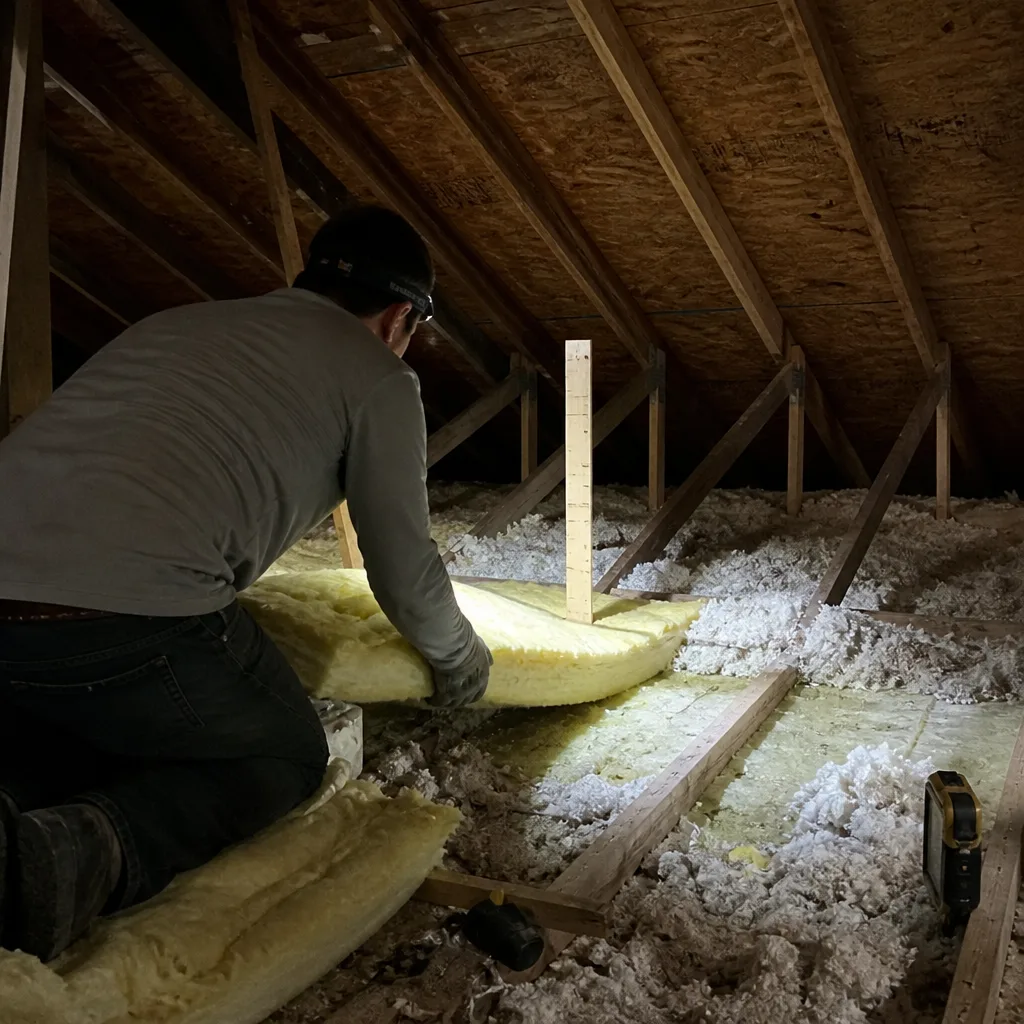
- Uneven room temperatures with no ductwork explanation. If your master bedroom runs 10 degrees warmer than the hallway and your HVAC tech has ruled out duct leaks, the Demilec foam may have pulled away from roof decking at the ridge. Thermal imaging shows this as a cold stripe along the peak in winter, hot in summer. We see this pattern most often in Canyon Lake homes with dark shingles and inadequate ridge ventilation.
- Sudden spike in summer cooling costs. A $150 jump from June to July with no rate change usually means the insulation’s effective R-value has dropped. Open-cell Demilec foam can absorb moisture if the attic wasn’t properly vented; once waterlogged, 5.5 inches of foam performs like 2 inches. We test this with a moisture meter probe, not guesswork.
- Visible yellowing, crumbling, or powdering of foam surfaces. UV degradation hits any foam left exposed longer than the manufacturer-specified 30-day protection window. In Canyon Lake, where attic temps hit 140°F regularly, unprotected Demilec foam can chalk and lose structural integrity in 18-24 months. This isn’t cosmetic; it’s thermal performance leaving with it.
- Musty odors after rain or high humidity. Demilec foam itself doesn’t support mold, but gaps where foam has shrunk or delaminated create condensation surfaces on OSB or drywall. We find this behind kneewalls in second-story additions around the Canyon Lake Hills and Village West areas, where original foam installers often missed the transition framing.
- Ice damming or heavy frost on nails in winter. Even in mild Canyon Lake winters, a week below freezing with warm indoor air leaking through compromised insulation will drive condensation onto cold nail shanks. If your attic looks like a freezer ceiling in January, the thermal boundary has failed at the plane, not the material.
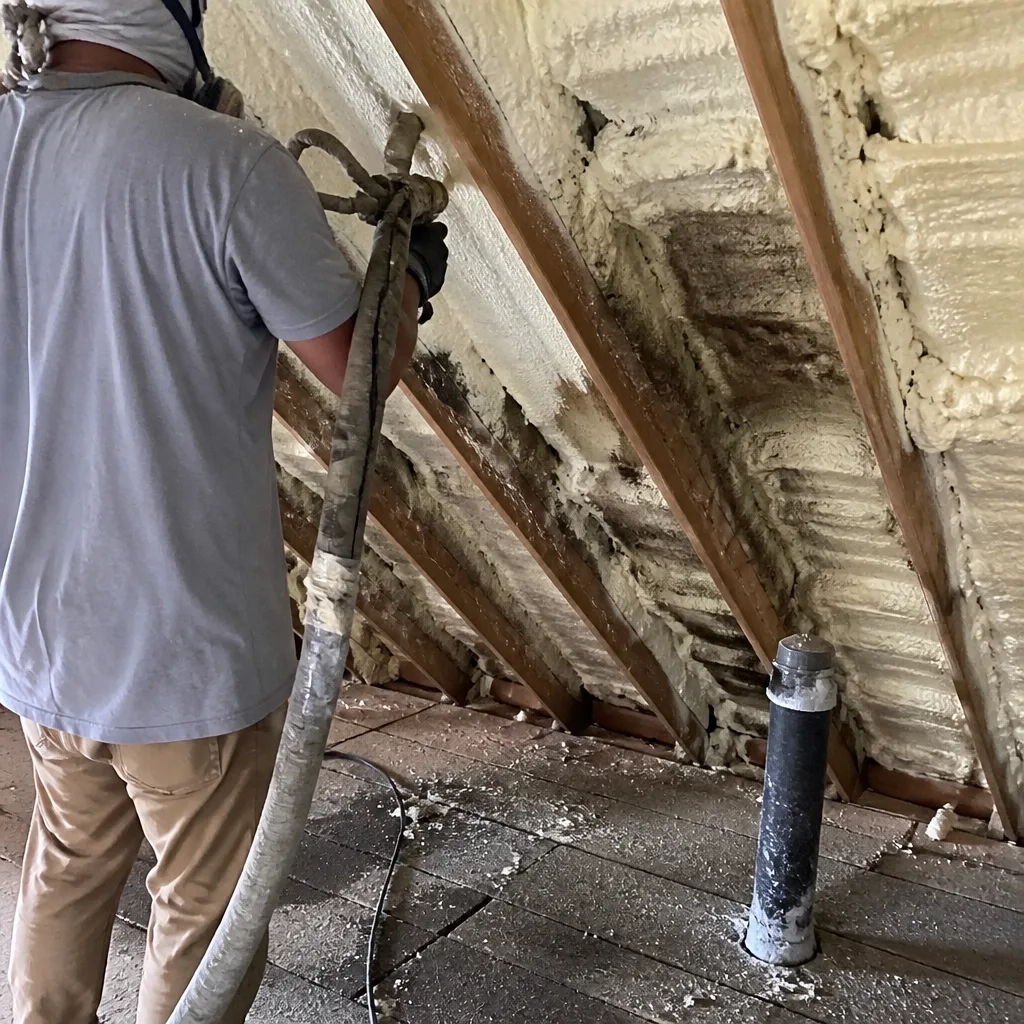 Before
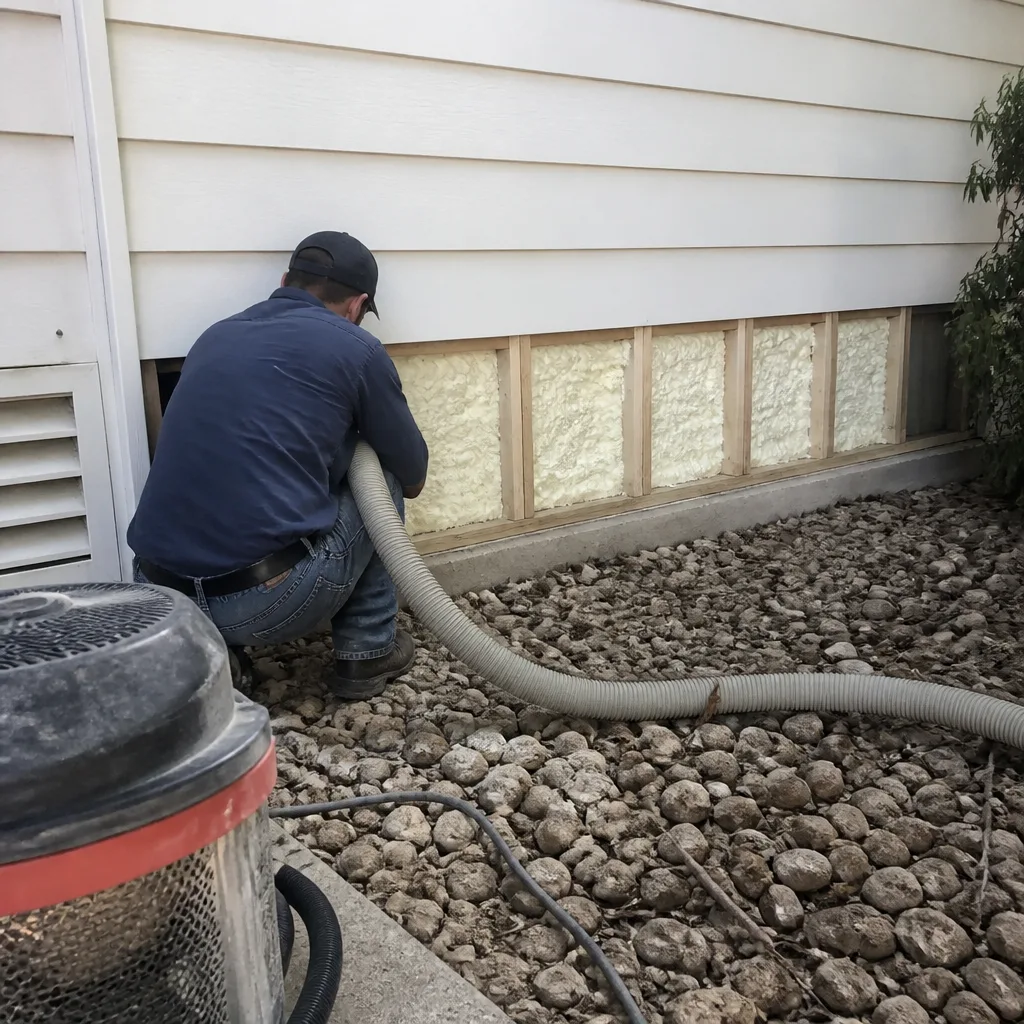 After
AfterReplacement Cost & What’s Included
Most Demilec attic insulation replacements in Canyon Lake fall between $4,200 and $7,800 for complete removal and reinstallation on a standard single-family home. Partial remediation, targeting specific failed zones, typically runs $1,800-$3,400. The spread depends on four factors: whether we can foam-over or must scrape back to substrate, the square footage of affected deck, accessibility (cathedral ceilings over the lake-facing great rooms add labor), and whether the original failure requires us to install baffles or improve ventilation as part of the fix.
Every quote under Haven Standard Clause 1 is flat-priced and written before work starts. The scope specifies foam density, target R-value, and whether we’re treating the roof deck or the attic floor. We include a Documented Photo Record of the removal condition, the pre-install blower-door test, and the post-install verification. Before-and-after CFM50 readings are provided on every job where air sealing is part of the scope. Our 365-Day Done Right Promise covers both materials and installation labor.
DIY or Call Us?
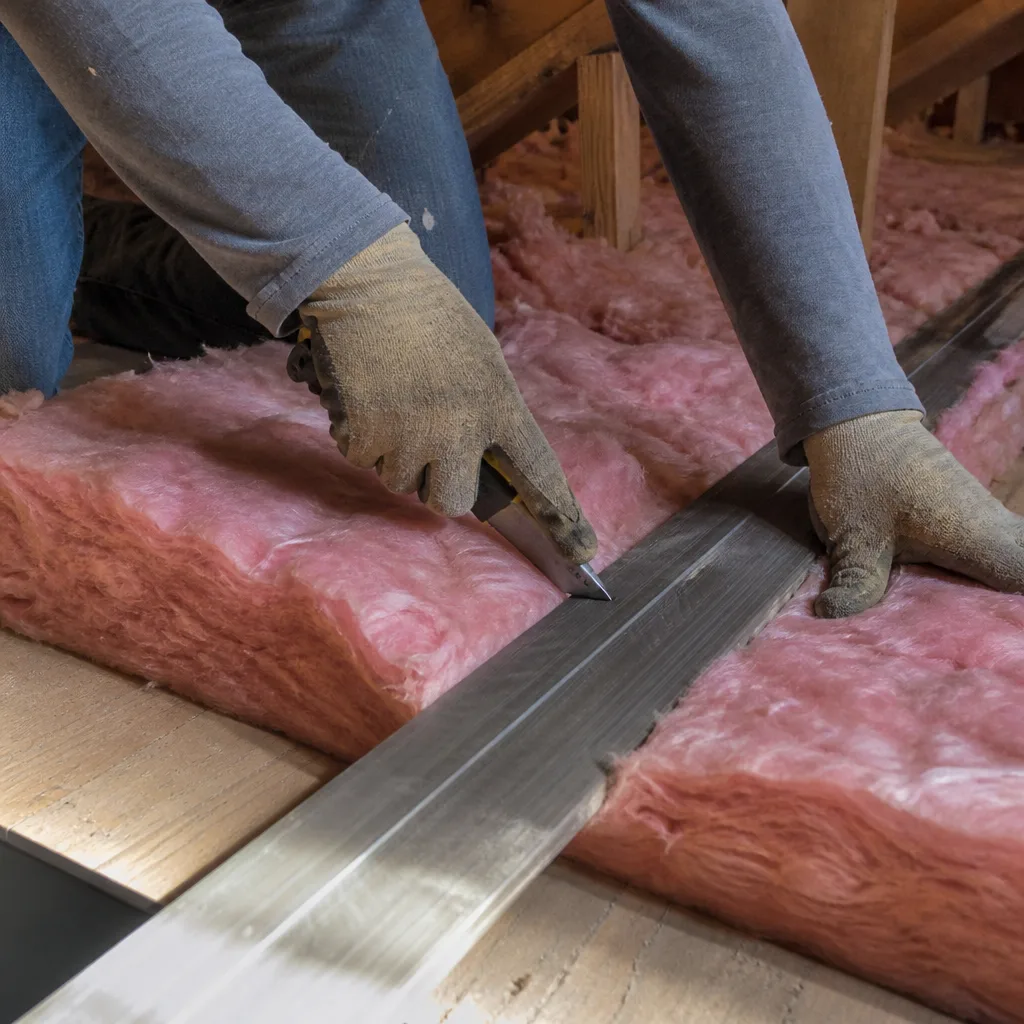
There’s a short list of things a Canyon Lake homeowner can safely check: read the foam tag for date and density, photograph any visible gaps or crumbling, and verify that attic vents aren’t blocked with stored holiday decorations. What you should not do: cut into spray foam without respiratory protection (the dust is an irritant and potential sensitizer), attempt to add new foam over old without verifying chemical compatibility, or assume that more insulation always fixes what might be an air-sealing problem first.
We run a blower-door test before quoting any Demilec replacement. If your home is leaking 3,500 CFM50 and we blow new foam over the leaks, you’ve paid for insulation that can’t perform because the air is still moving. Seal the leaks first. Then insulate. The report tells you whether it worked. Call (737) 227-6219 when you’re ready for the test; estimates are free, and we stock Demilec-compatible materials for same-day starts when the scope is straightforward.
FAQs
Properly installed and protected from UV, Demilec spray foam should perform for 20-25 years. In practice, we see premature failure at 8-12 years when the original installer skipped air sealing, used the wrong density for the application, or left foam exposed to attic heat cycling. Canyon Lake’s combination of high radiant roof loading and occasional hard freezes accelerates thermal stress on any material. Call (737) 227-6219 for a free condition assessment with photo documentation.
Localized delamination or shrinkage can sometimes be cut back and patched with compatible foam if the surrounding material tests sound. We do not patch over moisture-compromised foam; it traps water and damages structure. About 60% of the Demilec jobs we quote in Canyon Lake require full removal because the failure mode, once started, isn’t isolated. We’ll show you the thermal imaging and explain which category yours falls into before you commit.
Most residential jobs complete in two to three days: one day for removal and substrate prep, one for air sealing and foam application, and a partial day for trim, cleanup, and the post-install blower-door test. Cathedral ceilings or restricted attic access add a day. We don’t rush the cure time; Demilec open-cell needs 24 hours minimum before occupancy, and we schedule accordingly.
We carry Demilec-compatible open-cell and closed-cell foams, plus Johns Manville, Knauf, and Rockwool alternatives, on every truck. For Canyon Lake jobs requiring a specific Demilec lot match, we can pull from San Antonio distributors with 24-hour notice. Same-day starts are common for standard density replacements. Call (737) 227-6219 to confirm stock for your specific application.
Written by Wes Okafor, Owner & Lead Insulation Technician, Topside Attic Insulation Canyon Lake at Topside Attic Insulation Canyon Lake, serving Canyon Lake and nearby areas.