
Demilec Blown-In Insulation in Canyon Lake: What to Know First
We provide independent Demilec blown-in insulation service in Canyon Lake, typically completing attic retrofits in one day with a written price locked before any work starts. Most jobs run between $1,800 and $4,200 depending on attic square footage, existing insulation condition, and whether air sealing is needed first. If your energy bills are higher than your mortgage, the attic is usually confessing something. Call (737) 227-6219 for a free estimate with upfront pricing.
This page is for Canyon Lake homeowners who already have Demilec insulation products and need blown-in service, top-up, or replacement. Whether you’re in a 2018 build near Startzville or a retrofit off FM 306, the humid subtropical climate here puts different stress on Demilec materials than the datasheets assume.
How Demilec Products Fail - and How We Fix Them
- Demilec Sealection 500 open-cell spray foam shrinkage in hot attic cavities. In Canyon Lake attics that hit 140°F in August, this series can pull away from rafter bays, creating convection loops that render any over-blown cellulose ineffective. We remove the detached foam, re-adhere with compatible adhesive, then blow in dense-pack cellulose only after confirming the cavity is sealed.
- Demilec Heatlok HFO High Lift settling in truss attics with ridge-vent pull. The high lift chemistry can slump 15-20% over five years when installed over loose-fill fiberglass that wasn’t removed first. We find this constantly in homes near Cranes Mill Road where builders rushed the envelope. Our fix: extract the compromised layer, install proper baffles, then blow Demilec-compatible cellulose to the correct R-value with depth markers.
- Demilec 500 Series moisture retention in lake-proximity homes. Canyon Lake’s elevation changes mean morning dew penetrates vented assemblies differently than inland San Antonio. When 500-series open-cell holds moisture, it loses R-value and can support mold. We don’t cover it with more insulation. We test with a moisture meter, remove if readings exceed 18%, treat the substrate, then reinsulate with blown fiberglass that doesn’t retain water.
- Demilec AgriThix blown-in settling in 2×4 walls with electrical penetrations. This soy-based cellulose settles hard around unsealed boxes, creating cold stripes we map with infrared. We dense-pack properly by sealing every penetration first with acoustic sealant, then blowing to 3.5 lbs/cu ft so the material can’t shift. Seal the leaks first. Then insulate. The report tells you whether it worked.
- Demilec closed-cell flash-and-batt jobs with incomplete coverage at top plates. When a “flash” coat of 2 inches misses the top plate entirely, the blown-in batt stage becomes a thermal bridge. We see this in Canyon Lake townhomes where crews worked too fast. Our fix: complete the flash with Demilec-compatible closed-cell, verify with thermal imaging, then proceed with the blown stage.
Our Demilec Blown-In Insulation Process
- 1
Call and schedule. A live person answers 24/7. We ask about your Demilec product line if you know it, the home’s year built, and whether you’ve noticed hot rooms or rising bills.
- 2
On-site assessment with blower-door test. We run a pressurization diagnostic that shows, in one number, how much conditioned air your building envelope is losing. This reading is printed and given to you. We also inspect existing Demilec material for the failure modes above.
- 3
Written price before any work starts. Flat price, written scope, written warranty. No exceptions. If you have a competing quote, we provide a free second opinion and read it with you.
- 4
Air sealing first, then insulation. Top plates, can lights, penetrations, and duct boots get sealed. We never blow insulation over an unsealed attic floor.
- 5
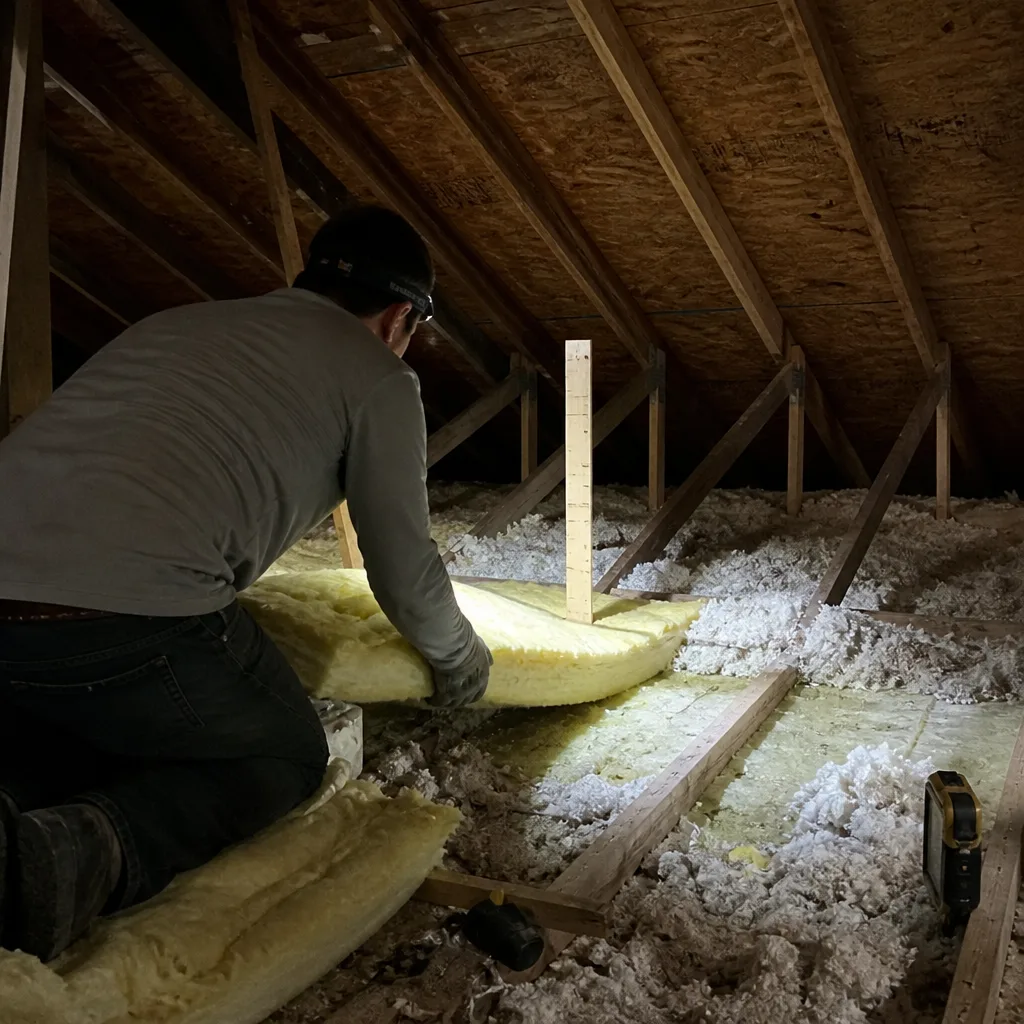
Blown-in installation with depth markers and photo documentation. Cellulose or fiberglass blown to specified density with R-value verification. Every step is photographed for your Documented Photo Record.
- 6
Post-work blower-door test and printed report. We hand you the before-and-after numbers so you can verify the air-sealing result. The 365-Day Done Right Promise applies from this moment.
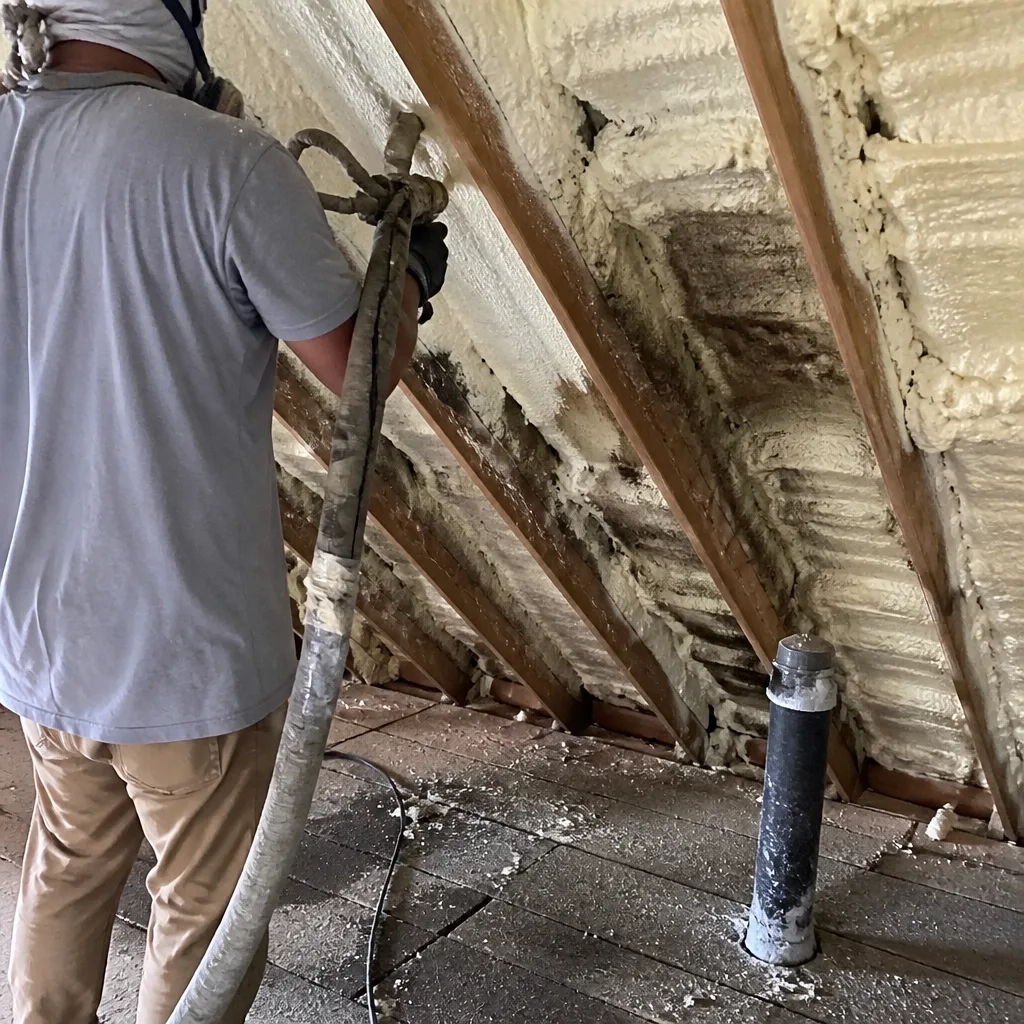 Before
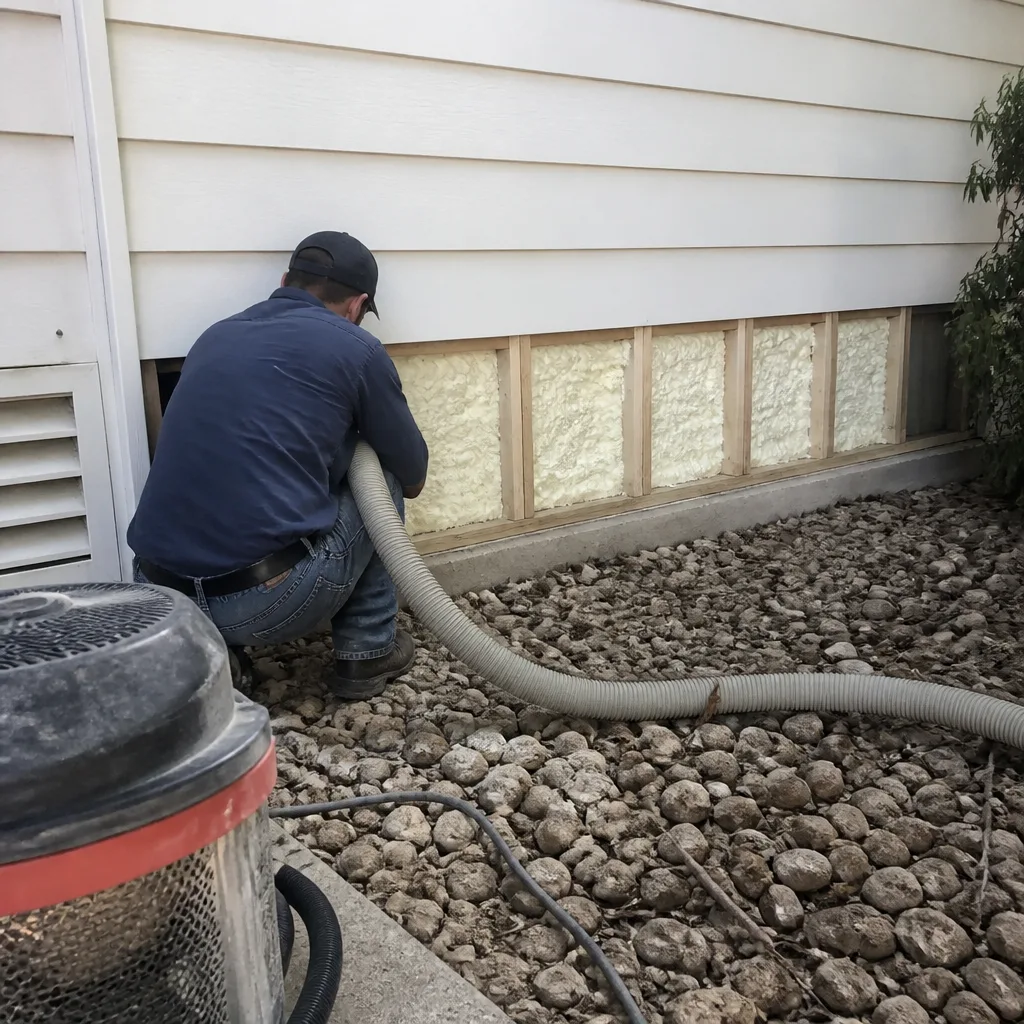 After
AfterWhat Demilec Blown-In Insulation Costs in Canyon Lake
Most attic insulation jobs in a Canyon Lake home between 1,800 and 2,800 square feet run between $1,800 and $4,200. Here’s what moves you within that range:
| Scenario | Typical Range |
|---|---|
| Blown cellulose top-up over existing Demilec (no removal) | $1,800 - $2,600 |
| Demilec removal + air sealing + new blown cellulose | $3,200 - $4,200 |
| Dense-pack wall insulation with Demilec-compatible cellulose | $2,400 - $3,800 |
| Moisture-damaged Demilec extraction and replacement | $3,500 - $5,500+ |
Attic square footage, accessibility (Canyon Lake’s steep-pitch lake homes cost more to navigate), and whether we need to install baffles or rodent-proof first all affect the final number. We give you the exact price in writing before anyone lifts a tool. Call (737) 227-6219 for your free estimate.
Why Canyon Lake Homeowners Call Topside Attic Insulation Canyon Lake for Demilec Work
We’ve sealed and insulated over 9,000 homes since 2016, and the ones in Canyon Lake teach you something specific about humidity and ridge-vent interaction. Wes Okafor runs a blower-door test before a single bag of blown cellulose goes in, then hands you a printed pre- and post-install report so the numbers speak for themselves. Our materials come from Owens Corning, Johns Manville, Knauf, Rockwool, CertainTeed, Icynene, Demilec, and GreenFiber, plus Reflectix when radiant barriers make sense, so we don’t lock you into a proprietary product. The 365-Day Done Right Promise, background-checked uniformed technicians, and a live person answering calls 24/7 are standard. Every job closes with a Documented Photo Record, not available on request, included.
FAQs
No, product warranties cover material defects regardless of who installs or services them, though workmanship issues fall to the contractor who performed the work. We document our installation with photos and blower-door readings so any future claim has clear evidence. Call (737) 227-6219 if you need help interpreting your Demilec warranty terms.
Properly installed blown cellulose lasts 20-30 years, but Canyon Lake’s humidity and temperature swings accelerate failure when air sealing is skipped first. We’ve replaced Demilec installations that failed in 7 years because the attic wasn’t sealed. Our process prevents that.
Repair is cheaper only when the material is dry, properly adhered, and meets current R-value after top-up. Moisture damage, significant settling, or shrinkage usually makes full removal and replacement the better long-term value. We give you both options in writing with honest math.
We can match Demilec’s performance specifications with compatible materials from our multi-brand inventory, including Reflectix where radiant control is needed. We don’t claim exclusive access to Demilec stock, and we won’t pretend a visual match matters more than the blower-door number.
Most Canyon Lake homeowners get an assessment within 48 hours of calling, with work scheduled within a week depending on material availability. Emergency situations, like moisture-saturated insulation after a roof leak, get priority. Call (737) 227-6219 to check current scheduling.
Written by Wes Okafor, Owner & Lead Insulation Technician, Topside Attic Insulation Canyon Lake at Topside Attic Insulation Canyon Lake, serving Canyon Lake and nearby areas.