
Demilec Home Energy Audit in Canyon Lake: What to Know First
A Demilec home energy audit in Canyon Lake typically runs $280-$520 for a full diagnostic with blower-door test and thermal imaging, and most appointments are scheduled within 48 hours. We’re an independent Demilec service provider - not affiliated with or authorized by Demilec - and we publish before-and-after blower-door numbers on every job so you can verify the result in writing. This page is for Canyon Lake homeowners who have Demilec spray foam, open-cell, or closed-cell insulation in their attic or walls and want to know whether it’s performing the way it should. Call (737) 227-6219 for a free estimate with a written price before any work starts.
How Demilec Products Fail - and How We Fix Them
- Heatlok HFO Pro closed-cell shrinkage at rim joists. The HFO blowing agent in newer Heatlok formulations can contract 3-5% during cure in the first two Texas summers, pulling away from sill plates and creating thermal bypasses we catch with the blower door. We cut back the failed section, re-foam with a compatible high-yield closed-cell product, and retest.
- Sealection 500 open-cell overspray into soffits blocking intake ventilation. In Canyon Lake homes near the lake itself, where humidity stays elevated through October, blocked soffits trap moisture against the roof deck. We remove the overspray mechanically, restore the vent channel, and document the correction with photos.
- Demilec 500 open-cell dusting in inaccessible knee-wall cavities. Low-yield application in tight framing bays leaves a thin, ineffective layer that reads fine on visual inspection but fails the thermal camera. We borescope the cavity, remove if necessary, and dense-pack with blown cellulose where the original application can’t be corrected.
- Heatlok XT adhesive failure on metal ductwork in vented attics. The temperature swing between a 140°F Canyon Lake attic in August and conditioned air below 55°F can delaminate Demilec from galvanized duct. We strip, prep with a compatible primer, and reapply - or switch to mechanical insulation support where the substrate won’t hold.
- Sealection Agribalance off-gassing odor persistence in humid conditions. The bio-based content can retain aldehyde odor when cure conditions are marginal, common in spring Canyon Lake builds where nighttime temps drop below manufacturer’s minimum. We ventilate, test VOC levels with a photoionization detector, and encapsulate only if the source can’t be isolated.
Our Demilec Home Energy Audit Process
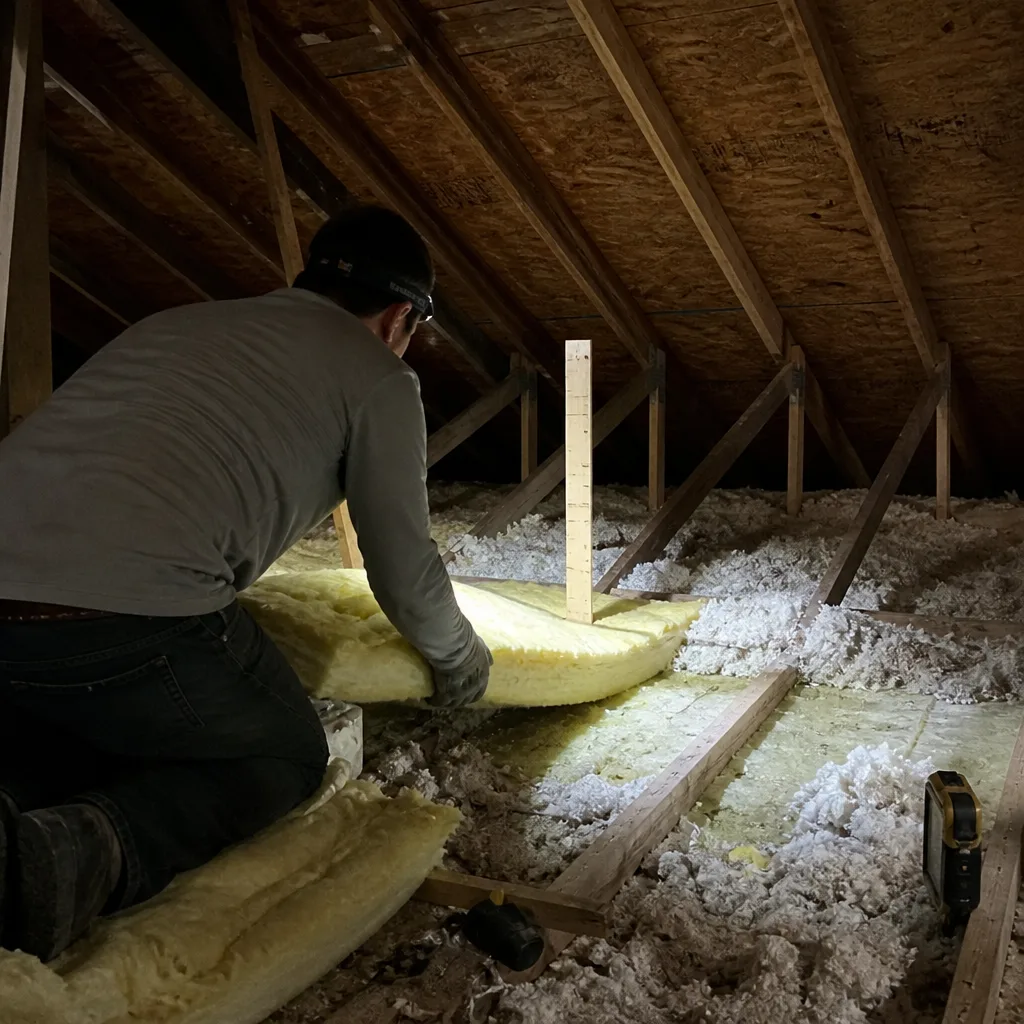
- 1
Call and schedule. A live person answers, or you text. We ask the Demilec product line if you know it, the home’s age, and your specific concern - high bills, hot rooms, musty attic, or a previous contractor’s work you’re questioning.
- 2
Arrival and walkthrough. Our technician arrives uniformed and background-checked. We review any prior energy audit reports or insulation invoices you’ve kept. Haven Standard: you get a named technician and a text when they’re en route.
- 3
Blower-door test first. We run a pressurization diagnostic - a blower-door test that measures CFM50, or how much air your building envelope is losing - before touching anything. This establishes your baseline. In Canyon Lake homes built 2015-2020, we typically see 3,500-5,500 CFM50 before any air sealing.
- 4
Thermal imaging and targeted inspection. We scan with a FLIR camera to find Demilec-specific failure patterns: shrinkage gaps, delamination, overspray blockages, or areas where the foam thickness doesn’t match the specified R-value.
- 5
Written scope and price. Before any work starts, you receive a flat price, written scope, and written warranty. Haven Standard Clause 1. No exceptions.
- 6
Air sealing, correction, and verification. We seal top plates, can lights, and penetrations first - never blow insulation over an unsealed attic floor. Then we correct the Demilec issue. Afterward, we run the blower door again and hand you a printed pre- and post-install report. Seal the leaks first. Then insulate. The report tells you whether it worked.
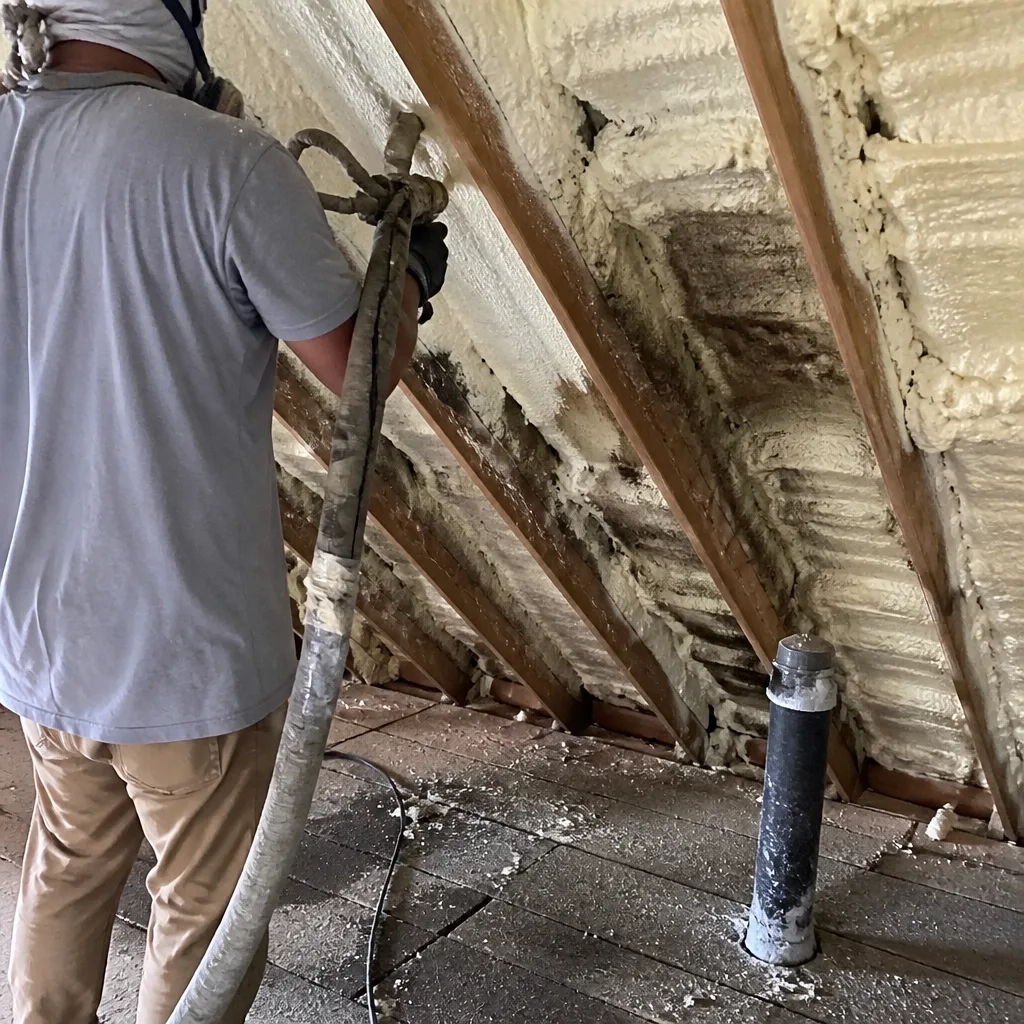 Before
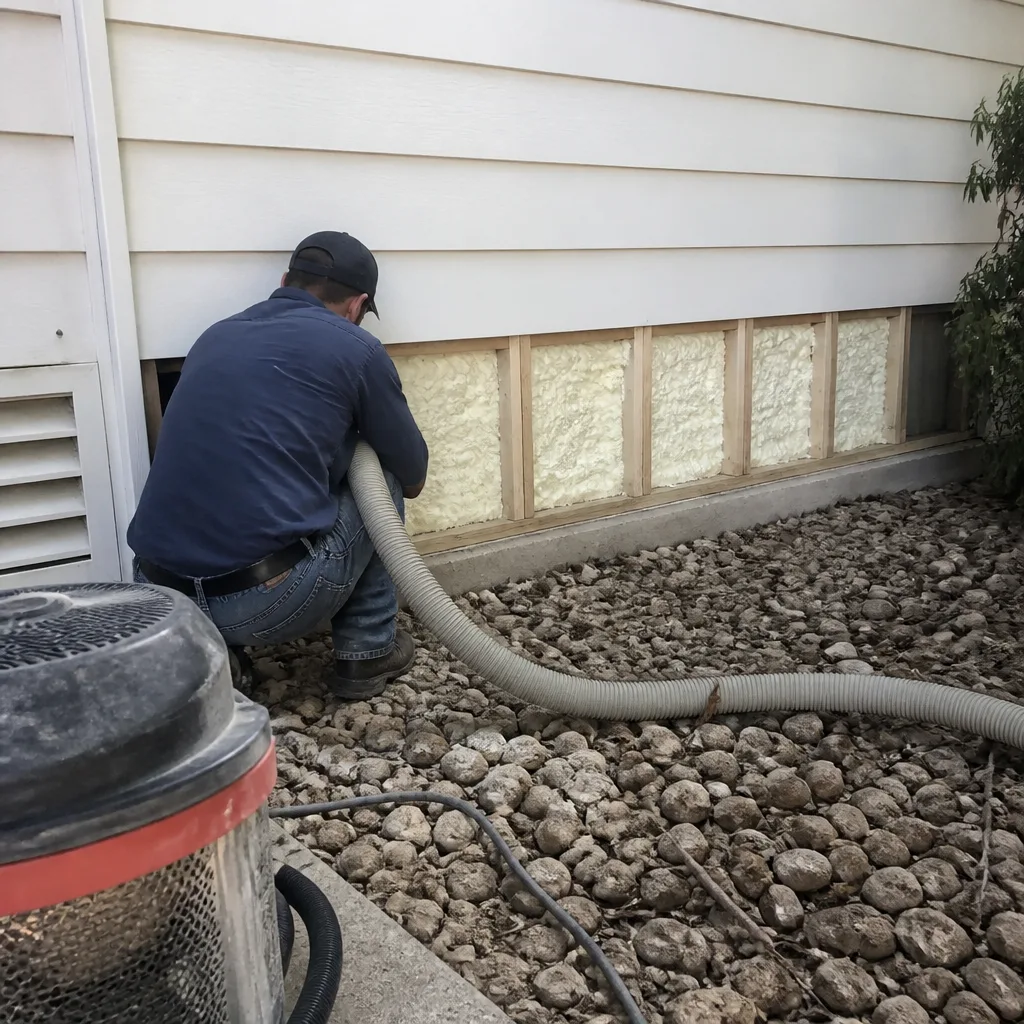 After
AfterWhat Demilec Home Energy Audit Costs in Canyon Lake
| Service | Typical Range | What Moves the Price |
|---|---|---|
| Basic Demilec energy audit (blower door + thermal imaging) | $280-$380 | Home size, attic accessibility, number of HVAC zones |
| Audit with targeted Demilec repair (seal gaps, minor re-foam) | $420-$680 | Linear feet of failed foam, need for borescope inspection |
| Full Demilec removal and replacement in affected area | $1,800-$3,400 | Cavity depth, disposal requirements, replacement material |
| Duct leakage test add-on (per system) | $140-$220 | Number of air handlers, accessibility of plenum connections |
Homes on the Cranes Mill Road corridor or other Canyon Lake areas with complex rooflines and multiple dormers tend toward the higher end - more thermal bridges to check, more attic access points to seal. We also service Reflectix radiant barrier systems where they’re present as part of a hybrid insulation strategy. Call (737) 227-6219 for an exact quote - estimates are free, and the price we write is the price you pay.
Why Canyon Lake Homeowners Call Topside Attic Insulation Canyon Lake for Demilec Work
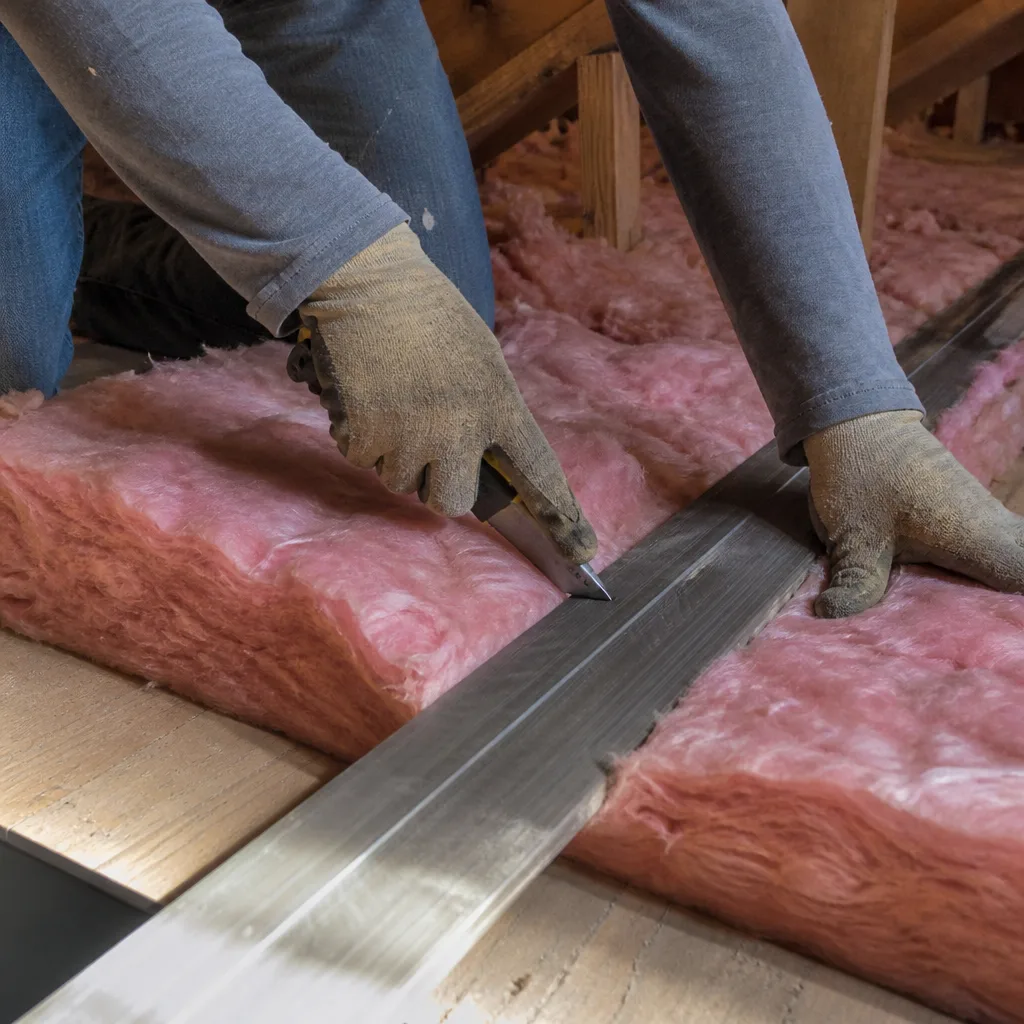
We’ve been in Canyon Lake homes where the previous contractor blew cellulose right over unsealed top plates, burying the problem under a layer of false security. We don’t do that. Every job starts with air sealing, ends with a documented photo record, and includes before-and-after blower-door numbers you can hold in your hand. The 365-Day Done Right Promise applies to all completed work - if it’s not done right, we make it right. Our materials come from Owens Corning, Johns Manville, Knauf, Rockwool, CertainTeed, Icynene, Demilec, and GreenFiber - no proprietary lock-in means we recommend what fits your house, not what we’re obligated to sell. Wes Okafor, our owner and lead technician, learned the building-science side of this trade at Olive-Harvey College’s construction technology program before spending years figuring out why houses in hot-humid climates fail differently than the ones up north. That background shows up in how we read a blower-door trace and how we explain it to you.
FAQs
No - Demilec’s limited warranty covers material defects, not independent diagnostic or repair work performed by qualified contractors. As an independent Demilec service provider, we document our work with photos and written scope so any future warranty claim on the original material remains supportable. If you’re concerned about a specific Heatlok or Sealection warranty period, bring your original invoice and we’ll review it with you. Call (737) 227-6219 for a free estimate.
We can source Demilec OEM product for repairs where color match or chemical compatibility matters, particularly with Heatlok HFO Pro where the HFO blowing agent requires matching density. For many corrections, though, we use compatible third-party closed-cell or open-cell products from our multi-brand inventory - Icynene, CertainTeed, or Johns Manville - that meet or exceed the original specification at lower material cost. We specify which we’re using in your written scope before work starts.
Localized shrinkage, minor overspray, or isolated delamination usually warrants targeted repair. Widespread dusting, persistent odor with elevated VOC readings, or foam installed below specified thickness across large areas typically means removal and replacement is more cost-effective than chasing individual failures. Your blower-door result helps us decide - a 15-20% reduction in CFM50 after targeted sealing means repair was sufficient; minimal change means the problem is systemic. Call (737) 227-6219 and we’ll run the test.
Most Canyon Lake appointments are available within 48 hours, and same-day service is often possible for urgent cases - significant temperature stratification between rooms, visible foam degradation, or post-storm moisture intrusion in the attic. A live person answers calls 24/7, so you’re not waiting through a voicemail loop while your conditioned air leaks into the rafters.
Yes - a Demilec-specific audit includes knowledge of that product line’s known failure modes, the correct thermal imaging interpretation for spray foam substrates, and the right blower-door protocol for homes with air-impermeable insulation. Generic auditors sometimes misread spray foam cavities as “fine” because the foam is present, missing shrinkage gaps or delamination that only show up under pressure testing or with the right camera settings. We’ve corrected work after three “clean” general audits that missed the actual problem.
Written by Wes Okafor, Owner & Lead Insulation Technician, Topside Attic Insulation Canyon Lake at Topside Attic Insulation Canyon Lake, serving Canyon Lake and nearby areas.