
GreenFiber Crawl Space Encapsulation: The Canyon Lake Owner’s Guide
GreenFiber crawl space encapsulation systems in Canyon Lake typically run $2,800-$4,600 installed for a standard 1,200-square-foot crawl space, and we stock the full GreenFiber-compatible vapor barrier, seam tape, and mechanical fastening line for same-day starts. Most Canyon Lake homeowners discover their encapsulation has failed when they notice musty odors returning after a dry spell, or when their spring energy bills spike despite the HVAC running constantly. That polyethylene barrier, rated for 10-mil or 12-mil thickness depending on your original install year, doesn’t last forever in the Hill Country’s alkaline soil and seasonal groundwater shifts.
Which GreenFiber Models This Applies To
GreenFiber doesn’t manufacture complete encapsulation kits under discrete model numbers like HVAC equipment. Instead, the system in your Canyon Lake crawl space was likely assembled from GreenFiber’s distributed vapor barrier rolls, seam tape, and termination bar components, often paired with third-party dehumidifiers or sump systems. To identify what you have, look for the embossed GreenFiber logo on the vapor barrier itself, usually found within 12 inches of the crawl space entry point where the material was first unrolled. The critical spec is the mil thickness: pre-2019 installs in this region often used 6-mil polyethylene that GreenFiber later upgraded to 10-mil woven-reinforced, and the two are not interchangeable without adjusting the mechanical fastening pattern.
We also stock Reflectix radiant barrier products for crawl space ceiling applications when the original install combined GreenFiber vapor barrier with reflective insulation above. For OEM-strict warranties, GreenFiber-branded seam tape and termination bars are required; for out-of-warranty systems, we use an equivalent 10-mil woven polyethylene with pressure-sensitive butyl tape that meets the same ASTM E1745 Class A standard at a lower parts cost. The compatibility gotcha: GreenFiber’s 2017-2020 seam tape used a narrower 3-inch width that won’t properly overlap with current 4-inch spec material. We measure what you have before quoting.
Signs Your GreenFiber Crawl Space Encapsulation Is Failing
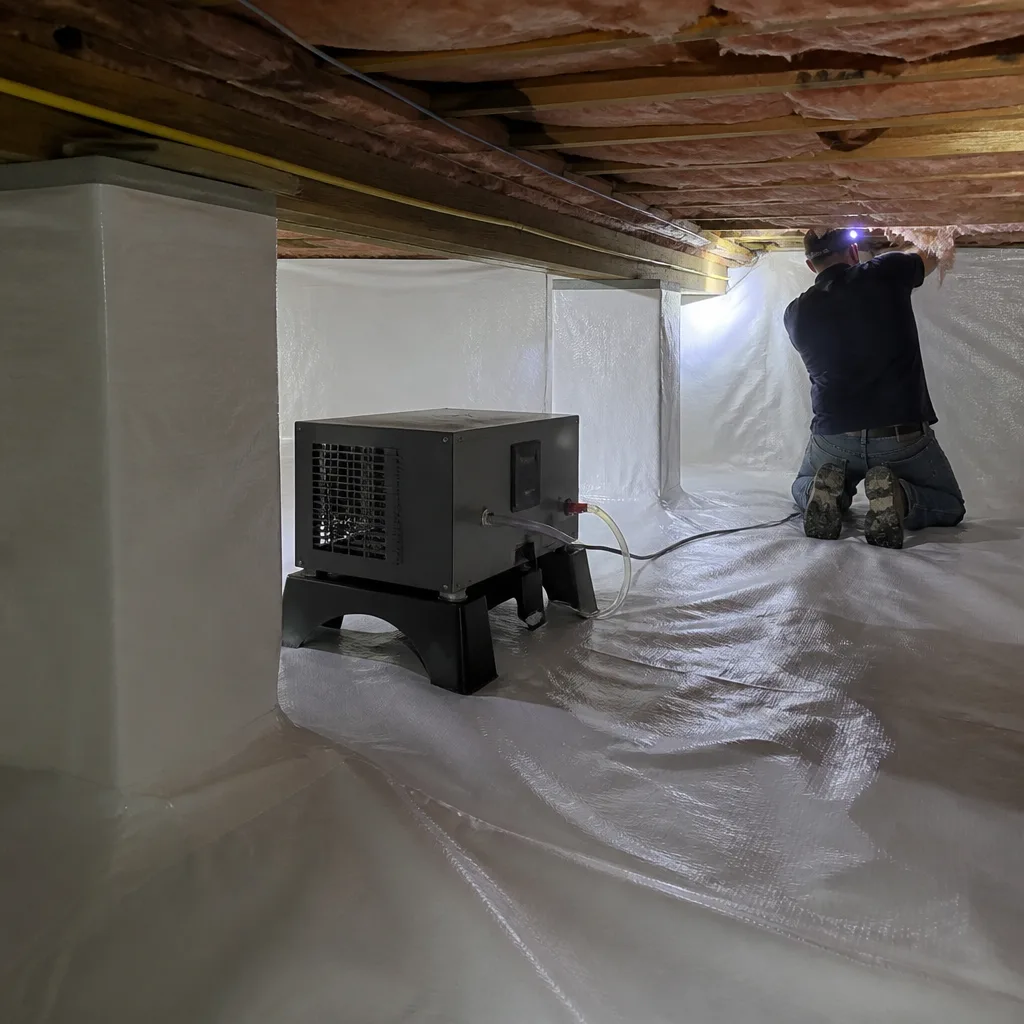
- Condensation beads on the barrier underside. This means your vapor barrier is still passing moisture vapor at a rate exceeding the dehumidifier’s removal capacity. In Canyon Lake, we see this most often where the barrier was fastened to block walls with adhesive alone; the alkaline efflorescence common to Comal County limestone substrate breaks that bond in 3-5 years.
- Tape lifting at seams and piers. GreenFiber’s butyl seam tape degrades faster when the crawl space cycles above 70% relative humidity. Once the seal breaks, unconditioned air enters at the rate of roughly 1 CFM50 per linear foot of failed seam, which our blower-door test will isolate precisely.
- Musty odor returning after rain events. This indicates groundwater is entering at the perimeter or through a compromised barrier section. Canyon Lake’s clay-loam soils expand against foundation walls seasonally, and that hydrostatic pressure finds any gap in the termination bar detail.
- Insect or rodent activity under the barrier. A properly sealed encapsulation removes the food source and access path. If you’re seeing activity, there’s a breach, and in this region that usually means a 1/4-inch gap at a plumbing penetration that wasn’t sealed with expandable foam during original install.
- Insulation sagging in floor joists above. When the encapsulation fails, crawl space relative humidity rises above 65%, and fiberglass batts absorb that moisture, losing R-value and eventually delaminating. We’ve pulled saturated batts in Canyon Lake homes where the GreenFiber barrier looked intact but had micro-perforations from foot traffic during original installation.
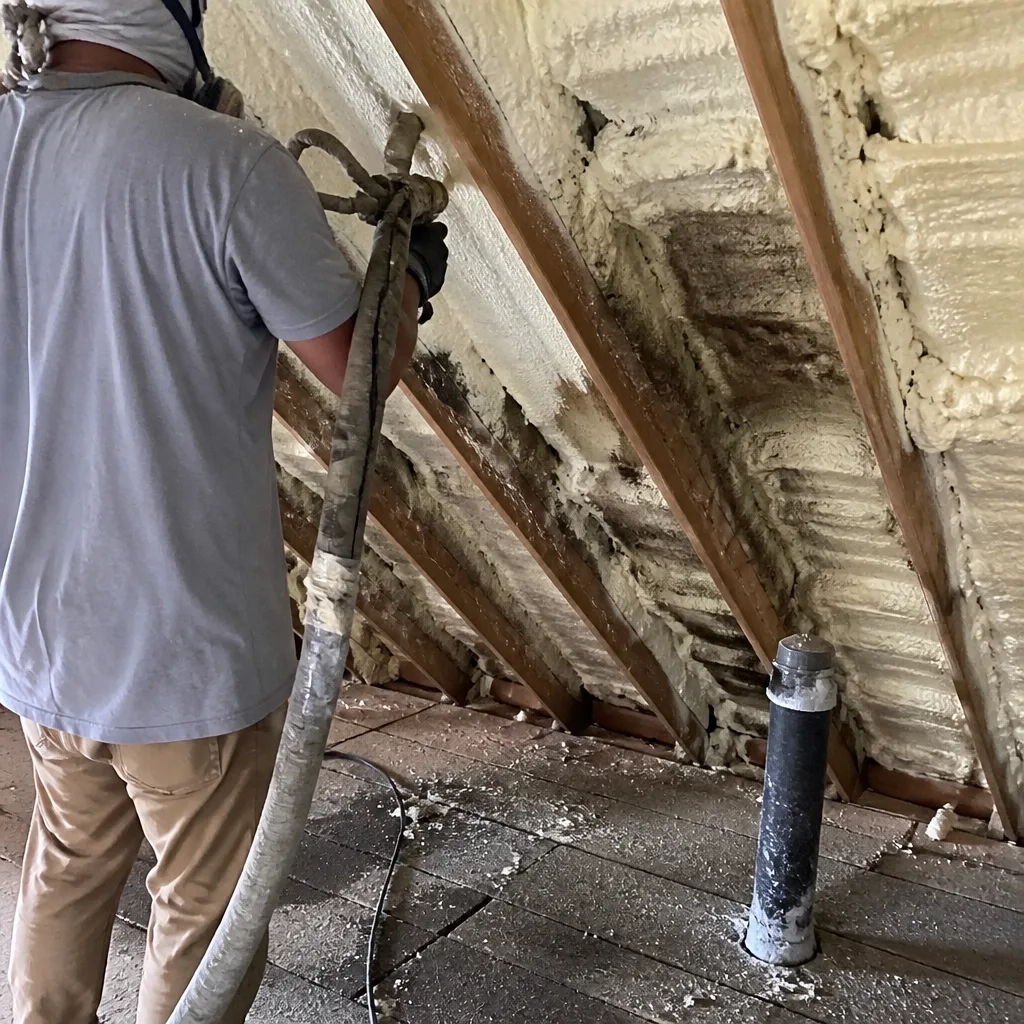 Before
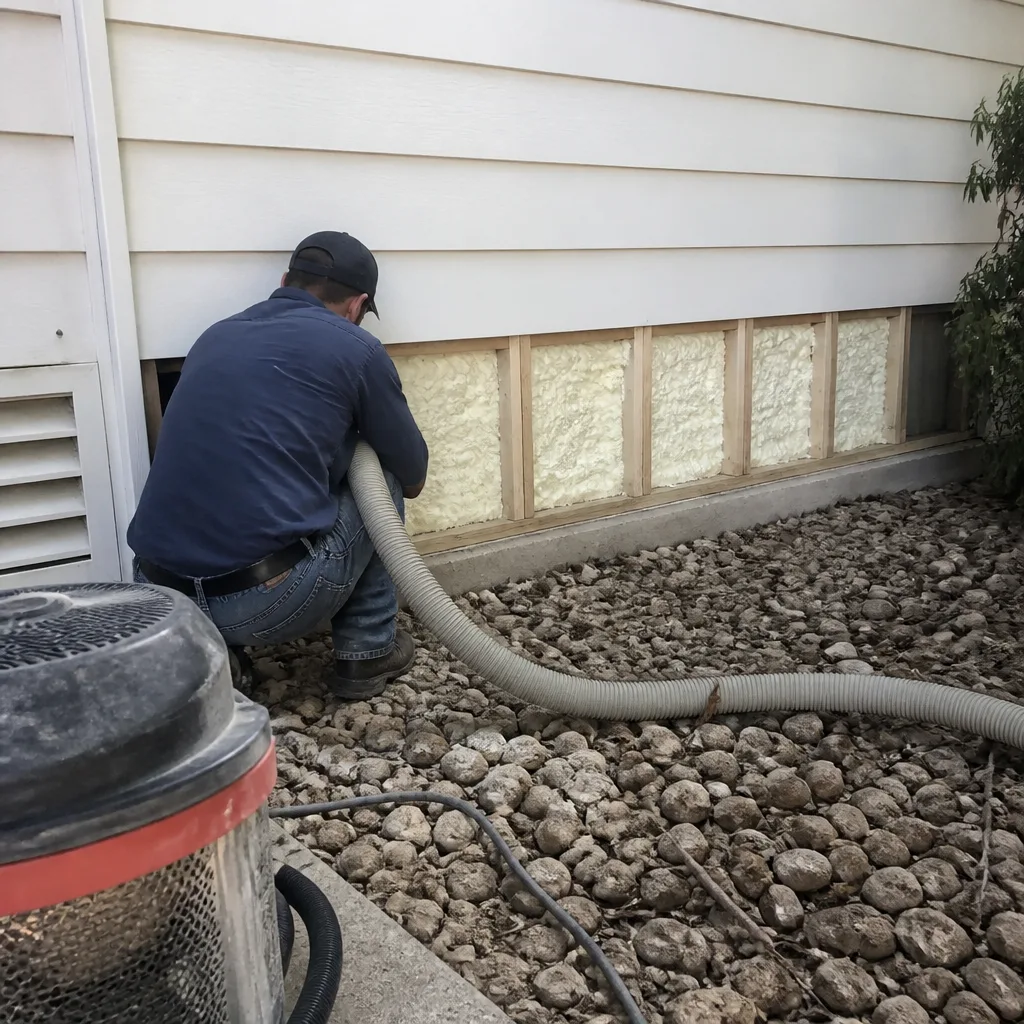 After
AfterReplacement Cost & What’s Included
For a typical Canyon Lake crawl space of 1,000-1,400 square feet, complete GreenFiber-compatible encapsulation replacement runs $2,800-$4,600. That range breaks down as follows: 10-mil woven reinforced polyethylene barrier material at $1.10-$1.40 per square foot, seam tape and termination hardware at $280-$420, mechanical fastening and sealant at $340-$480, and labor at $1,200-$1,800 depending on clearance height and pier count. Drive the price higher: active groundwater requiring French drain or sump pump integration, clearance below 18 inches, or hazardous material discovery such as asbestos-containing vermiculite. Drive it lower: partial replacement where the barrier is sound but tape has failed, or a recent dehumidifier already in place.
Every encapsulation job we complete includes a written scope and written warranty before work starts, per Haven Standard Clause 1. On applicable jobs, we run a blower-door test - a pressurization reading that shows, in one number, how much conditioned air your building envelope is losing - and publish the before-and-after CFM50 reduction so you can verify the air-sealing result. The 365-Day Done Right Promise covers all completed work. Materials are sourced from GreenFiber, Owens Corning, Johns Manville, Knauf, Rockwool, CertainTeed, Icynene, Demilec, and Reflectix - no proprietary lock-in.
DIY or Call Us?
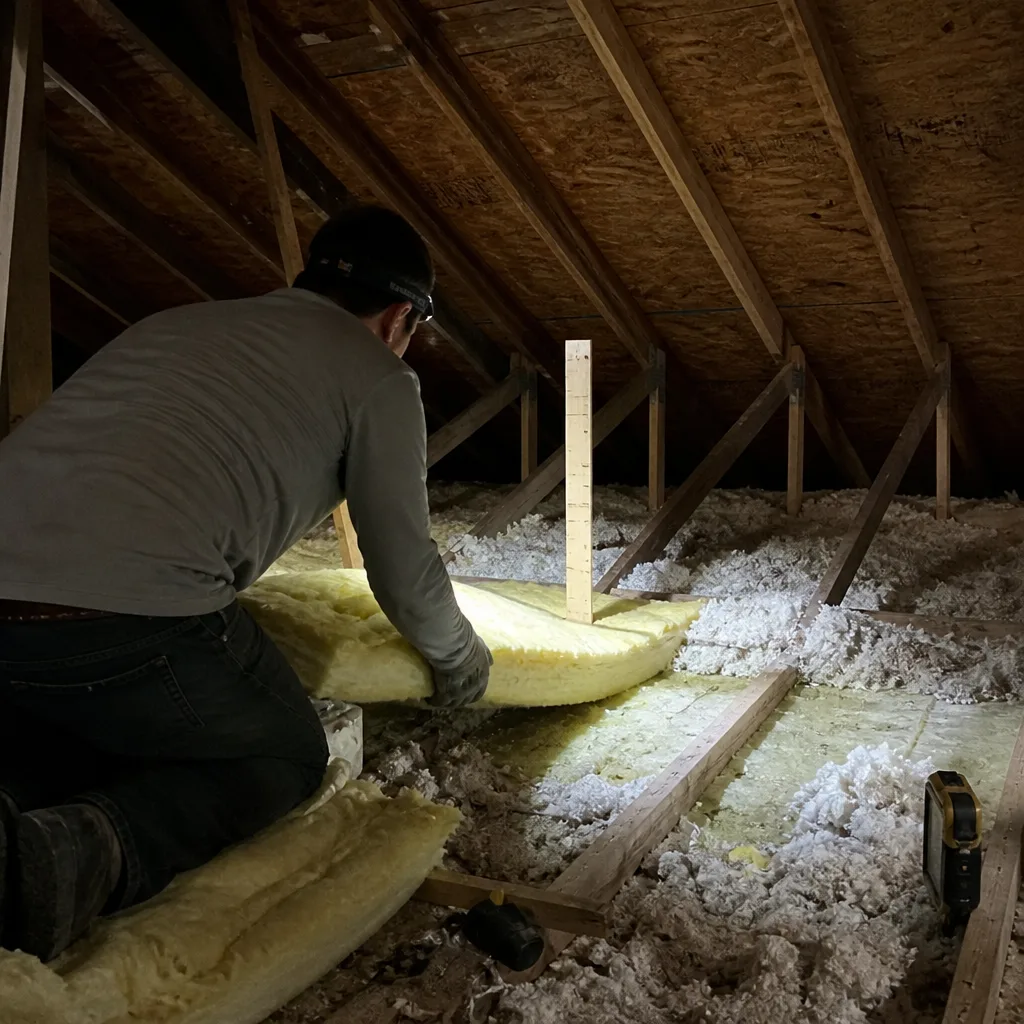
Here’s what you can safely check yourself: verify the mil thickness embossed on your existing barrier, photograph any lifted seams, and note whether your dehumidifier is cycling properly. Do not enter the crawl space if you smell gas, see standing water contacting electrical components, or suspect structural damage to floor joists. Where DIY goes wrong: cutting and seaming 10-mil woven polyethylene requires a specific overlap pattern and roller pressure that most homeowners underestimate; a single missed seam creates a convection loop that defeats the entire system. The mechanical fastening to block walls in Canyon Lake’s limestone substrate demands masonry anchors rated for the efflorescence cycle, not adhesive. We carry those anchors, the proper seam rollers, and the GreenFiber-compatible tape on every truck. Call (737) 227-6219 for a free estimate with a written price before any work starts.
FAQs
How long does GreenFiber crawl space encapsulation last in Canyon Lake?
A properly installed 10-mil woven system lasts 15-20 years in this climate, but the 6-mil material common in pre-2019 installs often shows seam failure in 7-10 years due to Hill Country groundwater chemistry and seasonal expansion. Call (737) 227-6219 for an exact assessment - estimates are free.
Can it be repaired instead of replaced?
Partial repair is viable when the barrier is intact but tape has failed at seams or piers. We cut back 6 inches past the failed section, apply new butyl tape, and roller-seam the patch. If the barrier has micro-perforations from foot traffic or rodent damage, replacement is the only lasting fix. Call (737) 227-6219 and we’ll tell you which category you’re in.
How long does a full replacement take?
Most Canyon Lake crawl spaces of 1,200 square feet or less are completed in one working day. Tight clearances below 24 inches, numerous piers, or concurrent dehumidifier installation can extend to a second day. We give you a written timeline with the written price before anyone lifts a tool.
Do you stock GreenFiber parts on your truck?
We stock 10-mil woven reinforced polyethylene, 4-inch butyl seam tape, termination bars, masonry anchors, and expandable foam sealant for GreenFiber-compatible encapsulation on every service vehicle. For OEM GreenFiber-branded material specifically, we order direct and typically have it within 48 hours. Call (737) 227-6219 to confirm current truck inventory for your job.
Topside Attic Insulation Canyon Lake is an independent service provider, not affiliated with GreenFiber.
Written by Wes Okafor, Owner & Lead Insulation Technician, Topside Attic Insulation Canyon Lake at Topside Attic Insulation Canyon Lake, serving Canyon Lake and nearby areas.