
GreenFiber Spray Foam Insulation in Canyon Lake: What to Know First
We provide independent GreenFiber spray foam insulation service in Canyon Lake, typically completing open-cell and closed-cell jobs within one to two days of scheduling, with written pricing delivered before any work begins. Most Canyon Lake homeowners with GreenFiber systems in the 78133 zip and along the Cranes Mill Road corridor see project costs between $2,800 and $6,400 depending on whether we’re treating a roof deck, rim joist, or full garage ceiling. This page is for GreenFiber owners who want their spray foam installed or supplemented by technicians who understand how GreenFiber’s cellulose-based product line interacts with foam chemistry in hot-humid Texas conditions. Call (737) 227-6219 for a free estimate with written pricing.
How GreenFiber Products Fail - and How We Fix Them
- GreenFiber All Borate cellulose settling against spray foam interfaces. In Canyon Lake’s cooling-dominated climate, the All Borate line can settle 15-20% over time where it meets open-cell spray foam at the roof deck, creating thermal bypass channels. We remove settled material, install proper baffles to maintain the ventilation gap GreenFiber specifies, then re-apply foam with a substrate-compatible adhesive that accounts for cellulose dust residue.
- GreenFiber Sanctuary two-part foam shrinkage in garage ceiling applications. The Sanctuary line’s two-component foam can pull away from OSB sheathing when applied too thick in a single pass during high-humidity months, which in Canyon Lake runs roughly April through October. We diagnose this with thermal imaging, cut back failed sections, and re-apply in 1-inch lifts with controlled temperature staging.
- GreenFiber stabilized cellulose moisture retention at rim joists. When stabilized cellulose is packed against rim joists that later get foam-sealed, trapped moisture from Canyon Lake’s spring humidity spikes can degrade the joist edge. We extract the cellulose, dry the cavity with directed airflow, apply closed-cell foam for the air seal, then reinstall cellulose only where it won’t contact the foam boundary.
- GreenFiber Low Dust formula incompatibility with certain foam primers. The Low Dust line’s proprietary oil treatment can interfere with water-based foam primers used by some contractors, causing delamination within 18 months. We test substrate compatibility with a small probe patch before full application, switching to solvent-based primers where chemistry demands it.
- GreenFiber Netted Blown System sagging in steep-pitch Canyon Lake attics. The netting system can belly between trusses under its own weight when attic temperatures exceed 140°F, common in Canyon Lake homes with dark shingles and limited ridge venting. We reinforce the net with strapping, then use closed-cell foam at the roof deck to reduce the radiant heat load that causes the sag.
Our GreenFiber Spray Foam Insulation Process
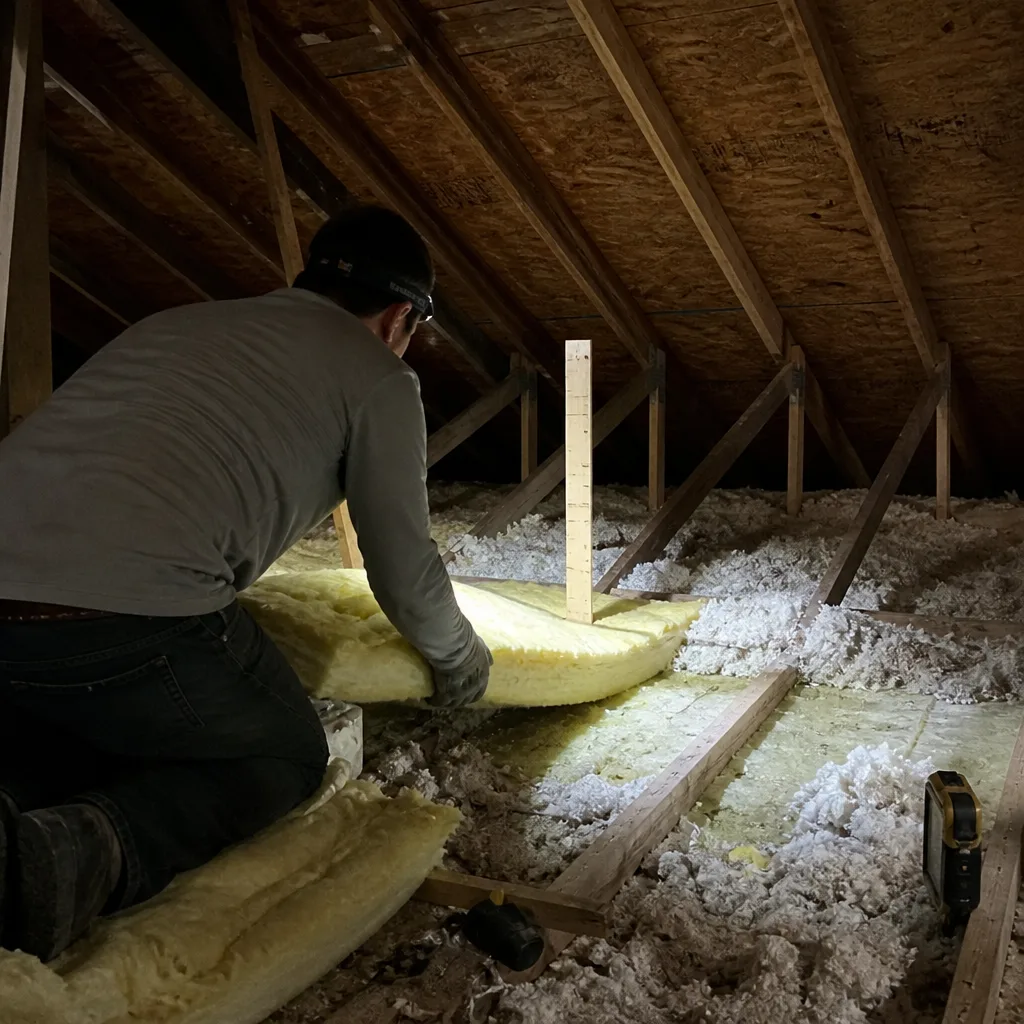
- 1
Call and scheduling. A live person answers, notes your GreenFiber product line if known, and books a site visit. You’ll get a text when your technician is en route.
- 2
Blower-door test and thermal imaging. We run a pressurization diagnostic - a blower-door test that shows, in one number, how much conditioned air your building envelope is losing. Thermal imaging identifies where GreenFiber materials and existing foam are underperforming.
- 3
Written scope and price. Before any work starts, you receive a flat price, written scope, and written warranty. Haven Standard Clause 1: no work begins without it.
- 4
Air sealing first, then foam application. Top plates, can lights, and penetrations get sealed before any spray foam goes in. We use OEM GreenFiber accessories where available or quality aftermarket equivalents that meet the same density and fire-rating specs, with the trade-off explained in writing.
- 5
Installation with lift controls. Open-cell foam goes in 1-inch passes; closed-cell in ½-inch lifts. We monitor substrate temperature and humidity, critical in Canyon Lake’s climate.
- 6
Post-test and documentation. We run a second blower-door test, hand you printed pre- and post-install readings, and deliver your Documented Photo Record. Seal the leaks first. Then insulate. The report tells you whether it worked.
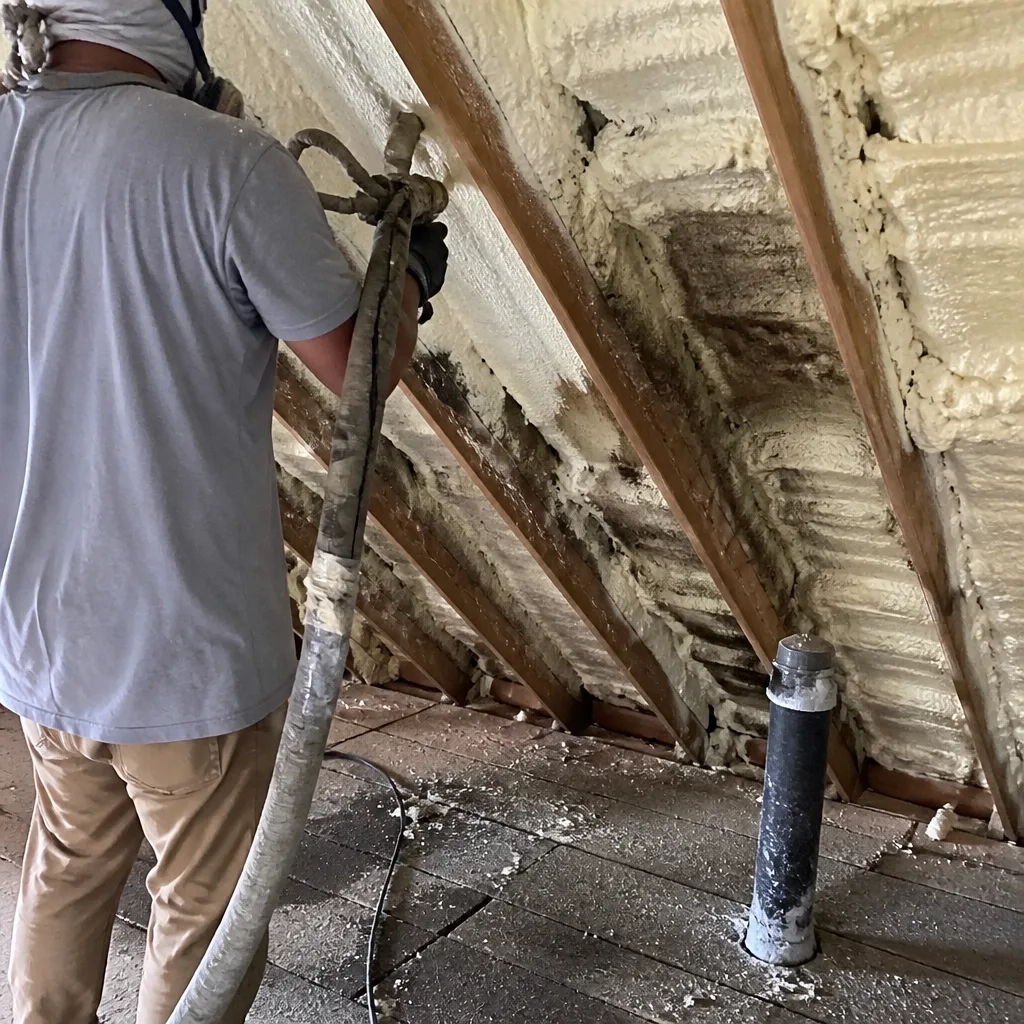 Before
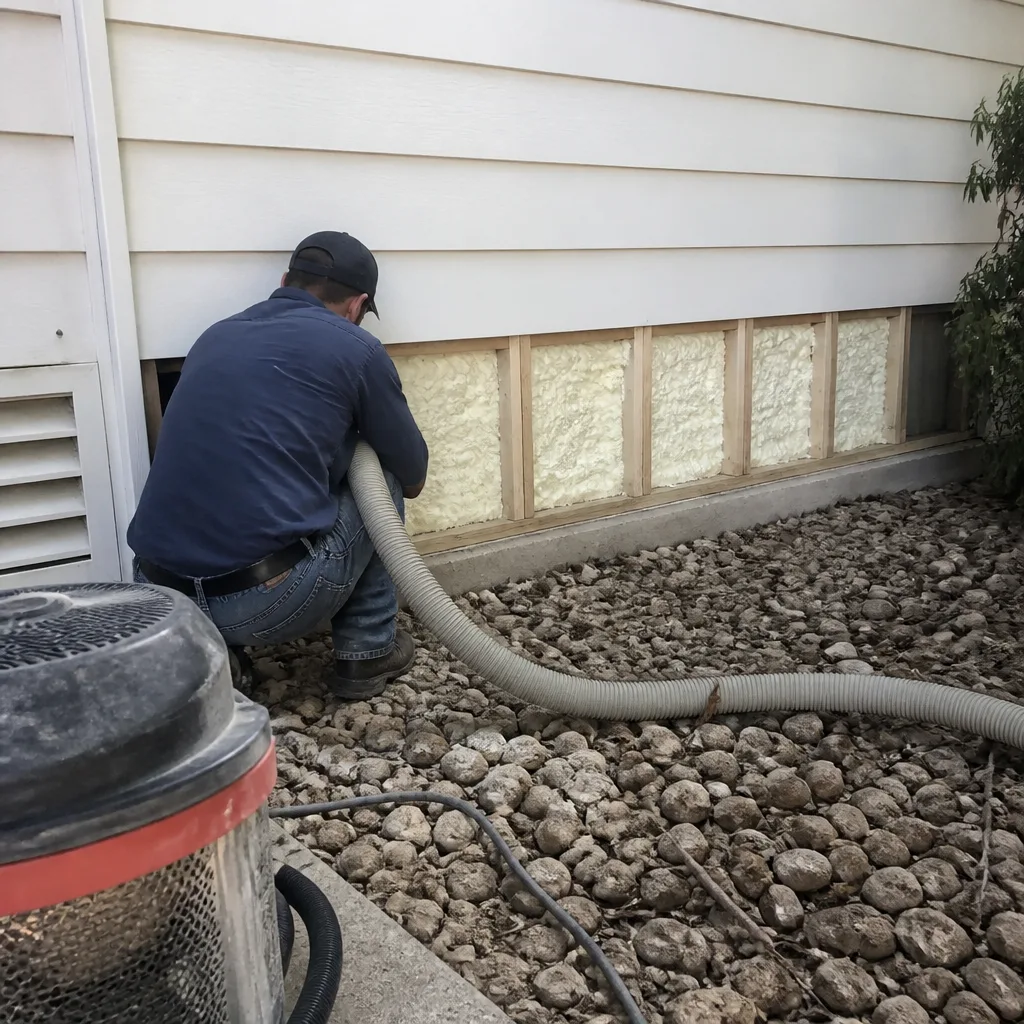 After
AfterWhat GreenFiber Spray Foam Insulation Costs in Canyon Lake
| Job Type | Typical Range | What Moves the Price |
|---|---|---|
| Rim joist (closed-cell, basement or crawl) | $1,800 - $3,200 | Linear footage, access difficulty, existing GreenFiber removal |
| Garage ceiling (open-cell) | $2,400 - $4,100 | Square footage, whether HVAC ducting is present, net repair needed |
| Roof deck (open-cell, vented assembly) | $3,500 - $6,400 | Roof pitch, square footage, baffle installation, ridge-vent condition |
| Roof deck (closed-cell, unvented) | $4,200 - $7,800 | Thickness required for vapor barrier, HVAC relocation, code compliance |
Factors that push Canyon Lake jobs toward the higher end: homes built 2015-2020 with minimal initial air sealing, dark shingle roofs that drive attic temperatures above 145°F, and GreenFiber systems installed by prior owners without blower-door verification. We also service Reflectix radiant barrier systems when they’re part of the same assembly. Call (737) 227-6219 - estimates are free, and the price you get is the price you pay.
Why Canyon Lake Homeowners Call Topside Attic Insulation Canyon Lake for GreenFiber Work
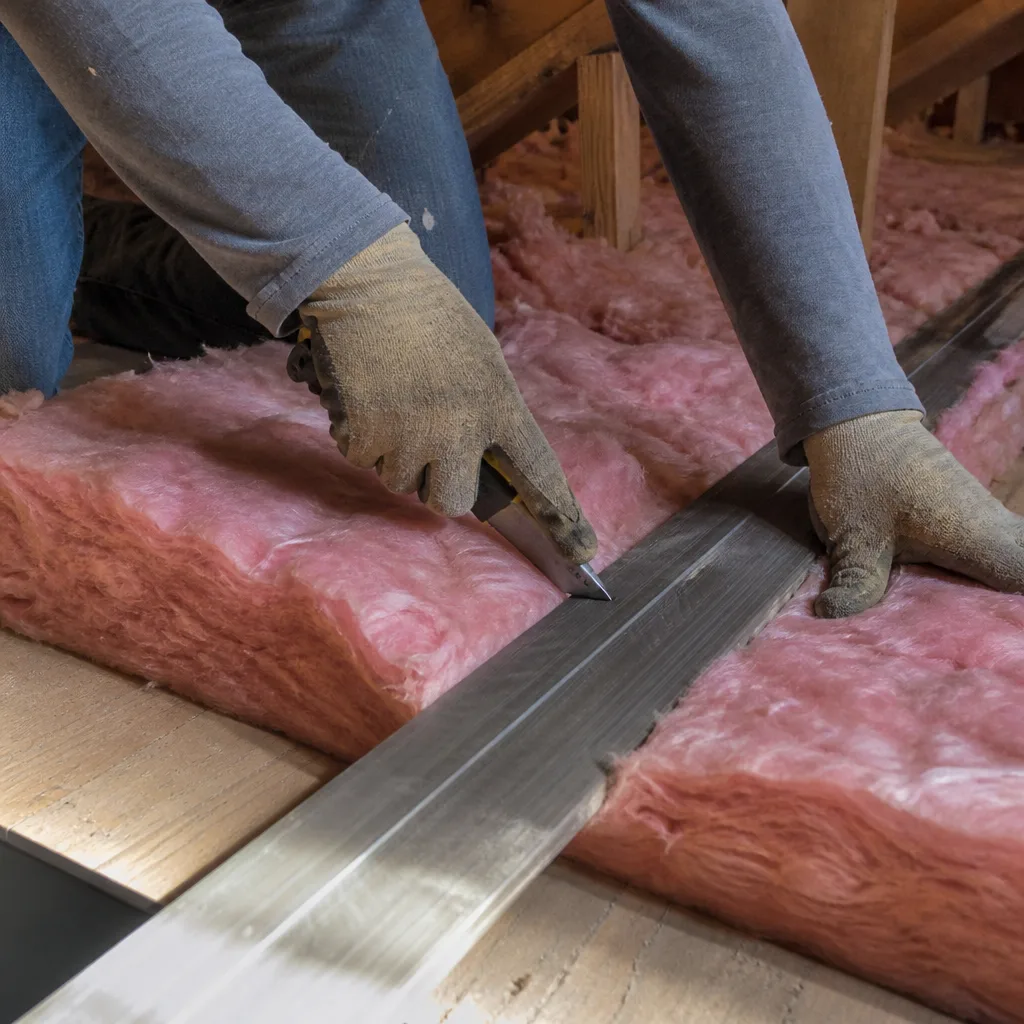
We’ve been in Canyon Lake homes where the energy bills were higher than the mortgage, and the attic was always confessing something. Wes Okafor and our crew have tracked how different ridge-vent configurations perform over time - a log started years ago that has saved customers from repeat calls when the real problem was ventilation, not insulation quantity.
As an independent GreenFiber service provider, we carry no manufacturer-mandated parts restrictions. Our 365-Day Done Right Promise applies to every job, backed by written scope and warranty delivered before anyone lifts a tool. Calls are answered by a live person 24/7. Background-checked, uniformed technicians arrive with documented credentials and printed pricing. We publish before-and-after blower-door numbers on every applicable job because a number without context is just noise - but a number with context is proof.
FAQs
Does using an independent GreenFiber service provider void my warranty?
No. GreenFiber’s product warranties cover material defects regardless of who installs or services them, provided the work follows published application guidelines. Our documentation includes material lot numbers and installation parameters to support any future claim. Call (737) 227-6219 if you need help interpreting your warranty language.
Can you get OEM GreenFiber parts, or do you use aftermarket?
We source OEM GreenFiber accessories when lead times are reasonable, typically 3-5 business days for common items. For time-sensitive Canyon Lake jobs, we use quality aftermarket equivalents that match density, fire rating, and substrate compatibility - the specific part source and its trade-offs are listed in your written scope before work begins.
Is it cheaper to repair my existing GreenFiber system or start over with new spray foam?
Repair is usually more cost-effective when the existing GreenFiber is less than 10 years old, properly installed, and the failure is isolated to the foam interface or a specific cavity. Full replacement makes sense when there’s widespread settling, moisture damage, or the original installation lacked air sealing. We’ll show you both numbers in writing. Call (737) 227-6219 for an exact quote - estimates are free.
How fast can you complete a GreenFiber spray foam job in Canyon Lake?
Most residential jobs are completed in one to two working days after scheduling. Rim joist work often finishes in a single day; full roof deck treatments may require two days for proper lift staging and cure time. We don’t rush cure chemistry to hit a schedule. Call (737) 227-6219 to check current availability.
Do you also service Reflectix products if they’re part of my assembly?
Yes. We encounter Reflectix radiant barriers in Canyon Lake attics where they’ve been layered with or adjacent to GreenFiber systems, and we can assess, repair, or replace them as part of a unified envelope solution. The specific approach depends on whether the Reflectix is functioning as a radiant barrier, a vapor retarder, or both - we test and document before modifying.
Written by Wes Okafor, Owner & Lead Insulation Technician, Topside Attic Insulation Canyon Lake at Topside Attic Insulation Canyon Lake, serving Canyon Lake and nearby areas.