
GreenFiber Vapor Barrier Installation: The Canyon Lake Owner’s Guide
GreenFiber vapor barrier installation in Canyon Lake typically runs $1,800-$3,400 for a full crawl space or attic floor application, and we stock the 6-mil and 10-mil reinforced polyethylene rolls on our truck for same-day starts. Most homeowners figure out something’s wrong when they spot condensation beading on ductwork or catch a musty smell that gets worse after rain off Canyon Lake itself. If your crawl space floor joists are showing surface mold or your fiberglass batts are sagging and dark at the edges, the vapor barrier is either missing, torn, or improperly lapped at the seams.
Which GreenFiber Models This Applies To
GreenFiber doesn’t manufacture vapor barriers directly, but their blown cellulose insulation systems, particularly the Sanctuary and Low Dust product lines, are spec’d for installation over sealed crawl space floors or attic planes where a continuous vapor barrier is code-required. The compatibility issue isn’t the GreenFiber cellulose itself, it’s the assembly: GreenFiber’s cellulose is hygroscopic, meaning it manages moisture by absorbing and releasing it, but only if the vapor barrier below it is doing its job. If you’re looking at a retrofit where GreenFiber was blown over an existing dirt crawl space without proper ground sealing, you’ve got an incomplete assembly.
To identify what you need, check what’s currently on the ground. A proper GreenFiber-compatible install uses a 6-mil minimum reinforced polyethylene sheeting, lapped 12 inches at seams, sealed with pressure-sensitive tape or acoustic sealant, and run 6 inches up stem walls. Some Canyon Lake builders in the 2018-2022 construction wave used 4-mil sheeting to save cost, and that material degrades faster in our high-alkali Hill Country soils. We carry both the 6-mil and 10-mil reinforced grades, plus the seam tape and mastic that GreenFiber’s installation literature calls out. OEM isn’t really a thing here, the polyethylene itself is commodity, but the tape and detailing are where aftermarket shortcuts fail. We use 3M 8086 or equivalent pressure-sensitive tape, not the box-store HVAC foil tape that peels in crawl space humidity.
Signs Your GreenFiber Vapor Barrier Installation Is Failing
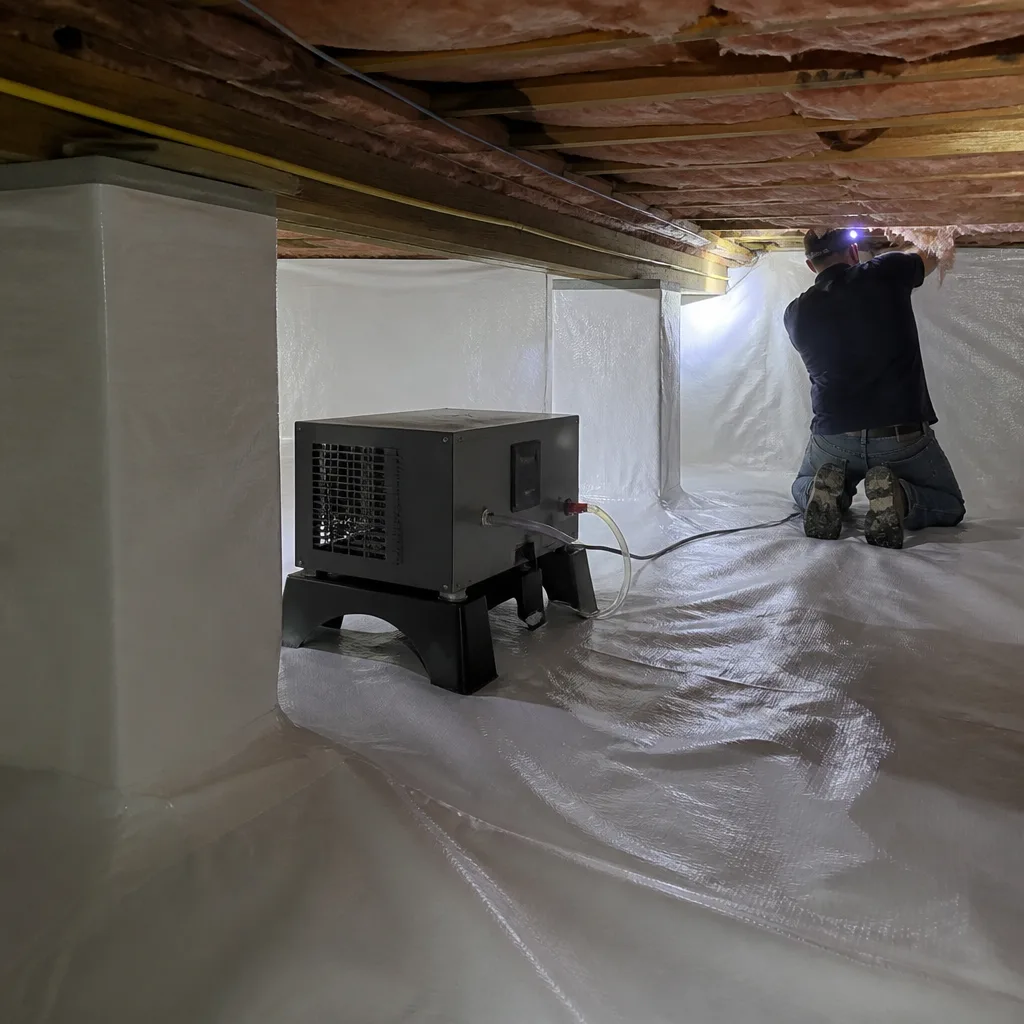
- Condensation on ductwork or pipes. When ground moisture passes through a torn or missing vapor barrier, it hits the cooler surfaces of your HVAC ducts and condenses. In Canyon Lake, we see this most on flex duct runs where the insulation jacket has separated from the inner liner, the vapor barrier failure and the duct failure amplify each other.
- Sagging or discolored fiberglass batts. Fiberglass doesn’t absorb moisture well, but it holds it against framing when the vapor barrier below is compromised. The batts turn gray or black at the bottom edges first, right where they meet the crawl space floor or top of the foundation wall.
- Musty odor that intensifies after rain. Canyon Lake’s clay-heavy soils shed water slowly, so a heavy storm can push ground moisture levels up for days. If your house smells like wet cardboard 48 hours after the rain stops, moisture is wicking through the soil, past a failed barrier, and into your floor system.
- Increased energy bills with no HVAC explanation. Wet insulation performs like no insulation. A blower-door test on a home with a failed crawl space vapor barrier often shows elevated duct leakage too, because the metal ductwork has rusted at the seams from chronic condensation exposure.
- Visible gaps, tears, or pooling water on the barrier surface. The polyethylene should lie flat and continuous. If you see standing water on top of the barrier, either the barrier has holes letting it through from below, or the grade wasn’t properly sloped before installation, a detail we correct on every job.
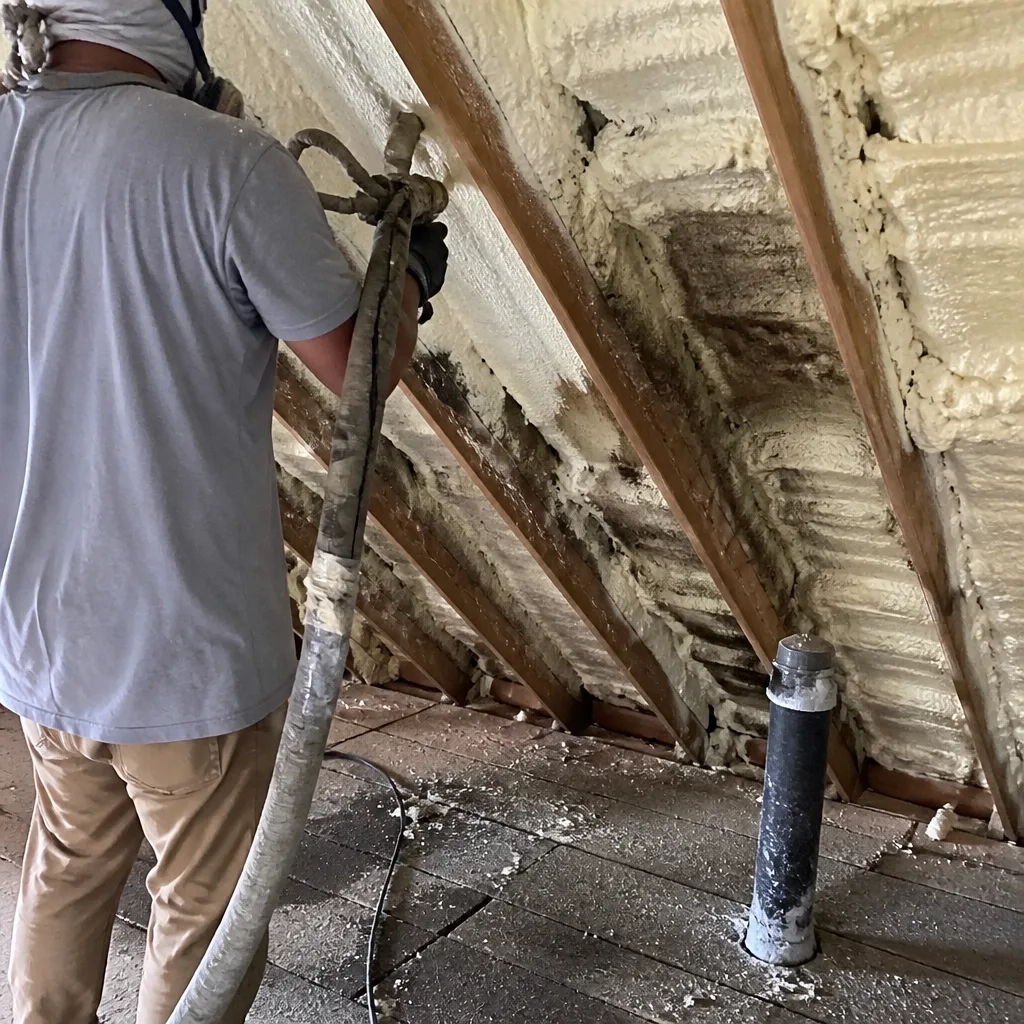 Before
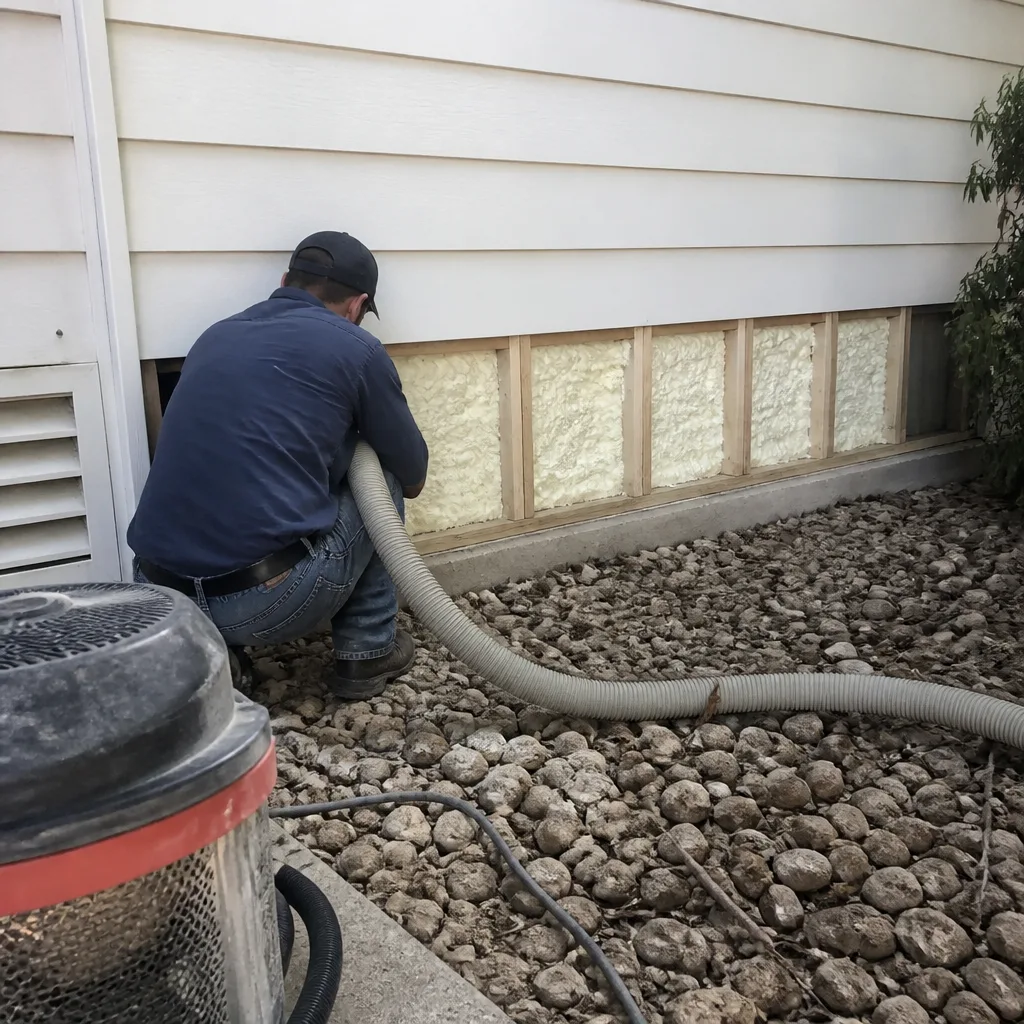 After
AfterReplacement Cost & What’s Included
Most full crawl space vapor barrier replacements in Canyon Lake run between $1,800 and $3,400 installed, with the range driven by square footage, accessibility, and whether we need to remove degraded existing material first. A typical 1,200-square-foot crawl space with standard stem wall height and decent access falls around $2,200. That includes removal of old sheeting if present, regrading the soil surface for positive drainage, laying 6-mil reinforced polyethylene with 12-inch seam laps, sealing all seams and penetrations, running the barrier 6 inches up walls and sealing to the sill plate, and a Documented Photo Record of the completed work.
We don’t start without a Written Price Before Any Work Starts, Haven Standard Clause 1, and every vapor barrier job carries our 365-Day Done Right Promise. If you’re comparing quotes, bring us any written estimate for a Free Second Opinion, we’ll read it with you and flag where the scope differs from what GreenFiber’s assembly details actually require.
DIY or Call Us?
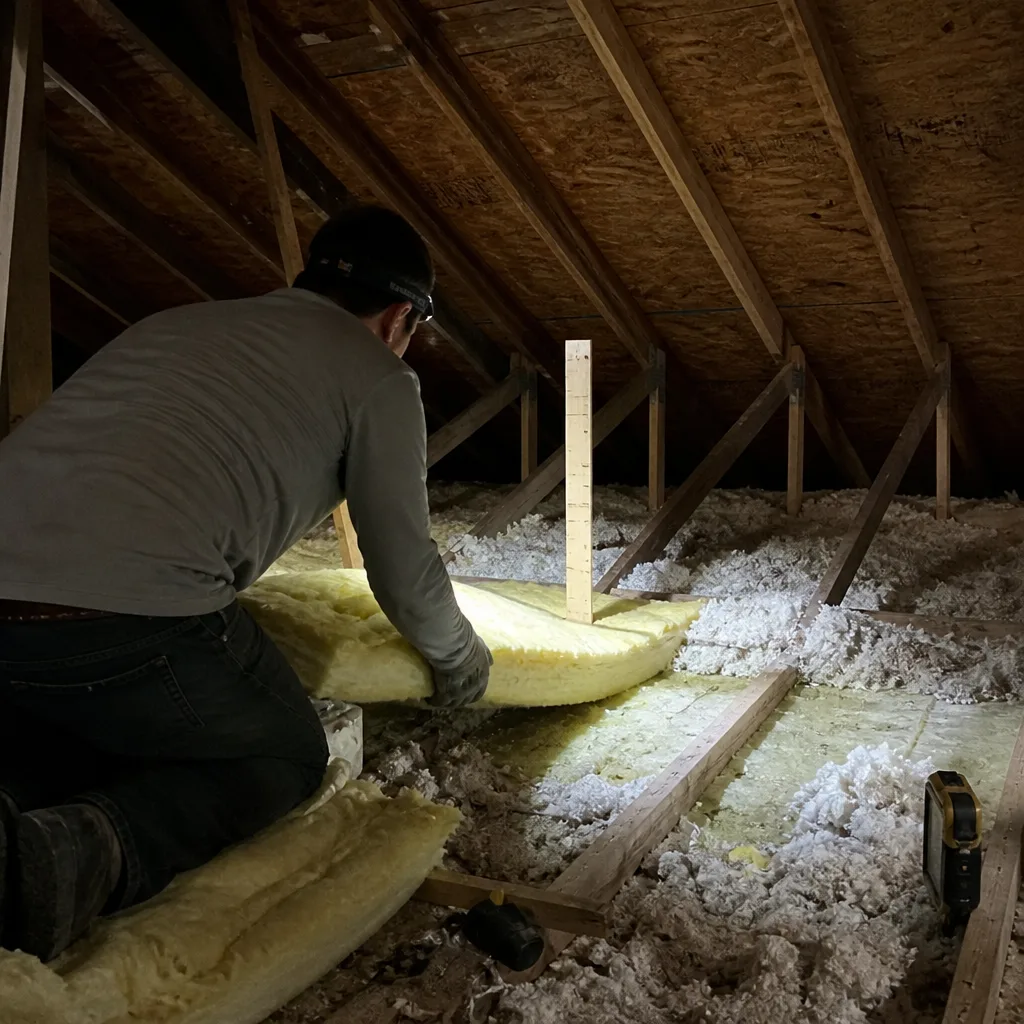
There’s nothing inherently dangerous about laying polyethylene sheeting, the risk is in what you don’t see. Crawl spaces in Canyon Lake often have active plumbing leaks, electrical junctions sitting in damp soil, or rodent damage to wiring that gets exposed when you move the old barrier. We find something worth photographing on roughly one in three jobs, and we background-check and uniform our technicians for exactly that reason.
What you can safely check: confirm the barrier exists at all, look for obvious tears or gaps at seams, and note any standing water or mold on framing. What goes wrong with DIY: inadequate seam sealing, short laps that separate as soil shifts, failure to seal around piers and penetrations, and using 4-mil or non-reinforced sheeting that tears during the next service call. If your energy bills are higher than your mortgage, the attic is usually confessing something, and the crawl space is often where it starts talking. Seal the leaks first. Then insulate. The report tells you whether it worked. Call (737) 227-6219 for a written price and a free estimate.
FAQs
Properly installed 6-mil reinforced polyethylene lasts 15-20 years in our climate, but the 4-mil grade some builders used in the 2018-2022 construction wave often shows seam separation and embrittlement within 7-10 years, especially where Hill Country soil alkalinity contacts the material. Call (737) 227-6219 for an exact quote on replacement, estimates are free.
Patching works for isolated punctures smaller than a dinner plate using compatible polyethylene tape, but if you’re seeing multiple tears, seam separation, or degradation across more than 20% of the surface, replacement is more reliable and usually more cost-effective than chasing individual failures. Call (737) 227-6219 for an exact quote, estimates are free.
Most residential crawl spaces in Canyon Lake take one crew day, assuming standard access and no extensive debris or pest damage requiring remediation first. We arrive with the GreenFiber-compatible materials on the truck and hand you the Documented Photo Record before we leave. Call (737) 227-6219 to schedule.
We stock 6-mil and 10-mil reinforced polyethylene sheeting, seam tape, mastic, and acoustic sealant compatible with GreenFiber cellulose assemblies on every truck, plus Reflectix radiant barrier if your job needs both ground and roof deck moisture control. Topside Attic Insulation Canyon Lake is an independent service provider, not affiliated with GreenFiber. Call (737) 227-6219 for same-week availability.
Written by Wes Okafor, Owner & Lead Insulation Technician, Topside Attic Insulation Canyon Lake at Topside Attic Insulation Canyon Lake, serving Canyon Lake and nearby areas.