
Icynene Attic Air Sealing: The Canyon Lake Owner’s Guide
Most Icynene attic air sealing jobs in Canyon Lake run between $1,800 and $3,400 installed, depending on attic square footage and how many top plates, can lights, and duct chases need sealing. We stock Icynene-compatible open-cell spray foam and acrylic sealant compounds on every truck, and most replacements are completed same-day. Homeowners usually figure out something’s wrong when their summer electric bill spikes $80-$150 over the previous year, or when they notice the upstairs bedrooms in their Canyon Lake home won’t stay within 3 degrees of the thermostat setpoint despite the AC running nonstop.
Which Icynene Models This Applies To
Icynene’s open-cell spray foam systems, primarily the LD-C-50 and MD-R-200 series, are what we encounter in Canyon Lake attics. The LD-C-50 is the lighter-density formula, rated at 0.5 lbs per cubic foot, and it’s what most builders in the Hill Country spec’d between 2012 and 2019. The MD-R-200 is medium-density at 2.0 lbs per cubic foot, more common in custom builds around the Startzville and Hancock areas where builders were chasing higher R-value per inch.
To identify which you have, check the application label left by the original installer, usually stapled to a rafter near the attic access hatch. The Icynene batch code starts with the series prefix, followed by a date stamp. If the label’s gone, we can tell by a core sample: LD-C-50 has a spongy, bread-like texture you can compress with a thumb; MD-R-200 feels closer to stiff cake and rebounds slowly.
We use Icynene OEM material where the existing foam needs extension or repair, but for air-sealing retrofits where we’re chasing gaps the original installer missed, we also carry Demilec Sealection 500 and certain Johns Manville open-cell formulations that bond chemically with cured Icynene. The compatibility gotcha: never apply closed-cell foam directly over open-cell Icynene without a separator layer; the two cure at different rates and the interface will crack within two seasons in Canyon Lake’s temperature swings.
Signs Your Icynene Attic Air Sealing Is Failing
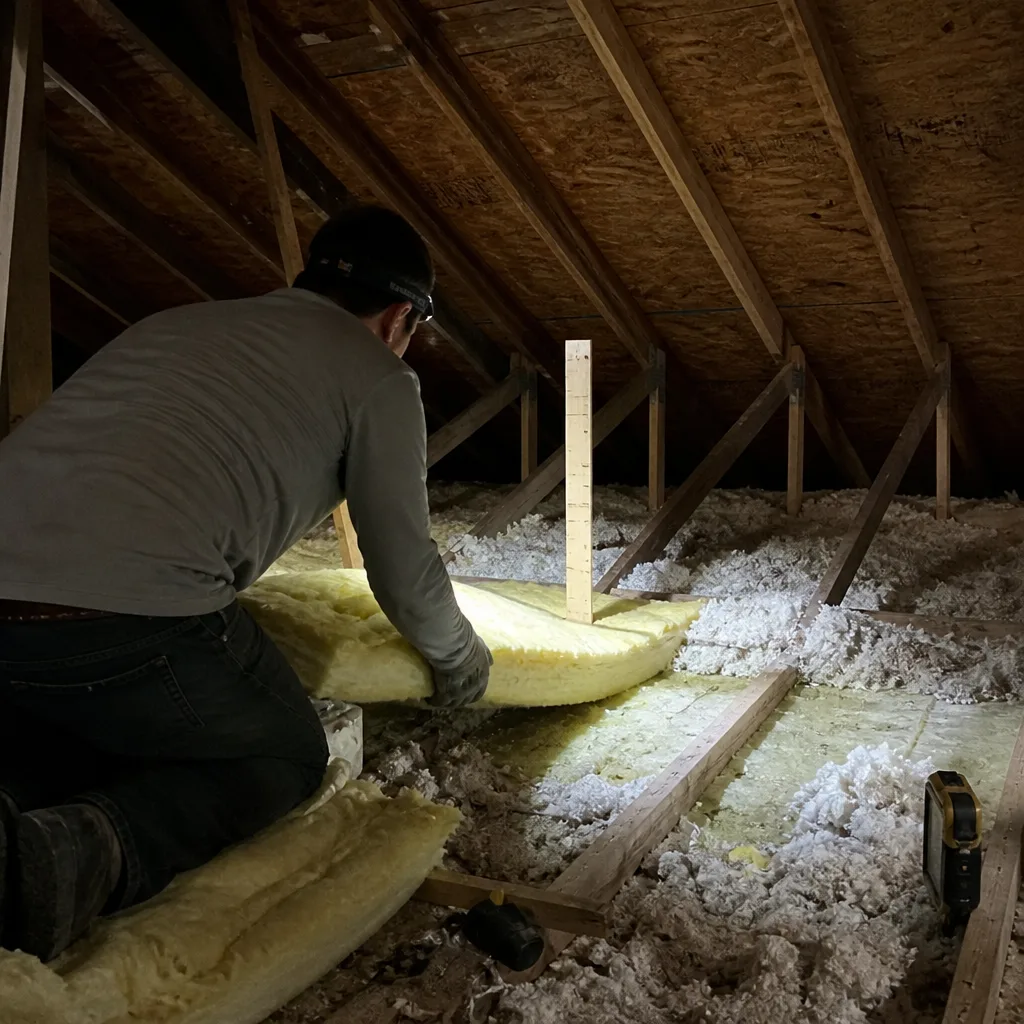
- Uneven room temperatures upstairs. When Icynene shrinks or pulls away from top plates, conditioned air escapes into the attic and the rooms farthest from the air handler run 4-6 degrees warmer. In Canyon Lake, we see this most on west-facing second-story bedrooms where afternoon solar gain stacks on top of air leakage.
- Dust streaking around ceiling registers. This means your attic is breathing into the house through gaps the Icynene was supposed to seal. The streaks are attic dust pulled through by pressure imbalance, and they’re usually worst in homes near the lake where wind exposure creates stronger stack effect.
- Spiking summer electric bills with no rate change. A properly sealed attic in Canyon Lake should hold your cooling load steady. If your kWh jumps 20% or more year-over-year and the AC unit checks out, the envelope is the suspect. We verify this with a blower-door test, a pressurization reading that shows, in one number, how much air your building envelope is losing.
- Hot attic air pouring from recessed can lights. Icynene should form a complete seal around IC-rated cans, but shrinkage or sloppy original application leaves a thermal chimney. Put your hand near the trim on a 95-degree Canyon Lake afternoon; if it feels like a hair dryer on low, the seal has failed.
- Visible gaps or yellowing at foam edges. Icynene yellows with UV exposure, which only happens where it’s not covered by insulation or where attic access hatches let light in. More critically, any gap wider than 1/8 inch between the foam and framing is a leak path that bypasses your R-value entirely.
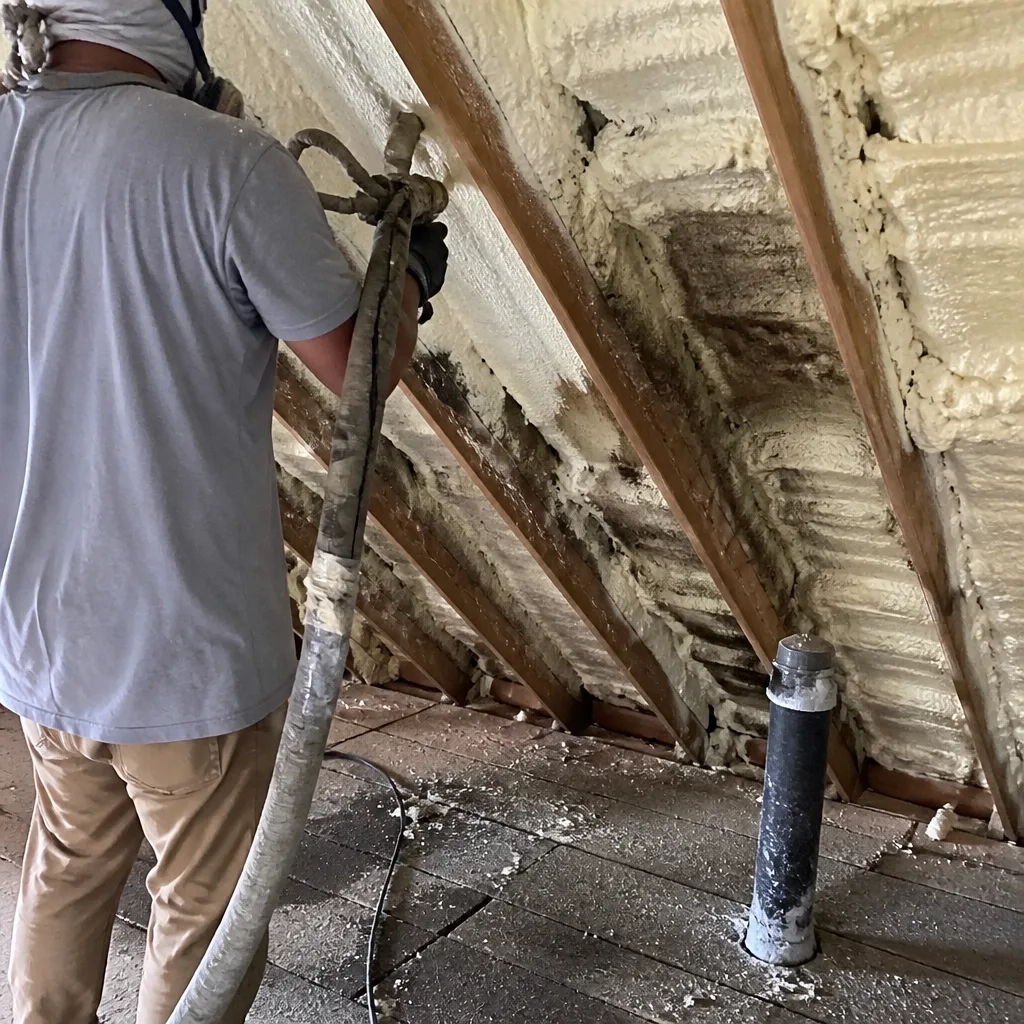 Before
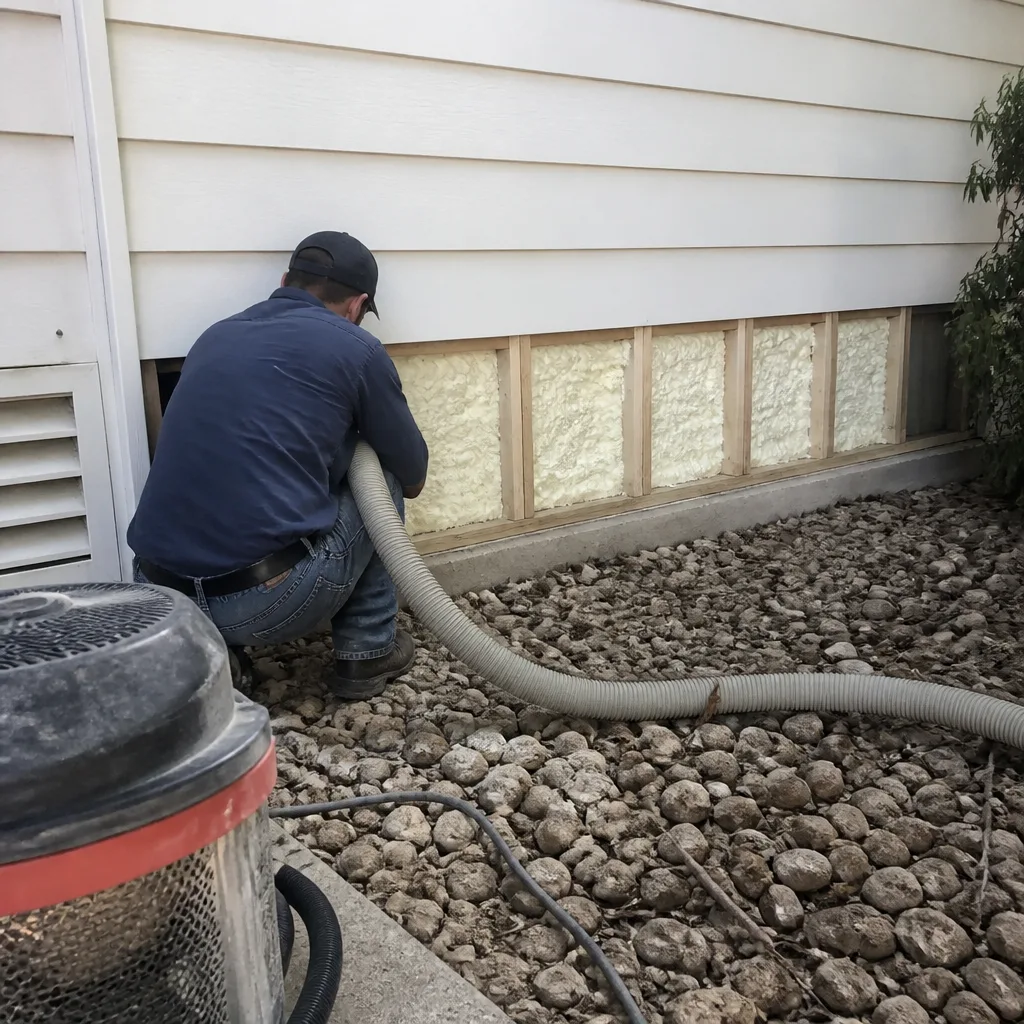 After
AfterReplacement Cost & What’s Included
For a typical Canyon Lake home between 1,800 and 2,800 square feet, Icynene attic air sealing runs $1,800-$3,400. The low end covers a focused repair: re-sealing pulled-away top plates, chasing gaps around chimney chases and plumbing stacks, and spot-foaming can lights. The high end is a full attic floor seal on a larger footprint with complex framing, multiple HVAC penetrations, and a full blower-door verification.
That price includes material, labor, and our before-and-after blower-door test. We don’t charge separately for the diagnostic. What drives the range: attic accessibility (steep pitch adds time), existing insulation that must be moved and replaced, and how many penetrations need individual attention. A written price before any work starts is Haven Standard Clause 1; you’ll get the flat number, the scope, and the warranty in writing before anyone lifts a tool. Our 365-Day Done Right Promise covers the seal integrity. We also source from Owens Corning, Johns Manville, Knauf, Rockwool, CertainTeed, Icynene, Demilec, and GreenFiber, so we’re not locked into a single product line if your situation calls for something different.
DIY or Call Us?
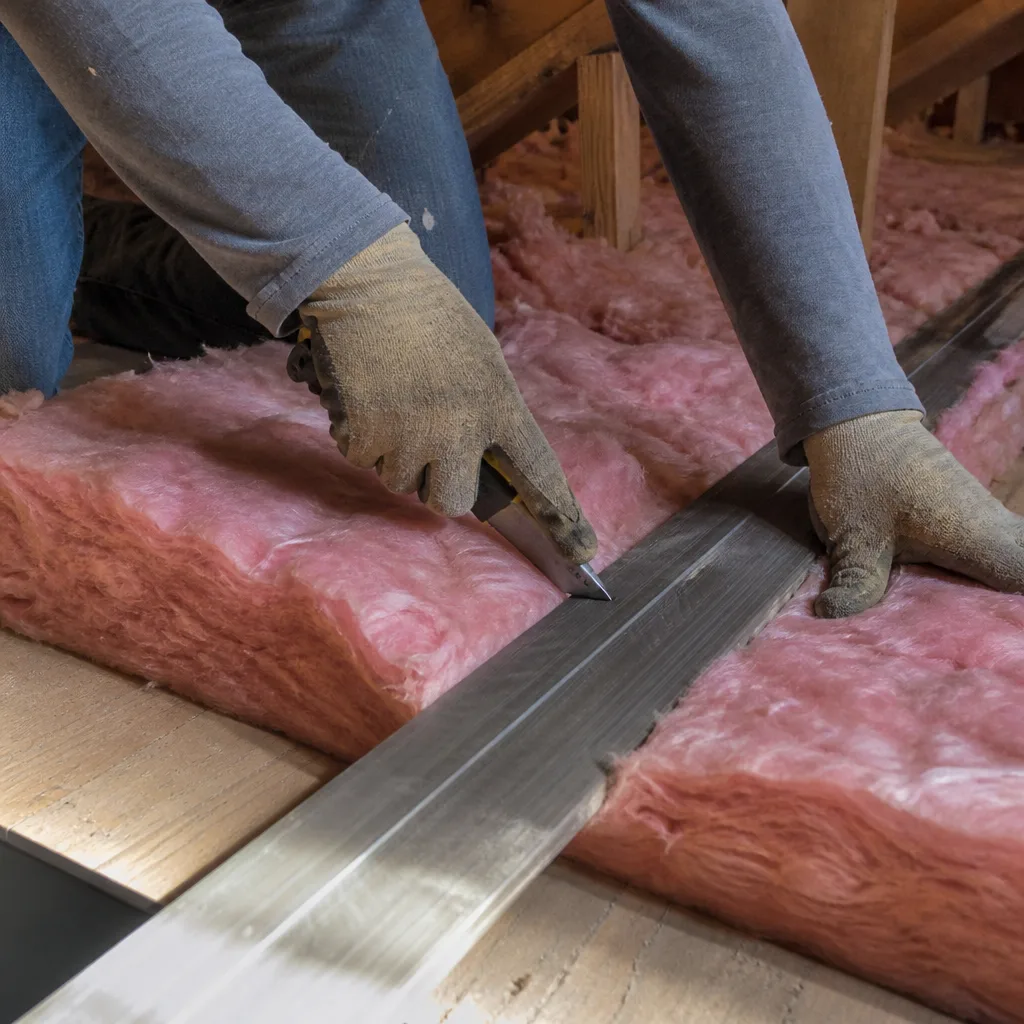
There’s a short list of what a Canyon Lake homeowner can safely check: verify your attic access is weatherstripped, confirm can light trims are tight, and look for obvious daylight through gaps in the Icynene. What you find is useful intelligence to hand us when we arrive.
Where DIY goes wrong is applying new foam over old without understanding vapor drive, or using the wrong product for the gap size. Icynene open-cell needs specific substrate moisture content to bond; spray it on a humid July sheathing in Canyon Lake and it’ll skin over before it adheres. Worse, homeowners sometimes use canned “great stuff” foam on large gaps, which cures too rigid and cracks within a season. The safety note: attic work in summer is heat-stress territory, and spray foam application requires respirator-rated PPE and ventilation planning. We carry both. Call (737) 227-6219 and we’ll give you a written price before any work starts.
FAQs
Properly applied Icynene open-cell foam lasts the life of the building, but the seal integrity depends on whether the original installer chased every gap. In Canyon Lake’s climate, with roof deck temperatures hitting 140°F in August and 30°F winter nights, thermal cycling stresses the foam-to-wood interface. We see the first separation cracks at 8-12 years on original installations that skipped the detail work. Call (737) 227-6219 for a free inspection and blower-door reading.
Most Icynene air sealing failures are localized and repairable. We cut back the failed section to sound foam, clean the substrate, and apply new compatible foam to rebuild the seal. Full replacement is only necessary when the original application was so incomplete that the attic never actually achieved airtightness. We quote both paths in writing so you can decide. Call (737) 227-6219 for an exact scope and price.
A focused Icynene repair on 10-15 gaps takes 4-6 hours. A full attic floor seal on a 2,400-square-foot home runs a full day, plus the blower-door test before and after. We schedule arrival windows and text when the technician is en route. Most Canyon Lake jobs are completed same-day.
We stock Icynene LD-C-50 and MD-R-200 formulations, plus Demilec and Johns Manville compatibles, on every truck. We also carry acrylic sealant for detail work around electrical boxes and non-foam-compatible surfaces. If your job requires a specific Icynene variant we don’t have loaded, we can source it within 48 hours; we’ll tell you upfront if that’s the case. Topside Attic Insulation Canyon Lake is an independent service provider, not affiliated with Icynene.
Seal the leaks first. Then insulate. The report tells you whether it worked. If your Icynene attic air sealing is pulling away, letting dust through, or just not keeping the upstairs comfortable anymore, call (737) 227-6219. We’ll run the blower-door test, show you the numbers, and give you a written price before any work starts.
Written by Wes Okafor, Owner & Lead Insulation Technician, Topside Attic Insulation Canyon Lake at Topside Attic Insulation Canyon Lake, serving Canyon Lake and nearby areas.