
Johns Manville Attic Insulation: The Canyon Lake Owner’s Guide
Most Johns Manville attic insulation retrofits in Canyon Lake run between $1.80 and $3.20 per square foot installed, depending on whether we’re adding blown-in fiberglass over existing material or pulling degraded batts and starting fresh. We stock Johns Manville Climate Pro, Spider, and Formaldehyde-free batts on our trucks, and we can usually inspect and quote same-day. Homeowners typically figure out something’s wrong when the upstairs bedrooms won’t cool below 78 degrees even after sundown, or when they pull down the attic ladder and find insulation compressed to half its labeled thickness, discolored from roof leaks, or scattered by rodents that moved in through unsealed gaps.
Which Johns Manville Models This Applies To
Johns Manville makes several product lines that show up in Canyon Lake attics, and matching the right material to what’s already there matters for thermal performance and warranty coverage. The most common we encounter are Climate Pro blown-in fiberglass (the loose-fill white or pink material, typically R-30 to R-60), Spider blown-in system (engineered for wall cavities but sometimes found in attic knee walls), and the Formaldehyde-free Kraft-faced batts (R-13 through R-38, with the paper vapor barrier facing the conditioned side).
To identify what you have, check for a printed label on the Kraft paper facing or a loose specification sheet stapled to a rafter near the attic access. The R-value, net coverage per bag, and manufacturing date should all be visible. If the label’s gone, we measure existing depth and density in three spots, then cross-check against Johns Manville’s coverage charts. OEM Johns Manville material isn’t required for code compliance in Comal County, but mixing incompatible types, like laying unfaced loose-fill directly over old cellulose without an air barrier, can create moisture traps that void the manufacturer’s system warranty. We also stock Reflectix radiant barrier products for homes where roof deck temperatures are the dominant problem.
Topside Attic Insulation Canyon Lake is an independent service provider, not affiliated with Johns Manville.
Signs Your Johns Manville Attic Insulation Is Failing
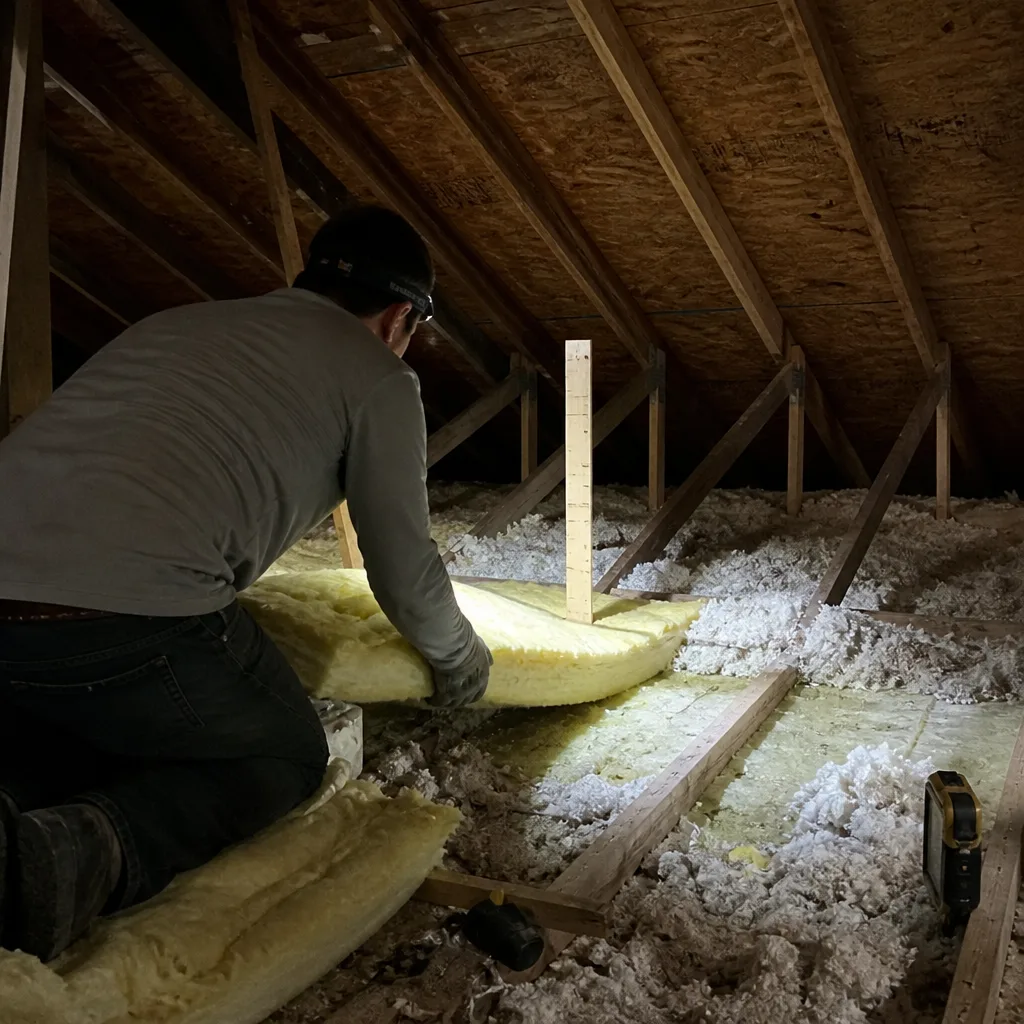
- Uneven temperatures room-to-room. If the master bedroom sits under a section of attic with settled or missing Climate Pro fill, that room runs 8 to 12 degrees warmer than the hallway thermostat reading. The fiberglass has compressed or migrated away from the eaves, breaking the thermal boundary.
- Insulation that looks wet, stained, or mold-speckled. Canyon Lake’s spring storms push moisture through ridge vents that weren’t properly baffled. Once Johns Manville batts absorb that moisture, the R-value drops by 40 to 60 percent and the Kraft facing delaminates, which becomes a mold substrate.
- Dust or insulation particles blowing from ceiling registers. This means your ductwork runs through an unsealed attic, and the pressure imbalance is pulling loose-fill through gaps around the boot connections. The insulation isn’t failing, but it’s being redistributed where it does no good.
- Ice damming or heavy frost on roof nails in winter. Even our mild Canyon Lake Januarys can produce attic condensation when warm, humid interior air hits a cold roof deck. Under-insulated or poorly air-sealed attics let that air migrate upward, and the moisture condenses on the first cold surface it finds.
- Energy bills climbing year-over-year with no rate change. We’ve pulled 15-year-old Johns Manville batts from homes near the Cranes Mill Road corridor that had degraded to R-11 effective value from an original R-30 rating, simply from thermal cycling and rodent activity.
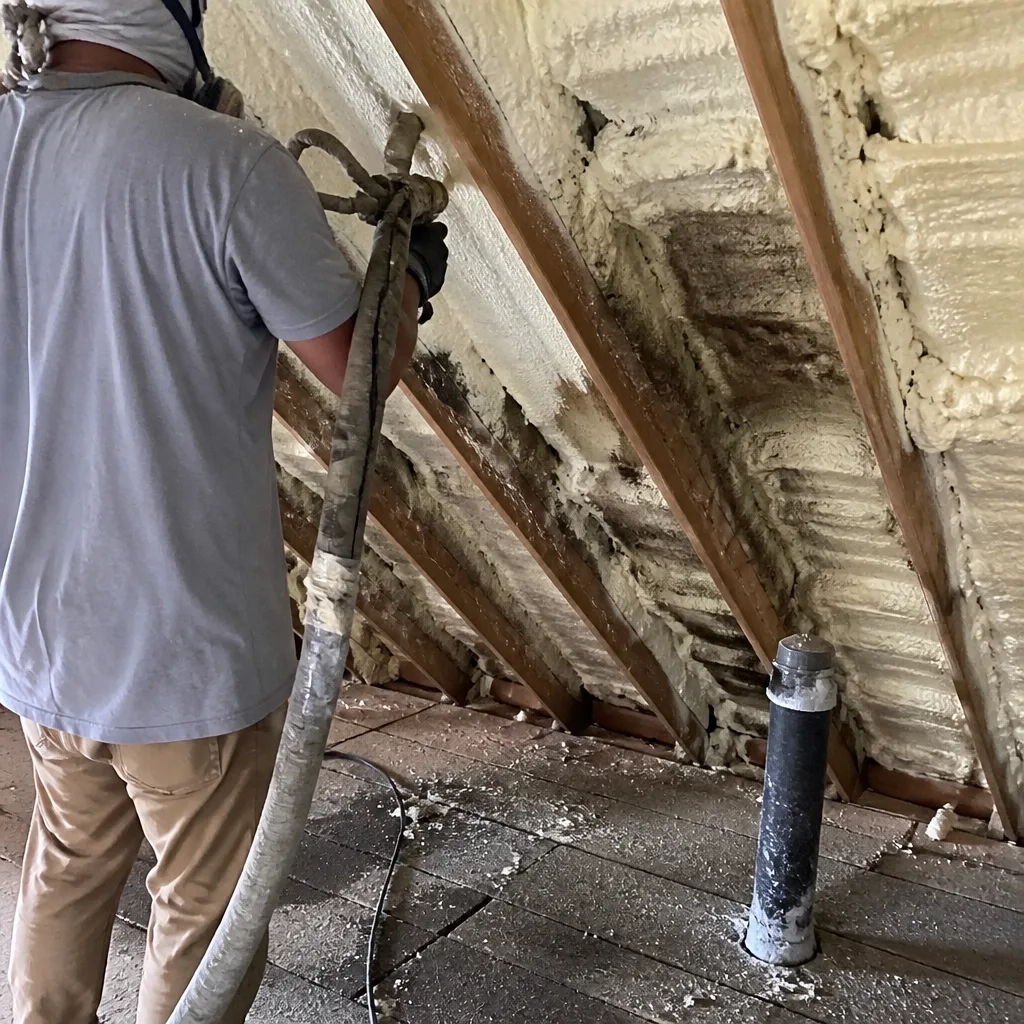 Before
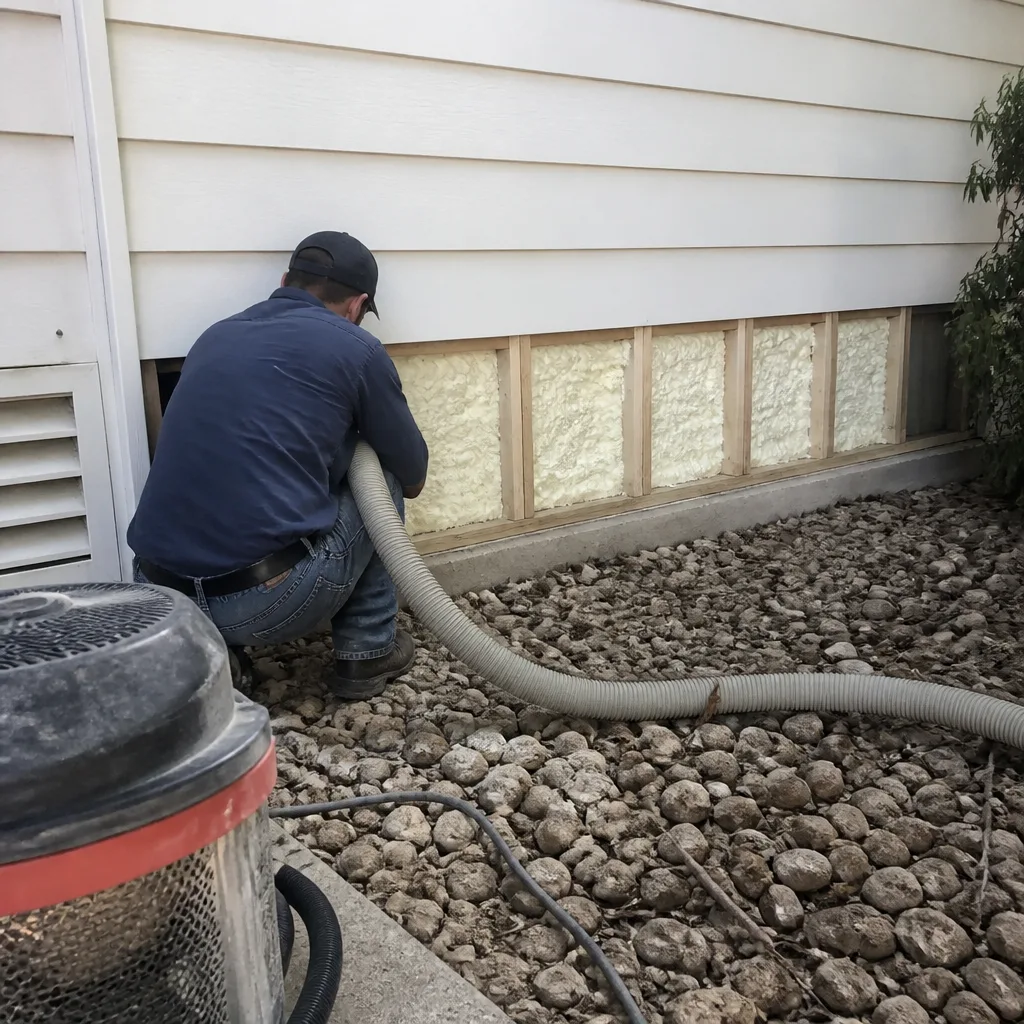 After
AfterReplacement Cost & What’s Included
| Scope | Price Range (Canyon Lake) | What’s Included |
|---|---|---|
| Add loose-fill over existing (good condition) | $1.80 - $2.40/sq ft | Air sealing of top plates and penetrations, blower-door pre-test, Climate Pro install to R-38 or R-60, post-test, photo record |
| Remove and replace degraded batts/loose-fill | $2.60 - $3.20/sq ft | Full extraction, attic cleaning, rodent proofing if needed, air sealing, new Johns Manville material, post-test, photo record |
| Attic air sealing only (no insulation add) | $850 - $1,400 | Top plates, can lights, penetrations, duct boots, blower-door pre- and post-test, photo record |
The range depends on three factors: attic square footage, accessibility (scuttle vs. pull-down stairs vs. cut new access), and whether we’re working around stored belongings or a cleared floor. Every quote is a written price before any work starts, Haven Standard Clause 1. The 365-Day Done Right Promise covers both material and installation. We don’t charge to re-read a competitor’s estimate, either, bring us any written quote and we’ll walk through it with you.
DIY or Call Us?
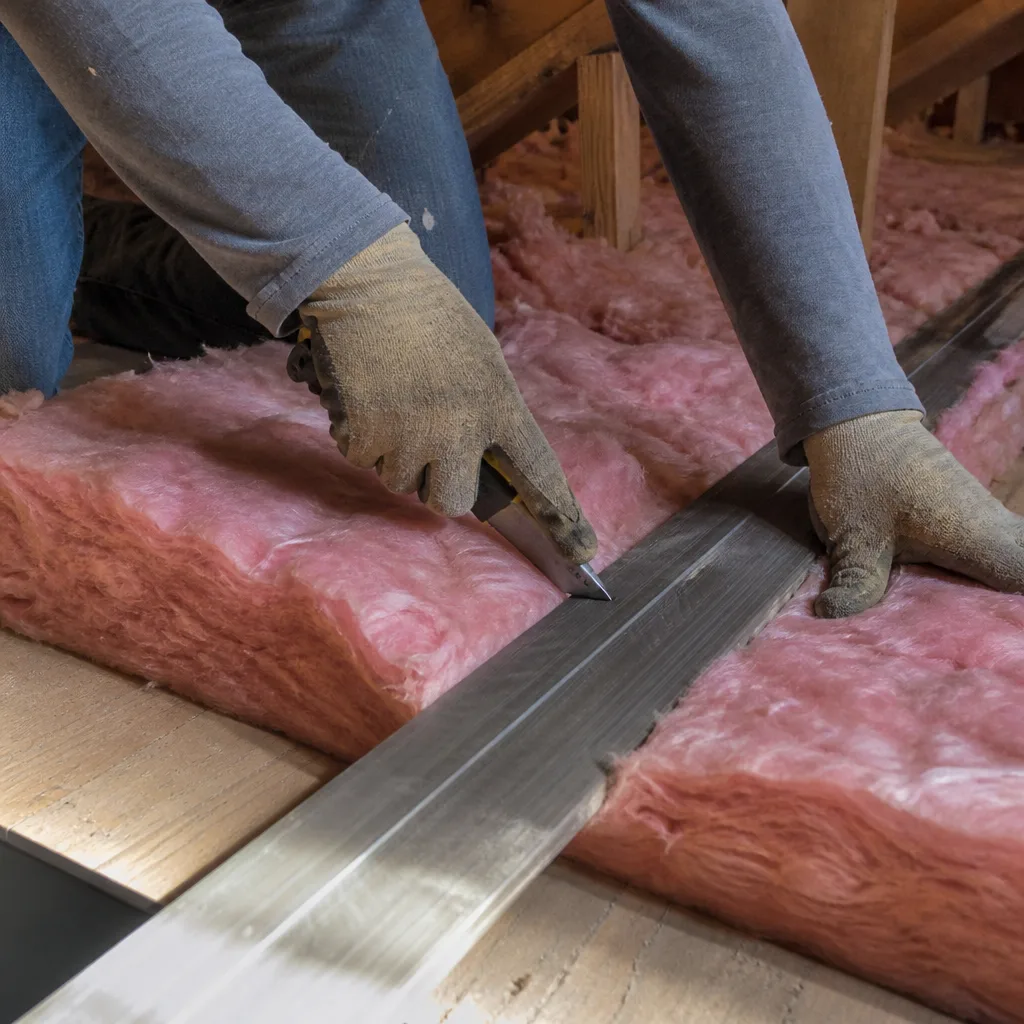
There’s no high-tension spring or live electrical hazard in handling fiberglass insulation, but there are genuine risks most Canyon Lake homeowners don’t account for. Disturbing old Johns Manville batts without a respirator rated for fine glass fibers will leave you itching for days, and walking a joist bay 10 feet over a drywall ceiling has sent more than one DIYer through the laundry room below. The bigger problem is what you can’t see: without a blower-door test, you’re guessing where the air leaks are, and blowing new insulation over unsealed top plates is like putting a sweater over a screen door.
What you can safely check: measure existing insulation depth with a ruler, photograph any labels you find, and look for obvious water staining or rodent droppings. What we handle: the pressurization diagnostic, the air sealing with proper fire-blocking at chimneys and canned lights, the material selection matched to your roof assembly, and the documented proof that it worked. Seal the leaks first. Then insulate. The report tells you whether it worked.
Call (737) 227-6219 for a written price before anyone lifts a tool.
FAQs
Properly installed and protected from moisture, Johns Manville fiberglass products carry a limited lifetime warranty, but in practice we see effective performance drop after 15 to 20 years in this climate. The thermal cycling between 105-degree August afternoons and 40-degree January mornings breaks down the fiber structure, and roof leaks or rodent activity accelerate that timeline. If your insulation is original to a 2005 build, it’s worth an inspection. Call (737) 227-6219 and we’ll check it for free.
Yes, if the existing material is dry, uncompressed, and free of pest debris. We blower-door test first to confirm the air barrier is intact, then add Climate Pro loose-fill to reach your target R-value, typically R-38 or R-60 for Canyon Lake’s IECC climate zone. If the old batts are moldy, urine-soaked, or wet, removal is non-negotiable, adding over contaminated material traps moisture against the drywall. We document the condition with photos before recommending either path.
Most single-story homes in Canyon Lake run two days: one for extraction, cleaning, air sealing, and the blower-door pre-test; one for insulation install and the post-test with photo record. Two-story homes or those with complex rooflines near the lake’s western coves may need a third day. We don’t quote by the hour, the written price covers the scope regardless of how long the crew is on site.
We keep Climate Pro, Spider system components, and R-13 through R-38 batts on our trucks and in our Canyon Lake warehouse. For less common Johns Manville specifications, like high-density batts for cathedral ceilings, we can typically source within 48 hours through our distributor in San Antonio. Same-day inspection and next-day install is standard for most jobs we quote.
Written by Wes Okafor, Owner & Lead Insulation Technician, Topside Attic Insulation Canyon Lake at Topside Attic Insulation Canyon Lake, serving Canyon Lake and nearby areas.