
Knauf Attic Insulation: The Canyon Lake Owner’s Guide
Knauf attic insulation installed in Canyon Lake homes typically runs between $1.80 and $3.20 per square foot for blown-in fiberglass, with most retrofits on 1,800-2,400 sq. ft. homes falling in the $2,800-$5,400 range including air sealing and cleanup. We stock Knauf Jet Stream and EcoFill blown-in fiberglass on every truck, and we can usually start the same day you call. Most Canyon Lake homeowners figure out something’s wrong when their summer electric bill cracks $400 or the upstairs bedrooms won’t cool below 78 degrees even with the AC running flat out.
Which Knauf Models This Applies To
Knauf’s blown-in fiberglass lines break into two families we see in Canyon Lake attics: Jet Stream Ultra (the higher-density, higher-R-value product, usually gray-pink in color) and EcoFill Wx (the standard-density white fiberglass, common in production builds from 2015-2022). The bag label will show the series name, a lot number, and the R-value per inch. Jet Stream Ultra nets R-2.7 per inch at settled density; EcoFill Wx settles at R-2.5 per inch. If you’re topping off existing Knauf, matching density matters more than matching color. Jet Stream over EcoFill compacts the layer beneath it; EcoFill over Jet Stream leaves thermal breaks at the density transition.
We also see Knauf’s batt products in older Canyon Lake builds near the lakefront, particularly R-30 and R-38 unfaced batts in 2×10 ceiling joists. Those batts sag when they’ve absorbed moisture from duct condensation, which is common in homes without sealed duct boots. We don’t push OEM-only replacement. Knauf publishes open specs, so compatible blown-in from Johns Manville or CertainTeed performs identically when density-matched. What we won’t do is blow new insulation over failed old insulation without pulling it first. That’s where the rot and rodent evidence lives.
Signs Your Knauf Attic Insulation Is Failing
- Uneven temperature rooms. If your hallway reads 74 and the back bedroom hits 82, the insulation has likely shifted or settled in the attic above that room. Blown fiberglass migrates toward low spots and away from eaves where wind washing pushes it back.
- Spiking summer electric bills. A jump from $220 to $380 in July without rate changes usually means your attic’s thermal boundary is compromised. In Canyon Lake, attic temps hit 140°F regularly. Insulation that’s compressed, moisture-damaged, or displaced by cable installers lets that heat radiate straight through the drywall.
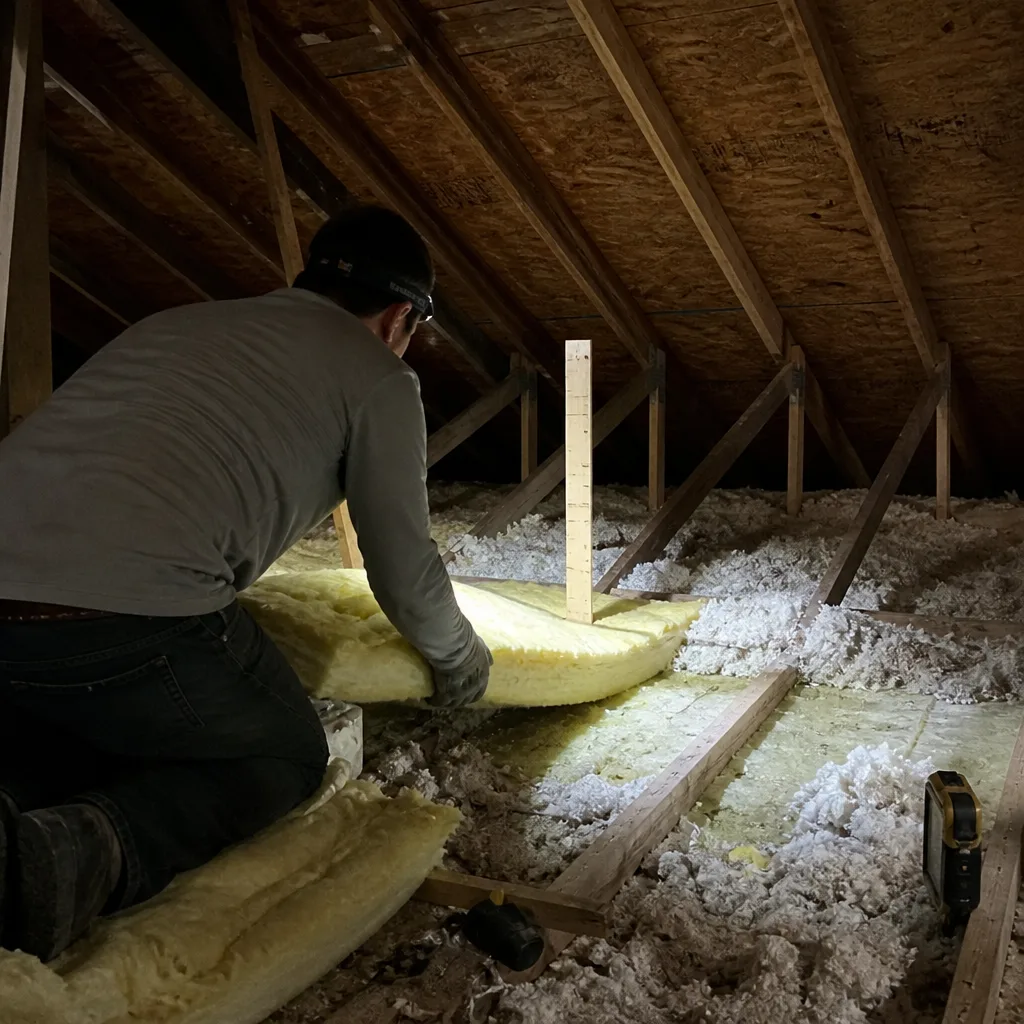
- Visible insulation on the attic floor is below the joist tops. Original R-38 blown-in should sit 11-14 inches deep for Knauf products. If you can see the tops of 2×8 or 2×10 joists, you’ve lost 30-40% of your thermal barrier to settlement and disturbance.
- Water stains on ceiling drywall below bath fans or ductwork. Knauf fiberglass doesn’t rot, but it holds moisture against the drywall when vapor barriers fail. The insulation itself looks fine from above; the damage is the compressed, darkened mat where condensate dripped through.
- Ice damming in rare cold snaps. Canyon Lake sees maybe two freeze events yearly, but when heat escapes through thin insulation at the eaves, it melts roof snow that refreezes at the gutter line. That’s always an insulation-depth problem at the perimeter.
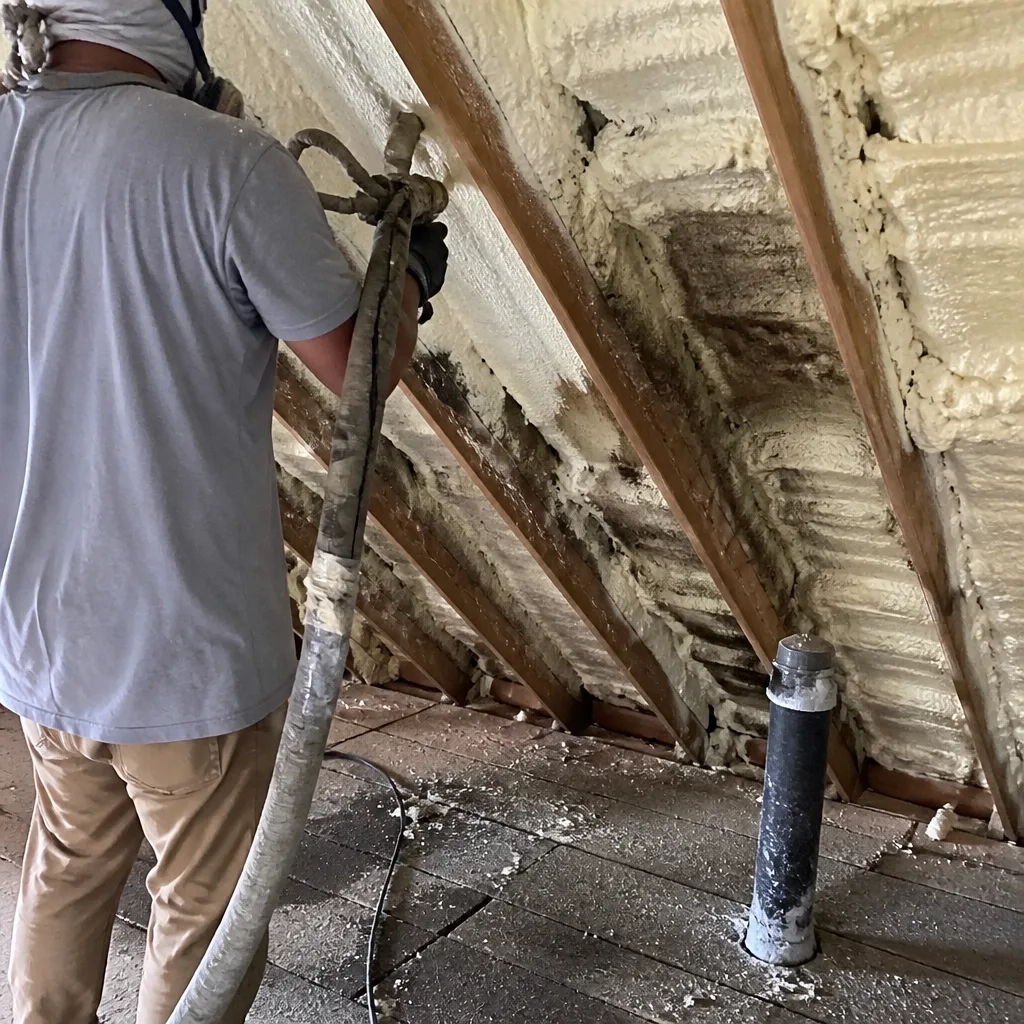 Before
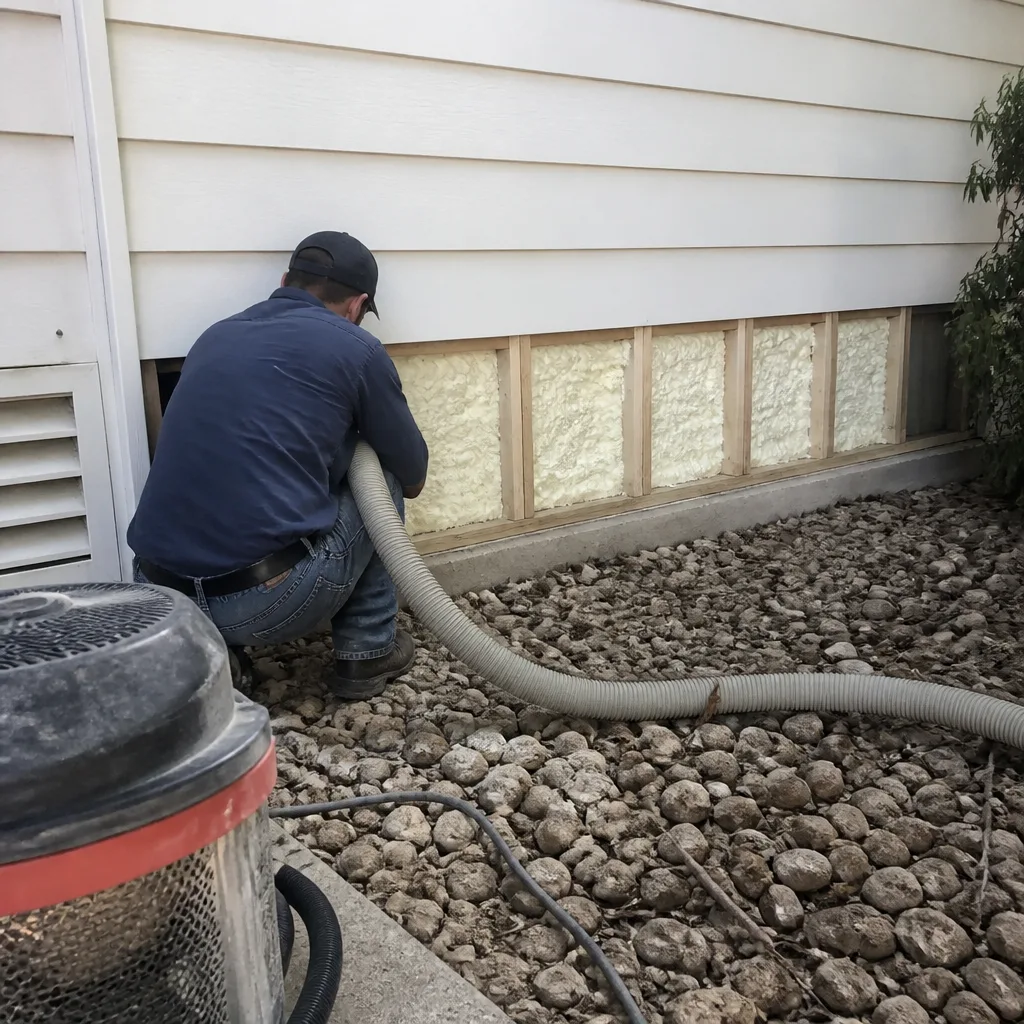 After
AfterReplacement Cost & What’s Included
| Scope | Price Range (Canyon Lake) |
|---|---|
| Top-off blown-in (add R-19 to existing) | $1,800 - $3,200 |
| Full removal + replacement, R-38, up to 1,500 sq. ft. | $3,800 - $5,400 |
| Full removal + replacement, R-38, 1,500-2,500 sq. ft. | $4,800 - $7,200 |
| Air sealing package (top plates, penetrations, can lights) | $900 - $1,800 add-on |
| Blower-door test with printed report | $350 - $450 standalone; included with full job |
What drives the range: attic square footage, accessibility (Canyon Lake has some 12/12 pitches near the lake that require scaffolding), whether we’re pulling failed insulation or topping off, and how much air sealing the top plates and penetrations need. Every full replacement includes removal and bagging of old material, HEPA cleanup, installation of new Knauf or equivalent to specified depth, and a Documented Photo Record. On jobs where we air seal first, we run a blower-door test before and after so you get a printed report with the CFM50 numbers. Seal the leaks first. Then insulate. The report tells you whether it worked.
Under our 365-Day Done Right Promise, if the attic doesn’t perform to the written scope, we come back and make it right. The written price, scope, and warranty are delivered before anyone lifts a tool. Haven Standard Clause 1.
DIY or Call Us?
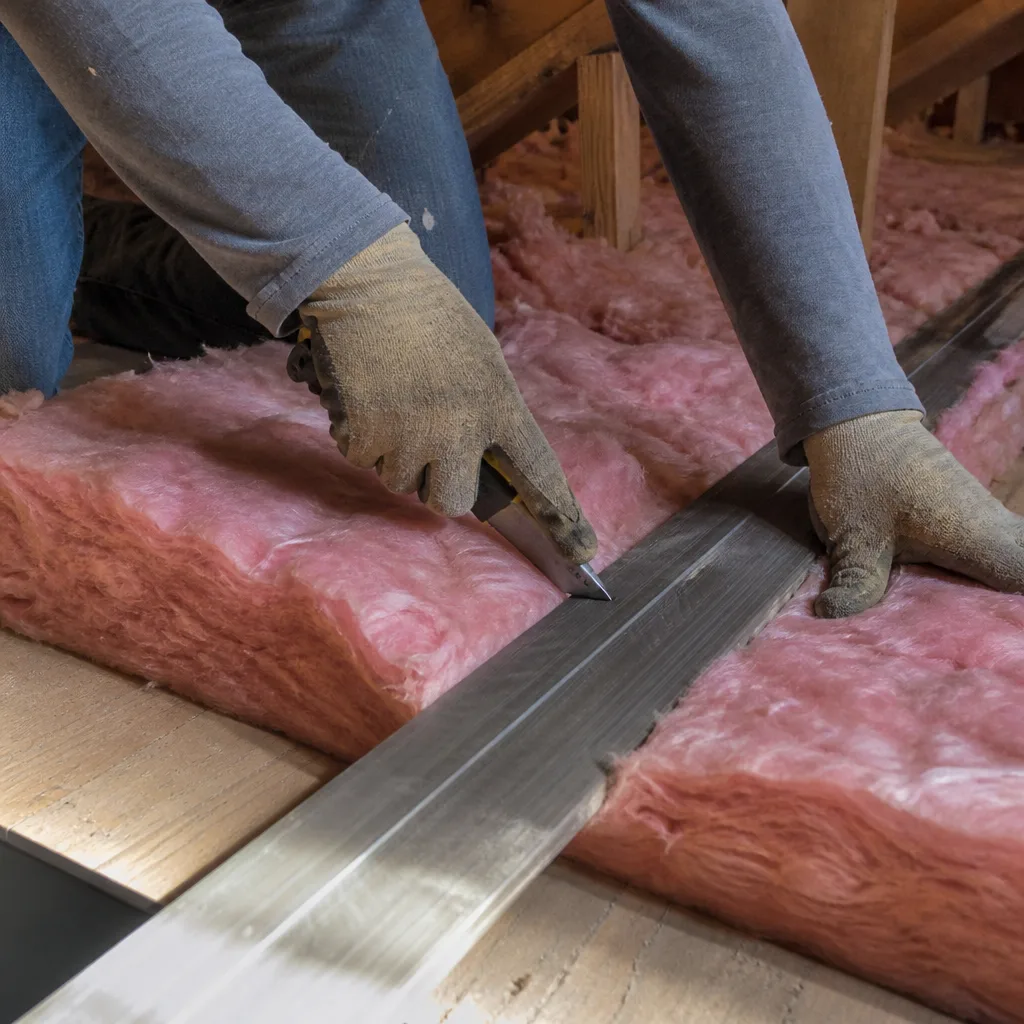
There’s nothing dangerous about handling Knauf fiberglass itself. The hazard is what you don’t see: compromised electrical splices buried in old insulation, wasp nests at the eaves, or joists that won’t hold weight after moisture damage. A homeowner can safely check depth with a yardstick and photograph bag labels for us to identify the product. What goes wrong fast is trying to blow new material over old without addressing air leaks. The blower-door test exists because your eyes can’t see a 200 CFM50 leak at a top plate. We’ve been called to fix DIY jobs in Canyon Lake where the homeowner added six inches of new fiberglass and saw zero bill reduction because the conditioned air was still escaping through unsealed can lights. If your attic has never had a pressurization test, call us at (737) 227-6219. We’ll read your situation with you, and our second opinion on any written estimate is free.
FAQs
Properly installed Knauf blown-in fiberglass lasts 20-30 years, but in Canyon Lake’s heat and humidity it often fails functionally in 8-12 years due to moisture cycling, disturbance by HVAC technicians, and wind washing at the eaves. The material itself doesn’t degrade; the installation integrity does. Call (737) 227-6219 and we’ll assess whether you’re looking at a top-off or full replacement.
Spot repair works if the failure is isolated, like a bathroom fan leak that compressed one bay. But if the attic shows widespread settlement below joist tops or multiple moisture events, patching creates density inconsistencies that show up as thermal stripes on infrared. We won’t quote spot repair without seeing it. Bring us photos or call (737) 227-6219 for a free look.
Most Canyon Lake homes up to 2,500 square feet are a one-day job: removal in the morning, air sealing and blower-door verification midday, new insulation blown and depth-checked by late afternoon. Larger homes or attics with extensive decking to remove run into a second day. We give you a written schedule with the price before we start.
Yes. We carry Knauf Jet Stream Ultra and EcoFill Wx on every truck, plus Owens Corning, Johns Manville, and Rockwool alternatives so we’re not pushing one product. Topside Attic Insulation Canyon Lake is an independent service provider with no affiliation to Knauf. If your home was originally spec’d with Knauf, we match it. If another material performs better for your situation, we say so.
Written by Wes Okafor, Owner & Lead Insulation Technician, Topside Attic Insulation Canyon Lake at Topside Attic Insulation Canyon Lake, serving Canyon Lake and nearby areas.