
Knauf Radiant Barrier Installation: The Canyon Lake Owner’s Guide
Knauf radiant barrier installation in Canyon Lake typically runs $1,800 to $3,400 for a standard attic, depending on roof complexity and whether your attic floor needs air sealing first. Most Canyon Lake homes we see near the Cranes Mill Road corridor or the Startzville area get same-day or next-day scheduling once the written price is approved. Homeowners usually figure out something’s wrong when their summer electric bill jumps $80 to $150 from one year to the next, or when they walk into the attic in July and the air feels like it’s being pushed down from the roof deck itself.
Which Knauf Models This Applies To
Knauf manufactures radiant barrier products under the Knauf Insulation Radiant Barrier line, most commonly the RB (radiant barrier) foil-faced batts and the standalone Knauf Reflective Insulation rolls used in vented attics across Texas Hill Country. The critical compatibility point is this: Knauf’s foil-faced products are designed for unconditioned vented attics with a minimum 3/4-inch air gap between the radiant surface and the roof deck. Install it tight to the sheathing and you’ve converted a radiant barrier into a conductive heat sink, which we see on about one in four DIY attempts in Canyon Lake.
To identify what you have, check the product stamp on the foil facing for the Knauf logo and either “RB” or “RI” series markings. The RB series is a fiberglass batt with radiant foil on one face; the RI series is a perforated reflective roll meant for draping over rafters or stapling to the deck with spacers. We also stock Reflectix equivalents for homeowners who want a non-fiberglass option, though the installation method differs. Topside Attic Insulation Canyon Lake is an independent service provider, not affiliated with Knauf.
Signs Your Knauf Radiant Barrier Installation Is Failing
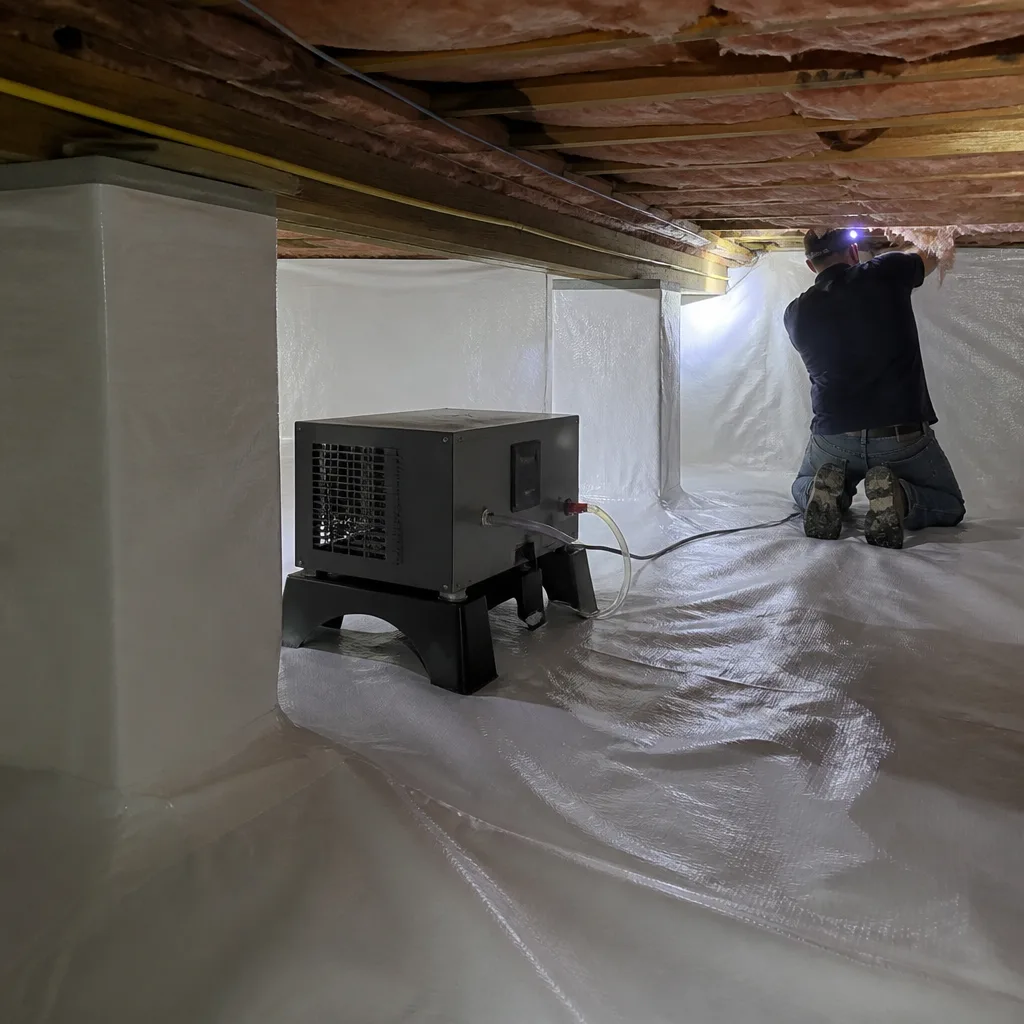
- Attic temperature exceeds 130°F on a 95°F day. A properly installed Knauf radiant barrier should drop peak attic temps by 20 to 40 degrees. If your attic still feels like a convection oven, the barrier may be dust-coated, improperly oriented, or installed without the required air gap.
- Second-floor rooms stay hot until 10 p.m. even with the AC running. This means radiant heat is soaking into your ductwork and ceiling joists all afternoon, then releasing into conditioned space after sunset. In Canyon Lake’s climate, this pattern shows up hardest on west-facing roof planes.
- Visible dust accumulation on the foil surface turning it matte gray. Knauf’s foil facing loses reflectivity when dust binds to it, which happens faster in Hill Country attics with our caliche dust and pollen loads. Once reflectivity drops below 0.75, you’re paying for a barrier that isn’t reflecting.
- Foil facing torn or sagging between rafters. The RI rolls rely on proper stapling and tension; sagging breaks the air gap and creates pockets where convective heat builds. We see this most often on 6:12 pitch roofs where installers tried to span too wide a gap without support strapping.
- Moisture staining on the foil or surrounding framing. Knauf’s perforated products allow some vapor passage, but if the attic ventilation is undersized for the radiant barrier’s reduced heat load, you get condensation where warm moist air meets cooler surfaces. Canyon Lake’s spring humidity spikes make this a real concern.
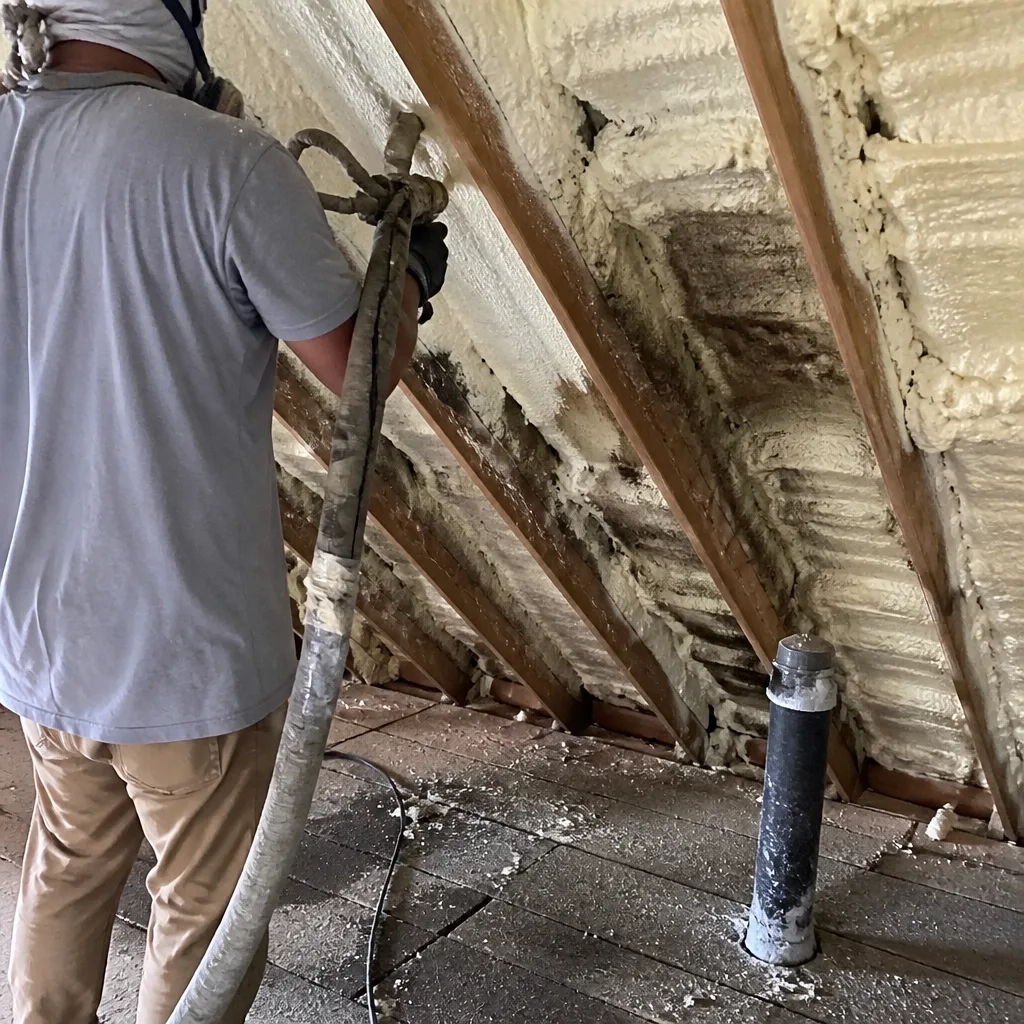 Before
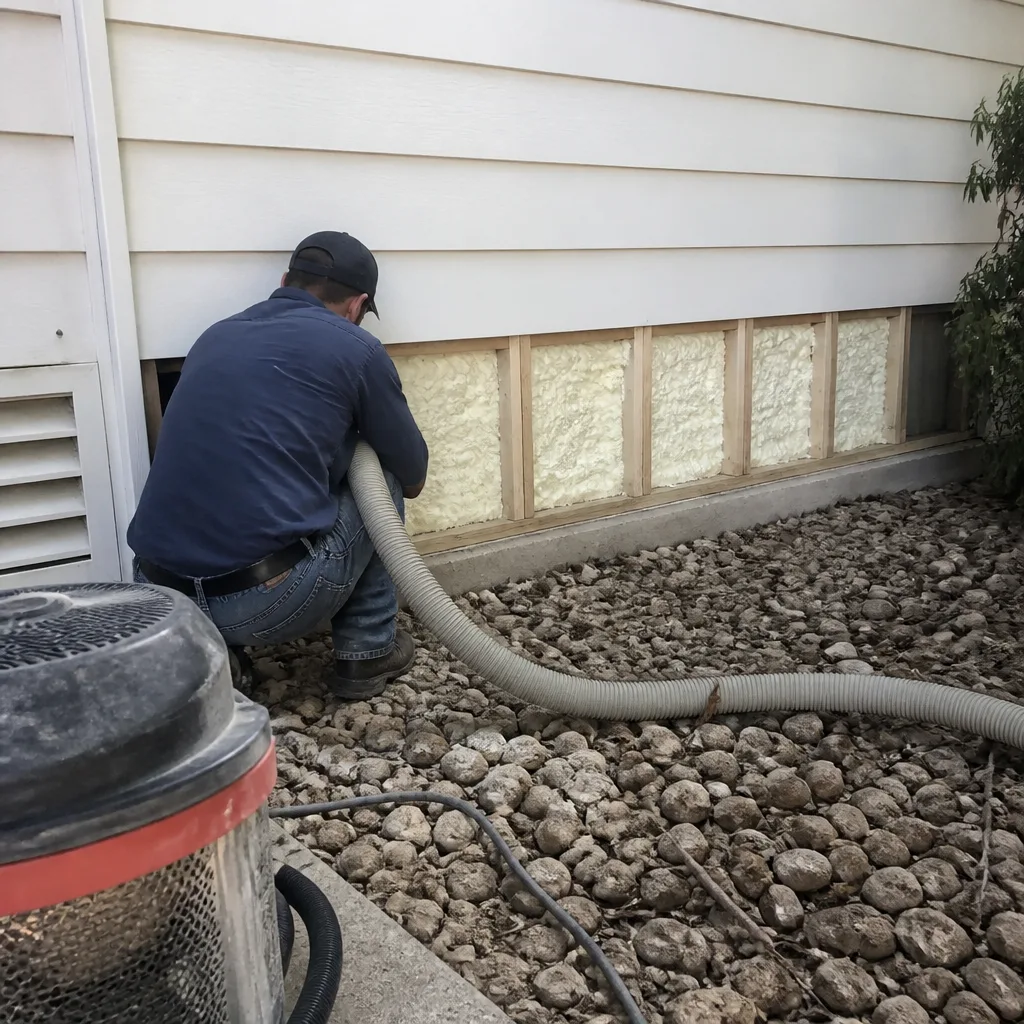 After
AfterReplacement Cost & What’s Included
| Scope | Typical Range in Canyon Lake |
|---|---|
| Knauf RI roll replacement, simple gable attic (1,200-1,800 sq ft) | $1,800 - $2,400 |
| Knauf RB foil-faced batt installation with air sealing | $2,400 - $3,400 |
| Attic floor air sealing (top plates, can lights, penetrations) - prerequisite work | $600 - $1,200 |
| Roof deck de-dusting and surface prep | $200 - $400 |
What drives the range: roof pitch (steeper = more labor), whether we need to remove failed existing material, and whether your attic floor is already sealed. We won’t blow or install over an unsealed attic floor. Under Haven Standard Clause 1, you get a flat written price, written scope, and written warranty before anyone lifts a tool. Every job closes with a Documented Photo Record, and on applicable jobs we run a blower-door test and hand you the pre- and post-install readings.
DIY or Call Us?
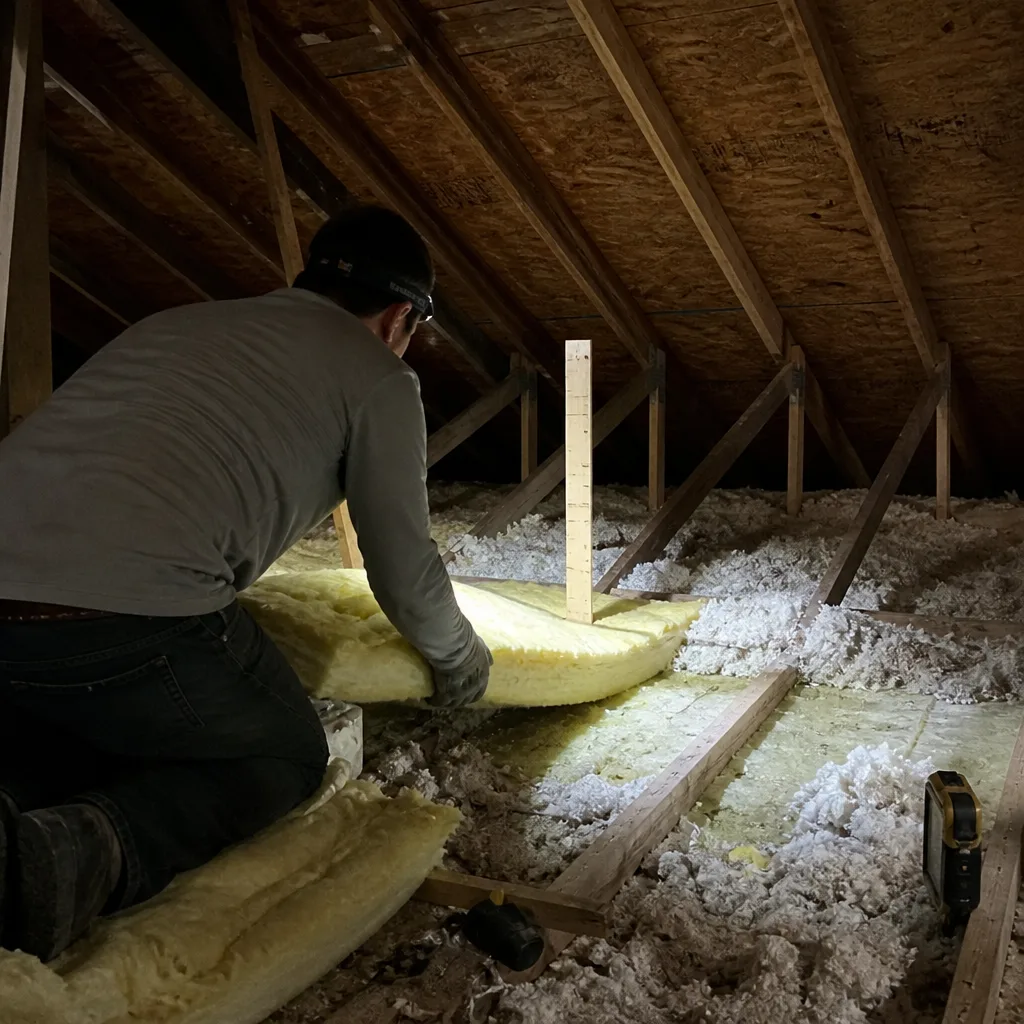
Here’s what you can safely check yourself: verify the product label and series, look for the air gap with a flashlight, and note any dust buildup or sagging. What goes wrong fast: working in a 140°F attic induces heat exhaustion in 15 minutes; stapling on a 6:12 or steeper pitch without proper footing is how shoulders and roofs get damaged; and misreading the air-gap requirement turns a $2,000 solution into a $3,500 redo. Knauf radiant barriers are not high-tension electrical, but the attic environment itself is the hazard. If your energy bills are higher than your mortgage, the attic is usually confessing something. Call (737) 227-6219 and we’ll read it with you.
FAQs
In Canyon Lake’s climate, a properly installed Knauf radiant barrier maintains effective performance for 15 to 25 years, though dust accumulation typically starts reducing reflectivity after year 7 to 10. We recommend an attic inspection every 5 years to check foil condition and air-gap integrity. Call (737) 227-6219 to schedule - estimates are free.
Spot repairs work for minor tears or localized sagging if the original material is less than 10 years old and the air gap is intact; otherwise, full replacement is more cost-effective than chasing degradation across the attic. We stock Knauf-compatible materials on our trucks and can assess repair viability during a site visit. Call (737) 227-6219 for a written scope.
Most Canyon Lake homes see completion in one to two days, with attic air sealing done on day one and radiant barrier installation on day two. Complex rooflines or homes requiring old material removal may extend to a third day. We provide a written schedule with your upfront price.
Yes, we carry Knauf RI rolls and RB-compatible foil-faced products on every truck, along with Reflectix alternatives for homeowners who prefer non-fiberglass. No proprietary lock-in - we source from multiple manufacturers and match the material to your attic’s specific conditions. Call (737) 227-6219 to confirm availability for your model.
Written by Wes Okafor, Owner & Lead Insulation Technician, Topside Attic Insulation Canyon Lake at Topside Attic Insulation Canyon Lake, serving Canyon Lake and nearby areas.