
Knauf Vapor Barrier Installation: The Canyon Lake Owner’s Guide
Knauf vapor barrier installation in Canyon Lake typically runs $1,200-$2,800 for a complete crawl space or attic application, depending on square footage and whether we’re sealing over a dirt floor or retrofitting an existing space. We stock Knauf Insulation’s Faced Batt and EcoSeal-compatible vapor retarder systems on our truck, and most Canyon Lake jobs are completed in a single day. Most homeowners discover their vapor barrier has failed when they notice musty odors returning after a rain, find insulation that looks damp to the touch, or spot condensation dripping from ductwork in a July afternoon when the attic hits 140°F.
Which Knauf Models This Applies To
Knauf manufactures vapor retarder products across several insulation lines, and matching the right barrier to your existing system matters for warranty coverage and building code compliance in Comal County. We work with Knauf’s kraft-faced fiberglass batts (R-13 through R-38, with the facing acting as the vapor retarder), their unfaced batts paired with separate poly sheeting, and the Knauf EcoSeal System where the vapor barrier is integrated with the air-sealing approach.
To identify what you have, check the facing label on any exposed batt edge. Kraft-faced batts will show “Knauf Insulation” with an R-value and “ASTM C665” marking. If you’re dealing with a crawl space, look for a polyethylene sheet: true Knauf-compatible 6-mil poly should be stamped with “ASTM E1745 Class A” for ground-contact applications. The gotcha we see in Canyon Lake homes near the lakefront is homeowners confusing standard 4-mil painter’s plastic with rated vapor barrier material. It looks similar, but it’ll degrade in 18-24 months under our UV exposure and temperature swings.
We don’t carry Knauf OEM-branded poly sheeting as a standalone SKU, we source equivalent 6-mil reinforced polyethylene that meets the same ASTM E1745 standard from our regular suppliers. For kraft-faced batts, we order Knauf direct. If your existing insulation is another brand (Johns Manville, Owens Corning), the vapor barrier can usually be matched without full insulation replacement, but the facing attachment method and permeance rating need to line up.
Signs Your Knauf Vapor Barrier Installation Is Failing
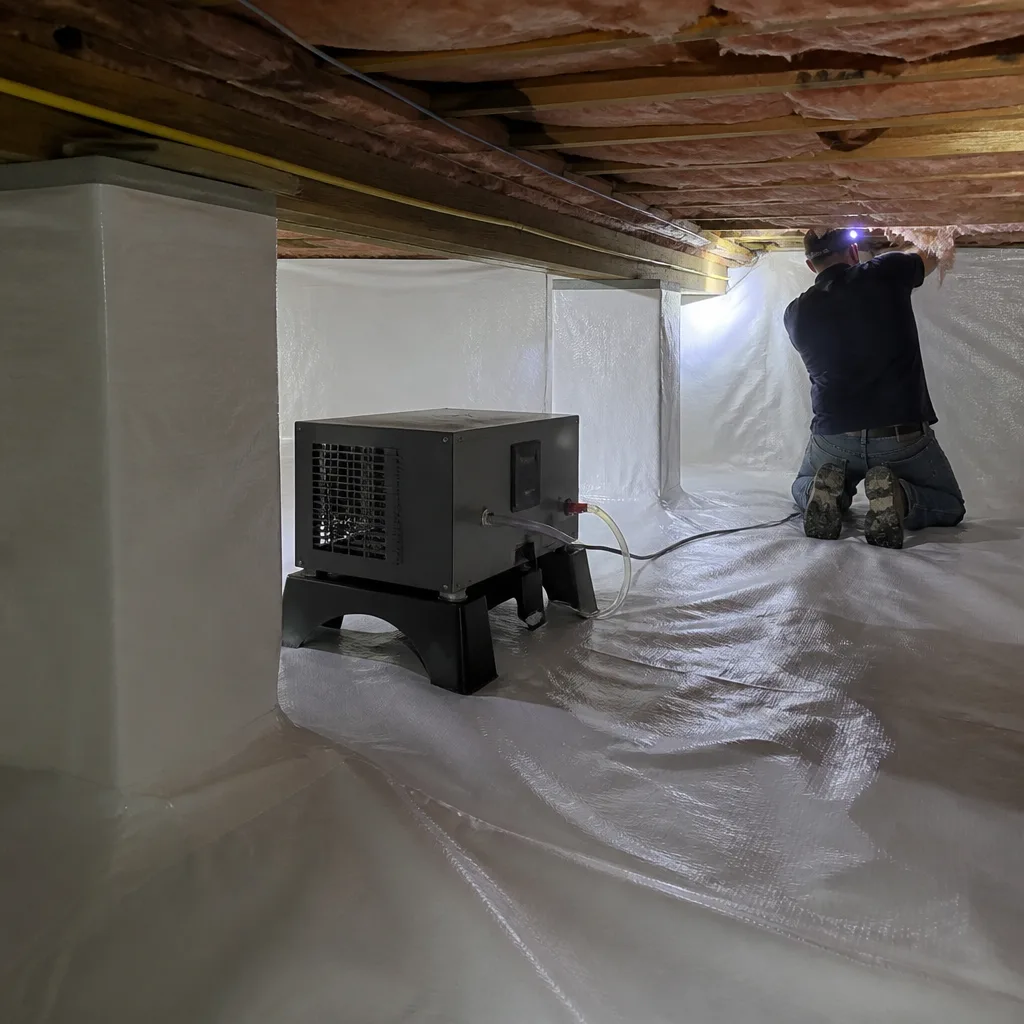
- Musty odors that worsen after rain. When the vapor barrier tears or separates at seams, ground moisture migrates upward through the crawl space. In Canyon Lake’s clay-heavy soils around the Startzville area, that moisture carries soil gases and mold spores with it. The smell is your first warning before visible damage appears.
- Insulation facing that looks dark, stained, or sagging. Kraft facing that’s absorbed moisture loses its structural integrity and begins to delaminate from the fiberglass. Once the facing separates, the vapor retarder function is gone even if the batt still looks intact from a distance.
- Condensation on ductwork or plumbing in summer months. This means warm, humid exterior air is reaching a cool surface because the vapor barrier isn’t blocking the migration path. We see this most in Canyon Lake homes with ridge vents but inadequate soffit ventilation, where attic humidity spikes in August.
- Wood framing that feels damp or shows surface mold. Sustained relative humidity above 70% in a crawl space will begin attacking floor joists. The vapor barrier’s job is to keep that humidity below 60% year-round. If you’re seeing mold on the north side of joists, the barrier has likely failed at the perimeter or has ponding water underneath.
- Increased energy bills with no equipment change. Wet insulation loses R-value fast. A saturated R-19 batt performs closer to R-5. When customers in the Canyon Lake Hills area call us with 30% summer cooling spikes, the attic or crawl space vapor barrier is the first place we check.
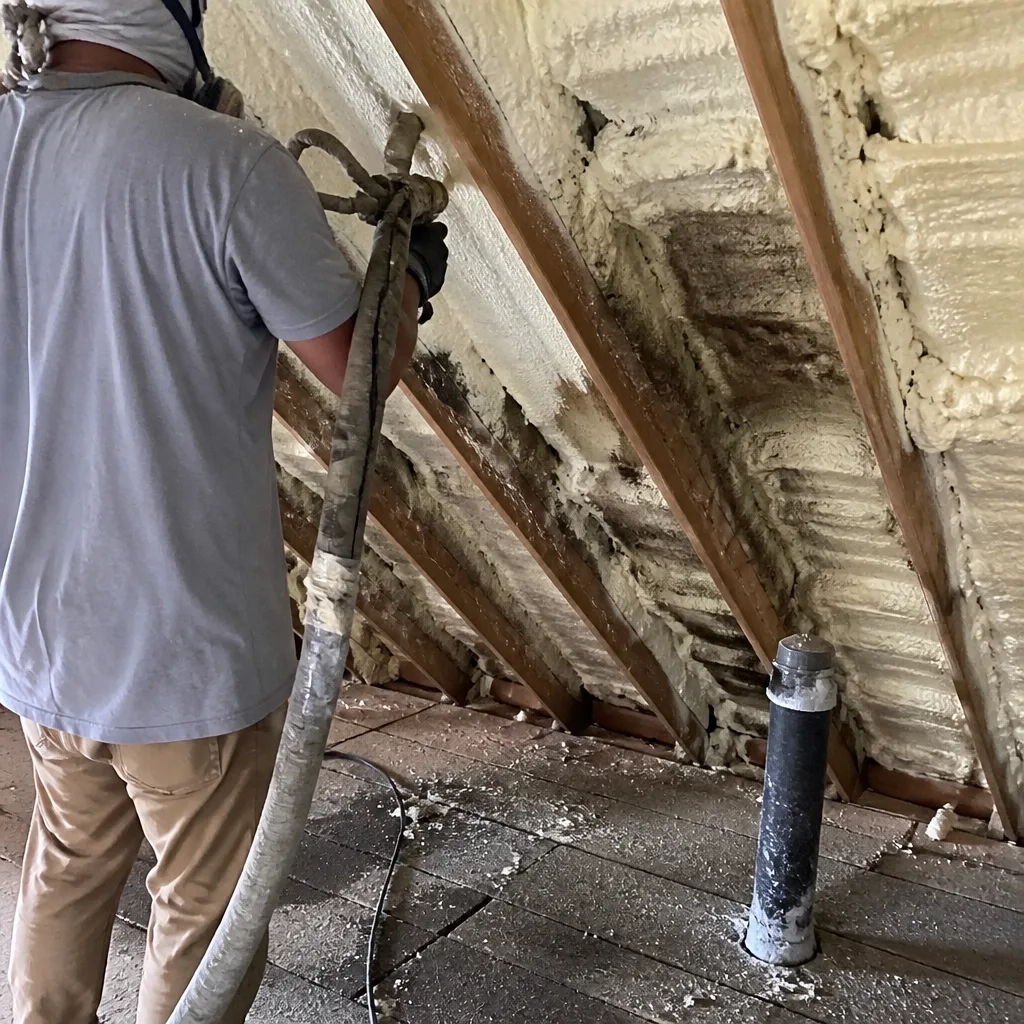 Before
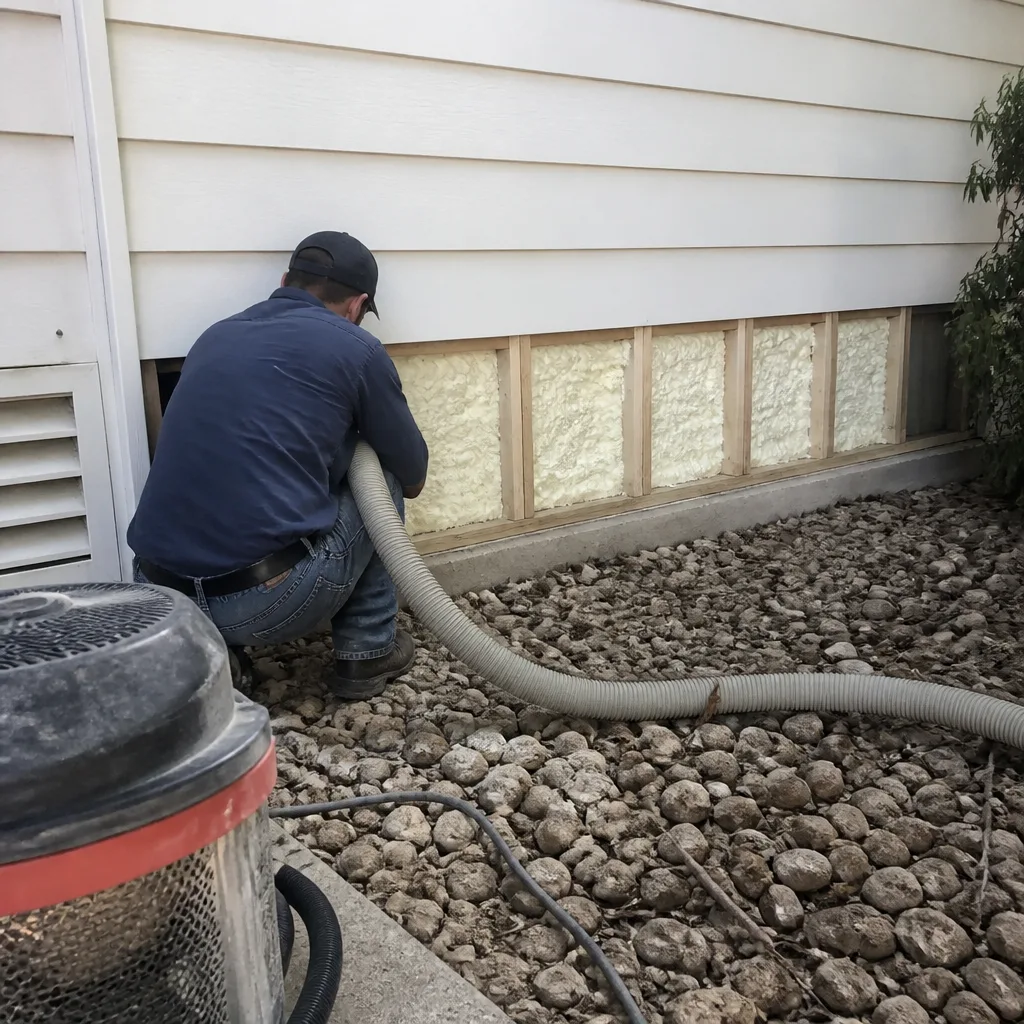 After
AfterReplacement Cost & What’s Included
Most complete vapor barrier replacements in Canyon Lake run $1,200-$2,800 installed. A small crawl space under 800 square feet with good access might land at the lower end. A full attic retrofit with air sealing, baffle installation, and new Knauf-faced batts over 2,000 square feet pushes toward the upper range.
Here’s how the pricing breaks down:
- 6-mil reinforced polyethylene vapor barrier (ASTM E1745): $0.45-$0.65 per square foot material
- Knauf kraft-faced batt insulation (if replacing degraded batts): $1.10-$1.80 per square foot installed
- Labor for removal, disposal, surface prep, and installation: $450-$1,200 depending on access difficulty
- Perimeter sealing with compatible tape and mechanical fasteners: $150-$350
What drives the range: crawl spaces with less than 18 inches of working height require different prep. Attics with active rodent damage need cleaning before barrier installation. And if we’re working in a Canyon Lake home built between 2010-2015, we often find the original builder-grade barrier was 3-mil or less, which means full replacement rather than repair.
Every job closes with our Documented Photo Record and, where applicable, before-and-after blower-door numbers. The 365-Day Done Right Promise covers the installation. Your written scope and warranty arrive before any work starts, per Haven Standard Clause 1.
DIY or Call Us?
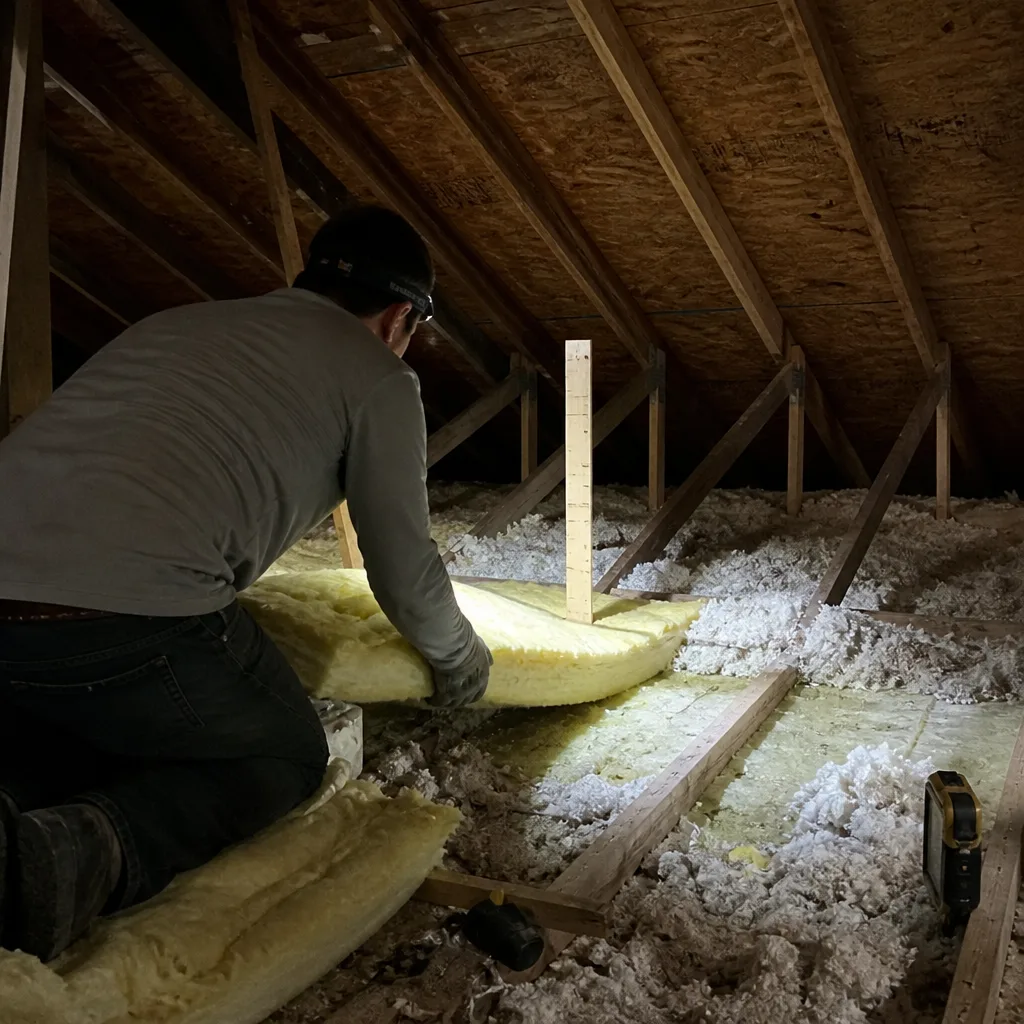
There’s a honest line here. A homeowner can safely inspect their own vapor barrier: look for tears, check that seams overlap by at least 12 inches, verify the perimeter is sealed to the wall or sill plate, and note any standing water underneath. A flashlight and a moisture meter from the hardware store will tell you plenty.
Where DIY goes wrong: installing vapor barrier in a crawl space with active drainage problems just traps water against the framing. Seaming poly sheeting without pressure-sensitive tape rated for damp substrates creates leak paths that won’t show for months. And in attics, placing a vapor barrier on the wrong side of the insulation for our climate zone, IECC Zone 2, can cause summer condensation inside the wall cavity. We’ve removed DIY installations where the homeowner created a mold problem that didn’t exist before.
We’re not affiliated with Knauf, we’re an independent service provider. We source their products alongside Owens Corning, Johns Manville, and others. If you want a second opinion on another contractor’s scope, bring us their written estimate, we’ll read it with you. Call (737) 227-6219.
FAQs
In Canyon Lake’s climate, a properly installed 6-mil reinforced vapor barrier lasts 15-20 years in a crawl space, while kraft facing on batt insulation typically holds 10-15 years before the asphalt-impregnated paper begins to degrade. The killer is UV exposure in attics with missing hatch covers or light fixtures that leak attic air, we see 5-7 year lifespans in those conditions. Call (737) 227-6219 and we’ll inspect what you have, estimates are free.
Small punctures and seam separations under 6 inches can be patched with vapor-barrier tape if the surrounding material is still supple and the tear isn’t near a high-traffic area. If the poly is brittle, has multiple tears, or has pulled away from the perimeter walls, patching is false economy, the labor to patch often approaches replacement cost with a shorter effective lifespan. Call (737) 227-6219 for an honest assessment.
Most residential vapor barrier replacements in Canyon Lake are completed in 4-8 hours for crawl spaces and 6-10 hours for attic applications. We schedule a single crew day, arrive with materials on the truck, and you get your Documented Photo Record before we leave. Same-week scheduling is usually available.
We stock 6-mil reinforced polyethylene vapor barrier and Knauf kraft-faced batts in common R-values on our Canyon Lake service truck. Specialty Knauf products like their high-performance EcoSeal membranes for conditioned crawl spaces are next-day from our San Antonio supplier. We’ll confirm material availability when we provide your written price, before any work starts.
Written by Wes Okafor, Owner & Lead Insulation Technician, Topside Attic Insulation Canyon Lake at Topside Attic Insulation Canyon Lake, serving Canyon Lake and nearby areas.