
Owens Corning Attic Air Sealing: The Canyon Lake Owner’s Guide
We stock and install Owens Corning-compatible attic air sealing systems in Canyon Lake, with most retrofits running $1,800 to $3,400 depending on attic square footage and the number of penetrations that need sealing. Same-day service is available when you call before noon. Most Canyon Lake homeowners figure out something’s wrong when their upstairs rooms won’t cool below 78 degrees even after the AC runs all afternoon, or when their energy bills spike during the first real heat wave in May.
Which Owens Corning Models This Applies To
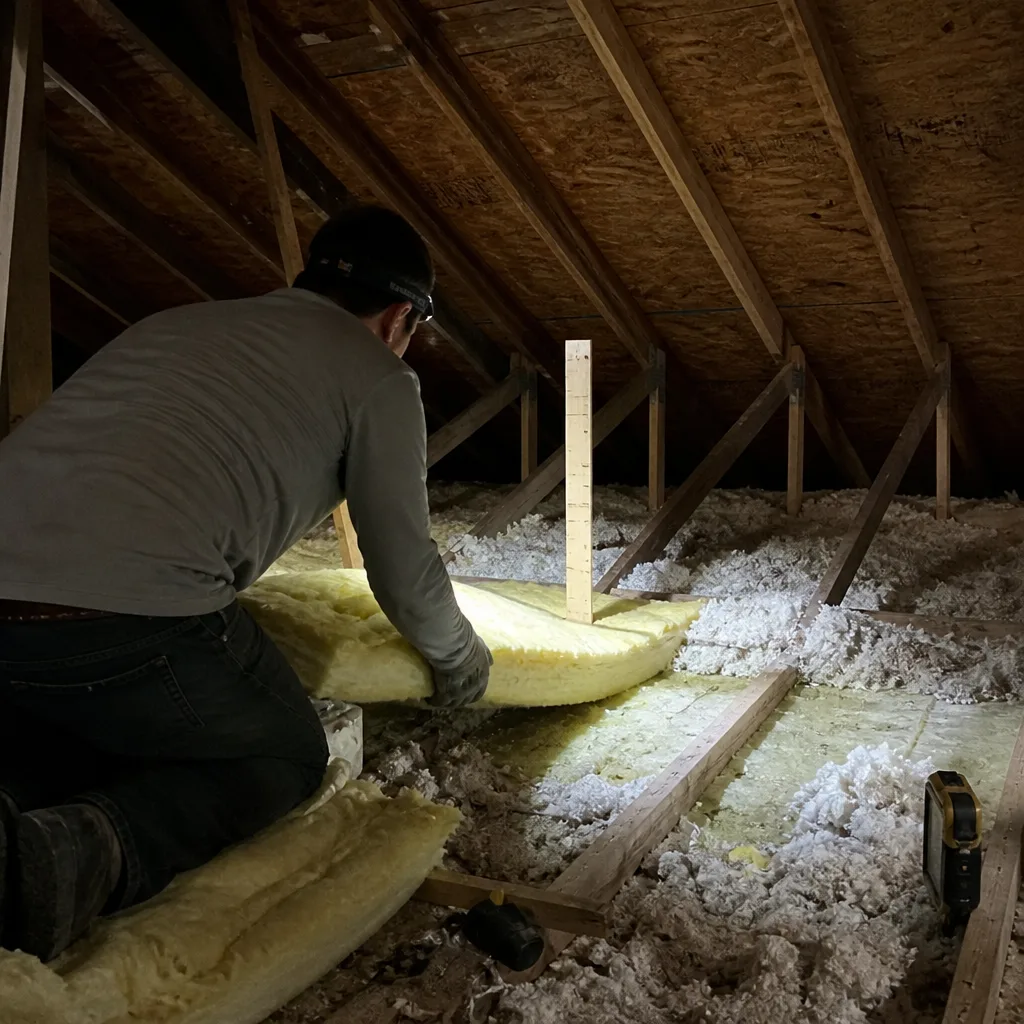
Owens Corning doesn’t sell attic air sealing as a standalone branded kit the way they sell insulation batts. What we’re talking about here is the air-sealing layer that belongs beneath Owens Corning blown-in fiberglass (ProCat, AttiCat, or loose-fill Pink) or beneath their Foamular rigid board when it’s used in attic applications. The critical compatibility point is this: Owens Corning loose-fill fiberglass performs poorly when installed over an unsealed attic floor because air moves straight through it. We’ve pulled back ProCat in Canyon Lake homes near Startzville where the homeowner paid for R-38 and got R-19 performance because the can lights and top plates were still leaking.
To identify what you have, check for the pink-bagged material in the attic. If you see loose pink fiberglass sitting directly on the drywall with visible gaps around electrical boxes, plumbing chases, or the perimeter top plates, the air sealing was either skipped or has failed. We use Owens Corning Foamular NGX as the rigid air barrier at times, but more commonly we seal with fire-rated caulk, spray foam, and rigid baffles matched to the Owens Corning insulation depth you’re trying to achieve. Aftermarket equivalents from Johns Manville or Knauf perform identically for the sealing layer itself; the Owens Corning product matters more for the insulation that goes on top.
Signs Your Owens Corning Attic Air Sealing Is Failing
- Hot second floor by 3 p.m. even with the AC running. Conditioned air is escaping through gaps in the attic floor faster than your system can replace it. In Canyon Lake, where attic temperatures hit 140°F in July, that lost air gets replaced by 140°F air pulling in from every leak below.
- Dust streaks around ceiling registers or can lights. Those dark lines are filtration marks, airborne particles passing through gaps in the ceiling plane because the attic is pulling air up through every crack. The air sealing layer above those fixtures has either pulled away or was never installed.
- Ice damming or moisture staining at the eaves in winter. Warm, humid interior air leaks through the attic floor, hits the cold roof deck, and condenses. Canyon Lake doesn’t see heavy snow, but we do get enough freeze-thaw cycles in January to create real moisture problems in under-sealed attics near the lake where humidity runs higher.
- Blown-in insulation that looks settled or uneven with visible “footprints” of air movement. Owens Corning fiberglass doesn’t settle much, but if you see valleys and ridges in the pink fill, air is moving through it like water through a streambed. That’s a dead giveaway the sealing layer underneath has failed.
- Energy bills that jump 30% or more May through September. We see this pattern every year in Canyon Lake homes built 2015 to 2020, where builders met code insulation levels but treated air sealing as optional. The blower-door test tells the story: 3,500 CFM50 or higher on a 2,000-square-foot house means you’re conditioning the neighborhood.
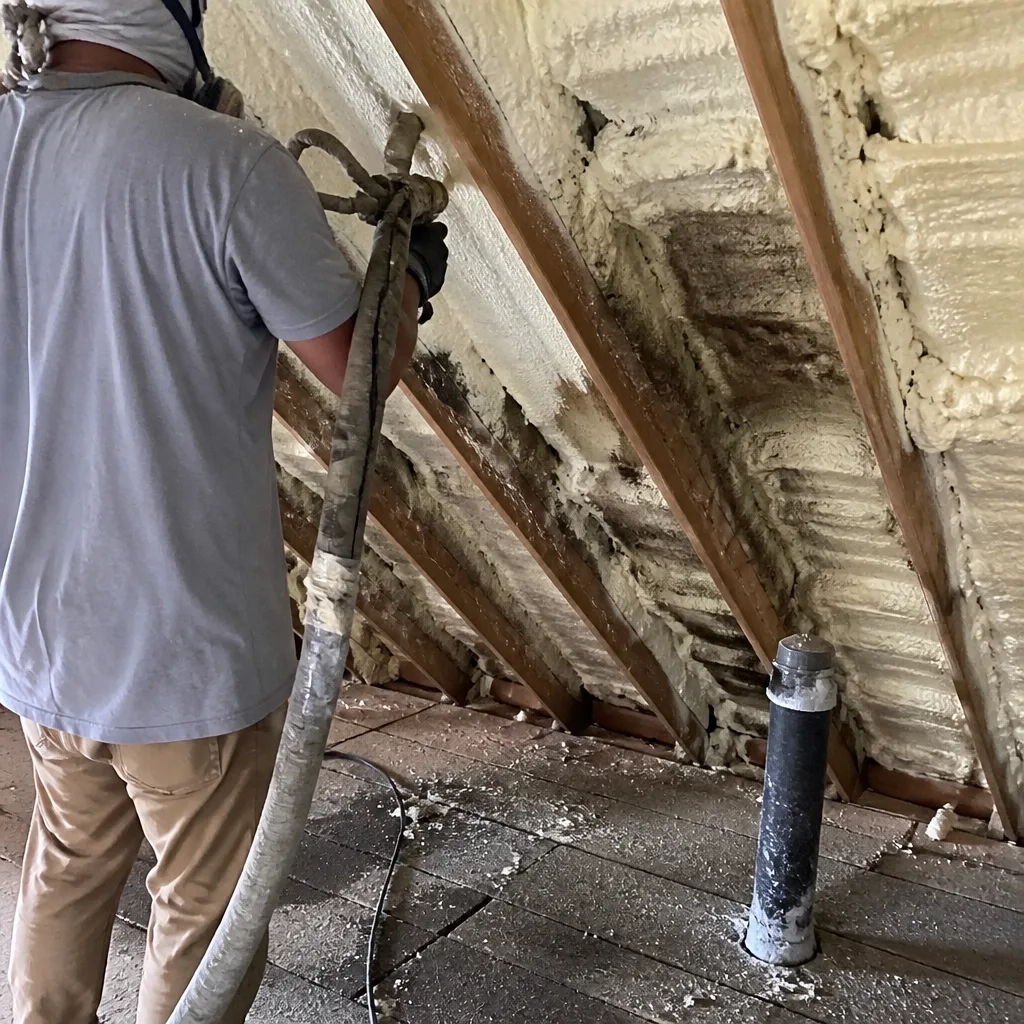 Before
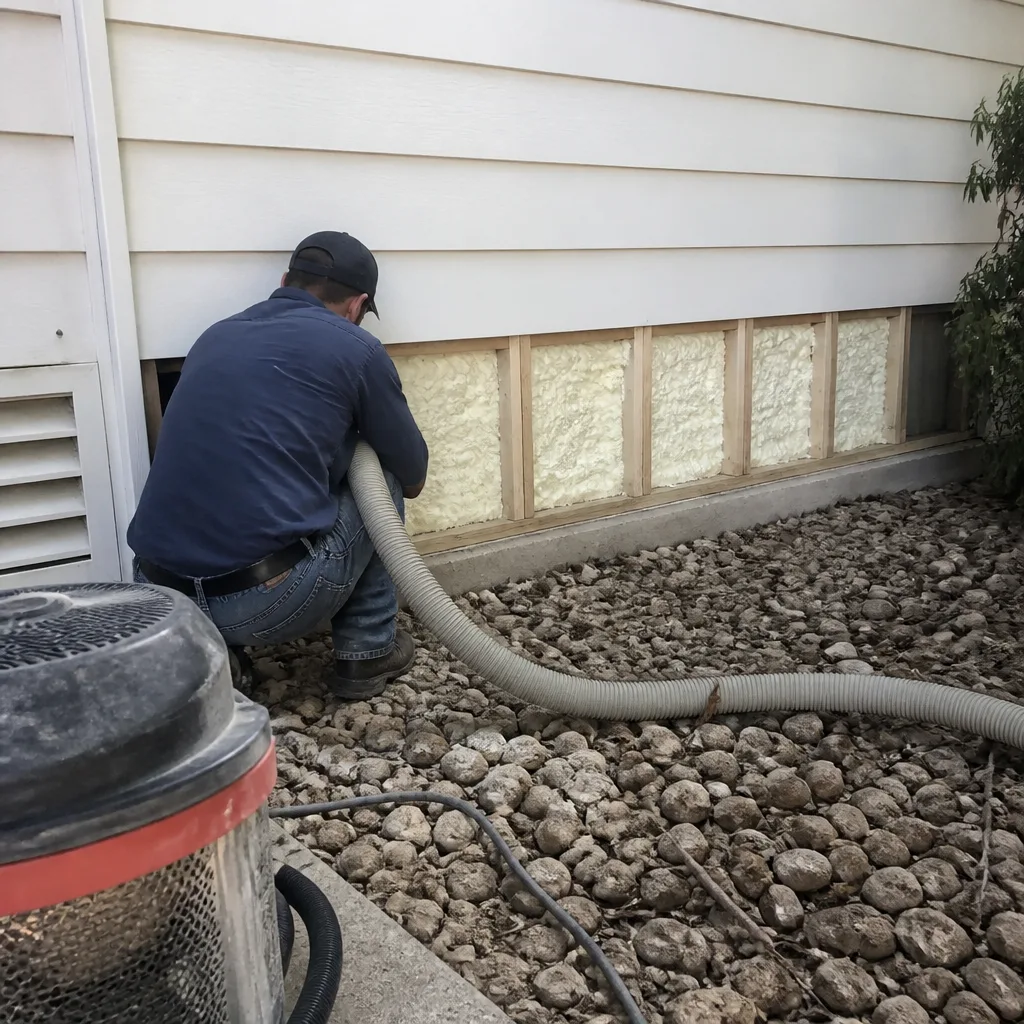 After
AfterReplacement Cost & What’s Included
Most Owens Corning attic air sealing jobs in Canyon Lake run $1,800 to $3,400 installed. The low end covers a straightforward single-story attic with standard penetrations: can lights, bath fans, plumbing vents, and top plates. The high end hits when we’re working around complex HVAC ducting, multiple dropped soffits, or homes near Canyon Lake’s older Cranes Mill Road corridor where balloon framing and irregular ceiling planes create more leak paths than a standard platform-framed attic.
That price includes the blower-door test before and after, all fire-rated sealants and rigid baffles, labor, and cleanup. We don’t bill separately for the diagnostic; it’s part of understanding what we’re actually fixing. Every job closes with a Documented Photo Record and your printed blower-door report showing the CFM50 reduction. Under Haven Standard Clause 1, you get the written price before anyone starts, and the 365-Day Done Right Promise covers the workmanship. Materials come from our standard stock: Owens Corning, Johns Manville, Knauf, Rockwool, and others. No proprietary lock-in.
DIY or Call Us?
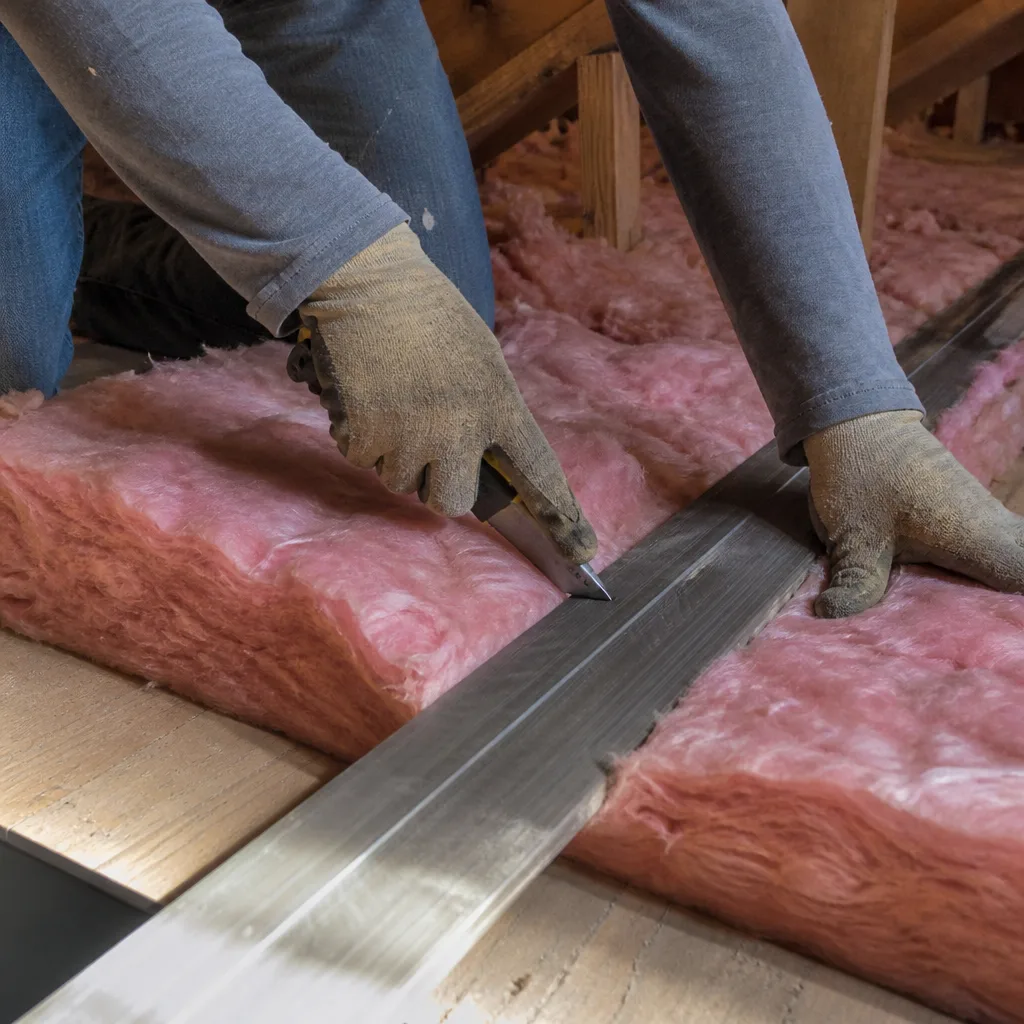
Here’s what you can safely check yourself: turn off the AC on a hot afternoon, climb into the attic with a flashlight, and look for daylight around chimneys, vent stacks, and the attic hatch. If you see it, air is moving. Also check whether your bath fan ducts actually connect to roof jacks or just terminate in the attic space, dumping humid air into the insulation. That’s common in Canyon Lake homes built during the 2018 to 2021 rush.
Where DIY goes wrong is in the execution. Sealing can lights requires fire-rated enclosures or intumescent caulk rated for the fixture type. Top plates in exterior walls need continuous sealing across every stud bay, which means moving insulation you already have. And without a blower-door test, you’re guessing at whether you found the leaks that matter. We’ve re-done homeowner attempts where the sealing looked tidy but missed the biggest leak path entirely. For the test, the tools, and the fire-safety details, call (737) 227-6219. Seal the leaks first. Then insulate. The report tells you whether it worked.
FAQs
Properly installed attic air sealing lasts the life of the home, 25 to 40 years, unless disturbed by later renovations or rodent damage. In Canyon Lake, the bigger threat is homeowners or HVAC contractors who go up later and disturb the sealant around ducts or wiring without resealing. We document every sealed penetration in your photo record so anyone working up there later knows what not to break. Call (737) 227-6219 if you’re not sure whether your sealing is intact.
Partial repair is common and often the right call. If 80% of your sealing is intact but three can lights and a bath fan were disturbed during a roof replacement, we spot-seal those areas, re-test with the blower door, and charge only for the work done. We don’t sell full replacements when targeted repairs solve the problem. Bring us any written estimate for a free second opinion.
Most Owens Corning attic air sealing jobs in Canyon Lake take one day for attics under 2,500 square feet, two days if we’re working around extensive ductwork or multiple attic zones. The blower-door test adds about 45 minutes at each end. We arrive with materials on the truck, so there’s no gap between diagnosis and work.
We stock the sealants, rigid baffles, fire-rated enclosures, and spray foam equipment to complete any Owens Corning-compatible attic air sealing job without a parts run. Topside Attic Insulation Canyon Lake is an independent service provider, not affiliated with Owens Corning, but we source their insulation and matching accessories regularly alongside Johns Manville, Knauf, and Rockwool equivalents. If your attic has a specific Owens Corning component that failed, we match or upgrade it.
Ready to stop conditioning your attic? Call (737) 227-6219 for a free estimate. A live person answers 24/7, and you’ll get a written price before any work starts, guaranteed.
Written by Wes Okafor, Owner & Lead Insulation Technician, Topside Attic Insulation Canyon Lake at Topside Attic Insulation Canyon Lake, serving Canyon Lake and nearby areas.