
Rockwool Attic Insulation: The Canyon Lake Owner’s Guide
Rockwool attic insulation installation in Canyon Lake typically runs $2.80-$4.20 per square foot for batt or loose-fill retrofits, with most complete attic jobs landing between $3,200 and $6,800 depending on accessibility and whether air sealing is needed first. We stock Rockwool ComfortBatt, ComfortBoard, and loose-fill Granulated Wool on our trucks, and most Canyon Lake attics can be assessed and started same-day if you call before noon. Homeowners usually figure out something’s wrong when their summer electric bill climbs past $400, the upstairs bedrooms won’t cool below 78 degrees, or they spot the original fiberglass batting compressed to half its labeled thickness in a 1980s-era home near the lake.
Which Rockwool Models This Applies To
Rockwool’s residential attic line breaks into three families, and getting the right one matters for both fire rating and thermal performance in Canyon Lake’s climate. ComfortBatt comes in R15, R23, R30, and R38 densities, with the R30 and R38 being what we pull for most attic floor jobs in Comal County homes built between 1975 and 2010. ComfortBoard 80 and 110 are rigid boards used for cathedral ceilings or roof deck applications, common in the newer construction off FM 306 where builders spec’d scissor-truss great rooms with minimal heel height. The loose-fill Granulated Wool, sometimes called “blow-in wool,” gets used when we’re topping existing insulation or dealing with irregular joist bays in additions near Startzville.
Here’s the compatibility gotcha: Rockwool batts are sized to standard 16-inch and 24-inch on-center framing, but Canyon Lake has a surprising number of 19.2-inch centers from certain 1990s production builders. A 16-inch batt in a 19.2-inch bay leaves a half-inch gap on each side; that gap is a thermal bypass that can cut the effective R-value by 15-20 percent. We measure before we order. The other thing to know is that Rockwool’s stone wool is hydrophobic, meaning it won’t absorb moisture like cellulose, but it also won’t dry out a roof leak the way fiberglass will. If you’ve got stained decking, we find the source before we bury it.
Topside Attic Insulation Canyon Lake is an independent service provider, not affiliated with Rockwool. We source through standard distribution channels and will spec Owens Corning, Johns Manville, or Knauf if the job calls for it. No proprietary lock-in.
Signs Your Rockwool Attic Insulation Is Failing
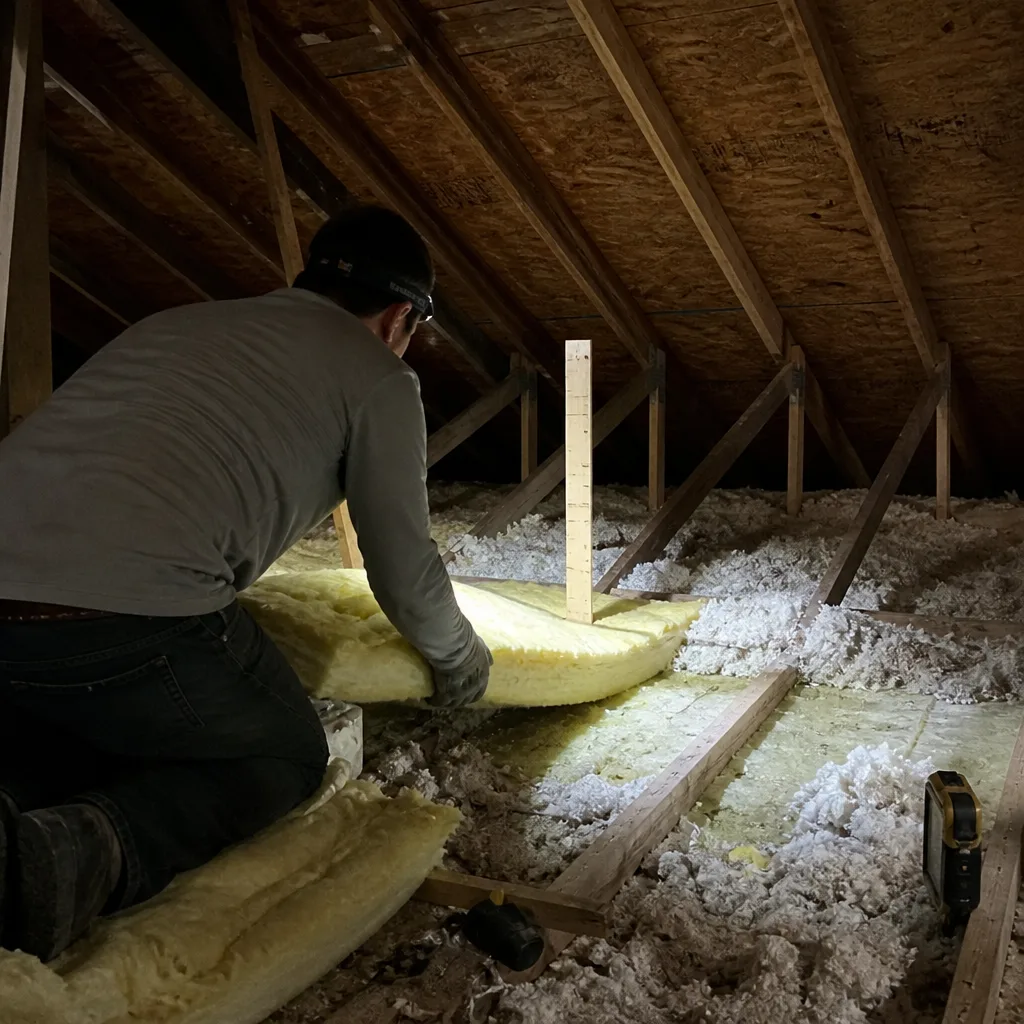
- Uneven temperatures room-to-room. If the guest bedroom over the garage hits 85 while the master stays at 74, the insulation layer has likely been disturbed by a prior cable installer or HVAC technician who never put it back. Rockwool batts are dense and don’t spring back once compressed.
- Ice dam patterns on the roof in rare freeze events. Even Canyon Lake sees a hard freeze every few winters. Warm spots on the roof deck mean heat is escaping through gaps in the thermal barrier, usually at top plates or around chimney chases where the original installer cut the batt short.
- Dust accumulation around ceiling registers. Rockwool fibers are bonded and don’t shed like old fiberglass, so visible dust means air is moving through the attic and carrying particulate with it. That’s an air leak, not an insulation problem, but it kills the insulation’s effectiveness.
- Original insulation labeled R19 or R30 in a home built before 2009. Texas energy code didn’t require R38 in attics until the 2009 IECC cycle, and Comal County enforcement was inconsistent through 2012. Most Canyon Lake homes from the 1980s and 1990s are running R19 or less, sometimes with 4-inch batts compressed to 2 inches by storage boards.
- Rodent disturbance in the insulation layer. Rockwool is mineral-based and unappealing to nest in, but mice will tunnel through anything to get where they’re going. If you see packed trails or droppings, the thermal barrier is compromised and the air quality issue needs addressing before new material goes in.
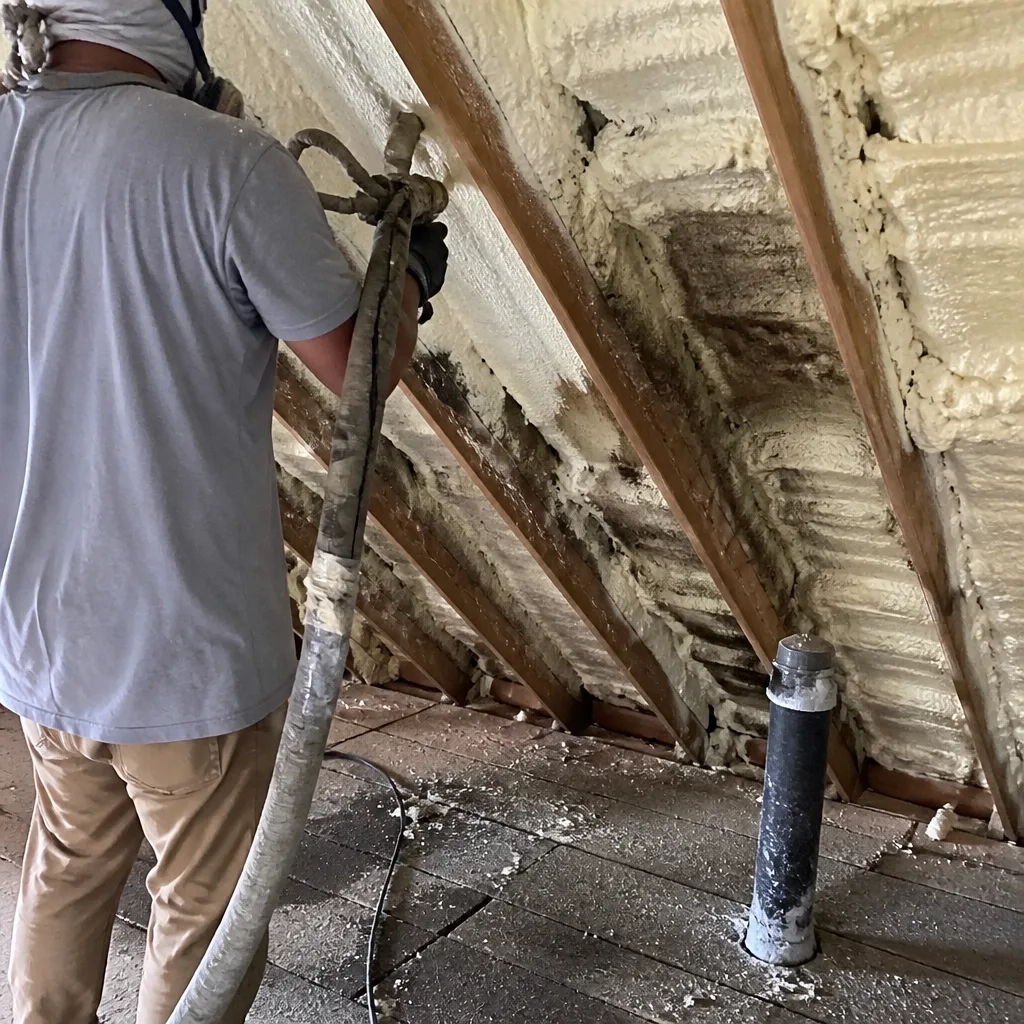 Before
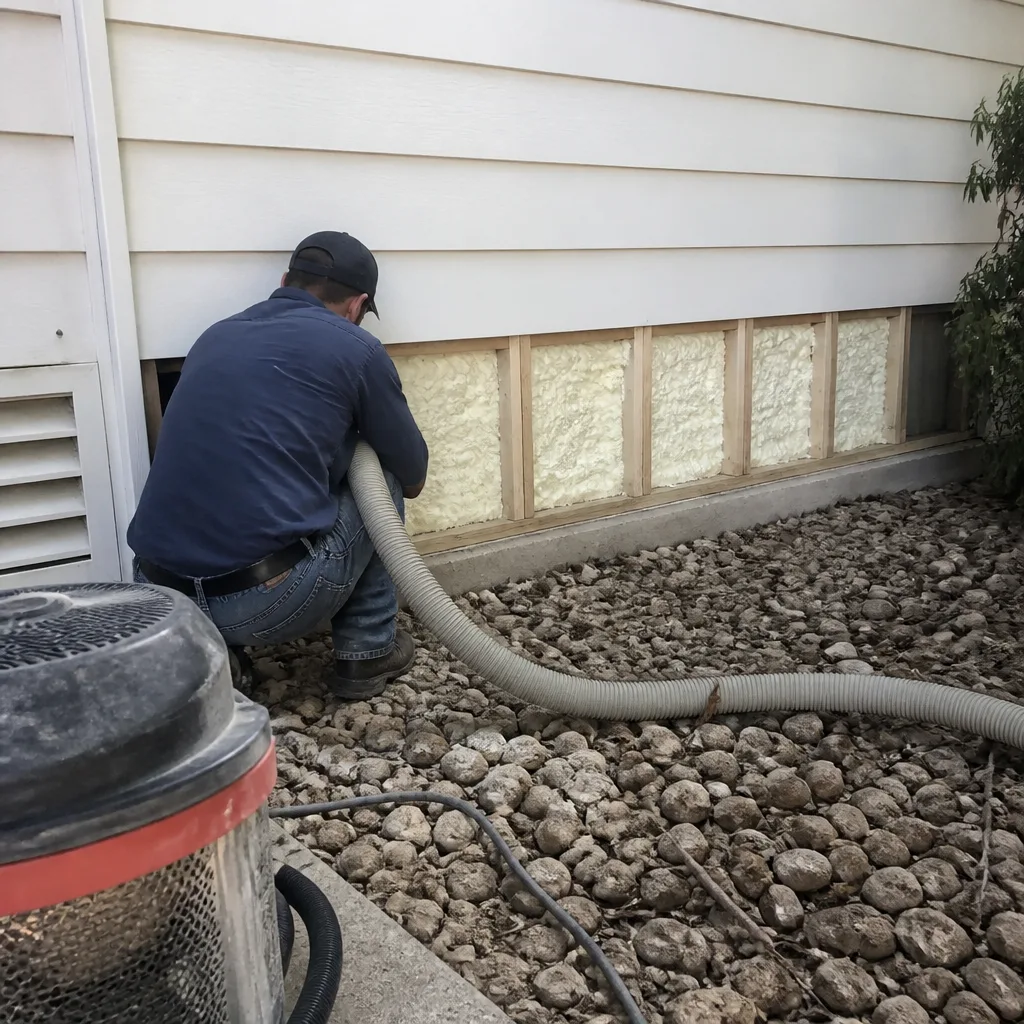 After
AfterReplacement Cost & What’s Included
| Scope | Typical Range in Canyon Lake | What Drives the Price |
|---|---|---|
| Attic floor, batt replacement, R38 | $3,200-$4,800 | Square footage, joist spacing, removal of old material |
| Attic floor, loose-fill top-off to R49 | $2,400-$3,600 | Depth of existing insulation, access hatch location |
| Cathedral ceiling, ComfortBoard rigid | $5,500-$8,200 | Roof pitch, interior finish protection, ventilation detailing |
| Full removal + replacement with air sealing | $4,800-$7,500 | Blower-door-guided sealing scope, decking condition |
Every quote we write in Canyon Lake includes the removal and disposal of existing material, installation of the new Rockwool layer to the specified depth or R-value, and a Documented Photo Record showing before, during, and after. On jobs where we’re doing air sealing, we run a blower-door test before and after so you see the CFM50 number drop. The 365-Day Done Right Promise covers all completed work, and we deliver the written scope and warranty before anyone starts. Haven Standard Clause 1: flat price, written scope, written warranty before anyone lifts a tool.
DIY or Call Us?
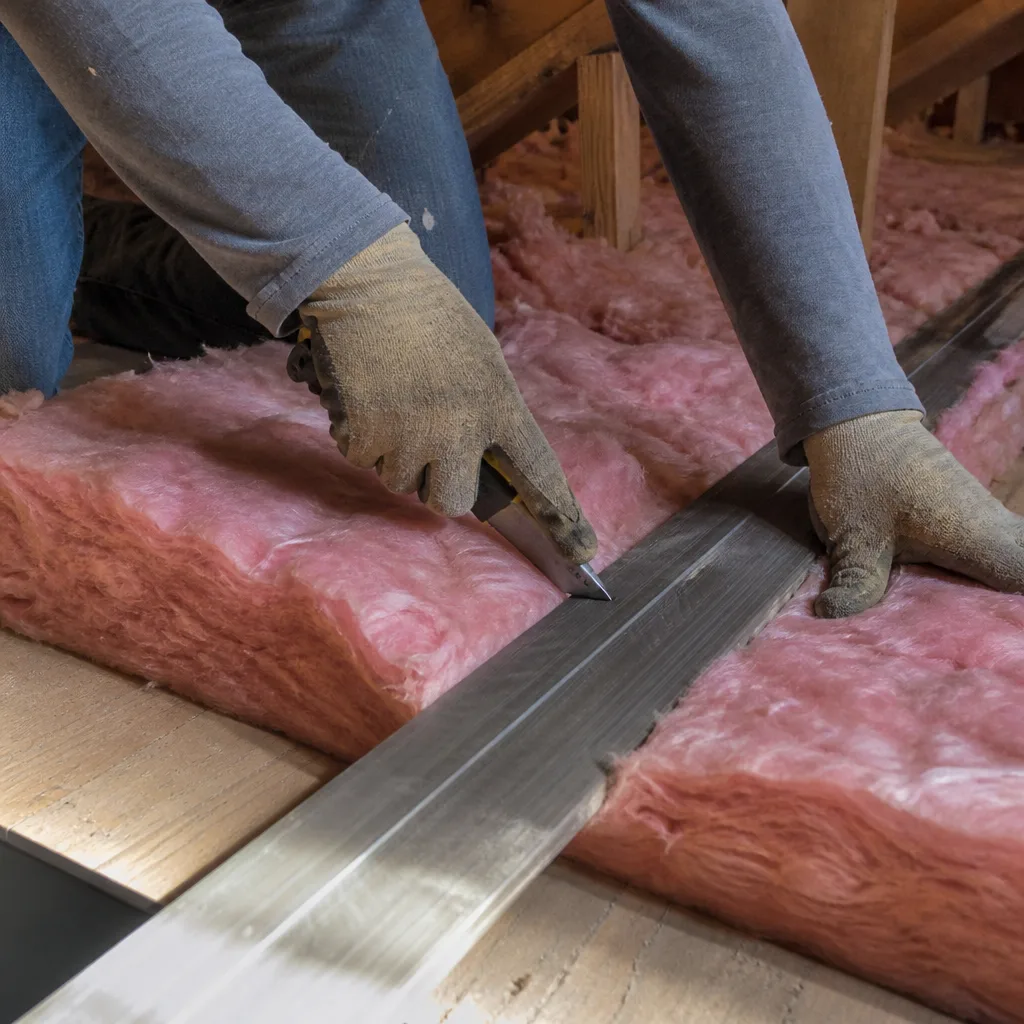
There are two things a Canyon Lake homeowner can safely check without getting into trouble. First, pull back the attic access hatch and measure the existing insulation depth with a ruler; if it’s less than 12 inches, you’re below current code minimum. Second, look for obvious gaps around the chimney, plumbing vent, or light fixtures where you can see the drywall below. Mark them with tape if you want to point them out.
Where DIY goes wrong is everything after that. Rockwool batts weigh nearly three times what fiberglass does for the same R-value, and a 24-foot truss bay loaded with R38 ComfortBatt can stress ceiling drywall if you walk the wrong joist. Roof deck work means working at height on a slope, often in 140-degree attic temperatures. And without a blower-door test, you’re guessing at where the air leaks are; we’ve seen homeowners bury perfectly good batts over a leaky top plate and wonder why the bills didn’t drop. If your energy bills are higher than your mortgage, the attic is usually confessing something. Call (737) 227-6219 and we’ll read it with you.
FAQs
Rockwool stone wool is rated for the life of the building when kept dry, but in practice we see performance degradation after 15-25 years due to settling, disturbance by trades, and the cumulative effect of roof leaks. The material itself doesn’t break down, but the installation integrity does. Call (737) 227-6219 for an assessment of your specific attic.
Localized disturbance can sometimes be patched with new batts cut to fit, but compressed or moisture-stained sections need removal. The real question is whether the air sealing underneath was done right in the first place; patching insulation over unsealed leaks is throwing good material after bad. We offer free second opinions on any written estimate if you want us to evaluate another contractor’s scope.
Most Canyon Lake homes between 1,800 and 3,200 square feet take one to two days for removal, air sealing, and new batt or loose-fill installation. Cathedral ceilings or homes with extensive storage decking add time. We give you a written schedule with the price, not a guess.
We carry ComfortBatt R30 and R38, ComfortBoard 80, and loose-fill Granulated Wool on our Canyon Lake trucks. Specialty densities or large commercial orders may need a day to pull from San Antonio distribution. Same-day starts are common for standard residential retrofits if you call before noon.
Written by Wes Okafor, Owner & Lead Insulation Technician, Topside Attic Insulation Canyon Lake at Topside Attic Insulation Canyon Lake, serving Canyon Lake and nearby areas.