
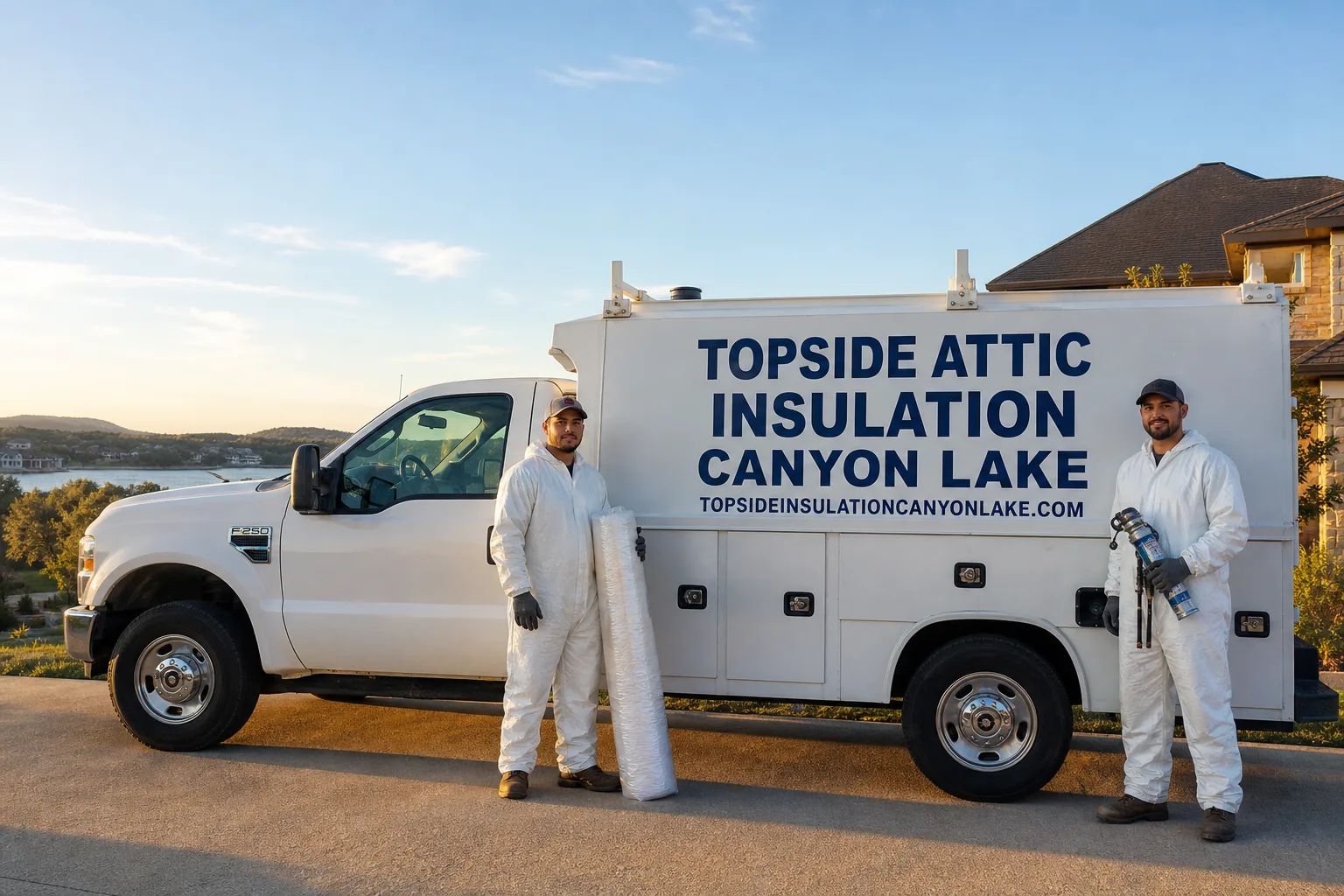
How Much Does Radiant Barrier Installation Cost in Canyon Lake?
Radiant barrier installation in Canyon Lake, TX typically runs between $1,400 and $3,200 for a standard single-story home, with most jobs landing around $1,800 to $2,400 when the attic is accessible and the framing is straightforward. The wide range comes down to three things: attic square footage, the barrier product chosen, and whether air sealing work needs to happen before the barrier goes in – which, under The Haven Standard, it always does if the penetrations aren’t already sealed.
Radiant Barrier Installation Cost Breakdown (2026)
Our Radiant Barrier Installation services in Canyon Lake cost $1,400-$3,200 for most homes. Here is how the line items typically stack up on a written scope from us:
| Line Item | Typical Range (Canyon Lake Market, 2026) | Notes |
|---|---|---|
| Radiant barrier material (foil, perforated) | $0.15 – $0.35 per sq ft | Perforated foil preferred in humid climates; prevents moisture trapping |
| Labor – standard attic (under 1,500 sq ft) | $600 – $1,000 | Assumes walkable attic, no major obstructions |
| Labor – larger attic (1,500 – 2,500 sq ft) | $900 – $1,600 | Common in Canyon Lake homes built 1995-2015 |
| Labor – complex attic (multiple roof lines, low pitch) | $1,300 – $2,100 | Low-pitch rooflines show up frequently on lakefront properties |
| Attic air sealing (top plates, can lights, penetrations) | $350 – $900 | Completed before barrier installation – not optional under Haven Standard |
| Existing insulation removal (if needed) | $500 – $1,400 | Required if existing insulation is damaged, contaminated, or compacted below code |
| Whole-job total – modest Canyon Lake home (~1,200 sq ft attic) | $1,400 – $1,900 | Includes barrier + air sealing, no removal needed |
| Whole-job total – larger Canyon Lake home (~2,000 sq ft attic) | $2,100 – $3,200 | Includes barrier + air sealing, straightforward attic access |
Every number above reflects what we’re writing on scopes for Canyon Lake and the surrounding Hill Country corridor in 2026. Material prices shifted roughly 6-9% between 2024 and early 2026 as aluminum foil feedstock costs moved – so if you’re comparing to an older estimate, the gap is real, not a contractor padding the bill.
One thing worth calling out specifically: some contractors quote radiant barrier in isolation, leaving you to discover later that the unsealed can lights and top-plate gaps are still leaking conditioned air into the attic cavity. We won’t do that. Under Haven Standard Clause 1, you receive a flat, written price covering the full scope before anyone touches a tool – air sealing included if it’s needed, line-itemed so you can see exactly what you’re paying for.
What Affects Radiant Barrier Installation Pricing in Canyon Lake
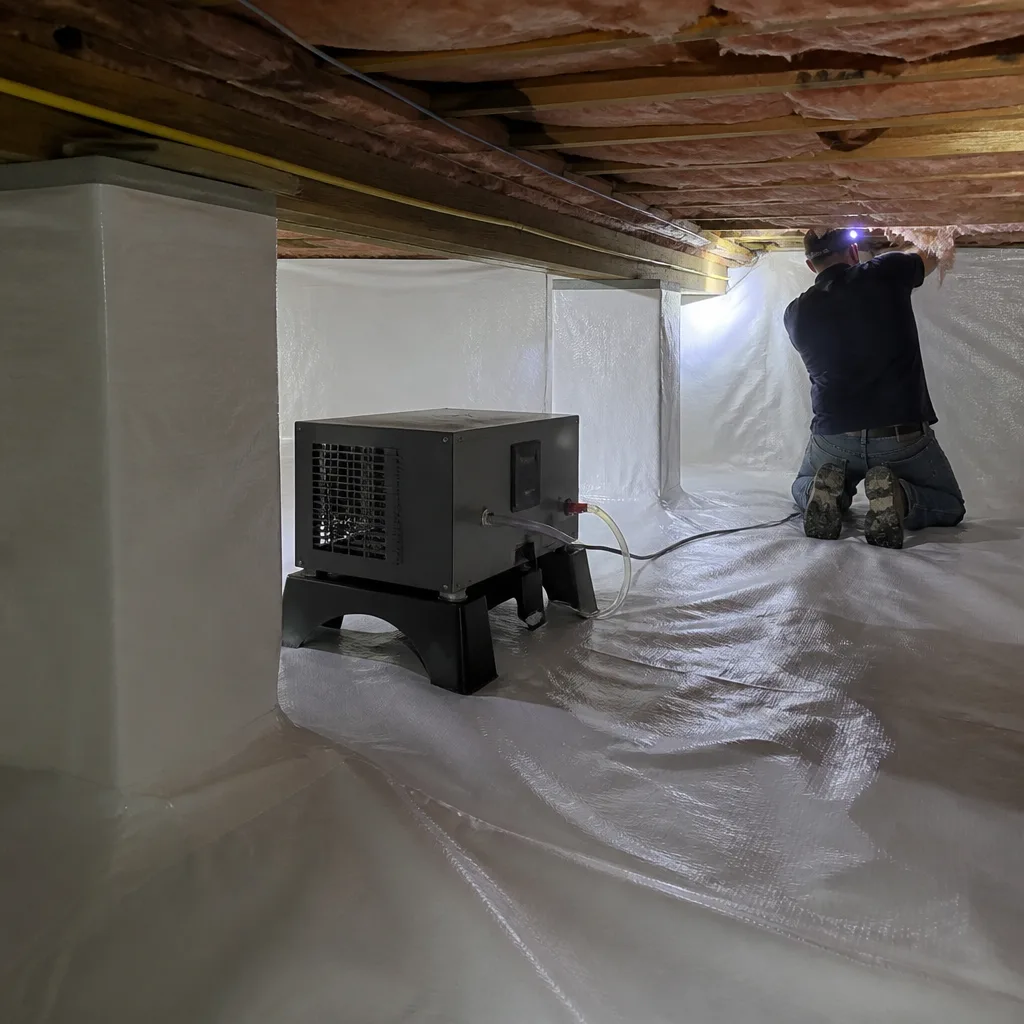
Canyon Lake sits in Comal County at roughly 950 feet elevation, which means the summer radiant heat load is significant – attic temperatures at the peak of July routinely push 150-160°F above the roof deck on south- and west-facing slopes. That heat load is exactly what a radiant barrier is designed to address. But several factors determine where your specific job lands on the price range.
- Attic square footage: This is the single biggest driver. A 1,100-square-foot footprint costs meaningfully less in labor and material than a 2,400-square-foot attic. Canyon Lake homes tend to have larger-than-average footprints because of the lot sizes in neighborhoods like Startzville, The Canyons, and Canyon Lake Hills – so don’t assume a neighbor’s quote maps directly to your home.
- Roof pitch and attic accessibility: Steeper pitches mean more stapling surface and slower going. Flat or low-pitch rooflines – common on lakefront cabins and some of the 1970s-era vacation homes that have since become full-time residences – actually create a different problem: limited working height that slows installation considerably. Either way, attic access affects labor hours, and labor hours affect price.
- Perforated vs. non-perforated foil: In Canyon Lake’s climate – hot summers and humidity that spikes during spring storm season – perforated foil is nearly always the right call. It lets moisture vapor pass through rather than trapping it against the roof deck. Non-perforated products cost marginally less but carry a real condensation risk in this region. We use perforated product as a default and explain the reasoning on every scope.
- Condition of existing insulation and air sealing: If we open an attic hatch and find unsealed can lights, unsealed top plates at interior walls, or gaps around plumbing and electrical penetrations, those need to be addressed before the barrier goes in. Installing radiant barrier over an unsealed attic floor is like putting a reflective shade on a car with the windows open – you’re solving the wrong problem first. The condition of what’s already up there determines how much prep work the job requires.
- Number of obstructions and HVAC equipment: Canyon Lake homes built during the 1990s-2000s building boom often have HVAC equipment and ductwork sitting in unconditioned attic space. Working around air handlers, flex duct runs, and associated equipment adds time. If your ducts are also uninsulated or leaking – which a duct blaster test can confirm – that’s a separate but related problem worth evaluating at the same visit.
- Removal of old or damaged insulation: Some homes we visit near the lake have insulation that’s been compressed by pest activity, saturated by a past roof leak, or simply degraded past the point where adding a radiant barrier on top makes sense. Removal adds cost but is sometimes the only honest recommendation. We’ll tell you whether it’s necessary – and why – before quoting it.
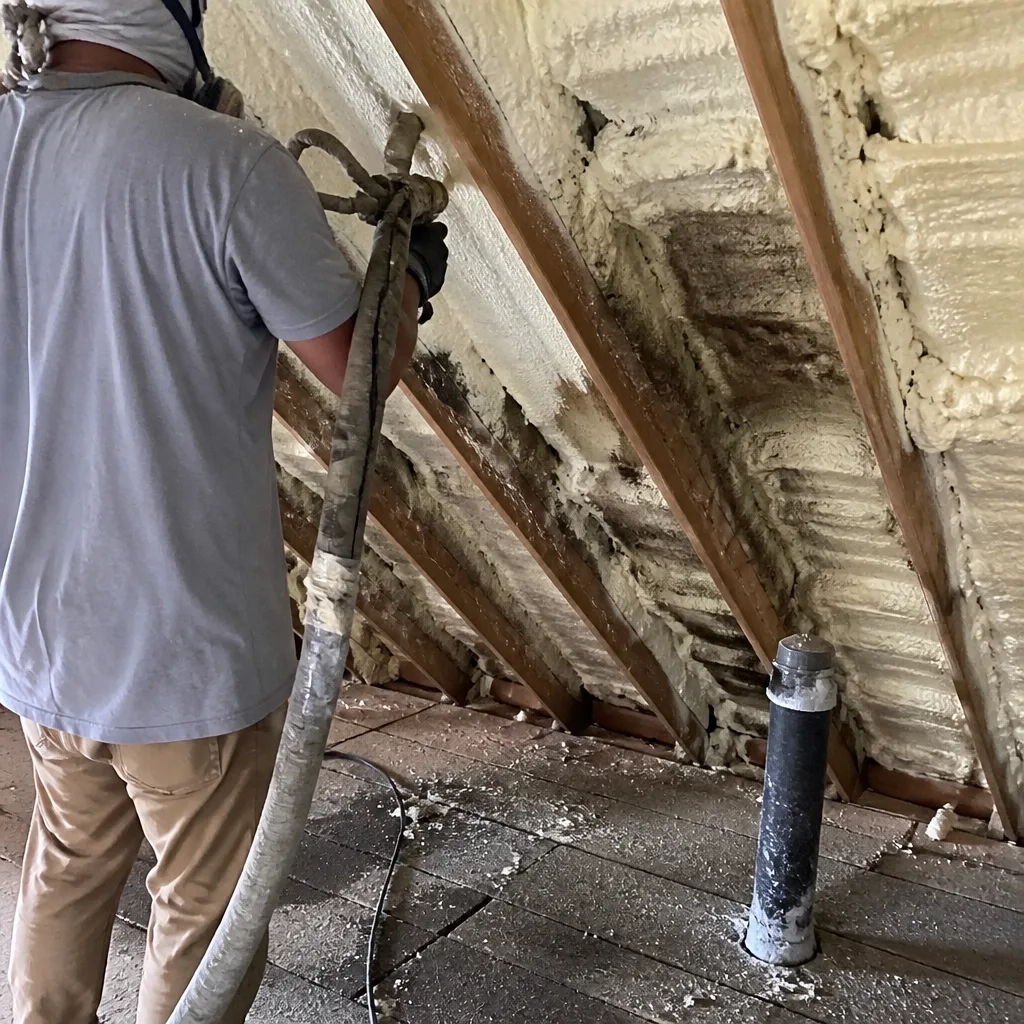 Before
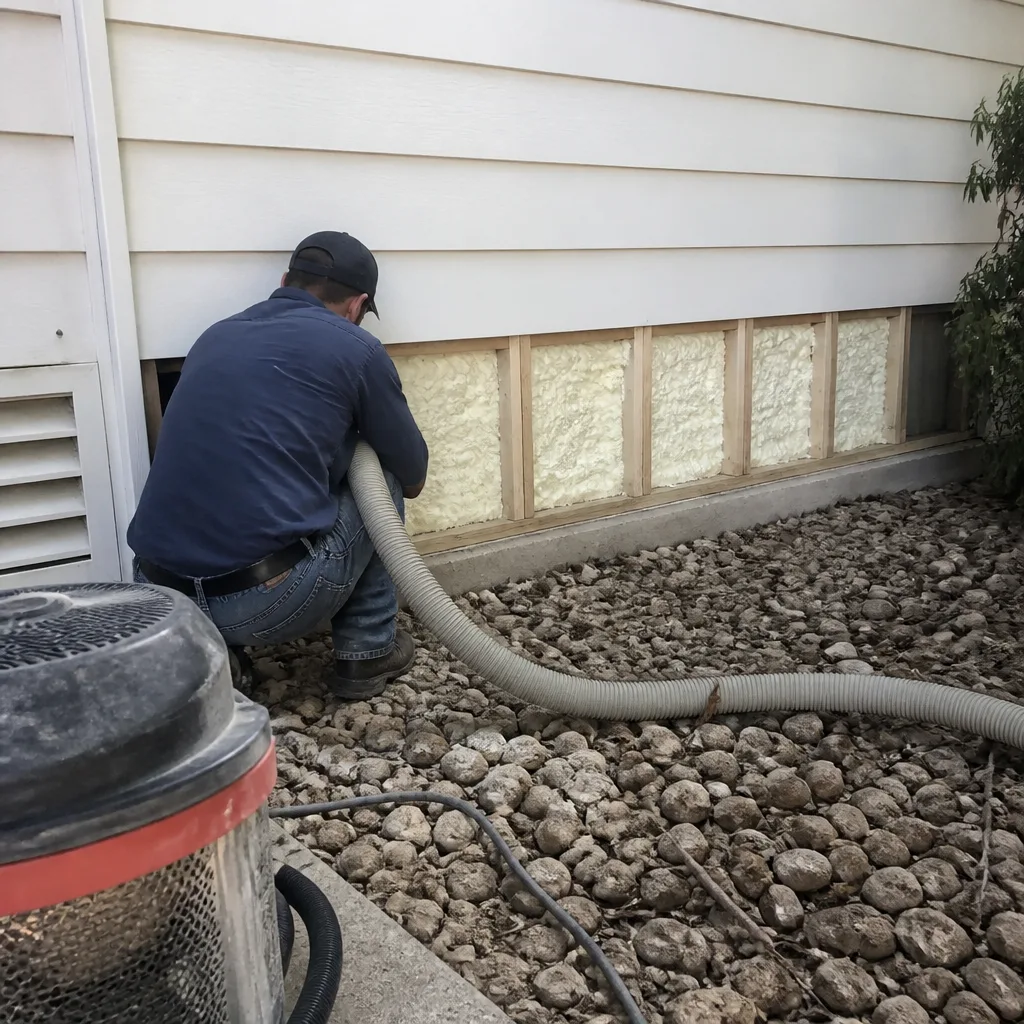 After
AfterHow to Save on Radiant Barrier Installation
The most direct way to reduce cost is to get an accurate scope before you sign anything. Vague quotes lead to change orders. A written scope with line items – material, labor, air sealing, any removal – lets you compare contractors on an apples-to-apples basis rather than guessing why one bid is $600 less than another.
A few specific things that genuinely move the number:
- Bundle with attic insulation work. If your attic insulation is below current code levels – R-38 to R-60 is the recommended range for Canyon Lake’s climate zone – installing the radiant barrier at the same time as an insulation upgrade shares the mobilization cost. One crew visit instead of two lowers the effective per-project labor rate. We scope these together frequently.
- Schedule outside peak summer demand. Most Canyon Lake homeowners call about radiant barriers in June and July, when the attic is already unbearable. Scheduling in March, April, or October means crews have more flexibility and lead times are shorter. Pricing doesn’t swing wildly by season on our end, but availability is genuinely better outside the summer rush.
- Check for utility rebates. CPS Energy and Pedernales Electric Cooperative (PEC) – both of which serve portions of Canyon Lake and Comal County – have historically offered rebates on qualified energy efficiency improvements. Rebate programs change annually and eligibility depends on your specific account and utility territory, so we recommend calling your provider directly. We’ll note the installation details on your Documented Photo Record in a format that supports rebate documentation.
- Get a second opinion on any written estimate. We offer a free second opinion on any written estimate – bring us a competing quote and we’ll read it with you, line by line. This isn’t a sales tactic; it’s Haven Standard practice. If another contractor’s scope is genuinely more appropriate for your home, we’ll say so.
- Don’t skip air sealing to save money. This sounds counterintuitive in a savings section, but it matters: skipping air sealing to reduce upfront cost frequently reduces the energy benefit of the barrier to near zero. In Canyon Lake’s climate, a properly sealed and radiant-barrier-equipped attic will outperform an unsealed attic with a barrier every time. The math on energy savings is only real if the whole envelope is addressed.
To get a written price specific to your home’s attic size and condition, call us at (737) 227-6219. We’ll schedule an assessment, measure the attic, evaluate the current air sealing condition, and hand you a flat written price before any conversation about scheduling work. That’s not a sales process – that’s just how we operate.
Is Radiant Barrier Worth the Cost in Canyon Lake, TX?
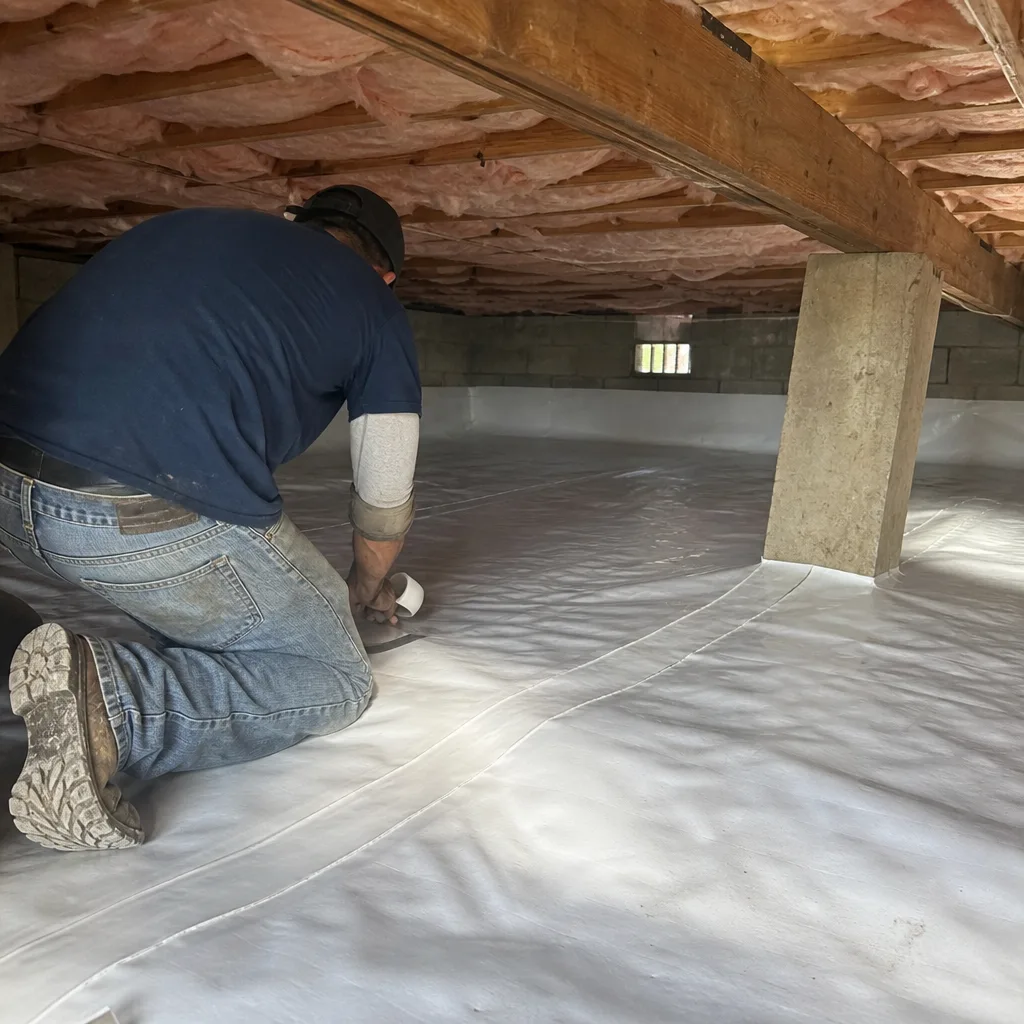
Canyon Lake sits at the edge of climate zone 2/3 transition – hot, sunny, and dry enough in summer that radiant heat gain through the roof deck is a genuine and measurable load on your HVAC system. The Department of Energy estimates radiant barriers can reduce cooling costs by 5-10% in hot climates when installed correctly. In Canyon Lake, where summer electricity bills on a 2,000-square-foot home can run $250-$400 per month during peak usage, even a 7% reduction represents real dollars.
But the math only holds when the installation is done correctly – perforated product in a ventilated attic, air sealing completed first, and the barrier positioned to face an air space. A radiant barrier stapled over a leaky attic floor without addressing the can lights and top plates is not going to deliver those numbers. We see that combination more often than we’d like when homeowners call after a previous installation didn’t perform as promised.
The honest answer: in Canyon Lake’s climate, a correctly installed radiant barrier on a home with adequate attic ventilation and proper air sealing is one of the better-performing attic upgrades available. It’s not a silver bullet, but it addresses a real heat load that insulation alone doesn’t solve – insulation slows heat transfer, a radiant barrier reflects it before it enters the attic cavity in the first place.
If you’re researching the full picture of what we do in Canyon Lake attics, our Radiant Barrier Installation in Canyon Lake service page covers the installation process, product selection, and what to expect on the day of work. And if you want to understand how radiant barriers fit into the broader building envelope picture, the home page covers the full range of services we offer under The Haven Standard.
Radiant Barrier vs. Attic Insulation: Which Does More in Canyon Lake?
This is a question we answer on almost every Canyon Lake attic assessment. The short version: they solve different problems, and the best attic performs well at both.
Attic insulation – blown-in fiberglass, blown-in cellulose, or spray foam at the roof deck – resists the transfer of heat through the ceiling plane. It slows heat moving from a hot attic into your living space. Radiant barrier reflects solar radiation before it converts to heat at the roof deck in the first place. One slows heat that’s already in the attic; the other keeps more of that heat from accumulating there.
In Canyon Lake, a home with R-19 insulation (common in 1990s construction) and a properly installed radiant barrier will outperform a home with R-38 insulation and no radiant barrier during peak July heat. But the highest-performing attic combines adequate insulation depth, complete air sealing, and a radiant barrier – all three together. We scope and price these as a combined project when the home needs it, because splitting them into separate jobs typically costs more overall.
What the Installation Process Looks Like
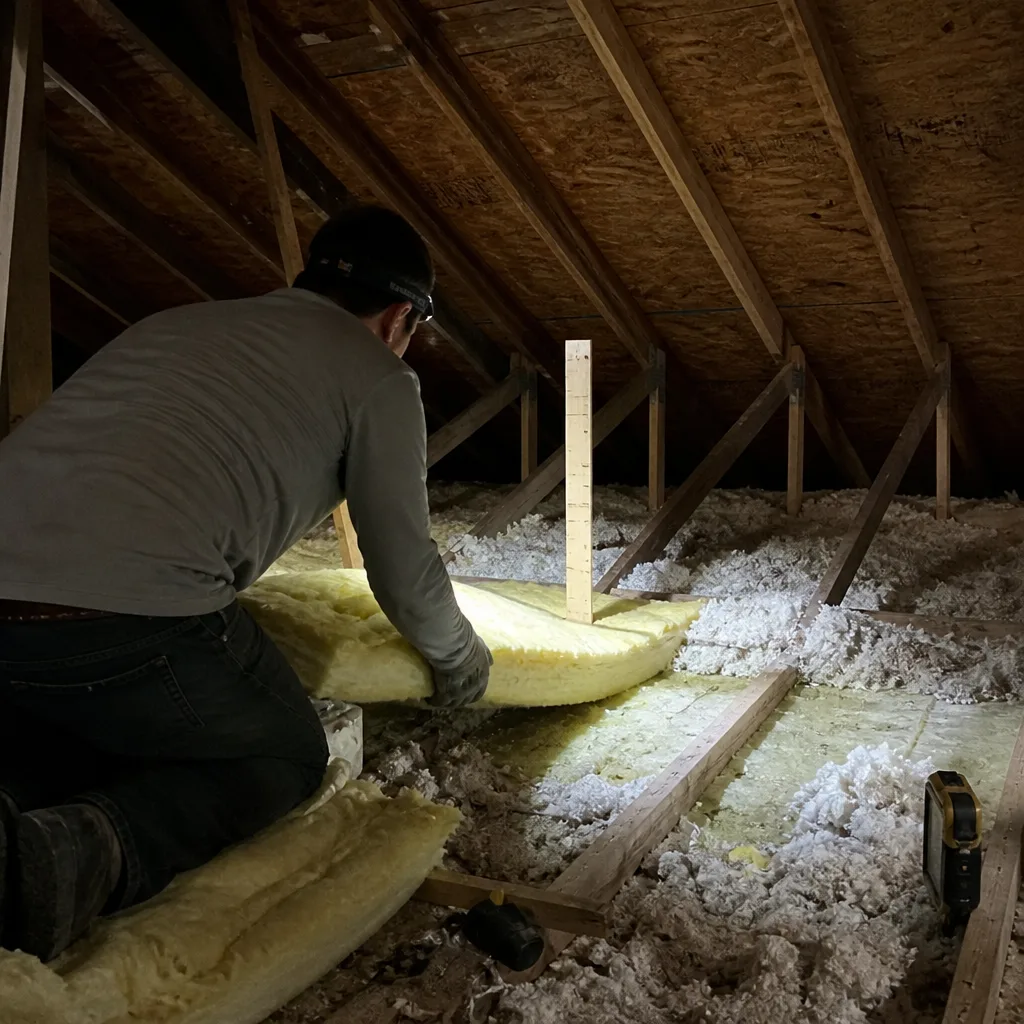
Understanding the process helps you evaluate any contractor’s scope, not just ours. Here’s what a correctly sequenced radiant barrier installation looks like in a Canyon Lake attic:
- Assessment: We measure the attic square footage, evaluate roof pitch, check attic ventilation (ridge and soffit vents need to be functional for the barrier to perform correctly), and document the existing insulation depth and air sealing condition. This takes 30-60 minutes depending on attic complexity.
- Written price delivered: You receive a flat, written price covering all line items before any work is scheduled. Under Haven Standard Clause 1, no work starts without it. No exceptions.
- Air sealing first: Top plates, can lights, plumbing penetrations, and electrical chases are sealed with appropriate materials – typically a combination of fire-rated caulk and spray foam at the right locations. We don’t move to the next step until this is done. Skipping it would mean installing the barrier over a leaky building envelope, which undermines the efficiency benefit.
- Radiant barrier installation: Perforated foil is stapled to the underside of the roof rafters, facing down toward the attic floor. This creates an air space between the foil and any insulation below – that air space is what makes the reflection work. The barrier is cut and fitted around obstructions, HVAC equipment, and framing members without gaps or loose sections.
- Documented Photo Record: Before we leave, you receive a documented photo record of the completed installation – both what we found before starting and what the finished work looks like. On applicable jobs, we also record before-and-after blower-door numbers so you have a documented record of the air sealing result, not just our word that it was done.
From scheduling to completion, most Canyon Lake radiant barrier installations run one full day for a standard single-story home. Larger homes or those with complex attic geometry may run into a second day.
Neighborhoods and Home Types We See Most Often in Canyon Lake
Canyon Lake isn’t a uniform housing stock. The city and surrounding Comal County communities include everything from 1970s-era vacation cabins that have transitioned to full-time residences, to newer construction in The Canyons at Canyon Lake, Canyon Lake Hills, and the River Chase corridor. Each type presents a different attic situation:
Older vacation-era homes (pre-1990) frequently have minimal insulation – sometimes R-11 or less – and no radiant barrier. The attic framing is often irregular, with additions built over decades. These jobs take longer and cost more to do correctly, but they also tend to show the biggest performance improvement.
Mid-period construction (1995-2010) in neighborhoods like Startzville and Canyon Lake Shores typically has standard blown-in fiberglass at R-22 to R-30 and may or may not have a radiant barrier already. When a barrier is already present, we inspect it for gaps, tears, and whether the air sealing was completed before it went in. Roughly 40% of the radiant barrier assessments we do on homes in this age range find the existing barrier has significant gaps or was installed over unsealed penetrations.
Newer construction (2015-present) in the Canyon Lake area is more likely to have a radiant barrier already installed per builder standard, but builder-grade installation quality varies. We’ve documented gaps exceeding 15% of the barrier surface on brand-new homes – usually at HVAC equipment cutouts and ridge areas where the crew ran short on material or time.
FAQs – Radiant Barrier Installation Cost in Canyon Lake
How much does radiant barrier installation cost in Canyon Lake, TX?
Most radiant barrier installations in Canyon Lake run between $1,400 and $3,200, with the middle of the range – $1,800 to $2,400 – covering the majority of single-story homes with attics between 1,200 and 2,000 square feet. The biggest variables are attic size, accessibility, and whether air sealing work is included in the scope. To get a flat written price for your specific home, call (737) 227-6219 – the assessment and written estimate are free.
Does radiant barrier installation require permits in Canyon Lake or Comal County?
In most cases, radiant barrier installation in an existing home’s attic does not require a permit in Canyon Lake or unincorporated Comal County – it’s generally classified as maintenance or repair work rather than a structural or mechanical change. If your project includes significant insulation removal and replacement, or any electrical work in the attic, the permit picture changes. We’ll confirm the applicable requirements for your specific scope before work starts, and anything requiring a permit will be noted on your written price.
How long does radiant barrier installation take in a typical Canyon Lake home?
A standard single-story Canyon Lake home with 1,200-1,800 square feet of attic space typically takes one full day – roughly 6-8 hours including air sealing prep, barrier installation, and documentation. Larger homes or those with complex roof geometry run longer. We give you a specific time estimate when we deliver the written price so you know what to plan for.
Is it cheaper to do radiant barrier now or bundle it with insulation replacement?
Bundling almost always costs less per line item than two separate visits. When radiant barrier and insulation replacement are scoped together, the mobilization cost – crew travel, setup, attic prep – is shared across both items rather than charged twice. For Canyon Lake homes that need both (attic insulation below R-38 and no existing barrier), a combined project typically saves $300-$600 compared to two standalone jobs scheduled separately. We scope these together whenever the home warrants it and show both line items on the written price so you can see the math clearly.
Will a radiant barrier actually lower my electric bill in Canyon Lake?
In Canyon Lake’s climate – where attic temperatures regularly exceed 150°F in July and August – a correctly installed radiant barrier in a ventilated attic with proper air sealing typically reduces cooling load by 5-10%, which translates to meaningful savings on summer electricity bills for most homes. The qualifier “correctly installed” matters: a barrier with significant gaps, installed over unsealed penetrations, or installed in an attic with blocked soffit vents will underperform those numbers. That’s precisely why we complete air sealing before the barrier goes in and document the work with photos when the job is done.
What is the best type of radiant barrier for Canyon Lake’s climate?
Perforated foil is the right product for Canyon Lake. The Hill Country climate delivers enough humidity – particularly during spring storm season and overnight in summer – that non-perforated foil can trap moisture vapor against the roof deck over time, leading to condensation issues. Perforated foil reflects the same proportion of radiant heat while allowing moisture vapor to pass through. The material cost difference is minimal; the risk difference is not. We use perforated product as our default for all Canyon Lake installations and will explain the reasoning in writing on your scope if you want it documented.
Key Takeaways
- Radiant barrier installation in Canyon Lake costs $1,400-$3,200 for most homes; the typical range for a single-story home is $1,800-$2,400.
- Attic square footage and accessibility are the biggest cost drivers – Canyon Lake’s larger lot footprints often mean larger attics than metro-area comparisons.
- Air sealing comes before barrier installation – always. Skipping it reduces efficiency benefits substantially in a climate like Canyon Lake’s.
- Perforated foil is the correct product for this climate. Non-perforated foil carries a condensation risk in Hill Country humidity conditions.
- Bundling with insulation replacement saves $300-$600 compared to two separate visits when both are needed.
- Every job from us includes a written price before any work starts, a documented photo record at completion, and a 365-Day Done Right Promise in writing.
- Utility rebates through PEC or CPS Energy may be available – check with your provider directly; we document installations in a format that supports rebate paperwork.
Wes Okafor and the team at Topside Attic Insulation Canyon Lake have completed assessments on hundreds of Canyon Lake and Comal County homes since 2016 – every one with a written price before work started and a documented photo record when the crew left. If you have a written estimate from another contractor, we’ll review it with you at no charge. Call (737) 227-6219 to schedule a free attic assessment and receive your written price – no work starts without it, and no estimate costs you anything.
Pricing reflects the Canyon Lake market as of 2026. Topside Attic Insulation Canyon Lake offers free estimates – call (737) 227-6219.
Written by Wes Okafor, Owner at Topside Attic Insulation Canyon Lake, serving Canyon Lake since 2016.
What Our Customers Say
"Crawl space encapsulation done properly. Photographs of the vapour barrier at every seam, and the damp smell in the hallway is gone."
- Ainsley P."The winter gas bill dropped by about a third. They had estimated a quarter, so they under-promised."
- Genevieve R."They photographed rodent damage in the old insulation that we had no idea about, and priced the exclusion work separately so we could decide."
- Harriet N.