
Last updated September 24, 2026
The Complete Guide to Insulation in Canyon Lake
A Canyon Lake home with R-38 attic insulation and no air sealing can still leak the equivalent of a 16-square-inch hole in the ceiling - roughly the size of a brick - because R-value measures resistance to heat flow, not air flow, and those are two different problems. At 909 feet above sea level, Canyon Lake sits in a hill-country microclimate where summer radiant heat gain through the roof deck dominates energy loss, not wall conduction. The standard insulation playbook built for flat Texas plains leaves most homes here persistently uncomfortable. This guide maps every insulation decision to the specific conditions above 909 feet elevation, from caliche-heavy crawlspaces to metal-roof vaulted ceilings common in the area.
Quick Answer
Proper insulation in Canyon Lake requires treating three distinct zones - attic floor, roof deck, and exterior walls - with air sealing completed before any insulation is installed. Most Canyon Lake homes see their biggest comfort gains from addressing radiant heat gain through the roof deck first, then sealing attic floor penetrations, then upgrading wall insulation. A complete attic insulation job in a typical 1,800-2,400 square foot Canyon Lake home runs $2,800-$5,400 including air sealing, with spray foam at the roof deck ranging $4,500-$8,200 for the same footprint. See our Insulation Cost Breakdown: The Canyon Lake Homeowner’s Reference for 2026 for detailed pricing factors.
Table of Contents
- Why R-Value Isn’t Enough: Understanding ACH50 in Canyon Lake
- The Three Insulation Zones in a Canyon Lake Home
- Hill-Country Dust, Cedar-Elm Debris, and Insulation Degradation
- When Spray Foam at the Roof Deck Beats Blown Cellulose at the Floor
- What Documentation You Should Receive at Job Completion
- Costs, Timeline, and What Disrupts Both in Canyon Lake
- Common Mistakes to Avoid
- When to Call a Professional
- Frequently Asked Questions
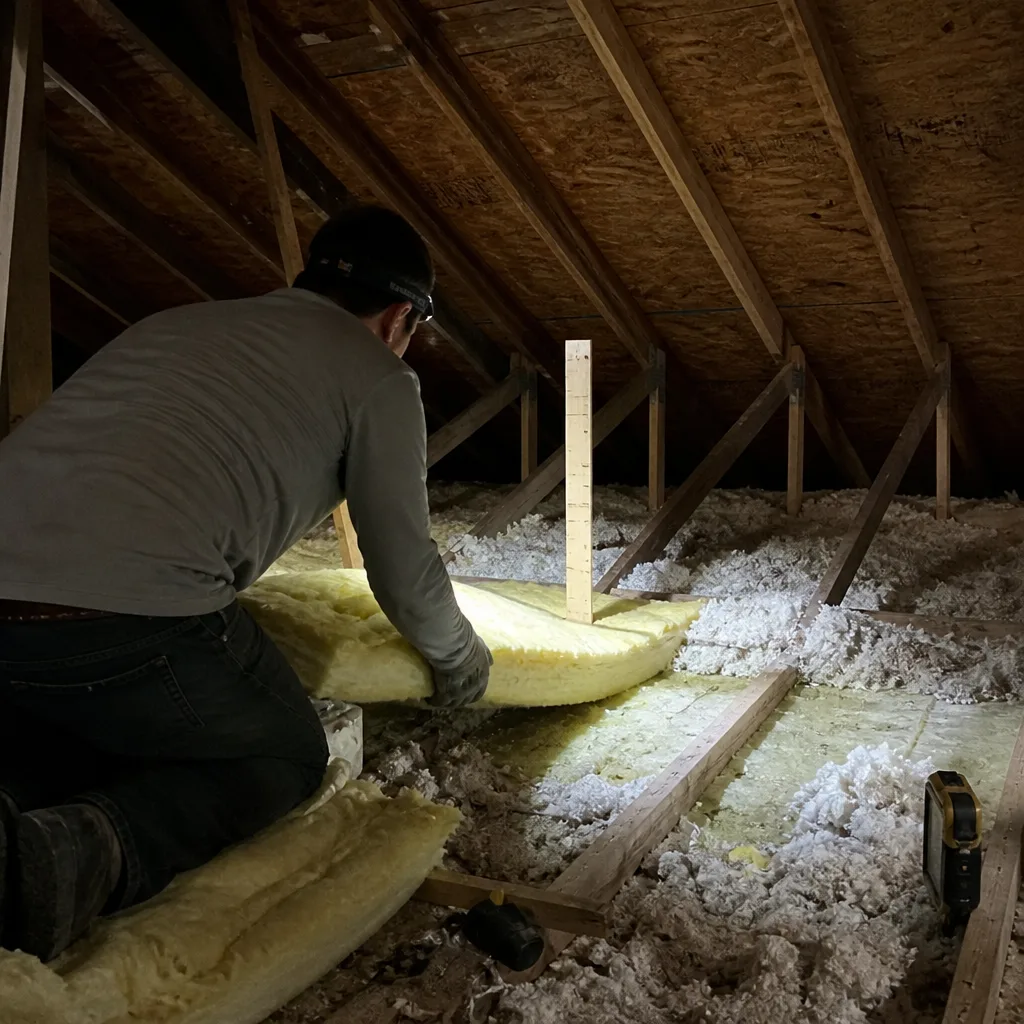
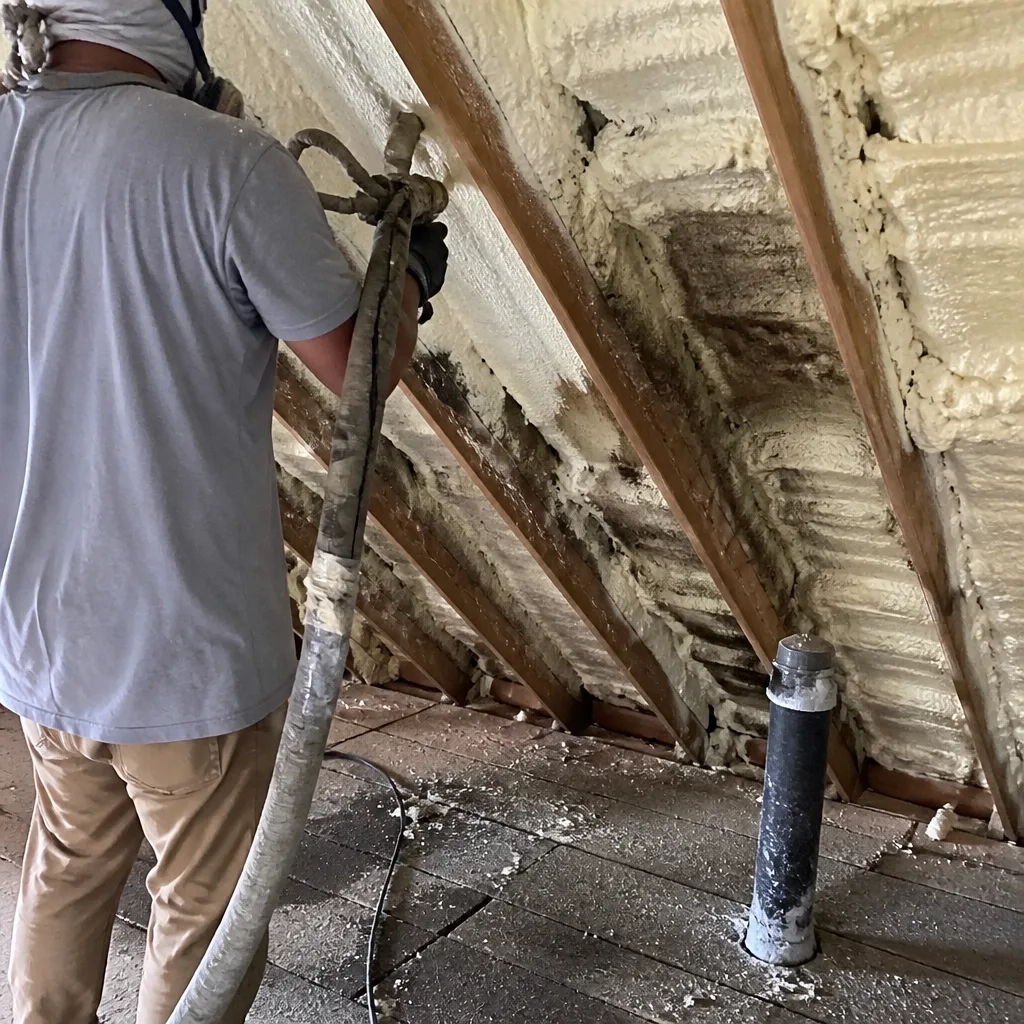 Before
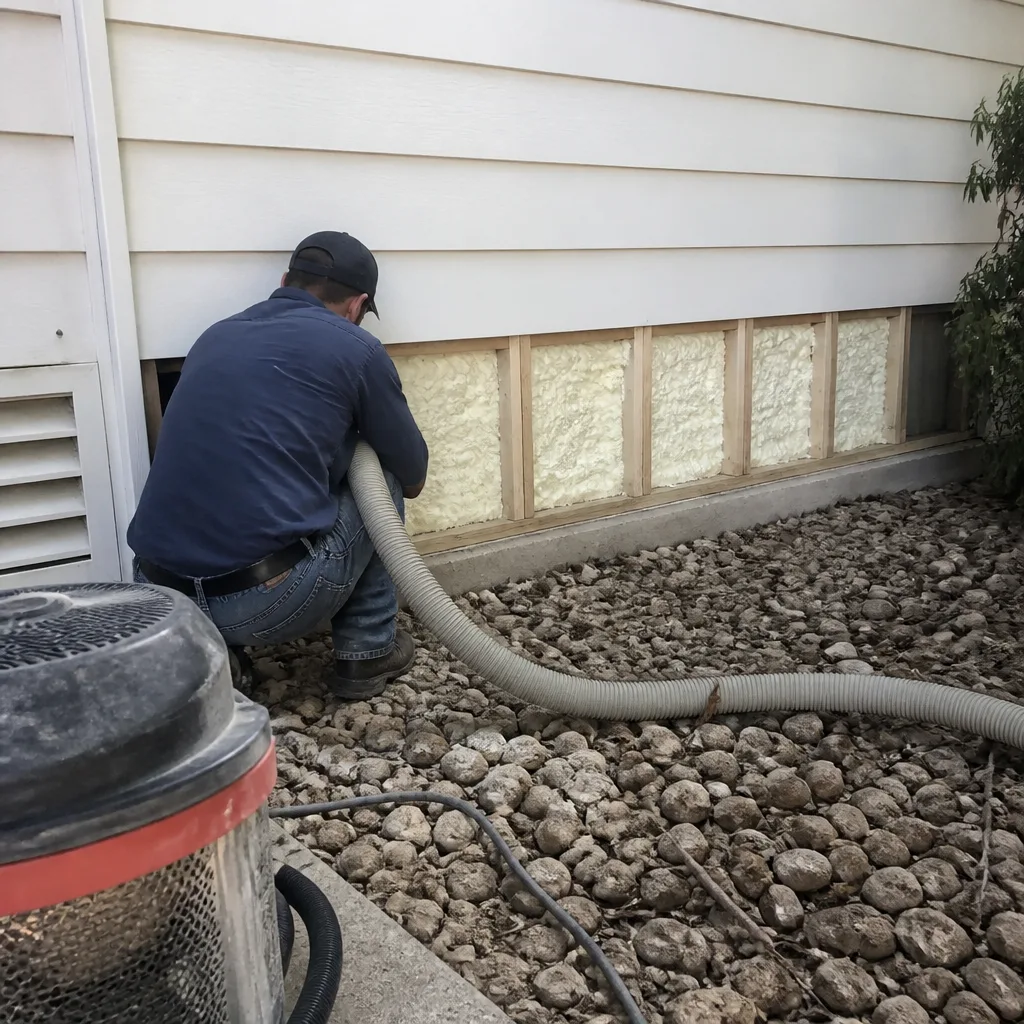 After
AfterWhy R-Value Isn’t Enough: Understanding ACH50 in Canyon Lake
R-value tells you one thing: how well a material resists conductive heat flow. An R-38 batt slows heat moving through it, which matters when your attic hits 140°F in July. But R-value says nothing about air moving around, through, or behind that batt. And in Canyon Lake, where afternoon temperature swings of 25°F are routine and winter northers drop the mercury fast, air movement is often the bigger thief.
ACH50 - air changes per hour at 50 pascals of pressure - is the number that captures this. A blower-door test, which we run on every applicable job, pressurizes your home and measures how much air escapes through gaps, cracks, and bypasses. The reading comes out in CFM50, cubic feet per minute at 50 pascals, which converts to ACH50 by factoring in your home’s volume.
Here’s what we’ve found in Canyon Lake homes built between 1985 and 2010, which is much of the housing stock:
- Pre-sealing blower-door readings typically range from 3,200 to 5,800 CFM50
- Post-sealing readings on the same homes drop to 1,800-2,800 CFM50
- That reduction represents 15-35% less conditioned air lost to infiltration
- The work focuses on top plates, recessed can lights, plumbing and electrical penetrations, and chimney chases
A home at 4,500 CFM50 before work and 2,400 after is losing roughly half as much conditioned air. You can add R-60 insulation to an attic floor and still feel drafts in the living room if the can lights leak. We’ve seen it. The attic insulation in Canyon Lake that actually works starts with sealing, then measures the result.
Texas energy code references IECC 2021 for new construction, requiring 3 ACH50 or better in climate zone 2, which includes Comal County. Most existing Canyon Lake homes were built to much leakier standards. The practical target for retrofit work is 5 ACH50 or better, which is achievable in most single-story homes with thorough attic floor sealing and proper damming around access points.
The Three Insulation Zones in a Canyon Lake Home
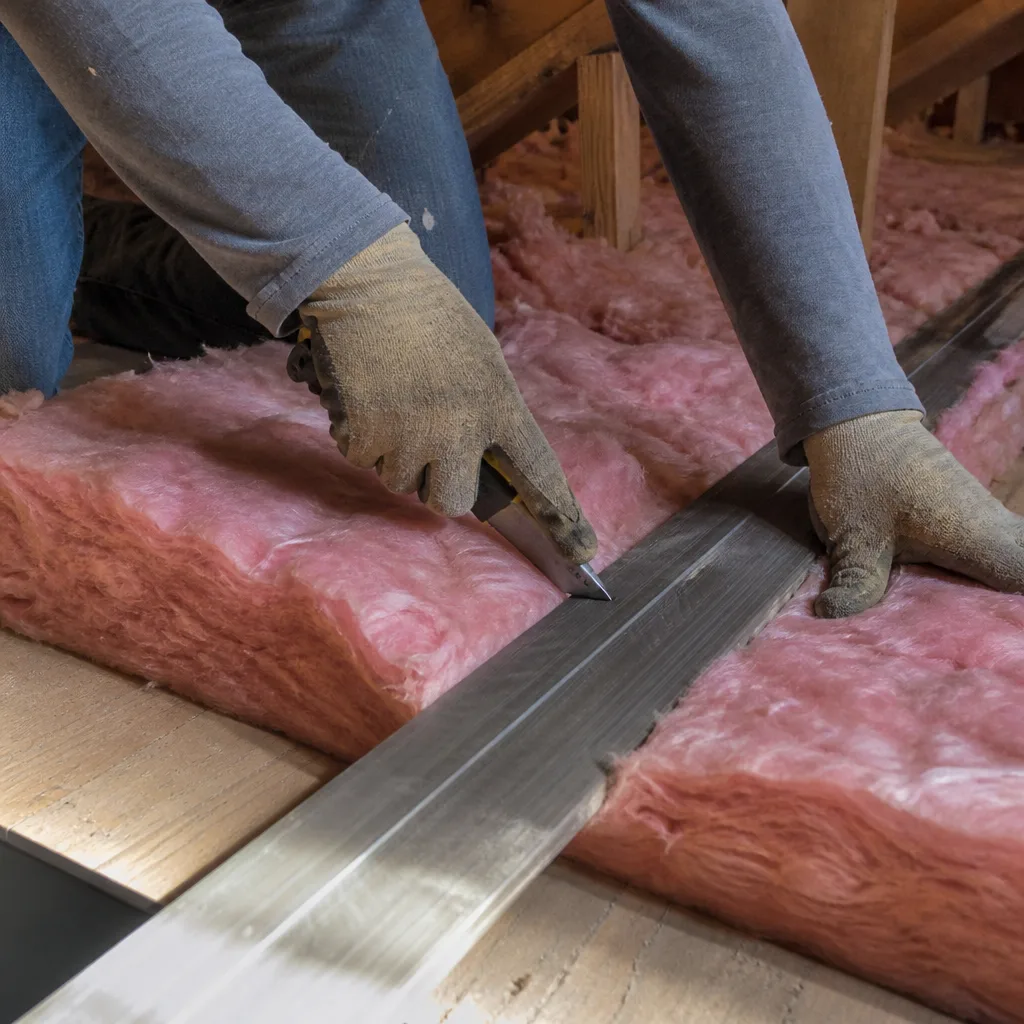
Canyon Lake homes present three distinct thermal boundaries, each with different physics, different access challenges, and different payback timelines. Treating them as interchangeable is a common and expensive error.
Zone 1: The Attic Floor
This is the conventional approach - insulation flat on the ceiling drywall, vented attic above. In Canyon Lake, this works well for homes with:
- Traditional pitched roofs with adequate soffit and ridge ventilation
- No HVAC equipment or ductwork in the attic
- Storage needs that keep the attic as an unconditioned zone
Blown cellulose or fiberglass at R-38 to R-49 is typical here. The critical detail most crews miss: the attic floor is also the air barrier, so every penetration gets sealed before the blower truck arrives. We use Owens Corning AttiCat or GreenFiber stabilized cellulose for floor applications, depending on the home’s moisture history and whether rodent activity is present.
Zone 2: The Roof Deck
When HVAC equipment lives in the attic - common in Canyon Lake ranch-style homes from the 1990s and 2000s - the roof deck becomes the thermal boundary instead. Conditioning the attic by insulating at the roof line eliminates the 30-40°F temperature penalty that ductwork otherwise suffers through July and August.
Spray foam, either open-cell Icynene or closed-cell Demilec, is the standard approach. Open-cell at 5.5 inches yields roughly R-19 with excellent air-sealing; closed-cell at 3 inches yields R-19 with vapor barrier properties. The choice depends on whether the roof deck is vented or unvented, and whether the home has experienced moisture issues in the attic. We assess sheathing condition and nail-base integrity before recommending either.
Zone 3: Exterior Walls
Wall insulation in Canyon Lake is often the lowest priority for comfort improvement, but it matters for homes with:
- Stucco exteriors over uninsulated block or frame, common in 1970s-1980s construction
- Metal siding with minimal original insulation
- Additions built with 2×4 walls that max out at R-13
Dense-pack cellulose or fiberglass into existing wall cavities requires drilling access holes, either from interior or exterior. In Canyon Lake’s limestone-rich soils, homes on slab foundations often have limited crawl access, making exterior drilling the only viable path for first-floor walls.
The performance trade-off: attic work typically yields $0.15-$0.25 per square foot in annual energy savings at current CPS rates; wall work yields $0.05-$0.12. We present the numbers and let homeowners decide based on their budget and how long they plan to stay.
Hill-Country Dust, Cedar-Elm Debris, and Insulation Degradation
Canyon Lake’s geography creates insulation failure modes that don’t exist in Houston or Dallas. The combination of caliche soil, cedar-elm pollen loads, and limestone dust produces a fine particulate that infiltrates attics through gable vents, ridge gaps, and poorly sealed soffits. Over time, this material accumulates on insulation surfaces and changes how they perform.
Kraft-faced fiberglass batts are particularly vulnerable. The paper facing, designed as a vapor retarder, traps dust against the fiberglass and creates a thermal bridge where contact occurs. We’ve removed batts in Startzville and Canyon Lake Estates where the facing had degraded to the point of detaching, leaving bare fiberglass with an R-value reduced by 20-30% from compression and contamination.
The cedar-elm component matters because it’s fibrous and acidic. When it combines with moisture from occasional roof leaks or high humidity events, it accelerates corrosion of metal fasteners and degrades cellulose binders. Homes within a quarter-mile of mature cedar-elm stands show this pattern more aggressively.
What we do differently on Canyon Lake jobs:
- Inspect existing insulation for dust loading and facing condition during the initial assessment
- Recommend removal and replacement when contamination exceeds roughly 30% of surface area, rather than topping over
- Specify unfaced products or blown applications without vapor retarders in vented attics, since vapor drive in this climate is predominantly inward and bulk moisture management belongs at the roof plane
- Install baffles at eaves that extend 4 inches above anticipated insulation depth, preventing wind-wash of soffit intake air that carries dust
For homes near the Guadalupe River corridor or in lower elevations where humidity runs higher, we also evaluate whether a vapor barrier at the crawl space - not the attic - is appropriate. Crawl space encapsulation and vapor barrier in Canyon Lake addresses a different moisture path than attic work, but the two systems interact if ductwork runs through the crawl.
When Spray Foam at the Roof Deck Beats Blown Cellulose at the Floor
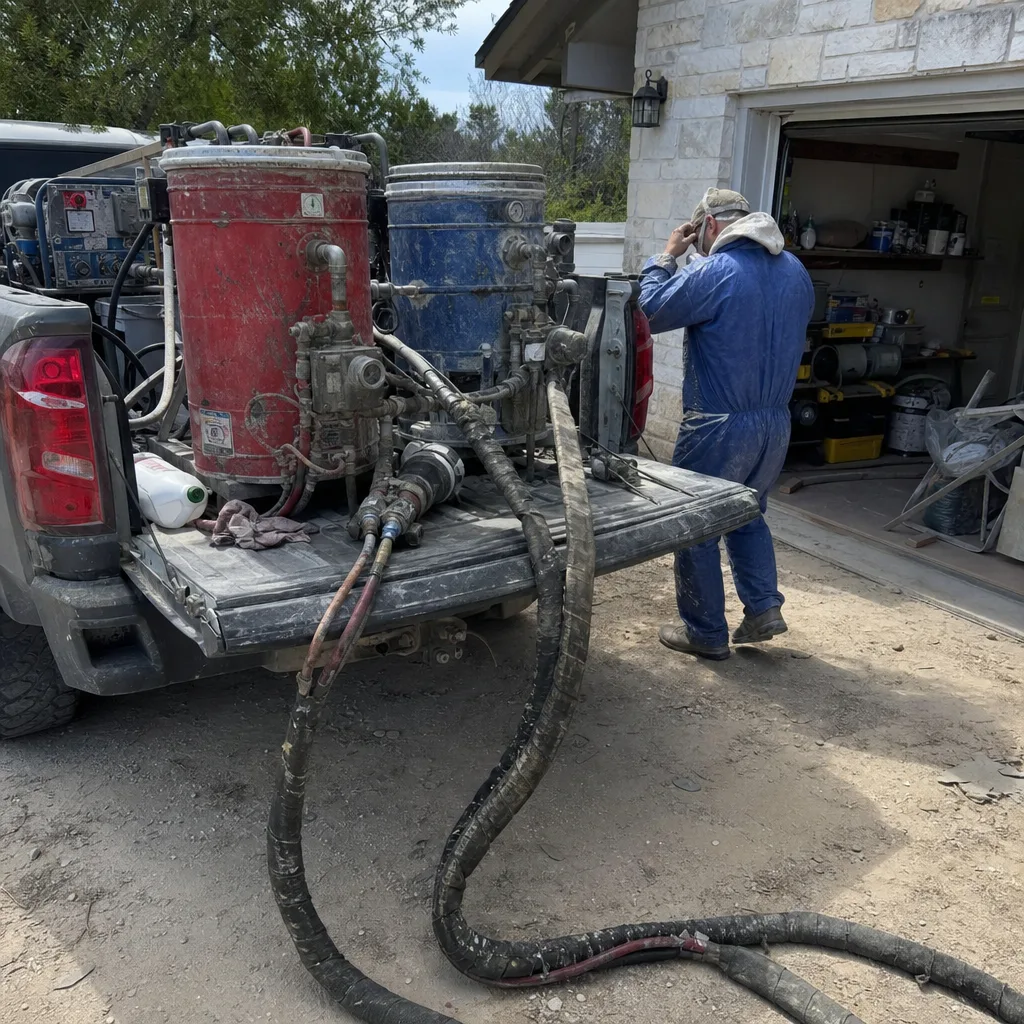
The decision between insulating the attic floor versus the roof deck is the most consequential choice in Canyon Lake retrofit work, which we explore in depth in our DIY vs Professional Insulation: The Canyon Lake Homeowner’s Decision Guide. It determines where your thermal boundary lives, whether your attic becomes conditioned space, and how your HVAC system performs for the next 20 years.
Use this framework, based on heat-load calculations we’ve run for Canyon Lake homes:
| Condition | Floor Insulation (Blown Cellulose/Fiberglass) | Roof Deck (Spray Foam) |
|---|---|---|
| HVAC and ducts in attic | Poor choice - ducts lose 15-25% capacity to attic heat | Correct choice - attic becomes conditioned, duct losses minimal |
| Metal roof with no radiant barrier | Acceptable with added radiant barrier; R-49 floor minimum | Superior - foam eliminates radiant gain at source |
| Vaulted or cathedral ceiling sections | Often impossible without major drywall removal | Required - no attic floor exists to insulate |
| Storage use of attic | Attic remains 130°F+ in summer; stored items degrade | Attic stays 75-85°F; usable conditioned space |
| Upfront budget constraint | Lower initial cost: $2.80-$4.50/sq ft of attic floor | Higher initial cost: $6.50-$11.00/sq ft of roof deck |
| Payback timeline priority | 8-14 years at current energy rates | 12-18 years, but includes HVAC efficiency gains not captured in insulation-only calculations |
The heat-load numbers matter more than the sales pitch. A 2,000 square foot Canyon Lake home with dark shingles, west-facing roof exposure, and R-30 floor insulation sees a cooling load of roughly 3.2 tons. The same home with spray foam at the roof deck, R-19 effective, drops to 2.6-2.8 tons because the attic isn’t a 140°F radiant oven surrounding the ductwork. The smaller HVAC requirement, extended equipment life, and reduced duct leakage to outside are real dollars, even if they don’t appear on the insulation invoice.
We model this with Manual J software and provide the load calculation as part of our written scope. If a contractor can’t show you the heat-load difference between the two approaches, they haven’t done the engineering. Our How to Hire a Insulation Contractor in Canyon Lake: A Step-by-Step Guide explains what documentation to demand.
Spray foam insulation in Canyon Lake requires specific application conditions: substrate temperature above 60°F, relative humidity below 85%, and proper mixing ratios for the specific product. We schedule accordingly and reject same-day pressure to foam in marginal conditions.
What Documentation You Should Receive at Job Completion
The Haven Standard requires written documentation at three points: before work starts, during execution, and at completion. For insulation work, this means specific deliverables that most Canyon Lake homeowners have never received from previous contractors.
Before Work Starts
- Written scope of work with installed R-value specified per zone
- Material specification sheets naming manufacturer and product (e.g., CertainTeed InsulSafe SP, Icynene MD-R-200)
- Flat price with no per-unit escalation clauses
- Written warranty terms - ours is the 365-Day Done Right Promise
During Execution
- Documented Photo Record of conditions before, during, and after - included on every job, not available on request
- Blower-door pre-reading in CFM50 with date and technician name
- Mid-job verification photos of sealed penetrations, baffle installation, and clearance maintenance around combustion equipment
At Completion
- Blower-door post-reading in CFM50, with calculated ACH50 for your home’s volume
- Installed R-value verification - measured depth for blown products, labeled R-value for batts and foam
- Final photo documentation showing completed work
- Material spec sheets and warranty documents in physical or digital format, homeowner’s choice
The blower-door numbers are the critical proof point. A contractor who sealed your home effectively will show you the before and after. A contractor who didn’t will change the subject. We’ve published these numbers on every applicable job since 2016 - over 9,000 homes - because the number doesn’t lie. A drop from 4,200 CFM50 to 2,100 CFM50 is a 50% reduction in air leakage. “Significantly improved your home’s efficiency” is a phrase that means nothing without this figure attached.
Costs, Timeline, and What Disrupts Both in Canyon Lake
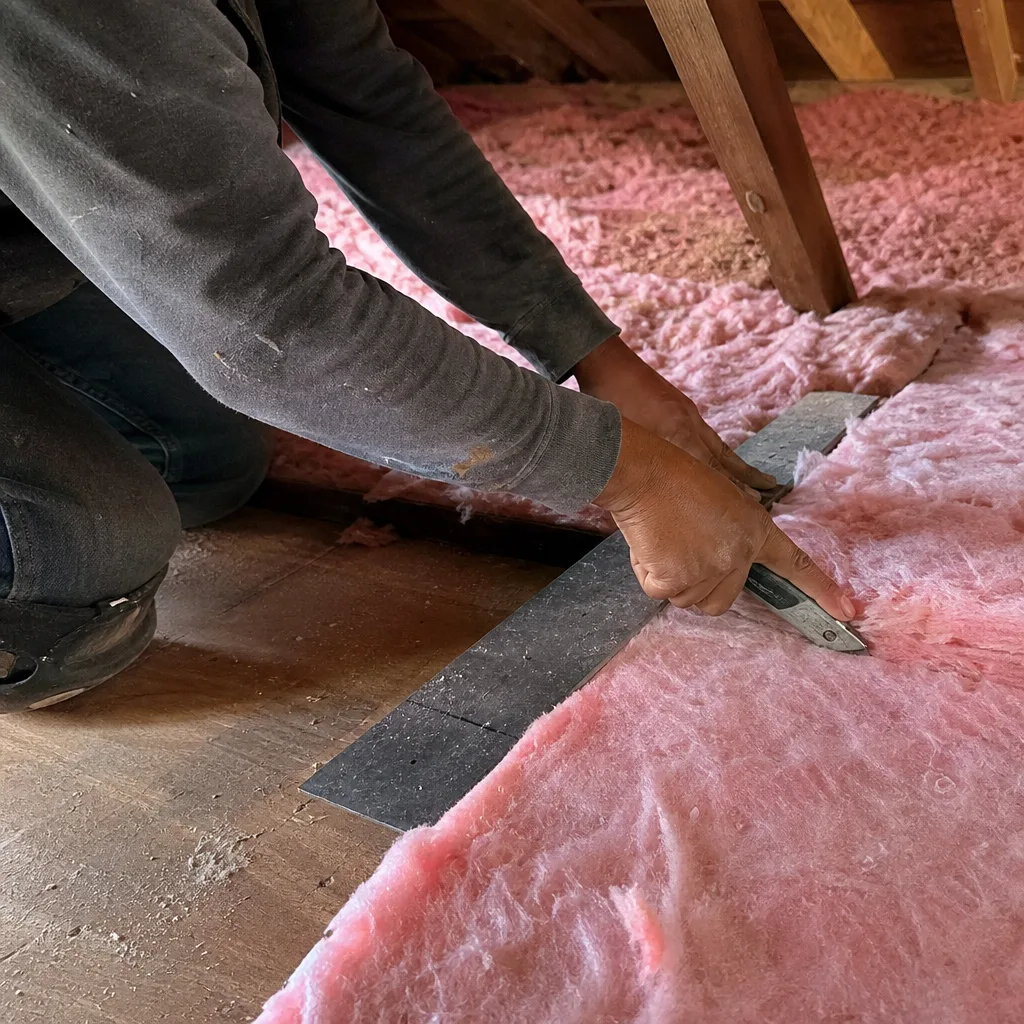
Insulation pricing in Canyon Lake reflects hill-country access challenges, material transport from San Antonio or New Braunfels suppliers, and the specific conditions we find in homes at this elevation. These are actual ranges from our written scopes, not teaser rates.
| Service | Typical Range (1,800-2,400 sq ft home) | Timeline |
|---|---|---|
| Attic air sealing only | $1,400-$2,600 | 1 day |
| Attic floor insulation (blown cellulose or fiberglass, R-38 to R-49) | $2,800-$4,200 | 1-2 days |
| Attic floor insulation + air sealing package | $3,800-$5,400 | 2 days |
| Spray foam at roof deck (open-cell, R-19 effective) | $4,500-$6,800 | 2-3 days |
| Spray foam at roof deck (closed-cell, R-19 effective) | $6,200-$8,200 | 2-3 days |
| Wall insulation (dense-pack, existing construction) | $2,200-$4,000 | 2-3 days |
| Insulation removal and replacement (contaminated or degraded) | $1,800-$3,200 removal + insulation cost | 2-3 days |
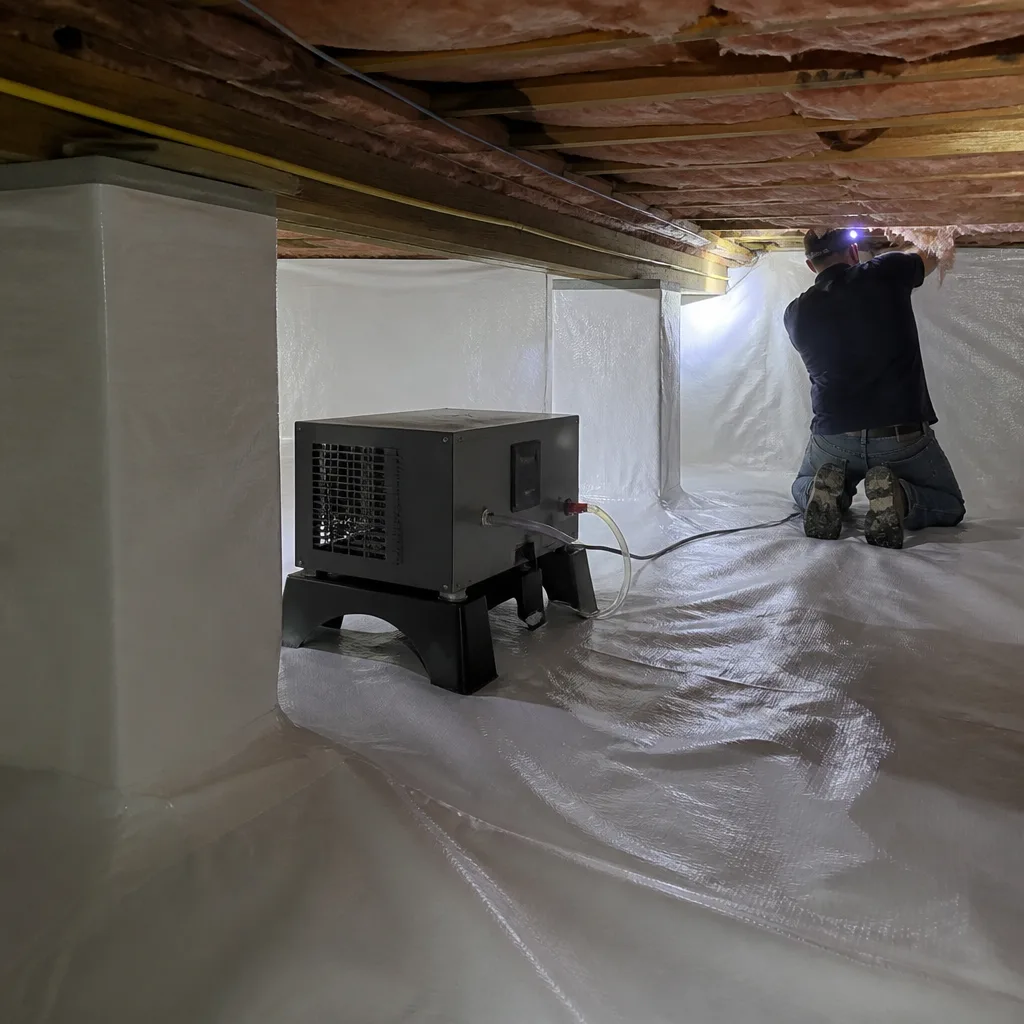
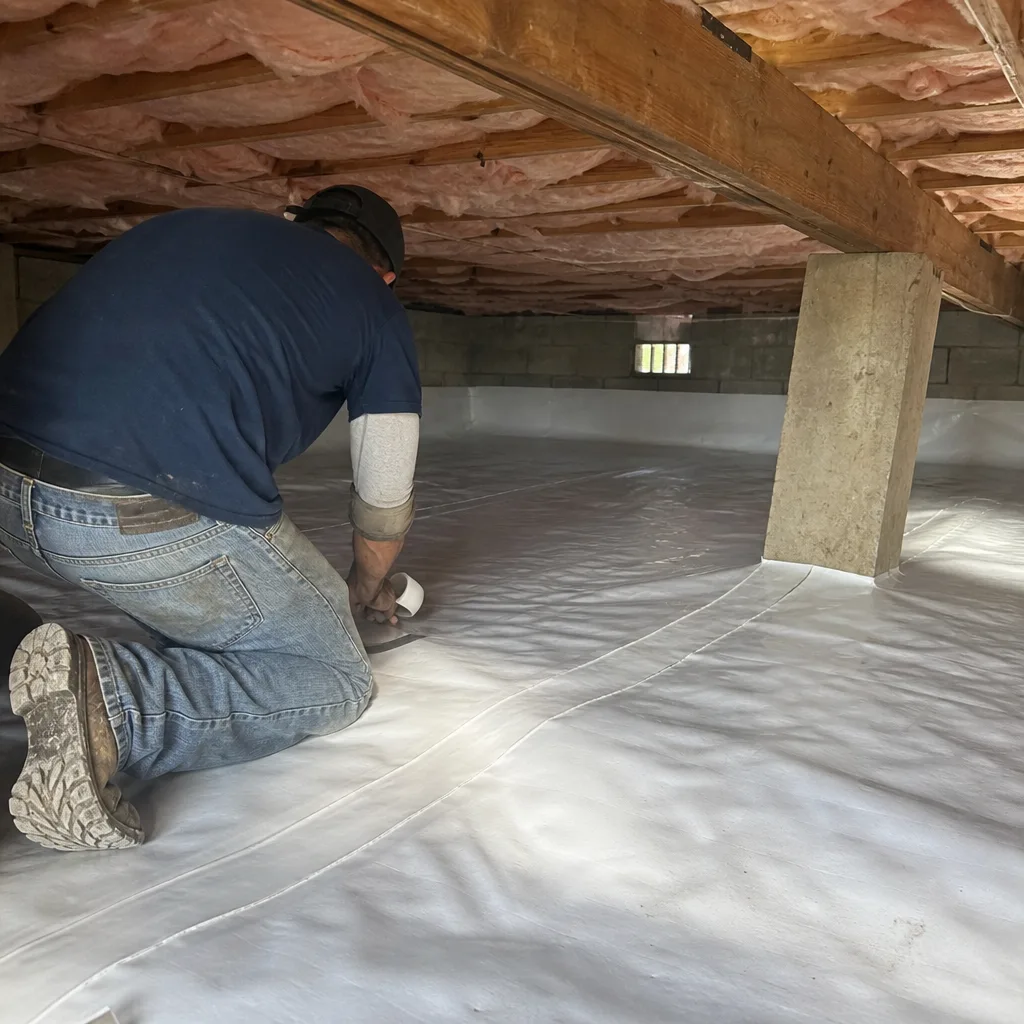
| Crawl space encapsulation with vapor barrier | $3,500-$6,500 | 2-3 days |
| Full home energy audit with blower-door test | $350-$550 (credited toward work if contracted within 30 days) | 2-3 hours |
Factors that push Canyon Lake jobs toward the higher end:
- Steep roof pitches above 8:12, common in lake-view homes, requiring specialized access equipment
- Metal roofing that must be protected from spray foam overspray or worker foot traffic
- Caliche soil conditions that prevent standard ladder staging and require scaffold or boom lift
- Multiple attic zones separated by vaulted ceilings or addition junctions, each requiring separate treatment
- Active rodent infestation requiring removal, sanitization, and proofing before new insulation
Timeline disruptions we plan for: summer afternoon thunderstorms that halt spray foam application, holiday weekends when lake traffic makes crew transport unpredictable, and the September-October period when cedar-elm pollen is heaviest and we avoid attic work for crew health.
Every job begins with a written price - no work starts without it - and the price doesn’t change unless you add scope. That’s Haven Standard Clause 1.
Common Mistakes to Avoid
- Blowing insulation over unsealed penetrations. This is the most common error in Canyon Lake retrofits. The insulation hides the leaks from visual inspection but doesn’t stop the air movement. We remove and start over on roughly 15% of our jobs.
- Ignoring the roof deck in homes with attic HVAC. Conditioning air through ducts that sit in 140°F space is fighting physics. The insulation investment belongs at the roof line first, not the floor.
- Installing kraft-faced batts in vented attics. The facing traps hill-country dust against the fiberglass and can create moisture problems in spring and fall when dew point conditions are marginal. Unfaced products with proper attic ventilation perform better here.
- Blocking soffit vents with insulation. Canyon Lake homes need active ventilation to purge attic heat. Baffles are cheap insurance against wind-wash and vent blockage, but we find them missing on most existing installations.
- Choosing insulation based on R-value alone without considering air leakage. A leaky R-49 attic performs worse than a sealed R-38. The blower-door number tells you which you have.
- Neglecting to document pre-existing conditions. Without photos and measurements before work starts, disputes about whether a roof leak or existing damage was caused by the insulation crew are unresolvable. We document everything.
- Assuming all spray foam is equivalent. Open-cell and closed-cell have different vapor permeance, different R-values per inch, and different structural contributions. The wrong choice for your roof deck can trap moisture or fail to meet code.
When to Call a Professional
Call when your upstairs rooms stay 8-12°F warmer than downstairs in July despite the AC running continuously. Call when you find insulation scattered in your yard after a wind event, which indicates attic floor bypasses or missing baffles. Call when your energy bills spike without rate changes, especially if the increase is summer-weighted. Call when you’re considering any roof replacement - the tear-off is the only practical time to access roof-deck insulation for a conventional attic.
Topside Attic Insulation Canyon Lake offers free estimates in Canyon Lake. We’ll run a blower-door test, show you the CFM50 number, and explain what it means for your specific home. No work starts without a written price. Call (737) 227-6219.
Frequently Asked Questions
Most attic insulation jobs in a typical 1,800-2,400 square foot Canyon Lake home run between $2,800 and $5,400 including air sealing, depending on existing conditions and whether removal is needed. Spray foam at the roof deck ranges from $4,500 to $8,200 for the same footprint. Call (737) 227-6219 for a written estimate - estimates are free and include a blower-door reading.
Repair is cheaper only when contamination or compression is limited to less than 30% of the attic area and the remaining insulation is unfaced fiberglass or cellulose in good condition. In Canyon Lake, dust loading and rodent activity often make full removal and replacement the better long-term value. We’ll show you photos and give you both options in writing.
Same-day air sealing is possible in some cases, but complete insulation installation requires scheduling for material delivery and crew availability. Emergency comfort improvements - sealing the largest attic bypasses - can sometimes be completed in a single day with a follow-up visit for full insulation. Call (737) 227-6219 to discuss your timeline.
R-value measures how well insulation resists heat moving through it; ACH50 measures how many times per hour your home’s entire air volume leaks out when pressurized to 50 pascals. You need both: R-value without air sealing is like a winter coat with the zipper stuck open. Every Canyon Lake project summary we deliver includes both numbers.
Yes. The 909-foot elevation means slightly lower air density and more intense UV exposure than the Texas plains, which increases radiant heat gain through roofing. It also means greater temperature swings between day and night, making air sealing more consequential for thermal comfort. Our specifications account for these factors.
Request the documentation: material spec sheets, installed R-value per zone, and blower-door pre/post readings in CFM50. If your contractor can’t provide these, the installation wasn’t documented to the Haven Standard. We deliver all three on every job, with photos, before the crew leaves your property.
The Bottom Line
Canyon Lake’s hill-country geography demands an insulation approach that addresses radiant heat gain first, air leakage second, and conductive resistance third. The standard flat-land playbook fails here because it treats R-value as the whole story. The complete picture requires three numbers: installed R-value per zone, CFM50 before and after air sealing, and ACH50 calculated for your home’s volume. Get all three in writing before work starts, receive documentation at completion, and verify the result with your own eyes and your next energy bill. That’s what 9,000+ homes since 2016 have taught us about doing this right. Explore more guides & resources for Canyon Lake homeowners.
Written by Wes Okafor, Owner at Topside Attic Insulation Canyon Lake, serving Canyon Lake since 2016.