
Last updated September 24, 2026
How to Hire a Insulation Contractor in Canyon Lake: A Step-by-Step Guide
In Texas, insulation contractors are not required to hold a specialty license specific to insulation. The barrier to entry is a truck and a hose. For Canyon Lake homeowners, that means your only protection is the written scope you negotiate before work begins, not a state board you can appeal to later. We’ve seen attics in Canyon Lake where blown fiberglass was installed directly over unsealed top plates and can-light penetrations, turning the insulation into an air filter that collected humidity from the Hill Country’s temperature swings. This guide and our Insulation Warning Signs: A Canyon Lake Homeowner’s Reference Guide will teach you to hire based on verifiable outputs, not verbal assurances. You’ll learn the five questions that separate performance contractors from material installers, how to read a written scope, and what documentation to demand when the crew leaves.
Quick Answer
To hire a reliable insulation contractor in Canyon Lake, request a written scope that lists material type, installed R-value per zone, air-sealing locations, and the verification metric (CFM50 or ACH50) before any work starts. The single most predictive question you can ask is whether they will provide a pre-job blower-door number and a written scope with installed R-value per zone. Contractors who refuse are selling labor, not performance.
Table of Contents
- Why the Written Scope Matters More Than the Price in Canyon Lake
- Five Questions That Separate Performance Contractors from Material Installers
- How to Read and Compare Insulation Bids Apples-to-Apples
- What a Written Scope Must Contain
- Red Flags Specific to Canyon Lake Bids
- Comparing Materials: Spray Foam vs. Blown Cellulose vs. Batts
- What Post-Job Documentation to Demand
- Common Mistakes to Avoid
- When to Call a Professional
- Frequently Asked Questions
- The Bottom Line
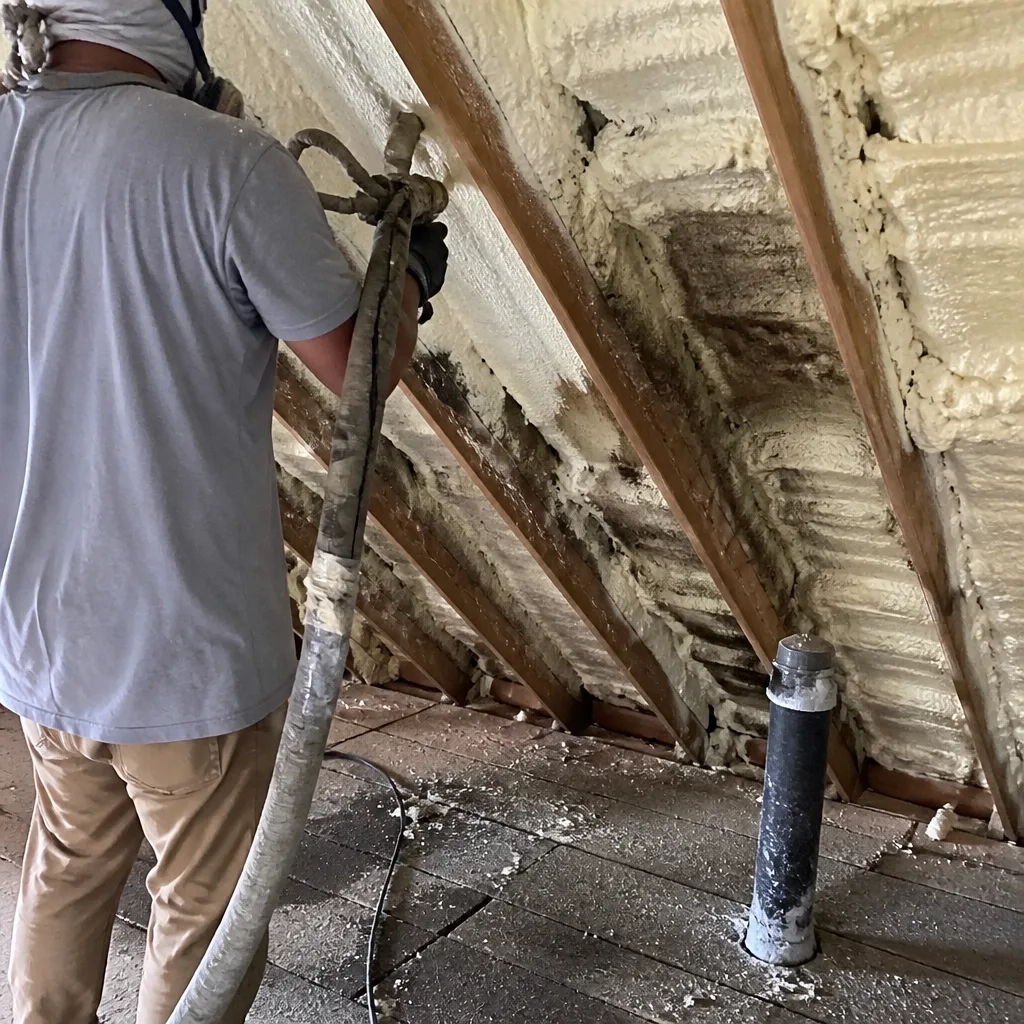 Before
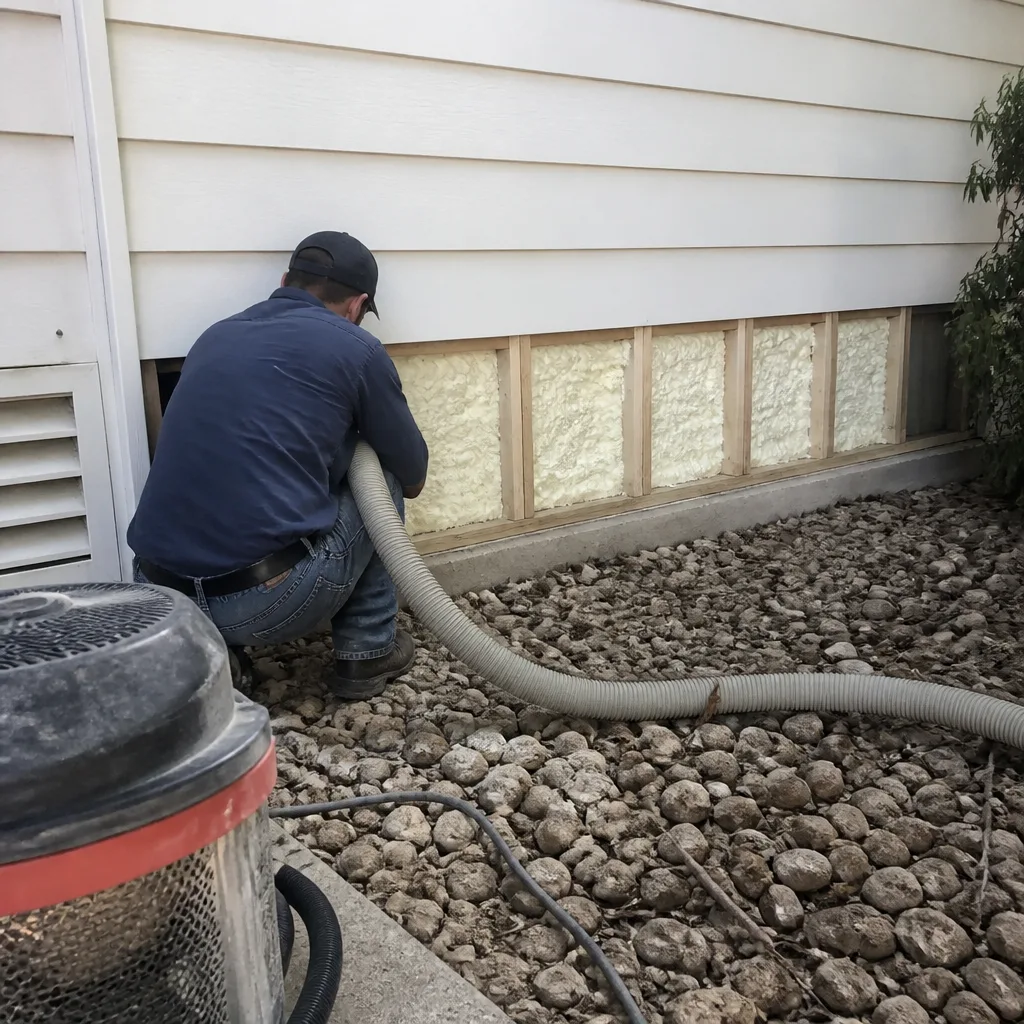 After
AfterWhy the Written Scope Matters More Than the Price in Canyon Lake
Canyon Lake sits in the Texas Hill Country, where summer highs routinely hit triple digits and winter nights can drop below freezing. That temperature range puts stress on building envelopes that contractors in milder climates rarely see. We’ve inspected homes in Startzville and Canyon Lake Hills where insulation was installed by the lowest bidder, only to find thermal imaging revealed gaps at chase walls and plumbing stacks that rendered the R-value on the bag meaningless.
The problem isn’t the material. It’s the absence of a written scope that defines what “done” looks like.
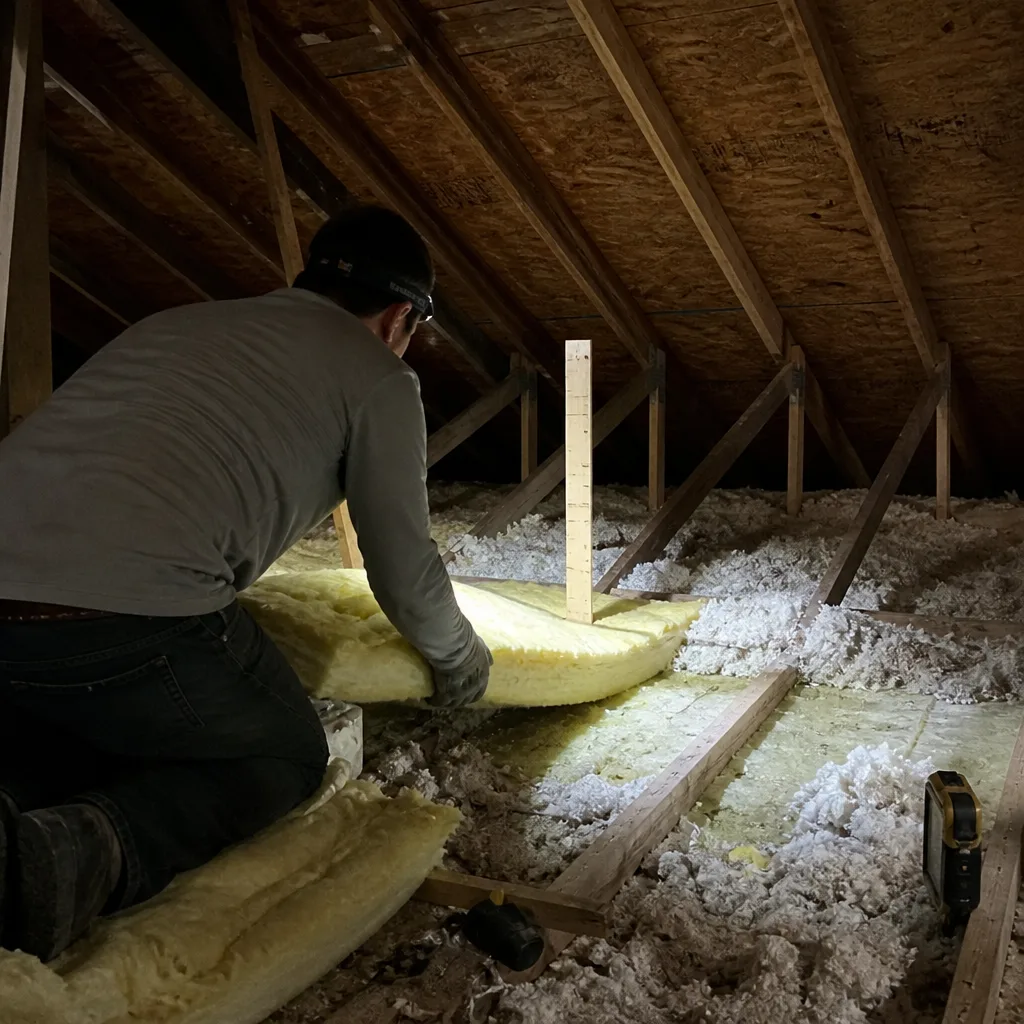
Under Topside Attic Insulation Canyon Lake home operations, every job begins with a written price and ends with a documented record. This isn’t a marketing position. It’s a response to what we’ve found in Canyon Lake attics since 2016: insulation installed over unsealed penetrations, batts compressed into cavities too shallow for their labeled thickness, and spray foam with no documentation of applied board-feet.
A written scope is your enforceable contract for performance. Verbal promises about “making it tight” or “you’ll feel the difference” dissolve the moment the crew drives away. The scope should specify:
- Material type and brand
- Installed depth or board-feet
- R-value achieved per zone (attic floor, knee walls, rim joist, etc.)
- Air-sealing locations and methods
- Verification metric and target (CFM50 or ACH50)
Without these elements, you’re buying a labor hour, not a defined outcome. And in Canyon Lake’s unregulated contractor market, that distinction is everything.
Five Questions That Separate Performance Contractors from Material Installers
These five questions cut through sales scripts. Ask them in this order, and listen for specific answers, not reassurance.
1. Will you provide a pre-job blower-door number?
A blower-door test is a pressurization reading that shows, in one number, how much air your building envelope is losing. The measurement is taken in CFM50 (cubic feet per minute at 50 Pascals of pressure) or ACH50 (air changes per hour at 50 Pascals). A contractor who won’t establish a baseline cannot prove improvement. We’ve measured Canyon Lake homes at 5,000+ CFM50 before air sealing and dropped them below 2,500 after. Without the before number, the after number is just a number.
2. Can I see a prior job’s before-and-after blower-door report?
Ask for a redacted report from a recent job. You’re not looking for a specific address; you’re looking for documentation habits. Does the report show test date, technician name, weather conditions, and both readings? Or is it a handwritten note with one figure? The former indicates a system; the latter indicates an afterthought.
3. What air-sealing scope is completed before insulation goes in?
This is the question that separates envelope contractors from insulation installers. The correct answer includes: top plates, electrical penetrations, can lights, plumbing stacks, chase walls, and attic access hatches. If the answer is “we include air sealing” with no itemization, you’re talking to a material installer. Attic Insulation in Canyon Lake requires sealing first because Hill Country wind drives air through even small gaps, carrying moisture that degrades thermal performance.
4. What ACH50 target do you design for?
ACH50 measures how many times the home’s air volume exchanges per hour under test pressure. The 2021 IECC recommends 5 ACH50 or better for new construction in Climate Zone 2, where Canyon Lake sits; see Insulation Permits, Codes & Inspections in TX: What You Need to Know for full code context. Retrofit work rarely hits new-construction numbers, but a performance contractor should have a target and explain the constraints of your specific home. “We’ll see what we get” is not a target.
5. What documentation do I receive at job completion?
The answer should include: installed depth photos at multiple points, material data sheets, a written final blower-door reading, and a photo record of air-sealing work. If the contractor mentions “a receipt,” keep looking.
How to Read and Compare Insulation Bids Apples-to-Apples
Canyon Lake homeowners often receive bids that appear to describe the same work but specify nothing comparable. One contractor quotes “R-38 blown fiberglass, 1,200 sq ft.” Another quotes “R-38 blown cellulose, 1,200 sq ft, includes air sealing.” A third quotes “insulate attic, $2,400.” None of these are comparable without conversion.
Here’s how to normalize them:
- Verify the R-value is installed, not labeled. A bag of fiberglass labeled R-38 achieves that rating only at 12 inches of settled depth. If your attic has 2×8 joists (7.25 inches), the installed R-value is closer to R-25 unless the contractor builds up with cross-battens or loose-fill to full depth.
- Confirm the coverage area is conditioned floor area, not gross attic area. Some contractors quote the entire footprint including overhangs and garages. You care about the thermal boundary over living space.
- Convert air-sealing claims to line items. “Includes air sealing” should specify locations and methods. Top plates sealed with caulk? Foam? Gaskets? How many can lights? Each location has a labor cost; a real scope names them.
- Request the verification method. Will they blower-door test after? Visual inspection only? The answer determines whether you’re paying for a process or a result.
At Topside Attic Insulation Canyon Lake, we provide a Free Second Opinion on any written estimate. Bring us a competing quote and we’ll read it with you, line by line, to show what’s actually being purchased.
What a Written Scope Must Contain
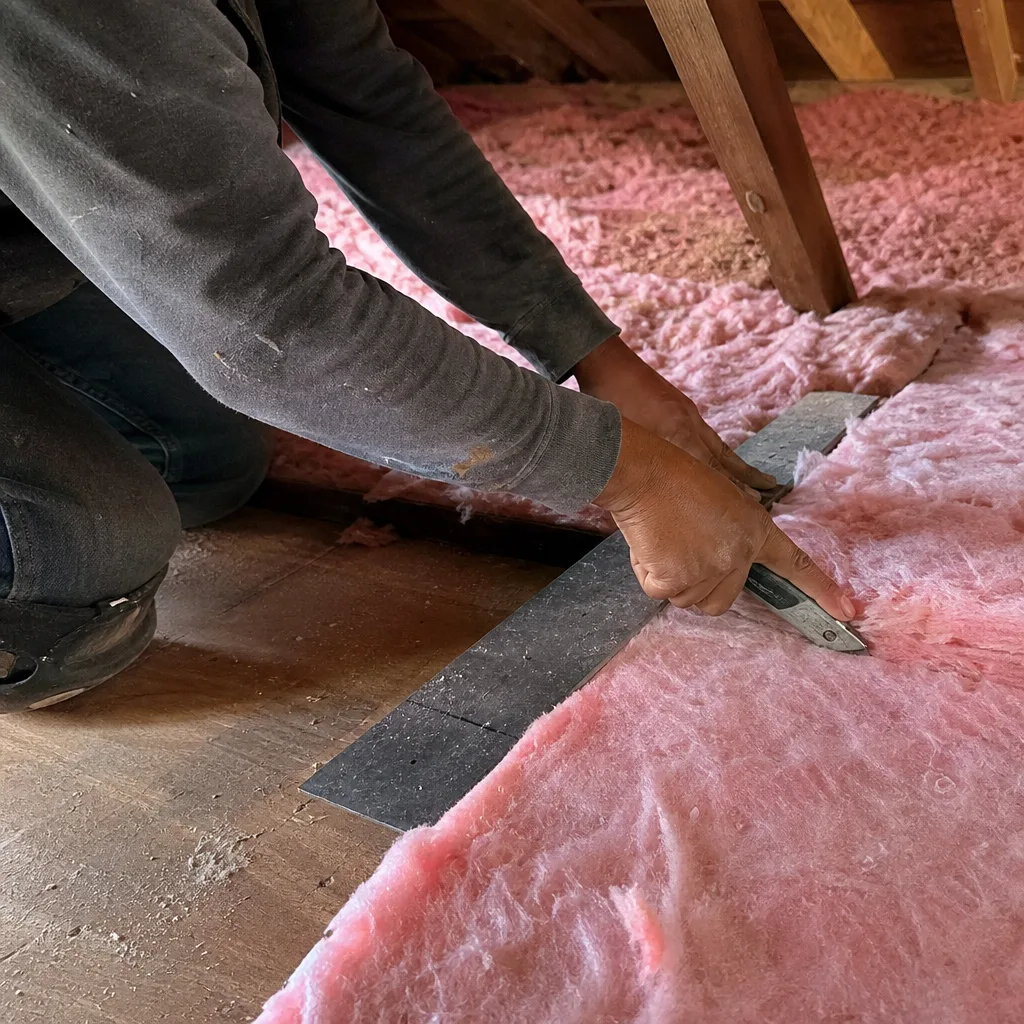
A written scope is not an estimate. An estimate is a price prediction. A scope is a technical specification that defines completion. Under Haven Standard Clause 1, every job gets a flat price, written scope, and written warranty before anyone lifts a tool. Here’s what that scope must include at minimum:
| Element | Why It Matters | What to Watch For |
|---|---|---|
| Material type and brand | Different materials have different settling rates, moisture sensitivity, and R-value per inch | “Blown insulation” without specifying fiberglass, cellulose, or mineral wool |
| Installed depth or board-feet | R-value depends on installed thickness, not bag count | Quotes by the bag rather than by depth or R-value |
| Zone-by-zone R-value | Attic floor, knee walls, and rim joists need different treatments | Single R-value for entire “attic” when multiple planes exist |
| Air-sealing locations | Defines the thermal boundary; unsealed penetrations bypass insulation | “Air sealing included” with no itemization |
| Verification metric | Proves the work performed as designed | No mention of blower-door, thermal imaging, or inspection criteria |
The scope should also name the warranty terms and duration. Our 365-Day Done Right Promise applies to all completed work, and the terms are in writing before start.
Red Flags Specific to Canyon Lake Bids
Canyon Lake’s housing stock mixes 1970s lake cottages, 1990s suburban builds, and recent Hill Country custom homes. Each era has distinct envelope problems, and low bidders often exploit the variation. Watch for these specific red flags:
- Quotes by the bag, not by square-foot-to-R-value. A bag of loose-fill fiberglass covers different areas at different depths. A quote for “20 bags” tells you nothing about the R-value achieved. Demand pricing per square foot at specified R-value.
- No mention of attic bypasses. Canyon Lake’s older lake homes often have chase walls for plumbing vents, dropped soffits over kitchen cabinets, and open framing around brick fireplaces. These bypasses carry conditioned air directly into the attic. A scope that doesn’t name them isn’t planning to seal them.
- “Air sealing included” with no line-item description. This phrase usually means the crew will foam the obvious gaps they happen to notice. It does not mean a systematic treatment of top plates, can lights, and penetrations.
- No discussion of ventilation. Texas summers cook unvented attics. A bid that adds insulation without assessing soffit, ridge, or gable ventilation can create moisture problems. We’ve found mold in Canyon Lake attics where insulation was added over blocked soffit vents.
- Pressure to decide immediately. Under Haven Standard, you get a written price and time to review it. Any contractor who claims pricing expires in 24 hours is selling urgency, not value.
Comparing Materials: Spray Foam vs. Blown Cellulose vs. Batts
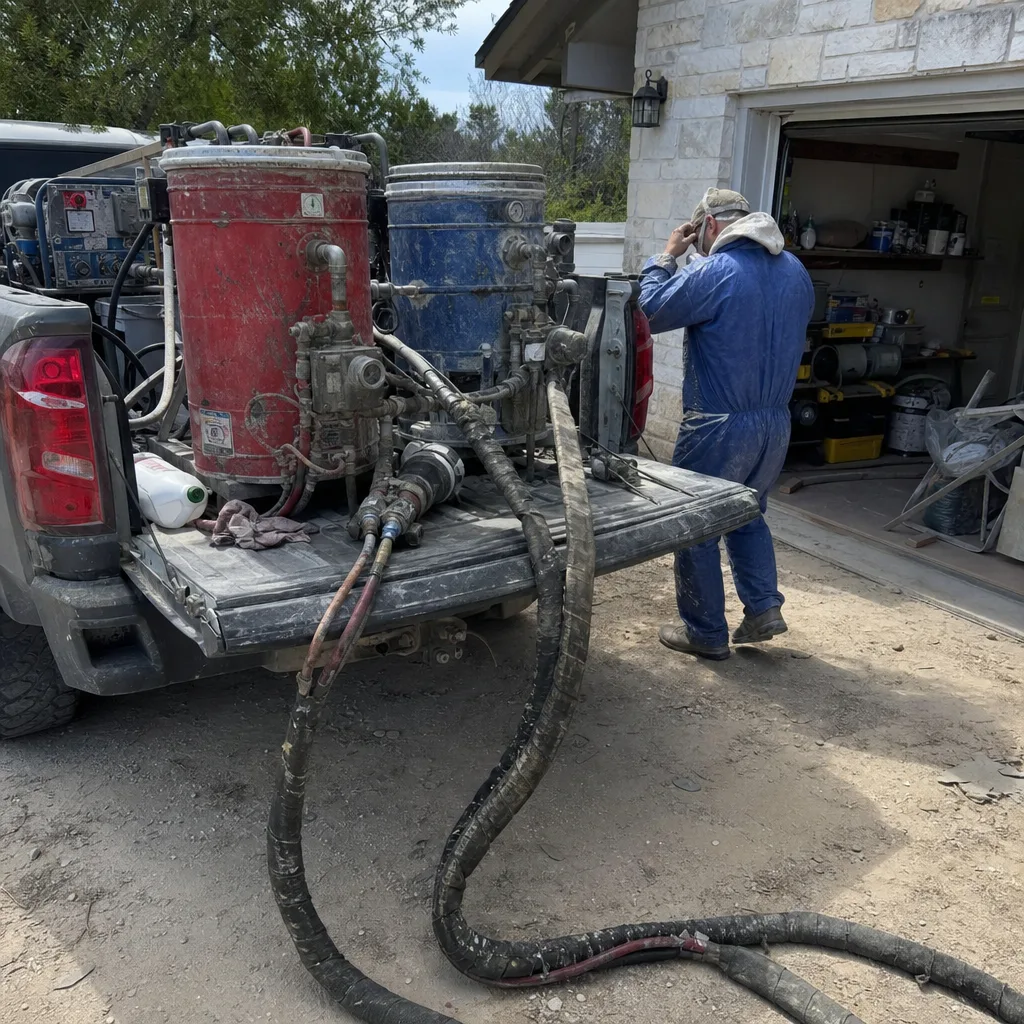
Different materials suit different applications, and honest contractors will explain the tradeoffs rather than push one product. Here’s how to compare bids that specify different materials by converting to cost-per-effective-R-value.
Spray foam (open-cell or closed-cell) provides the highest R-value per inch and acts as its own air barrier when properly applied. Closed-cell foam runs roughly R-6.5 per inch; open-cell around R-3.6. The critical specification is board-feet applied, not “spray foam attic.” A 1,500 square foot attic at 5 inches of open-cell requires 7,500 board-feet. Ask for the calculation. Spray Foam Insulation in Canyon Lake is often the right choice for complex framing or conditioned attic designs, but it’s not automatically superior for every application.
Blown cellulose (we use GreenFiber in some applications) provides R-3.2 to R-3.8 per inch and performs well in Canyon Lake’s climate when the attic is properly air-sealed first. Cellulose is treated with borate for fire and pest resistance. The key specification is settled depth, not blown depth, which can be 20% higher before settlement.
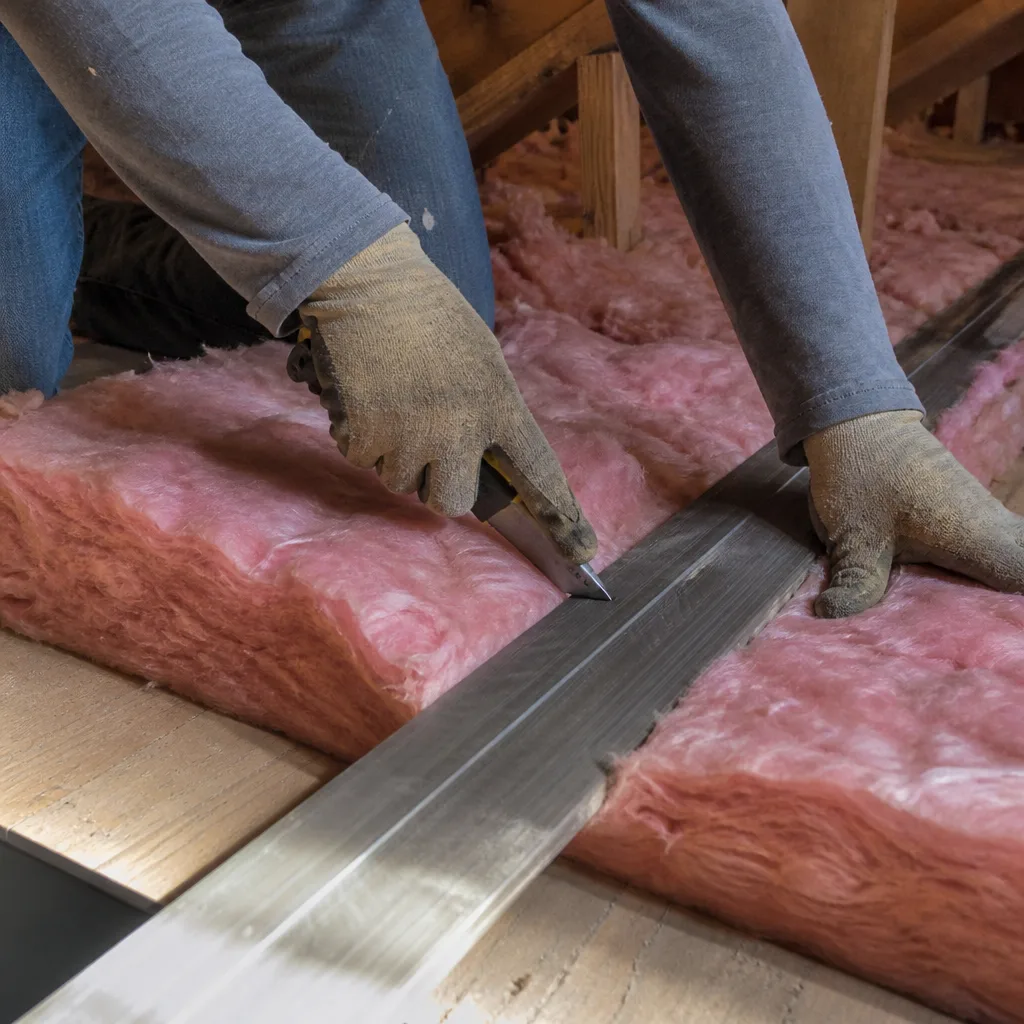
Fiberglass batts are the most commonly misinstalled material. Compression in cavities narrower than the batt thickness, gaps at electrical boxes, and failure to split around wiring all reduce effective R-value. Batts work only where cavities are uniformly sized and the installer is meticulous.
To compare bids, calculate: Total installed cost ÷ (Area in sq ft × Achieved R-value) = Cost per effective R-value per square foot.
A bid for $3,600 to achieve R-38 over 1,000 square feet with blown cellulose: $3,600 ÷ (1,000 × 38) = $0.095 per R-sq ft. A bid for $5,400 to achieve R-38 with spray foam over the same area: $5,400 ÷ (1,000 × 38) = $0.142 per R-sq ft. The spray foam bid may still be correct if it includes comprehensive air sealing that the cellulose bid omits. The calculation forces the comparison to include scope, not just material.
What Post-Job Documentation to Demand
The job isn’t complete when the crew leaves. It’s complete when you have documentation that proves the work was done as specified. Demand these items before final payment:
- Installed depth photos at multiple points. Not one photo of the attic’s center. Photos at eaves, near penetrations, and at the access hatch show consistency. Depth should be measured with a ruled probe, not eyeballed.
- Material data sheets. The manufacturer specifications for the actual product installed. This protects you if a warranty claim arises later.
- Written final blower-door reading in CFM50 or ACH50. The post-work number, with test conditions noted. If the contractor performed air sealing, you should see meaningful improvement from the pre-job baseline.
- Photo record of air-sealing work. Before-and-after photos of sealed top plates, foamed penetrations, and gasketed access hatches. You can’t inspect these easily after insulation covers them.
- Updated written scope with any changes noted. If the crew found inaccessible cavities or modified the plan, the changes should be documented and acknowledged.
At Topside Attic Insulation Canyon Lake, we include a Documented Photo Record on every visit, not available on request. It’s part of the job, not an add-on.
Common Mistakes to Avoid
- Hiring based on price per bag instead of price per R-value. Canyon Lake homeowners who compare “20 bags” bids often pay for material that achieves less than the labeled R-value because depth was insufficient.
- Skipping air sealing to save money. In Hill Country wind patterns, unsealed attics lose 30-40% of conditioned air through bypasses. Insulation over leaks is an expensive filter.
- Accepting verbal scope changes during the job. Any change to material, depth, or sealing locations should be written and signed before implementation. Haven Standard requires it.
- Ignoring ventilation when adding insulation. Blocking soffit vents with insulation creates moisture problems that cost more than the original job to remediate.
- Not verifying the crew’s work before payment. The documentation listed above is your only recourse if performance doesn’t match promise. Request it before the final draw.
- Assuming all spray foam is the same. Demilec and other manufacturers specify application temperature, substrate moisture limits, and pass thickness. A bid that doesn’t name the product and application parameters is incomplete.
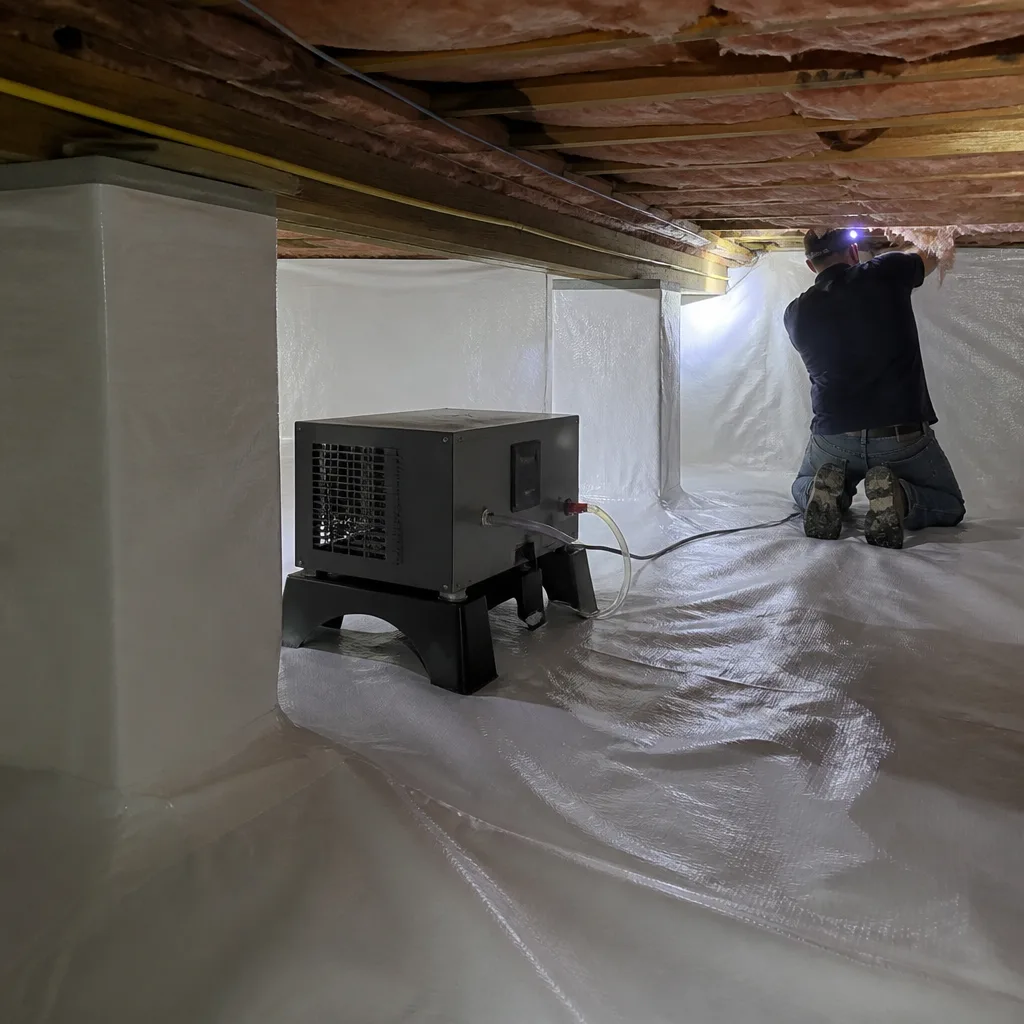
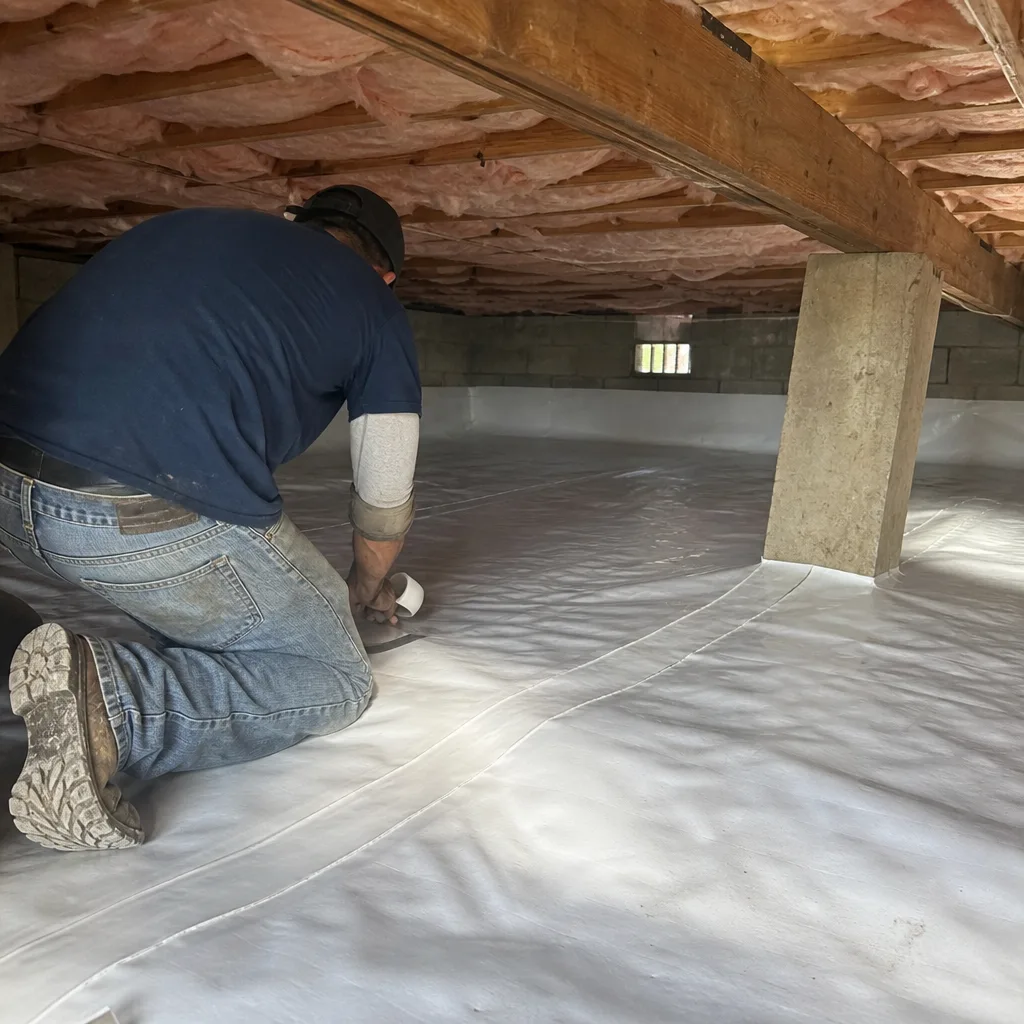
- Neglecting crawl spaces. Canyon Lake’s lake-adjacent homes often have elevated humidity in crawl spaces. Crawl Space Encapsulation & Vapor Barrier in Canyon Lake may be the higher-priority improvement if floor insulation is compromised by moisture.
When to Call a Professional
Call a professional when your energy bills spike without explanation, when rooms farthest from the HVAC unit never reach set temperature, or when you find insulation disturbed by rodents or moisture in the attic. These symptoms indicate envelope failure that DIY patching won’t resolve.
Topside Attic Insulation Canyon Lake offers free estimates in Canyon Lake. We’ll blower-door test your home, photograph current conditions, and provide a written scope with a flat price before any work starts. Call (737) 227-6219 to schedule. Under Haven Standard, you’ll speak to a live person, 24/7.
Frequently Asked Questions
Most attic insulation jobs in Canyon Lake run between $2,200 and $4,800 for loose-fill fiberglass or cellulose to R-38 over 1,000-1,500 square feet, with spray foam ranging higher depending on board-feet and access complexity; see our Insulation Cost Breakdown: The Canyon Lake Homeowner’s Reference for 2026 for detailed pricing factors. The variation depends on whether air sealing is included, current insulation removal needs, and attic accessibility. Call (737) 227-6219 for an exact quote on your home - estimates are free, and we provide a written price before any work starts.
Texas does not require a specialty license for insulation contractors, which means anyone with equipment can perform the work. Your protection is the written scope you negotiate, not state oversight. Verify general liability insurance, workers’ compensation coverage, and request a written scope with verification metrics before hiring.
Adding over existing insulation is cheaper upfront but often costs more over time if the old material is compressed, moisture-damaged, or infested. In Canyon Lake’s lake-adjacent neighborhoods, we’ve found existing insulation degraded by humidity that new material layered over it won’t fix. A blower-door test and thermal imaging reveal whether addition or replacement is the actual solution. Call (737) 227-6219 and we’ll assess your specific conditions.
Signs include visible gaps around light fixtures below the attic, dirty insulation (indicating air movement through the material), and high energy bills despite adequate insulation depth. The definitive test is a blower-door test with thermal imaging or smoke pencil inspection of the attic floor. We perform this assessment on every estimate in Canyon Lake - it’s the only way to specify the right scope.
The 2021 IECC recommends R-38 to R-60 for attics in Climate Zone 2, where Canyon Lake sits. R-38 is the practical minimum for retrofits; R-49 or higher provides better performance in Hill Country temperature extremes. The effective R-value depends on installed depth and air-sealing quality, not just the number on the bag.
Properly installed insulation with comprehensive air sealing reduces cooling load significantly in Canyon Lake’s triple-digit summers, but attic ventilation and duct sealing are equally important. We’ve measured attic temperatures above 140°F in unsealed, under-insulated Canyon Lake homes. Reducing heat gain through the envelope is the first step; right-sizing HVAC and sealing ducts are the complementary steps. A home energy audit identifies the priority sequence for your specific home.
The Bottom Line
Hiring an insulation contractor in Canyon Lake comes down to one decision: are you buying labor hours or defined performance? The contractors worth hiring will provide a pre-job blower-door number, a written scope with zone-by-zone R-values and air-sealing locations, and post-job documentation that proves the work. Anyone who won’t commit to these outputs in writing is selling material installation, not envelope improvement. Ask the five questions, calculate cost-per-effective-R-value, and demand the documentation that makes the scope enforceable. In an unregulated market, your written scope is your only warranty. Explore more guides & resources to protect your investment.
Written by Wes Okafor, Owner at Topside Attic Insulation Canyon Lake, serving Canyon Lake since 2016.