
Last updated September 24, 2026
Insulation Warning Signs: A Canyon Lake Homeowner’s Reference Guide
Here is a number that changes how you should read your utility bill: in Canyon Lake, a homeowner who calls an HVAC company complaining that the system “can’t keep up” in July has roughly a 40-60 percent chance of having an insulation or air-sealing deficiency, not an undersized unit. The HVAC technician measures refrigerant pressure and airflow at the registers; they do not run a blower-door test or pull back insulation to find a top plate that was never sealed. So the homeowner buys a larger air conditioner, pays for the upgrade, and the bedroom still never drops below 78°F because the real problem is conditioned air escaping into the attic faster than any size unit can replace it. This guide maps the observable symptoms - the ones that show up as discomfort, odor, or bill shock - to their actual causes in the building envelope, so you can diagnose before you spend. For a deeper dive, see The Complete Guide to Insulation in Canyon Lake.
Quick Answer
The most common insulation warning signs in Canyon Lake homes are a hot second floor, drafty baseboards in winter, utility spikes in May before peak summer, musty attic odors after cold fronts, uneven room temperatures, and AC units that short-cycle. These symptoms almost always trace to one of three envelope failures: air bypasses through unsealed attic penetrations, insulation gaps or compression at thermal boundaries, or missing air sealing at the rim joist or masonry veneer transition. A five-minute attic hatch test and a draft check around recessed lights will identify the highest-priority leaks without tools.
Table of Contents
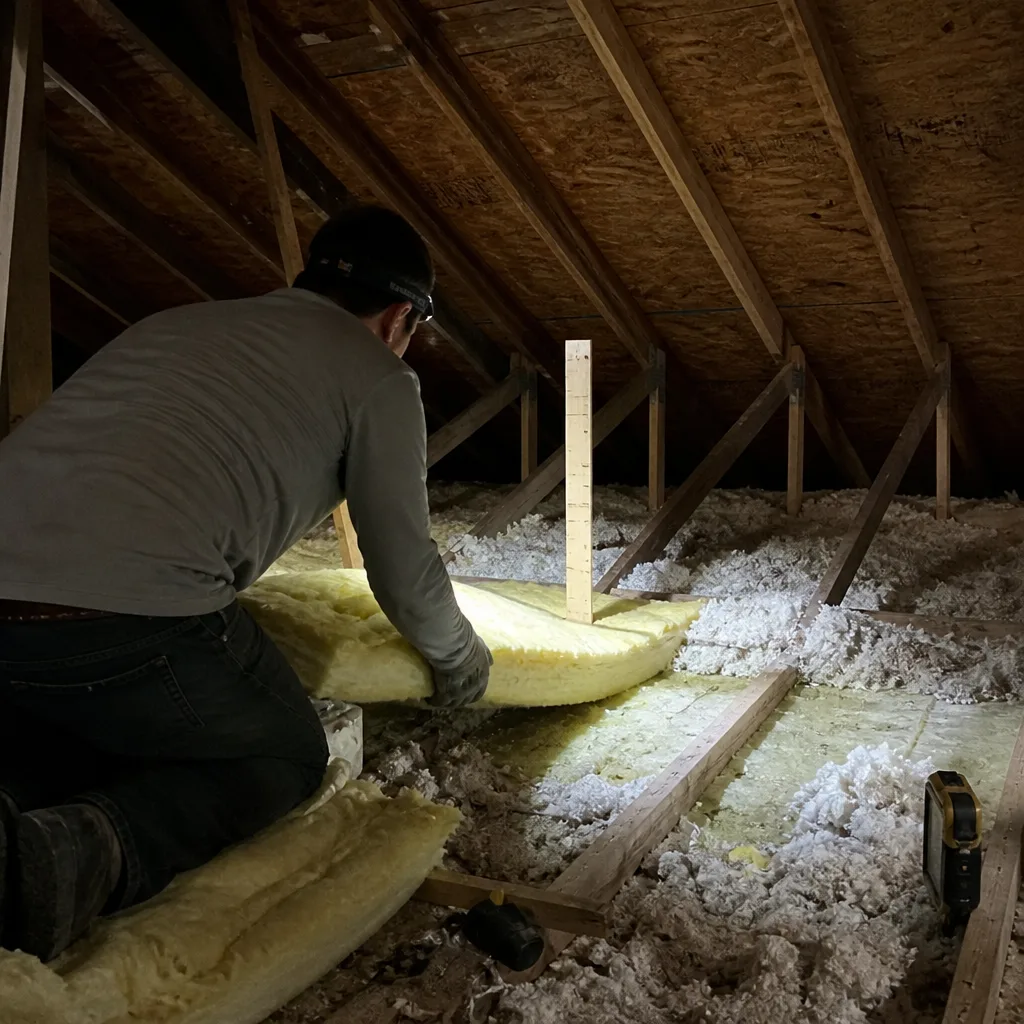
- The HVAC Misdiagnosis Problem in Canyon Lake
- Seven Observable Symptoms and Their Envelope Causes
- The Ceiling Stain Diagnostic: Air Bypass vs. Roof Leak
- Two Zero-Tool Tests That Find Your Worst Leaks
- Hill-Country Construction: Canyon Lake-Specific Failure Points
- When to Escalate: The Blower-Door Threshold
- Common Mistakes to Avoid
- When to Call a Professional
- Frequently Asked Questions
- The Bottom Line
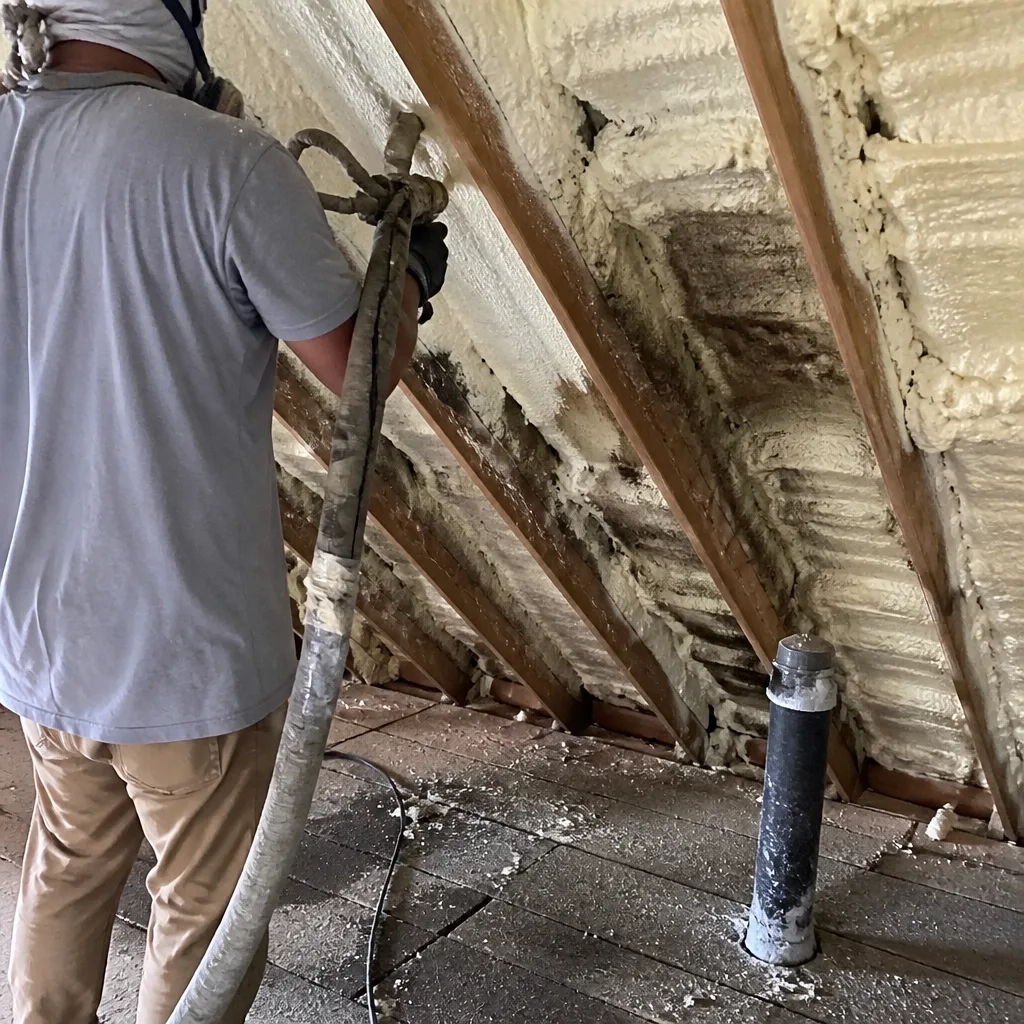 Before
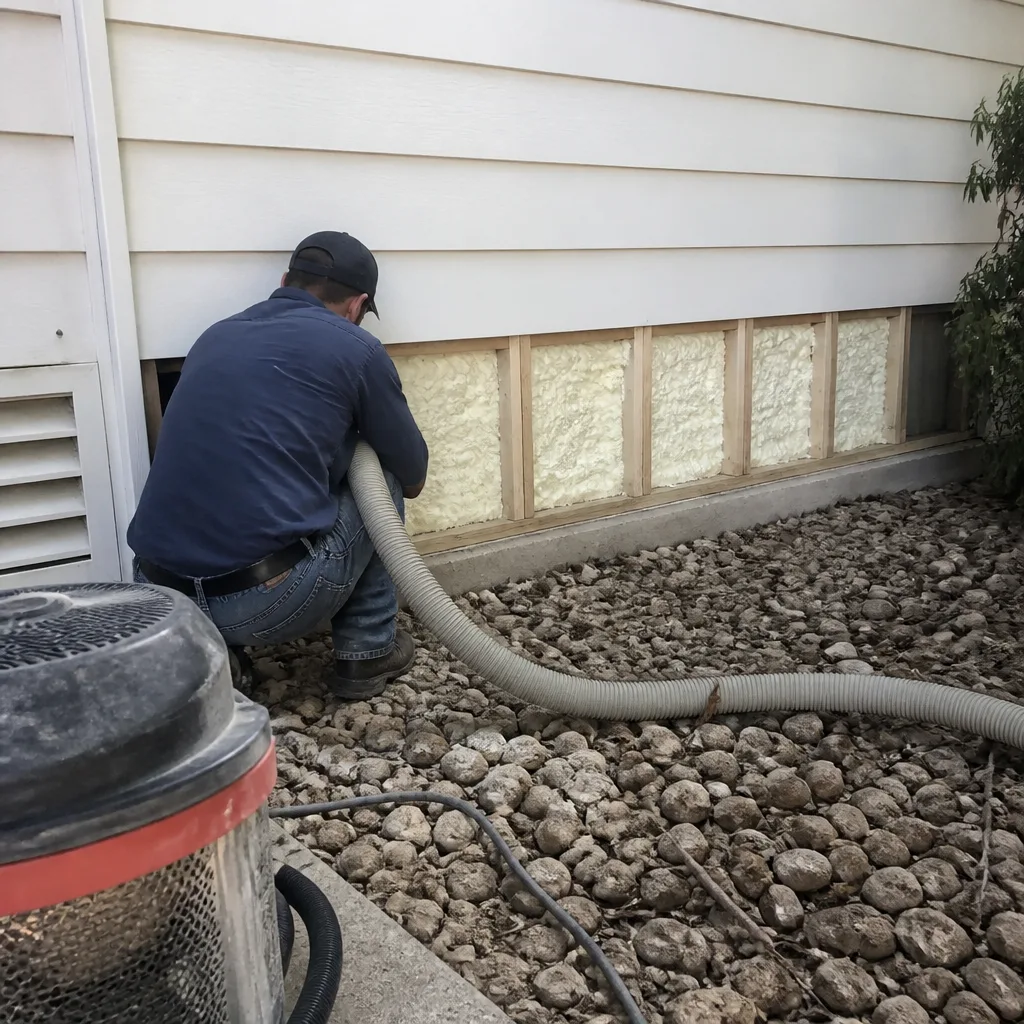 After
AfterThe HVAC Misdiagnosis Problem in Canyon Lake
Canyon Lake sits at the edge of the Texas Hill Country, where summer design temperatures hit 100°F regularly and winter lows dip below freezing just enough to matter. Homes here are built to a mixed climate standard, but the construction details from the 1980s through the mid-2000s often treated air sealing as optional. The result is a regional pattern we have documented across hundreds of Canyon Lake inspections: the building envelope leaks enough that the mechanical system is fighting a losing battle, and the homeowner never knows because no one measured the envelope.
An HVAC contractor’s load calculation assumes a certain rate of air leakage. If the actual leakage is double that assumption, the unit runs continuously without ever reaching setpoint. The contractor sees an old unit, notes its age, and recommends replacement. The new unit is sized correctly for the assumed leakage, not the actual leakage, and the cycle repeats. We have inspected Canyon Lake homes where the third AC unit in ten years was installed before anyone checked whether the attic floor was a sieve.
The fix is not more tonnage. It is sealing the envelope first, then sizing or adjusting the mechanical system to the reduced load. Topside Attic Insulation Canyon Lake home inspections begin with a blower-door test - a pressurization reading that shows, in one number, how much air your building envelope is losing. On homes built between 1985 and 2010 in Canyon Lake, we typically see initial readings of 3,500 to 5,500 CFM50. After air sealing and insulation work, those same homes read 1,800 to 2,800 CFM50. The homeowner feels the difference immediately, and the mechanical system finally gets a fair fight.
Seven Observable Symptoms and Their Envelope Causes
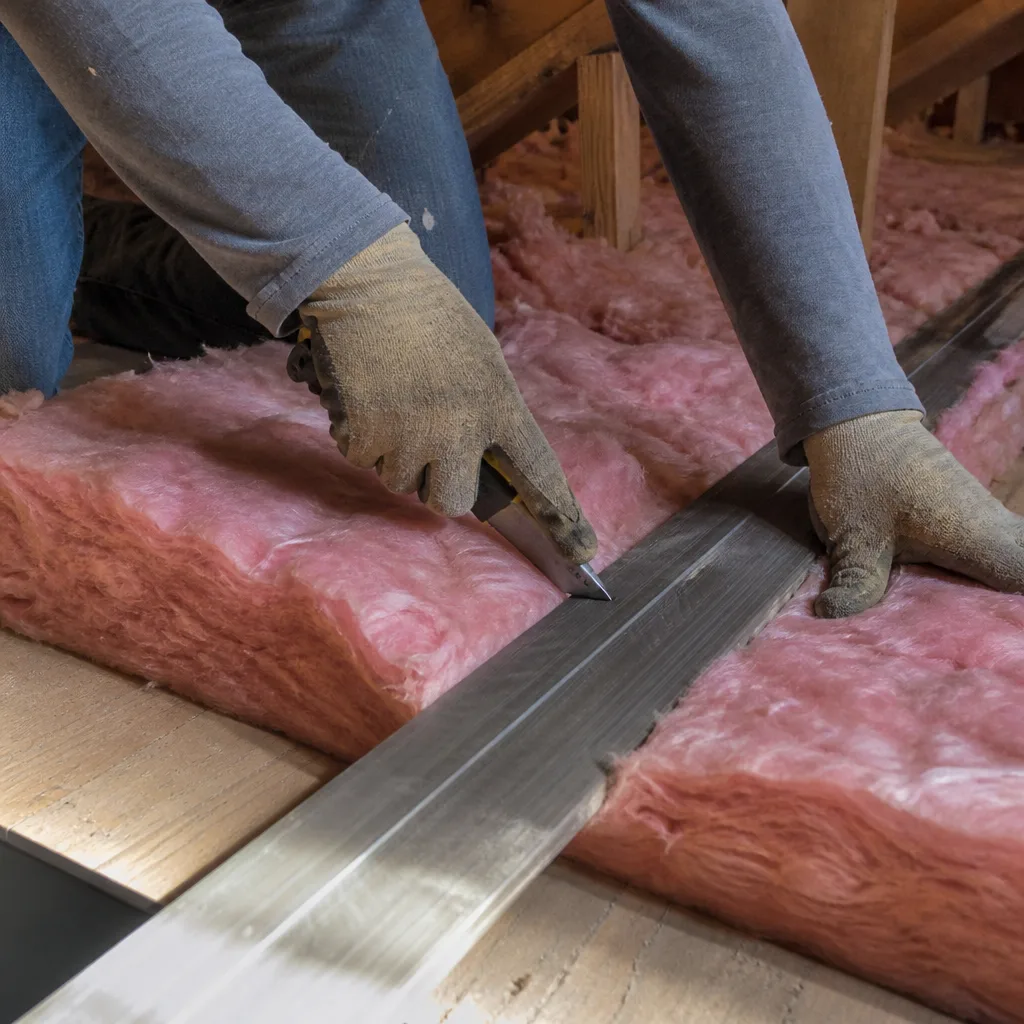
Each symptom below links to a specific physical failure. If you recognize more than two from your own home, your envelope needs inspection.
1. Hot Second Floor
The upstairs runs 8-15°F warmer than downstairs, even with the AC running. In Canyon Lake, this is rarely a duct design problem alone. The attic floor is the thermal boundary, and if insulation is compressed, displaced by previous work, or missing at the eaves, radiant heat from the attic deck overwhelms the ceiling plane. Compounding this, unsealed top plates - the horizontal framing member where interior walls meet the ceiling - allow conditioned air to escape upward, depressurizing the lower floor and pulling in hot attic air through the same gaps. The fix is air sealing at all top plates and penetrations, then restoring full-depth insulation with proper baffles at the soffit to maintain ventilation. Follow our Attic Insulation Maintenance Checklist for Canyon Lake Homeowners to stay on track.
2. Drafty Baseboards in Winter
Cold air entering at the floor level in January points to rim joist leakage or, in slab-on-grade homes, masonry veneer gaps at the sill plate. Canyon Lake’s hill-country terrain means many homes have walkout basements or split levels with exposed rim joists. These are often insulated with fiberglass batts that do not seal air movement, or they are entirely open to the exterior. Spray foam at the rim joist - closed-cell for below-grade, open-cell for above-grade - stops the infiltration. In pier-and-beam construction, which is common in the older lake-area neighborhoods, the crawl space perimeter is the culprit; Crawl Space Encapsulation & Vapor Barrier in Canyon Lake addresses this directly.
3. Utility Bill Spike in May
Your bill jumps before the real heat arrives. This timing matters. In Canyon Lake, May is when attic temperatures first sustain above 120°F. If your insulation is borderline inadequate, that first sustained heat load overwhelms it. The system runs longer, the bill spikes, and by July you are in crisis mode. May spikes are an early warning that insulation depth or coverage has degraded. Attic insulation should maintain its R-value across the entire floor; we find compression from storage, displacement from cable or HVAC work, and settling in older blown-in jobs.
4. Musty Attic Odor After Cold Fronts
You smell it when the heat first comes on, or after the first hard freeze. This is moist conditioned air hitting cold attic surfaces through bypasses. Warm, humid interior air leaks around can lights, bath fans, and chimney chases, condensing on the underside of the roof deck when temperatures drop. The moisture feeds mold growth on organic surfaces. The smell is the warning; the structural risk is the roof deck. Air sealing stops the moisture transport. In Canyon Lake’s variable spring and fall, these condensation events happen repeatedly before homeowners notice. Our Seasonal Insulation Care for Canyon Lake: Year-Round Homeowner’s Guide explains how to prevent them.
5. Uneven Room Temperatures
One bedroom is fine, the next is uninhabitable. This is almost always a local insulation failure or duct leakage, not a system problem. We find dropped soffits in kitchens and baths that were never insulated, attic kneewalls with no air barrier, and bonus rooms over garages where the garage attic connects to the conditioned space through unsealed framing. In Canyon Lake’s lakefront and hillside homes, these architectural features are common. The garage attic bypass is particularly insidious: the garage is technically unconditioned, but if its attic connects to your bedroom ceiling through open framing, you are conditioning the garage every time the AC runs.
6. AC Short-Cycling
The unit turns on, runs five minutes, shuts off, repeats. Short cycling indicates the system is reaching setpoint too quickly, which means it is cooling the air but not the structure. This happens when envelope leakage is so severe that the thermostat senses temperature drop before the walls and contents have absorbed any cooling. The air is cold, everything else is hot, and the cycle repeats every fifteen minutes. The compressor wears prematurely, humidity stays high, and the homeowner pays for runtime without comfort. Sealing the envelope slows the temperature change, extends run cycles, and lets the system dehumidify properly.
7. Ice Damming on Rare Freeze Events
Canyon Lake sees hard freezes every few winters, and when we do, ice dams form on homes with attic bypasses and inadequate insulation. Warm attic air melts snow at the ridge; water runs to the cold eave and refreezes, backing up under shingles. The damage shows as interior water stains weeks later, often misdiagnosed as roof failure. The actual cause is thermal bridging and air leakage at the ceiling plane. Proper air sealing and full-depth insulation at the eaves prevents the temperature differential that creates dams.
The Ceiling Stain Diagnostic: Air Bypass vs. Roof Leak
A dark circular stain around a ceiling penetration - a can light, a bath fan, a smoke detector - is almost always an air bypass, not a roof leak. The distinction matters because the repair is entirely different, and getting it wrong means replacing a roof that was fine.
Roof leaks follow gravity and the path of least resistance. They appear as irregular streaks, often traveling along framing members, and they widen toward the lowest point. The stain shape is dendritic, like a tree branch, and the damage is wet drywall, not just discoloration. Air bypass stains are different: they are circular or oval, centered on the penetration, and the drywall is typically dry to the touch. The discoloration is dust and moisture deposition from years of conditioned air escaping and attic air entering. The pattern is radial because the air movement is radial.
In Canyon Lake, we see this misdiagnosis frequently after winter cold fronts. A homeowner spots a stain, calls a roofer, and gets a $12,000 roof proposal. The actual fix is $400 in air sealing around the penetration and restoring insulation. Before you authorize roof work on a stain that centers a ceiling feature, perform the hand test below or call for a blower-door-directed inspection. We publish before-and-after blower-door numbers on every applicable job so you can verify whether the envelope was the problem.
Two Zero-Tool Tests That Find Your Worst Leaks
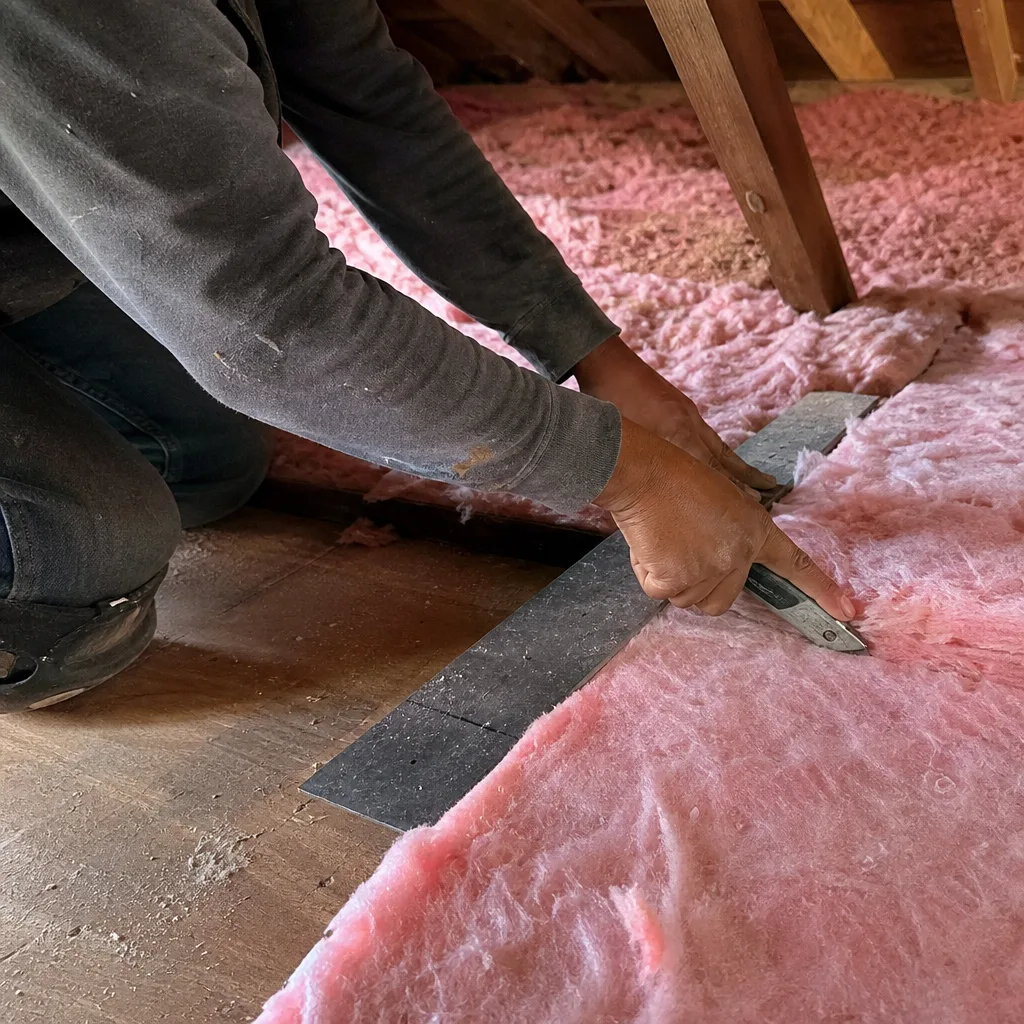
These tests require no equipment and take under five minutes. They identify the highest-priority air sealing targets that we address in every Attic Insulation in Canyon Lake job.
Test 1: The Attic Hatch Hand Test
- Run your heating or cooling system for at least fifteen minutes to establish pressure difference.
- Stand on a step stool and place your bare hand flat against the attic hatch or access door, covering as much surface as possible.
- Feel for airflow at the perimeter gap, the latch area, and any visible cracks. A detectable draft indicates a significant leak; the attic access is often the single largest unsealed penetration in the ceiling plane.
- Check the hatch itself: is it a piece of drywall resting on trim, or a proper insulated door with weatherstripping? Drywall hatches leak continuously and conduct heat; they should be upgraded or at least sealed with gasket material and latch hardware that compresses the seal.
In Canyon Lake homes built before 2010, we find unsealed drywall hatches in roughly 70 percent of attics. The fix is a pre-hung insulated access door or a site-built upgrade with rigid foam, weatherstripping, and mechanical latches. This alone can reduce blower-door readings by 150-300 CFM50.
Test 2: The Draft Sock Test for Recessed Lights
- Turn on the HVAC system and close all interior doors to create pressure differential.
- Hold a thin strip of tissue paper, a lit incense stick, or a smoke pencil near each recessed light fixture when the light is off and cool.
- Watch for movement toward or away from the fixture. Inward movement indicates suction - the light is a leak point pulling attic air into the conditioned space. Outward movement indicates pressurization - conditioned air is escaping upward.
- Note which fixtures show movement. IC-rated (insulation contact) can lights with airtight housings should show minimal flow. Older non-IC fixtures or remodel housings typically leak substantially.
The highest-leak fixtures are usually in the kitchen and master bath, where they are most numerous and where moisture transport is most damaging. Sealing or replacing these fixtures with airtight LED retrofits is standard in our air sealing scope. We use Owens Corning and Johns Manville sealing products at these penetrations, matched to the specific assembly.
Hill-Country Construction: Canyon Lake-Specific Failure Points
Canyon Lake’s geography and building history create envelope problems that do not appear in standard construction guides. These are the failures we document repeatedly in local inspections.
Masonry Veneer Gaps at the Soffit Line
Hill Country homes often use full masonry veneer that terminates at a wood soffit. The interface is rarely sealed properly; we find continuous gaps where the brick meets the fascia or where the soffit framing meets the top of the wall. These gaps communicate directly with the attic through the wall cavity, creating a chimney effect that draws conditioned air out in summer and pulls cold air in during winter. The fix is sealant at the veneer termination, often combined with blocking in the wall top plate, before any attic insulation is added. This is why we seal first, then insulate - in that order. Envelope will never blow insulation over an unsealed attic floor.
Spray Foam Voids at Rim Joists in Pier-and-Beam Homes
The lake-area neighborhoods and older hillside builds use pier-and-beam foundations with exposed crawl spaces. When spray foam was applied at the rim joist - common in retrofits from the 2010s - installers often missed the narrow corners where joists meet the band board, or they applied foam too thin to achieve the rated R-value. The result is a thermal bridge that shows up as cold floors in January and high humidity in the crawl space. Spray Foam Insulation in Canyon Lake requires proper thickness verification and cavity fill; we inspect with depth probes and thermal imaging to confirm complete coverage.
Detached Garage Attic Bypasses
Canyon Lake’s larger lots and lake-view homes often include detached or semi-detached garages with living space above or adjacent. The framing connection between house and garage attic is frequently left open, or it is covered with a lightweight access panel that is not airtight. Conditioned air moves freely between these spaces, and the garage - with its unsealed walls, vehicle exhaust exposure, and temperature extremes - contaminates the home’s air supply. The diagnostic is simple: on a still day, check for temperature and odor transfer between the garage attic and the house attic. The repair is rigid air barrier construction at the separation, sealed with appropriate materials.
Stone Veneer Thermal Mass Misalignment
Decorative stone veneer is popular in Canyon Lake’s Hill Country aesthetic, but when it is applied over frame walls without a proper drainage plane and air gap, the thermal mass works against the envelope. The stone heats in sun, stores energy, and radiates it inward through the wall assembly. If the wall insulation is incomplete or the air barrier is missing, this radiant load enters the conditioned space. The symptom is a west-facing room that never cools after 4 PM, even with blinds closed. The fix is proper wall insulation continuity and, in retrofits, sometimes exterior insulation board before re-siding.
When to Escalate: The Blower-Door Threshold
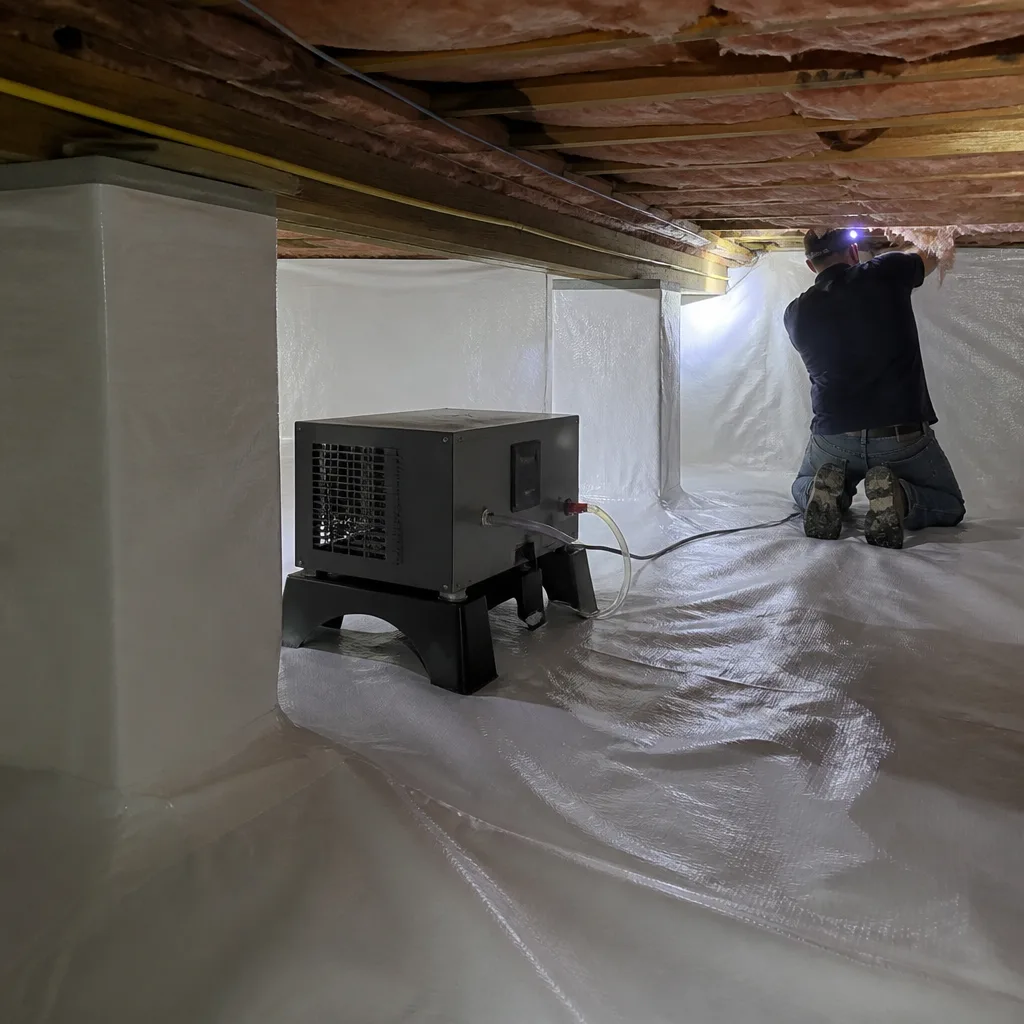
A DIY visual inspection finds symptoms; a blower-door test quantifies them. The question is when the homeowner’s observation should trigger professional measurement.
The metric is ACH50: air changes per hour at 50 Pascals of pressure, a standardized blower-door reading. Building codes and efficiency programs use this number to define acceptable leakage. Here is how to interpret it for Canyon Lake’s climate:
- Below 3.0 ACH50: Tight envelope. Any comfort problems likely trace to duct leakage, window quality, or mechanical sizing, not envelope infiltration. Air sealing improvements will have diminishing returns.
- 3.0-5.0 ACH50: Moderate leakage. Common in newer construction with reasonable attention to sealing. Improvements are possible but should be prioritized against other upgrades.
- 5.0-8.0 ACH50: Significant leakage. This is where most Canyon Lake homes built 1985-2010 fall. Comfort problems are envelope-related, and air sealing will produce measurable improvement in bills and comfort. This is the threshold where we recommend professional intervention.
- Above 8.0 ACH50: Severe leakage. The home is essentially unsealed. Every air-sealing measure is cost-effective, and mechanical systems are operating far outside design parameters. Immediate blower-door-directed sealing is warranted.
The five-minute hand and draft tests above will not give you an ACH50 number, but they will tell you whether you are likely above or below that 5.0 threshold. If you feel drafts at multiple penetrations, if your utility bills spike before peak season, and if rooms vary by more than 5°F, you are almost certainly in the 5.0-8.0 range or higher. A blower-door test costs less than a single month of excess utility spending in a leaky Canyon Lake home, and it provides the roadmap for every subsequent improvement.
Under Haven Standard: Have it in writing. Every job we perform begins with a written price, a written scope, and a written warranty before anyone lifts a tool. The blower-door reading is documented in that scope, and the after-test is recorded in the Documented Photo Record you receive when the crew leaves.
Common Mistakes to Avoid
- Adding insulation over unsealed air leaks. This is the most common error we correct in Canyon Lake. Blown fiberglass or cellulose over a leaking attic floor acts as a filter, not a barrier. Air moves through it, carrying moisture and dust, and the insulation compresses and degrades. Seal first, then insulate.
- Assuming new construction is tight. Texas did not adopt rigorous envelope codes until the 2012 IECC cycle, and enforcement varied by jurisdiction. We have tested Canyon Lake homes built in 2018 that read 6.5 ACH50. Age alone is not protection.
- Sealing attic ventilation. Soffit and ridge ventilation is required for moisture control in our mixed-humid climate. Homeowners sometimes stuff insulation into soffit vents or block ridge vents, thinking this “keeps heat out.” It traps moisture and voids most shingle warranties. Use baffles to maintain airflow.
- Ignoring the garage attic connection. The garage is not “outside” if its attic connects to yours. Treat the garage-house separation as a thermal and air barrier, not an afterthought.
- Replacing HVAC before testing the envelope. A new unit in a leaky house is wasted capital. The correct sequence is: blower-door test, air sealing, insulation restoration, then right-size the mechanical system to the reduced load.
- Using the wrong insulation type for the application. Open-cell spray foam in a below-grade rim joist absorbs moisture; fiberglass in a vented crawl floor collects it. Each assembly has appropriate materials. We source from Knauf, Rockwool, CertainTeed, and other manufacturers to match material to condition, with no proprietary lock-in.
- Skipping documentation. If your contractor cannot show you photos of the completed work, blower-door numbers, and a written warranty, you have no verification and no recourse. The Haven Standard requires all three, every time.
When to Call a Professional
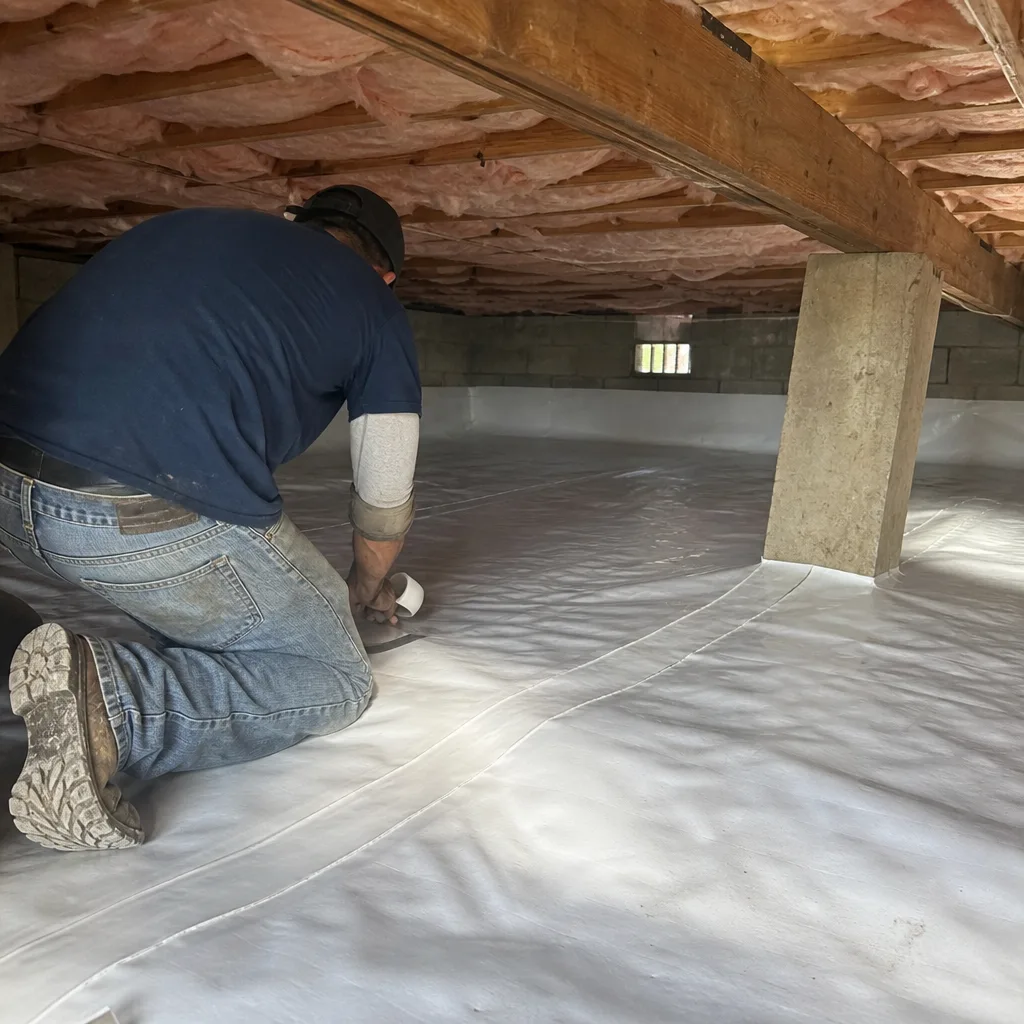
Call for a blower-door-directed inspection when you observe two or more symptoms from the seven listed above, when your utility bills spike without rate increases, or when you are considering any HVAC replacement. The test takes under two hours, requires no preparation, and gives you a ranked list of leakage points with photos.
Topside Attic Insulation Canyon Lake offers free estimates in Canyon Lake - call (737) 227-6219. Every estimate includes a visual envelope inspection, and we upgrade to full blower-door testing when the scope warrants. Our 365-Day Done Right Promise applies to all completed work: if it’s not done right, we make it right, backed by the written scope and warranty delivered before anyone starts.
Frequently Asked Questions
Most attic air sealing and insulation restoration jobs in Canyon Lake homes of 1,800-2,800 square feet run between $2,800 and $6,500, depending on accessibility, existing insulation condition, and the extent of air sealing required. Crawl space encapsulation adds $3,500-$8,000 for typical pier-and-beam homes. We provide a written price before any work starts - no exceptions - and offer a Free Second Opinion on any written estimate you have received. Call (737) 227-6219 for an exact quote; estimates are free.
You can, but you should not if the existing insulation is compressed, water-stained, or covering unsealed air leaks. Adding new material over damaged or bypassed old material traps moisture and hides the real problem. The correct sequence is removal of compromised material, air sealing of all penetrations and top plates, then installation of new insulation to full depth. In Canyon Lake’s climate, we typically specify R-38 to R-49 in attics, achieved with blown fiberglass or cellulose over sealed surfaces.
Compare your usage in kilowatt-hours, not dollars, to the same month in prior years. If kWh is up 20 percent or more without weather variation, and your thermostat habits have not changed, the envelope is the likely culprit. Check the May spike pattern: if usage jumps before peak summer, your attic is losing the battle with sustained high temperatures. A blower-door test confirms the diagnosis in under two hours.
Comal County and the City of Canyon Lake adopt the International Energy Conservation Code with local amendments. Current residential code requires R-38 minimum in ceilings, R-13 in frame walls, and R-19 in floors over unconditioned spaces. However, code minimum is not performance optimum; we design to the Department of Energy’s climate-zone recommendations, which exceed code for this region. If you are building or remodeling, we can review your plans against both standards.
Air sealing stops air movement; insulation slows heat transfer. They are complementary but not interchangeable. A wall can be fully insulated and still leak air around electrical boxes; an attic can be air-sealed and still radiate heat through thin insulation. Effective envelope work addresses both, in that order. Envelope Insulation Co. will never blow insulation over an unsealed attic floor; air sealing of top plates, can lights, and penetrations is completed before any insulation is added.
A typical attic air sealing and insulation job in a Canyon Lake home takes one to two days: half day for preparation and sealing, half day for insulation installation, and final documentation. Crawl space encapsulation runs two to three days. We arrive on schedule, you get a named technician and a text when they are on the way, and you receive your Documented Photo Record and blower-door results before the crew leaves. Since 2016, we have sealed and insulated 9,000+ homes - every one with a written price before work started and a documented record when the crew left.
The Bottom Line
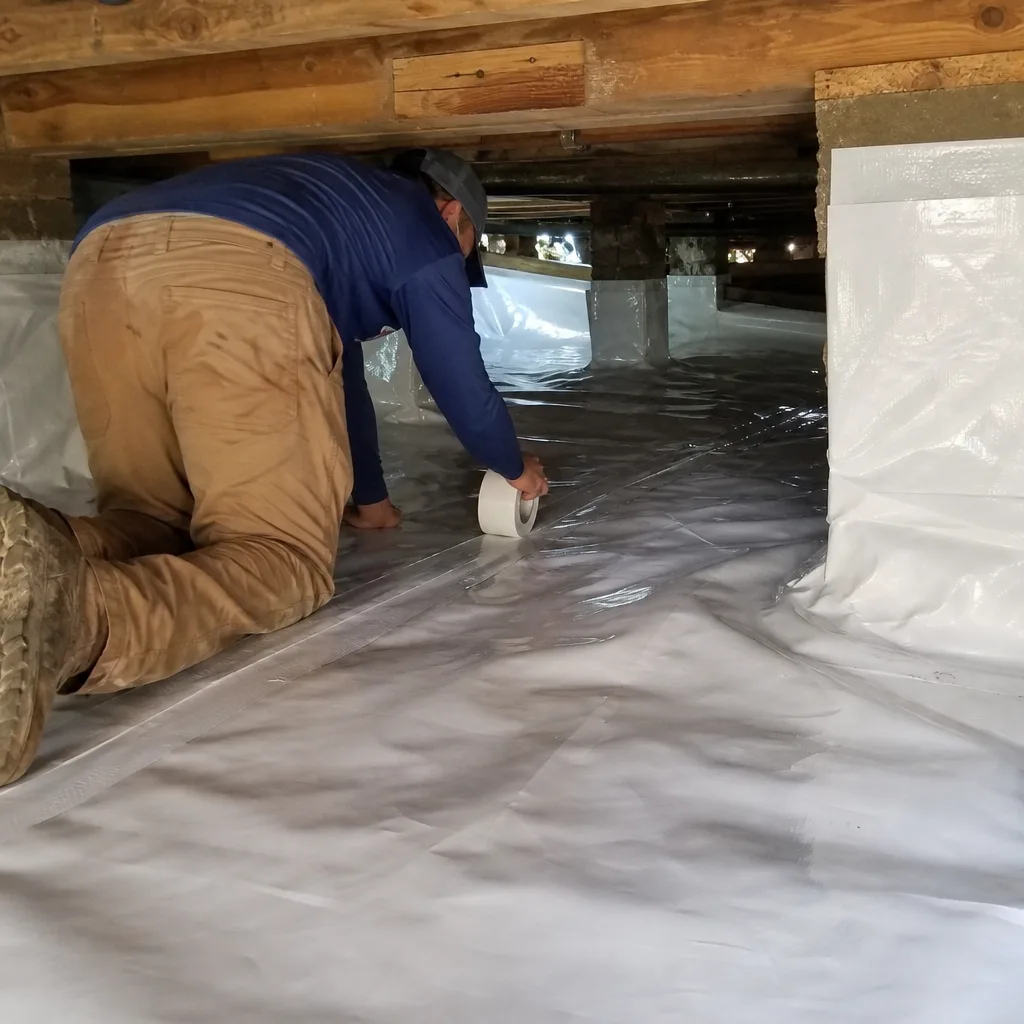
Insulation failure in Canyon Lake does not announce itself as “bad insulation.” It shows up as a bedroom that never cools, a bill that jumps in May, a musty smell after the first freeze, or a second AC unit that still does not solve the problem. The seven symptoms in this guide, the two zero-tool tests, and the ceiling stain diagnostic give you a framework to trace discomfort to its physical cause before you spend on the wrong fix. When your observations point to envelope leakage, a blower-door test quantifies the problem and directs the repair. Seal first, then insulate. Get it in writing. And verify the result with documented numbers. Browse more guides & resources to keep your home efficient year-round.
Written by Wes Okafor, Owner at Topside Attic Insulation Canyon Lake, serving Canyon Lake since 2016.