
How Much Does Blown-In Insulation Cost in Canyon Lake?
Blown-in insulation in Canyon Lake, TX typically runs between $1,400 and $3,800 for a standard attic, with most single-story homes in the 1,500-2,500 sq ft range landing between $1,800 and $2,600 when air sealing is included. The wide spread comes down to three things: your current R-value, how thoroughly the attic floor is sealed before any material goes in, and whether you’re adding to existing insulation or starting from scratch after a removal.
Blown-In Insulation Cost Breakdown (2026)
Blown-In Insulation services in Canyon Lake cost more than the state average in some project types – not because labor rates here are unusual, but because attics in Comal County sit under some of the most punishing roof decks in Texas. Homes off FM 2673 near the lake shore, and older builds in the Cranes Mill Road corridor, routinely hit 140-150°F measured deck temperatures in July. That thermal load means the insulation doing real work needs to actually hit the R-value on paper, which requires a sealed air barrier underneath it first. When that step gets skipped – and it does, routinely, on lower-bid jobs – the installed R-value is almost academic.
Under the Haven Standard, air sealing of top plates, can lights, and penetrations is completed before any insulation is added. The table below shows what that means in real dollar terms for Canyon Lake homes in 2026.
| Project Type | Typical Range (Canyon Lake, 2026) | Notes |
|---|---|---|
| Attic blown-in only (cellulose or fiberglass, 1,000-1,500 sq ft attic floor) | $1,400 - $2,100 | Existing insulation at or above R-22; top-up to R-38/R-49 |
| Attic air sealing + blown-in (1,000-1,500 sq ft) | $2,000 - $3,000 | Most common scope; includes top plate, can light, and penetration sealing before blowing |
| Attic blown-in only (1,500-2,500 sq ft attic floor) | $2,000 - $2,900 | Top-up to R-49; no significant sealing needed |
| Attic air sealing + blown-in (1,500-2,500 sq ft) | $2,600 - $3,800 | Full envelope treatment; blower-door readings before and after |
| Insulation removal + blown-in replacement (per 1,000 sq ft) | $1,800 - $2,600 (removal) + material/labor above | Old, compressed, or rodent-contaminated insulation requires vacuum removal first |
| Wall cavity blown-in (dense-pack cellulose or fiberglass, per 1,000 sq ft of wall) | $2,200 - $4,100 | Older Canyon Lake-area homes with uninsulated wood-frame walls; siding or drywall access needed |
| Crawl space blown-in (floor cavity above unconditioned crawl) | $1,600 - $2,800 | Less common here due to slab-dominant construction near the lake; more relevant in hill-side builds |
| Blower-door test (standalone, if not included in scope) | $250 - $450 | Produces a CFM50 reading; we include this on applicable jobs at no additional charge |
What the Numbers Above Include
Every price range above assumes a written scope delivered before work starts – Haven Standard Clause 1, no exceptions. On jobs where air sealing is in scope, the price also covers the before-and-after blower-door test, the Documented Photo Record, and a written warranty. Materials are sourced from Owens Corning, Knauf, GreenFiber, and Johns Manville depending on the application; there’s no proprietary product lock-in that pushes you toward a higher-margin option.
What the ranges above do not include: attic access modifications (adding a pull-down stair or enlarging a hatch), HVAC duct sealing as a standalone scope, or radiant barrier installation. Each of those is a separate line item on the written estimate if it comes up during the assessment.
Material Cost Comparison: Cellulose vs. Fiberglass Blown-In
- Blown-in cellulose (GreenFiber or equivalent): $0.55-$0.85 per square foot of attic floor per inch of depth. At R-49 (roughly 13 inches), that’s about $7.15-$11.05 per sq ft in material alone before labor. Cellulose settles roughly 15-20% over its first year, which is why reputable installers shoot for a slightly higher initial depth.
- Blown-in fiberglass (Owens Corning or Knauf): $0.70-$1.00 per square foot per inch of depth. Fiberglass doesn’t settle the same way cellulose does, but it requires more depth to hit the same R-value and can shift if the attic sees significant air movement – which is exactly why air sealing matters before any material goes in.
For most Canyon Lake attics, the material cost difference between cellulose and fiberglass blown-in is $150-$400 on a mid-size job. That’s not the deciding factor. The deciding factor is whether the attic floor is actually sealed first.
What Affects Blown-In Insulation Pricing in Canyon Lake
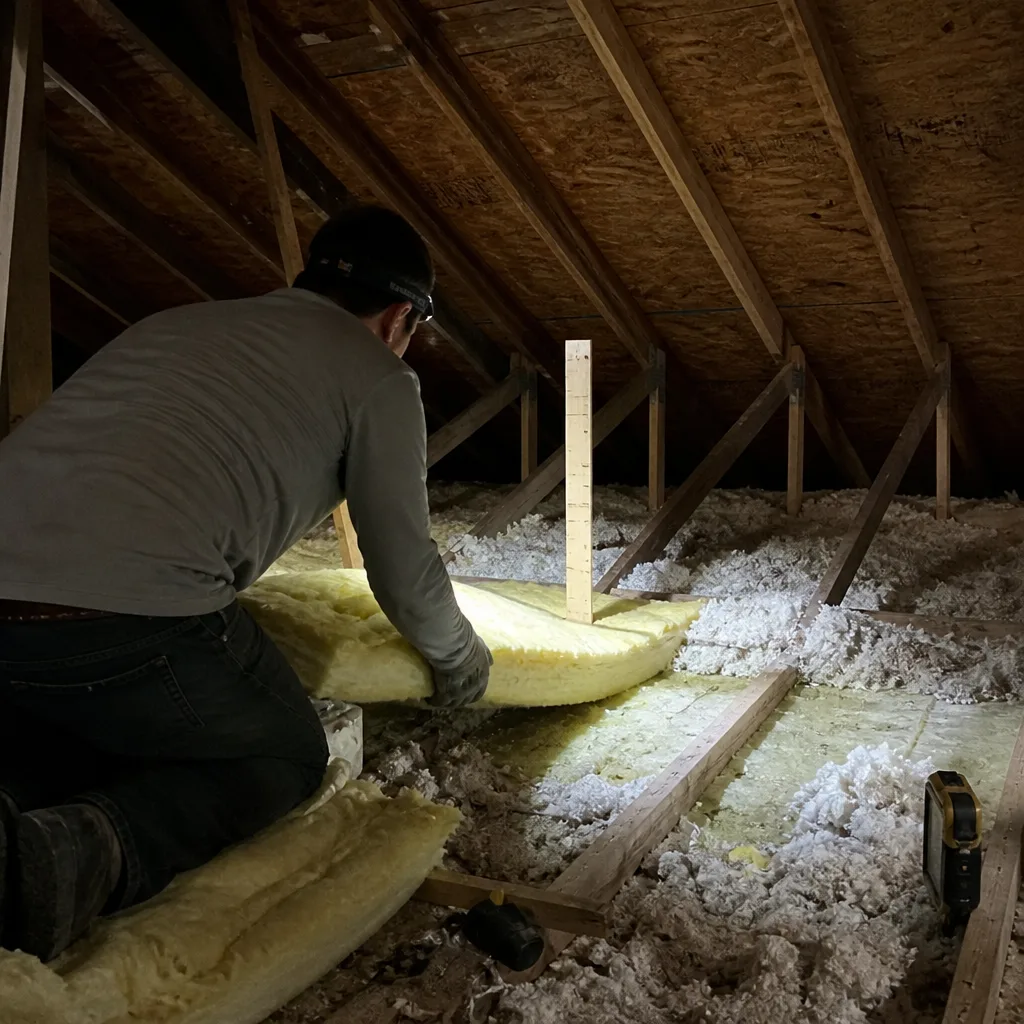
- Current insulation condition and R-value: Homes in Canyon Lake built before 2000 – particularly in older sections of Canyon Lake Estates and along Skyline Drive – frequently have R-11 to R-19 in the attic, far below the R-38 minimum and R-49 target for this climate zone (Zone 2 in Comal County). The lower your starting point, the more material the job requires, and the more likely removal is necessary if what’s there is compressed, wet, or contaminated.
- Attic access and geometry: Low-pitch roofs common on 1970s-era ranch homes near Startzville and Canyon City can make maneuvering equipment difficult. Attics with multiple HVAC systems, mechanical platforms, or irregular framing add labor time. Attic access points smaller than 22×30 inches sometimes require modification before a crew can work safely.
- Air sealing scope: The number of can lights, top-plate gaps, plumbing and electrical penetrations, and HVAC boots that need sealing before insulation is added varies significantly by build era and original contractor. A 2,000 sq ft home built in 1985 typically has three to four times as many unsealed penetrations as the same-size home built in 2015. That translates to real labor hours and real cost differences – typically $400-$900 more on older builds.
- Removal requirements: Blown-in insulation jobs that require removing existing material first – due to rodent activity, moisture intrusion from roof leaks, or prior spray foam overspray – carry a removal cost of $1,800-$2,600 per 1,000 sq ft of attic before the new material price begins. Canyon Lake’s proximity to the Guadalupe River basin means moisture intrusion events aren’t rare; we see water-damaged attic insulation regularly in low-lying lots between FM 2673 and the marina areas.
- Depth and target R-value: Texas code sets a minimum of R-38 for attic insulation in Climate Zone 2, but Energy Star and most utility rebate programs now target R-49. The difference between hitting R-38 and R-49 in cellulose is roughly 3 additional inches of material across the attic floor – a meaningful cost difference on larger footprints but often less than $250-$400 on a typical Canyon Lake home, making the upgrade worth considering.
- Season and scheduling: Summer scheduling (June through August) typically books faster in Canyon Lake because the heat makes homeowners feel the problem acutely. Pricing doesn’t change by season at Topside Attic Insulation Canyon Lake, but lead times can extend 1-2 weeks in peak months. Spring (March through May) is historically the easiest time to schedule with shorter lead times and cooler attic temperatures that affect crew efficiency on longer jobs.
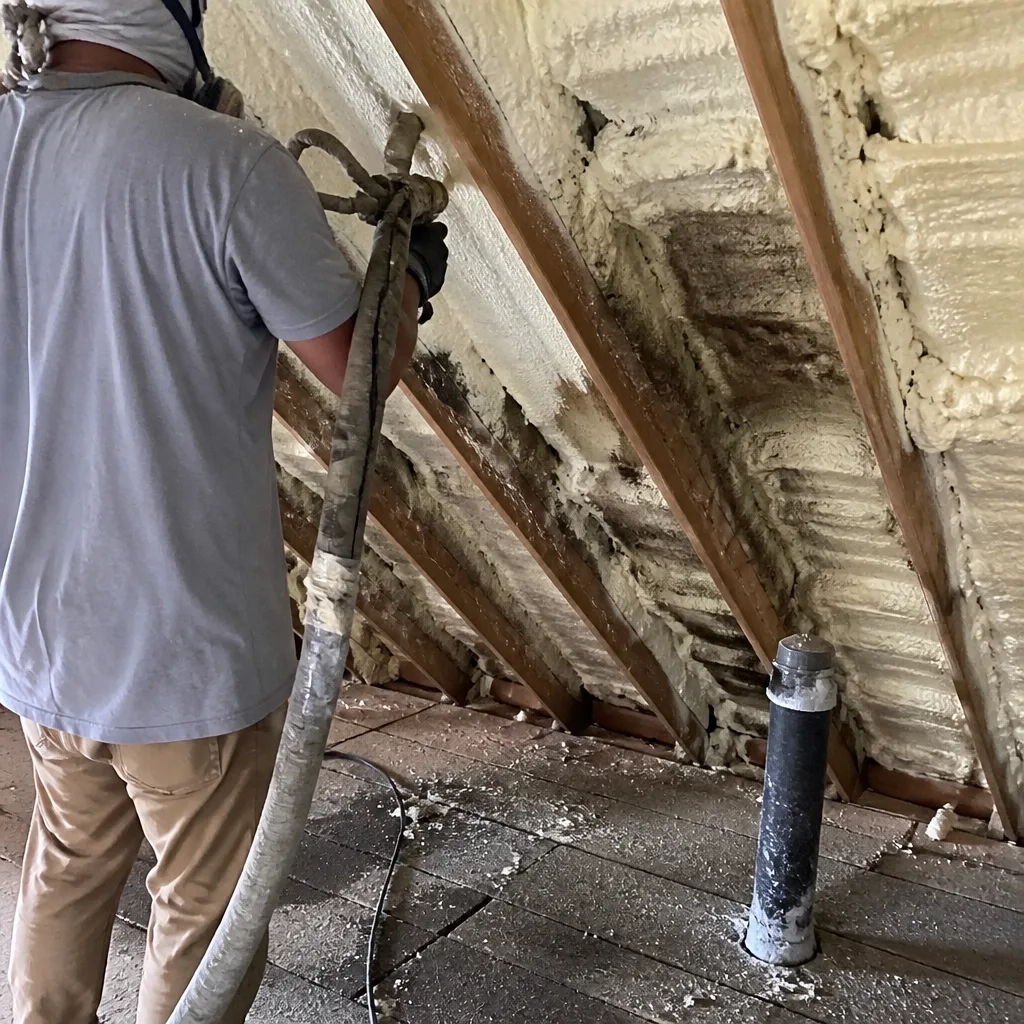 Before
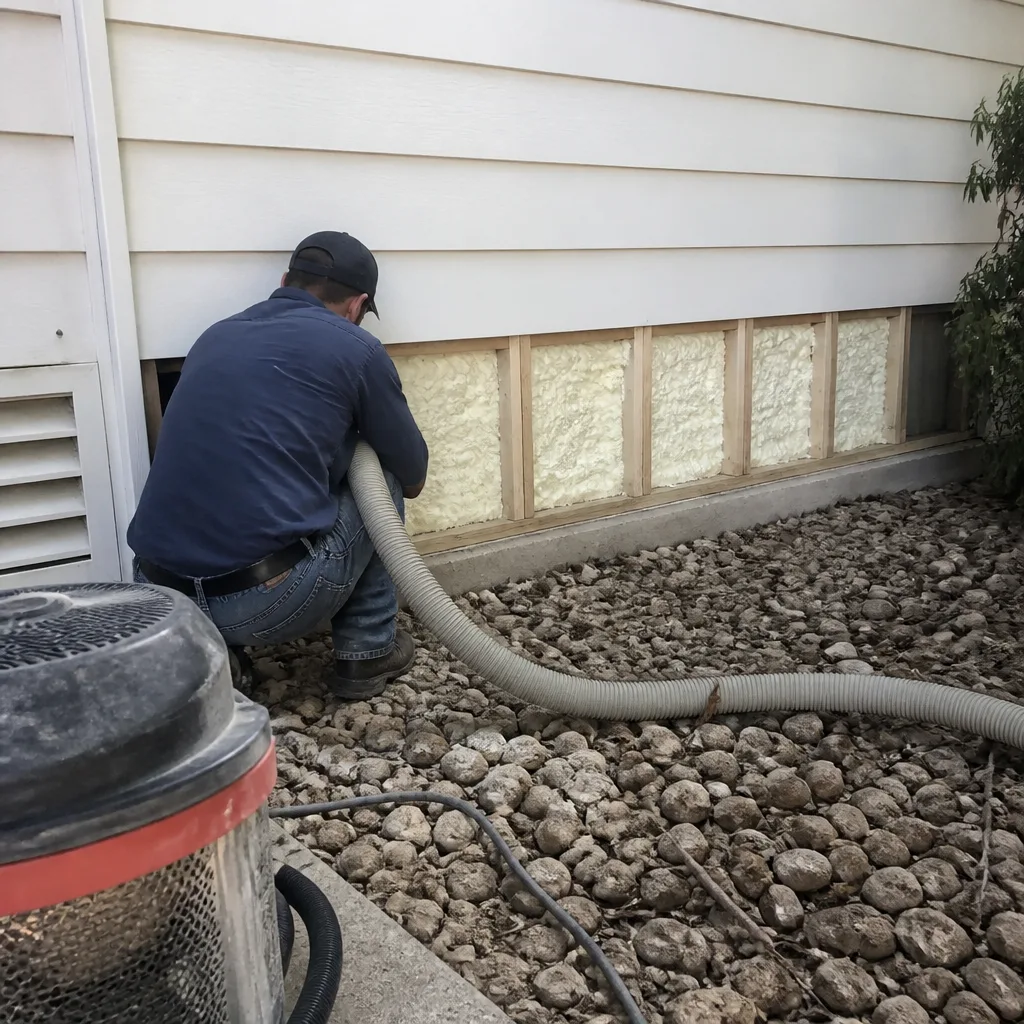 After
AfterCanyon Lake-Specific Factors You Won’t Find on Generic Price Guides
Most blown-in insulation price guides are written for a generic Texas market. Canyon Lake is specific enough that a few local realities affect both pricing and product selection in ways worth knowing before you request a quote.
The Attic Temperature Problem Near the Lake
Canyon Lake sits at roughly 940 feet elevation with open exposure on the south and west sides. Homes on the upper ridges above FM 306 can see attic temperatures 8-12°F higher than homes in shaded valley lots. We’ve measured deck temperatures above 148°F on exposed south-facing roofs in the Canyon Lake Highlands area in July. At those temperatures, fiberglass blown-in can lose effective R-value performance due to thermal drift – a phenomenon where high radiant heat reduces the actual insulating performance of low-density fiberglass below its labeled R-value. This is one reason a radiant barrier (either foil or spray-applied) is worth discussing alongside blown-in insulation for south-facing roof decks in Canyon Lake, even though it’s a separate line item.
The 1970s and 1980s Build Stock
A substantial portion of Canyon Lake’s residential housing stock was built between 1972 and 1992, during a period when air sealing wasn’t a code concern and attic insulation was often installed by framers as an afterthought. Wes Okafor has been in these attics. The typical finding: R-11 batts laid flat on the attic floor, no blocking at top plates, open chases around plumbing stacks, and can lights that open directly into the conditioned space below. On these jobs, air sealing isn’t an add-on option – it’s the foundation the insulation upgrade depends on. Skipping it and just blowing more material on top doesn’t fix the problem; it covers it up while conditioned air continues to move freely through every gap.
Permit Requirements in Comal County
Blown-in insulation added to an existing attic without changing the home’s structure typically does not require a permit in unincorporated Comal County, which covers most of Canyon Lake. Homes within the Canyon Lake Improvement Association (CLIA) boundaries or any incorporated jurisdiction should confirm with the county or applicable HOA before work begins. Wes Okafor’s team will tell you upfront, on the written estimate, whether your specific address triggers any permit or HOA notification requirement based on the scope of work.
How to Save on Blown-In Insulation in Canyon Lake
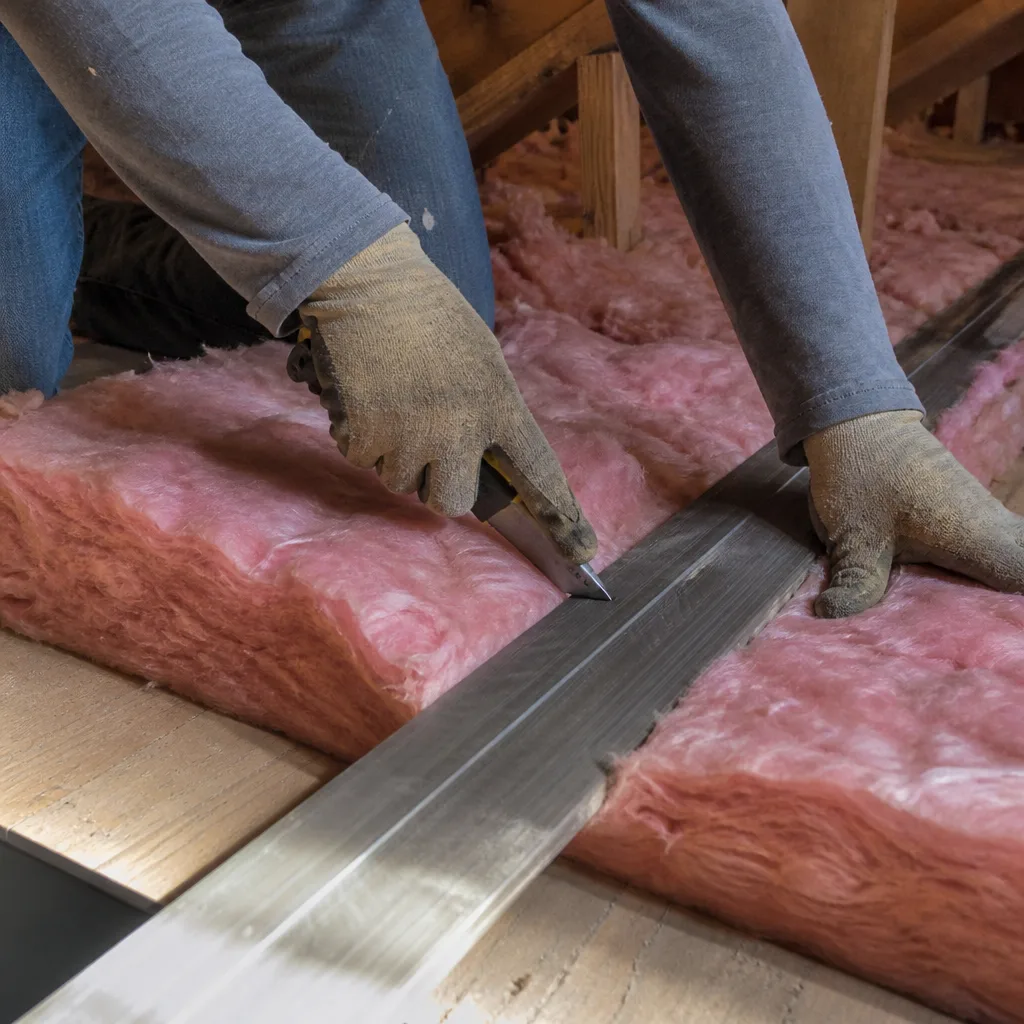
A few practical moves can meaningfully reduce the out-of-pocket cost of a blown-in insulation project without cutting anything that matters.
CPS Energy and SECO Rebates
Canyon Lake homes served by Pedernales Electric Cooperative (PEC) may qualify for insulation upgrade rebates under the cooperative’s energy efficiency program. The rebate amount varies by program cycle and current incentive availability, but typical attic insulation rebates in Texas utility programs run $0.10-$0.25 per square foot for upgrades to R-38 or above. Confirm current availability directly with PEC before the job is scoped, since rebate programs can be paused or modified. The State Energy Conservation Office (SECO) also periodically publishes rebate aggregators for Texas homeowners. A free estimate from Topside Attic Insulation Canyon Lake can be structured to document the R-value change in a format compatible with rebate applications.
Bundle the Air Sealing and Insulation Together
Scheduling air sealing and blown-in insulation as a single mobilization costs less than doing them on two separate visits. The crew is already in the attic; the equipment is already on site. Separating the scopes across two different days adds a mobilization charge each time. Most homeowners in Canyon Lake save $200-$450 by bundling the two into one written scope rather than treating them as sequential separate projects.
Get a Second Opinion on Any Written Estimate
Envelope Insulation Co. offers a free second opinion on any written estimate – bring a competing quote and we’ll go through it line by line. This is part of Haven Standard Clause 1: a written price before any work starts. A second opinion isn’t about finding the lowest number; it’s about understanding what’s actually in each scope and what isn’t. Two quotes with different totals often differ because one includes air sealing and one doesn’t, one uses R-38 and one uses R-49, or one includes removal and one assumes the existing material can stay.
Don’t Skip the Air Sealing to Save Money
This sounds counterintuitive as a savings tip, but it belongs here. Skipping air sealing to reduce the upfront cost typically extends the payback period of the insulation by 3-5 years because conditioned air continues escaping through every unsealed penetration, pulling the thermal performance of the new material well below what the label says. The cheapest version of this job is rarely the one with the best 5-year outcome. The written estimate we provide will show both options – with and without air sealing – so you can make the comparison on paper, in dollars, before committing to either.
For a free, written estimate with no obligation, call (737) 227-6219. A live person answers – not a voicemail system – and you’ll have a written price before anyone shows up at your door.
FAQs: Blown-In Insulation Cost in Canyon Lake, TX
How much does blown-in insulation cost per square foot in Canyon Lake?
Blown-in insulation in Canyon Lake runs approximately $1.10-$2.20 per square foot of attic floor when air sealing is included, or $0.75-$1.40 per square foot for material and labor alone without sealing. On a 1,800 sq ft attic floor, that puts the all-in cost with air sealing at roughly $1,980-$3,960. The per-square-foot number moves depending on how much depth is required (R-38 vs. R-49), whether existing insulation is staying or being removed, and how many penetrations need sealing. Call (737) 227-6219 for a written number tied to your specific attic – estimates are free and the price is in writing before any work begins.
Is blown-in insulation cheaper than batt insulation for an attic in Canyon Lake?
For attic applications in Canyon Lake, blown-in cellulose typically costs 10-20% less installed than fiberglass batts at equivalent R-values, primarily because it can be installed faster, conforms to irregular framing, and doesn’t leave the gaps and compressions that reduce batt performance around obstructions. Blown-in also produces a more consistent depth across the full attic floor. Batts can be appropriate for specific retrofit applications, but for a whole-attic insulation upgrade, blown-in is almost always the better value at this price point. A free second opinion on any existing batt quote is available – call (737) 227-6219.
Does the price include air sealing, or is that extra?
Air sealing is a separate line item on the written estimate, not automatically included in a base blown-in price. At Topside Attic Insulation Canyon Lake, air sealing of top plates, can lights, and penetrations is completed before any insulation is added – that’s a hard process requirement, not an optional add-on we can skip. The written estimate will show both line items clearly: the sealing scope and the insulation scope, with individual pricing. You know exactly what you’re paying for before work starts. Under the Haven Standard, there are no surprises added after the job is done.
How long does it take to pay back the cost of blown-in insulation in Canyon Lake?
Most homeowners in Canyon Lake see a payback period of 4-8 years on a properly scoped attic insulation project, based on typical cooling season energy bills in this climate zone. Homes starting below R-22 tend to see larger first-year savings and shorter payback windows. That estimate assumes the air sealing is done properly – without it, payback periods stretch to 8-12 years or longer because conditioned air keeps escaping through unsealed gaps regardless of how much insulation sits on top of them. Before-and-after blower-door readings, which Envelope Insulation Co. provides on applicable jobs, let you see the actual air change improvement rather than estimating it from a formula.
Can I get blown-in insulation installed in Canyon Lake the same week I request a quote?
In most cases during non-peak months (September through May), yes – a written estimate visit can typically be scheduled within 2-4 business days, and installation within 1-2 weeks of accepting the written scope. June through August books faster; lead times in peak summer can run 2-3 weeks. The estimate visit and the installation are always separate appointments: the assessment produces your written price, and installation only begins after you’ve accepted it in writing. Call (737) 227-6219 to find out what this week’s scheduling looks like – a live person will answer and give you a real date, not a callback window measured in business days.
What R-value do I need for blown-in insulation in Canyon Lake, TX?
Texas building code sets a minimum of R-38 for attic insulation in Climate Zone 2, which covers Canyon Lake and Comal County. Energy Star guidelines and most utility rebate programs target R-49 for this zone, and that’s what Wes Okafor’s team typically recommends for homes that are starting from below R-22. The difference in cost between hitting R-38 and R-49 on a mid-size Canyon Lake attic is usually $200-$380 – a small increment given the additional performance margin, particularly in an area where attic temperatures regularly exceed 140°F for weeks at a time.
Is blown-in insulation worth it for an older Canyon Lake home?
For homes built before 1995 in Canyon Lake – particularly in older sections of Canyon Lake Estates, Mystic Shores, or anywhere along the Cranes Mill Road corridor – blown-in insulation combined with air sealing is typically the highest-return single improvement available on the building envelope. These homes routinely test at 6,000-8,500 CFM50 on a blower-door test (that’s the measure of how much air the building envelope is losing under pressure), compared to a well-sealed modern home that might read 1,500-2,500 CFM50. Dropping that number by half through air sealing and insulation has a measurable, documented impact on both energy bills and indoor comfort. The before-and-after blower-door readings Envelope Insulation Co. publishes on applicable jobs let you see exactly what changed – in a single number – rather than taking the contractor’s word for it.
How Topside Attic Insulation Canyon Lake Prices and Executes a Blown-In Job
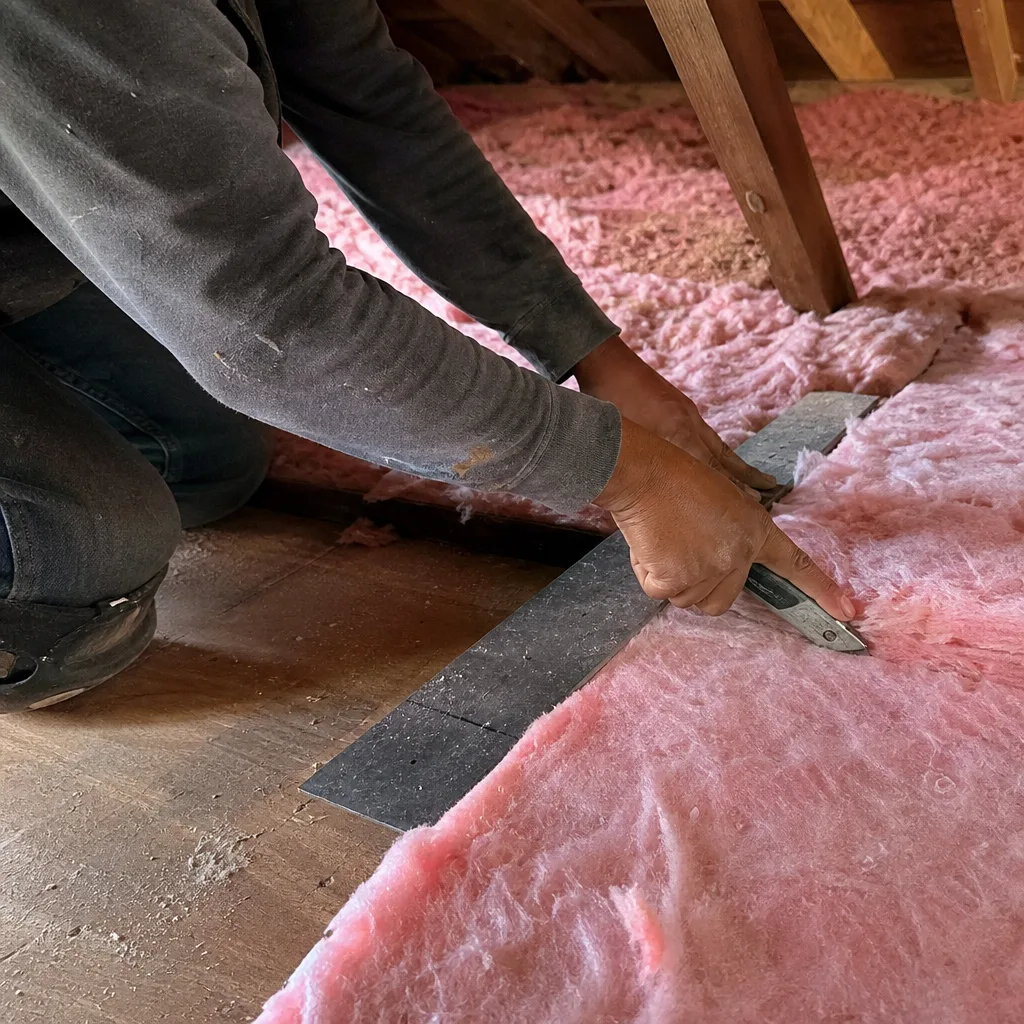
This is a practical walkthrough, not a sales pitch. Here’s what happens from first contact to the crew leaving your property.
Step 1: Written Estimate Visit
A background-checked, uniformed technician visits the property. They access the attic, take measurements, assess current R-value and insulation condition, identify unsealed penetrations, and note any access constraints. You get a written price – flat, not hourly – before they leave. The scope describes what will be done, what materials will be used, and what warranty applies. Nothing starts without your written acceptance of that price.
Step 2: Blower-Door Pre-Test
On applicable jobs, a blower-door test – a pressurization measurement that shows, in one number, how much air the building envelope is losing – is conducted before any work begins. This is the baseline. The CFM50 reading from this test becomes the “before” number on the documented record you receive when the job is complete. For a Blown-In Insulation in Canyon Lake project that includes air sealing, this reading is what tells you whether the sealing work actually moved the number.
Step 3: Air Sealing First
Every top plate, can light housing, plumbing penetration, electrical chase, and HVAC boot is sealed before the blowing rig starts. This is the order of operations that separates a performance upgrade from an aesthetic one. Insulation installed over an unsealed attic floor performs below its labeled R-value because air movement through the gaps undermines the material’s ability to resist heat transfer.
Step 4: Blown-In Installation
Material – Owens Corning, Knauf, GreenFiber, or Johns Manville depending on the application and the written scope – is blown to the depth specified in the written price. Depth gauges are left in the attic for verification. The crew does not leave until depth is confirmed across the attic floor, not just at the access hatch.
Step 5: Blower-Door Post-Test and Documented Photo Record
A second blower-door test produces the “after” CFM50 reading. The difference between before and after is your documented performance result. You receive the Documented Photo Record – photos of the attic before and after, including depth gauges and any notable conditions found – along with the written warranty and both blower-door readings. That’s what leaving looks like when Wes Okafor’s team finishes a job.
How Blown-In Insulation Compares to Other Insulation Options in Canyon Lake
Blown-in isn’t the right answer for every application in Canyon Lake. Here’s a quick comparison to help frame the decision:
- Blown-in vs. spray foam (open-cell): Open-cell spray foam applied to the roof deck creates an unvented conditioned attic – a fundamentally different approach where the HVAC system is brought inside the thermal envelope. It costs significantly more ($3.50-$6.50 per sq ft installed), but it eliminates duct leakage as a factor and can be the right call on certain Comal County builds. Blown-in on the attic floor is the right choice when the goal is a vented attic with insulation at the ceiling plane.
- Blown-in vs. radiant barrier: A radiant barrier (foil or spray-applied) reduces radiant heat transfer through the roof deck and is particularly effective on south- and west-facing roofs in Canyon Lake. It doesn’t replace blown-in; it works best in combination with it. The two address different parts of the heat gain equation.
- Blown-in vs. batt replacement: For whole-attic re-insulation, blown-in consistently outperforms batts at equivalent R-values in field conditions because it eliminates the gaps and compressions that reduce batt performance around obstructions. Batts remain useful for specific wall applications and certain retrofit scenarios.
Our home page covers the full building-envelope service line if you’re trying to figure out which combination of services makes the most sense for your Canyon Lake property before committing to a single scope.
Key Takeaways
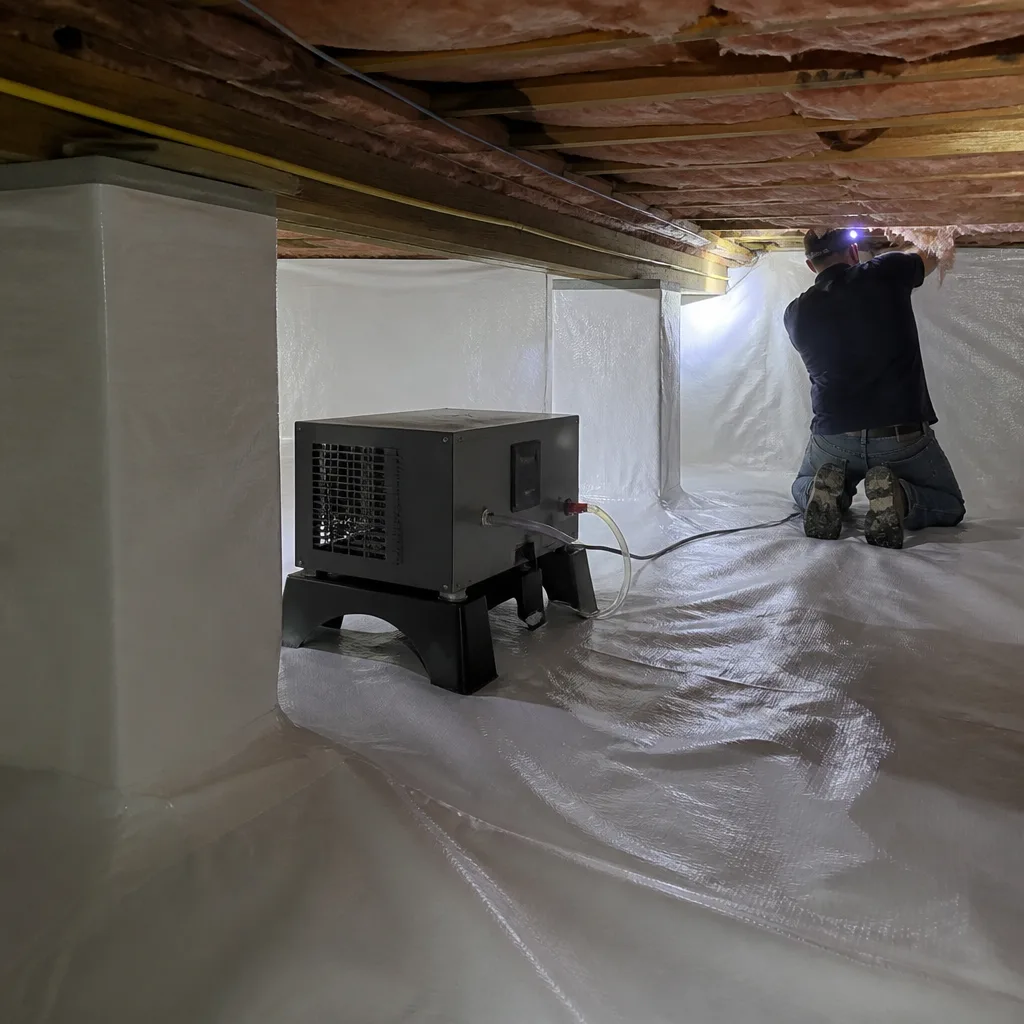
- Blown-in insulation in Canyon Lake runs $1,400-$3,800 for most residential attic projects, with air sealing included.
- The per-square-foot range is approximately $1.10-$2.20 with air sealing, or $0.75-$1.40 without.
- Air sealing before insulation is not optional – it determines whether the installed R-value actually performs in Canyon Lake’s climate conditions.
- Before-and-after blower-door readings (CFM50) are included on applicable jobs and give you a documented performance result, not an estimate.
- A written price is delivered before any work starts – Haven Standard Clause 1. No exceptions.
- The 365-Day Done Right Promise applies to all completed work.
- Utility rebates through PEC may reduce out-of-pocket cost; confirm current availability before scheduling.
- Most Canyon Lake attics built before 1995 benefit significantly from air sealing alongside blown-in insulation – the two together typically produce a payback period of 4-8 years.
Get a Written Estimate for Blown-In Insulation in Canyon Lake
If you want a number – a real one, tied to your specific attic dimensions, current insulation condition, and target R-value – call (737) 227-6219. A live person answers. You’ll schedule an estimate visit, a technician will assess the attic and any unsealed penetrations, and you’ll have a written flat price before anyone picks up a tool. That’s Haven Standard Clause 1, and it applies to every job Wes Okafor’s team takes on in Canyon Lake, no exceptions.
If you already have a written estimate from another contractor, bring it. The free second opinion offer applies – we’ll go through the line items with you so you understand exactly what each scope includes and what it doesn’t.
Pricing reflects the Canyon Lake, TX market as of 2026. Topside Attic Insulation Canyon Lake offers free estimates – call (737) 227-6219.
Written by Wes Okafor, Owner at Envelope Insulation Co. (Topside Attic Insulation Canyon Lake), serving Canyon Lake, TX since 2016.
What Our Customers Say
"They photographed rodent damage in the old insulation that we had no idea about, and priced the exclusion work separately so we could decide."
- Harriet N."Two other companies quoted to blow more insulation on top of what was there. These were the only ones who said the existing material had to come out first, and explained why."
- Clifford E."Crawl space encapsulation done properly. Photographs of the vapour barrier at every seam, and the damp smell in the hallway is gone."
- Ainsley P.