
Attic Baffles & Ventilation Prep in Canyon Lake, TX
Attic baffles – also called rafter vents – are channels installed between the roof deck and the insulation that keep soffit air moving toward the ridge, so your attic breathes the way it was designed to. In Canyon Lake, where summer attic temperatures regularly push past 150°F and humid air from the Guadalupe River corridor can stall in an under-ventilated space, blocking those channels is one of the fastest ways to shorten a roof’s life and spike an electric bill at the same time. If your insulation is about to go in – or already went in without this step – ventilation prep is what determines whether that insulation actually performs.
At Topside Attic Insulation Canyon Lake, we treat baffle installation and ventilation prep as a hard prerequisite, not an add-on. Under The Haven Standard that has guided every job we’ve completed since 2016, no insulation goes in before the attic floor is sealed and the ventilation channels are confirmed clear and protected. Wes Okafor built that sequence into the company from day one because he’d seen too many attics in the Canyon Lake area where blown insulation had completely buried the soffit vents – turning a ventilated attic into a trapped heat box. Call us at (737) 227-6219 if you want a straight answer on whether your attic is set up correctly before anyone touches the insulation. You’ll get a written price before any work starts – that’s Haven Standard Clause 1, no exceptions.
This page is part of our Attic Insulation in Canyon Lake service. Baffles and ventilation prep sit at the front of that process, and this is where we explain exactly what that looks like.
When You Need Attic Baffles & Ventilation Prep
Not every Canyon Lake homeowner knows their attic ventilation is compromised until we pull back the insulation and show them. These are the clearest signs that baffles were skipped, buried, or never installed correctly in the first place:
- Insulation pushed tight to the eaves with no visible airway. This is the most common finding in Canyon Lake homes built between 1985 and 2005. Blown-in cellulose or fiberglass settles against the soffit opening over time, and without a rigid baffle holding that channel open, you lose the entire lower portion of your ventilation circuit.
- Rooms above the garage or near the roofline that never cool down in summer. When soffit air can’t move through to the ridge vent, the attic holds heat well into the evening. In a Canyon Lake summer, that translates directly to a second-floor bedroom that runs 5-8°F warmer than the rest of the house even with the AC running hard.
- Ice dams or moisture staining at the eaves in winter. Canyon Lake doesn’t see heavy winters, but the occasional hard freeze in January or February can expose an attic that lacks airflow. Warm air trapped near the roof deck melts overnight frost unevenly, and the resulting moisture finds its way into fascia and decking.
- A roof that’s aging faster than neighboring homes of the same era. Sustained heat from a ventilation-starved attic accelerates shingle degradation from the underside. If your roofer has mentioned premature granule loss, attic airflow is worth investigating before re-roofing.
- Musty smell in the attic or visible dark staining on the underside of the roof deck. In Canyon Lake’s spring months, humid air moving up from the lake can condense inside a stalled attic. Mold doesn’t need much – a surface, moisture, and warmth – and a blocked soffit provides all three.
- You’re adding new blown-in insulation to an attic that already has some. Layering insulation without first confirming baffle placement is how attics that seemed fine for years suddenly lose their remaining soffit airflow. This is a preventable problem and one we check for before we start any insulation job.
Our Attic Baffles & Ventilation Prep Process
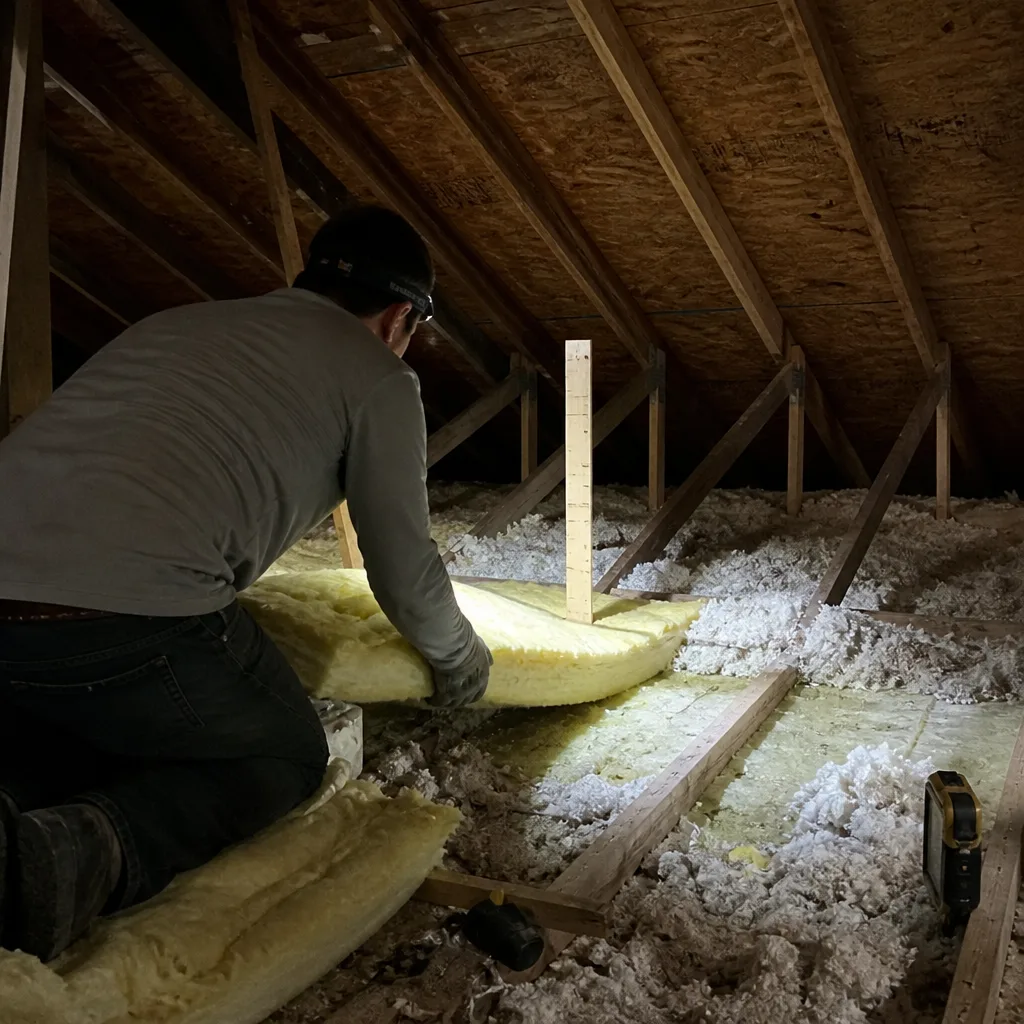
Here’s what the process looks like from the moment we show up to the point where insulation is cleared to go in. Nothing is rushed – the prep work is the work.
- Attic inspection and photo documentation. Before anything is moved or installed, we photograph the existing conditions – every soffit bay we can access, the current insulation depth and placement, the ridge vent or box vents, and any can lights, top plates, or penetrations that will need air sealing. You get that photo record when we leave, whether or not you proceed with additional work. Under the Haven Standard, a Documented Photo Record is included on every visit, not available on request.
- Air sealing before any baffle goes in. We seal top plates, bypasses around electrical penetrations, and any can lights using the correct material for the opening – two-part spray foam for larger gaps, fire-rated caulk for smaller ones. This step happens before baffles because baffles go against the roof deck and can block access to the eave penetrations once they’re in place. Wes Okafor’s standard on this: if the air leaks aren’t sealed first, the ventilation prep is only half the job.
- Baffle installation in each rafter bay. We install rigid baffles – typically Owens Corning ProPink or equivalent – from the soffit opening up toward the ridge, secured to the roof deck so they hold their position under the weight of blown insulation. Each baffle maintains a minimum 1-inch airway (most installations run 2 inches in Canyon Lake attics to accommodate the heat load), and we verify that the soffit vent itself is open and unobstructed before the baffle goes in.
- Ridge and upper-vent check. A soffit-to-ridge ventilation circuit only works if both ends are open. We check ridge vents for blockage from debris, prior insulation overshoot, or inadequate net free area relative to the soffit intake. If the upper venting is undersized for the square footage, we document that in writing and give you options – because adding soffit airflow without a proportional exhaust point can actually increase moisture problems.
- Blower-door baseline (on applicable jobs). On full attic insulation jobs that include air sealing, we run a blower-door test before and after sealing so you have a single number – CFM50, the cubic feet of air per minute escaping the envelope at 50 pascals of pressure – that shows exactly what changed. A Canyon Lake home with typical air-sealing work might move from 3,800 CFM50 to around 1,900 CFM50. That figure goes in your written job record. It’s not a marketing claim; it’s a measurement.
- Final walkthrough and written scope delivery. Once baffles are set and air sealing is confirmed, we walk you through what was done, show you the photos taken during the work, and hand over the written scope and warranty before the crew leaves. At that point, the attic is ready for insulation. If you’re using us for the insulation install, that work is scheduled separately so nothing is rushed. If you’re using another contractor for insulation, the documentation we provide tells them exactly what was done and what airway clearances to maintain.
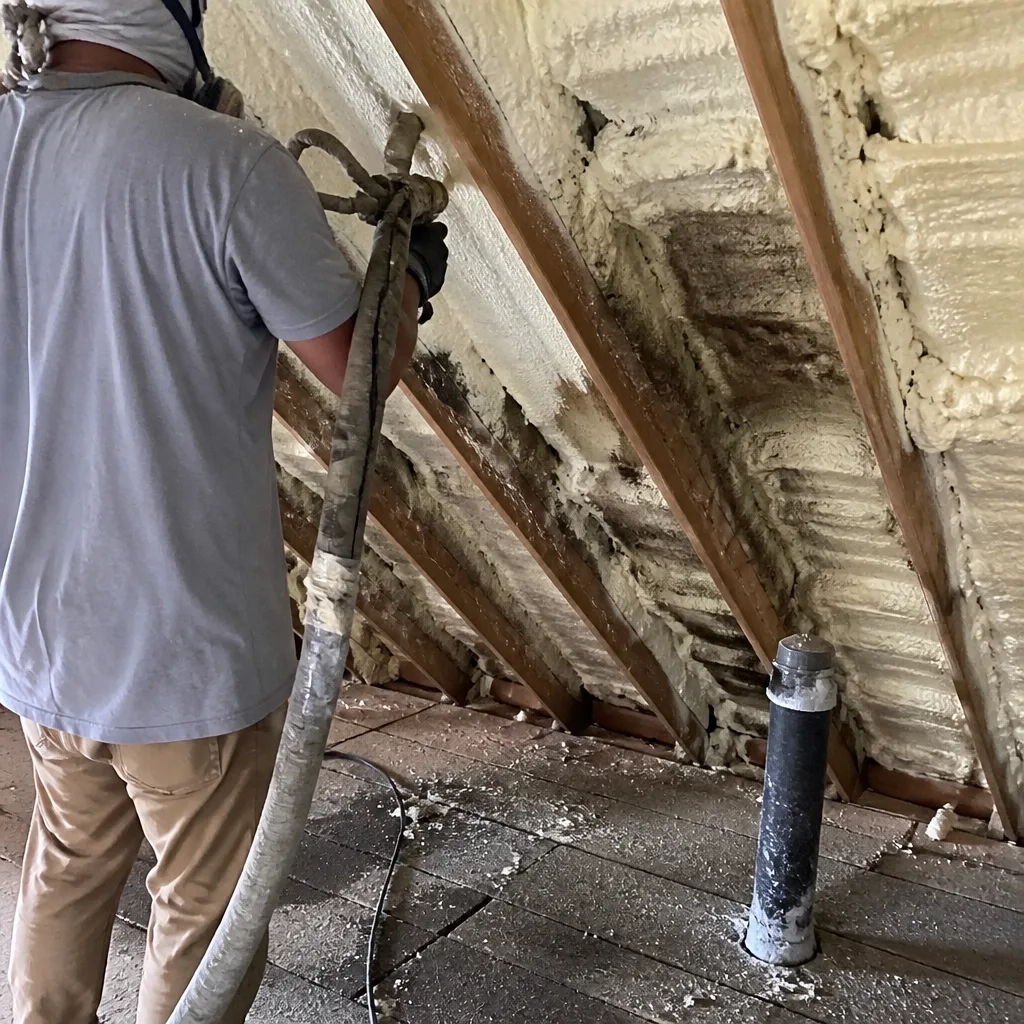 Before
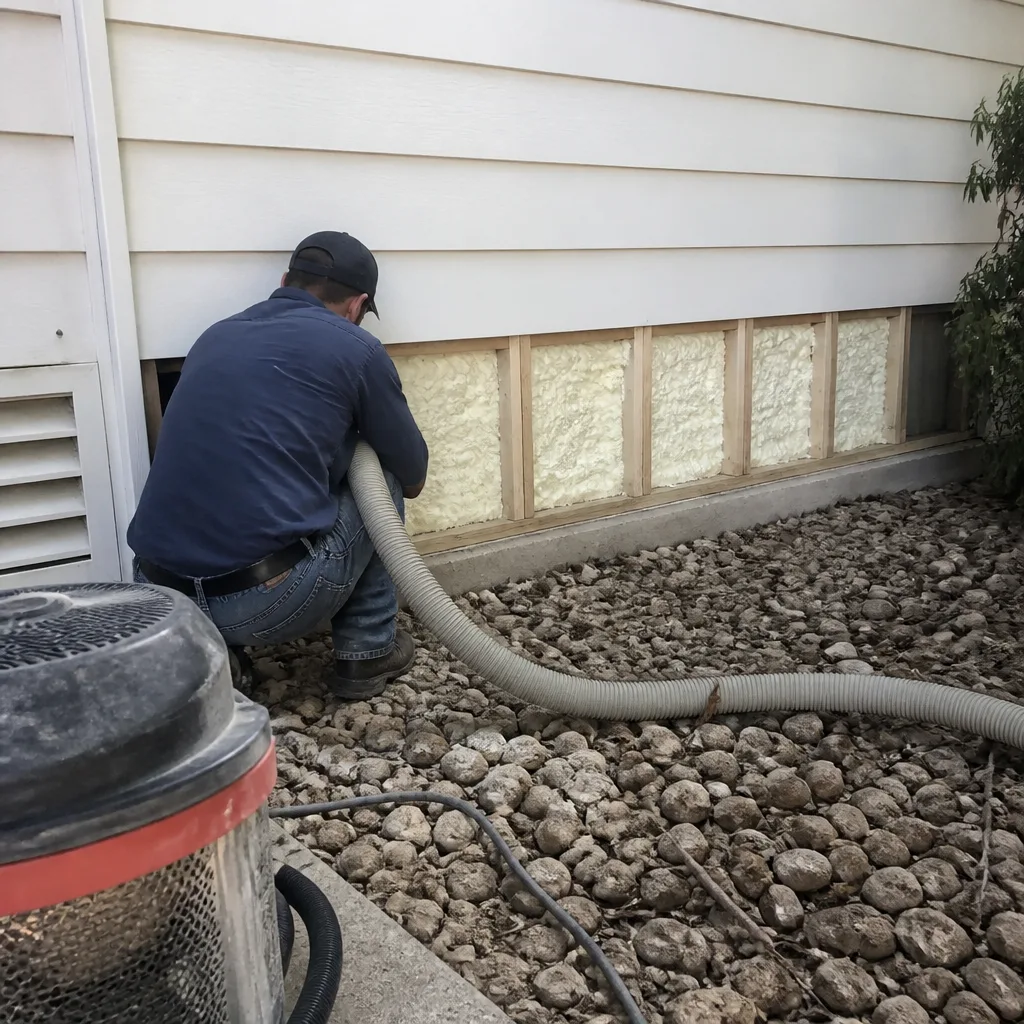 After
AfterAttic Baffles & Ventilation Prep Pricing in Canyon Lake
Baffle installation and ventilation prep in Canyon Lake typically runs between $350 and $950 as a standalone service, depending on attic square footage, accessibility, and the number of rafter bays that need baffles. When this work is bundled with a full attic batt insulation job, the combined cost for a standard 1,500-2,000 sq ft attic – including air sealing, baffles, and blown-in insulation – generally falls between $1,800 and $3,400.
Here’s what moves the number:
- Attic size and configuration. Canyon Lake homes vary widely – from compact hill-country cottages near FM 2673 to larger lakefront properties with complex rooflines and multiple attic sections. A straightforward gable roof with good access is faster than a hip roof with multiple valleys.
- Number of penetrations requiring air sealing. A 1990s Canyon Lake home with recessed can lights throughout often has 20-40 penetrations through the attic floor, each one a bypass that needs to be addressed before baffles go in. More penetrations take more time and material.
- Existing insulation that needs to be moved. If prior insulation has already buried the soffit bays, we need to clear it before baffles can be installed. That’s additional labor, and we document it before pricing it so there are no surprises on the final invoice.
- Ridge vent or upper-vent corrections. If the inspection shows that the upper exhaust is undersized or blocked, correcting it may add to the scope. We’ll spell that out in writing before any work starts.
Under Haven Standard Clause 1, you get a flat written price before anyone lifts a tool. If you have a written estimate from another contractor, bring it to us – we offer a free second opinion on any written quote, and we’ll read it with you line by line.
Call (737) 227-6219 to schedule an inspection. We’ll assess your attic, document what we find, and give you a written price the same visit.
FAQs – Attic Baffles & Ventilation Prep
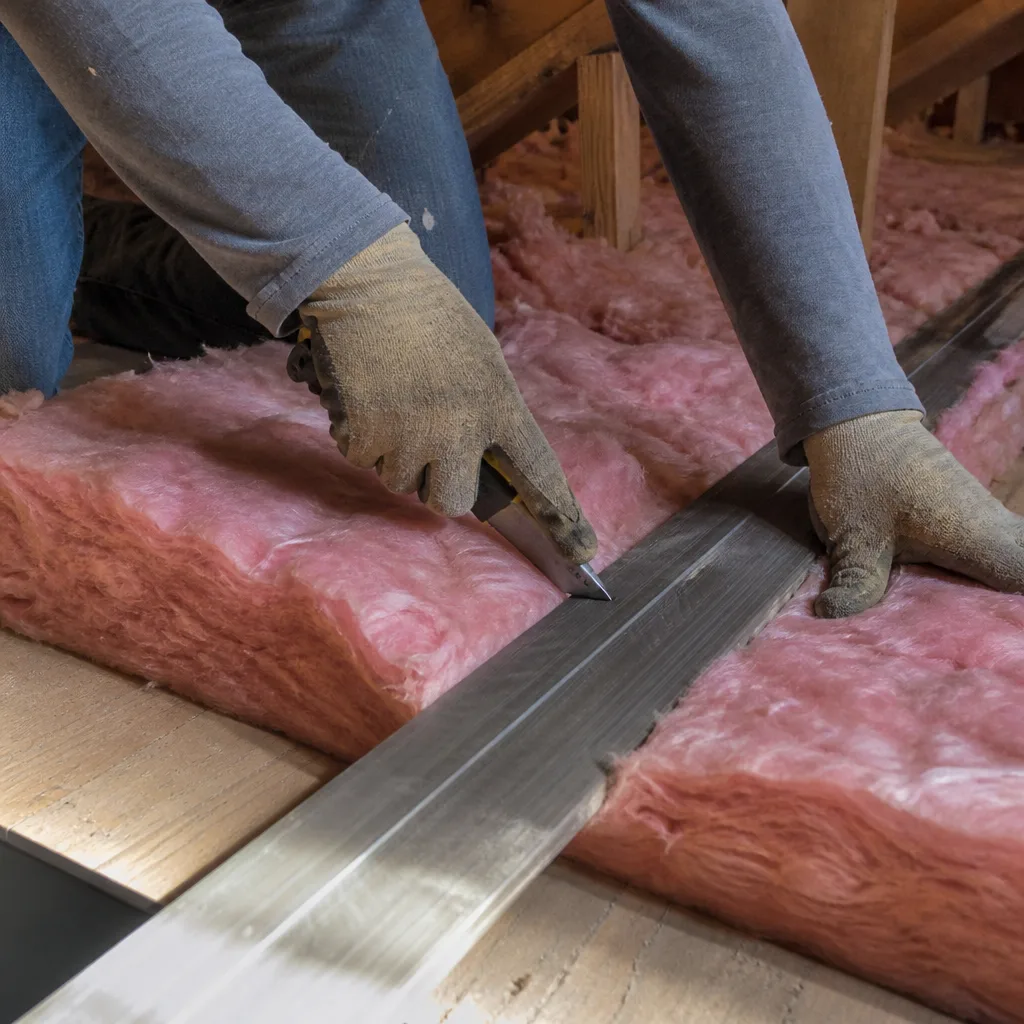
What exactly is an attic baffle and why does Canyon Lake’s climate make it especially important?
An attic baffle is a rigid channel – usually made from polystyrene or cardboard – that runs between the roof deck and the insulation in each rafter bay, holding open a clear airway from the soffit vent at the eave up toward the ridge. Without it, blown-in insulation fills that gap and the soffit vents go functionally dead. In Canyon Lake specifically, where attic temperatures in July and August can sustain above 140-150°F for weeks at a stretch, a properly ventilated attic is the difference between your insulation doing its job and your AC working overtime to compensate for radiant heat that never leaves the building. The lake itself adds a humidity variable – stagnant air in a sealed attic concentrates moisture that, over a season or two, shows up as wood staining or mold on the underside of the decking. Call (737) 227-6219 if you want us to check your current setup.
Can I add insulation to my Canyon Lake attic without installing baffles first?
Technically you can, but you’ll likely make the ventilation problem worse – and you won’t know it until the damage is visible. Every insulation contractor willing to blow over an unsealed, baffle-free attic floor is trading your long-term performance for their short-term convenience. At Topside Attic Insulation Canyon Lake, we won’t do it. Wes Okafor’s position on this is straightforward: the sequence exists for a reason, and skipping it doesn’t save money – it borrows it from your roofing budget a few years down the road. If you’ve already had insulation added without baffles, that’s a correctable situation; call us and we’ll assess what it takes to retrofit baffles and restore the airway.
How do I know if my Canyon Lake home’s current attic ventilation is adequate?
The general building-science standard is 1 square foot of net free ventilation area for every 150 square feet of attic floor space (or 1:300 if you have a vapor barrier in place). But the calculation only matters if the airflow circuit is actually working – meaning soffit intake is open, baffles are holding a clear channel, and the ridge or upper exhaust is sized proportionally. A visual inspection from the attic access point tells you part of the story; a full assessment with photos and measurements tells you all of it. We document every condition we find during an inspection visit, and you get that record whether you proceed with work or not. Call (737) 227-6219 to schedule.
Does the 365-Day Done Right Promise apply to baffle installation?
Yes. Every completed job at Topside Attic Insulation Canyon Lake is covered by our 365-Day Done Right Promise – if it’s not done right, we make it right, full stop. That promise is backed by a written scope and written warranty delivered before anyone starts work, and it applies to baffle installation, air sealing, and every other service in our building-envelope line. You’ll have the warranty in hand before the crew begins, not after. That’s how the Haven Standard works.
What You Get When the Job Is Done
The documented record matters as much as the physical work, because documentation is how you verify that the job was done correctly – not just that someone was in your attic. When Topside Attic Insulation Canyon Lake finishes a baffle and ventilation prep job, you walk away with:
- A photo record from before, during, and after the installation – every soffit bay we accessed, every penetration we sealed, the finished baffle positions.
- A written scope that describes what was done, what materials were used, and what specifications were met.
- A written warranty under the 365-Day Done Right Promise.
- Blower-door readings on jobs that include full air sealing – a before and after CFM50 figure that quantifies the air-sealing result rather than asking you to take our word for it.
- A clear record to share with the insulation installer if you’re using a separate contractor for that portion, so they know exactly what airway clearances to maintain during the blow-in.
Since 2016, we’ve completed work on more than 9,000 homes – every one with a written price before work started and a documented record when the crew left. That consistency is the point of the Haven Standard. It’s not a marketing phrase; it’s the job description.
If your Canyon Lake attic is due for insulation, or if you’ve had insulation installed and you’re not sure whether the ventilation was handled correctly first, search attic insulation near me in Canyon Lake, TX or call (737) 227-6219. Wes Okafor and the team will assess your attic, document what we find, and put a written price in your hands before any work begins.
Written by Wes Okafor, Owner at Topside Attic Insulation Canyon Lake, serving Canyon Lake.