
Blown-In Attic Insulation in Canyon Lake, TX
Blown-in attic insulation – also called loose-fill insulation – is a method where cellulose or fiberglass material is machine-blown into your attic floor cavity to fill every gap, corner, and odd-shaped space that batt insulation leaves behind. Most Canyon Lake homes built before 2005 are running with R-19 or less in the attic, and in a climate that pushes past 100°F for weeks at a stretch, that’s a meaningful gap between what your home has and what the 2021 IECC code recommends (R-38 to R-60 for this climate zone). We’re Topside Attic Insulation Canyon Lake, and we’ve been doing this work under The Haven Standard since 2016 – which means a written price before anything starts, documented before-and-after blower-door readings on applicable jobs, and a 365-Day Done Right Promise when we leave.
If you’d like a written estimate before committing to anything, call us at (737) 227-6219. A live person answers – no voicemail loops, no callback windows. For the full picture of what we do in the attic, visit our Attic Insulation in Canyon Lake parent page.
One thing we need to say clearly upfront: we will not blow insulation into an attic that hasn’t been air-sealed first. This isn’t an upsell. It’s the reason blown-in insulation either works or doesn’t. If your can lights, top plates, and penetrations are still open, all that new insulation will slow air – but it won’t stop it. Air sealing comes first, every time. That’s not a policy we invented; it’s how building science works.
When You Need Blown-In Attic Insulation
- Your energy bills have climbed even though you haven’t changed your habits. Canyon Lake sits in Climate Zone 2, where summer cooling loads are relentless from May through October. If your electric bill has crept up year over year on a home you haven’t significantly changed, inadequate attic insulation is one of the first places to look. We’ve seen Canyon Lake homes on Mystic Shores where the attic R-value measured below R-15 – roughly half of what code requires today.
- Your home was built before 2000 and the attic has never been re-insulated. Older fiberglass batts compress and lose R-value over time. Blown-in cellulose or fiberglass settles more predictably and can be added on top of existing material when the existing product is still in serviceable condition – but only after air sealing is done.
- Certain rooms are noticeably hotter or harder to cool than others. In Canyon Lake homes with vaulted ceilings or additions built toward the waterfront, uneven insulation depth is common. Blown-in material lets us hit a consistent depth across the entire floor plane, including areas where batts would have to be cut and pieced.
- You’ve had HVAC work done but the system still seems to run constantly. A new air handler or heat pump can’t overcome a leaky, under-insulated attic. If your HVAC contractor has ruled out equipment problems, the building envelope – the attic floor specifically – is the logical next step.
- You’re preparing to sell and want a documented energy upgrade. Canyon Lake’s real estate market increasingly asks for energy disclosures. A written scope, a documented photo record, and before-and-after blower-door numbers give you something concrete to hand a buyer’s agent rather than a verbal claim.
- Your attic was recently cleaned or had rodent damage remediated. After attic cleaning or contaminated insulation removal, the attic floor starts from zero. Blown-in is typically the most cost-effective way to restore depth quickly and uniformly after a cleanout.
Our Blown-In Attic Insulation Process
- Written scope and price before anyone lifts a tool. Under Haven Standard Clause 1, you receive a flat written price and a written scope that describes exactly what material will be used, to what depth, and at what R-value target. We use materials from Owens Corning, GreenFiber, and Johns Manville, among others – whichever product matches your attic’s specific conditions. There’s no proprietary product lock-in. The written scope also confirms what the air-sealing phase will cover, because air sealing is included as a prerequisite, not a separate line item you can opt out of.
- Pre-job blower-door test on applicable homes. Before we touch the attic, we run a blower-door test – a pressurization measurement that shows, in one number, how much conditioned air your building envelope is currently losing. This reading is documented and given to you. We’ve tested Canyon Lake homes on Cranes Mill Road and around the FM 2673 corridor that measured 5,000 CFM50 or higher – numbers that explain immediately why a well-maintained HVAC system can’t keep up.
- Air sealing of top plates, can lights, and penetrations. This is the step most contractors skip or sell as an add-on. We seal every penetration at the attic floor plane – recessed light fixtures, plumbing stacks, HVAC chases, top plates between living space and attic – before any insulation goes in. We use a combination of two-component spray foam and fire-rated caulk depending on the penetration type. In Canyon Lake homes with older recessed lighting, we regularly find 40 to 60 individual air pathways in a standard-sized attic that need addressing before insulation makes any thermal sense.
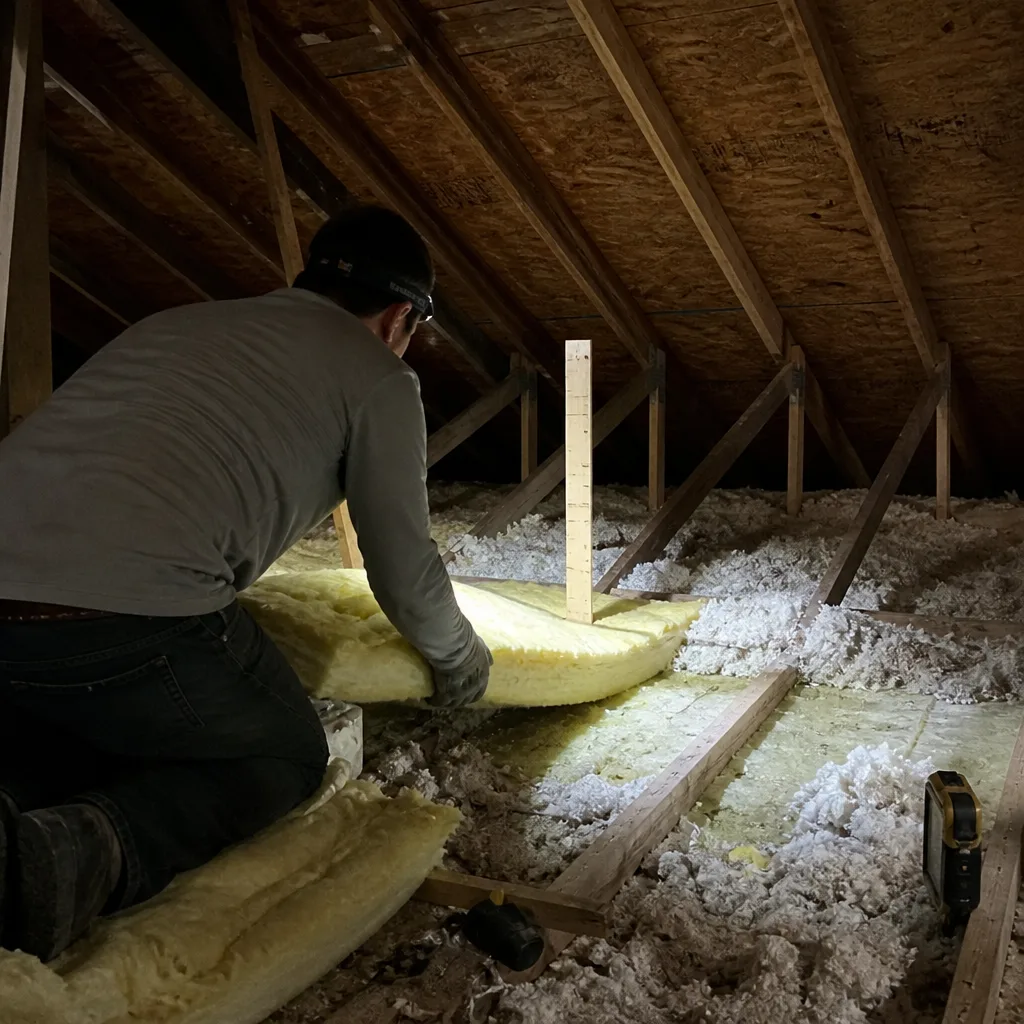
- Blown-in installation to the written depth. Once air sealing is complete and cured, we set up the blowing machine and hose. Depth gauges are installed across the attic floor before we start – these are small rulers that let both the crew and the homeowner verify the finished depth independently. For most Canyon Lake homes targeting R-38, that’s roughly 10 to 12 inches of blown-in fiberglass or 10 to 13 inches of blown-in cellulose. We install to the written depth, not an approximation.
- Post-job blower-door test and documentation. After the insulation settles and the attic access is closed, we run a second blower-door test and record the result. The before and after numbers go into your documented photo record. On a well-air-sealed Canyon Lake attic, we typically see a 25% to 45% reduction in CFM50 from the pre-job reading. That range varies with how leaky the home started, but the number is always real and always documented.
- Documented photo record delivered before we leave. Every job closes with a photo record – attic before, penetrations sealed, depth gauges at final depth, attic after. You receive this documentation the same day. The 365-Day Done Right Promise applies from the day the job closes: if anything in the written scope isn’t right, we make it right.
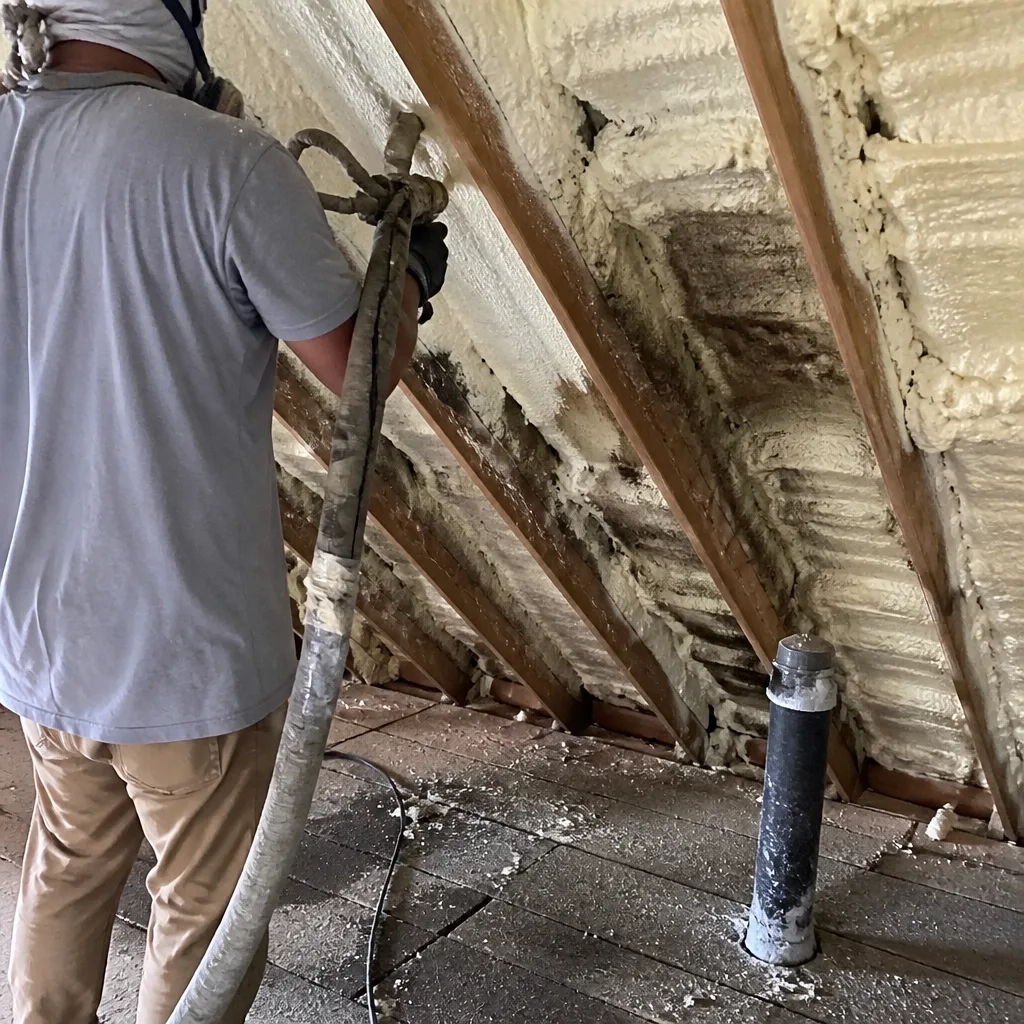 Before
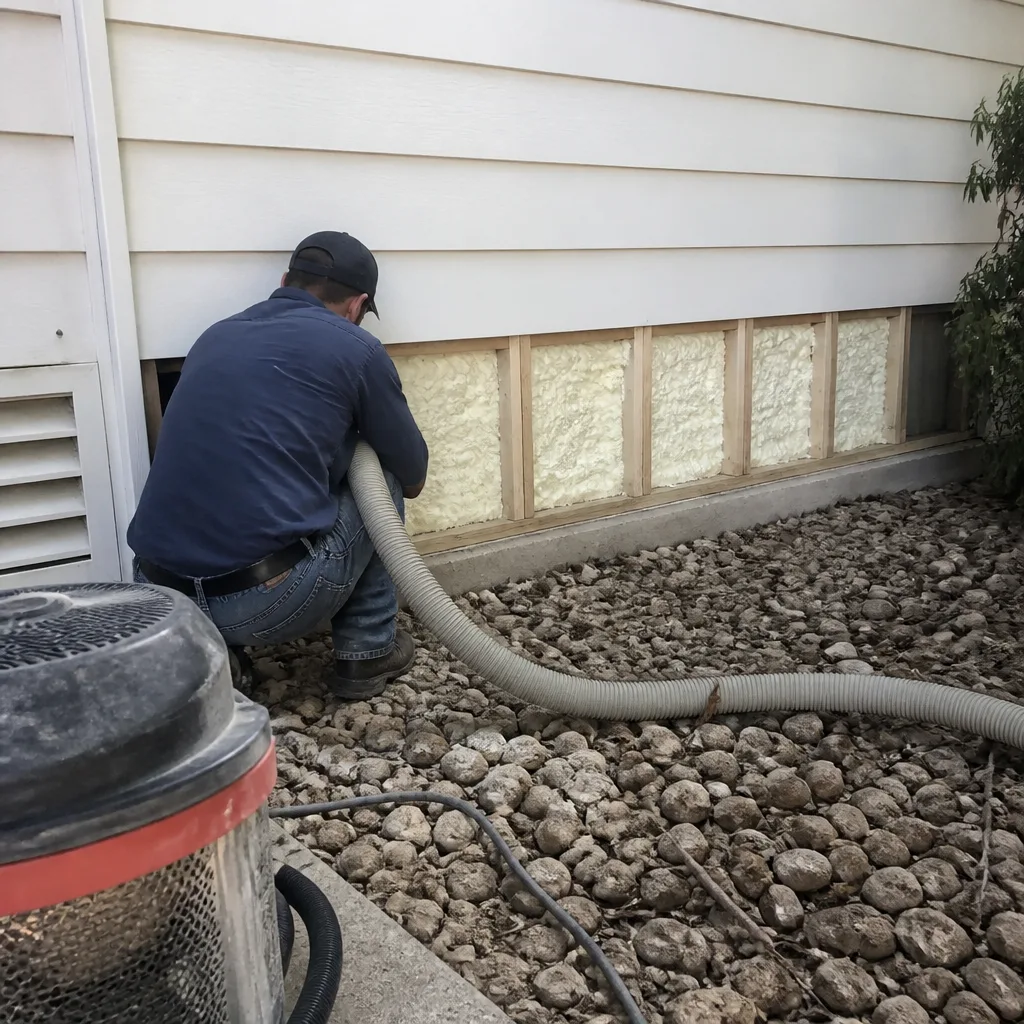 After
AfterBlown-In Attic Insulation Pricing in Canyon Lake
Most our Attic Insulation services for blown-in jobs in Canyon Lake run between $1,400 and $3,800 for a single-family home, with the air sealing phase included as a prerequisite in that range – not added separately afterward. The wide range exists because attic size, starting R-value, accessibility, and the number of penetrations that need sealing vary significantly from house to house.
| Scope | Typical Price Range |
|---|---|
| Air sealing only (no insulation added) | $600 – $1,200 |
| Air sealing + blown-in to R-38 (1,000-1,500 sq ft attic footprint) | $1,400 – $2,200 |
| Air sealing + blown-in to R-38 (1,500-2,500 sq ft attic footprint) | $2,000 – $3,000 |
| Air sealing + blown-in to R-49 or R-60 (larger or two-story homes) | $2,800 – $3,800 |
| Add: blower-door test (before and after, documented) | Included on applicable jobs |
A few factors that move the price inside those ranges:
- Attic access: Tight scuttle holes or unusual framing in older Canyon Lake homes near the lakefront can add labor time.
- Starting condition: If the existing insulation is contaminated, wet, or compacted, it needs to come out before anything goes in – that’s a separate scope. We’ll tell you in writing if that’s the case before any work starts.
- Number of penetrations: A home with recessed lighting throughout will have more air-sealing work than a home with surface-mounted fixtures. This directly affects the air-sealing labor line.
- Target R-value: Going from R-13 to R-38 versus from R-22 to R-38 uses meaningfully different amounts of material.
- Material choice: Blown-in cellulose (GreenFiber, for example) and blown-in fiberglass (Owens Corning or Johns Manville) land at comparable price points per R-value unit, but we’ll explain any difference in the written quote.
We offer a free second opinion on any written estimate you’ve received from another contractor. Bring us the quote, and we’ll read it with you – including what it includes and what it doesn’t. Call (737) 227-6219 to schedule a free assessment, and you’ll have a written price in hand before we ever start.
FAQs – Blown-In Attic Insulation
How much does blown-in attic insulation cost in Canyon Lake, TX?
Most blown-in attic insulation jobs in Canyon Lake, including air sealing, run between $1,400 and $3,800 for a single-family home, depending on attic size, starting R-value, and the number of penetrations that need sealing. The written price you receive before any work starts will itemize what’s included. If you have a competing written estimate, call us at (737) 227-6219 and we’ll give you a free second opinion on what it covers.
What’s the difference between blown-in insulation and batt insulation for an attic?
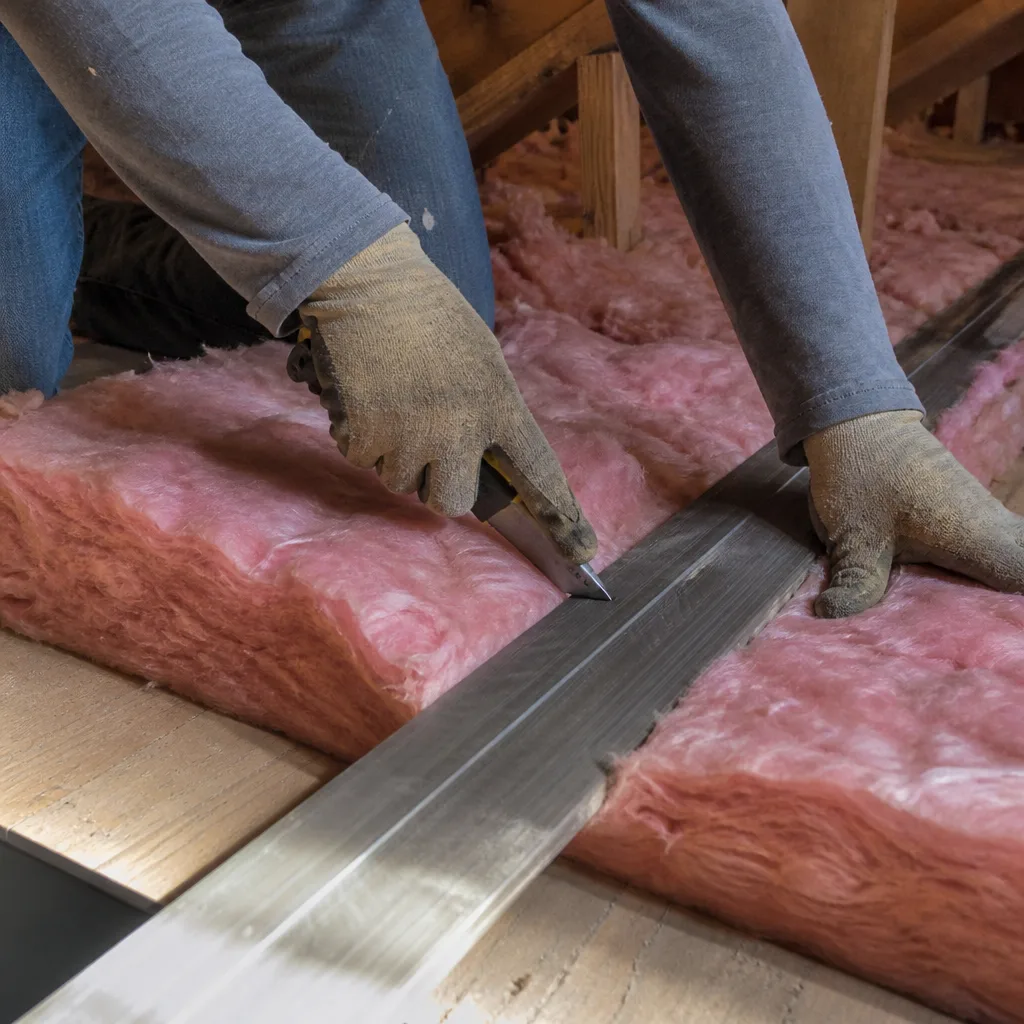
Blown-in insulation – loose-fill cellulose or fiberglass machine-distributed across the attic floor – fills irregular spaces, corners, and framing gaps that cut batts can’t reach cleanly. In Canyon Lake’s typical one-story construction from the 1990s and early 2000s, attic floors have a lot of framing variation, and blown-in material achieves a more consistent depth and R-value across the whole footprint. Attic Batt Insulation isn’t wrong in every situation, but for re-insulating an existing home without opening ceilings, blown-in is usually the better fit.
Do I need to air-seal my attic before adding blown-in insulation?
Yes – and this is not optional at Topside Attic Insulation Canyon Lake. Attic Baffles & Ventilation Prep and air sealing of top plates, can lights, plumbing penetrations, and HVAC chases must be completed before insulation goes in. If you insulate over an unsealed attic floor, the insulation will slow air movement but won’t stop it; you’ll spend money on material that’s doing a fraction of the thermal work it should. We’ve tested Canyon Lake homes where unsealed recessed fixtures accounted for the equivalent of a 6-inch-wide hole in the ceiling. Air sealing is included in every blown-in job we do – it’s not a line item you choose to add or skip.
How long does a blown-in attic insulation job take in Canyon Lake?
Most single-family homes in Canyon Lake take one day from start to finish – air sealing in the morning, blown-in installation in the afternoon, and the post-job blower-door test and photo documentation before the crew leaves. Larger homes, homes with contaminated insulation that needs removal first, or attics with very limited access may extend to a second day. The written scope you receive before work starts will tell you the expected timeline, and under the Haven Standard you’ll get a named technician and a text when they’re on the way.
Why Canyon Lake Homes Specifically Benefit
Canyon Lake’s position in Comal County puts it at a climatic edge that a lot of general insulation advice doesn’t account for. The reservoir moderates overnight temperatures near the water, which sounds pleasant but actually extends the cooling season – your AC runs later into the evening than it would in a comparable inland location at the same elevation. Homes on the north and northwest shores, particularly in the Cranes Mill and Thousand Trails areas, get full western sun exposure on roof planes that can drive attic temperatures above 140°F on a July afternoon. That’s the environment your existing insulation is working against.
The other Canyon Lake-specific factor is pier-and-beam construction on sloped lakefront lots. Homes built into hillside lots along the FM 2673 corridor often have attic configurations that batts can’t serve well – the geometry changes too much. Blown-in material handles those irregular spaces in a way that batts simply can’t, and the blower-door test afterward gives you a documented number to confirm the sealing actually worked, not just an assurance that it should have.
We’ve been doing this work since 2016, and across more than 9,000 homes sealed and insulated, every one came with a written price before the first tool came out and a documented record when the crew left. Canyon Lake homeowners in particular ask good questions about what they’re paying for – that’s exactly the kind of conversation we’re built for.
Key Takeaways
- Blown-in attic insulation in Canyon Lake typically costs $1,400-$3,800, air sealing included, and you receive a written price before any work starts.
- Air sealing is a hard prerequisite – we will not blow insulation into an unsealed attic floor, and it’s included in the scope, not sold separately.
- Before-and-after blower-door numbers are documented on every applicable job so you can see the actual performance change, not just accept a verbal claim.
- Materials come from Owens Corning, GreenFiber, Johns Manville, and other reputable manufacturers – no proprietary product lock-in.
- The 365-Day Done Right Promise applies to every completed job. If it’s not right, we make it right.
- A free second opinion on any competing written estimate is available – call (737) 227-6219.
Get a Written Price Before Any Work Starts
If your Canyon Lake home’s attic hasn’t been assessed since you bought it – or ever – a free written estimate is the right starting point. We’ll measure the attic, check the existing insulation depth and condition, identify the penetrations that need sealing, and give you a flat written price with a full scope before we ask you to decide anything. No guesses, no ballpark ranges that double by the time the invoice arrives.
Call (737) 227-6219 to schedule that assessment. A live person will answer. If you’d rather start with a second opinion on an estimate you already have, bring it – we’ll read it with you and tell you what it covers and what it doesn’t. That service is free under the Haven Standard, and it comes with no obligation to book with us.
Written by Wes Okafor, Owner at Topside Attic Insulation Canyon Lake, serving Canyon Lake since 2016.