
Last updated September 24, 2026
Insulation Cost Breakdown: The Canyon Lake Homeowner’s Reference for 2026
A Canyon Lake homeowner who receives a $1,800 attic insulation quote and a $3,400 quote for the same square footage is not necessarily looking at a rip-off versus a fair price. In our experience across more than 9,000 homes since 2016, that gap usually represents the difference between blowing material over an unsealed attic floor and completing a full air-sealing-plus-insulation scope with documented blower-door proof. Canyon Lake’s combination of 100-degree summer afternoons, variable roof pitches from the 1970s build era, and frequent finished attic conversions means the same square footage can hide dramatically different labor realities. This guide breaks down every line item that should appear on a legitimate insulation bid so you can evaluate what you’re actually paying for, and you can find more guides & resources on our blog.
Quick Answer
Most complete attic insulation jobs in Canyon Lake run between $2,800 and $5,400 for an 1,800-square-foot home when air sealing, material, and documentation are included as separate line items. A material-only blown-in job without air sealing typically costs $1,500-$2,200 but produces no measurable performance improvement if attic bypasses remain open. The difference is not the insulation itself; it’s whether the building envelope is sealed first.
Table of Contents
- Why Line-Item Pricing Matters in Canyon Lake
- The Five Components of Every Legitimate Insulation Bid
- Blown Cellulose vs. Spray Foam: Real Cost Comparison
- Canyon Lake Variables That Drive Cost
- Why Air Sealing Shows Up as a $400-$900 Line Item
- The Documentation Package and Its Resale Value
- Payback Math at Current CPS Energy Rates
- Common Mistakes to Avoid
- When to Call a Professional
- Frequently Asked Questions
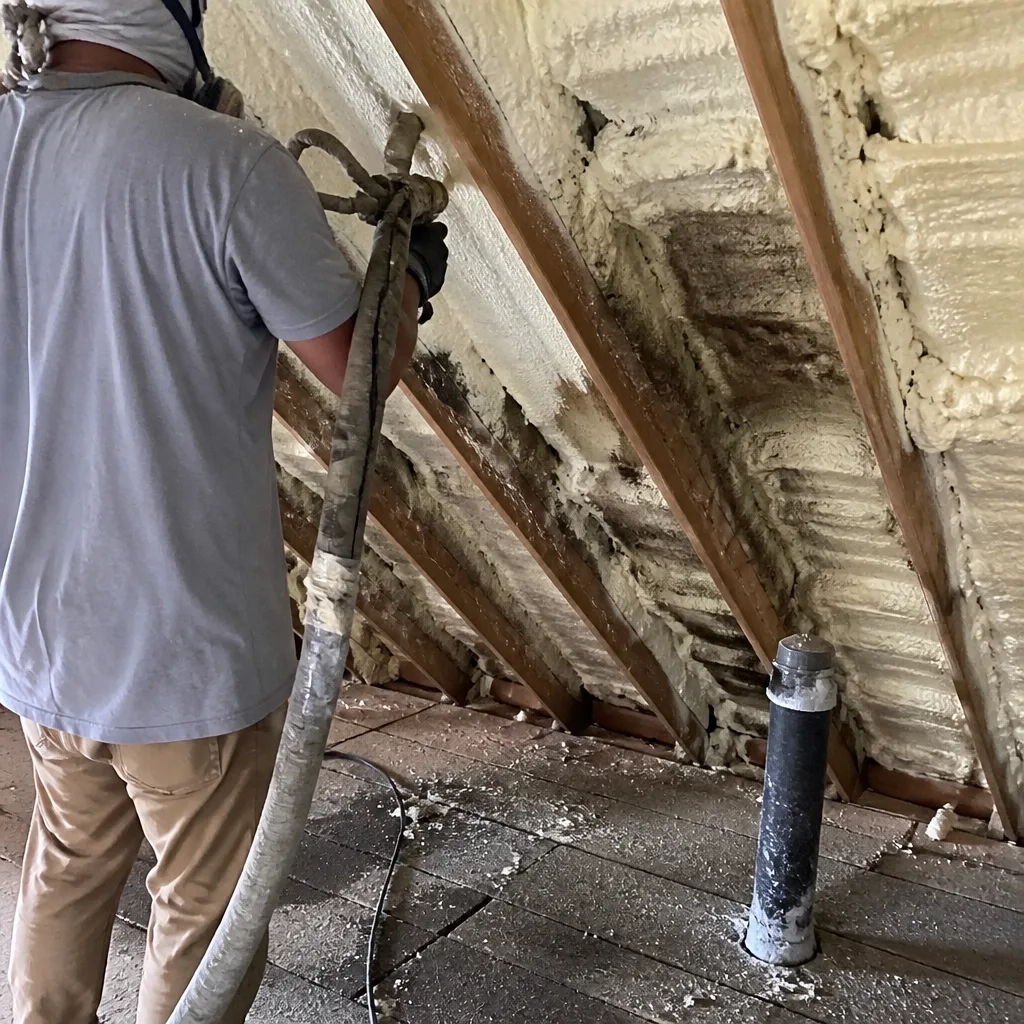 Before
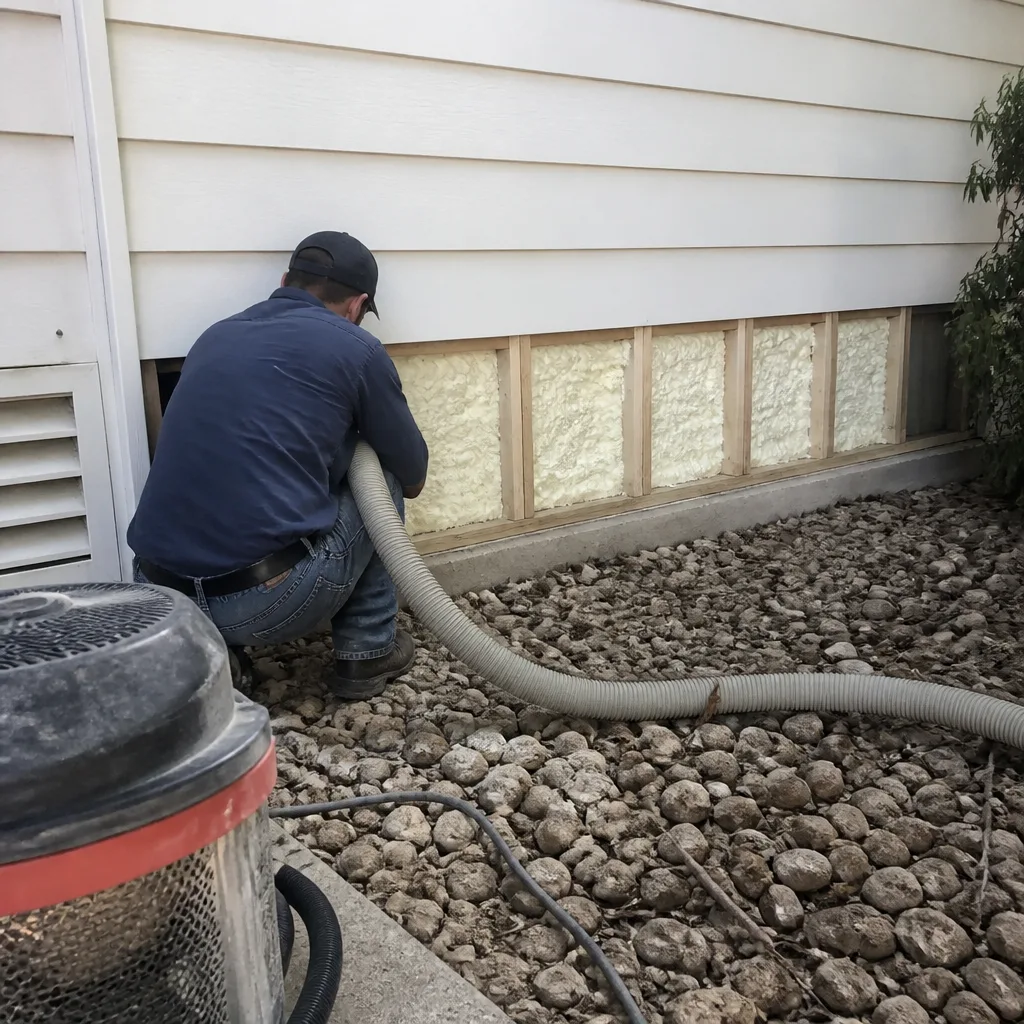 After
AfterWhy Line-Item Pricing Matters in Canyon Lake
Insulation cost guides that list a single price-per-square-foot range are not designed to help you budget. They are designed to get you to call. In Canyon Lake, where homes range from 1970s ranch-style builds near the lakefront to newer construction in the Hill Country surrounding areas, a single square-foot price is meaningless without knowing what’s included. For a deeper look at local requirements, see our guide to Insulation Permits, Codes & Inspections in TX: What You Need to Know.
We’ve audited too many attics where a previous contractor blew Knauf or Johns Manville cellulose over a floor that was never sealed. The insulation looks full. The energy bills don’t move. The homeowner calls us two years later wondering why.
The problem is scope ambiguity. A bid that says “attic insulation, 1,800 sq ft, $2,100” tells you almost nothing. Does it include removal of existing compressed or rodent-damaged material? Does it include sealing top plates, can lights, and plumbing chases? Does it include a blower-door test to prove the work changed anything? Without line-item separation, you cannot compare bids, and you cannot hold anyone accountable for outcomes.
Under Haven Standard Clause 1, every job we price is delivered as a written scope with a flat price before any work starts. The scope lists each component separately so you know what you’re buying and what you’re not. This is not an upsell format. It is the minimum standard for making an informed decision.
The sections below break down the five components that should appear on every legitimate insulation bid in Canyon Lake. If any are missing, you are not looking at a complete scope.
The Five Components of Every Legitimate Insulation Bid
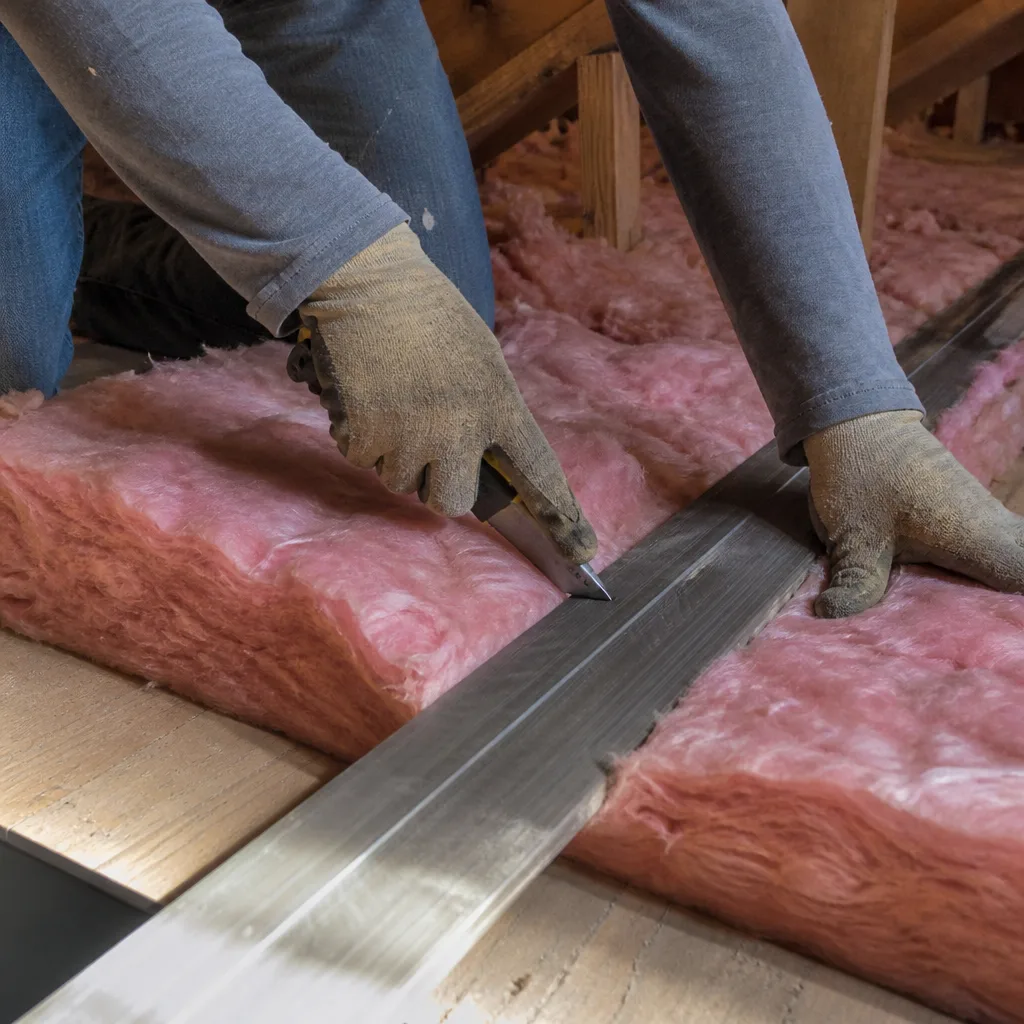
Every insulation job we scope in Canyon Lake decomposes into five line items. You can use this model to evaluate any bid you receive, including ours.
1. Existing Material Removal
Old insulation does not always need to come out, but when it does, the cost is real and should be stated upfront. In Canyon Lake, we regularly find three conditions that trigger removal:
- Compression and settling below R-19 - common in pre-1990 builds where fiberglass batts have collapsed to 2-3 inches
- Rodent infestation or moisture damage - urine-soaked material cannot be left in place
- Vermiculite or pre-1990 loose-fill - requires hazmat protocol and third-party clearance testing
Removal pricing in the Canyon Lake market runs $1.20-$2.40 per bag hauled, with most 1,800-square-foot attics generating 30-80 bags depending on original depth and compression. A clean removal with no hazmat protocol typically adds $400-$900 to the job. Vermiculite jobs run higher due to containment and testing requirements.
2. Air Sealing Labor
This is the component most often buried or omitted entirely. Air sealing addresses the bypasses that allow conditioned air to escape into the attic: top plates where walls meet the ceiling, plumbing and electrical penetrations, can light housings, chase walls for chimneys and flues, and the attic access hatch or pull-down stair perimeter.
We price air sealing by the penetration count and linear footage. A typical Canyon Lake ranch from the 1970s-1980s has 40-70 penetrations and 120-200 linear feet of top plate. Sealing scope runs $400-$900 in our market. Jobs with finished attic floors, multiple HVAC chases, or balloon framing run higher.
3. New Material Installed
This is the line item most homeowners focus on, and it is the least informative by itself. Material pricing depends on type, target R-value, and installed depth.
| Material | Target R-Value | Installed Depth | Price per Sq Ft (installed) |
|---|---|---|---|
| Blown cellulose (GreenFiber, CertainTeed) | R-38 to R-49 | 10-14 inches | $1.40-$2.10 |
| Blown fiberglass (Knauf, Johns Manville) | R-38 to R-49 | 11-15 inches | $1.60-$2.40 |
| Spray foam, open-cell (at roof deck) | R-38 | 5.5-6 inches | $3.50-$5.20 |
| Spray foam, closed-cell (at roof deck or walls) | R-21 to R-38 | 3-5 inches | $5.50-$8.00 |
| Rockwool batts (walls or cathedral ceiling) | R-23 | 5.5 inches | $2.80-$3.80 |
For an 1,800-square-foot attic floor, blown cellulose to R-38 typically runs $2,500-$3,800 for material and installation, not including removal or air sealing.
4. Blower-Door Testing
A blower-door test - a pressurization reading that shows, in one number, how much air your building envelope is losing - is the only way to verify that air sealing produced a measurable result. We charge a flat $250-$400 for pre- and post-testing on applicable jobs. Some contractors include this in a package price; others do not perform it at all. If a bid lacks blower-door numbers, you have no proof of performance.
5. Documentation Package
The final line item is not a cost to you; it is a deliverable you should demand. Every Haven Standard job closes with a Documented Photo Record, material spec sheets, installed depth verification, and on applicable jobs, the blower-door pre/post report. This package has direct resale value in Canyon Lake’s active market, which we address in a dedicated section below.
Blown Cellulose vs. Spray Foam: Real Cost Comparison
Homeowners in Canyon Lake often ask whether spray foam at the roof deck is worth the premium over blown cellulose on the attic floor. The answer depends on how the attic is used and what condition the space is in.
Consider a 1,800-square-foot home with a vented attic and standard pitch:
| Scope | Blown Cellulose (Floor) | Open-Cell Spray Foam (Deck) |
|---|---|---|
| Existing removal (if needed) | $600 | $600 |
| Air sealing | $650 | $650 |
| New material | $2,900 | $7,200 |
| Blower-door testing | $325 | $325 |
| Total | $4,475 | $8,775 |
The spray foam job costs nearly double. The performance difference is real but narrower than the price gap suggests. A properly air-sealed attic with blown cellulose to R-49 typically achieves a 25-35% reduction in heating and cooling load. Spray foam at the deck, by eliminating vented attic air exchange entirely, can push that to 35-45% - but only if the rest of the envelope is equally tight.
For Canyon Lake homeowners with HVAC ducts in the attic - common in 1980s-2000s builds - spray foam at the deck has an additional benefit: it moves the thermal boundary to the roof line, placing ducts inside conditioned space. Duct leakage in a 140-degree vented attic is a major efficiency loss that cellulose on the floor cannot address. In these cases, the payback calculation shifts.
At current CPS Energy rates (approximately $0.14-$0.16 per kWh for the typical residential tier in the Canyon Lake service area), the blown cellulose job above typically pays back in 5-7 years for a home with moderate air leakage. The spray foam job extends that to 10-14 years unless duct conditions are poor, in which case the combined savings can shorten payback to 7-9 years.
We do not recommend spray foam for every home. We do recommend that every homeowner understand the trade-off in specific numbers rather than accepting a contractor’s preference as default.
Canyon Lake Variables That Drive Cost
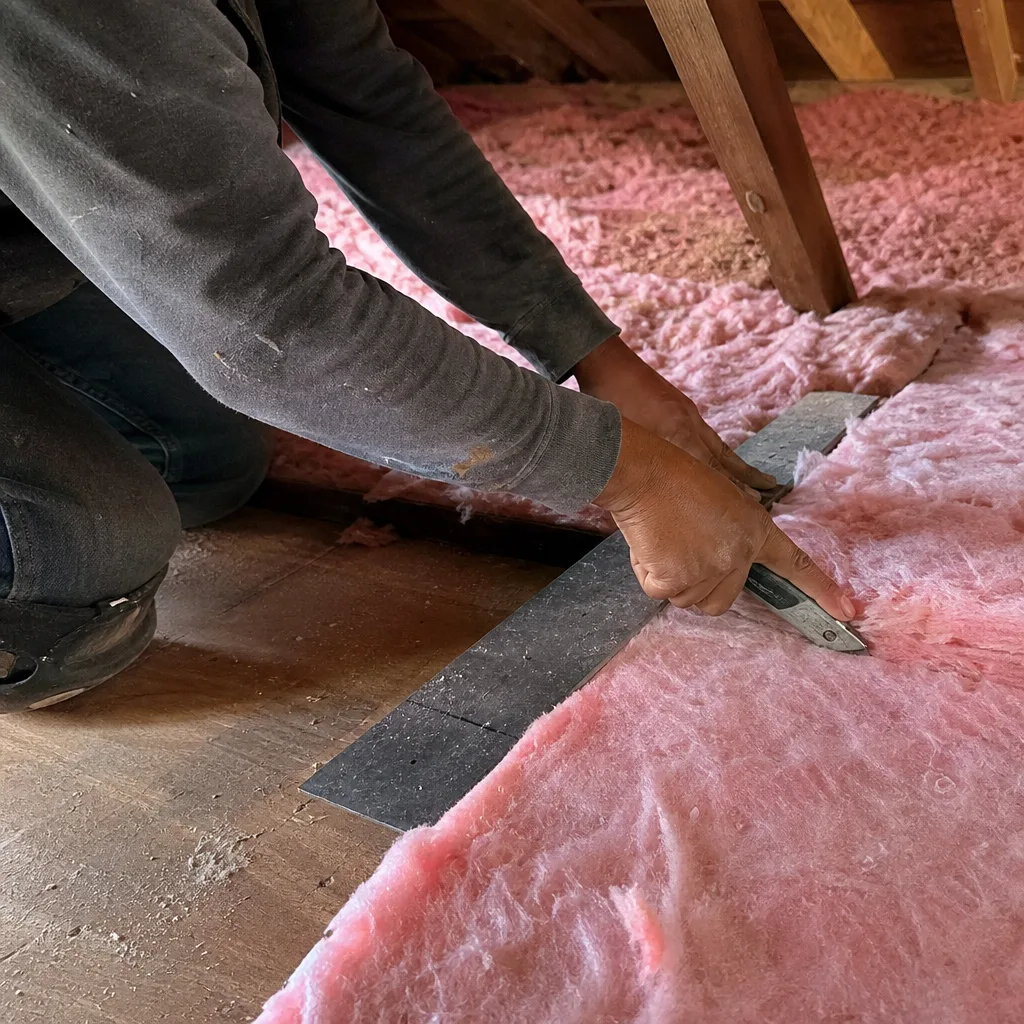
Four local conditions regularly push Canyon Lake insulation jobs above or below the typical range. We encounter all of them in the neighborhoods around Canyon Lake, from the older lakefront properties to the newer Hill Country subdivisions. If you’re unsure whether your home is showing symptoms, review our Insulation Warning Signs: A Canyon Lake Homeowner’s Reference Guide.
Roof Pitch and Access
Low-pitch roofs (3:12 or less) make attic work cramped and slow. Steep pitches above 8:12 require safety rigging and extend labor hours. In the Canyon Lake area, we see both extremes: 1970s ranch homes with nearly flat pitches and newer construction with steep Hill Country rooflines for runoff management. Labor rates adjust 15-30% for access difficulty.
Attic Entry Type
A small ceiling hatch requires material transport through the home or specialized hose routing. A pull-down stair simplifies access but creates its own air-sealing challenge - the stair perimeter and the stair unit itself are significant leakage points. We’ve measured 150-300 CFM50 of leakage through unsealed pull-down stairs alone. Sealing or replacing the stair unit adds $200-$600 depending on whether a weather-stripped insulated unit is installed.
Finished vs. Unfinished Attic Floor
Finished attic floors - plywood decking for storage - require removal and replacement or working around stored contents. Many Canyon Lake homeowners use their attics for seasonal storage, and crews must either relocate items or work in sections. This adds labor hours that should be stated in the bid, not absorbed as “extra.”
Hazardous Existing Material
Vermiculite insulation, common in pre-1980 homes, contains asbestos in a percentage of cases and requires EPA-compliant removal with third-party air clearance. We have encountered vermiculite in Canyon Lake homes near the original 1960s-1970s lake development. A positive hazmat finding typically adds $2,000-$4,500 to removal costs and extends project timeline by 5-10 business days for lab turnaround.
Why Air Sealing Shows Up as a $400-$900 Line Item
Some contractors eliminate air sealing from their bids to hit a lower price point. Others bury it in “prep labor” without specifying scope. Both practices obscure the fact that air sealing is discrete, skilled work with its own material and time requirements.
In a typical Canyon Lake attic, air sealing involves:
- Locating and marking all top plates - the horizontal framing member where interior walls meet the ceiling plane - using blower-door-directed infrared or smoke pencil verification
- Sealing can light housings with fire-rated covers or approved foam, not standard caulk
- Foaming plumbing and electrical penetrations, including cable and phone line holes that accumulate across decades of service changes
- Sealing chase walls around chimneys, flues, and HVAC ducts that create open channels from basement to attic
- Treating the attic access hatch or stair unit with gasketed perimeter seal and insulated cover
Each step requires specific materials: fire-rated foam, high-temperature sealant for flue penetrations, rigid foam board for large gaps, metal flashing for clearance compliance. A two-person crew typically spends 3-6 hours on air sealing in a 1,800-square-foot attic before insulation installation begins.
The $400-$900 range reflects this labor plus materials. Bids below $300 for air sealing in a full attic are either under-scoped or absorbing the cost elsewhere. Bids that omit the line item entirely are selling material, not performance.
We have measured the difference repeatedly. A recent job in the Canyon Lake area started at 3,850 CFM50 before sealing and dropped to 2,100 CFM50 after - a 45% reduction in envelope leakage before any insulation was added. The cellulose installation that followed then had a sealed floor to rest on, and the combined result was a 32% reduction in the homeowner’s summer cooling load. Without the sealing step, the cellulose would have masked the bypasses without closing them, and the performance improvement would have been single-digit.
The Documentation Package and Its Resale Value
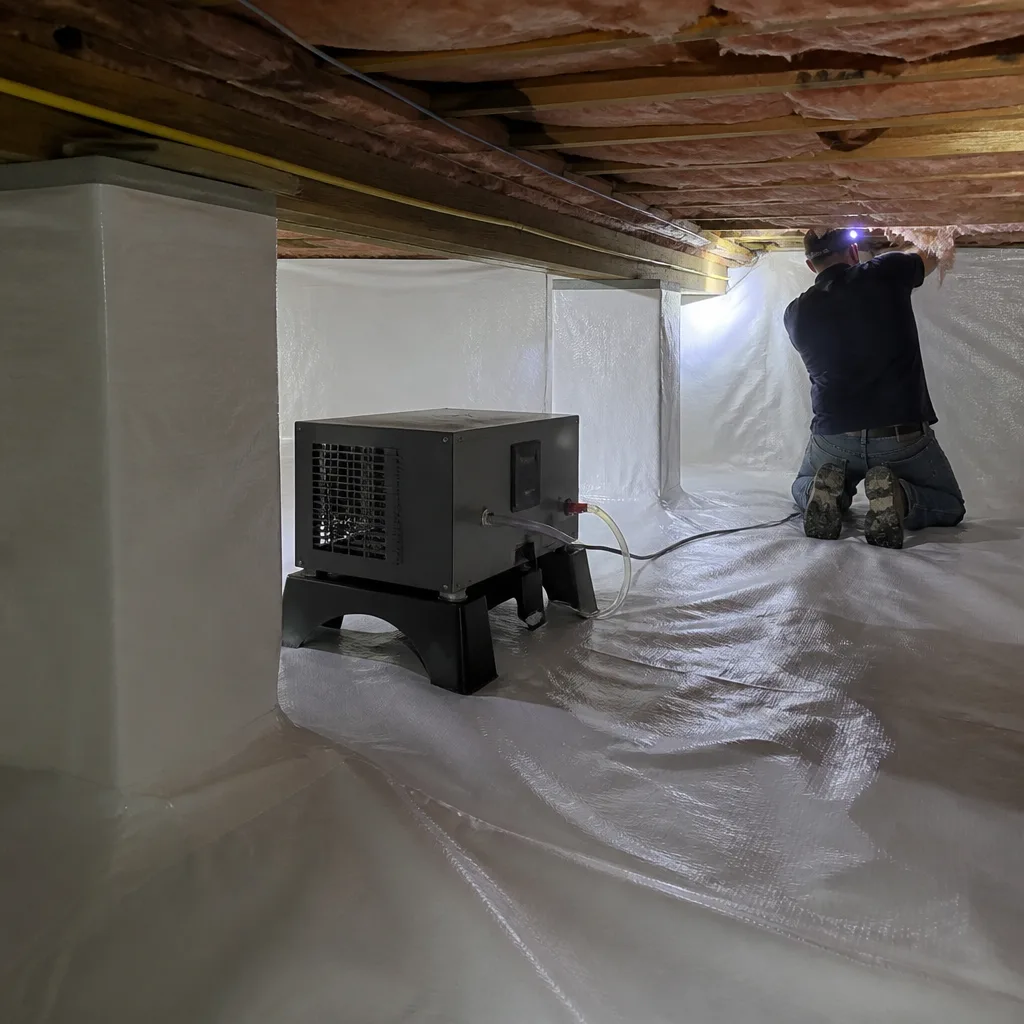
Most homeowners do not think about insulation documentation until they sell. Then they discover that buyers and inspectors ask questions they cannot answer: What R-value was installed? Was the work permitted? Is there proof of performance?
The documentation package we deliver on every Haven Standard job includes:
- Material spec sheets - manufacturer, product name, R-value per inch, and lot numbers for warranty traceability
- Installed depth photos - time-stamped images showing uniform depth across the attic field, with measuring tape visible
- Blower-door pre/post report - the pressurization readings, test conditions, and equipment calibration date
- Written scope and warranty - the original contract scope and the 365-Day Done Right Promise terms
In Texas, sellers must disclose known defects and material facts about the property. A documented insulation upgrade with performance verification is a material fact in your favor. Buyers in Canyon Lake’s competitive market - where homes from the 1970s-1990s dominate inventory - increasingly recognize the difference between “attic insulated” and “attic insulated with proof.”
We have had Canyon Lake homeowners report that their documentation package became a negotiating asset during sale, justifying asking price or deflecting repair credits. The package costs you nothing additional; it is included on every job. But you must request it as a contract deliverable if you are working with a contractor who does not provide it standard.
Payback Math at Current CPS Energy Rates
Insulation is not a cosmetic upgrade. It is a capital investment with a measurable return. The payback calculation requires three inputs: installed cost, annual energy savings, and your expected hold period.
For the blown cellulose job outlined above ($4,475 total) in a typical Canyon Lake home with pre-installation blower-door readings above 3,500 CFM50:
- Annual cooling and heating reduction: 25-35% of HVAC load
- Typical annual HVAC spend in Canyon Lake (1,800 sq ft, electric heat pump): $1,800-$2,400
- Estimated annual savings: $450-$840
- Simple payback period: 5.3-9.9 years
The spray foam job ($8,775) with 35-45% load reduction:
- Estimated annual savings: $630-$1,080
- Simple payback period: 8.1-13.9 years
These are conservative estimates that assume no energy rate increases. CPS Energy rates have increased an average of 3-4% annually over the past decade. Each rate increase shortens payback proportionally.
Homeowners planning to sell within five years should weigh payback against resale value impact. Those planning to hold 10+ years should prioritize performance and comfort, where the sealed-and-insulated envelope delivers consistent temperature stability and reduced HVAC runtime that extends equipment life.
Common Mistakes to Avoid
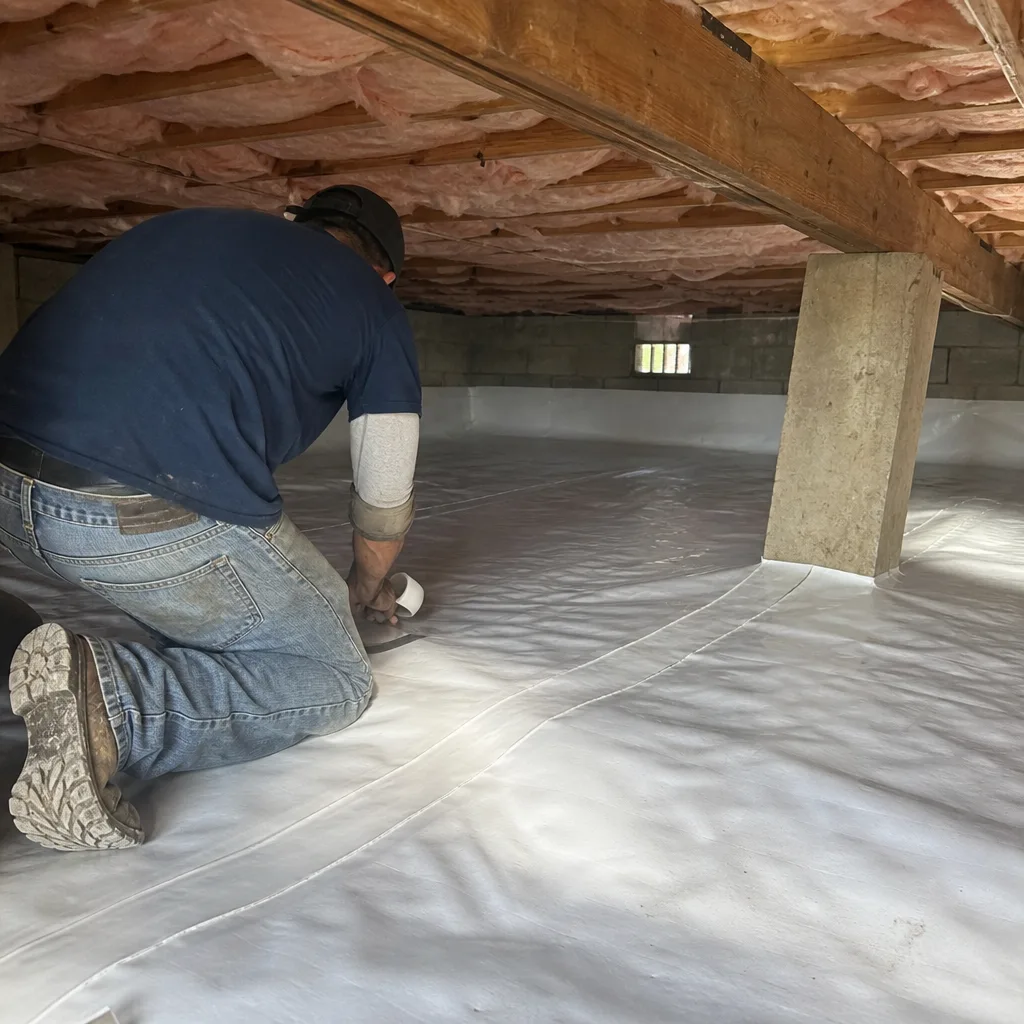
- Comparing bids without matching scopes. A $1,800 bid for material-only and a $3,800 bid for complete air sealing plus insulation are not comparable. Itemize both before deciding.
- Ignoring existing material condition. Blowing new insulation over compressed, contaminated, or inadequate old material creates a stratified layer cake with unpredictable performance. Removal is sometimes necessary.
- Skipping the blower-door test. Without pre- and post-pressurization numbers, you have no proof the air sealing worked. Any contractor confident in their work should provide this.
- Accepting verbal pricing. Under Haven Standard Clause 1, a written price before any work starts is non-negotiable. Verbal estimates allow scope creep and dispute.
- Neglecting attic access sealing. The pull-down stair or hatch is often the largest single leakage point in an otherwise sealed attic. A full insulation job without access treatment is incomplete.
- Assuming all spray foam is equal. Open-cell and closed-cell foam have different R-values, vapor permeance, and costs. Specify which you are receiving and why.
- Forgetting documentation at contract. Request material specs, photos, and blower-door reports as deliverables before work begins. Adding them after completion is often impossible.
When to Call a Professional
Call for a professional evaluation when your energy bills are rising without rate increases, when rooms have persistent temperature stratification, when you find compressed or disturbed insulation in the attic, or when you are preparing to sell and need documentation of envelope condition. In Canyon Lake, where summer attic temperatures exceed 140 degrees and winter nights drop below freezing, a compromised thermal boundary shows up in comfort and cost quickly. For maintenance tips through every season, see our Seasonal Insulation Care for Canyon Lake: Year-Round Homeowner’s Guide.
Topside Attic Insulation Canyon Lake offers free estimates in Canyon Lake with written scope and flat pricing before any work starts. Call (737) 227-6219 to schedule. We also provide a Free Second Opinion on any written estimate from another contractor - bring us their scope and we will review it with you line by line.
Frequently Asked Questions
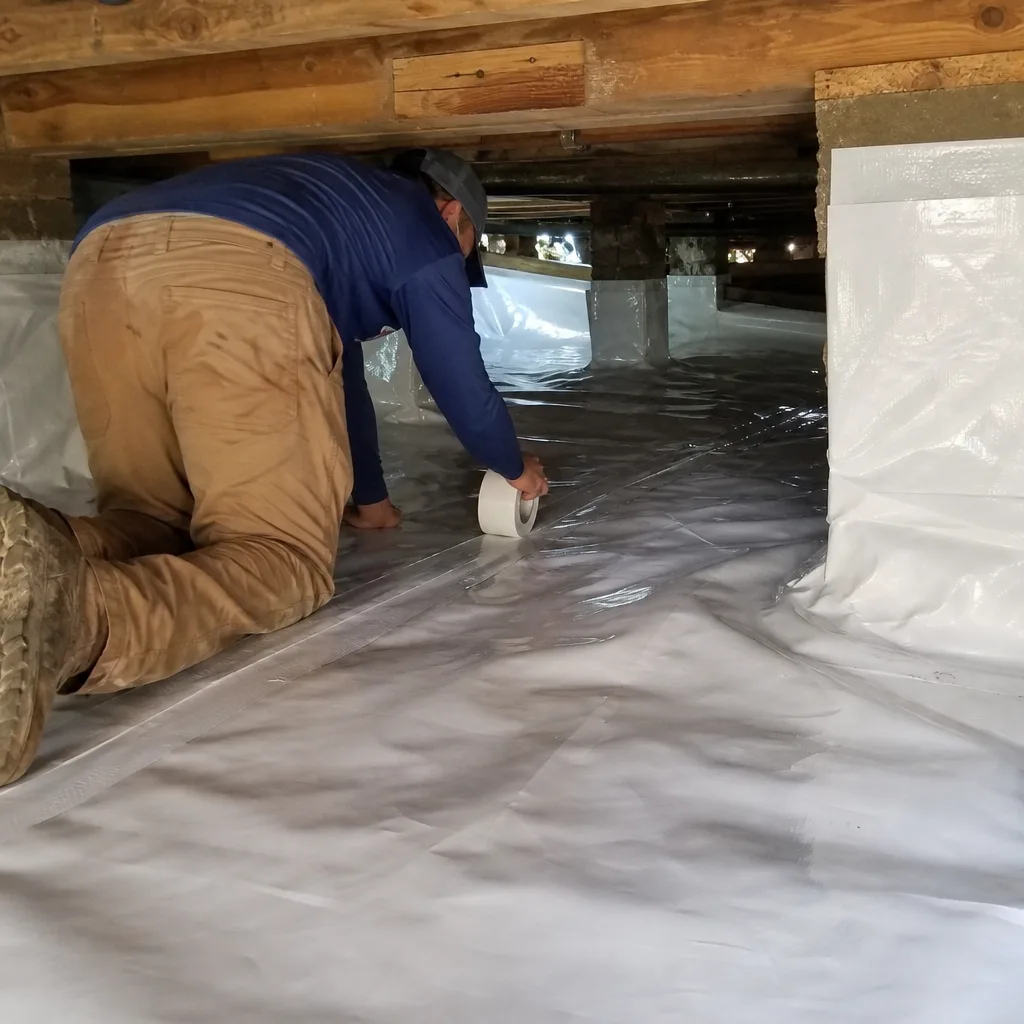
Most complete attic insulation jobs in Canyon Lake run $2,800-$5,400 for an 1,800-square-foot home when air sealing, material, removal if needed, and blower-door testing are included. Material-only blown-in jobs without air sealing typically cost $1,500-$2,200 but often fail to produce measurable energy savings. Call (737) 227-6219 for a written estimate with itemized scope - estimates are free.
Repair is rarely cost-effective. Compressed or settled fiberglass, moisture-damaged cellulose, or rodent-contaminated material cannot be restored to design R-value. Removal and replacement with new material, properly installed at full depth, is the only approach that delivers documented performance. In Canyon Lake, removal adds $400-$900 for a typical attic, or $2,000-$4,500 if vermiculite requiring hazmat protocol is present.
No reputable contractor installs insulation same-day without a site evaluation. We need to assess attic access, existing material condition, air-leakage scope, and any hazards before pricing. In Canyon Lake, we typically schedule evaluations within 1-3 business days and installation within 5-10 business days of written scope approval. Emergency exceptions apply only to active roof leaks or hazardous material exposure.
Because square footage measures floor area, not work scope. A bid may include or exclude material removal, air sealing, blower-door testing, access treatment, and documentation. The $1,800-$3,400 gap we opened with is usually explained by these variables, not by one contractor being fair and another dishonest. Demand line-item decomposition to compare accurately.
Canyon Lake’s specific combination of extreme summer heat, occasional hard freezes, and Hill Country wind exposure makes R-38 to R-49 in attics the practical minimum. The greater concern is air sealing quality, because wind-driven infiltration through bypasses can negate high R-values. Our blower-door testing consistently shows that a leaky R-49 attic performs worse than a tight R-38 attic.
Request these five deliverables: itemized scope with separate lines for removal, air sealing, material, testing, and documentation; material manufacturer and product name; installed depth verification with photos; pre- and post-installation blower-door readings; and written warranty terms. Under Haven Standard, we provide all five on every job before work begins.
The blower-door test provides the only objective verification. A meaningful air-sealing job in a Canyon Lake home should reduce CFM50 by 25-45%. Ask for the pre- and post-numbers in writing. If your contractor cannot produce them, the sealing scope was either not performed or not measured. We publish these numbers on every applicable job so homeowners have proof, not promises.
The Bottom Line
Insulation cost in Canyon Lake is not a single number. It is a sum of five line items - removal, air sealing, material, testing, and documentation - that vary with your home’s specific conditions. The homeowner who understands this decomposition can evaluate any bid accurately, avoid scope ambiguity, and demand proof of performance. The homeowner who accepts a single square-foot price risks paying for material that cannot deliver results because the envelope was never sealed first. Since 2016, we’ve completed more than 9,000 jobs under The Haven Standard, every one with a written price before work started and a documented record when we left. The model works because it is transparent, not because we say so.
Written by Wes Okafor, Owner at Topside Attic Insulation Canyon Lake, serving Canyon Lake since 2016.