
Last updated September 24, 2026
DIY vs Professional Insulation: The Canyon Lake Homeowner’s Decision Guide
Renting a blower-door machine in the San Antonio metro costs $300-$500 per day. That single line item changes everything about whether DIY attic insulation in Canyon Lake actually saves money. We’ve walked through enough homes in Startzville and Canyon Lake Hills to know the pattern: a homeowner adds six inches of blown cellulose over an unsealed attic floor, feels proud of the weekend’s work, and never learns that conditioned air is still pouring out through top plates and can-light bypasses at roughly the same rate as before. This guide shows you exactly which insulation jobs a Canyon Lake homeowner can handle without measurement equipment, which ones require a blower-door test to verify, and how to read a contractor’s scope of work so you know whether you’re paying for labor or for actual performance.
Quick Answer
DIY insulation in Canyon Lake makes sense only for three narrow scenarios: adding blown-in depth over existing undamaged insulation in a flat, accessible attic with no air-sealing needed; replacing a single batt section in an open wall cavity; or installing a pre-built attic hatch cover. Every other job type - including any work that could affect your home’s air leakage rate - requires a blower-door test to verify results, and the cost of renting or buying that equipment typically erases DIY savings. Professional insulation work earns its price through measurement infrastructure, not just labor.
Table of Contents
- When DIY Insulation Actually Works in Canyon Lake
- Four Job Types Where DIY Produces Unpredictable Outcomes
- The Equipment Gap: Why Measurement Matters More Than Skill
- The True Cost of DIY: Hidden Expenses in the Canyon Lake Market
- How to Read an Insulation Contract Like a Technician
- How Canyon Lake’s Climate Changes the Calculation
- Common Mistakes to Avoid
- When to Call a Professional
- Frequently Asked Questions
- The Bottom Line
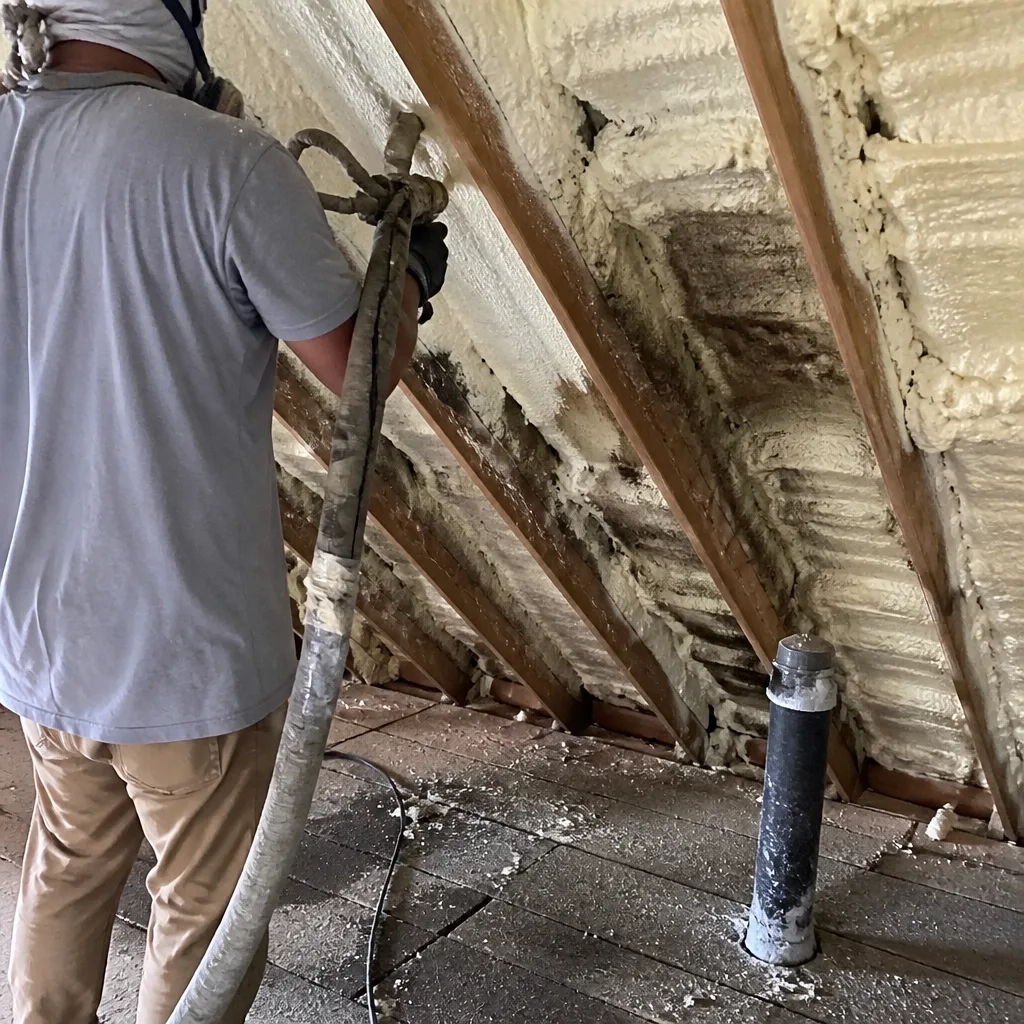 Before
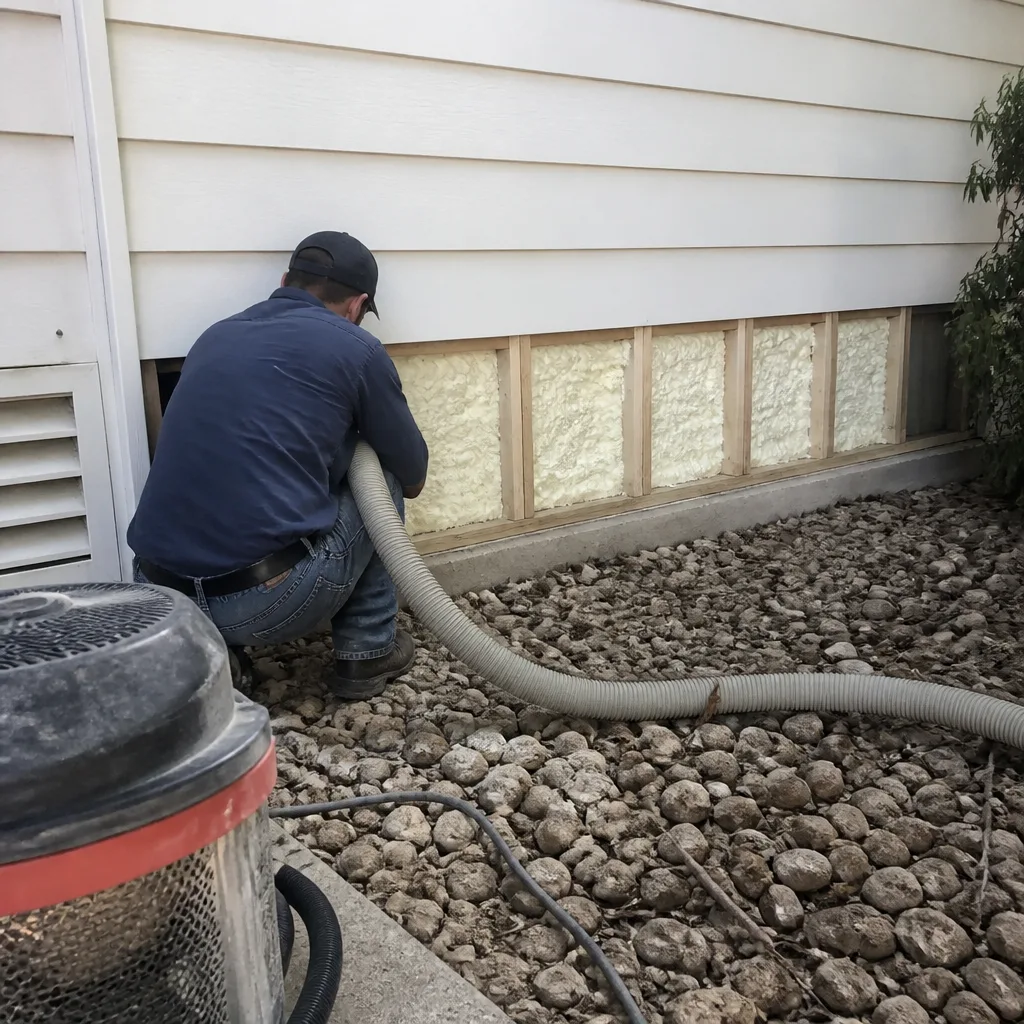 After
AfterWhen DIY Insulation Actually Works in Canyon Lake
There are exactly three scenarios where a Canyon Lake homeowner can complete insulation work with predictable results and no specialized measurement equipment. We define “predictable” as: the outcome is visible, the performance change is not in question, and the risk of creating a moisture or air-quality problem is minimal.
Scenario 1: Adding Blown-In Depth Over Existing, Undamaged Insulation
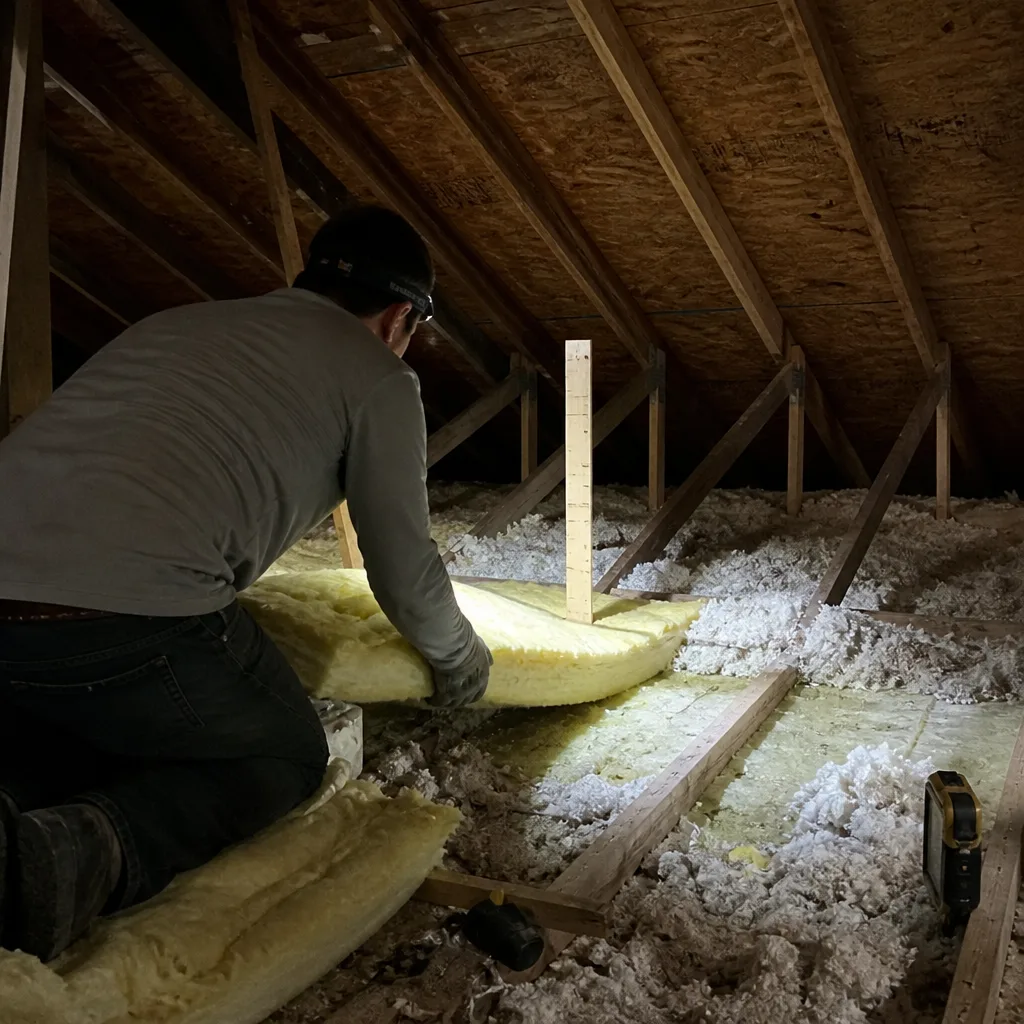
This is the most common viable DIY project. Your attic has existing fiberglass batts or blown cellulose in good condition - no compression, no rodent activity, no water staining. The attic floor is flat, the access opening is standard, and you can walk or kneel on joists without contorting. You rent a cellulose blower from a hardware supplier in New Braunfels or San Marcos, buy bags of GreenFiber or another loose-fill product, and add depth to reach your target R-value.
The critical condition: you must not need air sealing. If your can lights are unsealed, if your top plates - the horizontal framing members where interior walls meet the ceiling - show gaps, if your chimney chase or duct boots leak, then adding insulation without sealing first is precisely the mistake we correct most often in Canyon Lake homes. The new insulation buries the leaks, making them harder to find later, and the homeowner has spent money and time to achieve almost no reduction in air leakage.
Scenario 2: Replacing a Single Batt Section in an Accessible Wall Cavity
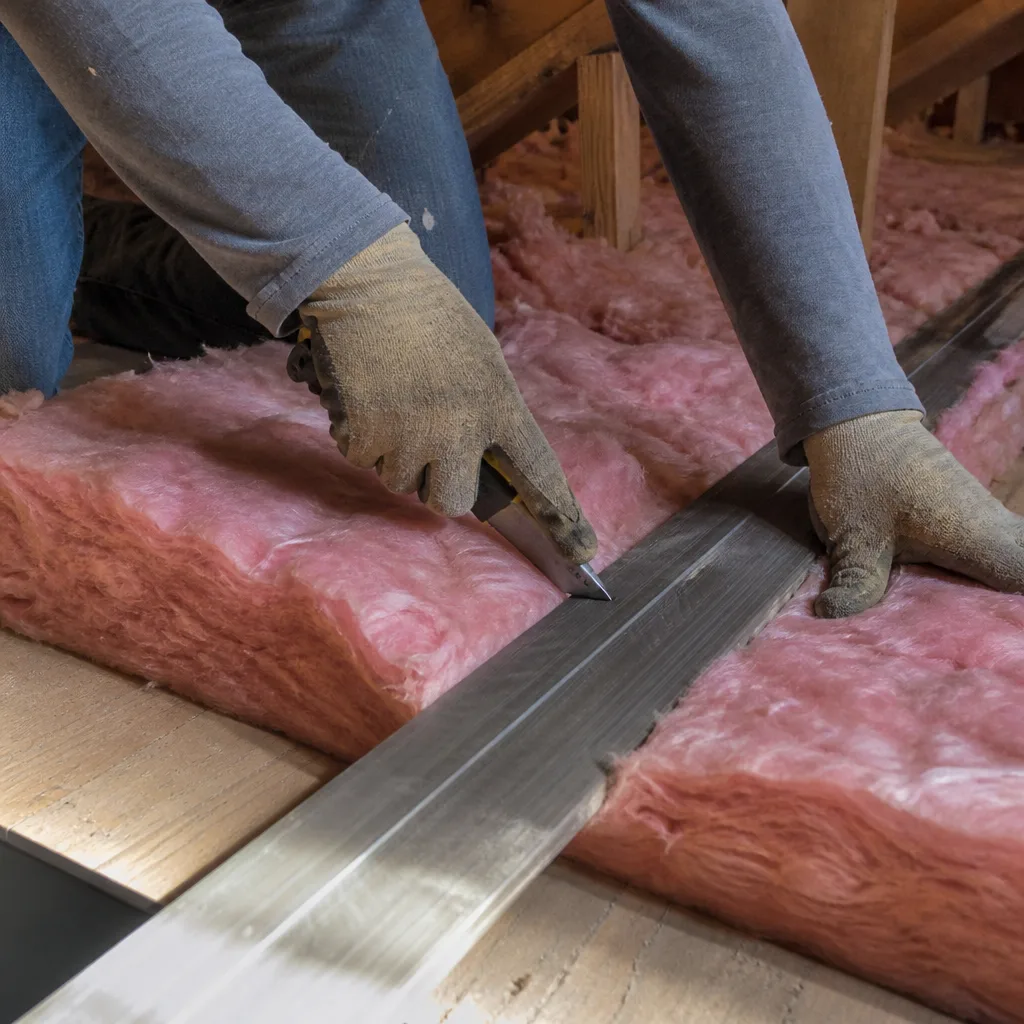
An interior wall with a removed electrical box, plumbing access, or drywall repair leaves an open cavity. You measure the cavity depth, buy the correct batt size (typically R-13 for 2×4 walls, R-19 for 2×6), cut to fit with a serrated knife, and install without compression. This is visual work. If the batt fills the cavity uniformly, the job is correct. No blower-door test is required because you’re restoring, not improving, the original thermal boundary.
Scenario 3: Installing a Pre-Built Attic Hatch Cover
Attic hatch covers - rigid foam assemblies with weatherstripping edges - address a common thermal bypass without entering the attic cavity. You measure your hatch opening, order or build a cover that overhangs by two inches on all sides, and attach weatherstripping. The performance gain is modest but real, and the installation is go/no-go: either it seals or it doesn’t.
What unites these three scenarios is the absence of air-sealing work and the absence of any need to verify air leakage change. If your job description includes “seal” or “improve tightness” or “reduce drafts,” you have exited the DIY zone.
Four Job Types Where DIY Produces Unpredictable Outcomes
These are the jobs we are called to fix after DIY attempts in Canyon Lake, Startzville, and the lake-area subdivisions. In each case, the homeowner’s work was not necessarily sloppy; it was unmeasured.
1. Any Job Requiring Air Sealing at Top Plates or Bypasses
Air sealing - applying caulk, foam, or gasket material to close gaps in the building envelope - is the step that determines whether insulation performs. In Canyon Lake’s climate, with summer attic temperatures reaching 140°F and winter nights below freezing, an unsealed attic floor allows conditioned air to escape continuously. The insulation acts as a filter, not a barrier.
Top plates, the horizontal 2×4 or 2×6 members at the top of interior walls, are almost never sealed in homes built before 2010. Can lights, bathroom fans, plumbing vent stacks, and chimney chases create additional bypasses. Finding all of them requires systematic inspection, and verifying the seal requires a blower-door test. We have seen homeowners in Canyon Lake Hills spend entire weekends sealing visible gaps while missing the top-plate leakage that accounted for 40% of their home’s air loss.
2. Spray Polyurethane Foam Application
Two-component spray foam systems - the kind that create high-performance air barriers - require specific equipment, respiratory protection, and substrate temperature control. The chemicals are exothermic; they generate heat during cure. Applied too thick in a single pass, they can ignite. Applied to a cold substrate in a Canyon Lake winter, they may not adhere or cure properly. The equipment costs alone - a proportioning unit, heated hoses, spray gun - place this firmly outside DIY territory. We use Icynene and Demilec products in our spray foam insulation in Canyon Lake work, and every application is preceded by substrate temperature checks and followed by thickness verification.
3. Removal of Deteriorated or Pest-Contaminated Material
Insulation removal sounds straightforward. It is not. Rodent-contaminated batts or blown material require HEPA filtration, protective equipment, and safe disposal. More critically, the removal process disturbs the air barrier. A homeowner who pulls out soiled insulation without identifying how rodents entered - typically through gaps in the envelope - has created an uninsulated, unsealed space that will perform worse than the original condition until it is properly restored. We include rodent proofing and topside attic insulation Canyon Lake home restoration as part of our removal and replacement service because the two cannot be separated.
4. Any Job Where the Goal Is a Measurable ACH50 Improvement
ACH50 - air changes per hour at 50 Pascals of pressure - is the standard metric for home airtightness. A blower-door test measures it. If your goal is to reduce your home’s ACH50 from 8.0 to 4.0, or to meet a specific program requirement, you cannot verify success without the test. Period. The equipment to do this costs $2,000-$4,000 to own, or $300-$500 per day to rent. Without it, you are guessing.
The Equipment Gap: Why Measurement Matters More Than Skill
The central argument of this guide is that the DIY-versus-professional question in Canyon Lake is not primarily about whether you can carry a hose or cut a batt. It is about whether you can measure the result.
A blower-door test - a pressurization reading that shows, in one number, how much air your building envelope is losing - is the only way to verify that insulation work has actually improved performance. The equipment consists of a calibrated fan mounted in a temporary door panel, a manometer to measure pressure differential, and software to calculate airflow at standard pressure. Here’s what ownership or rental looks like:
| Equipment | Purchase Cost | Rental Cost (San Antonio Metro) | Skill Required |
|---|---|---|---|
| Blower-door kit (fan, panel, manometer) | $2,000-$4,000 | $300-$500/day | Training to operate; certification to interpret for programs |
| Cellulose blower (for loose-fill) | $800-$1,500 | $75-$150/day | Basic operation; coverage rate calculation |
| Infrared camera (thermal imaging) | $2,500-$6,000 | $150-$300/day | Training to interpret; environmental conditions matter |
| Moisture meter | $50-$300 | Usually bundled | Basic; critical for substrate checking |
The rental math is unforgiving. A two-day blower-door rental ($600-$1,000) plus a cellulose blower ($150-$300) plus material and disposal puts a DIY attic job within striking distance of professional pricing, especially when you value your time. But the deeper issue is the feedback loop. Without pre- and post-test numbers, you do not know whether your air sealing worked, whether your insulation coverage is uniform, or whether you have created a moisture trap by sealing the wrong side of an assembly.
We publish before-and-after blower-door numbers on every applicable job because the number is the work product. A homeowner who pays for insulation and receives only a visual inspection has paid for labor, not for performance. The Haven Standard requires the number.
The True Cost of DIY: Hidden Expenses in the Canyon Lake Market
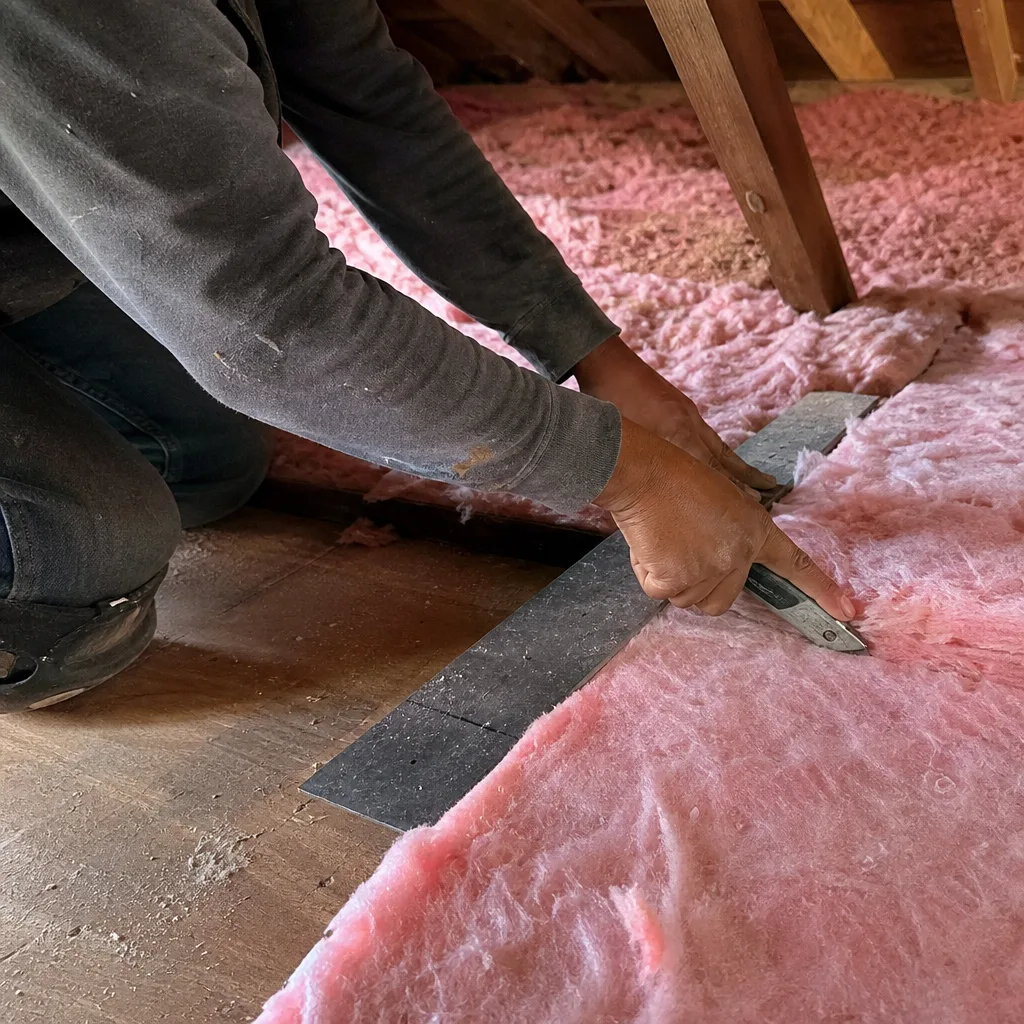
Canyon Lake homeowners consistently underestimate four cost categories when budgeting DIY insulation. We have compiled these from actual conversations and job corrections in the area.
1. Blower Rental or Purchase
As noted, $300-$500 per day for a blower-door kit from San Antonio-area equipment suppliers. Most attic jobs require a pre-test, a post-test after air sealing, and often a final post-insulation test. That’s three test days if you are thorough, or two if you combine. Either way, the rental cost is not trivial.
2. Cellulose Blower Rental and Material Transport
The blower itself rents for $75-$150 per day, but the material adds up. A typical 1,500-square-foot attic at R-38 requires roughly 60 bags of cellulose. At $12-$15 per bag, that’s $720-$900 in material alone. Transport from the New Braunfels or San Marcos supplier to Canyon Lake - roughly 20-30 miles - requires a truck or trailer. Delivery fees run $75-$150.
3. Disposal Fees for Removed Material
Old insulation does not go in residential trash. Comal County waste facilities charge by weight for construction debris. A typical attic removal runs $200-$400 in disposal fees, plus the time to bag and transport. Contaminated material requires more expensive handling.
4. The Time Cost of Attic Access in Summer
This is the category homeowners almost never calculate. A Canyon Lake attic in July or August operates at 130-150°F. Productivity drops sharply. A job that takes a professional crew four hours may take a homeowner two full days of early-morning and late-evening work, with midday breaks. At any reasonable valuation of time, the “savings” diminish rapidly.
Add these together for a representative attic job: blower rental ($600 for two days), cellulose blower ($150), material ($850), disposal ($300), and a conservative 16 hours of homeowner time. The cash outlay approaches $1,900 before valuing labor. Our attic insulation in Canyon Lake jobs for comparable scope start with a written price that includes all of the above, plus the blower-door test, plus the documented record.
How to Read an Insulation Contract Like a Technician
The difference between a professional insulation job worth paying for and one that is merely professional in price lies in the contract details. Here is what to look for, and what to walk away from.
Required Element 1: Written Scope with Zone-by-Zone R-Values
The contract should specify the target R-value for each thermal zone: attic floor, walls, crawl space, rim joist. “R-38 attic” is not enough. “Attic floor: existing R-19 fiberglass batts to be supplemented with blown cellulose to achieve R-38 total, verified by depth markers at 12 locations” is a scope you can verify.
Required Element 2: Air-Sealing Line Items by Location
Any contract that treats air sealing as a single line item - “air sealing: $800” - without specifying locations is suspect. The scope should name the work: top plates of interior walls, can-light enclosures, chimney chase, duct boots, plumbing vent stacks, attic access hatch. This is the difference between a contractor who seals what they find and one who seals what they bid. Under Haven Standard: written scope before any work starts.
Required Element 3: Post-Job Blower-Door Number
The contract should state that a post-job blower-door test will be conducted and the result provided to the homeowner in writing. Not “available upon request.” Not “if applicable.” Provided. This number - CFM50 or ACH50 - is your proof of performance. Without it, you have no way to know whether the crew’s air sealing actually changed anything.
Required Element 4: Material Specifications
The contract should name the manufacturer and product line, not just the type. “Blown cellulose” is insufficient. “GreenFiber all-borate cellulose insulation, or equivalent” allows verification and avoids proprietary lock-in. We specify materials from Owens Corning, Johns Manville, Knauf, Rockwool, CertainTeed, Icynene, Demilec, and GreenFiber depending on the application, and we name them in the scope so the homeowner knows what is being installed.
Required Element 5: Photo Documentation
The contract should state that photos will be taken before, during, and after work, and provided to the homeowner. Not “available on request” - included on every job, delivered with the final documentation. This protects both parties and creates a record for future work.
If a contractor cannot produce these five elements in writing before work begins, you are not buying professional insulation work. You are buying labor with a truck wrap.
How Canyon Lake’s Climate Changes the Calculation
Canyon Lake sits at the edge of the Texas Hill Country, with specific conditions that affect insulation strategy.
Summer Heat and Attic Ventilation
Summer attic temperatures in Canyon Lake regularly exceed 140°F. This creates extreme thermal loading on ceiling assemblies. Insulation depth matters, but so does ventilation. A DIY homeowner who adds insulation without verifying soffit vent clearance - ensuring that blown material does not block intake vents - can actually reduce attic airflow and increase shingle temperature. We check soffit baffles and vent paths as part of every attic insulation in Canyon Lake job.
Humidity and Vapor Drive
Canyon Lake’s proximity to the lake itself creates slightly elevated humidity compared to inland San Antonio. In summer, warm moist air can drive inward through the envelope if air sealing is incomplete. In winter, conditioned interior air carries moisture outward. The direction of vapor drive changes seasonally, which means the location of the air barrier - not just the insulation - determines whether moisture condenses inside wall or roof assemblies. This is why air sealing first, then insulating, is not preference but physics.
Freeze Events and Pipe Protection
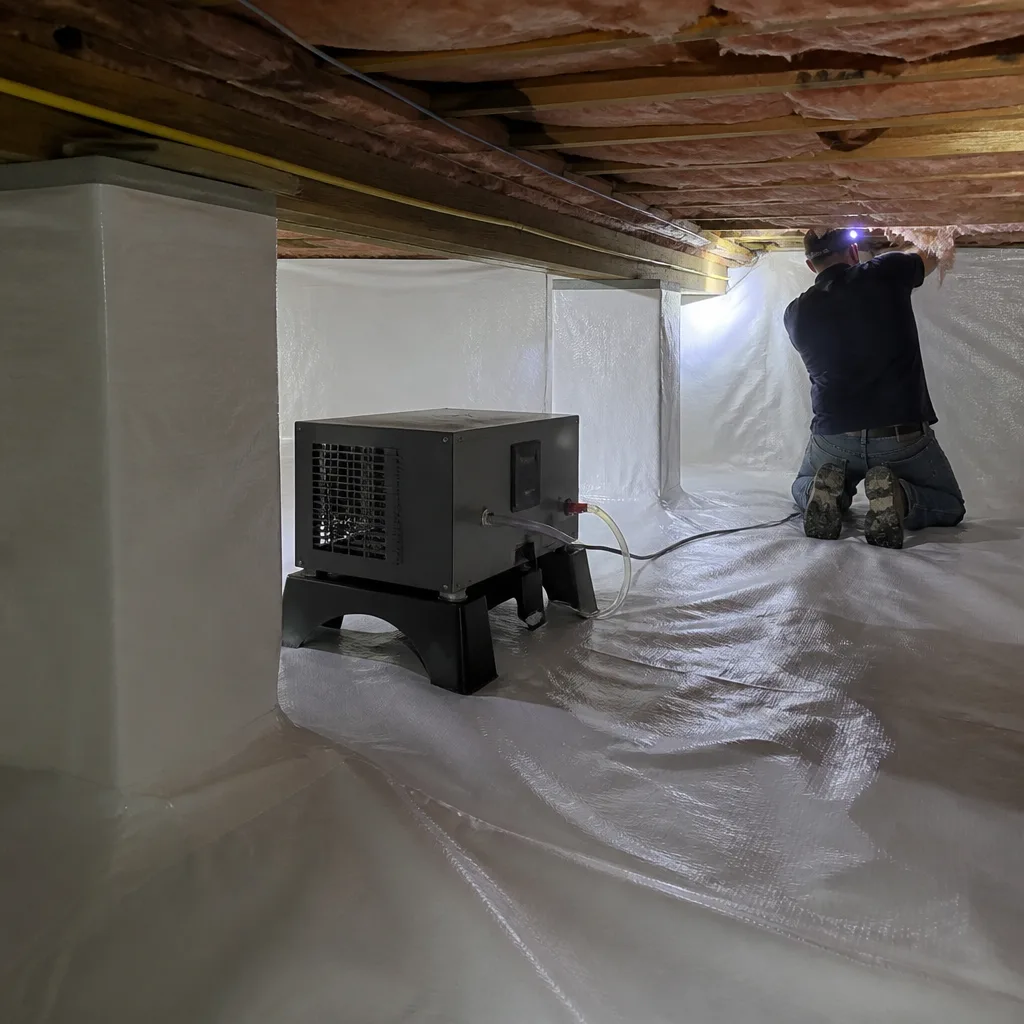
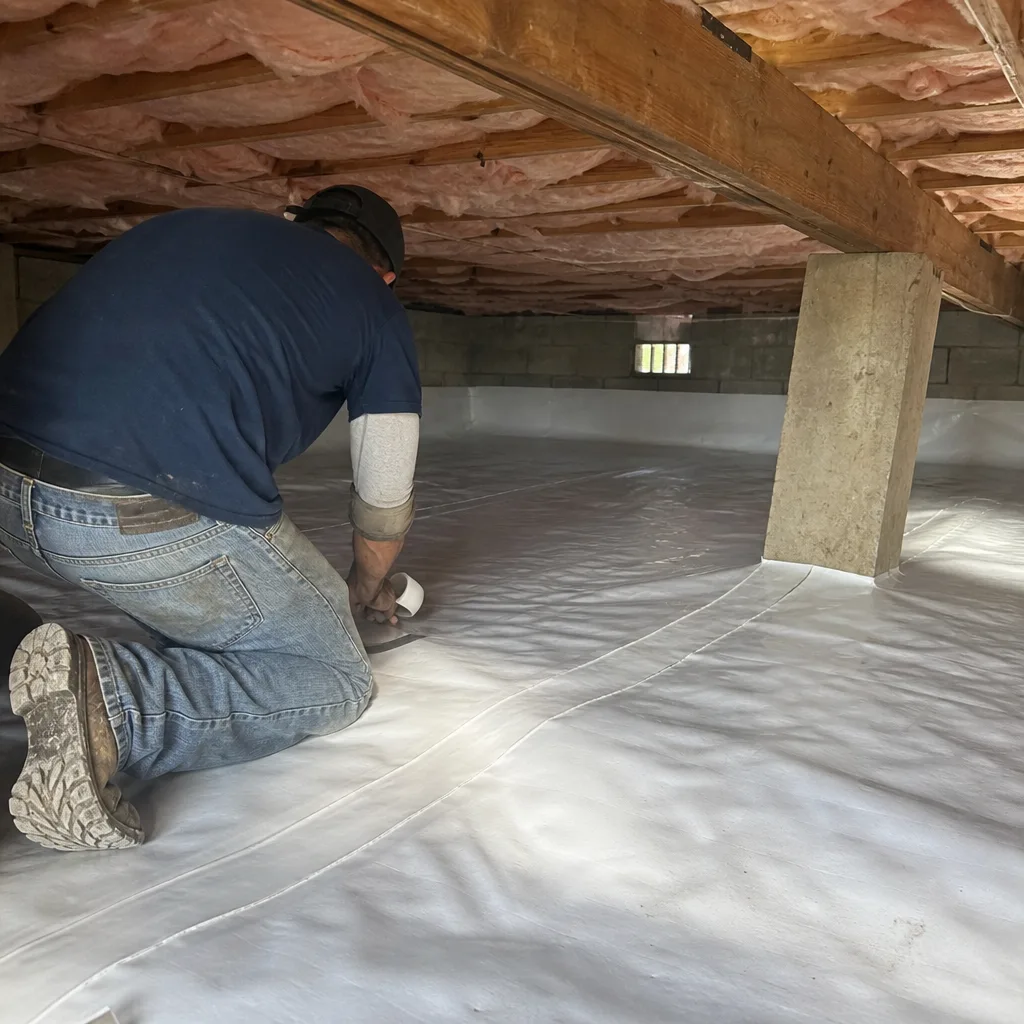
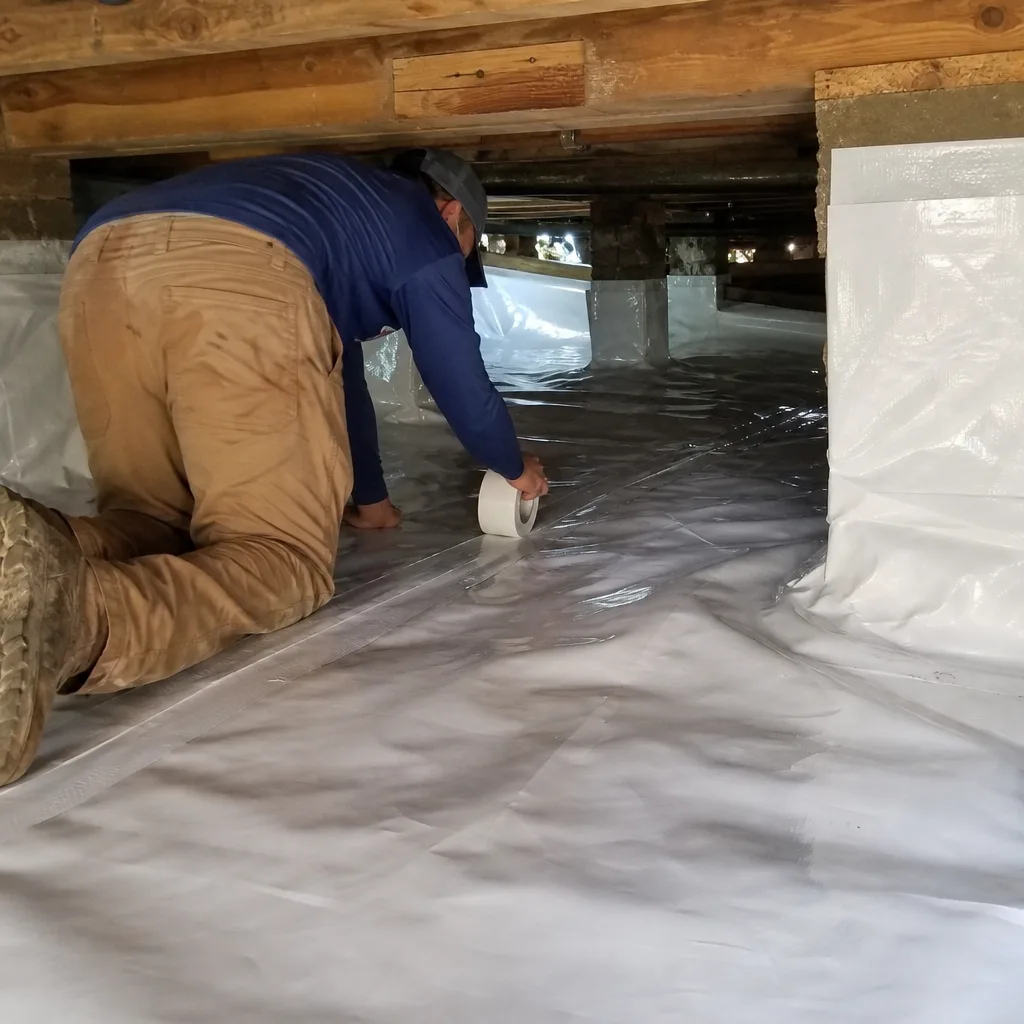
While Canyon Lake winters are mild, hard freezes occur every few years. Homes with crawl spaces or pier-and-beam foundations are vulnerable if floor insulation is inadequate or displaced. Crawl space encapsulation and vapor barrier in Canyon Lake addresses this by sealing the crawl space from outside air and conditioning the volume, but unsealed floor batts in a vented crawl space provide minimal protection during a freeze.
Wind and Driving Rain
Hill Country wind patterns can drive rain into soffit vents and wall cavities. Insulation that becomes wet loses R-value and can support mold growth. A proper inspection before insulation work - checking for staining, checking sheathing with a moisture meter - is essential. This is visual work, but it requires knowing what to look for and where water travels in a framing assembly.
Common Mistakes to Avoid
- Insulating over unsealed can lights. Standard recessed can lights are not airtight. Blowing insulation over them without sealing the housing creates a direct path for conditioned air into the attic. In Canyon Lake’s summer heat, this is like leaving a window open year-round. The correct detail is a sealed enclosure or rated airtight fixture.
- Compressing batts to fit. Fiberglass and mineral wool batts achieve their R-value through loft - the trapped air between fibers. A batt compressed into a cavity narrower than its designed width loses 20-50% of its rated performance. We see this frequently in older Canyon Lake homes where homeowners wedged R-19 batts into 2×4 walls.
- Blocking soffit vents with blown material. Attic ventilation depends on continuous airflow from soffit to ridge. Blown cellulose or fiberglass that drifts into soffit cavities blocks intake and can cause moisture accumulation. Proper installation requires baffles at every rafter bay.
- Ignoring knee walls and bonus room framing. Homes in Canyon Lake’s hillside lots often have bonus rooms or finished attics with knee walls - short vertical walls under sloped ceilings. These are thermal boundaries that are frequently uninsulated or poorly sealed, creating massive energy loss that standard attic insulation does not address.
- Using the wrong insulation type for the application. Fiberglass batts in a damp crawl space absorb moisture and degrade. Open-cell spray foam against a roof deck in a humid climate can accumulate moisture at the foam-deck interface if not properly specified. Material selection requires understanding the assembly, not just the R-value.
- Skipping the pre-installation inspection. Every insulation job should begin with a visual assessment of existing conditions: moisture staining, pest activity, electrical hazards, structural integrity. In Canyon Lake’s older lake-area homes, we regularly find knob-and-tube wiring, deteriorated ductwork, or previous rodent damage that must be addressed before insulation work proceeds.
- Assuming more insulation is always better. Beyond a certain depth, additional insulation yields diminishing returns, and in some assemblies - particularly where ventilation is already marginal - excessive depth can create moisture problems. The correct depth is calculated from target R-value, not from “as much as fits.”
When to Call a Professional
Call a professional when your job includes any of the following: air sealing at top plates, can lights, or penetrations; spray foam application; removal of contaminated or deteriorated material; work in a confined or hazardous space; or any goal that includes a specific airtightness target. These are not skill issues. They are measurement and safety issues.
Topside Attic Insulation Canyon Lake offers free estimates in Canyon Lake - call (737) 227-6219. Every estimate includes a written scope with zone-by-zone R-values, air-sealing line items by location, and a commitment to post-job blower-door documentation where applicable. Under Haven Standard: written price before any work starts, documented record when the crew leaves.
Frequently Asked Questions
Most attic insulation jobs in a Canyon Lake home of 1,500-2,500 square feet run between $2,800 and $5,500, depending on existing conditions, target R-value, and whether air sealing is required. Jobs requiring full removal and replacement, or spray foam application, range higher. We provide a written price before any work starts - no exceptions. Call (737) 227-6219 for an exact quote; estimates are free.
Yes, if three conditions are met: the existing insulation is undamaged and uncontaminated, the attic floor is flat and fully accessible, and no air sealing is needed. If your can lights are unsealed, if top plates leak, or if duct boots bypass the envelope, adding insulation without sealing first will produce minimal performance change. The only way to verify is a blower-door test.
No. Two-component spray polyurethane foam requires specialized proportioning equipment, heated hoses, respiratory protection, and substrate temperature control. The chemicals are exothermic and can ignite if applied too thick. Substrate temperature in a Canyon Lake winter attic can fall below manufacturer’s minimums. We use Icynene and Demilec products with trained applicators and verify thickness and adhesion on every job.
Ask for the blower-door number, in writing, before and after the work. CFM50 or ACH50 - either metric is valid. If the contractor cannot provide this, they cannot prove performance change. Under Haven Standard, we publish before-and-after blower-door readings on every applicable job so the homeowner can verify the result.
Current IECC code for Climate Zone 2 (which includes Canyon Lake) specifies R-30 to R-49 for attic floors, depending on construction type and year. Many Canyon Lake homes built before 2010 have R-19 or less. The practical target for most retrofits is R-38 to R-49, achieved by supplementing existing material or full replacement. Wall cavities in 2×4 construction are typically limited to R-13 to R-15 unless foam is used.
Yes. Elevated humidity near the lake increases vapor drive through the envelope. Fiberglass and cellulose are not air barriers; they slow heat flow but allow air and moisture passage. This is why air sealing - closing gaps with foam, caulk, or gasket - must precede insulation in humid climates. Without it, moist air can condense on cool surfaces inside assemblies, leading to mold and degradation. Crawl space encapsulation and vapor barrier in Canyon Lake is specifically designed to address this in foundation assemblies.
The Bottom Line
DIY insulation in Canyon Lake is viable for three narrow scenarios where no air sealing is required and no performance verification is needed. Every other job type - including any work with airtightness goals - requires a blower-door test to confirm results, and the cost of that equipment rental or purchase typically eliminates DIY savings. The professional difference is not labor; it is measurement infrastructure, documented scope, and verified outcomes. When evaluating contractors, demand written zone-by-zone R-values, air-sealing line items by location, and post-job blower-door numbers. Anything less is guesswork with a truck.
Written by Wes Okafor, Owner at Topside Attic Insulation Canyon Lake, serving Canyon Lake since 2016.