
Attic Insulation Top-Up in Canyon Lake, TX
An attic insulation top-up adds Blown-In Attic Insulation over your existing material to bring the total depth up to code-recommended levels – typically R-38 to R-60 for homes in this part of Texas. Most Canyon Lake homes built before 2010 are sitting at R-19 or less, and that gap is usually responsible for the high summer cooling bills homeowners describe when they call us. A top-up is not a full removal job; it’s a targeted correction that costs significantly less and, when done right, delivers a measurable reduction in air exchange.
That said, “blown over whatever’s already up there” is not a process – it’s a shortcut. At Topside Attic Insulation Canyon Lake, we treat air sealing as a hard prerequisite. Before any new insulation goes in, we seal the attic floor: top plates, can lights, recessed fixtures, plumbing and electrical penetrations. Blowing insulation over an unsealed attic floor is, at best, half a job. Our parent page on Attic Insulation in Canyon Lake covers the full scope of what that means for homes in this market.
If you’d like a written price before anyone touches your attic, call us at (737) 227-6219. A live person picks up – no voicemail loop, no callback window measured in days.
When You Need Attic Insulation Top-Up
Not every Canyon Lake home is a candidate for our Attic Insulation services. Some need full removal first. But for homes with clean, dry, pest-free existing insulation that’s simply too thin, a top-up is the right call. Here’s what usually brings people to us:
- Cooling bills that spike every June and stay high through September. Canyon Lake sits in Comal County, where summer attic temperatures routinely exceed 140°F. If your HVAC is running long cycles and the upstairs rooms are 4-6 degrees warmer than the thermostat setting, thin insulation is almost always part of the diagnosis.
- Existing insulation measured at less than 10 inches. A blower-door test – a pressurization reading that shows, in one number, how much air your building envelope is losing – often confirms what a tape measure finds: attics with 6-8 inches of old batts or settled blown cellulose are performing well below what’s needed in this climate zone.
- A home built between 1980 and 2005. Canyon Lake saw significant residential development during this period. Insulation standards at the time called for R-19 to R-30, which was sufficient then but falls short of current Texas energy code guidance of R-38 minimum and R-60 for optimal performance.
- You’ve had HVAC work done but the comfort problem persists. We see this regularly in the Cranes Mill Road and FM 2673 corridors – homeowners who replaced their air handler and still struggle with summer heat gain. The envelope was the issue the whole time.
- Recent attic entry showed the insulation has shifted, settled, or flattened. Blown cellulose settles over time. Fiberglass batts compress. Either way, nominal R-value on a label does not equal installed R-value ten years later.
- A home energy audit flagged attic insulation depth as a priority. If you’ve had a formal audit that produced a written recommendation for additional insulation, we can read that document with you and give you a written price against it before any work begins.
Our Attic Insulation Top-Up Process
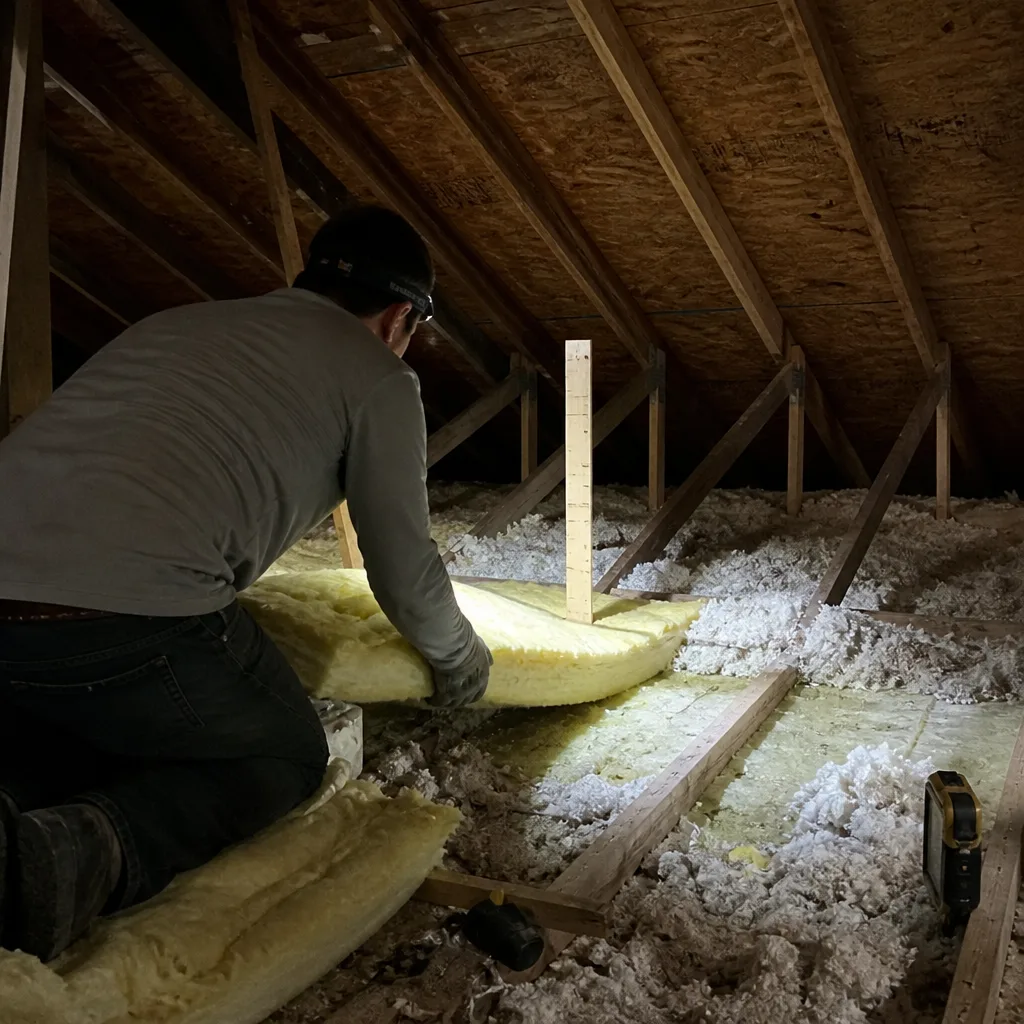
We follow the same documented sequence on every job. Nothing gets skipped because a customer wants to move fast, and nothing gets added without it appearing in the written scope you receive before work starts. Under Haven Standard Clause 1: a flat price, written scope, and written warranty are in your hands before anyone lifts a tool.
- Written price and scope before anything starts. We measure the attic square footage, document the existing insulation type and depth, note any visible air leaks, and produce a written price. You’ll know the dollar figure, the material, the target R-value, and the warranty terms before we schedule a crew. No surprises at invoice.
- Blower-door baseline reading. On jobs where air sealing is part of the scope – and it usually is – we run a blower-door test before we seal anything. That number goes into your job record. It’s the “before” figure you’ll compare against the post-sealing reading. Canyon Lake homes in the older lakeside subdivisions typically read between 3,800 and 5,500 CFM50 before sealing; tighter newer construction comes in lower.
- Air sealing first – no exceptions. We seal top plates, can-light penetrations, plumbing stacks, electrical chases, and HVAC boots at the attic floor level before any insulation is added. This is non-negotiable. Blowing insulation over unsealed penetrations reduces the value of the insulation itself, because conditioned air bypasses it entirely through the gaps below.
- Post-sealing blower-door reading. After sealing and before the insulation goes in, we run the pressurization test again. The before-and-after figures are documented and included in the photo record you receive when the job closes. If the numbers don’t show a meaningful reduction in air changes per hour, we find out why before we proceed.
- Blown-in insulation to target depth. We use Owens Corning or GreenFiber blown-in material depending on what’s appropriate for your existing substrate and attic configuration. The crew installs to the depth specified in your written scope – typically enough to bring the total to R-49 or R-60, depending on what you’ve agreed to – and depth markers are left in place so you can verify the coverage yourself.
- Documented photo record and closeout. Before the crew leaves, a photo set is taken: the sealed penetrations, the depth markers at multiple points, the blower-door readouts. That record goes to you the same day. Under the 365-Day Done Right Promise, if anything in the written scope wasn’t delivered correctly, we make it right – that promise is in writing before the job starts.
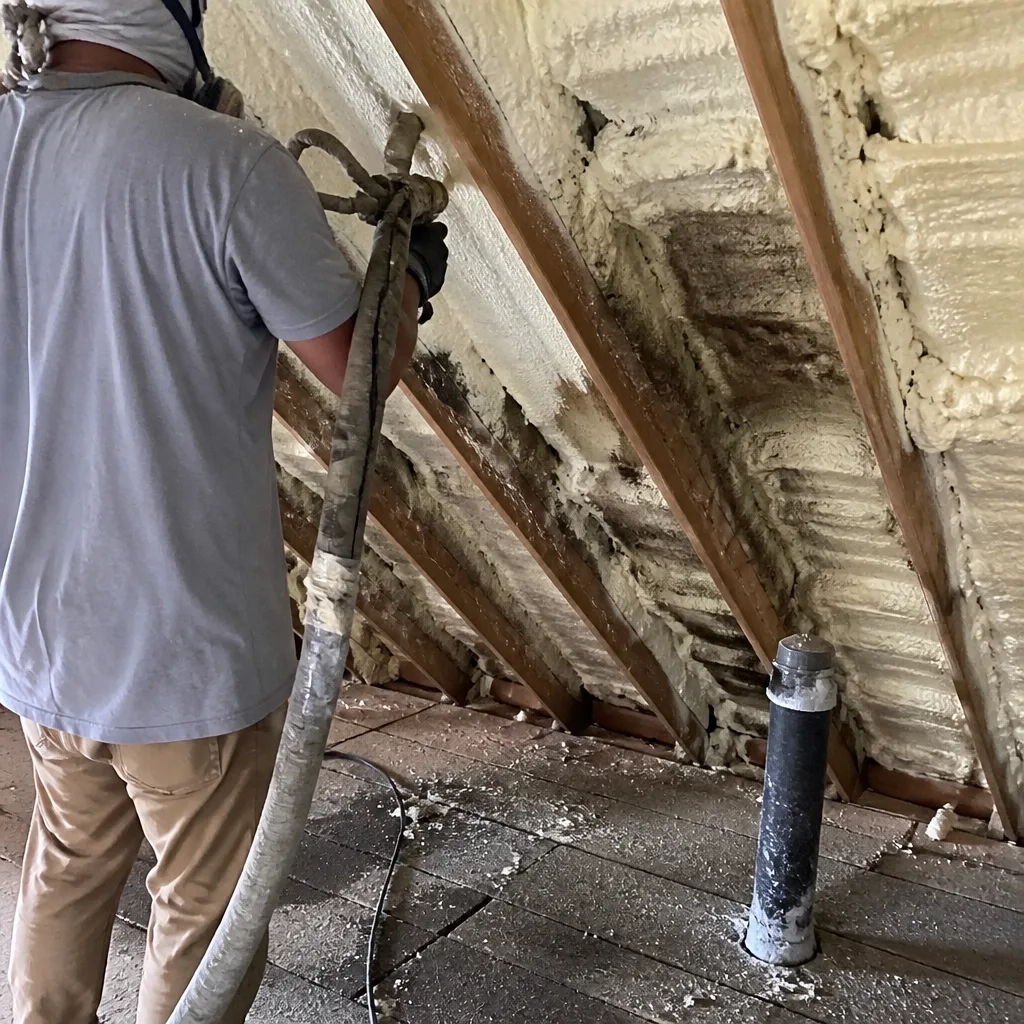 Before
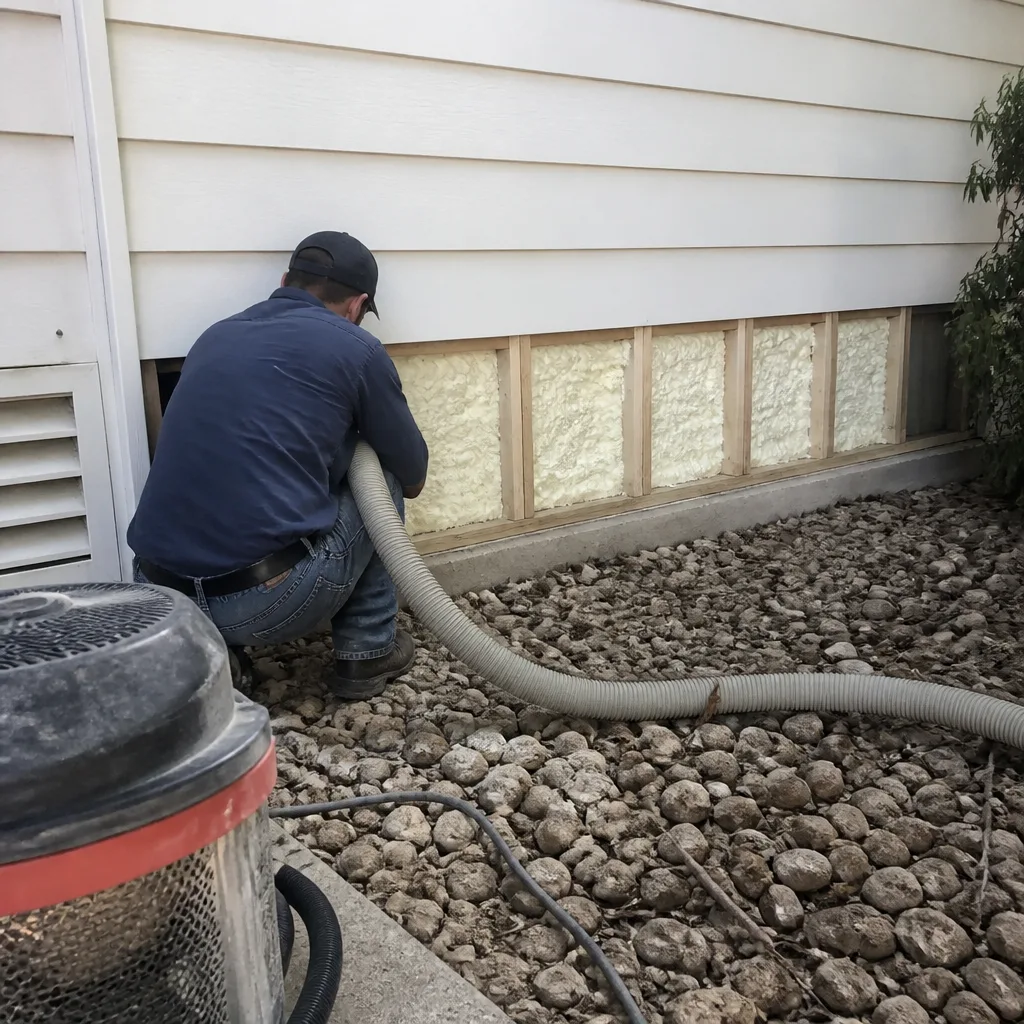 After
AfterAttic Insulation Top-Up Pricing in Canyon Lake
Most attic insulation top-up jobs in Canyon Lake run between $1,200 and $3,800, with the majority of single-story homes in the 1,600-2,400 square foot range landing between $1,400 and $2,200. Those numbers include air sealing – not as an add-on, but as part of the base scope, because we won’t blow insulation over an unsealed attic floor.
| Scope | Typical Range |
|---|---|
| Top-up only, 1,000-1,400 sq ft attic, moderate sealing | $1,200 – $1,700 |
| Top-up + air sealing, 1,600-2,200 sq ft attic | $1,600 – $2,400 |
| Top-up + air sealing, 2,400-3,200 sq ft attic | $2,200 – $3,200 |
| Two-story or complex attic geometry, same square footage | Add $300 – $600 |
| Blower-door test (before and after, documented) | Included on applicable jobs |
Several variables move the number. The existing insulation type matters: cellulose over cellulose is straightforward; Attic Batt Insulation as a substrate requires more attention to bridging gaps before the blown layer goes in. Attic access also matters – a standard pull-down stair is different from a tight scuttle hatch in a hallway closet, which slows the crew. The number of can lights and unsealed penetrations at the attic floor affects sealing labor. Canyon Lake homes with older construction near the lake, particularly in the Lazy Cove and Startzville areas, tend to have more penetrations than newer builds closer to FM 306.
We don’t ask you to call for pricing. A written price before any work starts is the foundation of how we operate. Call (737) 227-6219 and we’ll schedule the assessment, produce the written scope, and give you the dollar figure in writing – no work begins until you’ve approved it.
If you have a written estimate from another contractor, bring it. We offer a free second opinion on any written estimate and will read it with you line by line.
Key Takeaways
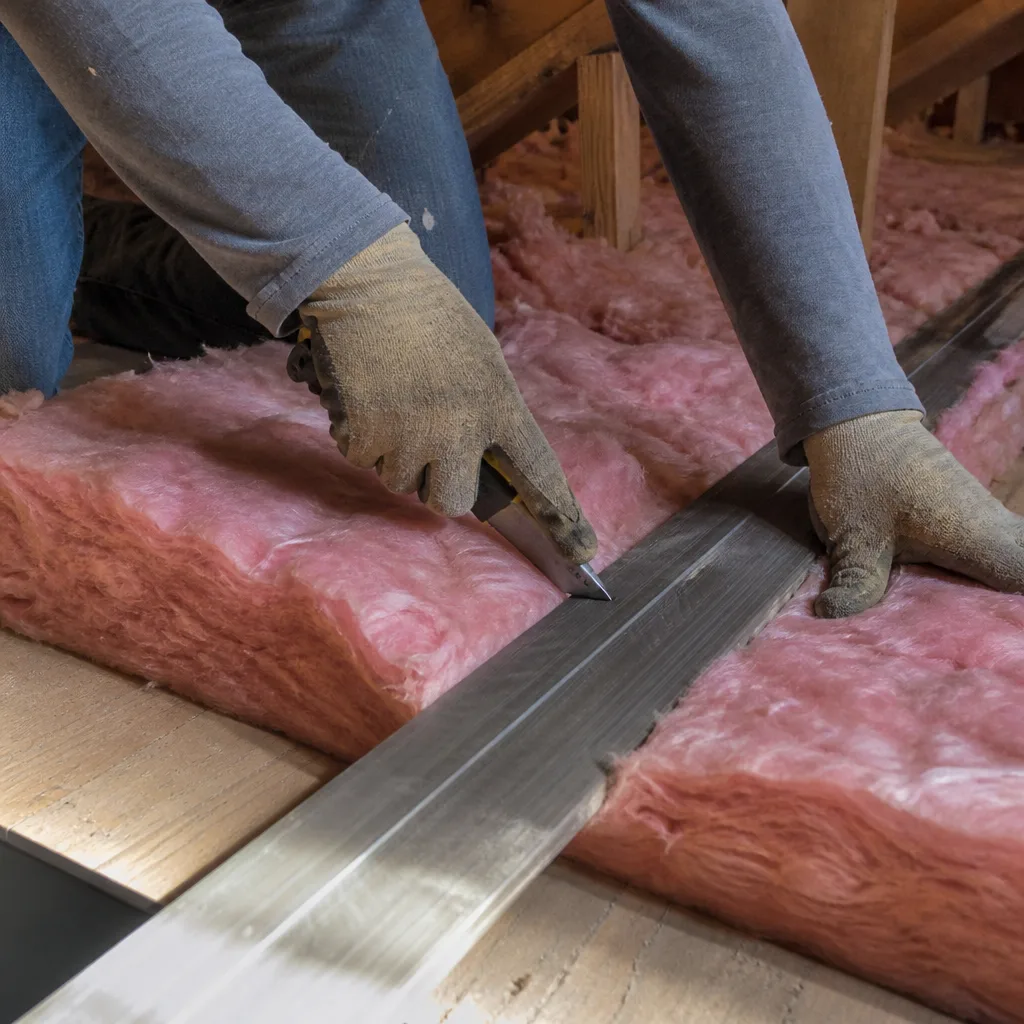
- An attic insulation top-up in Canyon Lake typically costs $1,200 to $3,800, depending on attic size and sealing complexity.
- Air sealing comes first – always. We won’t install additional insulation over an unsealed attic floor.
- Before-and-after blower-door readings are documented on every applicable job, so you have proof of the air-sealing result – not just our word for it.
- A written price, written scope, and written warranty are delivered before any work begins, under Haven Standard Clause 1.
- The 365-Day Done Right Promise is in writing: if the job isn’t done to the written scope, we make it right.
- Most Canyon Lake homes built before 2010 are under-insulated relative to current Texas energy code guidance and benefit meaningfully from a properly executed top-up.
FAQs – Attic Insulation Top-Up
Can you just add insulation on top of what’s already in my attic, or does the old material need to come out first?
In most cases, existing insulation in good condition can stay, and the top-up goes directly over it – no removal needed. The exceptions are visible moisture damage, active rodent contamination, or a substrate so compressed and deteriorated that it’s contributing to air movement rather than stopping it. When we assess the attic before writing the scope, we document what we find with photos and tell you plainly which situation you’re in. If removal is warranted, that’s a separate written scope with a separate price; we won’t bury the recommendation in fine print. Call (737) 227-6219 to schedule an assessment and get that answer in writing before any work begins.
What R-value should my attic reach after a top-up in Canyon Lake?
Texas energy code guidance for Climate Zone 2 – which covers Comal County and Canyon Lake – calls for a minimum of R-38, with R-49 to R-60 recommended for homes running central air conditioning through a long Texas cooling season. Most homes we work on in Canyon Lake are starting from R-19 or less, which means a meaningful depth of blown-in material is needed to hit those targets, along with proper Attic Baffles & Ventilation Prep. The written scope we produce before any work starts will state the target R-value explicitly, and depth markers placed during installation let you verify it didn’t just land on paper.
How long does an attic insulation top-up take in a typical Canyon Lake home?
For a single-story home with a straightforward attic and moderate sealing work, the air sealing and blow-in together typically take four to six hours on the job day. Larger attics, homes with significant can-light counts, or two-story configurations with split attic access can run a full day. The assessment visit – where we measure, document, and produce the written price – is a separate appointment scheduled before the crew comes out. You won’t find us showing up, assessing, and starting work in the same visit without a written price in your hands first.
Will a top-up actually lower my electric bill, and how will I know it worked?
A properly executed top-up – meaning air sealing done first, insulation brought to the right depth – reduces the rate at which conditioned air escapes the building envelope. That translates to shorter HVAC run cycles, which shows up in monthly bills over a full cooling season. The before-and-after blower-door readings we document on every applicable job give you a measurable data point: if the CFM50 reading dropped by 30-50% after sealing, the envelope is tighter in a way that your utility bills will reflect over time. We can’t predict an exact dollar figure because occupant behavior and utility rates vary, but the blower-door numbers are real, documented, and yours to keep. That’s a better answer than any efficiency estimate we could put on paper without testing your specific home.
About This Page
Topside Attic Insulation Canyon Lake is part of Envelope Insulation Co., independently owned and operated under The Haven Standard since 2016. Wes Okafor and the crew have assessed and insulated more than 9,000 homes across the region – every one with a written price before work started and a documented photo record when the crew left. The full range of building-envelope services we provide, including attic insulation, is outlined in our Attic Insulation in Canyon Lake page.
If you’re ready for a written price on an attic insulation top-up in Canyon Lake, call (737) 227-6219. A live person will answer. No voicemail, no callback window. Just a straight conversation about what your attic needs and what it will cost.
Written by Wes Okafor, Owner at Topside Attic Insulation Canyon Lake, serving Canyon Lake.